Reviewed by our editorial team Updated
Why Choose the Greek Islands Pass
The Interrail Greek Islands Pass is one of the most distinctive products in the Interrail portfolio. Unlike traditional country passes built around national rail networks, this pass is designed specifically for island-hopping by ferry across the Aegean Sea. It allows travellers to link Greece’s most famous islands without purchasing separate ferry tickets, offering a combination of flexibility, convenience, and often significant cost savings compared to point-to-point bookings.
It is worth being clear from the outset about what this pass actually is. The Interrail Greek Islands Pass is a standalone ferry product in its own right, not a discount added on top of an existing rail pass. Coverage is also more specific than many travellers expect, since it applies to ferries operated by the Attica Group, meaning Blue Star Ferries, Hellenic Seaways, and Superfast, rather than every ferry company serving the Greek islands.
For many travellers, the Greek Islands represent the ultimate summer escape, defined by whitewashed villages, turquoise waters, lively tavernas, and unforgettable sunsets. With the pass, these experiences can be combined across multiple destinations with ease. You might explore Santorini one day, Mykonos the next, and continue on to Crete or Rhodes, all within a single trip. The pass also integrates smoothly with the wider Interrail network, allowing you to travel by train to Athens and then transition seamlessly onto ferries at Piraeus, Greece’s main port.
Another major advantage is cost control. During peak season, ferry tickets on popular routes can become extremely expensive when purchased individually. The Greek Islands Pass locks in value by providing a set number of crossings at a fixed price, making budgeting far easier. Discounts for youth travellers and seniors make it particularly appealing for students on summer adventures and retirees exploring at a more relaxed pace.
The pass also provides a valuable sense of peace of mind. Ferries frequently sell out during July and August, but Interrail pass holders often benefit from simplified booking processes and priority access. For travellers planning to link multiple islands into one itinerary, whether over a few days or several weeks, the Interrail Greek Islands Pass offers a structured, hassle-free way to explore the Aegean.
Quick Facts / Pass Overview
The Interrail Greek Islands Pass operates very differently from standard One Country Passes. Instead of trains, it covers a network of ferry services operated by Blue Star Ferries and Hellenic Seaways, both part of the Attica Group. Together, these operators connect over 50 destinations across the Aegean Sea, including the Cyclades, Dodecanese, and North Aegean islands.
Travellers can choose between two Flexi Pass options, either 4 travel days within 1 month, all domestic, or 6 travel days within 1 month, of which four are domestic and two are for international sailings between Italy and Greece. Each travel day allows you to take one or more ferry journeys within a single calendar day, making it possible to link multiple islands efficiently. Because all passes are Flexi, there is no need to fix travel dates in advance. You activate each travel day as you go, which is particularly useful for adapting to weather conditions or local events.
The 4-day pass covers domestic ferry routes within Greece only. The 6-day pass adds two travel days on Superfast Ferries’ international routes between Italy and Greece, linking Venice, Ancona and Bari with Patras, Igoumenitsa and Corfu, alongside four domestic days. Neither pass covers high-speed catamarans run by operators outside the Attica Group. While standard deck travel is typically included, supplements may apply for premium seating, cabins, or certain vessels. Discounts are available for youth travellers aged 27 or under and seniors aged 60 and above, while children under 12 usually travel at reduced fares when booked directly with ferry operators.
The pass comes in both mobile and paper formats, and most travellers take the mobile version, stored within the Interrail Rail Planner App. This allows travellers to manage reservations, check timetables, and present tickets digitally when boarding. Once activated, the pass must be used within a one-month validity window, with travel days spread flexibly across that period.
In practical terms, the Greek Islands Pass is designed to simplify ferry travel, control costs, and provide complete flexibility for exploring Greece’s island networks.
Best for two or three nights. The widest choice of rooms, with filters for free cancellation and included breakfast.
View staysBest for families, or any stay past about four nights. A kitchen and a washing machine start paying for themselves.
Browse rentalsBest for double-checking. Runs the same search across several booking sites so you are not leaving money behind.
Compare pricesKey Operators and Network Coverage
Unlike traditional Interrail passes based on national rail systems, the Greek Islands Pass is built entirely around ferry operators. The network is centred on the Attica Group, whose subsidiaries Blue Star Ferries and Hellenic Seaways provide the core coverage across the Aegean Sea.
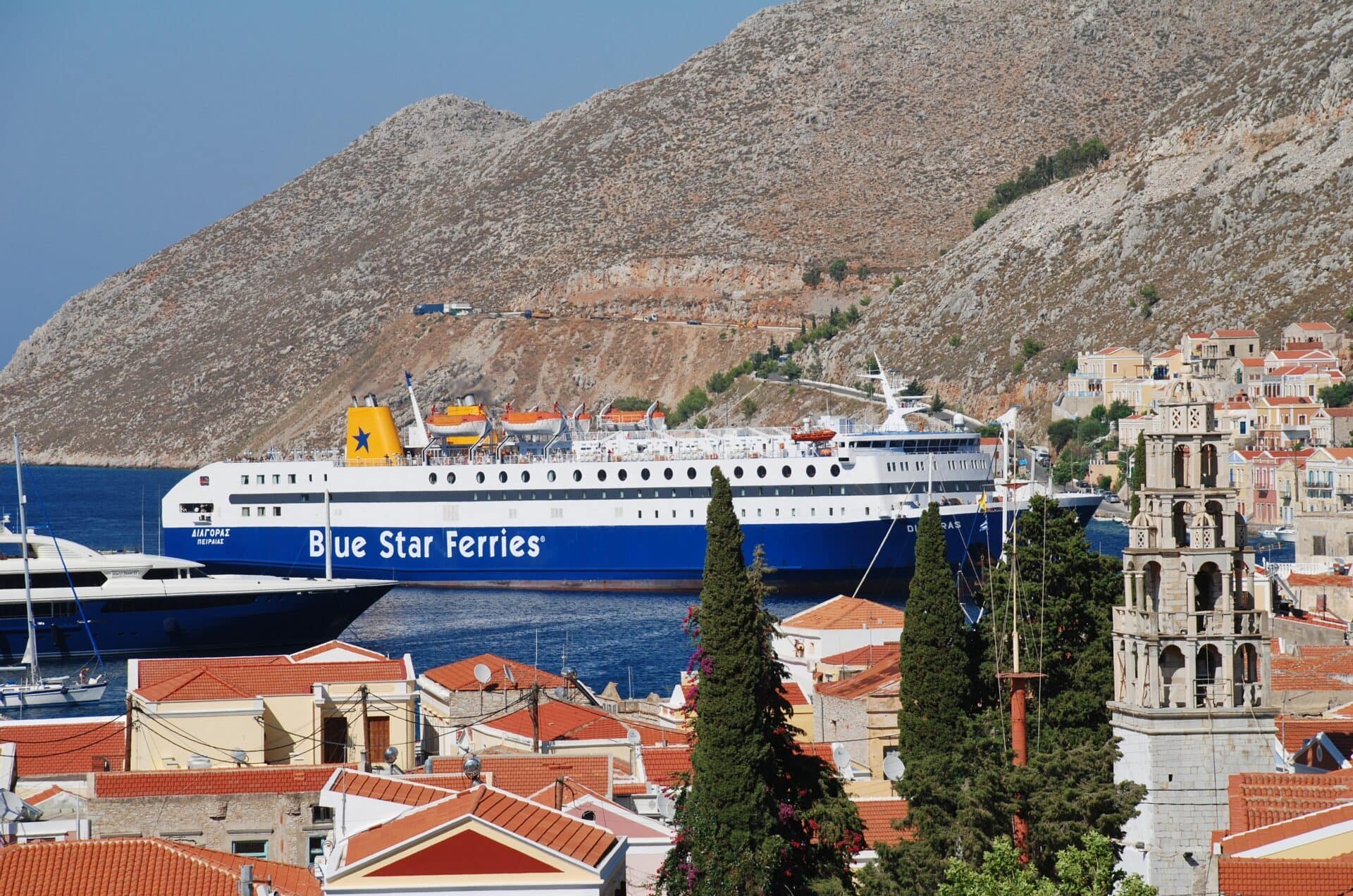
Blue Star Ferries focus on the most popular long-distance routes, particularly across the Cyclades and Dodecanese islands. This includes key destinations such as Santorini, Mykonos, Paros, Naxos, Rhodes, Kos, Patmos, and Karpathos. These routes are heavily used by both locals and tourists, with frequent departures from Piraeus, and services operate year-round with increased frequency during the summer season.
Hellenic Seaways complements this network by serving the Saronic Gulf Islands, including Aegina, Hydra, Poros, and Spetses, as well as extending into parts of the North Aegean. These shorter routes make it easy to combine a stay in Athens with nearby island visits.
In total, the pass provides access to around 50 destinations, forming a comprehensive maritime network that connects Greece’s major island groups. While this is not a rail network in the traditional sense, it functions as a flexible island-hopping system, allowing travellers to build diverse itineraries across multiple regions.
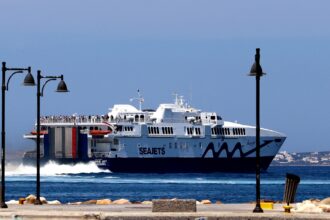
It is important to note that the pass does not include other ferry operators such as SeaJets or Golden Star Ferries, which dominate some high-speed routes. The pass does also extend to Superfast Ferries for the Italy–Greece international leg and some Crete sailings, and to Anek Lines on certain domestic Crete routes, alongside its core Blue Star Ferries and Hellenic Seaways network. However, for most travellers, this Attica Group coverage is sufficient to unlock the classic Greek island experience.
Transport Hubs and Major Routes
The central hub of the Greek Islands Pass is the Port of Piraeus, located just a short metro journey from central Athens and run by the Piraeus Port Authority. This is the primary departure point for most long-distance ferries to the Cyclades, Dodecanese, and Crete, making it the natural starting point for travellers arriving in Athens via the Interrail network.
From Piraeus, several key routes define the structure of the network. The route from Piraeus to Santorini is one of the most iconic, linking Athens with one of the most photographed destinations in the Aegean. The connection from Piraeus to Mykonos is equally popular, serving one of Greece’s most vibrant and internationally known islands. Longer routes such as Piraeus to Rhodes offer overnight journeys through the Dodecanese, often stopping at islands like Kos, Leros, and Patmos along the way.
Connections from Piraeus to Paros and Naxos act as gateways into the Cyclades, making it easy to build multi-island itineraries. While Rafina Port, located closer to Athens Airport, also serves some routes, the majority of Interrail pass coverage is concentrated in Piraeus. Lavrio Port provides access to smaller islands such as Kea and Kythnos, although these are less central to most itineraries.
Beyond Athens, Heraklion in Crete and Rhodes Town function as secondary hubs, enabling further connections between islands and supporting more complex, circular travel routes. These hubs are particularly useful for travellers exploring multiple island groups over a longer period.
By anchoring the network in Athens and extending across key ferry corridors, the Greek Islands Pass combines practical transport connectivity with the classic appeal of Greek island travel, while integrating seamlessly with wider European rail journeys.
Example Ticket Prices vs Pass Value
Understanding the value proposition of the Greek Islands Pass is essential when deciding whether it is the right choice. In many cases, particularly during peak season, the pass offers strong savings compared to purchasing individual ferry tickets.
For example, a one-way ticket on the Piraeus to Santorini route during summer typically costs between €40 (£35/$43) and €60 (£52/$65) for standard deck travel. A return journey can therefore reach €100 (£87/$108) to €120 (£104/$130), meaning that even a single island pairing can approach the cost of a 4-day pass priced at €82 (£71/$89) for youth or €110 (£96/$119) for adults. This already creates an opportunity for savings when additional journeys are added.
Similarly, the Piraeus to Mykonos route usually ranges from €36 (£31/$39) to €55 (£48/$59) per trip, and combining this with onward travel to islands such as Naxos or Paros quickly exceeds the cost of the pass. Longer routes, such as the overnight ferry from Piraeus to Rhodes, often cost between €70 (£61/$76) and €90 (£78/$97) one way, making return travel particularly expensive when booked separately.
The real value emerges when building multi-island itineraries. A typical summer route such as Athens to Mykonos, onward to Paros, then Santorini, and back to Athens can easily cost €150 (£131/$162) to €200 (£174/$216) or more when booked individually. The pass reduces this to a predictable upfront cost while maintaining flexibility.
For travellers planning only one or two short trips, the pass may not be necessary. However, anyone taking three or more ferry journeys within a month is likely to see clear financial and practical benefits, alongside the convenience of managing fewer bookings.

Interrail Greek Islands Pass Prices (Flexi Passes)
The Interrail Greek Islands Pass is available only as a Flexi Pass, giving travellers a fixed number of travel days to use within a one-month window. Each travel day can include one or more ferry journeys, provided they take place within that same calendar day. This structure makes the pass especially useful for travellers who want to combine relaxed island stays with occasional travel days, rather than moving every day.
The official prices are structured by age group. For Youth travellers aged 12 to 27, the 4 Days in 1 Month pass costs €82 (£71/$89), while the 6 Days in 1 Month pass costs €176 (£153/$190). For Adults aged 28 to 59, the 4-day pass costs €110 (£96/$119) and the 6-day pass costs €235 (£204/$254). For Seniors aged 60 and above, the 4-day pass is priced at €99 (£86/$107), while the 6-day pass costs €211 (£184/$228).
Children get generous treatment on this pass: those under 4 travel free without needing a pass at all, while children aged 4 to 11 travel free with a Child Pass (up to two Child Passes per adult pass purchased). This makes the product genuinely family-friendly as well as suited to independent travellers, couples, and older children travelling under separate arrangements.
The 4-day pass is best suited to shorter island-hopping itineraries, such as Athens plus two or three islands. The 6-day pass costs considerably more because it is a different product: four domestic days plus two international days between Italy and Greece, which makes it the one to buy if you are arriving or leaving by ferry from Venice, Ancona or Bari rather than simply island-hopping for longer.
Both a mobile and a paper version are offered, and the mobile one is managed through the Interrail Rail Planner App. Once activated, the pass remains valid for one month, but the actual travel days can be used when needed during that period. This makes it easy to pause on favourite islands for several days before continuing onward, without losing the value of the pass.
Island Hop More Easily with a Greek Islands Ferry Pass
Booking multiple ferry tickets around Greece can quickly become expensive and time-consuming. A Greek Islands ferry pass offers a more flexible way to travel between islands with one pass, making it easier to plan a wider island-hopping trip.
It is ideal for multi-island itineraries, flexible travel plans, and travellers who want a simpler way to move between destinations. Rail Europe lets you explore ferry pass options, including Interrail-linked products such as the Greek Islands Pass.
How the Greek Islands Pass Works
The Interrail Greek Islands Pass is designed around flexibility and simplicity. Instead of buying separate ferry tickets for each leg of your trip, you purchase the pass in advance and then activate travel days as your journey unfolds. Each day you use the pass counts as one travel day, and within that 24-hour period you can take one or more ferry journeys included in the network.
To use the pass, you first need to download the Interrail Rail Planner App, which stores the pass digitally. Before boarding, you activate the pass through the app, select the journey you intend to take, and then present the digital ticket to ferry staff at boarding. This removes the need for paper tickets and makes the entire process much easier to manage while travelling.
The pass remains valid for one month from the first day of use. If, for example, you activate it on 5 July, you can spread your available travel days across the rest of July and into early August, depending on the exact validity period shown in the app. This structure allows you to combine quick island-hopping itineraries with longer stays, giving you freedom to slow the pace when you reach islands you particularly enjoy.
Most ferry journeys covered by the pass include standard deck class. If you want extra comfort, such as a cabin on an overnight sailing or access to certain upgraded seating areas, you may need to pay a supplement directly to the operator. These upgrades are optional, but they can make a noticeable difference on longer crossings.
Reservations are mandatory on every sailing, but Interrail makes them free of charge for pass holders, so this is a booking step rather than an extra cost. Make them well ahead in the peak summer season, when sailings fill up quickly. Pass holders can arrange them at ticket offices in Piraeus or through the ferry operators’ own websites.
In practical terms, the pass works by combining predictable costs, flexible travel days, and digital convenience, making it far easier to explore multiple islands without managing a stack of separate ferry bookings.
Where You Can Travel with the Greek Islands Pass
The Greek Islands Interrail Pass covers a broad network of ferry routes across the Aegean Sea, giving travellers access to more than 50 destinations. This wide coverage is one of the pass’s biggest strengths, because it allows you to build an island-hopping itinerary that can be as classic, fast-paced, relaxed, or offbeat as you like.
From Piraeus, the main port of Athens, the pass reaches the Cyclades, including some of Greece’s most famous island destinations such as Santorini, Mykonos, Naxos, Paros, and Ios. These islands are among the most popular in the country and offer a wide mix of nightlife, beaches, traditional villages, archaeology, and dramatic scenery.
The pass also extends into the Dodecanese, where travellers can explore islands such as Rhodes, Kos, Patmos, and Karpathos. These routes are often longer and sometimes overnight, but they add a very different dimension to a trip, blending beach escapes with medieval towns, strong regional identity, and deeper cultural heritage.
Closer to Athens, the Saronic Gulf Islands are also included, with destinations such as Aegina, Poros, Hydra, and Spetses. These are ideal for shorter escapes and are especially attractive for travellers who want to combine a few days in Athens with nearby island visits that do not require a major time commitment.
The network also reaches into parts of the North Aegean, including islands such as Lesvos and Chios. These islands tend to receive fewer international visitors than the Cyclades or Dodecanese, but that can be part of their appeal. They offer a more traditional, less crowded version of Greek island life, with strong food culture, local customs, and slower rhythms.
It is important to remember that the pass does not include every ferry operator in Greece. Coverage is mainly limited to routes operated by Blue Star Ferries and Hellenic Seaways, so some high-speed or alternative services, including those run by SeaJets, are excluded. Even so, the network remains broad enough to connect many of the most iconic and rewarding island destinations in Greece, allowing travellers to create varied and memorable itineraries.
Best for long or awkward journeys. Builds one itinerary out of separate flights.
View flightsBest for anyone whose home plan charges by the megabyte abroad. Pay a fixed price up front.
Check eSIMsBest after a long flight or a late landing. Price agreed before you travel, and no taxi queue.
Check transfersCan You Use the Greek Islands Pass for Crete, Santorini and Mykonos?
The Greek Islands Pass works particularly well for some of Greece’s most famous destinations, including Santorini, Mykonos, and Crete, which are among the main reasons many travellers purchase the pass in the first place.
From Piraeus Port in Athens, included ferry operators provide regular connections into the Cyclades, allowing pass holders to reach islands such as Santorini, Mykonos, Paros, and Naxos using the Blue Star Ferries network. These conventional ferries are generally slower than high-speed catamarans, but they are usually more spacious, more stable in rough seas, and often significantly better value during peak season.
For Santorini, the pass typically covers the larger standard ferry services rather than the premium high-speed tourist boats. The same principle applies to Mykonos, where slower conventional services are included while some rapid tourist-focused ferries require separate tickets.
Crete is slightly different because the island operates through several major ports including Heraklion, Chania, and Sitia. Our Ferry Routes from Crete guide explains which of these ports to use for each route. Overnight routes from Athens to Crete are among the most useful services covered by the pass because standalone ferry tickets on these routes can become expensive during summer. Many travellers also find overnight ferries to Crete particularly enjoyable, especially when booking upgraded seating or cabins.
One important thing to understand is that Greek ferry schedules change substantially depending on the season. Summer brings more departures and stronger island connectivity, while winter schedules are more limited. Checking operators, departure ports, supplements, and reservation requirements in advance remains essential, particularly for travellers building more complex multi-island itineraries.
When used properly, the pass provides an efficient and cost-effective way to combine some of the most iconic destinations in Greece into one connected island-hopping journey.
How to Buy the Interrail Greek Islands Pass
Buying the Interrail Greek Islands Pass is a straightforward process, but it helps to understand where to buy it and how it is delivered. The pass is sold in both mobile and paper formats, and the mobile version is the one most travellers choose. It is managed digitally through the Interrail Rail Planner App, where it can be downloaded, activated, and shown when boarding, with no waiting for a physical pass in the post.
The simplest place to buy the pass is through the official Interrail website, which is often the best option for promotions, seasonal offers, and the clearest refund or exchange terms. It is also sold through trusted travel partners such as Rail Europe, as well as through some national railway ticket offices across Europe. Travellers already in Greece may find that ferry company offices in Athens, particularly in Piraeus, can provide information, although many will still direct customers to complete the purchase online.
Payment is generally straightforward, with major credit cards and debit cards accepted, and in some cases payment methods such as PayPal may also be available. After purchase, you receive a code or confirmation that allows you to load the pass into the Rail Planner App. From there, you can add journeys to your My Trip section, organise your itinerary, and activate travel days when needed.
It is wise to buy the pass a little before your trip, especially if you plan to travel during July or August, when the most popular sailings can book out quickly. Having the pass ready in advance gives you more time to secure reservations on busy routes and improves your chances of getting the sailings you want at the times you want.
If you buy from the official Interrail site, refund and exchange policies are usually fairly flexible, but it is still important to read the terms carefully before completing payment. In short, the purchase process is quick, secure, and entirely digital, which makes it easy to prepare your island-hopping trip before you even arrive in Greece.
Island Hop More Easily with a Greek Islands Ferry Pass
Booking multiple ferry tickets around Greece can quickly become expensive and time-consuming. A Greek Islands ferry pass offers a more flexible way to travel between islands with one pass, making it easier to plan a wider island-hopping trip.
It is ideal for multi-island itineraries, flexible travel plans, and travellers who want a simpler way to move between destinations. Rail Europe lets you explore ferry pass options, including Interrail-linked products such as the Greek Islands Pass.
Top Routes and Itineraries with the Greek Islands Pass
The Greek Islands Pass is well suited to a wide range of itineraries, from short island breaks to more ambitious multi-region adventures. One of the most popular options is the classic Cyclades route, starting from Piraeus and continuing to Mykonos, then onward to Naxos or Paros, before finishing in Santorini. This itinerary delivers a strong mix of nightlife, beaches, dramatic scenery, and postcard-worthy towns, all within the space of about a week.
Travellers with more time can use the pass to go beyond the Cyclades and head into the Dodecanese. A longer itinerary might begin in Athens and continue to Kos and Rhodes, with stops at islands such as Patmos or Leros along the way. This type of route is particularly rewarding for travellers who enjoy longer ferry journeys, fewer crowds in parts of the route, and a more layered view of Greek island culture.
For those with limited time, the pass can also be used more locally by combining Athens with the Saronic Gulf Islands. Short sailings to Aegina, Poros, and Hydra make it possible to build an easy long weekend or a sequence of day trips from the capital. This is an excellent option for travellers who want island atmosphere without committing to major overnight ferry journeys.
More ambitious travellers can design a grand island-hopping itinerary covering several regions. A route such as Athens, Mykonos, Paros, Santorini, Crete, and Rhodes shows just how much range the pass can support. This kind of trip requires more careful planning because longer routes use up travel days more quickly, but it demonstrates the real scope of the product.
Ultimately, the pass is at its best when it is used to create an itinerary that fits your own travel style. Whether that means sunsets in Santorini, beaches in Mykonos, medieval streets in Rhodes, or long lunches in quiet harbour towns, the flexibility of the pass makes it possible to build a route that feels personal rather than fixed.
| Route | Typical Duration | Frequency (Peak Season) | Typical One-Way Cost (Deck) | Value with Pass |
|---|---|---|---|---|
| Piraeus to Santorini (Thira) | 5 to 8 hours | 1 to 3 per day | €40 (£35/$43) to €60 (£52/$65) | High |
| Piraeus to Mykonos | 2.5 to 5 hours | 2 to 4 per day | €36 (£31/$39) to €55 (£48/$59) | High |
| Piraeus to Paros | 3 to 4 hours | 2 to 3 per day | €35 (£30/$38) to €50 (£44/$54) | High |
| Piraeus to Naxos | 3.5 to 5.5 hours | 1 to 3 per day | €35 (£30/$38) to €50 (£44/$54) | High |
| Piraeus to Rhodes (overnight) | 12 to 16 hours | 1 per day | €70 (£61/$76) to €90 (£78/$97) | Very High |
| Piraeus to Crete (Heraklion) | 8 to 10 hours | 1 to 2 per day | €40 (£35/$43) to €70 (£61/$76) | High |
| Piraeus to Kos | 10 to 13 hours | 1 per day | €60 (£52/$65) to €80 (£70/$86) | High |
| Piraeus to Hydra | 1.5 to 2 hours | Multiple daily | €25 (£22/$27) to €35 (£30/$38) | Medium |
| Piraeus to Aegina | 40 minutes to 1.5 hours | Frequent (5 to 10 daily) | €10 (£9/$11) to €20 (£17/$22) | Low |
| Paros to Naxos | 45 minutes to 1.5 hours | Multiple daily | €15 (£13/$16) to €30 (£26/$32) | Medium |
| Mykonos to Santorini | 2 to 3 hours | 1 to 2 per day | €40 (£35/$43) to €70 (£61/$76) | High |
Best Greek Island Hopping Routes Using the Pass
The Interrail Greek Islands Pass delivers the strongest value when used across island groups that are heavily connected through Blue Star Ferries and Hellenic Seaways services. Building routes around these networks creates smoother logistics, lower overall transport costs, and far greater flexibility throughout the trip.
One of the most popular itineraries is the classic Cyclades route, beginning in Athens (Piraeus Port) before continuing through Mykonos, Paros, Naxos, and Santorini. This route combines some of Greece’s most famous scenery with excellent ferry coverage, making it ideal for first-time island-hoppers. The islands themselves each offer a different atmosphere, from the nightlife and beaches of Mykonos to the volcanic landscapes of Santorini and the slower traditional feel of Naxos.
The Dodecanese Islands create a very different type of itinerary, with routes centred around Rhodes, Kos, Patmos, and Leros. These islands generally feel less crowded than the Cyclades while offering stronger historical character, medieval architecture, and longer overnight ferry journeys that add another dimension to the experience.
Travellers wanting shorter crossings often focus on the Saronic Gulf Islands, particularly Hydra, Poros, Spetses, and Aegina. Because these islands are located much closer to Athens, they work particularly well for shorter trips or travellers who prefer not to spend long periods on ferries.
Longer crossings can often generate the best overall value from the pass. Routes from Athens to Rhodes, Kos, or Crete can become extremely expensive during summer when booked individually, meaning the pass can quickly pay for itself after only a handful of major ferry journeys.
The best itineraries usually avoid trying to include too many islands too quickly. Greece works best at a slower pace, allowing time to actually enjoy each island rather than treating ferry travel as a race between ports.
Seat Reservations and Supplements
One of the key differences between the Greek Islands Pass and standard Interrail rail passes lies in how reservations and seating work. On included ferry services, a seat reservation is mandatory on every crossing, so you cannot simply turn up at the port and board on the pass alone. The saving grace is that Interrail makes those reservations free of charge for pass holders, so the requirement costs you time rather than money.
However, the situation changes during the peak summer months of July and August, when demand is at its highest. Popular routes such as Piraeus to Santorini and Piraeus to Mykonos frequently sell out, and last-minute boarding becomes much less reliable. In these cases, it is strongly recommended to secure a reservation in advance. Reservations can be arranged through the ferry operators’ websites, including Blue Star Ferries and Hellenic Seaways, or in person at ticket offices in Piraeus and other major ports. Interrail charges pass holders no booking fee for them.
The pass includes standard deck seating, which is sufficient for shorter journeys and budget-conscious travellers. For longer routes, particularly overnight sailings such as Piraeus to Rhodes, many travellers choose to upgrade. Options include airplane-style seating, business lounges, or private cabins, all of which require an additional supplement. These upgrades generally range from €10 (£9/$11) to €50 (£44/$54) per journey, depending on the route, vessel, and time of year.
It is also important to understand that high-speed catamarans operated by companies such as SeaJets are not included in the pass. If you prefer these faster services to reduce travel time, you will need to purchase separate tickets. Similarly, cabins on overnight routes are never included and must always be booked as an extra.
In practical terms, the pass gives you the option to travel in a low-cost, flexible way without reservations in quieter periods, while still allowing you to upgrade comfort or secure seats in advance when needed. This balance between flexibility and optional comfort is one of the defining features of the Greek Islands Pass.
Benefits of the Greek Islands Pass
The Interrail Greek Islands Pass offers a range of advantages that make it particularly attractive for travellers planning to explore more than one island. One of the most significant benefits is cost efficiency. By paying a fixed price upfront, you avoid the fluctuating and often high costs of ferry tickets during peak travel periods. For travellers visiting multiple islands, the pass can often pay for itself within just a few journeys.
Another major advantage is flexibility. Because the pass operates as a Flexi product, you are not tied to specific travel dates or times. You can activate travel days when needed, which allows you to adjust your plans based on weather conditions, local events, or personal preference. This level of flexibility is difficult to replicate when booking individual ferry tickets, which are often restrictive or non-refundable.
The pass also provides extensive coverage, with access to more than 50 destinations across the Cyclades, Dodecanese, Saronic Gulf, and North Aegean. This allows travellers to combine well-known destinations such as Mykonos and Santorini with quieter, less-visited islands, creating a more varied and rewarding itinerary.
Convenience is another key strength. With the pass stored digitally in the Interrail Rail Planner App, there is no need to carry multiple tickets or keep track of separate bookings. You simply activate your travel day, show your digital pass, and board. This streamlined process reduces stress and makes it easier to manage travel on the move.
Finally, the pass provides a strong sense of budget certainty and peace of mind. Knowing that your main transport costs are already covered allows you to focus on enjoying your trip. In many cases, pass holders also benefit from simplified boarding procedures and easier access to reservations, which can be particularly valuable during busy periods.
Overall, the Greek Islands Pass combines value, flexibility, and convenience, making it an excellent option for travellers who want to experience multiple islands without the complexity of managing separate ferry bookings.
Best for short city stops where being central matters more than the room. Dorms and private rooms both listed.
See hostelsBest for anyone flying more than once or twice a year. Handles the compensation claim so you are not chasing the airline.
See AirHelp+Best for the gap between checking out and your train. Drop bags at a shop or hotel nearby and carry on.
Store your bagsDrawbacks and Limitations
While the Greek Islands Pass offers clear advantages, it is important to understand its limitations before deciding whether it is the right option for your trip. One of the main restrictions is operator coverage. The pass is valid only on services operated by Blue Star Ferries and Hellenic Seaways, both part of the Attica Group. Although these operators cover a large portion of the Aegean, other companies such as SeaJets, Golden Star Ferries, and Aegean Speed Lines are not included, which means some routes and faster connections may require separate tickets.
Another important factor is journey duration. Ferry travel in Greece can involve long crossings, particularly when travelling to the Dodecanese or North Aegean islands, where journeys of eight to twelve hours are not uncommon. Overnight routes are often part of these itineraries, and while they can be enjoyable, many travellers prefer to pay for cabins or upgraded seating to remain comfortable.
Seasonality also plays a role. While ferries operate year-round, service frequency drops significantly outside the summer season. Some smaller islands have limited or irregular connections during winter, which reduces flexibility for travellers visiting outside peak months. This makes the pass most effective between late spring and early autumn, when services are frequent and connections are easier to manage.
The 4-day pass does not include international ferry routes to Italy, which are only on the 6-day version, and neither pass covers onboard extras such as meals, premium seating, or cabin accommodation, all of which must be paid for separately. Travellers seeking a more premium or luxury experience should factor these additional costs into their budget.
Finally, the pass is designed for multi-island travel. If your itinerary includes only one or two islands, it is often more cost-effective to purchase individual tickets. The pass also does not include local transport on the islands themselves, such as buses, taxis, or car hire, which should be considered when planning your overall travel budget.
In short, while the Greek Islands Pass is a powerful tool for island-hopping, it requires careful planning and realistic expectations to ensure you get the best possible value from it.
Who the Pass is Best For
The Greek Islands Interrail Pass is not designed for every type of traveller, but it is particularly well suited to those who want to explore multiple islands with flexibility and cost control. One of the strongest target groups is backpackers and younger travellers, especially those aged 27 or under who benefit from discounted fares and are often looking to experience as many destinations as possible within a limited timeframe. The flexibility of the pass allows them to adjust plans easily, whether that means staying longer in one place or moving on quickly.
The pass is also an excellent option for couples and small groups who want to combine iconic destinations with lesser-known islands. When travelling together, managing separate ferry bookings can quickly become complicated, so having transport prepaid and centralised through a single pass simplifies logistics and budgeting.
For senior travellers, the pass offers a more relaxed and structured way to explore the Greek islands. Discounted senior pricing makes it more accessible, while the slower pace of ferry travel allows time to enjoy sea views, onboard facilities, and the overall journey experience. The option to add cabin upgrades or premium seating also makes longer routes more comfortable.
Another key audience is travellers combining mainland Europe with Greece. Those arriving in Athens by train can transition directly from the Interrail network onto ferry travel using the pass, creating a seamless rail-to-sea journey that fits naturally into a wider European itinerary.
In practical terms, the pass is best suited to travellers planning three or more ferry journeys within a month, who value flexibility, simplicity, and predictable costs. It is less suitable for those visiting only one island or for travellers who prioritise high-speed or luxury transport on every leg of their journey.
Tips for Using the Greek Islands Pass
Getting the most out of the Greek Islands Pass comes down to combining flexibility with smart planning. The first step is to plan your overall route in advance, even if you do not fix exact travel dates. During the peak summer months, especially July and August, ferries to destinations such as Santorini, Mykonos, and Rhodes can fill up quickly. Having a clear outline of your intended route allows you to secure reservations early while still keeping flexibility in your schedule.
It is also important to arrive at ports with plenty of time to spare, particularly at Piraeus, which is one of the busiest ferry hubs in Europe. Arriving 45 to 60 minutes before departure gives you enough time to locate your gate, confirm boarding details, and settle onto the ferry without stress.
Balancing long and short journeys is another key strategy. While overnight routes to destinations such as Rhodes or Crete can be memorable, they can also be tiring. Mixing these longer crossings with shorter trips to islands such as Aegina, Paros, or Hydra helps maintain a more enjoyable pace throughout your trip. For longer journeys, upgrading to reserved seating or a cabin can make a significant difference in comfort.
One of the biggest advantages of the pass is its flexibility, so it is important to use travel days strategically. You do not need to travel on consecutive days, which allows you to spend more time relaxing on islands you enjoy without feeling rushed. This approach not only improves the overall experience but also helps maximise the value of each travel day.
Finally, it is worth preparing properly for ferry travel itself. Bringing snacks, water, sunscreen, and entertainment can make longer crossings far more comfortable. While most ferries have onboard cafes and shops, prices are typically higher than on land, so being prepared helps you avoid unnecessary costs.
By combining forward planning with flexible decision-making, the Greek Islands Pass can be used to create a smooth, efficient, and highly enjoyable island-hopping experience.

Apps for Train and Ferry Travel
Although the Greek Islands Pass is focused on ferry travel rather than trains, it sits within the wider Interrail ecosystem, which means using the right apps can significantly improve how smoothly your journey runs. A small set of well-chosen tools will help you manage routes, reservations, connections, and real-time updates across both rail and sea travel.
The most important app is the Interrail Rail Planner. This is where your mobile pass is stored, activated, and validated, and it also provides access to ferry timetables included in the Greek Islands Pass. You can plan journeys, organise trips in the “My Trip” section, and activate travel days directly within the app, making it the central control point for your itinerary.
For ferry-specific planning, apps such as Ferryhopper and Direct Ferries are extremely useful. While not all routes within these apps are covered by the pass, they provide live schedules, alternative operators, and route comparisons, which can help you understand your options if a sailing is full or if you want to explore routes beyond the included network.
For broader travel coordination, tools like Google Maps and Rome2Rio help bridge the gaps between train stations, ferry ports, accommodation, and local transport systems. These are particularly useful in Athens, where you may need to navigate between the city centre and Piraeus port efficiently.
In practice, combining the Interrail Rail Planner App with one or two additional tools creates a complete travel setup, allowing you to manage both your ferry journeys and any connecting rail travel with confidence and flexibility.

Rupert’s Handy Travel Tips
The Greek Islands Pass rewards a bit of forward planning, so here are my favourite ways to get the most out of ferry-hopping the Aegean.
- Check the operator before you book: domestic coverage is Blue Star Ferries and Hellenic Seaways only, with Superfast and Anek on the Italy legs of the 6-day pass, so double-check the operator logo on your ticket or app screen before assuming a route is included.
- Reserve early for July and August: popular crossings like Piraeus to Santorini or Mykonos sell out fast in peak season, so lock in reservations as soon as your route is set.
- Pack for the deck, not just the cabin: standard fares mean deck seating, so bring a light layer, sunscreen, and snacks for longer daytime crossings.
- Mix long and short hops: pair a big overnight crossing to Rhodes or Crete with a couple of short island-to-island hops to keep the trip from feeling like one long ferry marathon.
- Arrive at Piraeus early: it is one of the busiest ports in Europe, so give yourself 45 to 60 minutes to find your gate before departure.
Want to meet the reindeer behind our travel tips? Find out more in our page Who is Rupert?.




Frequently Asked Questions about the Interrail Greek Islands Pass
Do I need to reserve my seat on ferries?
Yes. Interrail states that seat reservations are mandatory on every ferry journey taken with this pass, and that they are free of charge for pass holders. Book them early during peak summer months, especially on routes such as Piraeus to Santorini or Piraeus to Mykonos, where sailings sell out.
Are cabins included in the pass?
No, the pass covers standard deck seating only. If you want additional comfort on longer or overnight journeys, you will need to pay a supplement for cabins or upgraded seating directly to the ferry operator.
Can I use the Greek Islands Pass for international ferries to Italy?
Only with the 6-day pass. Two of its six travel days can be used on Superfast Ferries’ Italy to Greece routes, between Venice, Ancona or Bari and Patras, Igoumenitsa or Corfu, and it also covers a transfer between Patras and Piraeus. The 4-day pass is domestic only.
Is the pass available in paper format?
Yes. Interrail offers the Greek Islands Pass as both a paper and a mobile pass. The mobile version is stored in the Interrail Rail Planner App, where you activate travel days and present your ticket when boarding.
How many islands can I visit with the pass?
The number of islands you can visit depends on the pass you choose. A 4-day pass typically allows for three to four islands, while a 6-day pass makes it possible to include more distant destinations such as Rhodes or Crete, depending on how you structure your route.
Do ferries run all year round?
Yes, ferry services operate throughout the year, but frequency is reduced in winter. Some smaller islands may have limited connections outside the summer season, so it is important to check timetables in advance.
Further Reading & Related App Guides
Planning your Greek island adventure becomes much easier when you connect the right routes, destinations, and tools together. If you are still shaping your itinerary, start with the Greek Ferries Guide and the Cyclades Ferry Routes Guide, which give a clear overview of how the island network fits together and help you understand the best connections between destinations.
For specific journeys, you can explore detailed route guides such as Athens to Mykonos, Athens to Santorini, and Athens to Paros, all of which are among the most popular starting points for island-hopping. Once in the Cyclades, routes like Mykonos to Naxos, Santorini to Paros, and Milos to Paros help you build a smooth, logical itinerary without backtracking.
If you are planning shorter trips or staying near Athens, the Athens to Aegina, Athens to Hydra, and Athens to Poros routes are ideal for quick island escapes, while the Athens Ferry Routes (Piraeus Port Guide) explains how everything connects at Greece’s main transport hub.
To decide where to spend your time, you can dive deeper into destination guides such as Mykonos, Santorini, Paros, Milos, Crete, and Syros, each offering a different mix of scenery, culture, and atmosphere. If you prefer a more relaxed pace, the Saronic Islands Travel Guide and Athens Island Day Trips pages are perfect for building a slower, more flexible itinerary.
To connect your island journey with wider European travel, explore the Greek Interrail Pass Guide alongside the main Interrail Pass Guide, which show how to combine rail and ferry travel into one seamless trip. Finally, staying connected between islands is essential, so reviewing the best eSIM apps will help you manage bookings, check timetables, and navigate without relying on expensive roaming.