
Reviewed by our editorial team Updated
Saronic Islands Travel Guide: Greece’s Closest Island Escape from Athens
The Saronic Islands offer one of the easiest and most rewarding ways to experience Greek island life, without the long ferry journeys or complex planning often associated with the Cyclades. Located just off the coast of mainland Greece, these islands combine short travel times with authentic character, making them ideal for both first-time visitors and returning travellers looking for something different.
What sets the Saronic Islands apart is their accessibility and variety. Within a relatively small area, you will find islands that range from lively and food-focused to quiet and nature-driven, as well as destinations known for their architecture, history, and car-free environments. This diversity allows you to experience multiple sides of Greece without travelling far.
Unlike more distant island groups, the Saronic Islands feel closer to everyday Greek life. They are popular with local travellers as well as international visitors, creating a more balanced and less tourist-driven atmosphere in many areas.
Whether you are planning a short escape from Athens or looking to explore the region more deeply, the Saronic Islands provide a flexible, accessible, and genuinely rewarding travel experience.
| Island | Fastest Ferry | Best For | Don’t Miss | Ideal Time |
|---|---|---|---|---|
| Aegina | 40 minutes | First-time visitors, food and history | Temple of Aphaia, pistachios, harbour | Full day |
| Hydra | 1 hr 30 mins | Couples, photographers and architecture | Car-free streets, harbour, mansions | Full day |
| Poros | 1 hour | Relaxed sightseeing | Harbour, clock tower, waterfront cafés | Half or full day |
| Agistri | 55 minutes | Beaches and swimming | Dragonera Beach, pine forests, crystal-clear water | Full day |
| Spetses | 2 hours | Elegant atmosphere and history | Old Harbour, Bouboulina Museum, promenade | Full day |
Where Are the Saronic Islands and Why Visit Them
The Saronic Islands are located in the Saronic Gulf, just south of Athens and the Greek mainland. Their proximity to the capital makes them one of the most accessible island groups in the country, with ferry journeys ranging from under one hour to around two hours.
This location has a major impact on the overall travel experience. Unlike the open Aegean routes to the Cyclades, the Saronic Gulf is generally more sheltered, which often means calmer crossings and more predictable ferry conditions. This makes the islands particularly appealing for travellers who prefer shorter, smoother journeys.
One of the key reasons to visit the Saronic Islands is the variety of experiences within a compact region. You can move from the busy harbour of one island to the quiet beaches of another in a short space of time, allowing for a more diverse and flexible itinerary.
The islands also offer a closer connection to Greek history and culture, with landmarks, architecture, and traditions that reflect their role in the country’s past. Combined with their accessibility, this makes the Saronic Islands an excellent choice for travellers who want to experience more than just the typical island highlights.
Browse hotels and accommodation for your visit to Saronic Islands.
View staysBrowse apartments, homes and self-catering accommodation in Saronic Islands.
Browse rentalsCompare hotel deals in Saronic Islands from multiple booking sites.
Compare pricesWhat Makes the Saronic Islands Different from the Cyclades
While both the Saronic Islands and the Cyclades are popular destinations, they offer very different travel experiences, and understanding these differences is key when choosing where to go.
The most obvious distinction is distance and travel time. The Saronic Islands are much closer to Athens, meaning ferry journeys are shorter and easier to manage. This makes them ideal for short trips or flexible itineraries, whereas the Cyclades often require more planning and longer travel days.
Another major difference is the landscape and atmosphere. The Cyclades are known for their whitewashed villages, dramatic coastlines, and iconic views, while the Saronic Islands tend to be greener, more varied, and less uniform in appearance. This creates a more relaxed and less polished feel in many areas.
The pace of travel is also different. The Saronic Islands generally feel more low-key and authentic, particularly outside peak summer periods. While islands like Hydra and Spetses are popular, they still maintain a sense of local life and tradition that can be harder to find in more heavily visited Cycladic destinations.
Finally, the Saronic Islands are better suited to short stays and spontaneous travel, while the Cyclades often work best as part of a longer, more structured itinerary.
For many travellers, the choice comes down to whether they want iconic scenery and island-hopping adventures, or a closer, more relaxed introduction to Greek island life.
Saronic Islands Overview: Which Island Is Right for You?
One of the biggest advantages of the Saronic Islands is that there isn’t a single “best” island. Instead, each destination has developed its own distinct personality, meaning your choice depends far more on your travel style than the ferry timetable. Although the islands all sit within the Saronic Gulf, they’re surprisingly different from one another, offering everything from lively harbour towns and ancient temples to peaceful beaches, elegant mansions and completely car-free communities.
If you’re visiting the Greek islands for the first time, Aegina is often the easiest recommendation. As the closest major island to Athens, it’s quick to reach and offers an excellent mix of history, food, beaches and traditional Greek island life. You can explore the bustling waterfront, visit the impressive Temple of Aphaia, sample the island’s world-famous pistachios and still find time to relax beside the sea. It provides perhaps the most balanced experience of any island in the group, making it an ideal introduction to island-hopping in Greece.
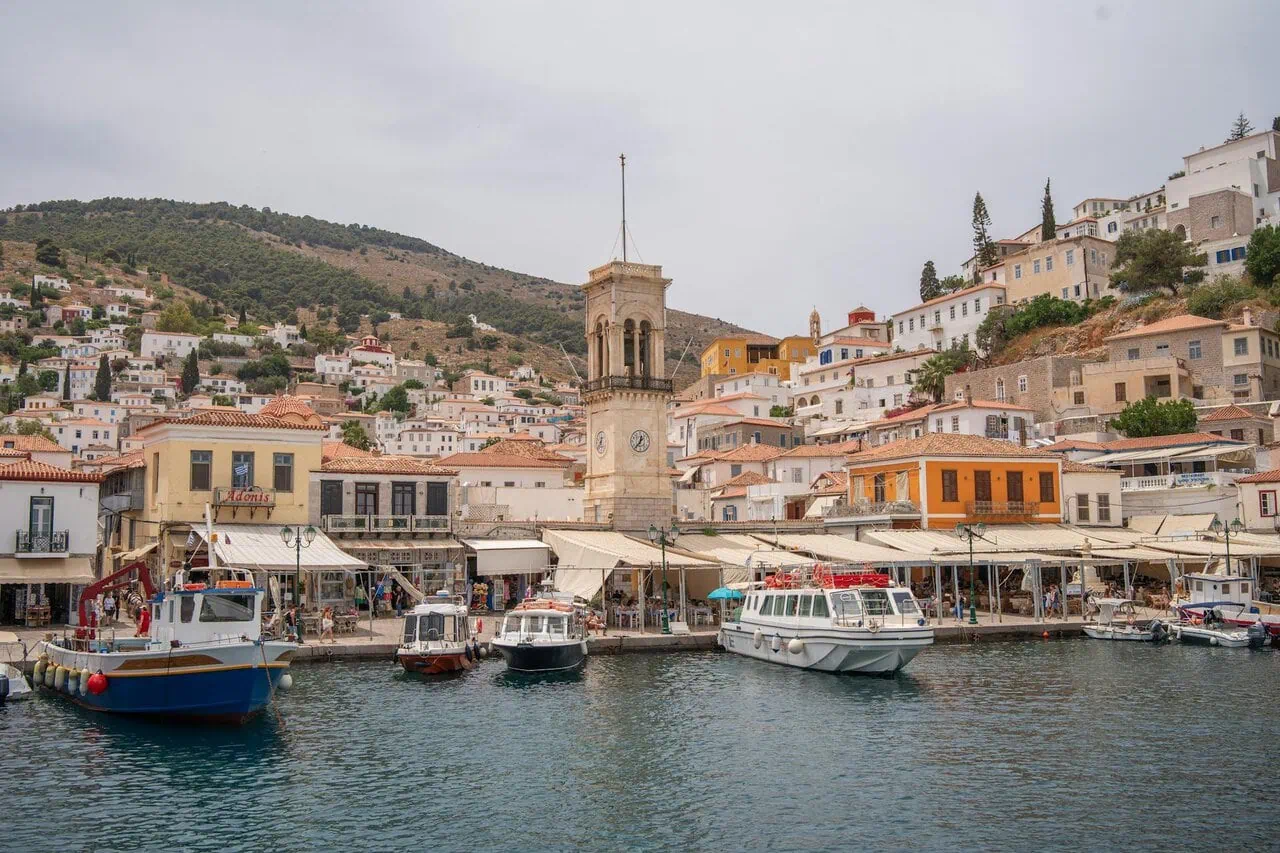
For something completely different, Hydra is unlike almost anywhere else in the country. The island’s famous car-free policy creates an atmosphere that’s wonderfully peaceful, with visitors exploring entirely on foot or by water taxi while donkeys continue to carry supplies through the narrow streets. The elegant harbour, beautifully preserved stone mansions and thriving art scene have attracted writers, artists and photographers for decades, giving Hydra a timeless quality that’s difficult to match elsewhere in Greece.
Poros offers a more relaxed pace while still providing plenty to see and do. Its attractive harbour, colourful hillside houses and laid-back waterfront cafés make it perfect for visitors who simply want to wander without following a strict sightseeing itinerary. The island is compact and easy to explore, with lovely beaches, scenic viewpoints and quiet streets that encourage you to slow down and enjoy the atmosphere.
If your priority is crystal-clear water, peaceful beaches and escaping the busiest crowds, Agistri is hard to beat. Covered in fragrant pine forests and surrounded by remarkably clear turquoise seas, it’s the most nature-focused island in the group. Visitors come here to swim, cycle, walk through woodland trails and enjoy long, lazy lunches overlooking the water rather than rushing between attractions.
Meanwhile, Spetses delivers a more elegant and sophisticated experience. Grand mansions, wide waterfront promenades, boutique hotels and an important role in the Greek War of Independence give the island a distinctive character. It’s larger than most of the other Saronic Islands and rewards visitors who enjoy combining history with stylish cafés, excellent restaurants and leisurely coastal walks.
The beauty of the Saronic Islands is that they don’t compete with one another—they complement each other. Whether you’re looking for your first Greek island adventure, a romantic harbour, a relaxing beach escape, fascinating history or an authentic slice of Greek island life, there’s an island that fits your interests perfectly. And thanks to the excellent ferry network from Athens, it’s even possible to combine several islands into a longer itinerary, allowing you to experience the very best the Saronic Gulf has to offer.
Aegina: Food, History and the Perfect First Island
Aegina is often considered the gateway to the Saronic Islands, and for good reason. Its close proximity to Athens, combined with its variety of attractions, makes it one of the most accessible and rewarding destinations in the region.
The island is best known for its food culture, particularly its pistachios, which are widely regarded as some of the finest in Greece. This focus on local produce gives Aegina a strong identity, and many visitors find that food becomes a central part of their experience, whether they are enjoying a meal by the harbour or sampling local products.
The main town, located at the port, is lively and welcoming, with cafés, restaurants, and small shops lining the waterfront. It is easy to explore on foot, and its energy provides a clear contrast to the quieter parts of the island.
Beyond the harbour, Aegina offers a fantastic mix of ancient history, traditional villages and beautiful beaches. The island’s most famous attraction is the Temple of Aphaia, one of the best-preserved ancient temples in Greece. Perched on a pine-covered hill around 13 kilometres east of Aegina Town, the temple rewards visitors with spectacular panoramic views across the Saronic Gulf and, on clear days, towards Athens and the Peloponnese.
Reaching the temple is straightforward without hiring a car. KTEL Aegina local buses depart regularly from the main bus station beside the ferry port in Aegina Town, with services heading towards Agia Marina stopping close to the temple entrance. The journey takes around 25 to 30 minutes, after which it’s a short uphill walk of around five minutes to the archaeological site. Bus tickets are inexpensive and can usually be purchased directly from the driver or at the station before departure.
If you have more time, continue on the same bus to Agia Marina, one of Aegina’s most popular beach resorts. Its long sandy beach, calm shallow water and waterfront tavernas make it an excellent place to spend the afternoon before returning to Aegina Town. Visitors looking for something quieter can also explore smaller beaches such as Marathonas, Souvala or Portes, each offering a more relaxed atmosphere away from the busiest tourist areas.
With reliable local buses connecting the ferry port, the Temple of Aphaia and several of the island’s best beaches, it’s perfectly possible to experience the highlights of Aegina during a day trip from Athens without needing to hire a car or scooter.
All buses depart from the main KTEL bus station in Aegina Town, located directly opposite the ferry ticket offices, making transfers from arriving ferries quick and straightforward. Services generally run throughout the day, with more frequent departures during the summer tourist season. Tickets can usually be purchased either at the bus station or directly from the driver, and while there is no official KTEL Aegina app, the network is easy to use thanks to its three simple routes.
| Route | Main Stops | Journey Time | Best For |
|---|---|---|---|
| Route 1 | Aegina Town → Kipseli → Vathi → Souvala → Agioi → Vagia | 30–35 mins | Northern villages, beaches and a quieter side of the island |
| Route 2 | Aegina Town → Agios Nektarios → Temple of Aphaia → Agia Marina | Around 40 mins | The Temple of Aphaia, Agios Nektarios Monastery and Agia Marina Beach |
| Route 3 | Aegina Town → Faros → Marathonas → Aeginitissa → Perdika | Around 25 mins | Beaches, Perdika fishing village and seafood restaurants |
What makes Aegina particularly appealing is its balance. It offers enough variety to keep visitors engaged, while remaining compact enough to explore without feeling rushed. This makes it an excellent choice for those looking to experience multiple aspects of Greek island life in a single destination.

Hydra: Car-Free Living and Timeless Architecture
Hydra is one of the most distinctive islands in Greece, known for its car-free environment and remarkably preserved architecture. Unlike almost anywhere else in the country, there are no cars or scooters on Hydra. Movement is entirely on foot, by boat, or by traditional means such as donkeys, which immediately creates a slower and more peaceful atmosphere.
The island’s main town is built around a natural amphitheatre-shaped harbour, with elegant stone mansions rising up the hillside. Many of these buildings date back to the 18th and 19th centuries, reflecting Hydra’s historical importance as a maritime power. Walking through the narrow streets, you quickly notice how well the island has preserved its character, with very little modern development interrupting the landscape.
Hydra is not a typical beach destination. While there are swimming spots and rocky coves, the focus here is more on atmosphere, culture, and exploration. Visitors spend their time wandering through the town, discovering small galleries, cafés, and quiet viewpoints overlooking the sea.
The island has long attracted artists, writers, and travellers seeking inspiration, and that creative influence is still present today. There is a strong sense that Hydra offers something more than just a day at the beach, making it particularly appealing to those looking for a unique and memorable experience.
Hydra works best for travellers who appreciate history, aesthetics, and a slower pace, rather than those seeking busy beaches or nightlife.
Poros: Harbour Views and Relaxed Island Life
Poros offers one of the most visually appealing settings in the Saronic Gulf, with a harbour that is often considered among the most beautiful in the region. The town is built along the waterfront and climbs gently up the hillside, creating a layered view of colourful buildings, narrow streets, and sea-facing cafés.
What makes Poros stand out is its balance between activity and calm. The harbour area is lively enough to feel engaging, with restaurants and small shops, but it never becomes overwhelming. This creates a comfortable environment where you can explore at your own pace without feeling rushed.
The island itself is relatively small and easy to navigate, making it ideal for casual exploration. You can walk through the town, visit nearby beaches, or take short trips to quieter areas without needing complex transport arrangements. This simplicity is part of what makes Poros so appealing.
Poros also has a strong sense of natural beauty, with pine-covered hills and clear water surrounding the island. The combination of greenery and sea views gives it a softer, more relaxed feel compared to some of the more dramatic Greek islands.
For many travellers, Poros represents a classic Greek island experience, offering just enough variety to stay interesting while maintaining a calm and welcoming atmosphere. It is particularly well suited to those who want a scenic and easygoing destination that does not require extensive planning.
Agistri: Quiet Nature, Crystal Clear Water and Relaxed Island Life
Agistri is the smallest and quietest of the three islands visited on the popular Athens day cruises, offering a peaceful escape surrounded by pine forests and some of the clearest water in the Saronic Gulf. While neighbouring Aegina is known for its historic attractions and Poros for its lively waterfront, Agistri is all about relaxing by the sea and enjoying its natural beauty.
Most day cruises arrive at Skala, the island’s main tourist village. The ferry docks just a short walk from the beach, so within a couple of minutes of stepping ashore you’ll find a sandy shoreline with shallow, crystal-clear water, waterfront cafés, traditional tavernas and a handful of small shops. Skala is compact enough to explore on foot and is an ideal place to enjoy a swim, browse the seafront or stop for lunch before continuing your visit.
If you have more time, it’s well worth making the short journey to Megalochori (also known as Mylos), the island’s traditional harbour village around 2.5 kilometres away. The walk between Skala and Megalochori takes around 30 minutes along a quiet coastal road with sea views, while local buses, taxis and bicycle hire are also available. Megalochori has a much quieter atmosphere than Skala, with colourful fishing boats, whitewashed houses, a picturesque harbour and several excellent waterfront tavernas serving fresh seafood and traditional Greek dishes.
Beyond Megalochori lies Aponisos, widely regarded as Agistri’s most beautiful swimming spot. This small peninsula is famous for its turquoise water, rocky coves and pine trees stretching almost to the shoreline, making it one of the best places in the Saronic Islands for swimming and snorkelling. Visitors looking for an even quieter experience can also walk to Chalikiada Beach, a secluded pebble beach reached via a forest path.
Agistri is best suited to travellers looking for a relaxing day rather than a busy sightseeing itinerary. Whether you spend your visit swimming at Skala, enjoying lunch in Megalochori or discovering the island’s hidden coves, it offers one of the most peaceful island experiences within easy reach of Athens.
Compare routes and fares for your journey to Saronic Islands.
Compare flightsBrowse Airalo eSIM options for convenient travel data.
Check eSIMsCheck private pickup options and plan your onward journey before arrival.
View transfersSpetses: Elegant Atmosphere and Island History
Spetses offers a more refined and spacious experience compared to the other Saronic Islands, combining historical significance with a polished, elegant atmosphere. While it is further from Athens than the other islands, it rewards visitors with a sense of scale and character that feels distinctly different.
The island played an important role in the Greek War of Independence, and this history is still visible in its architecture and landmarks. The main town features neoclassical buildings, wide promenades, and well-maintained public spaces, giving it a more structured and sophisticated feel.
Like Hydra, Spetses has restrictions on vehicles in its main areas, which contributes to a more peaceful and walkable environment. However, the island is larger and more spread out, offering a greater sense of space and a wider range of places to explore.
Visitors to Spetses often spend their time walking along the coastal promenade, visiting historical sites, or enjoying the island’s cafés and restaurants. There are also beaches and quieter areas further from the main town, providing a mix of activity and relaxation.
Spetses tends to attract travellers who are looking for something a little more upscale and refined, while still maintaining the character of a traditional Greek island. It is best suited to those who are happy to travel slightly further in exchange for a more spacious and elegant destination.
Ferry Connections Between the Saronic Islands
| From / To | Athens | Aegina | Agistri | Poros | Hydra | Spetses |
|---|---|---|---|---|---|---|
| Athens (Piraeus) | — | 40–70 min | 55–90 min | 60–80 min | 90–120 min | 2–3 hrs |
| Aegina | 40–70 min | — | 10–20 min | 45–70 min* | 75–100 min* | 105–140 min* |
| Agistri | 55–90 min | 10–20 min | — | 50–75 min* | 80–105 min* | 120–140 min* |
| Poros | 60–80 min | 45–70 min* | 50–75 min* | — | 30–40 min | 60–80 min |
| Hydra | 90–120 min | 75–100 min* | 80–105 min* | 30–40 min | — | 30–40 min |
| Spetses | 2–3 hrs | 105–140 min* | 120–140 min* | 60–80 min | 30–40 min | — |
* Seasonal services only. Some direct sailings operate mainly during the tourist season, while at quieter times you may need to change ferries at Piraeus or travel on a service that calls at multiple islands.
Island Hopping Around the Saronic Islands
One of the biggest advantages of visiting the Saronic Islands is that you don’t have to return to Athens after every excursion. Unlike many of Greece’s more remote island groups, the Saronic Islands are connected by a network of ferry services that continue from one island to the next, making it easy to build your own island-hopping adventure. Whether you’re planning a long weekend or have several days to explore, travelling between the islands is often just as simple as travelling from Athens itself.
The shortest and easiest island hop is between Aegina and Agistri, with ferries taking as little as 10 to 20 minutes. This makes them an excellent combination for visitors who want to experience both a lively harbour town and a quieter island known for its beaches and crystal-clear water. Many travellers spend the morning exploring Aegina Town or visiting the magnificent Temple of Aphaia, before continuing to Agistri for an afternoon of swimming, cycling or relaxing beside the sea.
Further south, Poros, Hydra and Spetses form another natural island-hopping route. Ferries between Poros and Hydra usually take around 30 to 40 minutes, while continuing from Hydra to Spetses takes a similar amount of time. This allows visitors to experience three islands with completely different personalities. Poros offers a relaxed harbour and leafy hillsides, Hydra is famous for its elegant car-free streets and beautiful stone mansions, while Spetses combines grand architecture with a rich maritime history and a sophisticated atmosphere.
Although it’s technically possible to visit several islands in a single day, we’d recommend taking a more relaxed approach. Spending one full day on each island gives you enough time to wander beyond the harbour, enjoy a long lunch by the waterfront, visit the main attractions and experience the slower pace of island life that makes the Saronic Gulf so appealing. Rushing through three or four islands simply to tick them off a list often means missing what makes each destination special.
If you’re staying in Athens for a week, you could easily dedicate two or three days to exploring different islands without ever repeating the same experience. Equally, if you’re planning a longer holiday in Greece, consider spending a night or two on one of the islands before continuing to the next. Watching the day-trippers leave and experiencing the harbours during the peaceful evening hours reveals a completely different side of the Saronic Islands.
Before travelling, it’s always worth checking ferry timetables, particularly outside the main tourist season. While the principal routes operate throughout the year, some direct island-to-island services are seasonal, and certain sailings only operate on selected days of the week. Booking ahead during the busy summer months is also recommended, especially if you’re planning to travel at weekends or on public holidays, when ferries can fill up quickly.
Whether you choose a simple Aegina and Agistri adventure or a longer journey through Poros, Hydra and Spetses, island hopping is one of the most rewarding ways to experience the Saronic Gulf. Rather than seeing just one destination, you’ll discover how each island has developed its own traditions, landscapes and atmosphere, making every ferry crossing feel like the start of a completely new adventure.
Ferry Routes and Travel Times in the Saronic Gulf
The ferry network in the Saronic Gulf is designed for short-distance travel, making it one of the most convenient regions in Greece for both day trips and short multi-island itineraries.
Travel times are generally short, and services are frequent, particularly during the summer months. The table below highlights the most important routes within the region.
| Route | Typical Travel Time | Ferry Type | Frequency (Summer) |
|---|---|---|---|
| Athens → Aegina | 40m – 1h 15m | High-speed & Conventional | Very frequent |
| Athens → Agistri | 55m – 1h 30m | High-speed | Frequent |
| Athens → Poros | 1h – 2h | Mixed | Frequent |
| Athens → Hydra | 1h 30m – 2h | High-speed | Frequent |
| Athens → Spetses | 2h – 3h | High-speed | Moderate |
| Aegina → Agistri | 10m – 20m | Local ferry | Frequent |
| Poros → Hydra | 30m – 1h | High-speed | Moderate |
| Hydra → Spetses | 30m – 1h | High-speed | Moderate |
These routes make it possible to build a short Saronic island-hopping itinerary, combining two or three islands within a few days. For most travellers, however, the simplicity of travelling directly from Athens to a single island remains the most popular option.
Best Ways to Explore the Saronic Islands
There are several ways to experience the Saronic Islands, depending on how much time you have and what kind of trip you are planning.
The simplest option is to focus on a single island, using it as a base for relaxation and exploration. This works particularly well for destinations such as Aegina or Poros, where there is enough variety to fill a day or more without needing to travel further.
For those with more time, a two-island combination can provide a broader experience. Pairing islands with different characteristics, such as Aegina and Agistri or Poros and Hydra, allows you to experience both lively and quieter environments within the same trip.
Travellers looking for a more complete experience can consider a short island-hopping itinerary, moving between two or three islands over several days. The short distances between destinations make this both practical and enjoyable.
The best approach is to keep your itinerary balanced and flexible, focusing on quality experiences rather than trying to visit too many places in a limited time.
When to Visit the Saronic Islands
The Saronic Islands can be visited throughout much of the year, but the experience varies depending on the season.
The summer months offer the most reliable weather, with warm temperatures and frequent ferry services. This is the busiest period, particularly in July and August, when both international and local travellers visit the islands.
The shoulder seasons, particularly spring and early autumn, are often considered the best time to visit. During these months, the weather remains pleasant, but the islands are quieter, creating a more relaxed atmosphere.
One of the advantages of the Saronic Islands is that they are less affected by the strong winds that can impact other parts of Greece. This makes ferry travel more predictable and comfortable, particularly compared to the Cyclades.
Choosing the right time to visit depends on whether you prefer lively energy or a quieter, more relaxed experience.
Compare hostels and budget-friendly accommodation around Saronic Islands.
Browse hostelsGet help with compensation, eligible lounge access and disruption support.
Explore AirHelp+Leave your luggage somewhere convenient and enjoy Saronic Islands hands-free.
View storageWho the Saronic Islands Are Best For
The Saronic Islands are particularly well suited to travellers who want to experience Greek island life without long travel times or complex planning.
They are ideal for those staying in Athens who want to explore beyond the city, offering a quick and accessible escape that feels very different from the mainland. The short ferry journeys make them especially appealing for first-time visitors and short-stay travellers.
The islands also suit those who prefer a more relaxed and authentic atmosphere, as many destinations in the region retain a stronger connection to local life compared to more heavily visited areas.
For travellers interested in culture, history, and scenery, the Saronic Islands provide a balanced experience, combining traditional towns, natural landscapes, and historical landmarks.
Overall, they are best suited to those looking for a flexible, accessible, and less crowded introduction to the Greek islands.

Rupert’s Handy Travel Tips
Exploring the Saronic Islands? Rupert has a few practical tips to help you get the most out of your trip.
- Keep your itinerary simple and focus on one or two islands rather than rushing.
- Use the short ferry routes to your advantage and plan efficient connections.
- Visit during shoulder season for a more relaxed and authentic experience.
- Choose islands based on your travel style, not just proximity.
- Take time to enjoy the slower pace — that’s where the real charm lies.
Want to meet the reindeer behind our travel tips? Find out more in our page Who is Rupert?.


Frequently Asked Questions About the Saronic Islands
What are the Saronic Islands?
They are a group of islands located in the Saronic Gulf near Athens, including Aegina, Hydra, Poros, Agistri, and Spetses.
Which Saronic Island is best to visit?
It depends on your preference. Aegina is the easiest, while Hydra is the most unique.
Can you visit multiple Saronic Islands in one trip?
Yes, the short distances make it possible to visit two or more islands over a few days.
How long are ferry journeys in the Saronic Gulf?
Most journeys range from 40 minutes to 2 hours, making travel quick and convenient.
Are the Saronic Islands worth visiting?
Yes, they offer a more relaxed and accessible alternative to other Greek island groups.
Plan Your Trip: Further Reading & Related Guides
Once you understand the Saronic Islands, the next step is to explore specific routes such as Athens to Aegina, Athens to Hydra, or Athens to Poros, which provide detailed guidance on ferry options and what to expect.
For shorter trips, the Athens island day trips guide helps you choose the best destination based on your time and travel style. If you are planning a wider journey, the Athens ferry routes and Piraeus port guide explains how to connect to islands across Greece.
By combining these guides, you can build a complete and flexible itinerary, whether you are visiting for a single day or exploring the region in more depth.











