
Reviewed by our editorial team Updated
Why Milos Is One of the Most Unique Greek Islands to Visit
Milos stands apart from almost every other island in the Cyclades thanks to its dramatic landscapes, unusual beaches, and volcanic origins. While many Greek islands are known for whitewashed towns and predictable coastlines, Milos offers something far more distinctive, where the scenery itself becomes the main attraction.
The island’s volcanic past has created a coastline filled with rock formations, sea caves, and beaches in a wide range of colours and textures. From smooth white rock formations to hidden coves and turquoise water, Milos feels visually different from the moment you arrive. This natural variety gives the island a strong identity and makes exploring it a constantly changing experience.
Milos is also less focused on large-scale tourism than some of its neighbours. While it has become increasingly popular, it still retains a sense of space and discovery, particularly if you explore beyond the main towns. This makes it especially appealing to travellers who are looking for something more unique and less predictable.
At the same time, Milos offers traditional villages, good food, and a relaxed pace, ensuring that it still delivers the core elements of a Greek island trip. It is this combination of natural beauty and laid-back atmosphere that makes Milos one of the most memorable destinations in Greece.
Exploring Milos: Key Areas, Villages and Coastal Regions
Understanding the layout of Milos helps you get the most out of your visit, as the island is made up of several distinct areas, each offering a different experience.
Adamas is the main port and the most practical base for visitors. It is where most ferries arrive, and it offers a range of accommodation, restaurants, and transport options. The town has a relaxed waterfront atmosphere and serves as the island’s central hub.
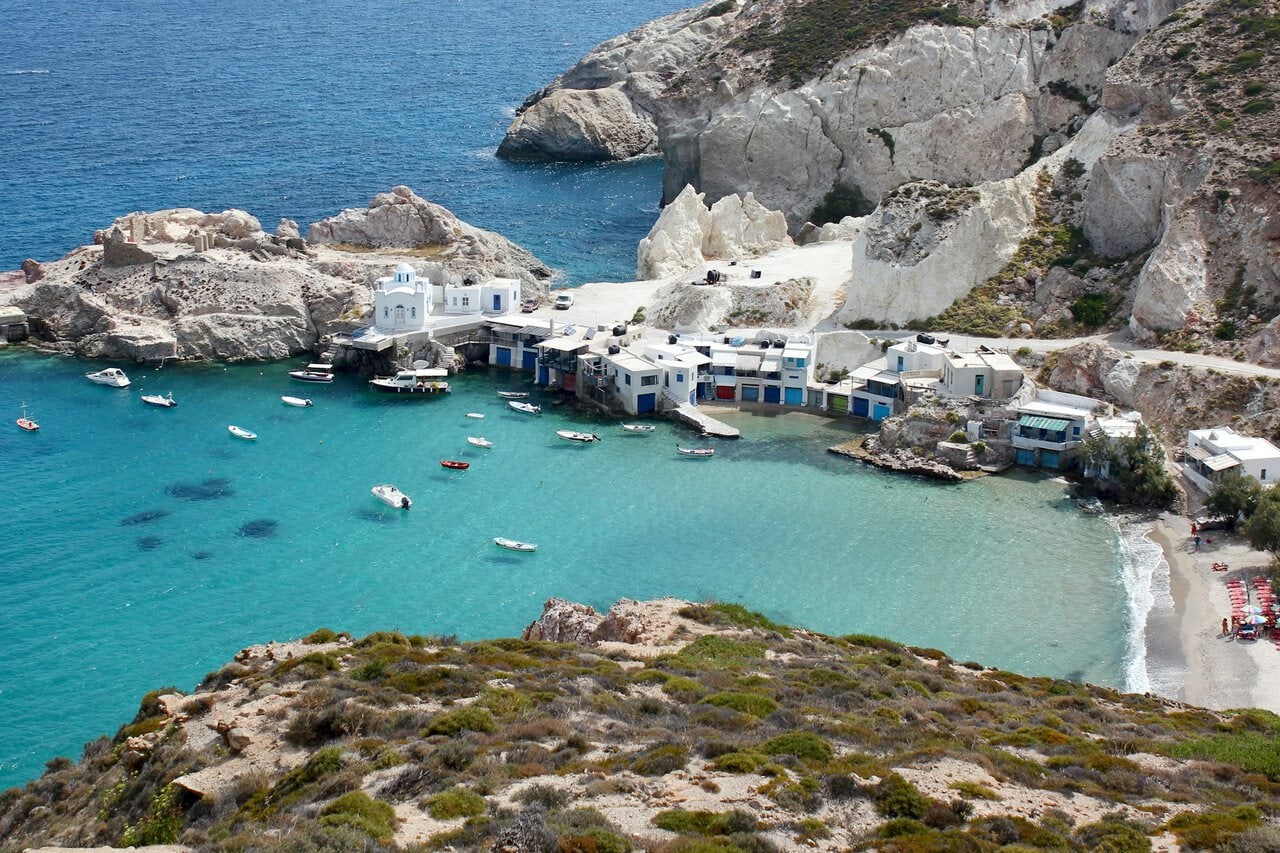
Klima is one of the most iconic villages on Milos, known for its colourful boat houses built directly along the water. This small settlement is highly photogenic and provides a glimpse into the island’s traditional fishing culture.
Sarakiniko is not a town but one of the island’s most famous natural areas. Its smooth white rock formations and unusual landscape create a setting that feels almost otherworldly, making it one of the most recognisable locations in the Cyclades.
Other coastal areas and beaches are spread across the island, often separated by distance and terrain. This makes Milos feel more exploratory and varied, as each part of the coastline offers something different.
Together, these locations create a destination that is less centralised and more discovery-driven, encouraging visitors to explore rather than stay in one place.
Compare hotels and other places to stay for your trip.
Check availabilityBrowse apartments, homes and self-catering accommodation.
Browse rentalsCompare hotel prices across multiple booking sites.
Compare ratesMilos at a Glance: Essential Travel Facts
| Key Detail | Information |
|---|---|
| Location | Cyclades, Greece |
| Main Town / Port | Adamas |
| Famous Village | Klima |
| Airport | Milos National Airport (MLO) |
| Currency | Euro (€) |
| Language | Greek (English widely spoken) |
| Best Time to Visit | May to October |
| Ferry Access | Direct from Athens and Cyclades islands |
| Known For | Unique beaches, caves, volcanic landscape |
| Driving Side | Right |
These basics highlight what makes Milos different, particularly its focus on landscape and exploration rather than a single central town.
The Volcanic History of Milos and Its Impact on the Island
The defining feature of Milos is its volcanic history, which has shaped almost every aspect of the island’s landscape and identity. Unlike many other Cycladic islands, Milos is not defined by uniform terrain, but by a complex and varied coastline formed through volcanic activity.
This geological history has created some of the most unusual beaches in Greece, with rock formations, caves, and mineral-rich landscapes that vary dramatically from one location to another. The island’s natural features are not only visually striking but also scientifically significant, attracting interest from geologists as well as travellers.
Milos is also historically important as the discovery site of the Venus de Milo, one of the most famous ancient sculptures in the world. This connection adds a cultural layer to the island’s geological identity.
Today, the influence of this history is visible everywhere, from the shape of the coastline to the colours of the rock and sand. Exploring Milos means experiencing a landscape that feels dynamic and constantly changing, rather than static.
Understanding this background helps explain why Milos feels so different from other islands and why it offers such a distinctive travel experience.
Getting Around Milos: Transport and Accessibility
Getting around Milos requires a bit more planning than on some other islands, as its attractions are spread out and not all areas are easily accessible by public transport.
The island does have a bus network, which connects Adamas with key beaches and villages. This is a practical option for visitors who prefer not to drive, but it does limit flexibility, particularly when trying to visit multiple locations in one day.
Taxis are available but limited, especially during peak season. As a result, they are best used for shorter journeys or specific transfers rather than general exploration.
Most visitors choose to rent a car, ATV, or scooter, as this provides the freedom to explore the island’s more remote beaches and hidden areas. This is particularly important on Milos, where many of the most interesting locations are not easily reached by bus.
Road conditions are generally manageable, although some routes can be unpaved or uneven, especially when leading to more isolated beaches. Driving carefully and allowing extra time ensures a smoother experience.
Overall, transport on Milos is about flexibility and exploration, rather than convenience alone, making it ideal for travellers who enjoy discovering places at their own pace.

Arriving in Milos: Flights, Ferries and First Impressions
Reaching Milos is part of the experience, and your arrival often sets the tone for the island’s more rugged and exploratory feel. Most travellers arrive either by ferry from Athens or nearby Cycladic islands, or by a short domestic flight.
Ferries from Piraeus Port in Athens are the most popular option, with both high-speed and conventional vessels operating throughout the season. Travel times vary depending on the service, but arriving by sea is particularly memorable. As the ferry approaches Adamas port, you begin to see the island’s distinctive coastline and natural formations, offering a clear introduction to its volcanic character.
Flights from Athens to Milos National Airport take around 40 minutes and provide a faster alternative. However, flight schedules can be limited, particularly outside peak season, and the airport itself is small.
Unlike more uniform Cycladic destinations, Milos does not present a single, polished first impression. Instead, it feels natural, slightly rugged, and full of potential for exploration, which becomes part of its appeal.
Airport Transfers and Getting to Adamas
Milos National Airport is located a short distance from Adamas, the island’s main port and accommodation hub. The journey typically takes around 10 to 15 minutes, making transfers relatively quick and straightforward.
Taxis are usually available outside the airport, but numbers are limited, especially during peak periods when multiple arrivals occur close together. Waiting times can increase during busy times of day.
Many hotels offer pre-arranged transfers, which can be one of the easiest options, particularly if you are arriving with luggage or later in the day. These services provide a smoother and more predictable arrival experience.
Public transport from the airport is limited, so most visitors rely on taxis or private transfers. If you arrive by ferry instead, you will find that Adamas port is centrally located, with many hotels, restaurants, and services within walking distance.
This combination of short distances and a central arrival point makes getting started on Milos relatively easy, even if the island itself requires more planning to explore fully.
Local Public Transport on Milos
The bus network on Milos connects Adamas with several of the island’s key beaches and villages, providing a useful option for travellers who do not wish to drive.
Routes typically link Adamas with locations such as Sarakiniko, Pollonia, and other popular coastal areas, allowing you to reach some of the island’s main highlights. During the summer months, services become more frequent, reflecting the increase in visitor numbers.
However, public transport on Milos is more limited compared to some other islands. Not all beaches or remote locations are accessible by bus, and schedules may require planning in advance to avoid long waits.
For visitors who are focusing on a smaller number of locations, buses can provide a cost-effective and practical solution. For those who want to explore more extensively, additional transport options are usually needed.
Search routes and flight options for your journey.
Search flightsChoose an Airalo eSIM and arrange mobile data before you arrive.
Browse eSIMsCheck private airport pickup options and plan the first part of your journey in advance.
View transfersTaxis, Transfers and Getting Around Efficiently
Taxis on Milos are available but limited in number, particularly during peak travel periods. They are best used for short journeys, airport transfers, or specific trips rather than as a primary method of exploring the island.
Taxi services are typically centred around Adamas, where you can find vehicles near the port and main areas. Booking in advance is advisable if you need transport at a particular time, especially during busy seasons.
Private transfers offer a more reliable alternative, particularly for airport arrivals or travel between accommodation and key locations. These can often be arranged through hotels or local providers.
Within Adamas itself, walking is usually sufficient, as the town is compact and easy to navigate. For reaching beaches and more remote areas, taxis can be useful but are not always the most practical option for repeated travel.
Overall, taxis work best as a supporting transport option, complementing buses or car rental rather than replacing them.
Driving, Parking and Car Rental on Milos
Renting a vehicle is the most effective way to explore Milos, as many of the island’s most interesting locations are spread out and not easily accessible by public transport.
Car rental services are widely available in Adamas and at the airport, offering a range of vehicles to suit different needs. Booking in advance is strongly recommended during the summer months, when demand is highest.
Driving allows you to reach remote beaches, coastal viewpoints, and less-visited areas, giving you a much more complete experience of the island. It also allows you to move between locations at your own pace, without being restricted by bus schedules.
Parking is generally straightforward outside of the busiest areas, with space available near beaches and smaller villages. In Adamas, it may take a little more time to find a spot, particularly during peak periods.
Some roads on Milos are unpaved or uneven, especially when leading to more secluded beaches. Driving carefully and choosing an appropriate vehicle ensures a smoother and safer experience.
For travellers who want to fully experience the island’s variety and natural beauty, renting a car is one of the most important decisions you can make.
Exploring Milos on Foot: Harbours, Villages and Coastal Walks
Walking on Milos is most rewarding in and around its main settlements, where the island’s character is concentrated in harbours, narrow streets, and coastal paths. While the island as a whole is too spread out to explore entirely on foot, walking plays an important role in experiencing its atmosphere.
In Adamas, the port town, walking allows you to move easily between the waterfront, cafés, shops, and local services. The area is compact and relaxed, making it a good place to settle in and get a feel for the island.
Villages such as Klima offer a completely different walking experience. Here, the focus is on the colourful boat houses lining the water, with short paths that provide access to scenic viewpoints and quiet corners. The setting is simple but visually striking, making it one of the most memorable places to explore on foot.
Other parts of the island, particularly along the coast, include short walking routes and paths leading to beaches or viewpoints. These walks are often informal rather than structured, but they allow you to discover areas that are not immediately visible from the road.
Walking on Milos is less about covering distance and more about immersing yourself in specific locations, where the details of the landscape and architecture become most apparent.
Ferries, Boat Tours and Coastal Exploration
Milos is well connected within the Cyclades, but it is also one of the best islands for exploring by sea, thanks to its dramatic coastline and hidden coves.
Ferries operate regularly between Milos and other islands such as Paros, Naxos, Santorini, and Mykonos, making it a convenient stop on a wider island-hopping itinerary. The main departure point is Adamas port, which is centrally located and easy to access.
What truly sets Milos apart, however, is its boat tours and coastal excursions. Many of the island’s most impressive features, including sea caves, rock formations, and remote beaches, are only fully accessible by boat. These trips often circle the island, stopping at multiple locations for swimming and exploration.
The coastline includes areas that cannot be reached by road, making boat travel an essential part of experiencing the island fully. The perspective from the sea also highlights the scale and variation of the landscape in a way that is not possible from land.
For many visitors, a boat tour becomes one of the defining experiences of their trip, offering access to parts of Milos that feel remote, natural, and completely different from the main towns.
| Route | Typical Duration | Frequency (High Season) | Main Operators | Notes |
|---|---|---|---|---|
| Athens (Piraeus) → Milos | 2.5–7 hours | 2–5 daily | Seajets, Minoan Lines, Aegean Sea Lines | High-speed ferries are fastest, conventional ferries cheaper |
| Santorini → Milos | 2–5 hours | 1–3 daily | Seajets, Zante Ferries | Popular Cyclades island hop |
| Mykonos → Milos | 3–5 hours | 1–2 daily | Seajets | Usually direct in summer |
| Paros → Milos | 2–4 hours | 1–3 daily | Seajets | Easy connection via central Cyclades |
| Naxos → Milos | 3–5 hours | 1–2 daily | Seajets | Sometimes indirect via Paros |
| Crete (Heraklion) → Milos | 2–4 hours | 1–2 daily | Seajets, Minoan Lines | Strong summer connection |
| Sifnos → Milos | 40 min–1.5 hours | 3–6 daily | Seajets, Zante Ferries | Very frequent, short hop |
| Serifos → Milos | 1–2 hours | 2–4 daily | Seajets, Aegean Sea Lines | Easy Saronic/Cyclades crossover |
| Kimolos → Milos | 20–30 mins | Multiple daily | Local ferries | Very short local route |
| Folegandros → Milos | 1–2 hours | 1–3 daily | Seajets | Common island-hopping route |
Tourist Transport and Local Shuttle Options
Milos has a limited but useful selection of tourist transport options, designed to help visitors reach key locations without needing to organise everything independently.
Organised tours operate across the island, often focusing on beaches, geological features, and scenic viewpoints. These tours provide a structured way to explore multiple locations in a single day, which can be particularly helpful given the island’s spread-out layout.
Some shuttle-style services connect popular beaches and main areas, offering a simpler alternative to driving. While these are not as extensive as public transport networks on larger islands, they can still provide added convenience.
These options are particularly useful for travellers who prefer a guided experience or do not want to drive, allowing them to access some of the island’s highlights without needing detailed planning.
Most visitors will still rely on a combination of car rental and occasional public transport, but these additional services help make Milos more accessible to a wider range of travellers.
Top Things to Do in Milos: Beaches, Caves and Natural Landscapes
The main appeal of Milos lies in its natural features, which are among the most distinctive in Greece. Rather than focusing on a single landmark, the island offers a collection of experiences that are best explored over several days.
Beaches are the primary attraction, but they vary significantly in style. Some are defined by smooth white rock formations, while others offer sandy stretches or hidden coves. This diversity means that each beach feels different, encouraging exploration.
Sarakiniko is one of the most famous locations, known for its unusual landscape that resembles a sculpted, almost lunar surface. It is one of the most photographed areas on the island and provides a completely different experience from traditional beaches.
Sea caves and coastal formations are another highlight, particularly when viewed from the water. Exploring these areas adds an element of discovery, as many are not visible from land.
Villages such as Klima contribute to the experience, offering a contrast between natural landscapes and traditional island life.
Milos is best experienced by combining these elements, moving between beaches, villages, and coastal areas to build a varied and visually rich itinerary.
Compare hostels and budget-friendly places to stay.
Browse hostelsGet help with compensation, eligible lounge access and disruption support.
Explore AirHelp+Use convenient luggage storage between arrival, check-in and departure.
Check storageBest Beaches in Milos
Milos is widely regarded as one of the most unique beach destinations in Greece, thanks to its volcanic landscape. Instead of long sandy stretches, you’ll find dramatic white rock formations, hidden caves, turquoise water, and beaches that feel completely different from one another. Exploring them is one of the highlights of any Milos travel itinerary.
Sarakiniko Beach is the island’s most famous and instantly recognisable spot. The landscape looks almost lunar, with smooth white rock formations sculpted by wind and sea. There is little natural shade, but the setting is unforgettable, and it’s one of the best places on the island for swimming and cliff jumping.
Kleftiko is not a traditional beach you can simply walk onto, but it is one of the most spectacular coastal areas in Greece. Accessible mainly by boat, this former pirate hideout is filled with sea caves, arches, and crystal-clear water. A boat tour here is one of the must-do experiences in Milos and often the highlight of a visit.
Firiplaka Beach offers a more classic beach day, but with a Milos twist. The long stretch of sand is backed by colourful cliffs in shades of red, yellow, and white. The water is calm and shallow, making it ideal for swimming, and parts of the beach are organised with sunbeds and umbrellas.
Tsigrado Beach is one of the island’s hidden gems, reached via a short but slightly adventurous descent using ropes and ladders. Once you reach it, you’ll find a small, sheltered cove with soft sand and clear water. It feels more secluded than many other beaches, especially early in the day.
Papafragas Beach is a narrow inlet surrounded by high cliffs, creating a natural swimming channel that feels almost like a secret lagoon. It’s not the easiest place to access, but the dramatic scenery makes it worth the effort.
Provatas Beach is one of the best options for a relaxed, easy beach day. The sand is soft, the water is shallow, and there are plenty of organised facilities nearby. It’s particularly popular with families and those looking for a quieter, less rugged experience.
Agios Dimitrios Beach sits on the north coast and is often overlooked, which means fewer crowds. The water here is exceptionally clear, and on calm days it’s perfect for swimming and snorkelling.
Historic Landmarks and Cultural Highlights of Milos
Although Milos is primarily known for its landscapes, it also has a cultural and historical side that adds depth to the experience.
The island’s most famous historical connection is the discovery of the Venus de Milo, an ancient sculpture that is now housed in the Louvre Museum. This link highlights the island’s importance in the ancient world, even if the original artefact is no longer present.
Across the island, you will find archaeological sites, small museums, and traditional settlements, each contributing to the broader story of Milos. These locations are often understated, but they provide valuable context for understanding the island’s past.
Churches and historic buildings are also present in villages and towns, reflecting the island’s long-standing traditions and cultural continuity.
While these landmarks may not dominate the experience in the same way as the natural features, they provide an important layer of meaning, showing how Milos has evolved over time.
Exploring these sites alongside the island’s landscapes creates a more complete and balanced understanding of what Milos has to offer.
Hidden Gems and Remote Corners of Milos
One of the most rewarding aspects of visiting Milos is discovering the places that are not immediately obvious. While well-known spots like Sarakiniko attract attention, the island’s real appeal often lies in its quieter, less accessible locations.
Many of these hidden areas are found along the coastline, where small coves, secluded beaches, and unusual rock formations can only be reached by following lesser-used roads or short walking paths. These locations often feel more natural and less developed, offering a sense of space that is increasingly rare on more popular islands.
Inland, Milos also has areas that are often overlooked. Small settlements and viewpoints provide a different perspective on the island, away from the coast and its more dramatic scenery. These locations reveal a simpler, more traditional side of life, where the focus is on daily routines rather than tourism.
Exploring these hidden corners requires a willingness to move beyond the main routes, but it is this sense of discovery that defines the Milos experience. The island rewards curiosity, offering moments that feel personal, quiet, and completely removed from the busier parts of Greece.

Indoor Activities and Things to Do in Changing Weather
Although Milos is primarily an outdoor destination, there are still ways to enjoy the island when conditions are less ideal. While rainy days are uncommon during the main season, having alternatives helps ensure your trip remains flexible.
Museums and cultural spaces offer insight into the island’s history, geology, and maritime heritage. These smaller venues are easy to visit and provide a useful contrast to the outdoor-focused activities.
Local cafés and restaurants also play an important role during quieter periods. Spending time in these spaces allows you to experience the island’s food culture and relaxed pace, even when you are not exploring beaches or coastal areas.
In Adamas and other towns, shops and small indoor spaces provide additional options for passing time comfortably. These environments may not be the main focus of a trip to Milos, but they ensure that your visit remains enjoyable regardless of the weather.
Shopping in Milos: Local Crafts and Island Style
Shopping on Milos is relatively low-key, reflecting the island’s more relaxed and natural character. Rather than large retail areas, you will find small shops, local boutiques, and artisan products concentrated in towns such as Adamas.
Many shops focus on items that reflect the island’s identity, including handmade goods, local products, and simple souvenirs. The emphasis is on authenticity rather than scale, giving the experience a more personal feel.
In addition to traditional items, there are also a number of boutique stores offering clothing and accessories, often inspired by the island’s colours and landscapes. These shops provide a more modern element while still maintaining a connection to the local environment.
Shopping on Milos is not about variety or volume, but about finding items that feel connected to the place itself. It is an experience that complements the island’s overall atmosphere, rather than dominating it.
Suggested Itinerary for Exploring Milos
Planning your time on Milos is best approached with flexibility, allowing you to combine exploration with moments of relaxation. The island’s layout encourages movement between different areas, making it possible to experience a wide range of locations over a few days.
On your first day, focus on Adamas and nearby areas, allowing time to settle in and explore the harbour, local shops, and surrounding coastline. This provides a gentle introduction to the island.
A second day can be dedicated to Sarakiniko and other nearby beaches, where you can experience the island’s most distinctive landscapes. Taking your time at each location helps you appreciate the differences between them.
Another day should be reserved for a boat tour around the island, which is one of the best ways to see Milos fully. This allows access to sea caves, hidden beaches, and coastal formations that are not reachable by land.
If you have additional time, exploring villages such as Klima and more remote coastal areas adds further depth to your visit.
This approach ensures that you experience both the land-based and sea-based highlights, creating a balanced and memorable trip.

Festivals, Seasonal Highlights and the Best Time to Visit Milos
The experience of visiting Milos varies depending on the time of year, with each season offering a slightly different atmosphere.
The summer months provide the best conditions for exploring the island’s beaches and coastline. Warm temperatures and calm seas make it ideal for swimming and boat trips, which are central to the Milos experience.
During this period, the island is at its busiest, particularly in July and August. While this brings energy and activity, it also means that popular locations can become crowded.
The shoulder seasons of May, June, and September are often considered the best times to visit. The weather remains warm, but the island is quieter, allowing for a more relaxed and enjoyable experience.
Milos is less about large festivals and more about seasonal conditions, with the focus on making the most of the natural environment. Choosing the right time to visit depends on whether you prefer lively summer energy or a calmer, more spacious atmosphere.
Where and What to Eat in Milos
Food on Milos reflects the island’s relaxed pace and strong connection to the sea. Dining here is less about high-end presentation and more about fresh ingredients, simple cooking, and memorable settings, often right by the water.
In Adamas, you will find a wide range of restaurants serving classic Greek dishes, fresh seafood, and local specialities. The harbour setting adds to the experience, with many places offering views across the water as you eat. Meals here are typically informal and welcoming, making it easy to settle in and enjoy the atmosphere.
Across the island, smaller tavernas and coastal restaurants focus on locally sourced ingredients, including fish caught daily and produce grown nearby. This emphasis on freshness gives the food a distinct character, where flavour comes from quality rather than complexity.
Milos is also known for a few regional dishes that reflect its traditions, adding another layer to the dining experience. Trying these local flavours helps you connect more directly with the island’s culture.
Eating on Milos is rarely rushed. Meals are part of the day’s rhythm, often extending into the evening as you enjoy the surroundings. This slower pace is a key part of what makes dining on the island so enjoyable.
Nightlife in Milos: Relaxed Evenings by the Sea
Nightlife on Milos is generally low-key and relaxed, reflecting the island’s overall atmosphere. Unlike more party-focused destinations, evenings here are centred around cafés, bars, and waterfront settings rather than large clubs or high-energy venues.
In Adamas, the harbour area becomes the main focal point after sunset. Restaurants transition into evening venues, and bars offer a comfortable place to enjoy a drink while watching the activity along the waterfront. The atmosphere is social but never overwhelming.
Other parts of the island also offer quieter evening options, with small bars and local spots providing a more intimate setting. These venues are ideal for those who prefer a calm and enjoyable end to the day rather than a late-night party scene.
For travellers who want a livelier experience, there are still places to find music and a more energetic atmosphere, but these remain balanced within the island’s overall tone.
This approach to nightlife makes Milos particularly appealing to those who value relaxation and atmosphere over intensity, allowing you to unwind without feeling pressured to keep up with a busy scene.

Where to Stay in Milos: Best Areas and Accommodation Choices
Choosing where to stay on Milos has a direct impact on how you experience the island, as different areas offer varying levels of convenience and atmosphere.
Adamas is the most practical base for most visitors. Staying here puts you close to the port, restaurants, shops, and transport options, making it easy to move around and organise activities. It also offers the widest range of accommodation.
For a more scenic and traditional setting, areas such as Klima provide a unique experience, with accommodation located close to the water and surrounded by the island’s distinctive architecture. These locations are quieter and more atmospheric, but they may require additional planning for transport.
Other coastal areas offer a more relaxed and spacious environment, often closer to specific beaches. These are ideal for travellers who prioritise scenery and calm surroundings, although they are less central.
The best choice depends on your priorities. If you want convenience and access, Adamas is the strongest option. If you prefer atmosphere and uniqueness, smaller coastal areas provide a more distinctive stay.
Cultural Norms, Etiquette and Local Life on Milos
Understanding local customs helps you experience Milos in a more natural and respectful way. The island has a relaxed and welcoming atmosphere, but it still reflects traditional Greek values and rhythms of life.
Respect for local traditions and community spaces is important, particularly in villages and quieter areas. While the island is used to visitors, it remains a place where everyday life continues alongside tourism.
The pace of life is noticeably slower than in larger cities. Service in restaurants and cafés may take more time, but this reflects an emphasis on enjoying the experience rather than rushing.
Simple gestures such as greeting people when entering shops or showing patience in busy areas are appreciated and help create positive interactions.
Milos is easy to navigate culturally, but being aware of these norms allows you to engage more meaningfully with the island and its people.
eSIMs and Staying Connected on Milos
Staying connected on Milos is generally reliable, particularly in towns such as Adamas and along the more accessible parts of the coastline. Mobile coverage is strong in most areas, although it may be less consistent in remote locations.
Many travellers use eSIMs to ensure they have data access from the moment they arrive. This is particularly useful on Milos, where you may be travelling between different parts of the island and relying on navigation or ferry information.
WiFi is widely available in hotels, cafés, and restaurants, but speeds can vary depending on location and demand. Having your own mobile data provides greater flexibility and reliability.
Being connected makes it easier to plan your day, check transport schedules, and stay organised, especially on an island where exploration plays a central role.

Laws, Safety and Practical Advice for Visiting Milos
Milos is a safe and welcoming destination, with low levels of crime and a relaxed environment. Most visits are trouble-free, allowing travellers to focus on enjoying the island.
Basic precautions are still advisable, particularly in busy areas such as the port or popular beaches. Keeping an eye on personal belongings helps avoid minor issues.
Driving requires some attention, especially on narrow or unpaved roads that lead to more remote locations. Taking your time and choosing appropriate routes ensures a smoother experience.
Local laws are straightforward, but visitors should respect traffic rules, public behaviour standards, and environmental considerations, particularly in natural areas.
Healthcare services are available on the island, with pharmacies and medical facilities located in main towns. For more serious cases, assistance from larger islands or the mainland may be required, although this is uncommon.
Overall, Milos provides a safe and accessible environment, suitable for a wide range of travellers.

Rupert’s Handy Travel Tips
Heading to Milos? Rupert has a few smart tips to help you make the most of this unique island.
- Plan at least one boat trip to fully experience the coastline.
- Rent a vehicle to reach remote beaches and hidden spots.
- Visit popular places like Sarakiniko early or late in the day.
- Allow time to explore beyond Adamas for a more complete experience.
- Take your time and enjoy the island’s natural beauty and slower pace.
Want to meet the reindeer behind our travel tips? Find out more in our page Who is Rupert?.


Frequently Asked Questions About Visiting Milos
How many days do you need in Milos?
Most visitors find that 3 to 4 days is ideal to explore beaches, take a boat trip, and visit key locations.
What is Milos best known for?
Milos is known for its unique beaches, volcanic landscapes, and sea caves.
Do you need a car in Milos?
Yes, it is highly recommended if you want to explore remote areas and less accessible beaches.
Is Milos good for island hopping?
Yes, it connects well to other Cyclades islands, making it a strong part of a multi-island itinerary.
Is Milos better than Santorini or Mykonos?
It offers a more natural and less crowded experience, focusing on landscapes rather than nightlife or views.
Plan Your Trip: Further Reading & Related Travel Guides
After exploring this Milos travel guide, the next step is to plan how it fits into your wider journey through the Cyclades. Many travellers combine Milos with destinations such as Paros, Naxos, or Santorini, using ferry routes that connect the islands efficiently.
The Cyclades ferry routes guide provides a clear overview of connections and travel times, helping you build a practical itinerary. For travel from the mainland, the Athens ferry routes and Piraeus port guide explains how to reach the islands and plan onward journeys.
By using these guides together, you can move from a single destination to a well-structured island-hopping route, making the most of your time in Greece.











