
Reviewed by our editorial team Updated
Why Offline Messaging Apps Are a Must for Travellers
When you are travelling, connectivity often feels like something you can rely on until the moment it disappears. Offline messaging apps have become essential tools precisely because they remove that dependency on mobile networks and Wi-Fi infrastructure. Whether you are hiking in remote terrain, attending a crowded festival, or travelling across open water, these apps ensure that communication remains possible when traditional services fail.
At their core, these tools are designed to work without the internet. Instead of relying on mobile data or network towers, they use Bluetooth and Wi-Fi Direct connections to create local communication networks between devices. This allows travellers to send messages directly to nearby phones, even when there is no signal at all. For those exploring mountains, forests, or national parks, this capability can make a significant difference to both convenience and safety.
The value of these apps becomes especially clear in group travel situations. Families, friends, and organised groups often need to coordinate movements, meeting points, and changes in plan. Using these tools means this coordination continues even when roaming data is expensive, unavailable, or unreliable, which is often the case when crossing borders or travelling through rural areas.
Urban environments are not immune to connectivity problems either. Large gatherings such as concerts, festivals, or sporting events can overwhelm mobile networks, making it difficult to send even basic messages. In these scenarios, mesh messaging apps provide a reliable fallback, ensuring that communication does not collapse at the exact moment it is needed most.
The underlying technology also provides an additional layer of resilience. Messages can be passed from one device to another, extending range through a mesh network where each phone acts as a relay point. This allows communication to reach people who are further away than standard Bluetooth range, provided enough devices are present to bridge the gap.
Ultimately, these tools are about independence. They allow travellers to communicate without relying on infrastructure that may be unreliable, overloaded, or entirely absent, which is why they have become an increasingly important part of the modern travel toolkit.
How Offline Messaging Apps Work
Understanding how offline messaging apps function helps explain why they are so useful in situations where traditional communication fails. Unlike conventional messaging platforms, which depend on internet servers and mobile networks, these apps allow devices to communicate directly with each other using local wireless technologies.
The most common method is through Bluetooth connectivity, which typically operates within a range of around 100 metres under standard conditions. When two devices are within this range, they can exchange messages instantly without needing any external network. This direct connection forms the simplest type of communication, often referred to as peer-to-peer messaging.
However, the real power of these apps lies in their ability to extend beyond that initial range. By using a mesh networking system, messages can be passed from one device to another, effectively hopping across multiple phones until they reach their destination. Each participating device acts as a node in the network, allowing communication to travel much further than a single Bluetooth connection would allow.
Some apps also incorporate Wi-Fi Direct technology, which can offer faster data transfer and slightly extended range when supported by the device. Earlier platforms such as FireChat relied heavily on this approach, while newer apps are refining Bluetooth Low Energy systems to achieve better efficiency and longer reach.
Different apps approach this technology in different ways. Bridgefy, for example, focuses on short-range Bluetooth connections of around 100 metres per hop, while newer entrants such as BitChat are experimenting with extended ranges exceeding 300 metres in optimal conditions. These improvements reflect ongoing development in how devices communicate without relying on traditional infrastructure.
Because these systems operate independently of telecom networks, they remain functional during network outages, natural disasters, or in regions with poor coverage. For travellers, this means they can continue to share updates, coordinate plans, and maintain contact even when mobile signal is completely unavailable.
In practical terms, offline messaging apps replace the traditional idea of a network with something far more flexible. Instead of relying on central servers, they turn nearby devices into a temporary communication system, which is what makes them so valuable in off-grid environments.
See hotel options and places to stay for your trip.
Browse hotelsExplore holiday homes and apartments for your trip.
See holiday homesCompare hotel deals from multiple booking sites in one search.
Compare pricesWhere Travellers Benefit Most from Offline Messaging Apps
While these apps can be used anywhere, their true value becomes clear in specific situations where traditional communication breaks down. Travellers often encounter these scenarios unexpectedly, which is why having the right app already installed can make a significant difference.
One of the most obvious use cases is remote travel. Hikers, campers, and adventure travellers moving through mountains, deserts, or national parks frequently lose mobile signal. In these environments, offline messaging apps allow groups to stay connected even when they are spread out along trails or across large areas, providing reassurance and coordination without relying on external networks.
Large-scale events present a different but equally common challenge. Music festivals, sporting events, and major gatherings can place enormous strain on mobile infrastructure. Even in cities with strong coverage, networks can become overloaded as thousands of people attempt to connect simultaneously. In these moments, mesh messaging apps provide a reliable alternative, allowing communication to continue when standard messaging services slow down or fail.
International travel introduces another layer of complexity. Roaming charges can be high, and obtaining a local SIM card is not always straightforward, particularly for short trips or multi-country itineraries. Bluetooth-based messaging apps remove this dependency entirely, allowing travellers to communicate freely without worrying about data costs or network compatibility.
There is also a strong safety element to consider. During natural disasters, civil unrest, or unexpected network outages, communication can become unreliable at the exact moment it is most needed. Offline messaging apps provide a level of resilience that traditional systems cannot guarantee, helping travellers stay informed and connected even in challenging circumstances.
These scenarios highlight a simple reality. They are not just convenient extras. They are practical tools designed for the exact situations where communication becomes difficult, which is why they have become increasingly important for modern travellers.
Bridgefy
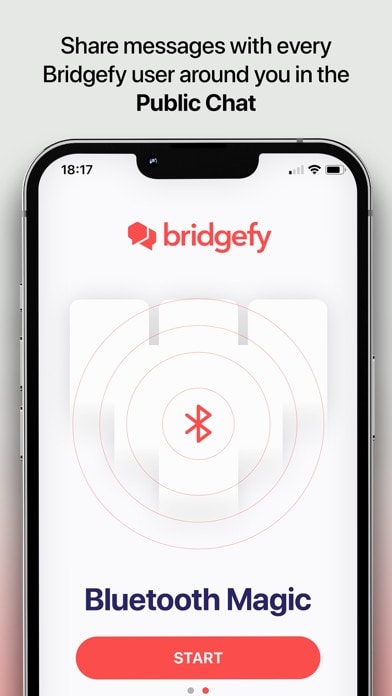
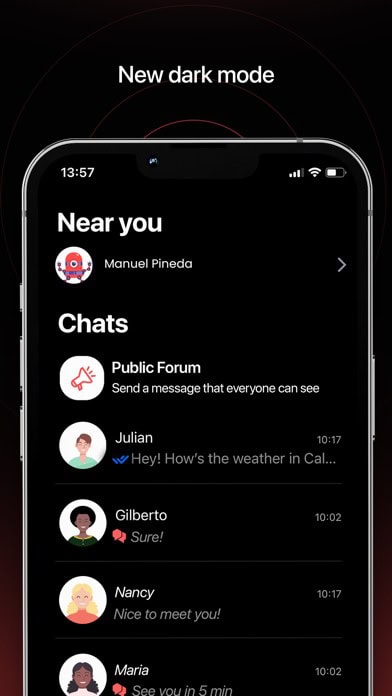
Bridgefy is one of the most widely recognised offline messaging apps and has built its reputation on reliability, simplicity, and real-world usability in situations where networks fail. Since its launch in 2014, it has been used extensively at festivals, large events, and in emergency scenarios where mobile infrastructure becomes overloaded or unavailable.
The app operates using a Bluetooth mesh network, allowing devices to connect within a range of approximately 100 metres. When multiple users are present, messages can be relayed from one device to another, extending the overall communication distance. This makes Bridgefy particularly effective in crowded environments, where the density of users naturally strengthens the network.
For travellers, the main advantage lies in ease of use. There is no need for a SIM card, account registration, or internet connection, which means users can install the app, enable Bluetooth, and begin messaging almost immediately. This straightforward setup has made it popular among backpackers, festival-goers, and anyone travelling through areas with unreliable connectivity.
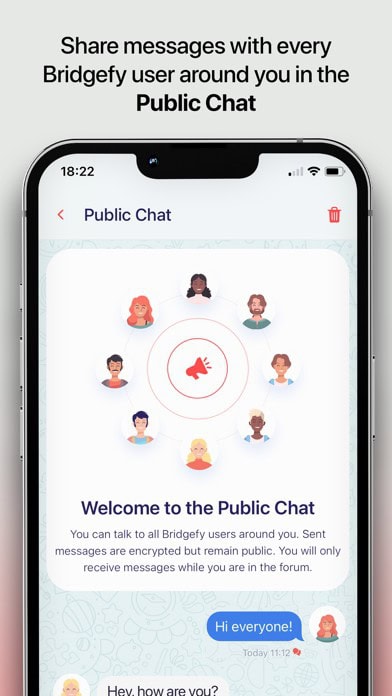
The app supports both private one-to-one messaging and group chats, making it suitable for coordinating travel plans, meeting points, or changes in schedule. Its simplicity ensures that even first-time users can navigate the interface without difficulty, which is an important factor in high-pressure situations where time and clarity matter.
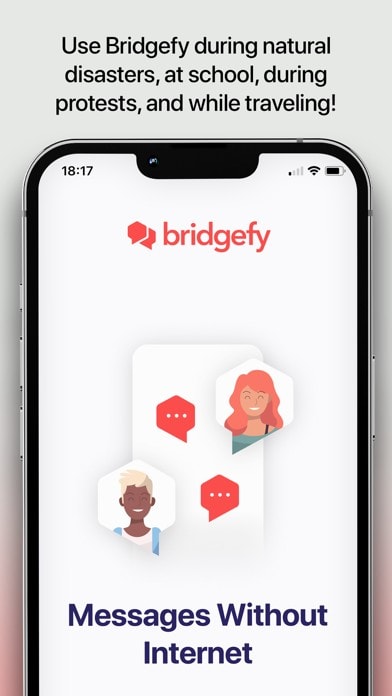
Bridgefy has also demonstrated its versatility in a wide range of environments. It has been used in crowded urban settings, remote rural areas, school campuses, and humanitarian operations, highlighting its ability to function effectively wherever traditional networks struggle.
However, its limitations should be understood. The reliance on short-range Bluetooth means that messages can only travel significant distances if enough devices are present to form a mesh network, and its security features are less advanced than those found in more privacy-focused apps.
Even with these limitations, Bridgefy remains one of the most practical and accessible offline messaging apps available, particularly for travellers who want a reliable and easy-to-use solution for staying connected in challenging environments.

App availability and prices vary by country. Some of these may not appear in your local App Store or Google Play.
AirChat
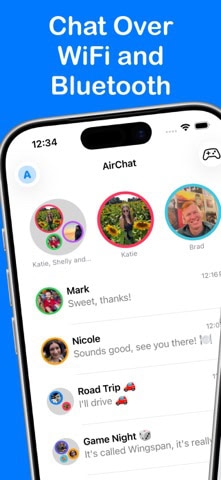
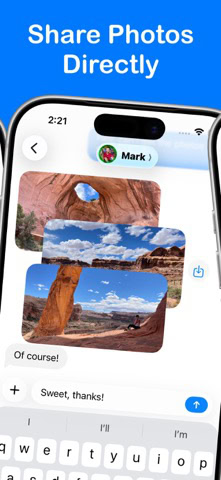
AirChat represents a more niche but highly focused approach to offline messaging, prioritising privacy, simplicity, and direct device-to-device communication over large-scale network functionality. While it does not have the widespread recognition of some competitors, it has developed a loyal following among travellers who value discretion and minimalism.
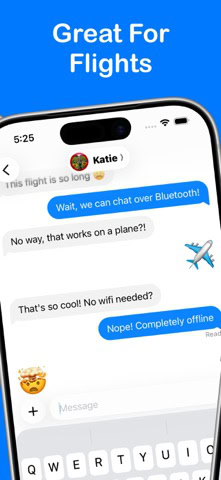
The app operates through peer-to-peer connections using Bluetooth and Wi-Fi, allowing iOS devices to communicate directly without passing messages through external servers. This means that conversations remain local, reducing exposure to third-party systems and enhancing privacy. For travellers who are conscious of their digital footprint, this approach offers a clear advantage.
One of AirChat’s defining features is its lack of onboarding requirements. Users do not need to provide a phone number, email address, or SIM card, and there is no account creation process. Messages are encrypted and temporary, which makes the app particularly appealing in situations where confidentiality is important.
In practical use, AirChat is best suited to smaller groups operating within close range. It works well for camping trips, hiking groups, or situations where travellers remain within Bluetooth distance of each other, providing a simple and secure communication channel without unnecessary complexity.
The app’s design reflects this philosophy. It is lightweight, straightforward, and easy to navigate, focusing on core messaging functionality rather than additional features. This simplicity makes it accessible, though it also means it lacks some of the broader capabilities found in larger mesh messaging platforms.
Its limitations are tied to its scope. AirChat is currently available only on iOS and has a relatively small user base, which restricts its usefulness in larger or more distributed networks. Its communication range is also limited to direct proximity, making it less suitable for extended mesh scenarios.
Even so, AirChat remains a valuable option for travellers who prioritise privacy, simplicity, and direct communication, offering a clean and effective solution for off-grid messaging in smaller groups.




App availability and prices vary by country. Some of these may not appear in your local App Store or Google Play.

BitChat (Bitchat)
BitChat is one of the newest and most advanced offline messaging apps, designed to combine modern usability with strong privacy and extended communication range. Developed with input from Jack Dorsey, it represents a significant step forward in how mesh messaging apps are built, focusing on both resilience and security for real-world use.
At its core, BitChat uses Bluetooth Low Energy mesh networking, allowing devices to connect across distances that can exceed 300 metres under optimal conditions. This is a noticeable improvement over earlier apps such as Bridgefy, which typically operate at around 100 metres per hop. In open environments such as beaches, national parks, or large outdoor events, this increased range can make communication more reliable, especially when users are more spread out.
One of the app’s strongest advantages is its approach to privacy. BitChat does not require phone numbers, SIM cards, or account registration, which means users can begin communicating immediately without linking their identity to the platform. Messages are protected through end-to-end encryption, ensuring that only the sender and recipient can read them. The inclusion of password-protected channels adds another layer of control, allowing groups to create secure communication spaces.
A particularly notable feature is the app’s panic mode, which allows users to instantly delete sensitive data from their device. For travellers in uncertain or restrictive environments, this provides an additional safeguard that is rarely found in other mesh messengers. Combined with its encryption features, this positions BitChat as one of the most security-focused options currently available.
Despite its advanced capabilities, BitChat maintains a relatively clean and user-friendly interface. This makes it accessible to casual travellers while still offering the depth required by more technically minded users. It is designed to feel modern and responsive, which helps reduce the learning curve compared to more complex privacy-first platforms.
However, there are still limitations to consider. BitChat is still in its early stages and centred on iOS, which is where the official release lives. An Android build does exist, but it is considerably less established than the iOS version, so for now iOS remains the platform where you are most likely to find other users. Adoption is still growing, and like all mesh-based systems, its effectiveness improves as more users install and actively use the app.
Even at this stage, BitChat stands out as one of the most promising next-generation offline messaging apps, combining extended range, strong privacy, and modern design in a way that positions it well for future growth.
Briar
Briar is one of the most secure offline messaging apps available, built specifically for users who require strong privacy, resilience, and independence from traditional communication infrastructure. While it is often associated with journalists and activists, it also has clear value for travellers who need reliable communication in low-connectivity or sensitive environments.
The app operates without relying on central servers. Instead, it connects devices directly using Bluetooth, Wi-Fi, or the Tor network when internet access is available, allowing messages to be exchanged without passing through external systems. This decentralised approach makes Briar highly resistant to surveillance, censorship, and network disruption.
Security is the defining feature of Briar. All messages are protected with end-to-end encryption, and the app is designed so that only the intended recipient can read them. Unlike many other messaging platforms, there is no requirement for a phone number, SIM card, or account creation. This ensures that communication remains private and that users retain full control over their data.
Briar also supports a broader range of communication formats than many similar apps. In addition to one-to-one chats, it allows for private groups, forums, and blog-style messaging, which can be useful for organising information within a travelling group or sharing updates across multiple users. This flexibility makes it more than just a basic messaging tool.
For travellers, the app is particularly useful in environments where connectivity is unreliable or where communication may be monitored. Because it can operate entirely offline and does not depend on external infrastructure, it remains functional even when networks are unavailable or restricted. This makes it a strong option for those travelling through remote areas or regions with tighter communication controls.
There are trade-offs to this level of security. Briar is available only on Android, which limits accessibility for some users, and its interface can feel more complex than simpler apps like Bridgefy or AirChat. Messages are stored locally on the device, which means they are not recoverable if the phone is lost or damaged.
Despite these limitations, Briar remains one of the most robust and privacy-focused offline messaging apps available, offering a level of security and independence that few other platforms can match.
App availability and prices vary by country. Some of these may not appear in your local App Store or Google Play.
Meshtastic
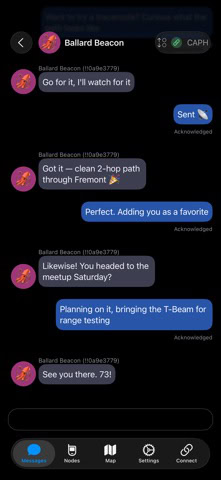
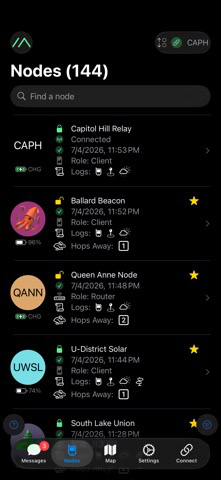
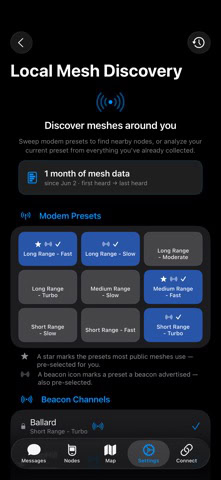
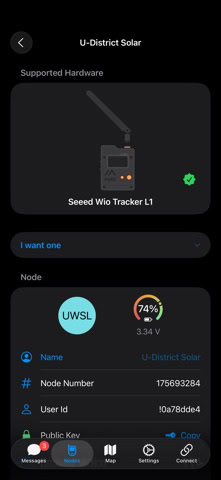
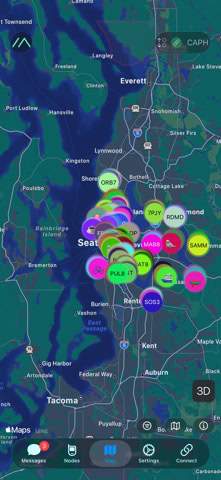
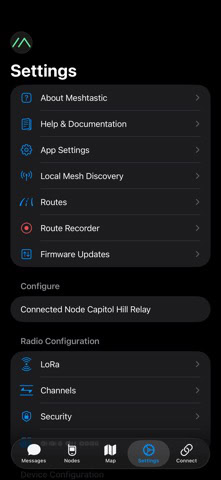
Meshtastic takes a completely different approach from every other app on this list, because it does not rely on your phone’s Bluetooth radio at all. Instead, it pairs your phone over Bluetooth with a small, low-cost LoRa radio device, and it is that dedicated hardware, not the phone itself, that does the actual long-range communication.
The trade-off for carrying extra hardware is dramatically longer range. While Bluetooth-only apps typically top out at 100 to 300 metres per hop, Meshtastic devices can relay messages several kilometres between nodes in open terrain, and a chain of several devices can extend that much further. This makes it especially useful for hiking groups, remote expeditions, and anyone travelling well outside areas with any other connectivity option at all.
It is free and open source, and the hardware devices themselves typically cost around $30 to $50 each. Every member of a group needs their own device for the mesh to work, which makes it a bigger upfront commitment than a Bluetooth-only app, but for remote hiking, off-grid expeditions, or areas with no other travellers nearby to relay messages through, that investment can be worth it.
Its main limitation is exactly that hardware requirement. Meshtastic is not something you can use with just a phone, and it is a less practical fit for casual city travel or festival crowds than Bridgefy or BitChat. It is best suited to travellers who are specifically heading somewhere remote enough that Bluetooth-only range simply will not be enough.
For serious backcountry travel, hiking groups, or anyone regularly heading beyond mobile coverage, Meshtastic is one of the most capable options available, precisely because it does not depend on other travellers being nearby to form a mesh the way Bluetooth-only apps do.

App availability and prices vary by country. Some of these may not appear in your local App Store or Google Play.
Search flights and useful route combinations in one place.
View flightsChoose an Airalo eSIM and arrange mobile data before you arrive.
Browse eSIMsBook a private airport transfer in advance and have your ride planned before you arrive.
Check transfersComparison Table of Key Features
Understanding the differences between offline messaging apps is essential, as each one is designed with a different priority in mind. Some focus on simplicity and ease of use, while others emphasise privacy, extended range, or advanced functionality. The table below provides a clear comparison of the leading options available to travellers.
| App | Status | Platform(s) | Connectivity Method | Privacy Level | Best Use Case |
|---|---|---|---|---|---|
| Bridgefy | Active | iOS & Android | Bluetooth mesh (approx. 100m per hop) | Moderate | Festivals, group travel, simple coordination |
| AirChat | Active | iOS only | Bluetooth and Wi-Fi peer-to-peer | High | Small private groups, short-range communication |
| BitChat | Active (new) | iOS mainly, Android build less established | Bluetooth Low Energy mesh (300m+) | Very High | Secure travel messaging with extended range |
| Briar | Active | Android only | Bluetooth, Wi-Fi, Tor sync | Very High | Privacy-critical communication in sensitive environments |
| Meshtastic | Active | iOS & Android (requires LoRa hardware) | LoRa radio mesh (several km per hop) | Moderate | Remote hiking and off-grid expeditions well beyond Bluetooth range |
This comparison highlights an important point. No single offline messaging app is ideal for every situation. Bridgefy excels in ease of use and accessibility, making it suitable for casual travellers and large events. AirChat provides a more private and minimal solution for smaller groups. BitChat introduces modern features and extended range, positioning itself as a future-focused option. Briar stands apart with its strong emphasis on security and decentralisation. Meshtastic is in a category of its own, trading the convenience of a phone-only app for hardware that delivers genuinely long range, making it the strongest choice for remote hiking and off-grid travel rather than city use.
For most travellers, the best approach is to consider context. Those travelling in groups or attending events may prioritise simplicity and compatibility, while those in remote or sensitive environments may require stronger privacy and resilience. Having more than one app installed can also provide additional flexibility, ensuring communication remains possible across different scenarios.
Offline Messaging Safety Tips
Using offline messaging apps effectively requires understanding both their strengths and their limitations. While they can provide valuable communication in challenging situations, they should always be used as part of a broader approach to safety rather than as a complete solution on their own.
One of the most important considerations is range. Bluetooth-based messaging typically works within distances of 100 to 300 metres, depending on the app and environment. Messages can travel further through mesh networks, but only if enough devices are present to relay them. Travellers should always test their chosen app in advance to understand how it performs in real-world conditions.
Security is another key factor. Not all apps offer the same level of protection. Platforms such as Briar and BitChat provide strong encryption and privacy features, while others like Bridgefy focus more on accessibility and ease of use. Travellers should select an app that matches their specific needs, particularly if they are visiting regions where privacy is a concern.
Device security also matters. Because many offline messaging apps store data locally, losing a phone can mean losing access to important messages and contacts. Using device locks, biometric security, and basic precautions helps reduce this risk.
It is also important to avoid relying entirely on these tools. Offline messaging apps are excellent backups, but they do not replace emergency communication systems. Travellers heading into remote or high-risk areas should still carry alternative options such as local SIM cards, emergency contact information, or satellite communication devices where appropriate. It is also worth remembering that official public warning systems, such as the Wireless Emergency Alerts service in the United States, are broadcast over the mobile network and will not reach you once you are outside coverage.
Preparation plays a major role in effectiveness. Ensuring apps are updated, fully installed, and tested before leaving a reliable connection can prevent issues later. Many travellers only realise they need these tools when connectivity is already gone, which limits their usefulness.
When used correctly, these tools add a valuable layer of resilience. When used without preparation, they can create a false sense of security, which is why understanding their limitations is just as important as understanding their benefits.
Usage Rules & Legal Restrictions
Although these apps are widely available, their use is not entirely unrestricted. Travellers should be aware that local laws, regulations, and enforcement attitudes can affect how these tools are perceived and used in different regions.
Because these apps bypass traditional telecom infrastructure, they can attract attention in countries where communication is closely monitored or controlled. In regions with strict censorship or surveillance policies, the use of mesh messaging apps such as Briar or BitChat may be viewed with caution by authorities, particularly during periods of unrest or large public gatherings. While the apps themselves are rarely banned outright, their use may still be scrutinised.
There are also practical restrictions to consider. In certain environments such as airports, border crossings, or high-security zones, wireless communication protocols including Bluetooth and Wi-Fi may be limited or regulated. This can affect the reliability of these tools and, in some cases, their permitted use.
For most travellers, using these apps in everyday scenarios such as hiking, festivals, or rural travel presents no legal issues. However, it is always advisable to research local regulations before relying on any communication tool, particularly in unfamiliar or restrictive environments. Some countries maintain lists of prohibited applications or impose limitations on certain types of communication technology.
Privacy considerations also play a role. Different apps handle user data in different ways, and travellers should understand how their information is stored and shared. Apps that operate without servers or accounts offer greater control, while others may retain certain data locally or within the app environment.
By staying informed and exercising basic caution, travellers can use offline messaging apps effectively while avoiding unnecessary complications. Understanding both the legal landscape and the technical limitations ensures these tools remain helpful rather than problematic.
App Availability by Region
The effectiveness of offline messaging apps varies significantly depending on where you are travelling, largely because their usefulness depends not just on installation, but on how widely they are adopted in each region. While all of the major apps are available globally through official app stores, real-world performance is influenced by how many other users are nearby and which platforms dominate locally.
In Latin America, Southeast Asia, and parts of Africa, Bridgefy has seen the widest adoption. Its simplicity and cross-platform support on both iOS and Android have made it particularly popular in regions where mobile coverage can be inconsistent. Travellers in these areas are more likely to encounter other users already running the app, which strengthens the mesh network and extends communication range beyond the typical 100 metre Bluetooth limit through multiple device hops.
In North America and Europe, adoption is more fragmented. BitChat is beginning to gain traction among privacy-conscious users, particularly in the United States, parts of Western Europe, and Japan. However, as a newer platform, its effectiveness still depends heavily on user growth. Travellers using BitChat may benefit from its extended Bluetooth Low Energy range, which can exceed 300 metres in open environments, but should not yet rely on widespread adoption in unfamiliar areas.
AirChat remains a niche option, primarily used by iOS users in North America and parts of Europe. Its limited platform support and smaller user base mean that travellers are unlikely to encounter unknown users on the network. Instead, it is best suited for pre-arranged group communication, where all participants have installed the app in advance.
In regions where privacy and censorship are concerns, such as parts of Asia and the Middle East, Briar stands out as the most resilient option. Its ability to operate without central servers and its support for Bluetooth, Wi-Fi, and Tor-based syncing make it particularly useful in environments where traditional communication channels may be restricted or unreliable. However, because it is Android-only, its usability depends on the devices within your group.
Across all regions, one principle remains consistent. Offline messaging apps are only as effective as the network of users around you. This means that travellers planning to rely on these tools should ensure that everyone in their group has installed and tested the same app before departure.
For most global travellers, the most practical approach is to combine a widely adopted app such as Bridgefy with a more secure option such as BitChat or Briar, depending on platform and privacy needs. This ensures both accessibility and resilience, regardless of destination.

Rupert’s Handy Travel Tips for Offline Messaging Apps
- Test apps before you go: Install and trial your chosen offline messenger at home or in a park to learn its range and quirks.
- Remember Bluetooth range: Mesh networks usually work in 50–100m hops; keep group members spaced to extend coverage.
- Battery is critical: Mesh apps use radios constantly. Carry a power bank and enable battery saver to stay reachable longer.
- Use airplane mode smartly: Switch off roaming data but leave Bluetooth/Wi-Fi on; it conserves power and avoids surprise charges.
- Pick privacy-first apps: For sensitive trips, use encrypted options like Briar or BitChat rather than casual chat apps.
- Plan fallback meet-ups: Mesh needs people; agree on check-in times and meeting points in case the chain breaks or batteries die.
- Keep local rules in mind: Some venues and countries restrict peer-to-peer networking. Always check what’s allowed before relying on it.




Frequently Asked Questions
Do offline messaging apps really work without the internet?
Yes. They connect smartphones directly via Bluetooth or Wi-Fi to create a peer-to-peer mesh network. This allows short-range communication even with no mobile data or Wi-Fi signal.
Are offline messaging apps secure?
It depends on the app. Options like Briar and BitChat offer strong encryption, while others such as Bridgefy are more focused on convenience. Always choose based on your privacy needs and travel destination.
Can I use offline messaging apps internationally?
Yes, but remember they only work if the people you want to message also have the same app installed. Unlike WhatsApp or Messenger, they don’t connect to global networks.
What’s the range of these apps?
Most Bluetooth chat apps work within 100–300 metres. Mesh networks can extend this distance if multiple devices relay messages between each other.
Which offline messaging app is best for travellers?
For everyday group trips, Bridgefy is a safe choice. For maximum security, Briar (Android) or BitChat (iOS) are stronger. AirChat is best for privacy-minded iOS users, and Meshtastic is the strongest choice for genuinely remote trips, provided everyone in your group carries a LoRa device.
Further Reading & Related App Guides
If you want to stay connected even when mobile networks fail, pairing offline messaging tools with a reliable data solution is essential. Our eSIM apps guide shows you how to get instant mobile data in over 100 countries without swapping SIM cards, giving you a dependable primary connection alongside your offline backup.
If you’re heading into remote areas where signal drops completely, navigation becomes just as important as communication. Our offline map apps guide explains how to download full maps, trails, and routes in advance, ensuring you can find your way even when you are fully off-grid.
For travellers exploring unfamiliar countries, communication is not just about messaging your group. Our translation apps guide helps you break language barriers instantly, making it easier to ask for directions, read signs, and interact confidently with locals.
Staying safe in unpredictable conditions is just as important as staying connected. Our weather apps guide highlights the best tools for tracking storms, temperature changes, and severe weather alerts, helping you plan ahead and avoid dangerous situations.
Finally, travel disruptions can happen at any time, especially in remote or high-risk areas. Our travel insurance apps guide shows you how to secure coverage, manage claims, and access support quickly, giving you peace of mind throughout your journey.
Offline messaging is just one layer of staying connected. Our VPN Travel Apps Guide covers how to keep your connection secure once you do have signal, and our WiFi Map Finder Apps Guide helps you track down a hotspot in the first place.