Reviewed by our editorial team Updated
Why Luggage Storage Apps Are a Must for Travellers
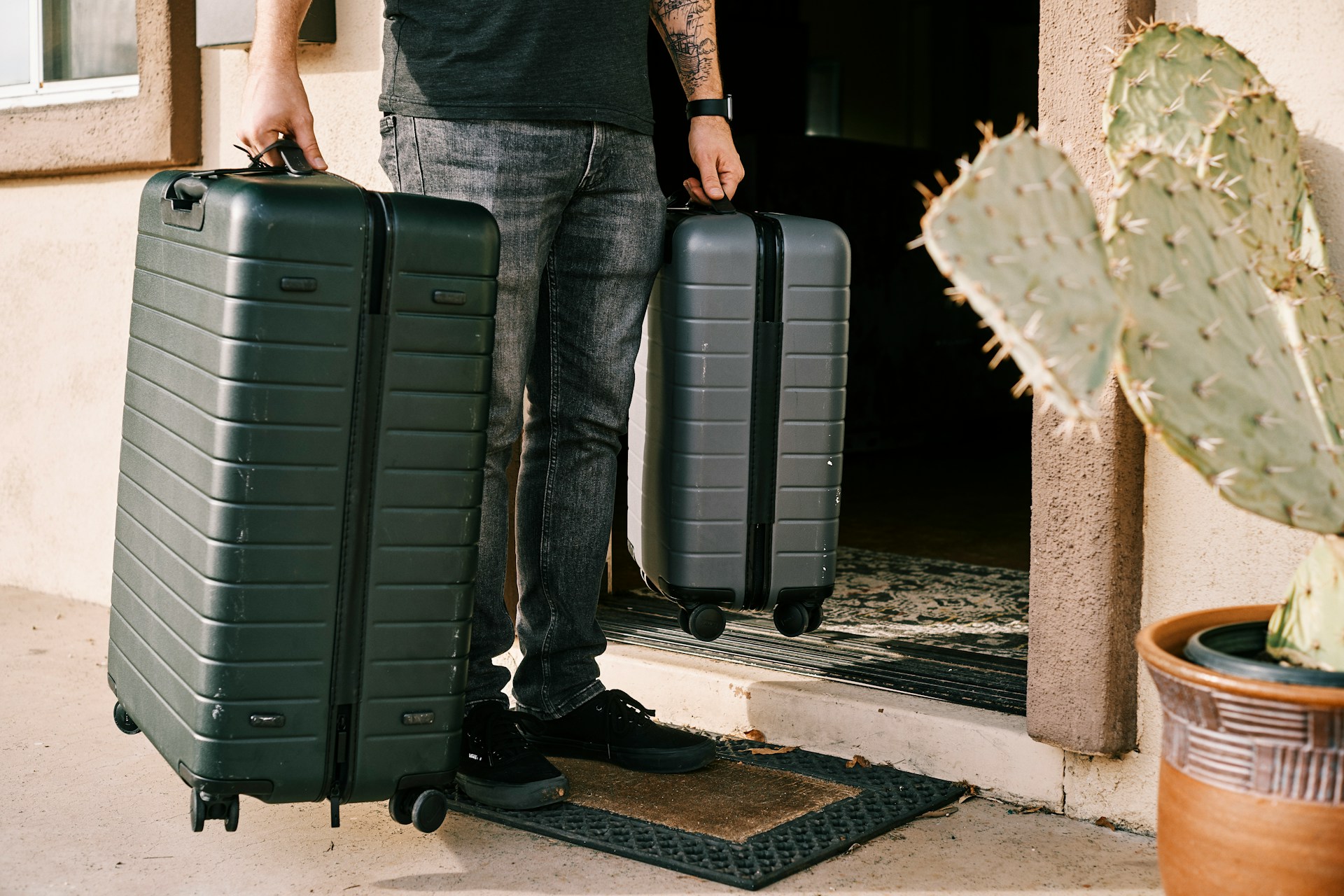
Luggage storage apps have become one of the most useful tools in modern travel because they solve a problem that almost every traveller faces at some point. Travel rarely lines up neatly with hotel check-in times, late departures, train changes, or evening flights. You often end up with several awkward hours in a city when you are no longer checked into accommodation but still carrying everything you own. That can turn what should be free sightseeing time into a frustrating exercise in dragging bags through crowded streets, stations, cafés, and attractions.
What makes these apps so valuable is the freedom they create. Instead of staying chained to your luggage, you can drop your bags at a vetted local partner, book the storage in a few taps, and regain the rest of the day. That means you can head to a museum, work from a café, enjoy lunch properly, or simply walk around a city without being weighed down by a suitcase or backpack.
This is especially useful in urban travel. Many city breaks involve early arrival or late departure, and traditional options such as station lockers or hotel bag rooms are often limited, inconvenient, or unavailable. Luggage storage apps solve that by creating a distributed network of hotels, shops, cafés, and purpose-built facilities where travellers can store bags securely for a few hours or the whole day.
Security is a major part of the appeal too. The best luggage storage apps do not simply offer convenience. They also provide insurance coverage, verified partner locations, and clear app-based booking records that make the process feel much safer than informal storage arrangements. In some cases, additional features such as tamper-proof seals and customer support add another layer of reassurance.
For solo travellers, families, business travellers, and anyone moving through a city between transport connections, these apps create flexibility that older storage systems never really offered. You are no longer dependent on finding a station locker, relying on a hotel to hold your bags, or limiting your final hours in a destination because your luggage is too inconvenient to carry.
Ultimately, luggage storage apps are about turning dead time into usable travel time. They give you back your mobility, your comfort, and often several valuable hours of your trip. That is why they have become such an essential part of stress-free travel.
What to Look for in Luggage Storage Apps
Choosing the right luggage storage app is not just about finding the cheapest place to leave a bag. It is about balancing convenience, security, pricing, and reliability in a way that suits the trip you are actually taking. Two apps may look similar on the surface, but the experience can differ a lot once you start comparing network size, insurance, local partner quality, and customer support.
One of the first things to consider is coverage. The strongest apps offer thousands of partner locations in major cities, especially near airports, train stations, city centres, and tourist attractions. If you travel often, wide network coverage matters because it means you can rely on the same app in multiple countries instead of downloading a different service in every destination.
Pricing structure is another major factor. Some providers charge a flat daily rate, while others offer hourly pricing with a daily cap. That difference matters. If you only need to store a bag for three or four hours between check-out and a train, hourly pricing can be cheaper. If you need all-day storage, a flat fee is often more predictable and easier to compare.
Security deserves close attention too. Good luggage storage apps make insurance coverage clear, and the difference between €1,000 and €10,000 of protection is not trivial if you are carrying electronics, work equipment, or expensive personal items. Travellers should also look for signs that partners are vetted and that there are practical safeguards such as bag seals, verified hosts, or strong check-in procedures.
User trust matters as well. Recent reviews, consistent ratings, and responsive support are often more revealing than marketing claims. A clean app interface is useful, but it matters much more that the location is open when promised, the partner understands the booking process, and support responds quickly if plans change.
Cancellation policy is another area people overlook. Travel plans shift constantly, especially around flights and rail journeys, so flexible cancellation and clear refund terms can save a lot of frustration. If an app makes this difficult or vague, that is often a warning sign.
In the end, the best luggage storage app is the one that fits how you travel. Frequent international travellers may prioritise global coverage and high insurance, while budget travellers may care more about flat pricing and simplicity. Comparing coverage, cost, protection, and service quality before booking makes the difference between a stress-free experience and an annoying one.
Browse hotels and accommodation for your journey.
View staysBrowse apartments, holiday homes and self-catering stays.
View rentalsCompare hotel deals from multiple booking sites in one search.
Compare pricesAt-a-Glance Comparison
A quick comparison is often the fastest way to narrow down which luggage storage app is worth using in a particular city. While all of the major platforms solve the same core problem, they do it in slightly different ways. Some focus on sheer scale, others on pricing simplicity, and others on flexibility for short-term storage.
Bounce currently leads on global reach. With more than 20,000 partner locations across over 4,000 cities and more than 100 countries, it has the broadest network in the sector. That makes it especially attractive for travellers moving between several destinations and wanting one app that works almost everywhere. It also stands out for high insurance limits, which adds reassurance for travellers carrying more valuable items.
Stasher is smaller than Bounce but still substantial, with more than 3,800 partner locations across over 1,000 cities worldwide. Its reputation is built less on scale and more on trust, transparent pricing, and consistently strong customer satisfaction. For many travellers, that combination makes it one of the safest and most dependable choices.
Radical Storage takes a more stripped-back approach. Its flat-rate pricing and broad spread of more than 7,000 locations make it attractive to budget-conscious travellers and city-break visitors who want something straightforward rather than feature-heavy. It is particularly useful in destinations where smaller cities matter, not just major global hubs.
Nannybag is more selective. Its network is smaller, but it has built a reputation for friendly service and dependable partner businesses, particularly in major cities. That makes it a good option for travellers who care more about consistency than raw geographic reach.
LuggageHero stands out because of its pricing model. Instead of focusing only on day rates, it offers hourly pricing with a capped daily maximum, which can work very well for shorter storage needs. That flexibility makes it appealing for layovers, afternoon stopovers, and half-day city visits.
Vertoe, which used to feature in comparisons like this one for its tamper-proof seals and high insurance limits, has permanently closed and is no longer an option.
The comparison table below shows the differences more clearly:
| App | Coverage | Pricing Model | Insurance Included | Standout Strength |
|---|---|---|---|---|
| Bounce | 20,000+ locations, 4,000+ cities | From about €3.50 per day | Up to €10,000 | Largest global network |
| Stasher | 3,800+ locations, 1,000+ cities | About £4.99 per day (€5.74/$6.34) | Up to £5,000 (€5,750/$6,350) | Strong reviews and reliability |
| Radical Storage | 7,000+ locations worldwide | Flat rate around €5 per day | Up to €3,000 | Simplicity and smaller-city coverage |
| Nannybag | 500+ locations worldwide | Flat rate around €6 per day | Up to €1,000 | Service quality and trusted partners |
| LuggageHero | 1,000+ locations in Europe and the US | Around $1 per hour, capped daily | $500 standard, upgrade available | Flexible hourly pricing |
This table makes one thing clear. No single app is automatically best in every situation. The right choice depends on whether you value global coverage, lower pricing, short-term flexibility, or stronger insurance.
Bounce
Bounce has become the best-known luggage storage app in the market because it combines very large global coverage with a polished app experience and strong insurance protection. For travellers who want the simplest answer to the question of where to leave a bag in an unfamiliar city, it is often the first app people check.
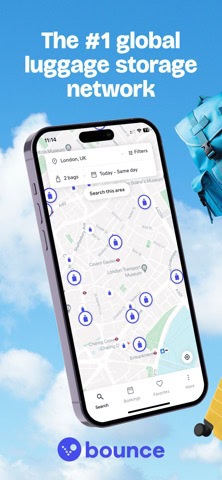
Its biggest advantage is scale. Bounce works with more than 20,000 partner locations across over 4,000 cities in more than 100 countries, which makes it the largest network in the sector. That size matters because it increases the chances that you will find a convenient drop-off point near a station, airport, hotel district, or major attraction without having to compromise on location.
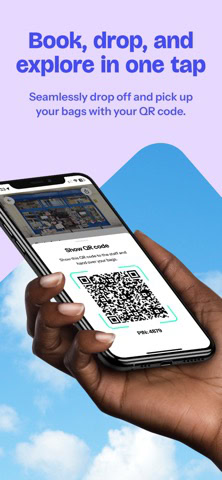
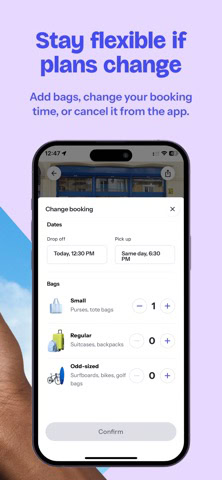
The booking process is one of the app’s strengths too. You can usually search, compare, and reserve a storage point in seconds, with prices often starting from around €3.50 per bag per day depending on city and demand. The app also makes cancellation easy before drop-off, which is useful when travel plans change suddenly.
Security is a major selling point. Every booking includes insurance coverage of up to €10,000, which is one of the highest standard levels in the industry. For travellers carrying laptops, cameras, or expensive clothing, that extra protection can make a real difference to peace of mind.
The partner network is broad in type as well as size. Bounce locations can include hotels, shops, cafés, and dedicated storage facilities, which gives the company flexibility in placing storage near where travellers actually need it most. The app allows users to review locations, compare opening hours, and in some cases identify useful features beyond pure storage.
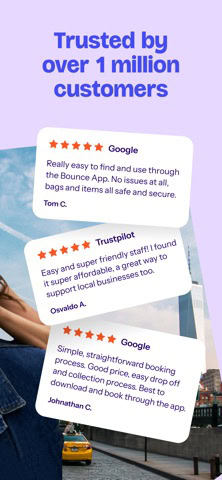
Another reason Bounce performs so well is usability. The app is clean, easy to understand, and built for fast decision-making, which matters when you are standing on a pavement with a suitcase and need a solution quickly. For frequent travellers, that consistency from city to city is part of the appeal.
Its limitations are mostly about partner variability. Because the network is so large, the quality of the actual storage experience can vary by location, and some travellers report that individual partner service is not always equally polished. Pricing can also come in a little higher than on smaller competitors in certain cities.
Even so, Bounce is best for travellers who want the broadest global reach, a smooth booking experience, and some of the strongest default insurance in the sector. For many people, especially those travelling internationally and moving through major hubs, it remains the strongest all-round option.



App availability and prices vary by country. Some of these may not appear in your local App Store or Google Play.
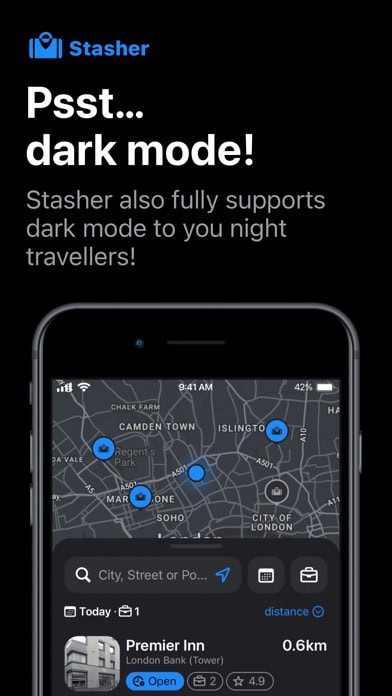
Stasher
Stasher is one of the most trusted names in the luggage storage app market, and its reputation rests on dependable partner quality, transparent pricing, and consistently strong customer reviews. It may not match Bounce on raw scale, but it remains one of the safest choices for travellers who care as much about reliability as they do about availability.
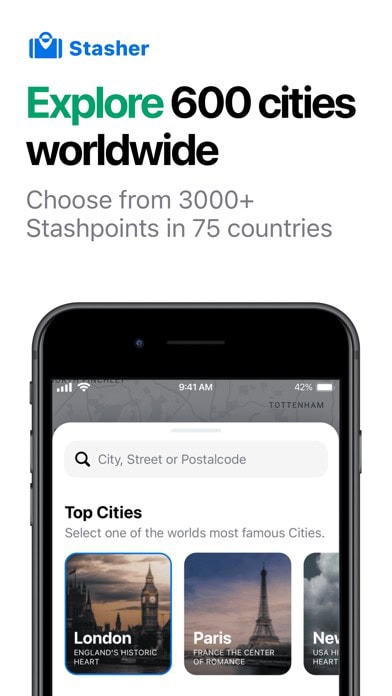
Its network is substantial. Stasher works with more than 3,800 partner locations across over 1,000 cities worldwide, which gives it meaningful coverage across Europe, North America, and a growing number of destinations in Asia and Oceania. This makes it especially useful for travellers who want a recognisable service in the world’s main city-break and transit destinations.
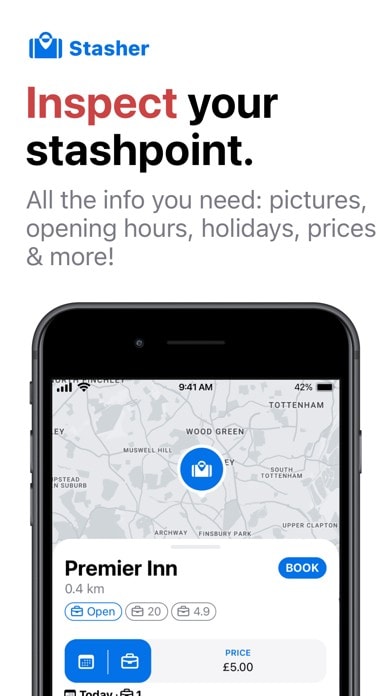
Pricing is one of its biggest strengths. The model is simple, usually around £4.99 (€5.74/$6.34) per bag per day, with no confusing hourly structures or hidden charges for ordinary use. That clarity makes it easy to compare and helps travellers know exactly what they are paying before they commit.
Insurance is also strong. Each booking typically includes coverage of up to £5,000 (€5,750/$6,350), which gives travellers a solid level of protection and places Stasher among the stronger providers in this regard. For people carrying valuable items, that matters.
Where Stasher really distinguishes itself is user trust. It has built a reputation for excellent customer satisfaction, supported by strong review scores and generally positive feedback about the consistency of its partner network. For many travellers, that reliability is worth more than simply having the largest possible number of locations.
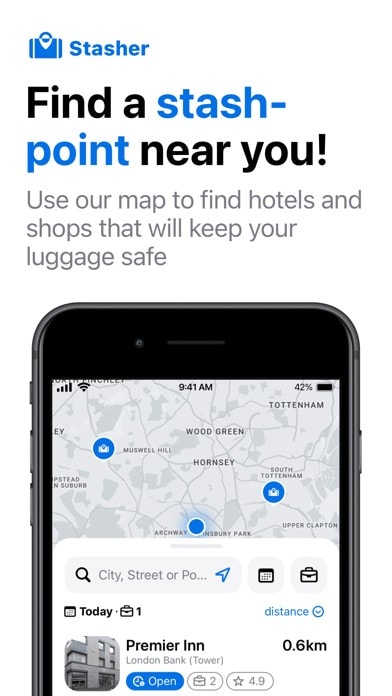
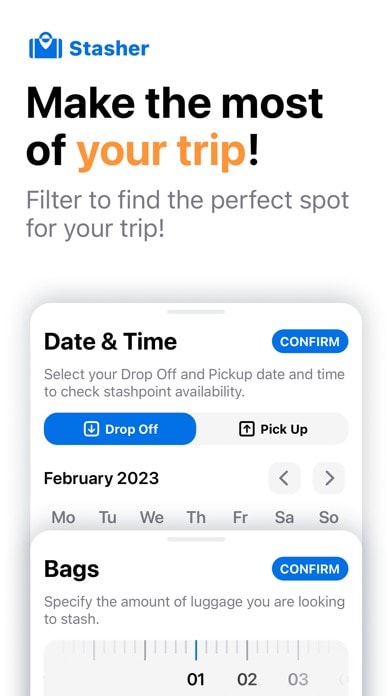
The app itself is clean and functional. It allows users to search near landmarks, transport hubs, or neighbourhoods, book quickly, and manage storage with minimal friction. That ease of use fits well with the core purpose of luggage storage, which is to solve a practical problem without creating a new one.
Its main limitation is relative rather than absolute. Outside Europe, coverage can still feel thinner than Bounce in some markets, and because pricing is daily rather than hourly, very short storage needs may not always feel as cost-efficient. Even so, for day-use travellers, that daily simplicity is often a benefit rather than a weakness.
Stasher is best for travellers who want clear pricing, strong insurance, and one of the most trusted service reputations in the luggage storage sector. It is particularly appealing for city-break travellers, rail passengers, and anyone who values dependable service over sheer scale.

App availability and prices vary by country. Some of these may not appear in your local App Store or Google Play.

Explore Hands-Free with Stasher
Don’t let heavy bags slow you down. Stasher helps you store your luggage securely at convenient locations near airports, railway stations, city centres, and popular attractions, so you can make the most of your time.
Whether you’ve arrived before hotel check-in, have time to explore after checking out, or simply don’t want to carry your luggage all day, Stasher makes it easy to find and book secure bag storage in just a few minutes.

Radical Storage
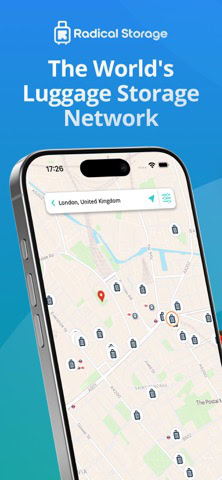
Radical Storage has built its reputation on simplicity, predictable pricing, and broad city coverage, making it one of the most practical luggage storage apps for travellers who want a straightforward solution without extra complexity. Originally launched under a different name, the service has expanded into a large international network and is now especially popular with city-break travellers who need a quick and affordable way to store bags.
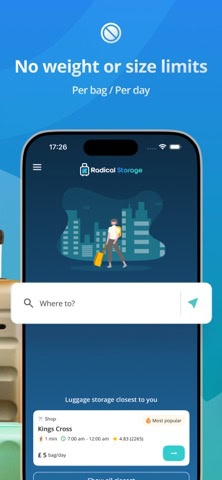
One of its biggest strengths is the pricing structure. Radical Storage generally uses a flat daily rate of around €5 per bag, which makes it very easy to understand before booking. There are no complicated hourly calculations for most users, which means travellers can decide quickly without worrying about whether an extra hour or two will materially change the cost. For many people, especially those arriving early or departing late from a city, that simplicity is a real advantage.
Its network is also larger than many travellers realise. With more than 7,000 storage points worldwide, Radical Storage has strong presence not only in major capitals but also in smaller cities where some competitors can feel less visible. That makes it useful for regional travel, secondary city stops, and destinations that do not always sit at the centre of global tourism app networks.
The storage model relies heavily on local partner businesses. Hotels, cafés, shops, and other vetted commercial locations act as luggage hosts, giving the app flexibility in where it can place storage points. This often means there is a practical location near a station, city centre, or attraction rather than only in one obvious transport hub.
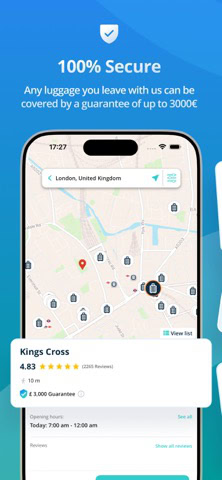
Insurance is included, though at a lower level than some of the biggest competitors. Each booking typically carries protection of up to €3,000, which is enough for many travellers but less reassuring than the maximum offered by Bounce or the stronger cover included by some other providers. For users carrying particularly high-value items, this is something to consider carefully.
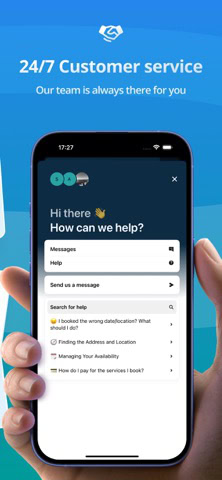
The app itself is functional rather than luxurious. It does the core job well, allowing users to search, choose a location, and book storage quickly, but it does not always feel as polished or feature-rich as the strongest interfaces in the category. Customer support can also feel slower in some cases, especially when compared with the larger premium-style platforms.
Radical Storage is best for travellers who want cheap, simple, and predictable daily pricing with good city coverage, including smaller destinations where other apps may not be as visible. It is especially appealing for budget-conscious users who care most about ease and availability.

App availability and prices vary by country. Some of these may not appear in your local App Store or Google Play.
Explore Hands-Free with Radical Storage
Dragging heavy luggage around a city can quickly spoil your day. Radical Storage makes it easy to store your bags securely at convenient locations near railway stations, airports, city centres, and major attractions.
It is ideal if you arrive before hotel check-in, have time to explore after checking out, or simply want to enjoy a destination without carrying your luggage. Book online in minutes and make the most of every hour of your trip.
Nannybag
Nannybag takes a more selective approach to luggage storage, focusing on trusted local partners and a cleaner, service-led experience rather than trying to dominate the market purely through size. Its network is smaller than that of Bounce or Radical Storage, but for many travellers that trade-off feels worthwhile because the platform has developed a reputation for reliability and good customer experience.
The pricing model is simple and easy to follow. Travellers usually pay around €6 per bag per day, which places Nannybag slightly above the very cheapest options but still within the normal range for this type of service. What many users are really paying for is peace of mind, because the service places strong emphasis on partner quality and consistency.
Its network includes more than 500 partner locations across major cities worldwide, with especially solid coverage in European capitals and larger North American destinations. While it is still expanding into Asia and South America, the real strength of Nannybag remains in dense, high-tourism cities where travellers want a trusted place to leave their bags without complications.
The choice of partners is one of the app’s core selling points. Nannybag often works with hotels and established local businesses rather than relying purely on quantity of partners, which helps support a more dependable drop-off and collection experience. This matters because luggage storage is only convenient when the location is actually easy to use, open when promised, and clear about the booking process.
Insurance is included at a lower level than the largest competitors. Each booking generally includes around €1,000 of coverage per bag, which is adequate for standard luggage but less generous than the stronger protection offered by Bounce or Stasher. Travellers with expensive work equipment or high-value electronics may want to account for that.
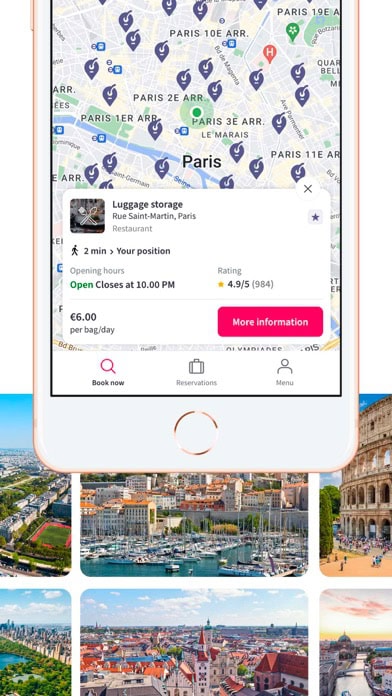
The app itself is intuitive and easy to navigate. Searching, booking, and managing the reservation is generally quick, and the platform communicates clearly enough that travellers can move from problem to solution with minimal friction. Reviews often highlight friendly service at partner locations, which is one of the reasons Nannybag has built a strong reputation despite its smaller footprint.
Its limitation is scale. Outside major cities, the network can thin out quickly, which means travellers in smaller destinations may find better availability elsewhere. But where it does operate, it tends to operate well.
Nannybag is best for travellers who want a smaller but more curated luggage storage network with simple pricing, a good user experience, and strong partner reliability in major cities.

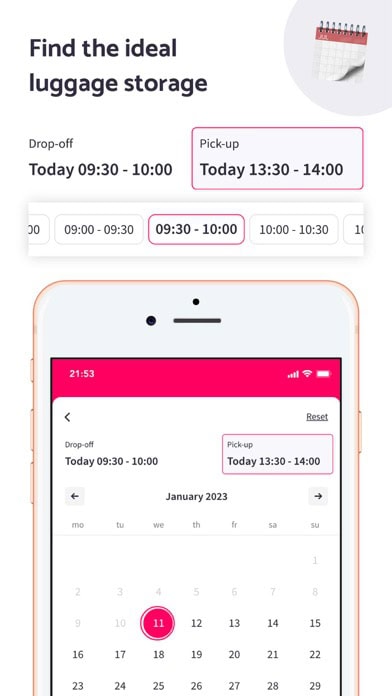
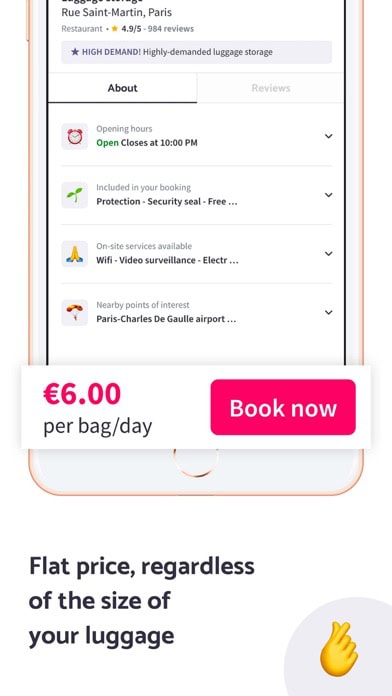
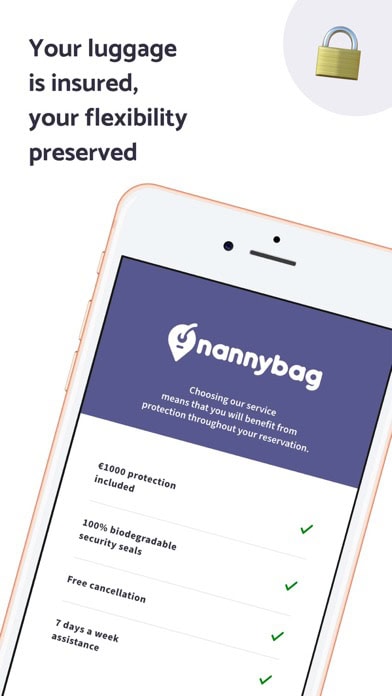
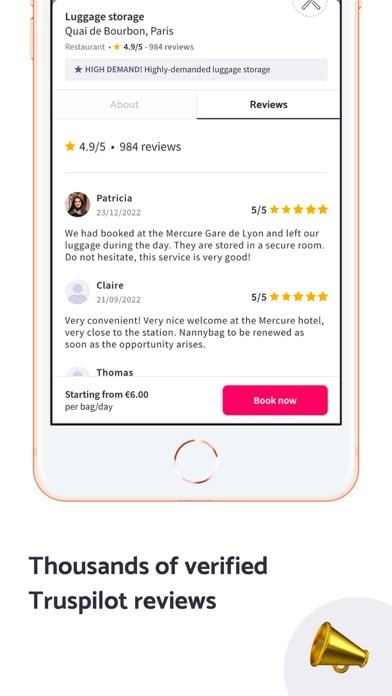
App availability and prices vary by country. Some of these may not appear in your local App Store or Google Play.
LuggageHero
LuggageHero is known for its flexible, pay-as-you-go pricing model, making it especially attractive to travellers LuggageHero stands out because it offers one of the most flexible pricing structures in the luggage storage market, making it especially attractive to travellers who do not need all-day storage and do not want to pay a full daily fee for only a few hours. That makes it particularly useful for stopovers, half-day city visits, and the awkward travel windows between check-out and departure.
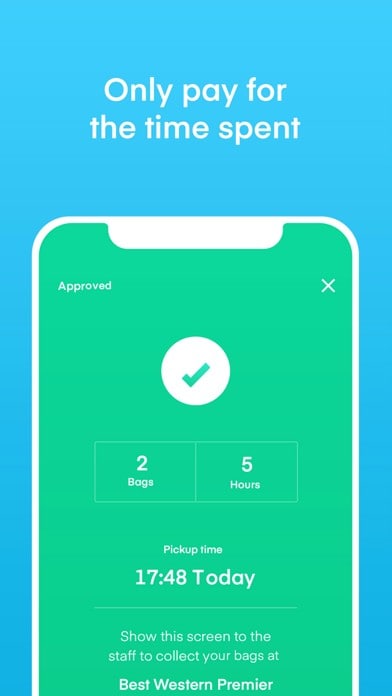
Its core strength is hourly pricing. Instead of charging a standard flat daily rate only, LuggageHero often starts at roughly $1 per bag per hour and then caps the total at around $8 per day, though local variations can make the effective cost even lower in certain cities. In practical terms, that means a traveller who only needs three hours of storage may save money compared with apps built entirely around daily pricing.
This structure is especially useful in places where travellers are in transit rather than truly staying. If you have a short rail layover, a half-day before an evening flight, or a free afternoon after check-out, the app’s model feels well matched to the way real travel often works. It gives more flexibility and helps prevent the feeling of overpaying for short storage windows.
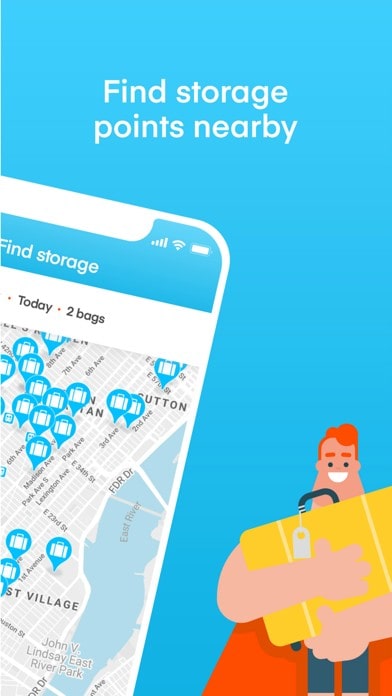
Its network includes around 1,000 storage points across Europe and the United States, which makes it smaller than Bounce or Radical Storage but still highly relevant in a number of major transport and tourism cities. Partner businesses usually include shops, cafés, and hotels, with locations selected for usefulness near transport hubs and attractions.
Insurance is more tiered than on some other platforms. The standard booking typically includes around $500 of cover per bag, which is lower than many competitors, but users can pay extra to raise that protection to around $3,000. That flexible approach allows travellers to decide how much cover they actually need rather than paying for a higher default level every time.
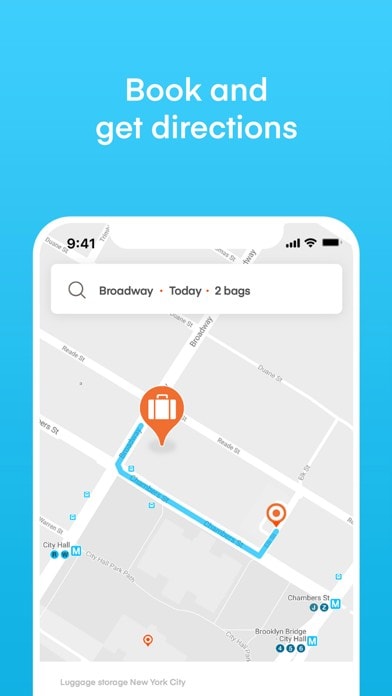
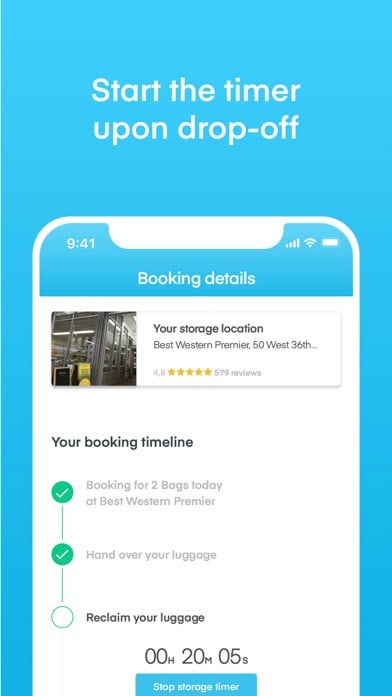
The app is straightforward and generally easy to use. Users can search by neighbourhood, opening hours, or convenience, and the booking flow is built to support short-notice decisions. That makes it especially practical for people making storage choices while already in motion rather than planning well ahead.
Its limitation is coverage depth and partner consistency. Because the network is smaller and concentrated mainly in Europe and the US, it is less useful for broad international travel, and some users report that individual partner quality can vary. Still, for the right type of trip, the pricing model can be hard to beat.
LuggageHero is best for travellers who want short-term flexibility, transparent hourly storage, and a pricing structure that better reflects how long they actually need to leave their bags.

App availability and prices vary by country. Some of these may not appear in your local App Store or Google Play.
Search flights and useful route combinations in one place.
View flightsChoose an Airalo eSIM and arrange mobile data before you arrive.
Browse eSIMsBook a private airport transfer in advance and have your ride planned before you arrive.
Check transfersVertoe (now closed)
Vertoe has permanently ceased trading. It was a well-regarded, security-focused luggage storage network built around North American coverage, tamper-proof bag seals and unusually high insurance limits. The company has since shut down, its website now carries a closure notice, and its apps have been removed from both app stores. We have left this entry here because Vertoe is still widely recommended elsewhere online, and travellers searching for it deserve to know it is gone.
If you were planning to use Vertoe, Bounce is the closest replacement and is covered above. It has the largest network of the providers in this guide, strong UK and US coverage, and comparable insurance. Stasher and Radical Storage are also solid alternatives.
Comparison Table of Key Features
A side-by-side comparison makes it easier to see how these luggage storage apps differ in the areas that matter most. Some focus on global reach, others on service consistency, others on pricing flexibility, and others on security. The best choice depends on what kind of trip you are taking and what matters most to you.
| App | Coverage | Typical Pricing | Insurance Included | Main Strength |
|---|---|---|---|---|
| Bounce | 20,000+ locations in 4,000+ cities | From about €3.50 per day | Up to €10,000 per booking | Largest global network |
| Stasher | 3,800+ locations in 1,000+ cities | About £4.99 per day (€5.74/$6.34) | Up to £5,000 (€5,750/$6,350) per booking | Strong customer trust and reliability |
| Radical Storage | 7,000+ locations worldwide | Around €5 flat per day | Up to €3,000 per booking | Simplicity and smaller-city coverage |
| Nannybag | 500+ locations worldwide | Around €6 flat per day | Up to €1,000 per bag | Curated partners and friendly service |
| LuggageHero | 1,000+ locations in Europe and the US | About $1 per hour, capped daily | $500 standard, optional upgrade to $3,000 | Flexible hourly pricing |
This comparison makes the trade-offs much clearer. Bounce leads on sheer scale and insurance. Stasher offers a very strong mix of trust and clarity. Radical Storage is strong on simple daily pricing. Nannybag prioritises service quality over network size. LuggageHero is the most flexible for shorter storage periods.
For many travellers, the right answer depends less on which app is theoretically best and more on which one is strongest in the specific city you are visiting, for the amount of time you need storage, and for the level of protection you want.
Luggage Storage App Safety Tips
Using luggage storage apps safely is not complicated, but a few smart habits make a significant difference to your overall experience. These platforms are designed with security in mind, yet travellers still need to understand how to use the built-in protections properly to avoid unnecessary risk.
One of the most important considerations is insurance coverage. Most leading apps include protection automatically, but the level varies widely. Bounce can offer up to €10,000 per booking, while others such as Nannybag may include closer to €1,000. Always check what is actually covered before you book, and understand that certain high-value items like cash, jewellery, or sensitive electronics may not be fully protected under standard policies. If you are carrying expensive gear, choosing a provider with higher coverage is the safer option.
Another key layer of protection comes from tamper-proof seals, which some storage partners apply at drop-off. These seals are applied to your bag at drop-off and provide visible confirmation that it has not been opened. If your chosen app offers this feature, make sure it is properly applied and take a quick photo of your sealed bag for your own records. It is a simple step that adds peace of mind.
Partner verification is equally important. All major luggage storage apps rely on local businesses such as hotels, cafés, and shops, but the quality of these partners can vary. Before confirming a booking, check recent user reviews, opening hours, and the exact location. A storage point that looks convenient on a map is only useful if it is actually open when you need to collect your luggage.
You should also keep your booking confirmation and access details easily available. Most apps provide a QR code or digital confirmation that must be shown at drop-off and collection. Having this ready avoids delays, especially in busy locations near train stations or airports.
Finally, think practically about what you store. Avoid leaving essential documents, passports, or irreplaceable valuables inside your bag, even if insurance is included. If a passport does go missing abroad, UK travellers should report a lost or stolen passport straight away. Luggage storage apps are safe, but they are not designed to replace a personal safe or carry-on essentials.
When used properly, these apps are extremely reliable. The combination of insurance, verified partners, and simple precautions allows you to explore freely without worrying about your belongings.
Usage Rules & Legal Restrictions
Luggage storage apps operate within clear rules and legal frameworks, and understanding these helps prevent problems at drop-off or collection. While the process is usually straightforward, there are a few important guidelines that apply across most platforms.
The first is size and type of luggage. Most providers accept standard travel items such as suitcases, backpacks, and duffel bags. However, oversized items like bicycles, surfboards, skis, or very large equipment may be refused or require special arrangements and additional fees. It is always worth checking the specific listing before booking if you are travelling with anything unusual.
There are also strict restrictions on what you can store. Hazardous materials, flammable items, illegal goods, perishables, and large amounts of cash are not permitted under any circumstances. These rules are not just for safety but also for legal compliance, and breaking them can void your insurance protection entirely.
Time limits are another factor to consider. Most bookings are based on a 24-hour period, even if you only need a few hours of storage. If you leave your luggage beyond the agreed time, additional charges will usually apply, and in extreme cases, the partner location may escalate the situation if the bag is not collected. Staying within your booked window avoids unnecessary complications.
Identification is sometimes required. Many partner locations will ask to see a passport or government-issued ID when you drop off or collect your luggage. This is a standard security measure designed to prevent theft or mistaken collection, so it is worth having ID readily available.
Local regulations can also play a role. In some countries, businesses must hold specific licences to offer luggage storage services, and reputable apps ensure their partners comply with these requirements. This is one of the reasons it is always safer to book through established platforms rather than informal arrangements.
By following these rules and understanding the limits of the service, travellers can use luggage storage apps confidently and avoid any unexpected issues.
App Availability by Region
Luggage storage app coverage is strong in major travel destinations, but it still varies significantly depending on the region. Understanding where each app performs best helps you choose the right one before you travel rather than scrambling for options on arrival.
In Europe, coverage is at its strongest. Cities such as London, Paris, Rome, Berlin, and Barcelona have dense networks from providers like Bounce, Stasher, and Radical Storage. Even secondary cities often have multiple options, making Europe the easiest place to rely entirely on luggage storage apps. LuggageHero is also particularly well established in several European hubs, especially in transport-heavy cities.
In North America, the market is led by Bounce. Major cities such as New York, Los Angeles, Chicago, Toronto, and San Francisco offer strong coverage, with storage points located near train stations, airports, and central attractions. Bounce is especially strong in the United States, where its network is densest and most consistent.
In Asia, coverage is expanding rapidly but remains uneven. Cities like Tokyo, Singapore, Bangkok, and Hong Kong are well served by global platforms, particularly Bounce and Radical Storage. However, outside major tourist hubs, availability can drop quickly, so advance checking is essential.
In South America, the network is still developing. There are options in major cities such as Rio de Janeiro, Buenos Aires, and Santiago, but coverage is thinner compared with Europe or North America, and travellers may have fewer choices in each location.
In Oceania, services are concentrated in key cities. Sydney and Melbourne have multiple providers, while smaller cities and regional areas may have limited or no availability.
Across all regions, one rule holds true. Major tourist cities almost always have reliable luggage storage options, while smaller towns and rural destinations may not. Planning ahead ensures you are not caught off guard.

Rupert’s Handy Travel Tips
Using bag storage apps isn’t just about finding a drop-off point. It’s about keeping the whole experience safe, affordable, and stress-free. Here’s how to make the most of them:
- Book early: Storage points near stations and landmarks fill up fast in summer and holidays, so reserve ahead.
- Check insurance cover: If you’re carrying valuables, pick providers like Bounce or Stasher with higher coverage limits.
- Confirm hours: Not all locations are 24/7; always check collection times to avoid extra charges.
- Use hourly pricing: Apps like LuggageHero can save money on short layovers compared to flat daily rates.
- Trust reviews: Scan recent ratings (Trustpilot is especially handy) to avoid unreliable partners.
- Stay connected: Pair your luggage app with an eSIM app so you can manage bookings on the go without relying on local Wi-Fi.
Want to meet the reindeer behind our travel tips? Find out more in our page Who is Rupert?.




Further Reading & Related App Guides
Want to prepare for every part of your journey? These related guides will help you stay informed, connected, and ready to travel with confidence. If you are planning sightseeing days, our Attraction Ticket Apps Guide makes it easy to book instant access tickets, while our Local Transport Apps Guide helps you get from A to B with ease once you land.
Staying connected matters just as much as staying organised. Our eSIM Apps Guide explains how to avoid expensive roaming charges, and our Travel Insurance Apps Guide covers how to protect your trip from the unexpected.
If you want a closer look at two of the apps covered above, our Stasher Review and Radical Storage Guide go into more depth on pricing, coverage, and booking, helping you decide between the two if you have narrowed your choice down that far.
Finally, keep your spending simple abroad with our Travel Cards Apps Guide, which rounds up the best travel money cards for avoiding fees while you explore.
Frequently Asked Questions
Are luggage storage apps safe?
Yes. Leading providers such as Bounce, Stasher, and Radical Storage use vetted partners, provide insurance coverage, and often add tamper-proof seals to protect your belongings.
How much do luggage storage apps cost?
Costs vary, but most services charge between €5–€7 per bag per day. Apps like LuggageHero also offer hourly pricing capped at a daily maximum.
Can I store oversized items like sports equipment?
Most apps allow standard luggage, backpacks, or duffels. Oversized items may be refused or require special arrangements — always check size rules in advance.
Do I need ID to use luggage storage apps?
Some partners may ask for identification at drop-off. Always bring a passport or government-issued ID to avoid problems.
Which luggage storage app is best for global travel?
Bounce has the largest international network, but Stasher and Radical Storage are also strong options depending on your location and insurance needs.