Reviewed by our editorial team Published
Can You Visit Brussels in One Day?
Brussels is one of the better European capitals for an extreme day trip. The historic centre is compact, several headline sights sit within walking distance of one another, Brussels Airport has a railway station directly beneath the terminal, and the city is also connected to neighbouring countries by fast international trains.
The trick is not to count the hours between your scheduled arrival and departure. What matters is your usable time in Brussels after airport transfers, station check-in requirements and the margin you need before the journey home. A cheap flight into Charleroi can look attractive until you realise how much of the day is spent travelling to and from Brussels, while a slightly more expensive arrival at Brussels Airport can leave you with substantially more sightseeing time.
This guide is written for travellers arriving from across Europe, whether by plane or international train. It includes airport choices, realistic same-day rail connections and several itineraries designed around different travel styles rather than assuming everyone wants to see Brussels in the same way.
Brussels Extreme Day Trip at a Glance
| Plan | Best Choice | Why |
|---|---|---|
| Best airport | Brussels Airport (BRU) | Direct railway beneath the terminal |
| Budget airport | Brussels South Charleroi (CRL) | Can have cheaper fares, but longer transfers |
| Best station for sightseeing | Brussels-Central | Walk straight towards Grand Place and Mont des Arts |
| Best station for international trains | Brussels-Midi/Zuid | Main Eurostar and international rail hub |
| Minimum worthwhile city time | About 6 hours | Enough for a compact central itinerary |
| Very good city time | 8–10 hours | Allows central sights plus one major attraction |
| Best first-timer plan | Historic centre itinerary | Minimal transport and maximum useful sightseeing |
| Best for maximum coverage | Hop-on hop-off itinerary | Reduces navigation time between spread-out sights |
Compare hotels and other places to stay for your trip.
Check availabilityBrowse apartments, holiday homes and self-catering stays.
View rentalsCompare prices from multiple hotel booking sites.
Check dealsHow to Find Flights for an Extreme Day Trip to Brussels
For an extreme day trip, the cheapest flight is not automatically the best flight. The useful search is the combination that gives you the earliest realistic arrival and latest realistic departure while keeping airport transfer time under control.
Our How to Find Extreme Day Trip Flights Using Google Flights guide explains the search method in detail. For Brussels, start with non-stop flights, compare BRU and CRL separately, and look at the total usable day rather than just the airfare. A flight arriving at BRU at 08:00 can be much more valuable than a cheaper flight landing at CRL at 09:00.
Do not assume the same routes operate every day. Early departures and late returns can vary by weekday and season, so search the exact date rather than deciding that a route is suitable because it works on one random Tuesday.
Which Brussels Airport Is Best for an Extreme Day Trip?
Brussels Airport (BRU) is normally the better airport for a one-day visit. Brussels Airport-Zaventem railway station sits directly below the terminal and direct trains reach Brussels-Central in roughly 18 minutes. That makes the airport unusually efficient for a capital-city day trip.
Brussels South Charleroi Airport (CRL) can still work, particularly when a low-cost airline offers a much better timetable or fare, but the airport is much farther from Brussels. The direct airport shuttle normally runs to Brussels-Midi rather than the historic centre, so you need to account for the coach journey and the final leg into central Brussels.
| Factor | BRU | CRL |
|---|---|---|
| Distance from Brussels | Close to the city | Much farther south |
| Main transfer | Direct train | Airport shuttle coach |
| Useful arrival point | Brussels-Central available directly | Usually Brussels-Midi |
| Traffic risk | Low on the train | Road traffic can affect journey time |
| Extreme day trip verdict | Best choice | Works with a strong timetable |
Our Brussels Airport Transfers and Charleroi Airport Transfers guides cover both journeys in detail.
Can You Visit Brussels by International Train and Return the Same Day?
Yes, and for several European cities the train is arguably better suited to an extreme day trip than flying. International trains arrive at Brussels-Midi/Zuid, which is already inside the city, removing airport transfer time completely.
The table below uses representative weekday services checked for 2 September 2026. It is deliberately limited to origins where the timetable provides a genuinely useful day in Brussels and a same-day return. Timetables change by date, engineering work and season, so always check your exact travel date before booking.
| Origin | Useful Morning Arrival | Late Return Available | Approx. Station-to-Station Window | Verdict |
|---|---|---|---|---|
| Paris | 07:44 | 21:16 | 13 hr 30 min+ | Excellent |
| Amsterdam | 08:06 | 20:53 | 12 hr 45 min+ | Excellent |
| Rotterdam | 08:06 | 20:53 | 12 hr 45 min+ | Excellent |
| London | 09:13 | 20:56 | 11 hr 40 min+ | Excellent, but allow Eurostar check-in time |
| Lille | 07:39 | 19:13 | 11 hr 30 min+ | Excellent |
| Cologne | 08:35 | 19:25 | 10 hr 45 min+ | Excellent |
| Aachen | 08:35 | Evening international services | 10 hr+ | Very good |
On the representative date checked, Eurostar showed Paris–Brussels arrivals before 08:00 and Brussels–Paris departures after 21:00. Amsterdam and Rotterdam also had early arrivals and evening returns, while Cologne and Aachen were connected by morning and evening international services. Lille had a particularly strong same-day pattern, with a 07:04 departure arriving Brussels at 07:39 and a direct evening return.
London works very well too, but it needs one extra calculation. Eurostar passengers travelling to Britain must allow time for security and border formalities before the return train. Do not treat a 20:56 departure from Brussels-Midi as permission to sightsee until 20:45.
Check live international schedules with Eurostar, SNCF Connect or the relevant national operator before relying on these examples.

How Much Time Do You Actually Need in Brussels?
Under five hours in the city is possible but difficult to justify unless your transport is extremely efficient. Stay around the historic centre and avoid the Atomium.
Six to seven hours is enough for Grand Place, Galeries Royales, Manneken Pis, Mont des Arts, lunch and one carefully chosen paid attraction.
Eight to ten hours is a very good extreme day trip. You can add a major museum, Belgian Beer World, Choco-Story or travel north to the Atomium without turning the whole visit into a race.
Ten hours or more gives you enough flexibility to build a themed itinerary, stop for food properly and still protect your return-travel margin.
Itinerary One: See as Much Brussels as Possible
This is the itinerary for travellers who want maximum coverage rather than long museum visits. It works best when you have at least eight useful hours in Brussels and are happy to keep moving. If you arrive by train at Brussels-Midi, take a local train to Brussels-Central and begin around Grand Place. If you arrive at BRU, take the airport train directly to Brussels-Central and start there.
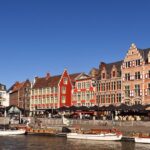
Spend the first 60 to 90 minutes in the historic centre. Walk from Brussels-Central to Grand Place, continue through the Galeries Royales Saint-Hubert, then loop down to Manneken Pis and back towards the Bourse. This gives you the essential historic sights before you commit time to attractions farther away.
The hop-on hop-off bus makes most sense on this particular itinerary. On a normal city break, STIB Metro and trams are usually cheaper and faster. On an extreme day trip, however, the sightseeing bus reduces route-planning and lets the journey itself become part of the sightseeing. Stay on for the Royal Quarter, European institutions and Cinquantenaire, then decide whether your remaining time justifies continuing to the Atomium.
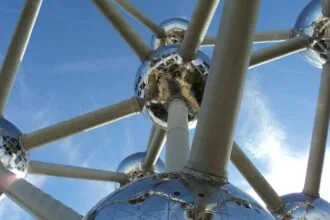
If you have ten hours or more, get off at the Atomium for around 60 to 90 minutes. Adult admission is €17 (£15/$20). Do not add Mini-Europe unless your return journey is late enough to protect a generous margin. The aim here is to see the landmark and experience northern Brussels without turning the middle of the day into a three-hour stop.
Finish back in central Brussels with one compact indoor attraction or a proper meal. Belgian Beer World works well because it is close to Grand Place and costs €14 (£12/$16) for adult admission, while Choco-Story is another easy central option. If your return is by Eurostar, ICE or another international train, leave enough time to reach Brussels-Midi comfortably. If you are flying, work backwards from the airport departure and stop sightseeing when your planned transfer window begins.
Itinerary Two: Classic Brussels for a First Visit
For most first-time visitors, this is the itinerary I would choose. It keeps almost everything within the historic centre and Royal Quarter, which means less time underground on public transport and more time actually seeing Brussels. It also works well with a shorter six- or seven-hour city window.
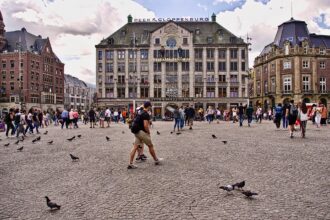
Start at Brussels-Central and walk straight to Grand Place. Give the square enough time to walk the full perimeter rather than taking one photograph and leaving. From there, continue through the Galeries Royales Saint-Hubert, then make the short detour to Manneken Pis before returning towards the Bourse.
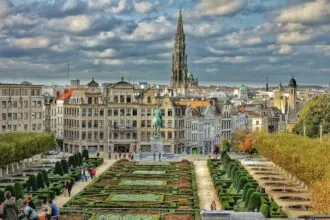
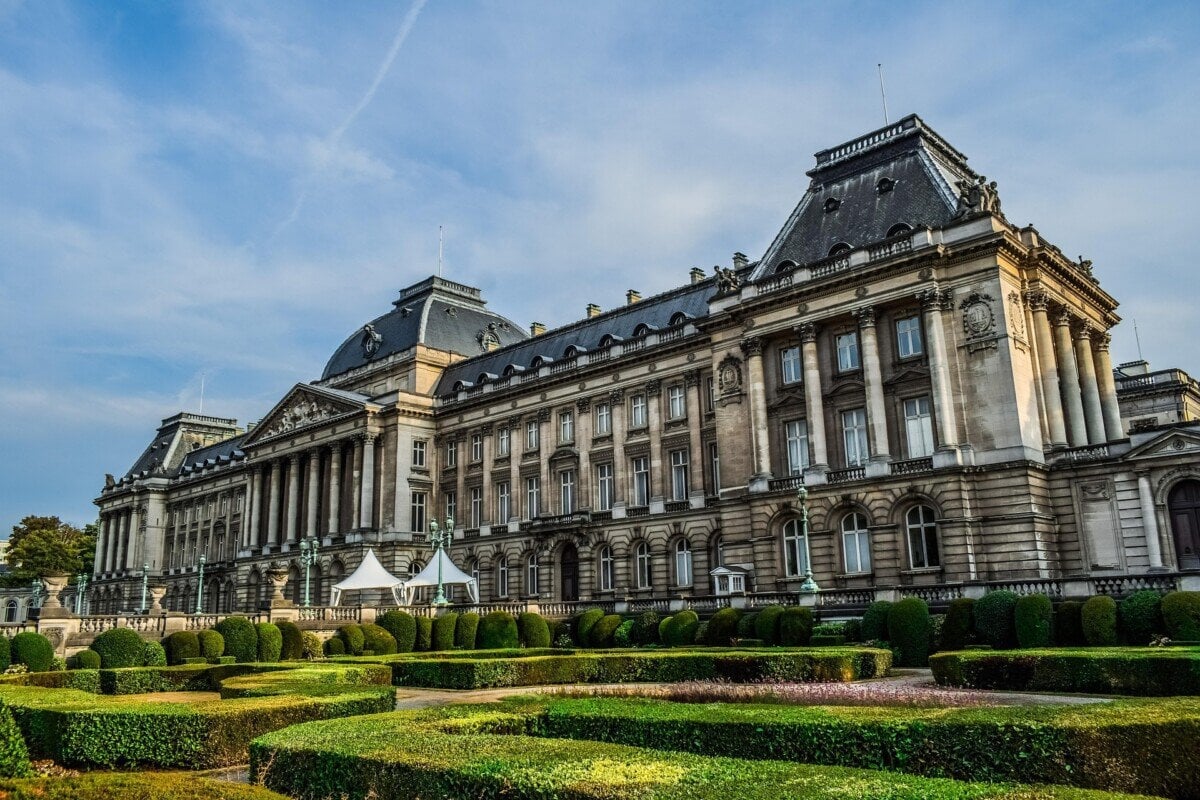
Late morning should be spent climbing towards Mont des Arts and Place Royale. This is where the city changes from the lower medieval centre into the museum and royal quarter. Stop at the Mont des Arts viewpoint, then continue towards Place Royale and the Sablon. The route gives you architecture, views and several of the city’s strongest streets without committing to a long transport journey.
Choose one paid attraction for the middle of the day. The Magritte Museum is the strongest choice for art, Choco-Story is easier to fit into a shorter visit, and Belgian Beer World works particularly well later in the afternoon because it brings you back towards the historic centre. Allow around 60 to 90 minutes for the lighter attractions and at least two hours if you choose a substantial museum.
Use the final part of the day for food and atmosphere rather than another major sight. Walk through the Sablon, stop for chocolate or a café, then return to Grand Place before leaving. If your return is after dark, seeing the square illuminated gives the day a much stronger finish than squeezing in one last museum simply because you have forty minutes spare.
Search flights and useful route combinations in one place.
View flightsUse an eSIM to get online without hunting for a local SIM after arrival.
See eSIM optionsArrange a private pickup before travel instead of sorting transport after landing.
Book a transferItinerary Three: Museums and Culture
This itinerary suits travellers who would rather understand Brussels than simply photograph it. It works best with eight or more useful hours because a proper museum visit can easily take two hours before you have added walking, lunch and the rest of the city.
Begin around Mont des Arts and Place Royale. From Brussels-Central, walk up through the gardens and make either the Royal Museums of Fine Arts or the Magritte Museum your first major stop. Magritte Museum adult admission is €13 (£11/$15). Starting here is efficient because the area is close to the station and you avoid crossing the city before you have seen anything.
Allow at least two hours for the main museum rather than trying to rush it. If Magritte is your priority, focus on that collection and use any spare time for the surrounding Royal Quarter. If you choose the broader Royal Museums complex, be selective about which collections you want to see so the morning does not disappear entirely indoors.
After lunch, switch to a very different kind of cultural attraction. The Belgian Comic Strip Center gives you Belgian popular culture and an Art Nouveau setting, while Belgian Beer World, at €14 (£12/$16) for adults, provides a more interactive look at one of the country’s best-known traditions. Choosing one rather than both keeps the day balanced and leaves time for Grand Place, the Galeries Royales and the streets around the historic centre.
A museum-heavy day is one of the few situations where the Brussels Card may genuinely save money. Check the exact museums you plan to visit, their opening days and their normal admission prices before buying. If you are only visiting one major museum, paying separately will often make more sense.
Itinerary Four: Atomium and Modern Brussels
This itinerary is for travellers who want Brussels beyond the medieval centre. It needs a longer city window, ideally nine hours or more, because the Atomium and European Quarter sit in different parts of the city. If your day is shorter, choose one of them rather than trying to force both into the schedule.
Head to the Atomium first. From Brussels-Central or Brussels-Midi, use the Metro towards Heysel/Heizel and aim to reach the Atomium before the middle of the morning. Allow around 90 minutes for the visit if you want to go inside, including time for the views and exhibitions. Adult admission is €17 (£15/$20). If the queue is heavy and you are on a tight schedule, take the exterior photographs and keep moving rather than sacrificing the rest of the day.
Add Mini-Europe only if your return journey is late enough. The two attractions sit close together and make geographical sense as a pair, but Mini-Europe can easily take another 90 minutes to two hours. Families may prefer the combination; solo travellers with limited time may get more value from the Atomium alone before returning south.
Use the afternoon for the European Quarter. Travel back towards Schuman or Brussels-Luxembourg and choose between the Parlamentarium and the House of European History, both of which add context to Brussels’ role as a European capital. If you are interested in architecture, include a walk through Parc Léopold and towards Cinquantenaire rather than spending the whole afternoon indoors.
Finish at Grand Place before you leave. Even on a modern-Brussels itinerary, the historic centre should not be skipped entirely. Give yourself at least 45 minutes to see Grand Place and the surrounding streets, then leave for Brussels-Midi or the airport with the return margin already protected.
Itinerary Five: Food, Beer and Chocolate
An extreme day trip does not need to be a race between landmarks. Brussels is particularly well suited to a food-led day because several of its most recognisable specialities can be experienced within the compact historic centre, with very little time lost to transport.
Start around Grand Place and the Galeries Royales Saint-Hubert. This gives you the essential city-centre sights while placing you close to some of the best-known chocolate shops. Do not try to sample everything immediately; the point is to build food stops through the day rather than turn the first hour into a sugar rush.
Make Choco-Story Brussels your main late-morning attraction. Allow around 60 to 90 minutes for the museum, demonstration and tasting elements. It is central enough that you can leave and move straight into lunch without another transport leg.
For lunch, choose one proper Belgian dish rather than grazing continuously. Fries are the obvious quick option, while carbonnade flamande or moules-frites make more sense if you have time to sit down. Avoid spending the whole meal immediately around Grand Place if queues are long; a short walk towards Sainte-Catherine, Sablon or the surrounding streets usually gives you more choice.
Use Belgian Beer World as the main afternoon stop. It is close to the Bourse and fits naturally back into the central route, with adult admission priced at €14 (£12/$16). Allow around 90 minutes to two hours if you want to experience the interactive displays and tasting properly. If you do not drink alcohol, swap this for another central museum or spend longer exploring Sablon and the chocolate shops.
Finish with one final treat and enough time to travel back comfortably. A waffle, a traditional beer café or chocolate shopping works better than squeezing in another large attraction. If you are flying home, remember that alcohol, a heavy meal and a rushed airport transfer are not a good combination, so protect the return margin.
Itinerary Six: Brussels on a Budget
You can build a genuinely full day in Brussels without paying for a major attraction. This itinerary is best for travellers who would rather spend on transport and food than tickets, and it works particularly well when you have six to eight useful hours in the city.
Begin with the historic centre, which gives you several of Brussels’ strongest sights for free. Walk from Brussels-Central to Grand Place, continue through the Galeries Royales Saint-Hubert, detour to Manneken Pis and then climb towards Mont des Arts. Allow around two hours for this first part so you can actually look around rather than simply collect photographs.
Continue through the Sablon and Marolles rather than paying for a central museum. The Sablon gives you grand architecture, antique shops and chocolate windows, while the Marolles feels more local and less polished. If your visit falls during market hours, Place du Jeu de Balle adds another free stop without taking you far out of the centre.
Use public transport only when it saves meaningful time. From the centre, head towards the European Quarter and choose the Parlamentarium or House of European History. Both are free, and together with Parc Léopold they can fill a substantial part of the afternoon without an admission charge.
If time allows, continue to Parc du Cinquantenaire. You do not need to enter Autoworld or the military museum to enjoy the monumental arches and park. This gives the day a very different final setting from Grand Place while keeping the sightseeing budget close to zero.
Spend the money you save on one thing you will remember. That might be lunch, a waffle, chocolate to take home or simply a coffee somewhere with a good view. A budget itinerary should still feel like a day out, not a challenge to spend nothing at all.
Looking for more ideas? Our Things to Do in Brussels guide covers more attractions, museums, free sights and experiences that you can swap into any of these itineraries if your timings or interests are different.
Best Brussels Extreme Day Trip by Traveller Type
| Traveller | Best Plan |
|---|---|
| First visit | Classic central Brussels |
| Maximum sights | Hop-on hop-off itinerary |
| Family | Atomium and Mini-Europe |
| Art and museums | Mont des Arts and museum itinerary |
| Budget traveller | Mostly free Brussels |
| Food and drink | Chocolate, beer and food itinerary |
| Short city window | Historic centre only |
Work Backwards from Your Return Journey
The safest way to plan an extreme day trip is to decide when sightseeing must end before building the itinerary. Start with the flight or train you absolutely cannot miss, then work backwards through every stage between central Brussels and your seat on the journey home.
For a flight, use the scheduled departure time as the end point, not the time you want to reach the airport. Allow the check-in and security margin recommended by the airline or airport, then add the transfer from central Brussels. For BRU, that normally means allowing for the train from Brussels-Central or Brussels-Midi plus walking through the terminal. For CRL, build in a much larger road-transfer margin because the shuttle journey is longer and can be affected by traffic.
A simple example shows why this matters. If your flight leaves BRU at 20:00 and you want to be at the airport around two hours beforehand, sightseeing may need to finish around 17:15 to 17:30 once you include the walk to Brussels-Central, waiting time and the train. A nominal 20:00 flight therefore does not give you an evening in Brussels.
International trains need the same treatment. A 20:30 train from Brussels-Midi might allow sightseeing until much later than a flight, but London-bound Eurostar passengers need extra time for security and border controls before departure. Other international trains may have shorter recommended arrival margins, but you should still allow time to reach Midi, find the correct platform and deal with any disruption on the way.
Whatever remains after those deductions is your real day in Brussels. Protect that return margin even if it means dropping the final attraction. The easiest way to ruin an extreme day trip is to squeeze in one more stop and spend the journey home worrying whether you will make it.
Compare hostels and budget-friendly places to stay.
Browse hostelsGet help with compensation, eligible lounge access and disruption support.
Explore AirHelp+Leave your luggage somewhere convenient and explore hands-free.
View storageCarry-On Only Makes the Day Easier
Checked luggage makes little sense for a same-day trip. Waiting at baggage reclaim on arrival can remove a significant portion of your sightseeing time, and having a suitcase with you makes every museum, café and public-transport journey slower. If an airline allows you to travel with a small personal item only, that is usually the cleanest setup for an extreme day trip.
A small backpack or day bag is ideal. Carry the essentials you are likely to need during the day: phone, power bank, passport or ID, payment card, any medication, a light layer and perhaps a compact bottle of water. Keep the bag small enough that you are not constantly looking for cloakrooms or worrying about attraction bag restrictions.
If your wider journey means you do have luggage, store it rather than dragging it through the city. Brussels-Midi is often the most practical point for rail travellers, and services such as Bounce run several drop-off points around the station with per-bag rates from about €3.25 (£3/$4) per day, useful if your sightseeing route takes you away from the main stations. The important point is to factor the drop-off and collection time into the day, especially before the return journey.
Do not create an unnecessary airport-security problem on the way home. Liquids, oversized toiletries, shopping and souvenirs can all be awkward if you are flying with cabin baggage only. If you plan to buy chocolate, beer or other gifts, think about airline baggage rules before turning the final hour of the trip into a packing problem.
What If Your Arrival Is Delayed?
Build the day so it can shrink without collapsing. Extreme day trips are vulnerable to delays because there is no spare evening or second day to absorb lost time. The best itinerary is one where the central sights form the core and the more distant or ticketed attractions can be removed without ruining the visit.
If you lose 30 to 60 minutes, drop one secondary stop. That might mean skipping a café break, shortening a museum visit or removing one attraction from the end of the itinerary. Do not respond to a modest delay by walking faster all day and destroying the experience.
If you lose one to two hours, keep the day central. Grand Place, Galeries Royales, Manneken Pis, Mont des Arts and the Sablon can still give you a very good Brussels visit without relying on long cross-city transfers. This is the point where the Atomium, Mini-Europe or a long museum visit should usually disappear from the plan.
If the inbound journey is severely delayed, stop thinking about the original itinerary altogether. Protect the return trip, choose two or three central highlights, eat something, and treat anything else as a bonus. A short but calm visit is much better than spending the whole day racing against the clock.
The return flight or train is the one fixed point you cannot afford to miss. Treat everything else as adjustable, including prepaid attractions if necessary. Losing the cost of one ticket is frustrating; missing the journey home can be far more expensive.
Walking, Public Transport or Hop-On Hop-Off?
The historic centre is best explored on foot. Grand Place, Galeries Royales, Manneken Pis, Mont des Arts, the Bourse and the Sablon are close enough together that repeatedly going underground can waste more time than it saves. For a short city window, walking also lets you see the streets between the headline sights rather than turning Brussels into a sequence of stations.
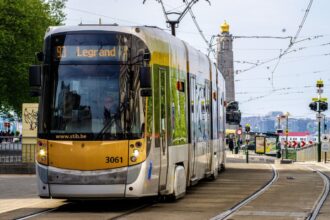
Use STIB Metro, tram and bus services when you need to make a genuine cross-city jump. The Atomium, European Quarter, Cinquantenaire and some specialist museums are where public transport earns its place in an extreme day trip. Contactless payment is particularly useful because you do not need to spend time buying a pass for just one or two journeys. Our Brussels Public Transport Guide covers the current fares, apps and money-saving tickets.
The hop-on hop-off bus occupies a different niche. It is not necessarily the cheapest or fastest way from A to B, but it can be useful when your priority is to see the maximum amount of Brussels with minimal route planning. On the maximum-sightseeing itinerary, the ride itself has value because you are still seeing the city while moving between districts.
Choose one main transport strategy rather than switching constantly. If your day is centred on the old town, walk. If you have one or two distant attractions, use STIB. If you deliberately want a panoramic overview and are comfortable sacrificing some speed, use the sightseeing bus. Constantly changing between all three usually creates more waiting and navigation than the time it saves.

Can You Do Brussels from Charleroi in One Day?
Yes, but CRL needs a much better flight timetable than BRU. The airport transfer can consume a large part of the day, especially once you include the shuttle to Brussels-Midi, the final journey into the historic centre and a sensible return margin for road traffic. A very cheap fare is not automatically good value if it removes two or three hours of usable sightseeing.
Judge the trip by the time you reach Brussels-Midi, not by the aircraft landing time. If a flight lands at Charleroi at 08:00 but you do not reach Midi until well after 09:30, that later time is the real start of your day. Do the same calculation in reverse for the evening and decide in advance when you must leave central Brussels.
If you have only around six usable hours in Brussels, stay central. Grand Place, Galeries Royales, Manneken Pis, Mont des Arts, the Sablon and one compact paid attraction can still make the trip worthwhile. The Atomium is usually the first thing to remove because of the extra cross-city travel.
Eight or more usable hours changes the calculation considerably. At that point CRL can support one of the fuller itineraries, provided the return flight is late enough and you keep a generous road-transfer buffer. Our Charleroi Airport Transfers guide covers the shuttle and alternative routes in much more detail.
What Not to Attempt on a Brussels Extreme Day Trip
Do not turn a one-day Brussels trip into a race around Belgium. Bruges, Ghent and Antwerp are excellent day trips from Brussels, but adding one of them to a flight-based extreme day trip usually defeats the point of visiting Brussels in the first place. A technically possible train connection is not the same thing as a sensible itinerary.
Do not try to combine the Atomium, several major museums and the European Quarter in a short city window. Those sights sit in different parts of Brussels and each one adds transport, queuing and decision time. Pick one distant area or one substantial indoor attraction, then keep the rest of the day geographically tight.
Avoid stacking fixed-time bookings too closely together. A late train, slow lunch, attraction queue or tram disruption can quickly turn two perfectly reasonable reservations into a stressful dash across the city. Leave breathing room between anything that requires you to arrive at a specific time.
Do not build the whole plan around theoretical journey times. A mapping app may say a transfer takes 22 minutes, but it cannot guarantee that you will walk straight onto the platform, find the right exit immediately or avoid service disruption. Extreme day trips need practical buffers, not perfect-case calculations.
The same applies to overloading the city itinerary. Seeing Grand Place properly, sitting down for lunch and having time to notice Brussels is better than spending the entire day checking the clock because you tried to visit every museum, the Atomium and three neighbourhoods before an evening departure.

Rupert’s Handy Travel Tips
I’ve squeezed enough cities into one-day trips to know that the return journey matters more than the final attraction. Here is what I’d want a fellow traveller to remember before attempting Brussels in a day.
- Plan the journey home first: Work out the time you must leave central Brussels before you build the sightseeing plan. That margin is not spare time.
- Choose BRU when the fares are close: The direct train beneath Brussels Airport can save a large amount of usable city time compared with Charleroi.
- Let the itinerary shrink if you are delayed: Drop the Atomium, a museum or a second district before you start eating into the return margin.
- Do not ignore the train: Paris, Amsterdam, Rotterdam, Lille, Cologne, Aachen and London can all produce realistic same-day Brussels trips on suitable timetables.
- Keep the first visit central if time is tight: Grand Place, Galeries Royales, Manneken Pis and Mont des Arts give you a much better short visit than spending half the day crossing the city.
Want to meet the reindeer behind our travel tips? Find out more in our page Who is Rupert?.




Frequently Asked Questions
Is Brussels good for an extreme day trip?
Yes. The historic centre is compact, Brussels Airport has a fast direct train connection and several neighbouring European cities have international rail timetables that allow a useful same-day visit.
Which Brussels airport is best for a day trip?
Brussels Airport (BRU) is normally best because the railway station is directly beneath the terminal and trains run straight to Brussels-Central. Charleroi (CRL) can work when the flight schedule is particularly strong.
How many hours do you need in Brussels?
Around six useful hours in the city is the minimum I would target. Eight to ten hours gives you a much better balance between sightseeing, food and one or two paid attractions.
Can you do Brussels as a day trip from Paris by train?
Yes. Representative 2026 weekday timetables show early morning arrivals in Brussels and return trains to Paris after 21:00, creating a very long usable day.
Can you do Brussels from Amsterdam in one day?
Yes. Early international trains can reach Brussels shortly after 08:00, with evening returns giving well over ten hours between arrival and departure on suitable dates.
Can you visit Brussels from London and return the same day?
Yes, on suitable Eurostar timetables. Remember that the return to London requires pre-departure security and border formalities, so you cannot use the full station-to-station window for sightseeing.
Is the Brussels hop-on hop-off bus worth it for one day?
It can be. Normal public transport is cheaper, but the sightseeing bus is useful when your priority is covering more of the city with less navigation and seeing attractions while you travel between stops.
Further Reading
Start with our Google Flights extreme day trip guide if you have not chosen your travel date yet. It explains how to search for early departures, late returns and non-stop routes rather than relying on the cheapest headline fare.
Once your timetable is fixed, our Things to Do in Brussels guide gives you more detail on the attractions mentioned here, while the Brussels Public Transport Guide helps you decide when walking, contactless travel or a transport ticket makes most sense.
If you decide one day is not enough, our Day Trips from Brussels guide covers Bruges, Ghent, Antwerp, Leuven and other places that work much better once Brussels becomes your base rather than a same-day turnaround.