Reviewed by our editorial team Published
The Best Day Trips from Brussels
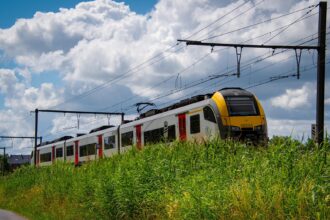
Brussels is one of the best bases in Belgium for day trips. The country is compact, the rail network is dense and several of Belgium’s most interesting cities are less than an hour away by direct train.
The obvious choices are Ghent, Bruges and Antwerp, but they are not the only good options. Leuven is much closer and works brilliantly for a shorter day, while Mechelen, Waterloo, Dinant, Namur and Liège all offer something very different from Brussels.
This guide focuses on trips that are realistically manageable without a car. Most can be done by train, and where an attraction sits beyond the railway station, we explain the extra local connection you need to allow for.
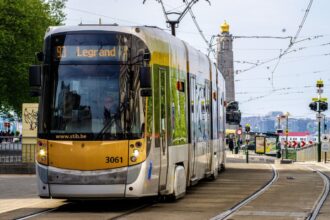
For travelling around Brussels before or after your day trip, see our Brussels Public Transport Guide. If you are arriving by air, our Brussels Airport Transfers Guide and Charleroi Airport Transfers Guide cover both airports separately.
Brussels Day Trips at a Glance
| Destination | Typical rail time | Best for | Easy without a car? |
|---|---|---|---|
| Leuven | About 25 min | University city, beer, architecture | Yes |
| Ghent | About 35–40 min | Canals, castle, medieval centre | Yes |
| Antwerp | About 40–50 min | Art, fashion, architecture | Yes |
| Mechelen | About 25–30 min | Compact historic centre | Yes |
| Bruges | About 1 hr | Canals, medieval streets, first visits | Yes |
| Waterloo | About 25–35 min to Waterloo station | Napoleonic history | Yes, but battlefield needs onward transport |
| Namur | About 1 hr | Citadel, Meuse and Sambre rivers | Yes |
| Liège | About 1 hr | Food, architecture, lively city | Yes |
| Dinant | Roughly 1 hr 40 min | Scenery, citadel, Meuse valley | Yes |
Train times vary by service and date. Check the current SNCB/NMBS journey planner before travelling, particularly at weekends when engineering work can alter routes.
Browse hotels and accommodation for your journey.
View staysExplore holiday homes and apartments for your trip.
See holiday homesCompare hotel prices across multiple booking sites.
Compare ratesGhent: Castles, Canals and a Lively Medieval Centre
Ghent is arguably the best all-round day trip from Brussels. It has the medieval architecture and canals many visitors want from Bruges, but it feels larger, more lived-in and less dominated by day-tour groups. If you only have one spare day in Belgium and want a mix of history, atmosphere, food and major attractions, Ghent is exceptionally easy to recommend.
Direct trains from Brussels normally take around 35 to 40 minutes, with frequent services throughout the day. Most visitors arrive at Gent-Sint-Pieters, which is outside the old centre, so the railway journey is only part of your travel time. From the station, allow roughly another 15 to 20 minutes for the tram into the historic core, or longer if you decide to walk.
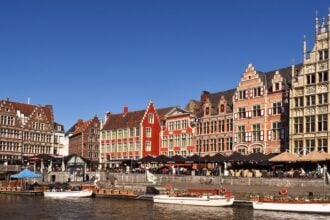
Gravensteen Castle is the obvious place to anchor a first visit. The fortress sits right in the city rather than on its outskirts, so you can combine it naturally with the narrow streets of Patershol and the Graslei and Korenlei waterfronts. Allow around 90 minutes to two hours for the castle if you want to explore the interior and viewpoints rather than simply photograph it from outside.
St Bavo’s Cathedral and the Ghent Altarpiece deserve proper time as well. The cathedral itself is a major historic building, while the Van Eyck brothers’ Adoration of the Mystic Lamb is one of the most important artworks in Belgium. Add the Belfry and St Nicholas’ Church and you have the famous three-tower skyline that defines central Ghent.
A very workable day is castle first, waterfront next, then the cathedral and Belfry after lunch. If the weather is good, add a canal cruise rather than another museum. If it rains, STAM, the Museum of Fine Arts or the Museum of Industry are strong alternatives. Ghent is compact enough that you can change the plan during the day without losing huge amounts of time to transport.
Do not rush back to Brussels too early. Ghent becomes particularly attractive in the late afternoon when some of the day visitors leave and the Graslei and Korenlei begin to feel more relaxed. If your train times allow it, have dinner or a drink before returning. For much more detail on the castle, Altarpiece, museums, canal cruises and practical timings, see our full Things to Do in Ghent guide.
Bruges: Canals, Belfry Views and Medieval Streets
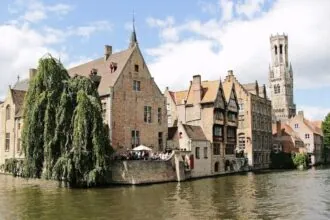
Bruges is the classic Belgian day trip from Brussels. Its canals, stepped-gable houses, Markt square and compact medieval centre deliver the version of Belgium many first-time visitors picture before they arrive. It is more touristy than Ghent, but that does not make it overrated. The historic core is remarkably well preserved and easy to explore in a single day.
Direct trains from Brussels usually take around one hour. Brugge station sits south of the historic centre, but the walk into town is straightforward and can form part of the sightseeing. Walking via Minnewater and the Beguinage is more enjoyable than treating the station-to-centre journey as dead time, and it naturally brings you towards the museum quarter and Markt.
Start with the Markt and Belfry if those are priorities. The Belfry has 366 steps and capacity is naturally limited, so leaving it until late afternoon can be risky on a busy day. Burg Square and the Basilica of the Holy Blood are only a few minutes away, which means you can see several major landmarks before lunch without repeatedly crossing the city.
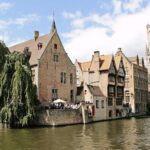
A canal cruise is one of the best ways to add something different to the day. Standard sightseeing cruises are short enough to fit easily into a day trip, but queues can grow in summer and at weekends. If you would rather stay on foot, Rozenhoedkaai, Bonifacius Bridge, the Church of Our Lady and St John’s Hospital can all be linked into one very efficient walking route.
Bruges also rewards visitors who choose one deeper attraction rather than trying to enter everything. The Groeninge Museum is the strongest choice for Flemish art, De Halve Maan Brewery adds Belgian beer and industrial history, while Choco-Story works well for families or anyone who wants something lighter than another church or museum.
Leaving Brussels early makes a real difference. The Markt and the most photographed canal viewpoints become much busier from late morning onward. An early start gives you a quieter first couple of hours, while staying into the early evening lets you see the centre after some coach groups have left. For a much fuller list of attractions, museum choices, free sights and suggested timings, see our Things to Do in Bruges guide.
Antwerp: Art, Fashion and Big-City Energy
Antwerp is the best Brussels day trip if you want something more urban than Bruges or Ghent. It combines monumental architecture, major museums, fashion, shopping, a working port and one of Europe’s most impressive railway stations. The city feels much larger than the medieval destinations, so it suits travellers who want variety rather than a single compact old town.
Direct trains from Brussels typically take around 40 to 50 minutes and arrive at Antwerpen-Centraal. Do not hurry straight out of the station: the grand hall, platforms and multi-level layout are part of the experience. From there, the main route into the historic centre follows De Keyserlei and Meir, so the walk itself takes you past the city’s busiest shopping streets.
For a first visit, aim for Grote Markt, the Cathedral of Our Lady and the old centre before choosing one major museum. The cathedral contains important works by Rubens, while the streets around Grote Markt provide the classic historic side of Antwerp. If art is your priority, the Royal Museum of Fine Arts Antwerp can easily take a large part of the afternoon.
MAS is the better choice if you want city views and a sense of Antwerp’s relationship with its port. The Museum aan de Stroom sits north of the historic centre in the Eilandje district, so allow extra walking or local transport time. The area around the museum is also good for waterside cafés and a different perspective on the city.
Fashion and design are genuine reasons to choose Antwerp over the more traditional day-trip cities. The city’s fashion reputation is not just branding, and travellers interested in independent shops, contemporary design and street style will find far more to explore here than in Bruges. That makes Antwerp particularly good for mixed-interest groups where not everyone wants churches and medieval monuments all day.
You can do Antwerp without using local transport if you keep to the station, Meir and historic centre. Once you add KMSKA, MAS or more distant neighbourhoods, trams and buses become more useful. Give Antwerp a full day rather than treating it as a quick half-day stop, especially if a museum is part of the plan.

Leuven: Gothic Architecture, University Life and Belgian Beer
Leuven is one of the easiest and most underrated day trips from Brussels. It is close enough for a half-day, but there is enough architecture, university history, food and beer culture to justify staying into the evening. Because the rail journey is short, Leuven is especially useful when you want a proper change of scene without spending two hours of the day travelling.
The historic centre is compact and easy to reach on foot from Leuven station. Head first towards Grote Markt, where the extraordinary Gothic Town Hall dominates the square opposite St Peter’s Church. The Town Hall’s dense façade of carved figures is one of the strongest pieces of civic architecture in Belgium and deserves more than a quick photograph.
The university shapes the character of the city. KU Leuven dates back to the 15th century, and the student population keeps the centre lively well beyond the normal sightseeing hours. The University Library and its tower are worth considering if you want a viewpoint, while the streets around the old university quarter make for an easy wander between the major squares.
Oude Markt is the obvious place to experience Leuven’s café and beer culture. The long square is lined with bars and terraces, and it becomes much livelier later in the day. If beer is a major reason for visiting Belgium, Leuven also has strong brewing associations, including Stella Artois, though brewery access and tour availability should be checked for your date rather than assumed.
Leuven works very well as a flexible-weather destination. In good weather, you can add the Great Beguinage, one of the city’s most attractive historic areas, and walk through its quiet lanes and courtyards. In poor weather, concentrate on the library, churches, cafés and indoor attractions instead.
This is the day trip to choose when you want less pressure. You can leave Brussels later than you would for Bruges, spend several relaxed hours in the centre, stay for dinner and still return easily. It is also a good option for travellers who have already seen Belgium’s headline tourist cities and want somewhere that feels more local.
Mechelen: A Quieter Historic City Between Brussels and Antwerp
Mechelen sits between Brussels and Antwerp and is one of the easiest Belgian cities to overlook. That is part of its appeal. The centre has grand churches, attractive squares, riverside walks and a strong sense of history, but it is usually far quieter than Bruges and less overwhelming than Antwerp.
The short train journey makes Mechelen ideal for a relaxed half-day or easy full day. From the station, walk towards Grote Markt and the old centre rather than trying to plan local transport. The city is compact enough that most of the main sights can be covered on foot without constantly checking timetables.
St Rumbold’s Cathedral and its tower are the headline attractions. The tower dominates the skyline and rewards the climb with broad views over the city and surrounding region. Around Grote Markt, the historic façades and civic buildings provide a strong sense of Mechelen’s former importance without the constant crowds found in Belgium’s biggest visitor destinations.
The Dijle path gives the day a completely different feel. Walking beside the river is a good way to link the centre with quieter areas, and the floating Dijlepad sections make the waterfront more than simply a backdrop. This is especially worthwhile in good weather when you want a break from churches and museums.
Families should also consider Technopolis if they want something more interactive. It sits outside the historic centre, so it changes the shape of the day and requires extra travel, but it can make Mechelen a stronger option with children than a purely architectural destination.
Choose Mechelen when you want a Belgian city that feels manageable rather than essential. It is not trying to compete with Bruges for postcard scenery or Antwerp for major museums. Its strength is that you can explore at a slower pace, have a proper lunch, climb the tower and still return to Brussels without the day feeling like a logistical exercise.
Waterloo: The 1815 Battlefield and Lion’s Mound
Waterloo is the strongest historical day trip from Brussels, but it needs more planning than the major Belgian cities. The key reason is simple: the famous battlefield complex is not beside Waterloo railway station. You can absolutely make the trip independently by public transport, but the final leg matters and should be planned before you leave Brussels.
The main attraction is the Waterloo 1815 Memorial. The site includes the Lion’s Mound, the underground museum, the Panorama and access to wider battlefield locations such as Hougoumont Farm. The experience is much better if you allow several hours and actually follow the story of the battle rather than treating the mound as a quick photo stop.
Train travel gets you to Waterloo town, not directly to the battlefield. From Brussels, the rail journey itself is relatively short, but you then need an onward bus, taxi or other local connection to the memorial area. That means Waterloo is technically easy without a car, but it is not as seamless as stepping off a train in Bruges or Antwerp and immediately beginning the day.
A guided excursion can therefore be genuinely useful here. The important distinction is whether the tour includes only transport or actually includes guided interpretation and battlefield stops. A transport-only excursion may still be convenient if it removes the local connection, but it should not be mistaken for a guided battlefield experience.
If you travel independently, build the day around the memorial rather than Waterloo town centre. Check the return connection before committing to a late visit to Hougoumont or another outlying site, and avoid relying on a tight sequence of buses near the end of the day. The battlefield is spread over a wider area than first-time visitors often expect.
Waterloo is best for travellers with a genuine interest in Napoleonic or military history. If that is only a passing interest, Ghent, Bruges or Antwerp will usually provide a more varied day. If the battle is the reason you are going, however, Waterloo offers enough depth to justify a full-day excursion from Brussels.
Compare routes and fares for your next trip.
Compare flightsBrowse Airalo eSIM options for convenient travel data.
Check eSIMsArrange a private pickup before travel instead of sorting transport after landing.
Book a transferNamur: Citadel Views and the Meeting of Two Rivers
Namur feels completely different from the Flemish cities west and north of Brussels. The city sits where the Sambre and Meuse rivers meet, with the large Citadel of Namur rising above the centre. It is calmer than Antwerp, less polished than Bruges and a good introduction to Wallonia if your trip has otherwise focused on Brussels and Flanders.
Direct trains from Brussels take around one hour, making Namur straightforward without a car. The station is close enough to the centre that you can begin on foot, then work gradually towards the rivers and citadel rather than needing another complicated transfer after the train.
The Citadel is the main reason to make the trip. Its elevated position gives wide views over both rivers and the city, while the site itself has enough history and walking routes to occupy a substantial part of the day. Depending on how much of the citadel you want to explore, allow at least a couple of hours rather than racing up for the viewpoint and straight back down.
The lower town is worth exploring before or after the citadel. The historic streets are compact, with cafés, churches and riverside viewpoints close together. Namur works especially well for travellers who like a slower day built around walking and atmosphere rather than a checklist of headline museums.
Good weather makes a big difference here. The river setting and outdoor parts of the citadel are central to the experience, so Namur is a stronger choice on a clear day than when low cloud or heavy rain obscures the views. In poor weather, one of the larger museum-heavy cities may offer more indoor options.
If you only have three hours in Namur, prioritise the Citadel over the lower town. Take the cable car or walk up to the fortress, allow around 90 minutes for the ramparts and viewpoints, then use the rest of the time for a quick coffee or a walk along the Meuse before heading back to the station rather than trying to add a museum as well.
Choose Namur if you want a gentler full-day excursion from Brussels. It does not have the instant visual impact of Bruges, but the combination of rivers, hills and Walloon character makes it one of the more distinctive alternatives in this guide.
Liège: Calatrava Architecture, Food and a Grittier City Break
Liège is one of Belgium’s most distinctive large cities and a strong choice if you have already seen Bruges and Ghent. It feels less polished, more lived-in and noticeably different from Brussels. That rougher edge is part of the appeal, especially for travellers who prefer working cities, food markets and contemporary urban life to perfectly preserved medieval centres.
Many trains arrive at Liège-Guillemins, which is an attraction in its own right. The Santiago Calatrava-designed station is one of Belgium’s most dramatic modern buildings, with sweeping white arches and a huge open structure that makes a memorable first impression. Do not assume, however, that stepping out of the station puts you straight in the historic centre.
The central sights are more spread out than in Leuven, Mechelen or Bruges. You can walk, but local buses may save time if you want to combine the station, old centre and riverside areas efficiently. The Montagne de Bueren, with its long flight of steps, is one of the city’s best-known landmarks and rewards the climb with views across the rooftops.
Liège works especially well for food-focused visitors. The city has a strong local identity, from Liège waffles to hearty regional dishes, and its markets and cafés feel much more integrated into everyday life than the tourist-centred food streets in some other Belgian cities. If your priority is eating well and exploring neighbourhoods, Liège can be more rewarding than a standard attraction checklist suggests.
Allow around an hour each way from Brussels on faster direct services. Because the station and centre are not as tightly connected as elsewhere, this is better suited to a full day than a half-day. Give yourself time to explore rather than trying to copy a Bruges-style walking itinerary onto a much larger urban layout.
If you only have three hours in Liège, focus on Montagne de Bueren and the riverside rather than trying to cover the whole city. Climb the 374-step staircase for the rooftop views, then head back down towards the Meuse; if your visit falls on a Sunday morning, build in time for La Batte, the long riverside market that is one of Belgium’s oldest and largest, rather than treating it as an afterthought.
Choose Liège if you want a Belgian city that feels different rather than prettier. It is not the obvious first day trip for a newcomer, but it becomes much more compelling once you have already seen Belgium’s classic medieval destinations.
Dinant: Citadel, River Scenery and the Meuse Valley
Dinant is the best scenic day trip in this guide. The town is squeezed between the Meuse and steep limestone cliffs, with the Collegiate Church of Notre-Dame and the Citadel forming one of Belgium’s most recognisable views. It is much smaller than Ghent, Antwerp or Liège, so the appeal is the setting and atmosphere rather than a long list of major attractions.
The journey is longer than the other trips here, usually around 1 hour 40 minutes from Brussels depending on the connection. That makes Dinant a full-day commitment. It is not a destination to squeeze into a spare afternoon, especially once you allow time for the walk from the station, the citadel and a relaxed lunch beside the river.
The Citadel should be the centrepiece of the visit. You can reach the fortress above the town and spend time exploring its military history while taking in views across the Meuse valley. Pair it with the Collegiate Church below so you experience both the landmark skyline and the streets at river level.
Dinant is also closely associated with Adolphe Sax, inventor of the saxophone. References to Sax appear throughout the town, adding a cultural theme that is easy to combine with the main walking route. Because the centre is compact, you can explore these smaller sights without needing public transport once you arrive.
Good weather matters more here than in most of the other destinations. The river, cliffs and viewpoints are a major part of the experience, so a clear day makes the long journey much easier to justify. In persistent rain, Ghent, Antwerp or Leuven offer more substantial indoor alternatives.
Choose Dinant when scenery is the priority and you are happy to trade variety for setting. It is one of the least rushed destinations once you arrive because there is no pressure to fit in multiple museums. The trade-off is the longer train journey, so check the return timetable before settling into dinner or an evening riverside walk.
How to Save Money on Belgian Train Day Trips
Belgium changed its domestic rail fare system, so older advice about products such as the former Rail Pass can now be misleading. The current system uses age-based fares and the optional Train+ discount product, which can reduce off-peak and weekend fares and cap the price of longer journeys.
Before buying several separate day-trip tickets, compare the current fare for your dates in the SNCB/NMBS app or on the operator’s website. The ticketing system automatically offers products based on age and journey, while Train+ can be worthwhile if you intend to make several longer rail journeys during the same visit.
Families should also check the current Free4Kids conditions for children under 12. Our Belgium Train Tickets Explained guide goes through the new fare structure in much more detail.
If Bruges or Ghent forms a bigger part of your trip than a single fast day, a city pass can be worth pricing against the rail fare. Bruges’ Musea Brugge Card currently starts from around €49 (£41/$53) and covers 12 museums and sites over 72 hours, while Ghent’s CityCard Gent costs around €49 (£41/$53) for 48 hours or €55 (£46/$60) for 72 hours and adds unlimited public transport and a canal cruise on top of museum entry. Both are aimed at a longer stay rather than a single rushed day trip, so weigh the validity window against how much time you actually have before assuming it is good value.
Train or Guided Tour: Which Works Best for Each Brussels Day Trip?
Every destination in this guide can be reached without hiring a car, but the train is not equally convenient for all of them. For the major Belgian cities, rail is usually the obvious choice because you can travel independently, stay as long as you want and return on a later service. Tours become more useful when the attraction sits beyond the railway station or when you want a guide to provide context rather than simply transport.
| Destination | Can you go by train? | When a tour may be better |
|---|---|---|
| Ghent | Yes, direct trains to Gent-Sint-Pieters, then tram or bus to the centre | If you specifically want a guided history tour or a combined Ghent and Bruges excursion |
| Bruges | Yes, direct trains and the centre is walkable from the station | If you want a guide, canal cruise package or a combined two-city day |
| Antwerp | Yes, direct trains to Antwerpen-Centraal | Usually unnecessary unless the tour includes specialist art, fashion or architecture content |
| Leuven | Yes, direct trains and an easy walk into the centre | Rarely necessary for transport alone |
| Mechelen | Yes, direct trains and a compact walkable centre | Rarely necessary for transport alone |
| Waterloo | Yes, but Waterloo station is not at the battlefield | Often useful because a tour can remove the awkward onward transfer and add battlefield interpretation |
| Namur | Yes, direct rail is practical for most visits | Only if you want a specialist guided visit rather than simple transport |
| Liège | Yes, direct trains to Liège-Guillemins | Usually unnecessary unless you want a themed food or architecture tour |
| Dinant | Yes by rail, with the exact service sometimes involving a connection | Useful if bundled with another Meuse Valley attraction or if you prefer not to manage the longer journey independently |
For Ghent, Bruges, Antwerp, Leuven, Mechelen, Namur and Liège, we would normally choose the train. You are not gaining much by paying someone simply to move you between two railway-connected city centres, and independent travel gives you more control over when you arrive and leave.
Waterloo is the clearest exception. The train gets you to Waterloo town, but the battlefield complex needs another connection. A well-designed tour that includes the Lion’s Mound, museum and battlefield interpretation can therefore save both time and planning. Dinant sits somewhere in the middle: rail is perfectly possible, but the longer journey can make a well-priced organised excursion attractive if it includes more than transport.
Check exactly what a tour includes before booking. Some excursions are little more than return transport with free time, while others include a guide, admissions or a structured walking tour. A transport-only product can still be useful, but do not pay a premium expecting a guided experience unless the listing explicitly says that is what you are getting.

Compare Trains and Buses with Omio
Choosing between trains and buses is not always obvious. Some routes are faster by train, while others are cheaper or easier by bus. Omio helps you compare routes, journey times, prices, and tickets in one place.
It is useful for city-to-city travel, cross-border journeys, and trips where flexibility matters. You can quickly see which option works best for your route, budget, and schedule before booking.

Rupert’s Handy Travel Tips
I’ve hopped around Belgium from Brussels more times than I can count, and the easiest day trips are usually the ones where you keep the transport simple and leave yourself enough time to enjoy the destination properly.
- Choose the direct train when you can: Ghent, Bruges, Antwerp, Leuven and Mechelen are all easier when you travel independently and avoid unnecessary tour timings.
- Check the SNCB/NMBS app on the morning of travel: Weekend engineering work and platform changes can affect even straightforward journeys.
- Leave Brussels early for Bruges and Ghent: You will get more out of the quiet first hours than arriving with the main wave of day-trippers around late morning.
- Plan Waterloo’s final connection before you leave: The railway station is not beside the battlefield, so the local bus or taxi is part of the day rather than an afterthought.
Want to meet the reindeer behind our travel tips? Find out more in our page Who is Rupert?.




Frequently Asked Questions
What is the best day trip from Brussels?
For most first-time visitors, Ghent or Bruges are the strongest choices. Ghent is faster to reach and feels more lived-in, while Bruges has the classic canal-and-medieval-streets atmosphere.
Can you visit Bruges and Ghent in one day from Brussels?
It is possible, but it makes the day much more rushed. Both cities deserve several hours, so most visitors will have a better experience choosing one unless they specifically prefer a fast highlights-only itinerary. There is no special combined SNCB ticket covering both cities, so independent travellers simply buy two ordinary day returns; several operators do sell a guided full-day Bruges-and-Ghent excursion by train from Brussels for anyone who would rather have the transport and itinerary handled for them.
How long is the train from Brussels to Ghent?
SNCB/NMBS currently lists an average journey of around 36 minutes, with frequent direct trains.
How long is the train from Brussels to Bruges?
The fastest direct journeys are around one hour. Allow additional walking time from Bruges station to the historic centre.
Do I need to book Belgian domestic trains in advance?
Normally no. Domestic Belgian trains generally do not use compulsory seat reservations, so you can buy a ticket for the route and travel on an appropriate service. Check current ticket conditions in the SNCB/NMBS app.
Is Waterloo easy to visit without a car?
Yes, but it is less straightforward than Bruges or Ghent because the battlefield complex is not beside Waterloo railway station. You need to plan the onward local connection.
Which Brussels station should I leave from for day trips?
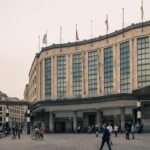
Many intercity trains call at Brussels-Midi, Brussels-Central and Brussels-North. Use whichever station is most convenient for your accommodation, but check your exact service before setting off.
Further Reading
If Ghent or Bruges is at the top of your list, our Things to Do in Ghent and Things to Do in Bruges guides go much deeper into the castles, museums, churches, canal cruises, city passes and practical timings that are only summarised on this day-trip page.
For anyone planning several Belgian rail journeys, read our Belgium Train Tickets Explained guide alongside the Interrail Benelux Pass Guide. The first explains SNCB/NMBS fares and Train+, while the second is worth comparing if Belgium forms part of a wider rail trip through the Netherlands and Luxembourg.
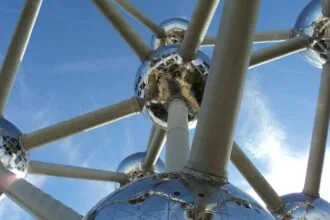
Back in Brussels, our Things to Do in Brussels guide covers the Grand Place, Atomium and major museums, while the Brussels Public Transport Guide explains the Metro, trams, buses, Brupass products and contactless fares for getting to and from the station efficiently.