Reviewed by our editorial team Published
Getting Around Brussels
Brussels is one of the easiest European capitals to explore without a car. The city has a dense mix of metro lines, premetro tunnels, trams, buses and local trains, and most visitors can reach the historic centre, European Quarter, Atomium, major railway stations and outer neighbourhoods without needing a taxi.
The part that confuses first-time visitors is not the network itself, but the number of operators. STIB-MIVB runs the Brussels metro, most city trams and buses. SNCB-NMBS runs trains. De Lijn buses enter Brussels from Flanders, while TEC services approach from Wallonia. Fortunately, the Brupass system lets you use several of these networks with one ticket when you stay within the relevant zone.
For a short city break, you do not need to master every ticket type. In many cases, simply tapping the same contactless bank card or phone on STIB-MIVB services is the easiest and cheapest way to travel. Longer stays, families and visitors combining metro, tram, bus and train may save more with Brupass, Brupass XL or a 10-journey ticket.
This guide explains how the Brussels network works, which apps are worth downloading, how to use contactless payment, where the money-saving tickets make sense and which option is best for different types of trip.
Brussels Public Transport at a Glance
| Transport | Main operator | Best for | Visitor tip |
|---|---|---|---|
| Metro | STIB-MIVB | Fast cross-city journeys | Best for Atomium, Midi, Schuman and outer districts |
| Premetro | STIB-MIVB | Trams using underground city-centre tunnels | Looks like a metro on the map but is operated by trams |
| Trams | STIB-MIVB | Central Brussels and neighbourhoods | Often more useful than the metro for sightseeing |
| Buses | STIB-MIVB, De Lijn, TEC | Areas beyond rail and tram corridors | Check the operator before choosing a ticket |
| Local trains | SNCB-NMBS | Fast trips between major Brussels stations and outer areas | Brupass can cover local rail journeys within its zone |
| Airport Line 12 | STIB-MIVB | Brussels Airport and European Quarter | Special Airport2City fare applies from the airport |
Most tourists will use STIB-MIVB for the majority of their journeys. The other operators become more important when you travel towards the outskirts, make a short rail hop or stay outside the central Brussels-Capital Region.
The simplest way to think about the network is by journey type rather than vehicle type. Walk within the historic centre, use metro or tram for longer urban journeys, consider local trains for fast cross-city hops, and only start thinking about Brupass or Brupass XL when more than one operator is genuinely useful.
See hotel options and places to stay for your trip.
Browse hotelsExplore holiday homes and apartments for your trip.
See holiday homesCompare hotel prices across multiple booking sites.
Compare ratesWho Runs Public Transport in Brussels?
STIB-MIVB is the main Brussels operator and the one most visitors need to understand first. It runs the metro, city trams and a large bus network across the Brussels-Capital Region. The same operator name appears in French as STIB and in Dutch as MIVB, so you will see both versions on maps, stations and apps.
SNCB-NMBS is Belgium’s national railway operator. Several stations sit inside Brussels, including Brussels-North, Brussels-Central, Brussels-Midi/Zuid, Luxembourg, Schuman and others. For some journeys across the city, a local train can be faster than the metro.
De Lijn operates buses and trams primarily in Flanders, while TEC covers Wallonia. Both have services that enter the Brussels area. You do not need separate operator knowledge for every trip if you use a valid Brupass product within the correct zone, but it is still useful to know which company you are boarding because ticket validation and app behaviour can differ.
Operator names matter most when buying or activating tickets. A route planner may show a perfectly sensible journey that combines a STIB tram with an SNCB train or a De Lijn bus, but that does not mean a basic STIB ticket covers the whole trip. Check the operator logos in the app before paying so you know whether ordinary contactless travel is enough or a multi-operator ticket makes more sense.
How the Brussels Metro Works
The Brussels metro is relatively compact compared with systems in London or Paris, but it is fast and useful for longer cross-city journeys. The network is particularly handy for travelling between the main railway stations, the European Quarter, the Atomium area and neighbourhoods beyond the historic core.
Metro stations use ticket gates, so you validate before reaching the platform. If you are using contactless payment, tap the same bank card, phone or smartwatch at the gate. If you are using a digital Brupass ticket in the STIB-MIVB app, the app provides the QR code used to open the gate.
For tourists, the metro is often less important inside the oldest part of Brussels because many central attractions are within walking distance of each other. It becomes much more useful once you travel beyond the Grand Place area.
The main mistake is using the metro for journeys that are easier on foot. Around Grand Place, the Royal Galleries, Mont des Arts and the central shopping streets, walking can be quicker once you include the time spent reaching a platform and waiting for a train. Save the metro for journeys where it genuinely cuts distance, such as the Atomium, Schuman or transfers between more widely separated districts.
What is the Brussels Premetro?
One feature that catches visitors out is the premetro. These are tram routes that run through underground tunnels in central Brussels. The stations can feel very similar to metro stations, but the vehicles are trams and the lines continue above ground outside the central tunnel sections.
This matters mainly when reading maps. Do not assume that every underground line is a metro line. In practical terms, however, the distinction is not difficult for visitors because the same STIB-MIVB tickets and contactless payment system apply.
For visitors, the premetro is best treated as part of the tram network. Follow the route number and destination shown on the platform rather than worrying about whether the vehicle is technically underground or above ground. The useful point is that the same ticketing rules continue to apply as the tram leaves the tunnel and returns to street level.

Brussels Trams
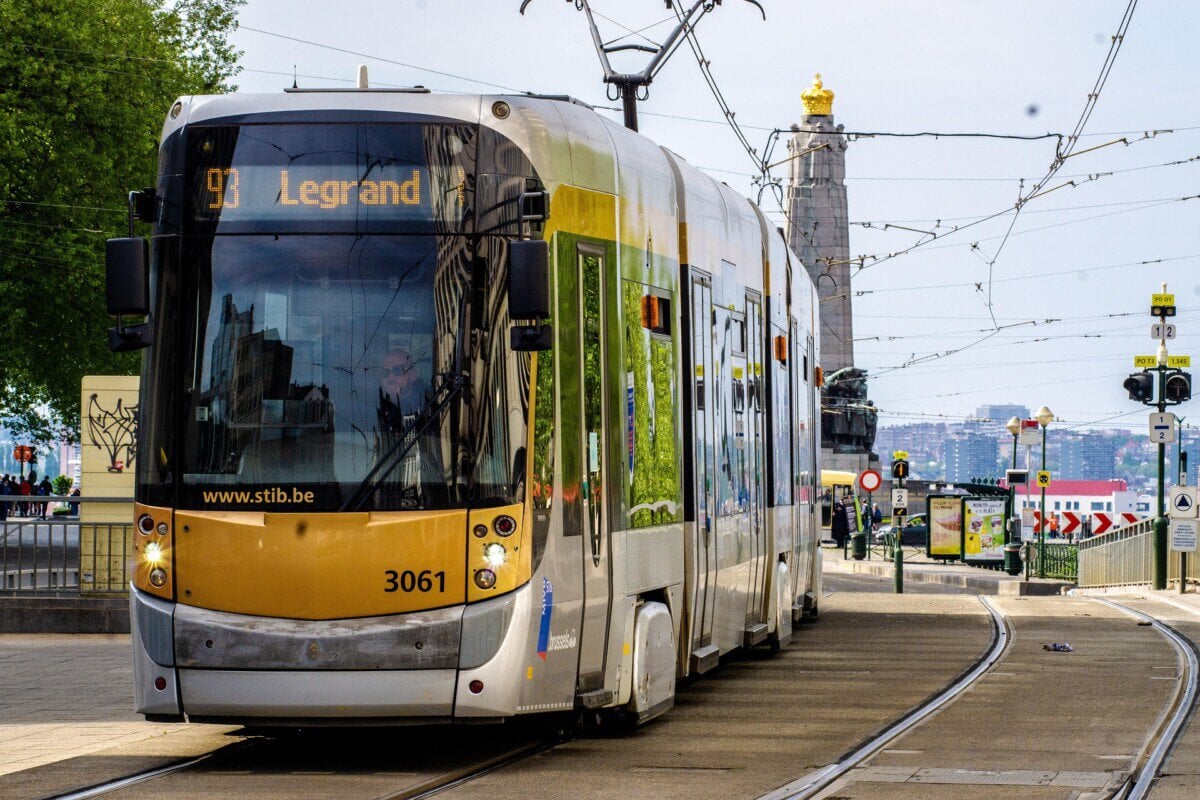
Trams are one of the most useful ways to get around Brussels. They reach neighbourhoods that the metro does not, and several routes pass close to major sights, shopping streets, parks and railway stations.
Unlike the metro, you usually validate after boarding the tram. If you are paying contactless, tap the grey contactless reader. If you change onto another STIB-MIVB vehicle within the permitted transfer window, validate again with the same card or device so the system recognises the connection correctly.
For sightseeing, trams can be more intuitive than the metro because you remain above ground for much of the journey and can see where you are. They are particularly useful once you move away from the very compact historic centre.
Trams are also useful for linking districts that do not sit neatly on one metro corridor. They can save a surprising amount of walking around the edges of the centre, and because stops are generally closer together than metro stations, they are often the better choice when mobility, luggage or tired children make a long walk less appealing.
Brussels Buses
STIB-MIVB buses fill the gaps between the metro and tram networks and are useful for outer neighbourhoods, residential areas and late-evening journeys. De Lijn and TEC buses also enter parts of Brussels from neighbouring regions.
The most important airport bus for visitors is Line 12, which links Brussels Airport with the European Quarter. It uses special pricing when departing from the airport, so an ordinary Brupass or Brupass XL ticket does not replace the required Airport2City fare for that airport-originating journey. Our Brussels Airport Transfers guide explains the airport fare and alternatives in more detail.
If you land at the other Brussels airport, the transport is completely different. Brussels South Charleroi Airport is far outside the city and should not be treated as part of the normal Brussels public transport network.
Within Brussels itself, buses are most useful when they solve a specific gap. They are rarely the first thing a visitor needs to master, but they become valuable for neighbourhoods beyond the tram and metro grid, late-evening journeys and routes where walking to the nearest rail station would take longer than simply boarding a bus nearby.
Using Local Trains Within Brussels
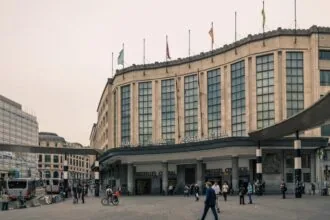
Brussels has more useful railway stations than many visitors realise. Brussels-North, Brussels-Central and Brussels-Midi/Zuid form the main north-south spine, but stations such as Brussels-Luxembourg and Schuman can be extremely useful for the European Quarter.
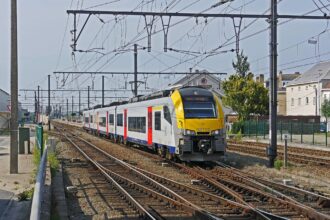
A local SNCB-NMBS train can sometimes be the quickest way to cross the city. Brupass and Brupass XL are designed specifically to make this kind of mixed journey easier because they can include eligible rail journeys alongside STIB-MIVB, De Lijn and TEC services within their validity areas.
If you plan longer rail journeys beyond Brussels, see our Belgium Train Tickets Explained guide. Belgium changed its national rail fares substantially, so older advice about legacy Rail Pass products can be misleading.
Local trains are particularly useful when both your origin and destination sit close to railway stations. A short SNCB journey between major Brussels stations can beat changing metro lines, but it is less attractive if you then need a long walk at either end. Check the complete door-to-door journey in the app rather than comparing only the time spent on the train.
Compare routes and fares for your next trip.
Compare flightsUse an eSIM to get online without hunting for a local SIM after arrival.
See eSIM optionsCheck private airport pickup options and plan the first part of your journey in advance.
View transfersThe Easiest Way to Pay: Contactless
For a short visit where you are mainly using STIB-MIVB, contactless payment is usually the simplest option. You can use an eligible contactless bank card, smartphone or smartwatch directly on the metro gates and validators on buses and trams.
As of 2026, a standard STIB-MIVB contactless journey costs €2.40 (£2.05/$2.80). Connections made within 60 minutes of the first validation are included, but you should still validate the same card or device when changing vehicles. The official STIB-MIVB contactless guide explains the current rules.
The major money-saving feature is the €8.50 (£7.30/$9.90) daily cap. Once your eligible STIB-MIVB contactless journeys reach that amount, further STIB-MIVB travel that day does not increase the charge. This means a visitor making four or more separate STIB-MIVB journeys can spend less than the €9 (£7.75/$10.45) STIB day ticket without having to decide in advance that they need a pass.
Always use the same payment method throughout the day. A physical bank card and the same card loaded into Apple Pay or Google Pay can be treated as different payment tokens. If you switch between them, the system may not combine the journeys towards the same daily cap.
Contactless is best when you value simplicity over pre-planning. You do not need to queue at a machine, work out in advance how many journeys you will make or remember to activate a ticket before boarding. The trade-off is that it is mainly a STIB-MIVB solution, so once trains or regional operators enter the journey, Brupass may be the cleaner choice.
Not sure which ticket you actually need? Tapping a contactless card or phone is the easiest choice for one or two journeys, since STIB-MIVB simply charges per trip up to the €8.50 (£7.30/$9.90) daily cap. Planning a single day that mixes metro, tram, bus and train, a Brupass 1-day ticket is usually the better value. If your trip stretches into the wider suburbs, Brupass XL extends the same idea further out, though neither Brupass nor Brupass XL covers the special Airport2City fare on Line 12 when departing from Brussels Airport.
Brussels Public Transport Ticket Prices
| Ticket | 2026 price | Best for |
|---|---|---|
| STIB-MIVB contactless single | €2.40 (£2.05/$2.80) | Occasional city journeys |
| STIB-MIVB contactless daily cap | Maximum €8.50 (£7.30/$9.90) | Busy sightseeing days using STIB only |
| STIB 1-day ticket | €9.00 (£7.75/$10.45) | Unlimited STIB travel without relying on contactless |
| Brupass 1 journey | €2.70 (£2.30/$3.15) | Journeys combining Brussels operators |
| Brupass 10 journeys | €18.90 (£16.25/$21.95) | Several days, couples or families |
| Brupass 1 day | €9.50 (£8.15/$11.05) | Heavy multi-operator travel inside Brussels |
| Brupass XL 1 journey | €3.60 (£3.10/$4.20) | Travel extending into the wider suburban zone |
| Brupass XL 10 journeys | €25.20 (£21.65/$29.30) | Repeated travel around Brussels and suburbs |
These fares are current for 2026 and can change. The latest prices are published by STIB-MIVB.
Do not compare tickets on price alone. The €8.50 (£7.30/$9.90) contactless cap applies to eligible STIB-MIVB journeys, while Brupass products cost more because they can cover several operators. The right comparison is therefore not simply €8.50 (£7.30/$9.90) versus €9.50 (£8.15/$11.05), but whether you actually need trains, De Lijn or TEC during the same day.
How to Save Money on Brussels Public Transport
The cheapest ticket depends on how you actually travel. There is no need to buy a multi-day or day pass automatically just because you are visiting as a tourist.
If you make only one, two or three STIB-MIVB journeys in a day, contactless payment at €2.40 (£2.05/$2.80) per journey is usually the simplest choice. If you reach four separate journeys, the €8.50 (£7.30/$9.90) daily cap becomes especially useful because you can continue using STIB-MIVB services without increasing the total for that day.
If you are staying several days or travelling as a couple or family, the Brupass 10-journey ticket at €18.90 (£16.25/$21.95) can be substantially better value than buying ten individual €2.70 (£2.30/$3.15) Brupass journeys. Ten singles would cost €27 (£23.20/$31.35), so the 10-journey product saves €8.10 (£6.95/$9.40), a saving of 30%.
The same principle applies farther out. Ten Brupass XL singles would cost €36 (£30.95/$41.85), while the Brupass XL 10-journey ticket costs €25.20 (£21.65/$29.30). That is a saving of €10.80 (£9.30/$12.55) if you genuinely need ten journeys in the extended zone.
A Brupass 1-day ticket costs €9.50 (£8.15/$11.05). It is more expensive than the €8.50 (£7.30/$9.90) STIB contactless cap, but it has a different purpose because Brupass can cover eligible travel with STIB-MIVB, SNCB-NMBS, De Lijn and TEC inside the Brupass zone. If you know you will combine operators heavily in one day, the extra euro can be worthwhile.
For most visitors, the biggest saving comes from not buying more transport than the itinerary needs. Grand Place, the Royal Galleries, Mont des Arts and many central museums sit close together, so a sightseeing day that looks busy on paper may still involve only two paid journeys. Work out where you are actually going before deciding that a day pass is automatically better value.
What is Brupass?
Brupass is the multi-operator ticket designed for journeys within Brussels. Instead of worrying about which company runs a particular tram, bus or train, a valid Brupass lets you use eligible services from STIB-MIVB, SNCB-NMBS, De Lijn and TEC within the defined Brussels zone.
For most tourists who stay inside the Brussels-Capital Region, Brupass is the more relevant version. The 1-journey product costs €2.70 (£2.30/$3.15), the 10-journey product €18.90 (£16.25/$21.95) and the 1-day product €9.50 (£8.15/$11.05) in 2026.
How to buy it: the easiest route is a digital ticket in the STIB-MIVB app, bought and activated on your phone with no MOBIB card needed. If you would rather use a physical card, buy or top up a MOBIB card with a Brupass product at a red vending machine (found at metro and premetro stations across the network) or at a STIB KIOSK or BOOTIK sales outlet, then validate it on the yellow validators when you travel.
The 10-journey version is particularly useful for visitors staying several days because it gives you flexibility without committing to unlimited travel every day. It can also work well for couples or families because the digital ticket system allows multiple journeys to be purchased and activated as needed.
Brupass makes most sense when your journey genuinely crosses operator boundaries. For example, a day that combines a local SNCB train with STIB metro or tram travel is exactly the sort of itinerary it was designed for. If every journey is on STIB-MIVB, contactless is often simpler and may be cheaper.
What is Brupass XL?
Brupass XL extends the multi-operator concept beyond central Brussels into a wider suburban area. It includes the full STIB-MIVB network, eligible De Lijn and TEC stops in the extended area, and more than 50 SNCB-NMBS stations within the Brupass XL zone.
It is most useful when your hotel, meeting, attraction or family visit lies outside the standard Brupass zone but still within the wider Brussels commuter area. In 2026, a single Brupass XL journey costs €3.60 (£3.10/$4.20) and ten journeys cost €25.20 (£21.65/$29.30).
How to buy it: Brupass XL is bought the same way as standard Brupass, as a digital ticket in the STIB-MIVB app, or loaded onto a MOBIB card at a red vending machine or a STIB KIOSK/BOOTIK sales outlet.
Do not buy XL simply because it sounds more comprehensive. If all your journeys stay within central Brussels, normal Brupass or STIB-MIVB contactless payment is usually cheaper.
One important exception is Brussels Airport. Brupass and Brupass XL are not valid for Line 12 when departing from Brussels Airport; that journey uses the special Airport2City fare.
Think of Brupass XL as a suburban extension, not a premium version of Brupass. It is useful only when the places you need to reach sit outside the standard Brussels zone. Check the zone map first, particularly if your accommodation is in the wider commuter belt, because paying for XL adds no benefit when all of your sightseeing remains in central Brussels.
Do You Need a MOBIB Card?
A MOBIB card is a reusable smartcard onto which Belgian public transport tickets and passes can be loaded. It can carry products from several operators, but most short-stay tourists no longer need to buy one.
If you are happy using STIB-MIVB contactless payment or digital Brupass tickets in an app, a MOBIB card adds an unnecessary step. It becomes more useful for regular visitors, residents, season-ticket holders and anyone who prefers a physical travel card.
For a first short visit, there is usually no reason to buy a MOBIB card just because it is the traditional local smartcard. Contactless and app-based tickets remove the need to find a sales point, load a product and keep track of another physical card. Consider MOBIB only when your ticket choice genuinely requires it or you expect to return to Brussels repeatedly.
Browse hostels and budget-friendly stays.
See hostelsAccess compensation support, eligible lounge benefits and faster payouts.
See the benefitsUse convenient luggage storage between arrival, check-in and departure.
Check storageBest Apps for Brussels Public Transport
Brussels is unusually good for official transport apps, but you do not need to download all of them. For most visitors, the STIB-MIVB app is the most useful starting point, with the SNCB-NMBS app worth adding if you plan to use trains.
| App | Operator | Best features | Who should download it? |
|---|---|---|---|
| STIB-MIVB | STIB-MIVB | Route planning, live departures, digital Brupass and Brupass XL tickets | Almost every Brussels visitor |
| SNCB-NMBS | Belgian Railways | Live train times, platform changes, rail tickets, multimodal planning | Anyone using local or national trains |
| De Lijn | De Lijn | Real-time buses, route planning, digital tickets and Brupass products | Visitors staying near Flanders or using De Lijn routes |
| TEC | TEC | Wallonia bus information and tickets | Useful mainly when travelling south of Brussels |
| Floya | Brussels multimobility platform | Combines public transport, taxis, bikes, scooters and shared cars | Useful in 2026, but it closes at the end of the year |
You do not need five apps for a normal Brussels city break. Start with STIB-MIVB for urban journeys and add SNCB-NMBS only if trains form part of your plans. De Lijn and TEC become relevant when your itinerary moves beyond the normal city network, while Floya is useful only for trips taking place before its announced closure.
STIB-MIVB App
The STIB-MIVB app is the best all-round Brussels public transport app. It provides route planning and live information and, since 2026, allows users to buy digital Brupass and Brupass XL tickets directly on a smartphone.
The digital ticket is especially useful for a 10-journey Brupass without buying a MOBIB card. After purchase, you activate the relevant journey in the app. On buses and trams the phone acts as the ticket, while at metro stations the app provides the QR code used at the gates.
If your trip is almost entirely on STIB-MIVB, contactless payment may still be easier because there is nothing to buy or activate and the €8.50 (£7.30/$9.90) daily cap is applied automatically.
The STIB-MIVB app is most valuable when you need information as well as a ticket. Live departures, disruption notices and route planning matter more once you move beyond a simple central sightseeing day, particularly in the evening or when engineering work changes a familiar route.
SNCB-NMBS App
The SNCB-NMBS app is worth downloading if you plan to use trains either within Brussels or for day trips elsewhere in Belgium. It shows real-time departures, platform changes, service disruption and estimated train occupancy.
Its route planner is multimodal, so it can combine trains with buses, trams and metro services. The app can also sell Belgian train tickets and De Lijn tickets, which is useful if your journey crosses operator boundaries.
It is also the app to keep if Brussels is only one stop on a wider Belgian trip. The same live train information, platform data and ticketing tools remain useful for Ghent, Bruges, Antwerp, Leuven and other day trips, so it avoids switching between separate city-specific systems.

De Lijn App
The De Lijn app is most useful when your journey extends into Flanders. It includes live bus and tram tracking, stop information, route planning and digital ticket sales.
De Lijn also sells Brupass and Brupass XL products digitally, so visitors who already use the app elsewhere in Belgium do not necessarily need a separate app purely for a Brussels multi-operator ticket.
For a visitor staying entirely in central Brussels, however, De Lijn should remain a secondary app. It becomes genuinely useful when your accommodation or journey crosses into Flanders, or when the route planner shows a De Lijn service as the most convenient option for a specific trip.
Floya: Useful in 2026, But Do Not Rely on It for 2027
Floya is Brussels’ all-in-one mobility app, combining public transport with taxis, shared bikes, scooters and cars. It can plan multimodal journeys involving STIB-MIVB, SNCB-NMBS, De Lijn and TEC alongside private mobility services.
There is an important date attached to it. Floya has announced that the app will close on 31 December 2026. Until then, its existing features continue to work, but anyone reading this guide for a 2027 trip should use the individual operator apps instead.
The closure does not mean the underlying transport services are disappearing. STIB-MIVB, SNCB-NMBS, De Lijn, TEC and the private mobility operators continue separately; only the Floya aggregation platform is ending.
For a trip late in 2026, avoid building your whole planning routine around Floya. It can still be useful for comparing modes, but learning the STIB-MIVB and SNCB-NMBS apps will give you tools that continue working after Floya closes and are more directly tied to the services you are actually using.
Which Ticket Should a Tourist Actually Buy?
| Your trip | Best starting option | Why |
|---|---|---|
| One or two city journeys | STIB contactless | No advance purchase and €2.40 (£2.05/$2.80) per journey |
| Busy one-day sightseeing itinerary | STIB contactless | Automatic €8.50 (£7.30/$9.90) daily cap |
| One day mixing metro, train and regional buses | Brupass 1 day | Multi-operator validity inside Brussels |
| Several days with moderate travel | Brupass 10 journeys | 30% cheaper than ten Brupass singles |
| Staying in the suburbs | Brupass XL | Extends beyond the normal Brussels zone |
| Frequent visitor or longer stay | MOBIB or season ticket | More suitable for repeated use |
Do not overbuy. Brussels is compact enough that many visitors walk between attractions and use public transport only for a few longer journeys. A pass that looks convenient can cost more than simply tapping a bank card when needed.
A good rule is to decide after you have mapped the day. If the plan is mostly Grand Place, galleries, museums and central streets, contactless is usually enough. If the day adds the Atomium, European Quarter and a local train, a wider ticket becomes easier to justify. Matching the ticket to the itinerary is more reliable than buying the most comprehensive product by default.

Getting to Brussels’ Main Visitor Areas
Grand Place is easiest to reach from Brussels-Central. From the station, the walk into the historic centre is short and usually quicker than adding another metro or tram journey. If you are already elsewhere in central Brussels, walking is often the best option because many of the main sights sit close together.
The Atomium is the opposite type of journey. It is far enough from the centre that public transport is the obvious choice, with the metro normally the easiest way to reach the Heysel/Heizel area. This is a good example of why many visitors do not need an unlimited pass: you can walk for most of the day in central Brussels and simply pay for the outward and return metro journeys when you head to the Atomium.
The European Quarter is well served by metro, bus and local train. Schuman is the key interchange for the Commission and Berlaymont area, while Brussels-Luxembourg is especially useful for the European Parliament. Depending on where you start, a local SNCB train can be just as useful as the metro because several central stations connect directly into this part of the city.
If you are arriving from Brussels Airport, Bus 12 is particularly useful for the European Quarter, while airport trains can be better for Brussels-Central or Brussels-Midi. The best route therefore depends less on the attraction name than on which part of the city you are actually trying to reach. For a wider sightseeing plan, our Things to Do in Brussels guide shows where the main attractions sit in relation to one another.
Night Transport in Brussels
Brussels public transport does not operate as a full 24-hour network, so late-night travellers should check the final service for their exact route rather than assuming the metro or tram will still be running.
STIB-MIVB also operates Noctis night buses on selected nights and routes. These can be useful after an evening in the centre, but they do not simply replicate the daytime network. Use the STIB-MIVB app for the current night timetable before relying on one.
Plan the journey home before the evening starts. If your hotel is outside the central area, check the final useful metro, tram or bus rather than only the final departure from one station. A late-running connection is not much help if the second leg of the journey has already finished for the night.
Ride-hailing apps such as Uber and Bolt also operate in Brussels and can be a useful backup once public transport has stopped for the night or for a late arrival with luggage. They generally cost more than a Noctis bus or tram, so they work best as an occasional supplement to the public network rather than a replacement for it.
Accessibility
Accessibility varies between Brussels stations, stops and vehicles. Many metro stations have lifts and newer trams and buses offer step-free boarding, but the age of the network means not every journey is equally straightforward.
If step-free access is essential, check the specific route and station status before setting off rather than assuming the nearest station will be suitable. SNCB-NMBS also publishes assistance and station-access information for train journeys.
Allow more time for interchange-heavy journeys. A route that looks fastest on paper can involve long station corridors, lifts at opposite ends of platforms or street crossings between stops. When accessibility matters, a slightly slower direct tram or bus can sometimes be easier than a theoretically faster journey involving several changes.

Public Transport with Children
Travelling with children is straightforward, but contactless travel requires a separate card or device for each paying passenger, so one adult cannot simply tap the same bank card repeatedly for a whole family.
For families making several journeys, digital Brupass tickets can be easier because the STIB-MIVB app allows multiple journeys to be purchased and activated. Check the current child-fare rules before travelling because age-based concessions differ between operators and ticket types.
Build in more transfer time with younger children. Metro gates, crowded trams and unfamiliar station layouts can make a journey feel more complicated than the timetable suggests, especially with a pushchair. Where two routes are similar in duration, the option with fewer changes is often the better family choice.
Common Brussels Public Transport Mistakes
The most common mistake is buying a large pass before considering how much you will actually walk. The historic core is compact, and many sightseeing days involve only two or three public transport journeys.
Another easy mistake is switching between a physical bank card and the same card stored on a phone. The contactless system may treat those as separate payment methods, preventing all journeys from contributing to one daily cap.
Visitors also sometimes confuse Brupass with Brupass XL, or assume that the more expensive XL version is automatically better. Buy according to the zone you actually need.
Finally, do not assume that an ordinary Brussels ticket covers the airport journey. Line 12 departing from Brussels Airport uses the special Airport2City fare.
Another mistake is trusting the first route an app suggests without looking at the change points. Brussels has enough overlapping rail, metro, tram and bus services that the fastest theoretical route is not always the easiest one. If two options are close in time, the simpler journey with fewer changes is usually the better visitor choice.

Rupert’s Handy Travel Tips
Brussels public transport is straightforward once you know which ticket and operator fit your journey. These are the points worth remembering.
- Use contactless for simple city travel. At €2.40 (£2.05/$2.80) a journey with an €8.50 (£7.30/$9.90) daily cap, it is difficult to beat for a short sightseeing trip.
- Keep using the same card or device. Changing between your bank card and phone can stop the daily cap working as expected.
- Consider the 10-journey Brupass for a longer stay. At €18.90 (£16.25/$21.95), it is 30% cheaper than buying ten Brupass singles.
- Download STIB-MIVB first. Add the SNCB-NMBS app if trains feature in your plans.
- Do not rely on Floya for a 2027 trip. The app is due to close on 31 December 2026.
Want to meet the reindeer behind our travel tips? Find out more in our page Who is Rupert?.




Frequently Asked Questions
What is the main public transport operator in Brussels?
STIB-MIVB runs the metro, most Brussels trams and city buses. SNCB-NMBS runs trains, while De Lijn and TEC also operate buses that enter the Brussels area.
Can I use contactless payment on Brussels public transport?
Yes. Contactless bank cards, smartphones and smartwatches can be used directly across the STIB-MIVB metro, tram and bus network.
How much is a Brussels contactless journey?
A standard STIB-MIVB contactless journey costs €2.40 (£2.05/$2.80) in 2026.
Is there a daily cap in Brussels?
Yes. STIB-MIVB contactless travel is capped at €8.50 (£7.30/$9.90) per day in 2026, provided you keep validating with the same card or smart device.
What is Brupass?
Brupass is a multi-operator ticket valid on eligible STIB-MIVB, SNCB-NMBS, De Lijn and TEC services within the Brussels zone. In 2026 it costs €2.70 for one journey, €18.90 for 10 journeys or €9.50 for a 1-day ticket. Buy it as a digital ticket in the STIB-MIVB app, or load it onto a MOBIB card at a vending machine or KIOSK/BOOTIK sales outlet.
What is Brupass XL?
Brupass XL extends the same multi-operator concept into a wider suburban area around Brussels and includes more than 50 eligible SNCB-NMBS stations. In 2026 it costs €3.60 for one journey or €25.20 for 10 journeys, bought the same way as standard Brupass: in the STIB-MIVB app, or loaded onto a MOBIB card at a vending machine or sales outlet.
Which Brussels transport app should I download?
The STIB-MIVB app is the best starting point for most visitors. Add the SNCB-NMBS app if you plan to use trains, and De Lijn if your journey extends into Flanders.
Is Floya still available?
Yes during 2026, but Floya has announced that it will close on 31 December 2026. For travel after that date, use the individual operator apps.
Can I use Brupass from Brussels Airport?
Not on STIB-MIVB Line 12 when departing from Brussels Airport. That airport-originating journey uses the special Airport2City fare, and our Brussels Airport Transfers guide breaks that fare down against a standard STIB ticket.
Is Brussels easy to explore without a car?
Yes. Central Brussels is walkable and the metro, tram, bus and rail network covers the main attractions and surrounding districts very well.
Further Reading
Arriving by air needs a separate transport plan from getting around Brussels itself. Our Brussels Airport Transfers guide covers the airport train, Line 12, taxis and private transfers, while the Charleroi Airport Transfers guide explains the much longer journey from Brussels South Charleroi Airport and the direct shuttle to Brussels-Midi.
Once you are in the city, transport makes more sense when it is tied to a sightseeing plan. Our Things to Do in Brussels guide shows how the Grand Place, Atomium, museums and European Quarter fit together, while our Brussels Card guide helps you decide whether a sightseeing pass is worth combining with separate transport.
If Brussels is your base for exploring Belgium, rail becomes much more important. Our Day Trips from Brussels guide covers Ghent, Bruges, Antwerp, Leuven, Waterloo and other realistic excursions, while Belgium Train Tickets Explained covers the current SNCB-NMBS fare system and Interrail Benelux Pass Guide is useful if Belgium forms part of a wider Netherlands, Belgium and Luxembourg rail trip.
For journeys that stretch beyond a normal city break, we have separate planning guides too. Our Night Trains from Brussels guide covers sleeper routes towards Berlin, Prague, Vienna and Milan, while our Extreme Day Trip to Brussels guide is designed for travellers trying to fit the capital into a same-day flight or international rail itinerary.