Reviewed by our editorial team Updated
Belgium Rewrote Its Entire Ticketing System, and Most Guides Haven’t Caught Up
If you have read an older guide to Belgian trains that mentions a “Rail Pass” for 10 journeys, a Standard Multi card, or a fixed rate Youth or Senior ticket, treat it with real caution before relying on it for your own trip. SNCB, Belgium’s national railway, scrapped almost all of its old ticket types between 15 October 2025 and January 2026 and replaced them with a completely new system built around automatic, distance based pricing and a single optional discount card called Train+, which now sits at the centre of almost everything covered in this guide.
There is no residency requirement anywhere in this new system either, Train+ and every fare covered here are open to visitors as well as residents. The good news is that the new system is genuinely cheaper for most passengers travelling around the country. SNCB itself says around 80 percent of current passengers will end up paying less under the new fares, and the whole point of the redesign was to stop travellers having to work out which of several confusing, overlapping ticket types was the cheapest for their particular journey on any given day of the week.
This overhaul happened recently enough that a lot of existing travel guides, forum posts and even some outdated search results still describe the old system as though it were current, which can lead visitors to plan an entire trip around tickets that genuinely no longer exist at all. Here is how the new system actually breaks down, covering the automatic pricing itself, the optional Train+ card, the automatic age based discounts, the weekend fare, and how all of this carries over into cross border journeys beyond Belgium’s own borders.
| Fare Type | Who It’s For | What It Does |
|---|---|---|
| Standard fare | Everyone | Automatic distance-based pricing, with long-distance journeys up to 20% cheaper than before |
| Automatic 40% discount | Under-26s, over-65s, and preferential reimbursement recipients | Applied automatically to every ticket, any time, any route |
| Weekend fare | Everyone | 30% off single or return journeys on Saturdays, Sundays, public holidays and specified bridge days |
| Train+ (adult) | Ages 26 to 64 | €6/month or €48/year; caps every journey at €14 in 2nd class, plus extra off-peak and weekend discounts |
| Train+ (youth/senior/BIM) | Under 26, over 65, or preferential reimbursement | €4/month or €32/year; caps every journey at €5.50 in 2nd class |
How Belgium’s New Automatic Pricing Works
The centrepiece of the overhaul is that SNCB now works out the best fare for you automatically, based on the distance of your journey, rather than asking you to choose between a confusing lineup of overlapping ticket types yourself every time you travel. Long distance journeys are up to 20 percent cheaper than under the old system, largely because the maximum fare is now calculated on a distance of 120 kilometres rather than the previous 150 kilometres, which has pulled the top fare for the longest domestic journeys down from around €26 to roughly €20.90 for a single one way trip.
Return tickets in the traditional sense have also been phased out entirely. Instead, you simply buy two single tickets, one for each direction of travel, and the same automatic pricing and discounts apply equally to both legs of the journey. Children under 12 continue to travel free when accompanied by an adult, with a maximum of four children permitted per paying adult travelling on the same booking together.
Every 2nd class single journey still has a minimum price, generally around €2.60 for adults and slightly less for young travellers, and this floor applies whether or not you hold a Train+ card at the time you make the booking. For most passengers, though, the headline change is simply that there is nothing left to compare or choose between any more, since the app and website work out the cheapest applicable fare for your specific journey and apply it automatically at the point of purchase.
Browse hotels and accommodation for your journey.
View staysBrowse apartments, holiday homes and self-catering stays.
View rentalsCompare hotel deals from multiple booking sites in one search.
Compare pricesTrain+: The Discount Card That Caps Every Journey
For travellers who use the train regularly, the optional Train+ card is where the real savings genuinely are. It is a personalised, non transferable card that costs €6 a month or €48 a year for adults aged 26 to 64, and just €4 a month or €32 a year for under 26s, over 65s and preferential reimbursement recipients who may already qualify for other discounts elsewhere in the system.
Once you hold it, Train+ caps the price of any single 2nd class journey at €14 for adults, or €5.50 for youth, senior and BIM cardholders, regardless of how far you actually travel or what time of day it happens to be. On top of that flat cap, cardholders get a further 40 percent discount during off peak hours, generally weekdays from 6pm to 6am and 9am to 4pm, plus an additional discount at weekends stacking on top of the weekend fare covered a little further on in this guide.
There is no Belgian residency or address requirement to buy Train+, a foreign credit card and a passport for identification are all that is needed. The card can be bought through the SNCB website or app, at a ticket machine, or at a station ticket desk, and it is issued either digitally through the app or loaded onto a physical MoBIB card that you carry with you when travelling. It is worth noting that the discounts are applied sequentially rather than added together, so a young traveller with both the automatic 40 percent discount and Train+’s further 40 percent off peak reduction ends up paying around 64 percent less than the full standard fare, not 80 percent less, since each discount is calculated on the already reduced price rather than stacking directly on top of the original fare itself.
Free Automatic Discounts for Under-26s, Over-65s and Benefit Recipients
One of the most genuinely useful parts of the new system is that certain groups get a meaningful discount without needing to buy anything at all beforehand. Travellers under 26, 65 and over, and those entitled to Belgium’s preferential reimbursement scheme for lower incomes, automatically receive a 40 percent discount on every single ticket, at any time of day and on any route, including in 1st class carriages as well as standard seating. This replaces the old fixed price Youth and Senior tickets, which previously carried their own separate eligibility rules, time restrictions and validity periods attached to each one.
Because this discount is automatic rather than something you need to apply for on every single booking you make, it is genuinely one of the simplest and most refreshing parts of the entire new system to understand. If you fall into one of these age brackets, the reduced price simply appears the moment you buy your ticket, with no separate card, membership or registration step required beforehand of any kind whatsoever.
Adding Train+ on top of this automatic discount is what pushes the savings further still, particularly for regular travellers, since the €5.50 journey cap for youth, senior and BIM cardholders applies regardless of the distance actually travelled on any given trip, making longer regular journeys, such as a daily commute or a weekly visit to family in another city, considerably cheaper than they would ever have been under the old ticketing system that Belgium has now entirely phased out.
The New Weekend Fare
Weekend travel in Belgium is covered by its own automatic discount, a genuinely useful 30 percent reduction applied on Saturdays, Sundays, public holidays and a small number of specific bridge days set annually by SNCB well in advance of each calendar year. Unlike the old Weekend Ticket, which required booking a full return journey together to qualify for the discount at all, the new weekend fare applies to single journeys as well, so a genuine one way weekend trip gets exactly the same discount as a round trip would.
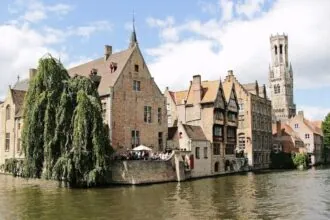
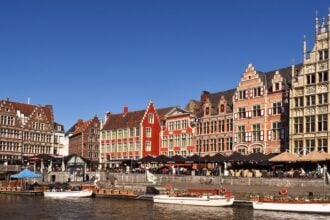
This genuinely makes short weekend breaks to cities like Bruges, Ghent or Antwerp noticeably cheaper than an equivalent weekday visit would otherwise be, and it stacks with Train+ for cardholders, who receive an additional discount on top of the weekend fare itself during their card’s validity period, effectively combining two entirely separate reductions on the very same weekend journey, one for the day of travel and one for the card itself.
Because this discount applies entirely automatically and needs no separate booking code, promotional voucher or advance registration of any kind, it is worth simply checking the price shown at the time of booking rather than assuming you need to hunt down a specific weekend fare option somewhere on the website, since the system already applies it behind the scenes whenever your travel date genuinely falls on a qualifying day of the week, whether that is a weekend, a public holiday, or one of the specific bridge days SNCB adds to the calendar each year.

Cross-Border Perks: Luxembourg, France, Germany and the Netherlands
Train+ is not confined purely to domestic Belgian journeys taken entirely within the country’s own borders, which is easy to overlook. Cardholders also get their discount applied to the Belgian portion of cross border services running to and from Luxembourg, Lille, Maubeuge, Aachen, Maastricht, Roosendaal and Breda, which covers a genuinely useful spread of destinations across France, Germany and the Netherlands, all within a fairly short hop of the Belgian border itself for most travellers.
Train+ holders also receive an off peak discount on the Belgian leg of international connections, including the Flex fare portion of EuroCity services running to and from the Netherlands, and on Connection tickets that link a Belgian departure point with an international Eurostar, TGV INOUI, EuroCity Direct, OUIGO, ICE, Nightjet or European Sleeper service running onward from there. This makes it a genuinely useful card worth holding even if your trip is really about connecting onward into a neighbouring country rather than staying entirely within Belgium’s own borders for the whole visit.
Because these cross border discounts only apply to the Belgian portion of the journey rather than the whole international fare, it is genuinely worth checking exactly where the discount cuts off when booking a longer international route in advance, since the savings will typically only cover the section of track running through Belgium itself before the international operator’s own entirely separate pricing structure takes over for the remainder of the journey beyond the border.
When Train+ Isn’t Worth Buying
Train+ is not automatically the right choice for every single visitor to Belgium. For a short trip involving only a handful of train journeys, the €6 or €4 monthly cost of the card may not be recovered by the savings on so few tickets, particularly on shorter routes where the automatic distance based fare is already fairly low to begin with. In that case, the automatic 40 percent discount for under 26s and over 65s, or simply the new standard fare for everyone else, is likely enough on its own without adding a card into the mix at all for such a short stay.
Train+ makes the most sense for anyone travelling frequently over at least a few weeks, commuting regularly between two fixed points, or making several longer journeys where the €14 or €5.50 cap genuinely undercuts the standard fare by a meaningful margin. Do the sums for your own specific route and travel frequency before buying, rather than simply assuming the card will automatically pay for itself over the course of your entire stay in the country.
The wider lesson from Belgium’s 2025 overhaul is a genuinely useful one for European rail travel more broadly. Fare systems change, and the ticket types that used to be worth knowing about can disappear entirely within a single year. So it is genuinely always worth checking the current, official rules directly with the operator rather than relying on older guides, forum threads or outdated search results that may no longer reflect what is actually on sale to travellers today.
How to Choose the Right Approach for Belgium
Start by checking your own age bracket first, since under 26s and over 65s already get an automatic 40 percent discount without buying anything at all beforehand or applying for a card. From there, work out roughly how many train journeys you are actually likely to make during your stay in Belgium. For a short visit involving only a handful of trips, the automatic discounts and the new distance based standard fare are probably enough entirely on their own, without needing to add anything extra to the equation.
For a genuinely longer stay, regular commuting between two fixed points, or several planned longer journeys spread across your visit, add Train+ into the calculation and compare its monthly cost against the savings from the €14 or €5.50 journey cap on your own specific routes. And if your trip continues on into Luxembourg, northern France, western Germany or the southern Netherlands, remember that Train+’s benefits genuinely follow you across the border on the Belgian leg of those particular international journeys too, even though the card itself is a Belgian product.
Whichever approach fits your own trip, book and check fares directly through the SNCB website or app rather than a third party platform, since the new automatic pricing is calculated there in real time and third party sites may not yet fully reflect every detail of the 2025 overhaul, particularly around how the age based discounts and Train+ actually interact with one another on the same booking.
Compare routes and fares for your next trip.
Compare flightsUse an eSIM to get online without hunting for a local SIM after arrival.
See eSIM optionsBook a private airport transfer in advance and have your ride planned before you arrive.
Check transfersHow to Buy: App, Website or Station
The SNCB app is genuinely the easiest way to buy tickets and manage a Train+ card, since it works out the automatic distance based fare, applies any age related discount you qualify for, and stores your ticket digitally without needing anything printed. Unlike some products elsewhere in this guide series, there is no Belgian address or residency proof required at any point, and a foreign credit card works perfectly well for every purchase covered in this guide. The app is available in English, and it also handles the digital version of Train+ directly, so cardholders never actually need to carry a separate physical card at all if they would rather manage everything entirely from their phone.
The SNCB website works identically to the app and suits anyone who would rather book from a laptop before their trip, particularly useful for setting up a Train+ subscription in advance of arriving in Belgium. Both channels charge exactly the same automatic fare, so the decision really comes down to whether you would rather book everything from home in advance or handle it from your phone once you have actually arrived.
Station ticket machines and staffed desks remain widely available, and machines generally accept both cash and card while offering an English language option at most larger stations. A staffed desk is genuinely the place to go if you want a Train+ card loaded onto a physical MoBIB card rather than kept digitally in the app, since staff can issue and register the physical card on the spot rather than leaving you to manage it entirely through a screen. Buying single tickets for both directions of a return journey works identically at a machine, a desk, or through the app, since traditional return tickets have been phased out entirely across the whole network, regardless of which of these three channels you happen to use.

Rupert’s Handy Travel Tips
Belgium’s system is brand new as of late 2025, so here’s what’s worth knowing before you travel.
- Ignore any guide mentioning the old Rail Pass or Standard Multi: these were discontinued from October 2025, so treat older advice with real caution.
- Check your age bracket first: under-26s and over-65s get an automatic 40% discount with no card or application needed.
- Do the maths before buying Train+: it’s genuinely worth it for regular travel, but a handful of short trips may not recover the monthly cost.
- Buy single tickets for both directions: traditional return tickets are gone, so book each leg of your journey separately, even though the same discounts still apply to both.
- Book directly through SNCB, not a third party: the new automatic pricing is calculated live on the official site and app, so this is the most reliable place to check your actual fare.
Want to meet the reindeer behind our travel tips? Find out more in our page Who is Rupert?.



Frequently Asked Questions
Is the old Belgian Rail Pass (10 journeys) still available?
No, this and several other multi-journey products, including the Standard Multi and Youth Multi cards, were discontinued from 15 October 2025 and replaced by the new automatic fare system and Train+ discount card.
How much does Train+ cost?
€6 a month or €48 a year for adults aged 26 to 64, and €4 a month or €32 a year for under-26s, over-65s and preferential reimbursement recipients.
Do young people and seniors automatically get a discount in Belgium?
Yes, under-26s and over-65s receive an automatic 40% discount on every ticket without needing to buy a card or apply, which can then be combined with Train+ for further savings.
Can I still buy a return ticket in Belgium?
Not in the traditional sense. Traditional return tickets have been phased out, so you now buy two single tickets, one for each direction, with the same automatic discounts applying to both.
Does Train+ work on international trains?
Train+ applies to the Belgian portion of certain cross-border routes to Luxembourg, Lille, Maubeuge, Aachen, Maastricht, Roosendaal and Breda, and gives an off-peak discount on Belgian connecting tickets for services like Eurostar, TGV INOUI and ICE.
Further Reading
This guide is part of our wider series on hidden rail passes and cheap train tickets across Europe, covering the overlooked discounts in six countries. If your trip continues across Belgium’s borders, our Euregio Ticket guide covers a separate cross-border day ticket linking Belgium, Germany and the Netherlands, and our Holland Travel Ticket guide is worth a read if the Netherlands is next on your itinerary. If you’re covering Belgium, the Netherlands and Luxembourg together, our Interrail Benelux Pass guide explains when an unlimited three-country pass beats booking each country’s fares separately.
For a wider European trip, our Interrail Pass guide explains when a multi-country pass still makes sense alongside country-specific fares like these, and our train booking apps guide rounds up the best platforms for comparing and booking tickets across Europe.