Reviewed by our editorial team Updated
Discover the Best Things to Do in Bruges
Bruges is one of Belgium’s easiest cities to enjoy on foot, but there is much more here than a pretty medieval centre. The canals, guild houses and cobbled lanes provide the atmosphere, while the Belfry, Flemish Primitive paintings, historic churches, museums, breweries and chocolate attractions give you plenty to do once you start looking beyond the postcard views.
The historic centre is compact enough for a day trip, although an overnight stay gives you the chance to see the Markt and canals after the largest day-trip crowds have left. If you are coming from Brussels, Ghent or elsewhere in Belgium, our Belgium Train Tickets Explained guide covers the current SNCB fare system, while our Day Trips from Brussels guide explains how Bruges fits into a wider Belgian itinerary.
Bruges Attractions at a Glance
| Attraction | Time to Allow | Best For |
|---|---|---|
| Markt and Belfry | 1–1.5 hr | First-time visitors and views |
| Canal cruise | 30–45 min | Seeing Bruges from the water |
| Burg and Basilica of the Holy Blood | 45–60 min | History and architecture |
| Groeninge Museum | 1.5–2 hr | Flemish art |
| Church of Our Lady | 45–60 min | Michelangelo and church interiors |
| St John’s Hospital | 1–1.5 hr | Art and medieval history |
| Gruuthuse Museum | 1.5–2 hr | Bruges history |
| Beguinage and Minnewater | 45–90 min | Quiet walks and photography |
| De Halve Maan Brewery | 1–2 hr | Belgian beer |
| Historium | 1–1.5 hr | Interactive history |
See hotel options and places to stay for your trip.
Browse hotelsExplore holiday homes and apartments for your trip.
See holiday homesCompare prices from multiple hotel booking sites.
Check dealsSee Bruges from the Water on a Canal Cruise
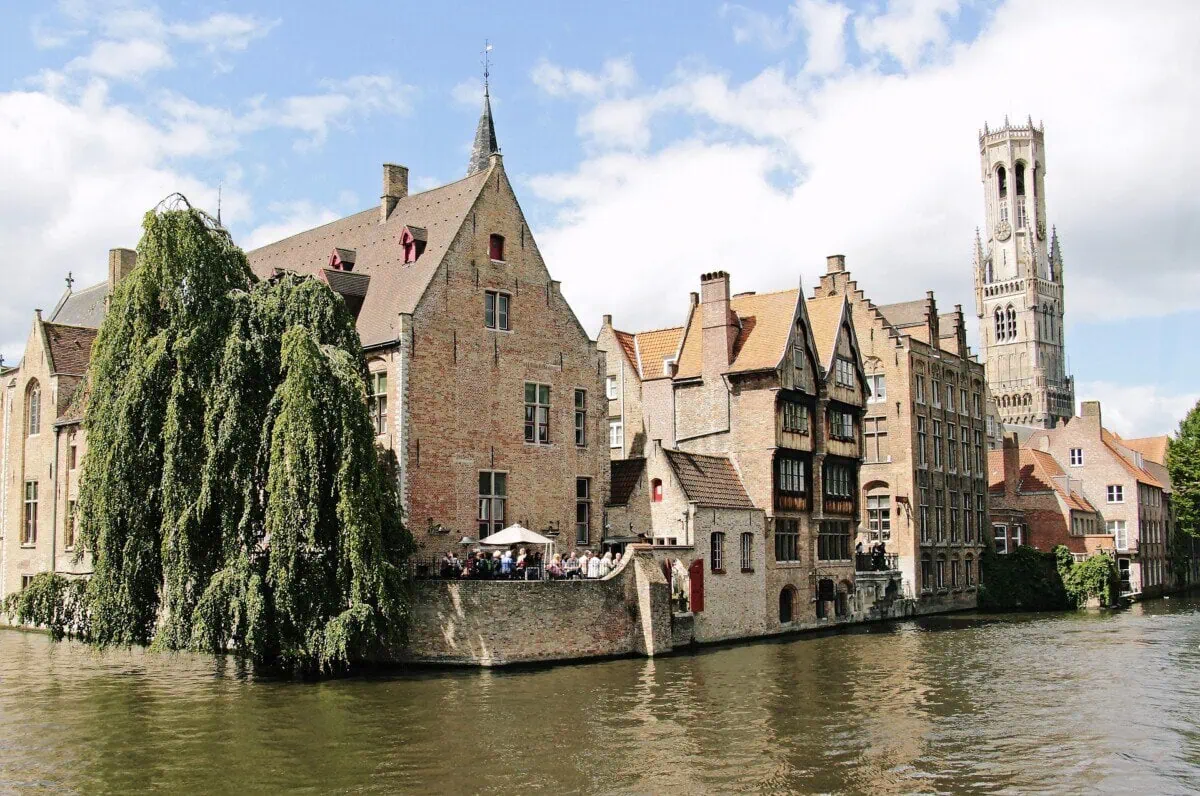
A canal cruise is one of the most useful paid experiences in Bruges because the waterways reveal angles of the city that are difficult to see from the streets. Low bridges, stepped gables and waterside façades make far more sense once you see how tightly the medieval centre developed around the canals.
Most standard sightseeing cruises last around half an hour and depart from several central landing points around the historic core. They are easy to fit into a day trip, and pre-bookable options are also sold through major attraction platforms including GetYourGuide. On busy weekends and summer days, queues can build, so it is sensible to avoid leaving the cruise until the final hour of your visit.
A cruise works especially well near the start of a first visit because it helps you understand the city’s layout before you spend several hours walking. You will see corners of Bruges that are difficult to appreciate from street level, including narrow canal passages, bridge arches and rear façades that make the old centre feel much more connected.
If you are travelling with children, have limited walking stamina or simply want a seated break, the boat is also one of the easiest attractions to justify. In poor weather, check how exposed the boat is before booking. In peak periods, doing the cruise earlier in the day can also help you avoid wasting time in a long queue later.
Explore the Markt and Climb the Belfry of Bruges
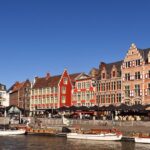
The Markt is the visual centre of Bruges, surrounded by colourful façades, restaurants and historic civic buildings. The dominant landmark is the Belfry of Bruges, an 83-metre medieval tower that rises above the square and remains one of the city’s defining sights.
Climbing the Belfry means negotiating 366 steps, so this is not a casual lift-to-the-top viewpoint. The reward is a broad view over Bruges’ rooftops and surrounding countryside. If you want to climb, try to do it earlier in the day because access can become busy and the staircase naturally limits capacity. Standard adult admission is €16 (£14/$19) in summer and at weekends, dropping to €15 (£13/$17) in winter, and entry is included on the Musea Brugge Card.
Allow around an hour to 90 minutes for the square and tower together if the climb is part of your plan. Even if you skip the Belfry, the Markt is worth time for the surrounding architecture and for understanding how the historic centre is laid out. Burg Square, Historium and several canal streets are only a few minutes away.
The square can feel very different depending on the time of day. Early morning gives you more space to appreciate the buildings, while later in the day the cafés and foot traffic make it much livelier. If photography matters, return in the evening when the buildings are illuminated rather than assuming one daytime pass is enough.
Visit Burg Square and the Basilica of the Holy Blood
A short walk from the Markt brings you to Burg Square, where several centuries of Bruges architecture sit together in one compact space. The Gothic City Hall is the most obvious civic building, while the Basilica of the Holy Blood is much smaller and easier to miss.
The basilica is a double chapel, with the Romanesque Saint Basil’s Chapel below and a richly decorated Gothic upper chapel above. The relic traditionally associated with the Holy Blood is kept here and remains an important part of the city’s religious identity.
Burg is worth treating as more than a quick detour from the Markt. The square is one of the best places to see how Bruges developed architecturally, with civic and religious buildings from different periods standing almost shoulder to shoulder. Allow enough time to look around rather than simply photograph the City Hall façade and move on.
Because the basilica remains an active religious site, opening arrangements and access to the relic can vary around services and special events. Check the current visitor information if seeing the relic is important to you, and dress appropriately for a church visit. Burg also sits perfectly between the Markt and several canal viewpoints, so it fits naturally into a walking route.

See Flemish Masters at the Groeninge Museum
The Groeninge Museum is the strongest museum choice in Bruges for Flemish art. The collection is particularly strong in the Flemish Primitives, including work associated with artists such as Jan van Eyck and Hans Memling, while later Belgian painting broadens the story beyond the city’s medieval image.
Allow at least 90 minutes if you want more than a quick pass through the galleries. It works especially well in poor weather and pairs naturally with the nearby Church of Our Lady, St John’s Hospital and Gruuthuse Museum. Standalone adult admission is €15 (£13/$17), and the museum is one of the sites covered by the Musea Brugge Card.
This is the museum to prioritise if the art history of Bruges interests you more than immersive attractions or general city history. The galleries help explain why the city became such an important artistic centre during its prosperous trading period, and seeing the paintings in Bruges gives them much more context than viewing them as isolated works elsewhere.
Do not try to combine every museum in this district in one short afternoon. Groeninge, St John’s Hospital and Gruuthuse are all substantial enough to deserve proper time. On a one-day trip, choose one or two according to your interests and leave room for the canals, Markt and Burg rather than turning the visit into an indoor marathon.
See Michelangelo’s Madonna in the Church of Our Lady
The Church of Our Lady has one of the most distinctive skylines in Bruges, but the main reason many people enter is the marble Madonna and Child by Michelangelo. It is one of the relatively small number of Michelangelo sculptures that left Italy during his lifetime.
The sculpture is not the only reason to visit. The church is an important part of Bruges’ medieval skyline and its interior contains tombs, artworks and architectural details that reward a slower visit. If you are interested in church interiors, allow roughly 45 minutes to an hour rather than treating it as a single-artwork stop. Entry to the church itself is free, but seeing the Michelangelo sculpture up close requires an O.L.V.-kerk Museum ticket, priced at €10 (£9/$12) for adults and covered by the Musea Brugge Card.
The church sits beside several other major cultural attractions, making this one of the best areas of Bruges for visitors who want to concentrate museums and historic interiors without repeatedly crossing the city. St John’s Hospital, Gruuthuse Museum and the Groeninge Museum are all close by, so this district is easy to build into a museum-focused half-day.
If your time is limited, combine the church with one museum rather than attempting all of them. The area is also close to Bonifacius Bridge and several attractive canal streets, which means you can balance indoor sightseeing with some of Bruges’ best free viewpoints.
Step into Medieval Bruges at Historium
Historium Bruges takes a more theatrical approach to the city’s history. Film, recreated sets and effects are used to place visitors in 15th-century Bruges during its commercial and artistic golden age, while optional virtual-reality elements provide another way to visualise parts of the medieval city that no longer survive.
This works particularly well for families or visitors who enjoy immersive attractions more than conventional display cases. It is on the Markt, so it can be paired easily with the Belfry without adding extra travel time.
Allow around 60 to 90 minutes if you want to experience the attraction properly rather than rushing through. It is especially useful on a wet day or when travelling with children who may not have the patience for several traditional museums in succession. The standard Historium Story ticket costs €22 (£19/$26) for adults and €14 (£12/$16) for children, while the Historium Story + VR ticket, which adds the virtual-reality element, costs €28 (£24/$33) for adults and €20 (£17/$23) for children.
Historium is best treated as an alternative way of learning about Bruges rather than a replacement for seeing the real city outside. Pair it with time on the Markt, Burg and the nearby canals so the reconstructed history connects with the streets and buildings you have just explored.
Compare routes and fares for your next trip.
Compare flightsUse an eSIM to get online without hunting for a local SIM after arrival.
See eSIM optionsBook a private airport transfer in advance and have your ride planned before you arrive.
Check transfersExplore Medieval Medicine and Art at St John’s Hospital
St John’s Hospital is one of Bruges’ strongest combinations of architecture, history and art. The medieval hospital complex tells the story of care in the city while also housing works associated with Hans Memling, whose paintings are among the artistic highlights of Bruges.
Its location beside the Church of Our Lady means the two can be visited together without wasting time. If you only have one day, combining this district with the Markt, Burg and canals creates a very efficient route.
Allow around 60 to 90 minutes if you want to appreciate both the building and the collection. The hospital story is a major part of the visit, so it is worth looking beyond the paintings and noticing how the complex itself reflects centuries of care, religion and civic life in Bruges.
For art-focused visitors, St John’s Hospital pairs particularly well with the Groeninge Museum. For everyone else, it can be the more varied choice because the architecture and medical history break up a day that might otherwise become dominated by churches and paintings.
Tour De Halve Maan Brewery and Discover Brugse Zot
De Halve Maan is the best-known working brewery experience in central Bruges. The family brewery dates to the 19th century and is associated with Brugse Zot, the city beer. One of its most unusual modern features is the roughly three-kilometre underground beer pipeline linking the brewery with its bottling facilities outside the historic centre.
Brewery tours are a useful contrast to the museums and churches, but they take more time than simply stopping for a beer. If this is a priority, reserve it first and build the rest of the day around the tour time rather than trying to squeeze it in at the end.
Allow around 90 minutes to two hours once you include the tour, brewery visit and a drink afterwards. That makes De Halve Maan a genuine anchor attraction rather than a quick extra, especially on a one-day visit. The standard Classic Tour costs €16 (£14/$19) for adults and €8.50 (£7/$10) for children aged seven to 15, with under-sixes admitted free.
The brewery sits conveniently on the southern side of the historic centre, so it combines well with the Beguinage, Minnewater and the museum quarter. If you are heading back to Brugge station afterwards, this is an efficient part of the city to finish in.
Discover Bruges’ Trading Wealth at the Gruuthuse Museum
The Gruuthuse Museum occupies a 15th-century city palace and is one of the best places to understand Bruges as a wealthy trading city rather than simply as a preserved medieval backdrop. The rooms cover several centuries of local history through decorative arts, objects and architecture.
One of the most memorable details is the private chapel connection overlooking the Church of Our Lady. That physical link between aristocratic residence and church helps explain the social structure of late-medieval Bruges in a way that a conventional display often cannot.
Allow around 90 minutes to two hours if you are interested in the city’s social and material history. The museum is particularly good for understanding how wealthy Bruges families lived and how the city’s prosperity shaped domestic architecture, art and craftsmanship.
Because Gruuthuse sits beside the Church of Our Lady and close to the Groeninge Museum, it is easy to over-plan this part of the city. Choose it when Bruges history interests you most; otherwise, one of the neighbouring art or church attractions may be a better use of limited time.
Learn About Belgian Chocolate at Choco-Story
Chocolate is an obvious part of a Bruges visit, and Choco-Story turns it into a full attraction rather than just a shopping stop. The museum explores cocoa, the development of chocolate and Belgian production, usually with demonstrations and tasting elements incorporated into the visit.
If a museum is more than you want, you can still build a self-guided chocolate stop into the historic centre by visiting several independent chocolatiers rather than buying from the first shop beside the Markt. Choco-Story tickets and chocolate-focused tours are commonly available through attraction booking platforms.
Allow around an hour to 90 minutes for Choco-Story if you want time for the displays and demonstrations rather than treating it as a quick tasting stop. It is particularly useful for families, wet-weather days and visitors who want something lighter after several churches or art museums. Standard adult admission is €16 (£14/$19), with a reduced €10 (£9/$12) rate for children aged three to 11.
If chocolate is one of the main reasons for your visit, compare a museum ticket with a guided tasting or workshop before booking. The experiences are quite different: the museum gives you history and production context, while a tasting-led activity is more about trying different styles and learning what separates mass-market chocolate from specialist Belgian makers.
Slow Down in Bruges’ Historic Beguinage
The Beguinage offers a very different pace from the crowded Markt. Founded in the 13th century, the white-painted houses and enclosed green create one of the calmest spaces in central Bruges and form part of the wider UNESCO-listed Flemish beguinage tradition.
This is a place to slow down rather than rush through. It also fits naturally into a walk towards Minnewater, making the southern edge of the historic centre an excellent final section of a day on foot.
The Beguinage works best as part of a wider walking route rather than as a standalone attraction. Enter from the city side, cross the quiet courtyard and continue towards Minnewater, or approach it from the station direction if you are beginning your day in the south of Bruges.
Keep the atmosphere in mind when you visit. This is a historic religious site rather than a conventional tourist attraction, so quieter behaviour is appropriate. The contrast with the crowded Markt is exactly what makes it worthwhile.
Visit the Frietmuseum for the Story of Belgian Fries
The Frietmuseum is one of Bruges’ more unusual food attractions, focusing on the history of the potato, the development of fries and the place frieten occupy in Belgian food culture. It is a deliberately light-hearted stop, but there is enough history and food context to make it more than a novelty museum.
This works particularly well for families, food-focused visitors or anyone who wants a break from churches and fine-art museums. The displays explain how potatoes reached Europe, how frying traditions developed and why Belgian fries became such a recognisable part of the country’s identity.
Allow around an hour for a relaxed visit. It is central enough to fit between larger sights without requiring a special journey, and it pairs naturally with Bruges’ chocolate and beer attractions if you want to build a food-themed afternoon. Adult admission is €12 (£10/$14), with a reduced €10 (£9/$12) rate for students and over-65s and €7 (£6/$8) for children aged three to 11.
The widget below links to the current ticket option. Check the live inclusions and opening times for your date before booking, particularly if the museum is one of the fixed stops in a short day-trip itinerary.
Browse hostels and budget-friendly stays.
See hostelsAccess compensation support, eligible lounge benefits and faster payouts.
See the benefitsUse convenient luggage storage between arrival, check-in and departure.
Check storageWalk Through Minnewater and the Lake of Love
Minnewater, often marketed as the Lake of Love, is one of the easiest free places to add to a Bruges itinerary. The water, bridges and parkland create a quieter ending to the day and place you conveniently in the direction of the railway station.
It is particularly useful for day-trippers because you can walk from the historic centre through the Beguinage and Minnewater before continuing towards Brugge station instead of retracing your steps to the Markt.
Minnewater is best treated as part of your route rather than a major standalone attraction. The bridges, water and parkland are ideal for a slower final walk, and the area gives you a useful change of pace after the dense medieval streets. If you arrive in Bruges by train, it also works well in reverse as a scenic introduction before you reach the busier centre.
Find Bruges’ Best Photo Stops at Bonifacius Bridge and Rosary Quay
Bonifacius Bridge and Rosary Quay are among Bruges’ most photographed locations, but they are worth treating as short stops rather than destinations that dominate your day. Both are easy to weave into a walking route between the museum quarter and the central canals.
Visit early in the morning or later in the evening if photographs matter to you. In the middle of the day, these compact viewpoints can become congested with walking groups and cruise passengers.
Bonifacius Bridge is easiest to combine with the museum quarter, while Rosary Quay fits naturally into a loop between Burg, the canals and the Markt. Neither needs a large time allowance, but both are good examples of why Bruges rewards walking slowly rather than moving only between ticketed attractions.
Decide Whether the Musea Brugge Card Is Worth It
The current Musea Brugge Card gives one visit to all open Musea Brugge locations within 72 hours from first activation. In 2026, the standard price is €49 (£42/$57), with reduced prices of €37 (£32/$43) for visitors under 26 and €25 (£21/$29) for visitors under 18. The card also includes the new BRUSK art venue, which opened in May 2026.
The comparison against paying separately is straightforward. Standalone admission to just four of the card’s included sites, the Belfry (€16/£14/$19), Groeninge Museum (€15/£13/$17), Gruuthuse Museum (€15/£13/$17) and the O.L.V.-kerk Museum housing the Michelangelo sculpture (€10/£9/$12), already totals €56 (£48/$65), more than the €49 (£42/$57) standard card price. Add St John’s Hospital, the Town Hall or BRUSK on top and the card pulls further ahead.
It is best suited to a museum-heavy two or three-day stay. For a single day in Bruges, calculate the normal admission prices for the specific attractions you genuinely intend to visit before buying. Children under 13 are generally admitted free to Musea Brugge locations, with a different age rule at the Belfry, so a family should not automatically buy the same product for everyone.
The card only makes sense when your itinerary genuinely uses it. If you are mainly walking the canals, visiting churches and choosing one museum, paying separately may be cheaper. If you plan several Musea Brugge sites over two or three days, the calculation becomes much more favourable.

Enjoy Bruges Without Paying for Every Attraction
You can experience a large part of Bruges without paying for admission. Walking the Markt, Burg, canal lanes, Rosary Quay, Bonifacius Bridge, Beguinage, Minnewater and the city’s quieter residential streets can fill several hours by themselves.
The strongest budget itinerary mixes these free outdoor sights with one paid attraction such as a canal cruise, Belfry climb or museum rather than trying to enter everything.
A good free walking route can take you from the Markt and Burg through Rosary Quay, the museum quarter, Bonifacius Bridge, the Beguinage and Minnewater without needing local transport. Add a few quieter side streets and you can spend most of the day experiencing Bruges without paying admission at every stop.
How Long Do You Need in Bruges?
One day is enough for the historic centre, canal cruise, one major indoor attraction and a walk through the Beguinage and Minnewater. This is why Bruges works so well as a day trip from Brussels, Ghent or Lille.
Two days lets you slow down and add several museums, a brewery tour and quieter areas away from the Markt. A third day only becomes necessary if you want a particularly museum-heavy visit or plan to use Bruges as a base for the surrounding region.
For most visitors, one full day is enough for the essentials and two days is the better experience. The extra time means you can see the centre early and late, when the biggest day-trip crowds have gone, and choose museums or food attractions without sacrificing the canals and neighbourhood walks that give Bruges its atmosphere.
Accessibility and Children
Bruges’ historic centre is roughly 95% cobblestone, and while the Markt and Burg squares are relatively smooth and manageable for wheelchair users, mobility scooters and pushchairs, they still deliver a genuinely bumpy ride rather than a level surface. The Belfry climb is explicitly not wheelchair accessible: the 366-step staircase has no lift and the entrance itself is reachable only by steep stairs, so museum and canal-based alternatives matter more here than at most Bruges attractions.
The canal cruise is not fully wheelchair accessible either. Boarding requires transferring out of a wheelchair, chairs are left on the dock, and only some departure points have a ramp down to water level, so it is worth confirming access with the operator before building a day around it. Among the museums, the Groeninge Museum’s entrance and galleries are accessible with assistance rather than independently, and its adapted toilet is not easily reached, while the Church of Our Lady’s O.L.V.-kerk Museum has a wheelchair-accessible entrance on Guido Gezelleplein via a steep ramp, again manageable with assistance rather than fully independent access.
Families often find Historium and the chocolate attractions the easiest to build a mixed-ability day around, since both are step-light and indoors, whereas the canal cruise and Belfry need the specific planning above. Where a venue’s accessibility could not be confirmed here, check directly with the attraction before travelling, since historic buildings vary considerably and arrangements can change.
Build in more time than the map suggests if you are using a wheelchair, mobility aid or pushchair. Bruges is compact, but cobbles, bridge approaches and crowded narrow streets can slow progress considerably. A route that looks like a ten-minute walk on a map may take noticeably longer in practice.
For children, the best days usually alternate between walking, one major indoor attraction and something lighter such as a boat trip, chocolate museum or Minnewater. That keeps the day varied and avoids asking younger visitors to spend hours moving from one historic interior to another.

Rupert’s Handy Travel Tips
Bruges is compact, but the best visits leave room for the city itself rather than treating every hour as another attraction slot.
- Book your must-do attraction first: If the Belfry, a brewery tour or a particular museum matters most, fix that time and keep the rest of the day flexible around it.
- Use the station walk as sightseeing: The route via Minnewater and the Beguinage is far more enjoyable than treating the journey between Brugge station and the centre as dead time.
- Do not overfill a one-day visit: One major indoor attraction, a canal cruise and plenty of walking usually gives a better first experience than trying to enter every museum.
- Stay later if your train allows it: The Markt, canals and photo spots become noticeably calmer after some day-trip groups leave, and evening Bruges feels very different from midday.
Want to meet the reindeer behind our travel tips? Find out more in our page Who is Rupert?.




Frequently Asked Questions
What is the best thing to do in Bruges?
For a first visit, combine the Markt and Belfry with a canal cruise and a walk through the historic centre. That gives you both the classic city views and the waterways that make Bruges distinctive.
Is Bruges worth visiting for one day?
Yes. The centre is compact and most major sights are within walking distance. One day is enough for the highlights, although an overnight stay gives you a quieter experience early and late in the day.
Is the Bruges canal cruise worth it?
For most first-time visitors, yes. It is short, easy to fit into a day and shows parts of the medieval city from angles that are difficult to appreciate from the streets.
How many steps are there in the Bruges Belfry?
The climb involves 366 steps. The staircase becomes narrow and steep higher up, so it is not suitable for everyone.
Can you walk from Bruges station to the centre?
Yes. Brugge railway station is within walking distance of the historic centre, and the route via Minnewater and the Beguinage can be incorporated into your sightseeing.
Further Reading
Travelling to Bruges by train? Our Belgium Train Tickets Explained guide covers current SNCB fares, discounts and ticket choices, while our Interrail Benelux Pass Guide is useful if Bruges forms part of a wider rail trip through Belgium, the Netherlands or Luxembourg.
Using Brussels as your base? Our Day Trips from Brussels guide compares Bruges with Ghent, Antwerp, Leuven and other easy rail trips, and our Things to Do in Brussels guide helps if you are splitting your time between the two cities.
Considering Ghent as well? Our Things to Do in Ghent guide covers Gravensteen, the Ghent Altarpiece, canal cruises, museums and the hop-on hop-off water tram, so you can compare the two Belgian cities properly rather than assuming they offer the same kind of day out.
Coming from northern France? Our Day Trips from Lille guide explains how Bruges fits into a cross-border itinerary alongside Ghent and Brussels, including the practical rail considerations for a same-day visit.