
Discover the Best of Strasbourg
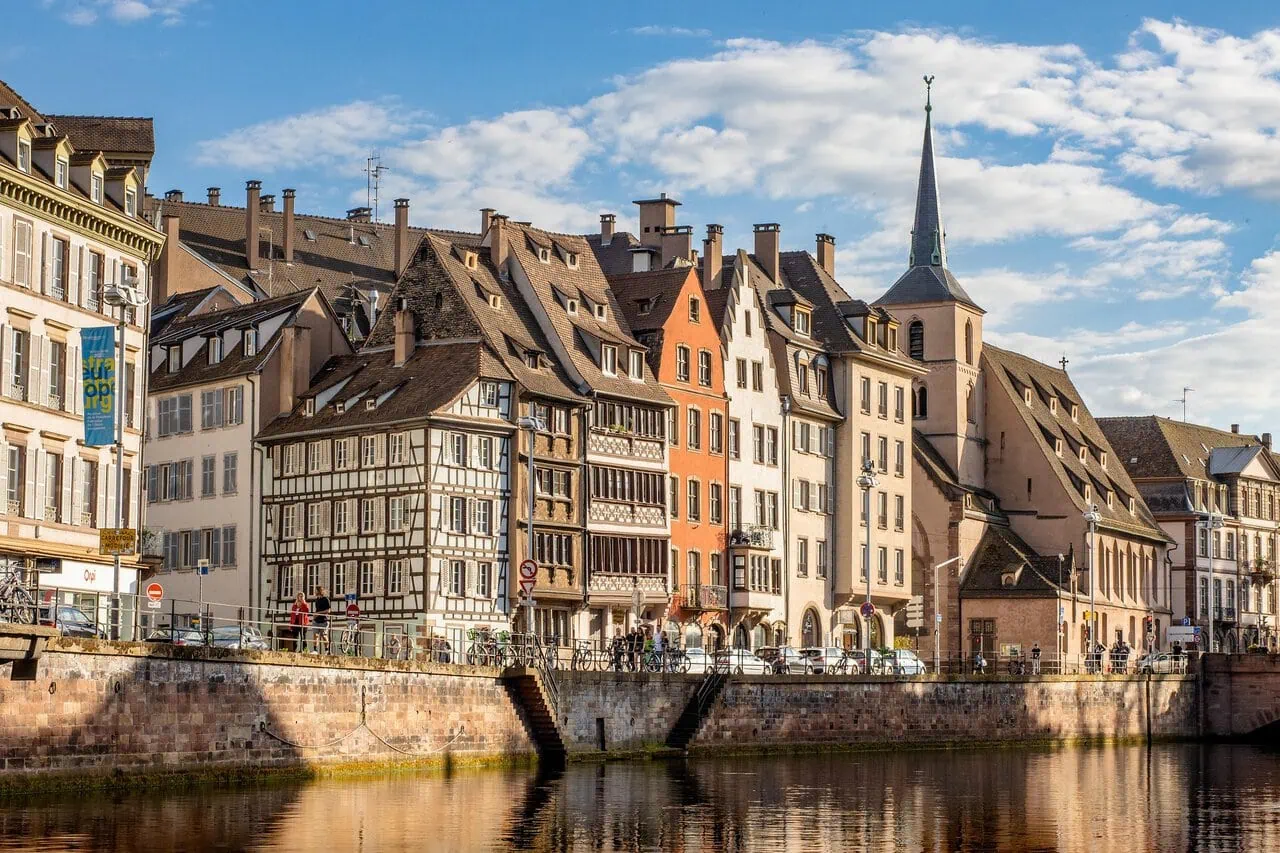
Sitting right on the border between France and Germany, Strasbourg is a city that has spent centuries absorbing the best of both cultures. Half-timbered houses lean over quiet canals, pink sandstone spires rise above cobbled squares, and pavement cafes serve choucroute alongside croissants. It is the capital of the Alsace region, the seat of the European Parliament, and the historic heart of a UNESCO World Heritage city centre, yet it rarely gets the attention that Paris or Lyon receive.
That is a mistake. Strasbourg’s old town, the Grande Île, is compact enough to explore on foot in a day but rich enough to fill three or four, especially once you factor in its museums, canal-side quarters, and one of Europe’s most famous Christmas markets. This guide covers the attractions worth building a trip around, along with practical tips on timing, getting around, and what to eat while you are there.
If you are flying in, our guide to Strasbourg Airport transfers covers the quickest ways into the city centre. And once you have explored Strasbourg itself, our roundup of day trips from Strasbourg has plenty of ideas for Alsace’s fairytale villages and castles beyond the city limits.
Strasbourg Attractions at a Glance
Before getting into the detail, here is a quick overview of the attractions covered in this guide, how much time to set aside for each, and who they suit best.
| Attraction | Type | Time Needed | Good For |
|---|---|---|---|
| Strasbourg Cathedral | Landmark / Church | 45–60 minutes | First-time visitors |
| La Petite France | Historic quarter | 1–2 hours | Photography, walking |
| Ponts Couverts & Barrage Vauban | Fortifications / Viewpoint | 30–45 minutes | Views, free activities |
| Place Kléber & the Grande Île | Square / Old town | 1–2 hours | Shopping, wandering |
| Palais Rohan Museums | Museum complex | 1.5–3 hours | History, art lovers |
| MAMCS (Modern Art Museum) | Museum | 1–2 hours | Modern art fans |
| Batorama Boat Tour | Guided tour | 70 minutes | Families, first-timers |
| European Parliament | Institution / Tour | 45–90 minutes | Politics, EU history |
| The Neustadt | Historic district | 1–2 hours | Architecture fans |
| Christmas Market | Seasonal event | 2+ hours | Winter visitors |
| Parc de l’Orangerie | Park | 1–2 hours | Families, relaxing |
| Covered Market & Alsatian Food | Food / Culture | 1 hour+ | Foodies |
Browse hotels in Strasbourg
Compare hotels and other places to stay in Strasbourg.
Check availabilityChoose a Strasbourg holiday rental
Browse apartments, homes and self-catering accommodation in Strasbourg.
Browse rentalsCompare Strasbourg hotel prices
Compare hotel deals in Strasbourg from multiple booking sites.
Compare pricesStrasbourg Cathedral and the Astronomical Clock
Rising out of a maze of medieval streets, the Cathédrale Notre-Dame de Strasbourg is the single most recognisable sight in the city. Built from pink Vosges sandstone, its single spire was completed in 1439 and, remarkably, held the title of the tallest building in the world for more than two centuries, from 1647 until 1874. You can still see the cathedral from miles outside the city as you approach by train or car.
Inside, the highlight is the astronomical clock, a Renaissance-era mechanism rebuilt in its current form in the 1840s. Every day at 12:30pm it puts on a short mechanical show as figures representing the Apostles file past a figure of Christ. Tickets for the clock show are sold separately and in limited numbers, so it is worth planning ahead if you want to see it rather than queuing on the day.
For those happy to climb, the cathedral’s platform sits partway up the tower and offers sweeping views across the rooftops of the Grande Île towards the Vosges mountains and, on a clear day, the Black Forest on the German side of the Rhine. Allow 45 to 60 minutes for the cathedral itself, longer if you climb the platform or catch the clock show.
La Petite France
La Petite France is the quarter most people picture when they think of Strasbourg: half-timbered houses in soft pastel colours, leaning slightly with age, lining narrow canals that once powered the tanners’, millers’ and fishermen’s trades the district is named after. It sits within the Grande Île, the island old town that became the first entire city centre in the world to be listed as a UNESCO World Heritage Site, back in 1988.
The prettiest views are along the Rue du Bain-aux-Plantes and from the small bridges crossing the canals, particularly early in the morning before the tour groups arrive. Many of the old tanners’ houses have wide, open attics that were originally used to dry hides, a detail that is easy to miss unless you look up.
For motorcycle enthusiasts and photographers, mornings here are worth actively planning your day around rather than treating as an optional extra, since the light on the canals changes quickly once the streets fill up. Give yourself at least 1 to 2 hours to wander without rushing, more if you plan to stop for a coffee or lunch in one of the canal-side restaurants.
The Ponts Couverts and Barrage Vauban
At the edge of La Petite France stand the Ponts Couverts, three covered bridges linked by four stone towers that once formed part of the city’s medieval defences. The wooden roofs that gave them their name are long gone, but the towers remain, and the bridges themselves make for one of the best photo spots in the city, especially with the cathedral spire visible in the background.
A short walk away is the Barrage Vauban, a dam built in 1690 by the military engineer Sébastien Le Prestre de Vauban as part of the city’s water defences. Its rooftop terrace is free to access and gives one of the best panoramic views in Strasbourg, taking in the Ponts Couverts, La Petite France, and the cathedral spire in a single sweep.
Budget around 30 to 45 minutes for both together. Since neither charges an entry fee, they combine easily with a walk through La Petite France on the same visit.
Place Kléber and the Grande Île
Place Kléber is Strasbourg’s largest square, named after the Napoleonic general Jean-Baptiste Kléber, whose statue stands at its centre above his own tomb. It is the natural hub of the old town, ringed by cafes and department stores, and it becomes the focal point of the Christmas market each winter when a towering tree is erected here.
From Place Kléber, the streets of the Grande Île fan out in every direction. Rue des Grandes Arcades and Rue des Hallebardes are good for shopping, while the smaller lanes around Place du Marché-aux-Cochons-de-Lait and Place de la Cathédrale are worth wandering simply to look up at the half-timbered facades and carved shop signs.
There is no single route to follow here; the point is to get pleasantly lost. Set aside 1 to 2 hours to wander without a fixed plan, and keep in mind that many of the smaller boutiques close for a couple of hours around lunchtime.
Palais Rohan and Its Three Museums
Just behind the cathedral, the Palais Rohan is an 18th-century former episcopal palace built for the powerful Rohan family, and it is one of the finest examples of French classical architecture outside Paris. Rather than a single museum, it actually houses three: the Museum of Fine Arts, the Archaeological Museum, and the Museum of Decorative Arts, each with its own entrance and collection.
The Decorative Arts museum includes the palace’s original state apartments, lavishly decorated rooms once used to receive royalty, while the Archaeological Museum traces the region’s history back through the Roman and Merovingian periods. The Fine Arts museum covers European painting from the medieval period through to the early 19th century.
A single ticket type does not always cover all three, so check current pricing before you go if you plan to visit more than one. Allow 1.5 to 3 hours depending on how many of the three museums you take in.
MAMCS: The Museum of Modern and Contemporary Art
For a change of pace from the old town’s medieval streets, the Musée d’Art Moderne et Contemporain, usually shortened to MAMCS, sits in a striking glass-and-stone building overlooking the Ill. Its collection runs from Impressionism through to contemporary installations, with a particularly strong section on early 20th-century German and French art from the period when the region moved between the two countries.
The building itself is worth the visit alone, with large glazed walls that flood the galleries with natural light and frame views back across the river towards La Petite France. Budget 1 to 2 hours, and check for temporary exhibitions before you go, since these change regularly.
A Boat Tour on the Ill with Batorama
One of the easiest ways to see Strasbourg’s old town and European Quarter in a single sitting is a boat tour with Batorama, which has been running glass-roofed boats along the Ill since the 1970s. The standard tour lasts around 70 minutes and loops from the Grande Île, through the locks at La Petite France, and out towards the European institutions before returning.
It is a particularly good option with children or on a first visit, since the recorded commentary points out landmarks you might otherwise walk straight past. Boats depart regularly from the landing stage near the Palais Rohan, and tickets can usually be bought on the day, though booking ahead is worth it in peak summer months and around the Christmas market.
The European Parliament and the European Quarter
Strasbourg’s role as a seat of the European Parliament, alongside the Council of Europe and the European Court of Human Rights, has earned it the nickname “the capital of Europe.” The European Quarter sits a short tram ride from the old town, centred on the distinctive curved glass hemicycle of the Parliament building.
When Parliament is not in plenary session, free guided tours are usually available, along with the Parlamentarium visitor centre, which explains the institution’s history and workings through interactive exhibits. It is a niche stop compared with the cathedral or La Petite France, but a genuinely interesting one if EU politics or modern history interest you.
Allow 45 to 90 minutes depending on whether you take a guided tour, and check opening times and session dates before travelling out, since access can be more limited during plenary weeks.
The Neustadt: Strasbourg’s German Imperial Quarter
Less well known than La Petite France but just as striking in its own way, the Neustadt (“new town”) was built after 1871, when Strasbourg became part of the German Empire. Wide boulevards, grand civic buildings and the imposing Palais du Rhin around Place de la République give this district a completely different character to the medieval Grande Île, closer in feel to Berlin or Vienna than to old Alsace.
The Neustadt’s significance was formally recognised in 2017, when UNESCO extended Strasbourg’s World Heritage listing to cover it alongside the Grande Île, making the city one of the few in the world with two adjoining but architecturally distinct UNESCO-listed districts. You can read more about the full listing on the UNESCO World Heritage site.
It rewards slow walking rather than a checklist of sights. Set aside 1 to 2 hours to wander from Place de la République down towards the university district and the Palais Universitaire.
Keep accommodation costs down in Strasbourg
Browse hostels and budget-friendly stays around Strasbourg.
See hostelsMake disruption on your Strasbourg trip less painful
Access compensation support, eligible lounge benefits and faster payouts when flights go wrong.
See the benefitsMake the most of your time in Strasbourg
Leave your luggage somewhere convenient and enjoy Strasbourg hands-free.
View storageChâteau Vodou Museum
For something completely different from Strasbourg’s medieval churches and Alsatian architecture, the Château Vodou Museum houses a large private collection devoted to Vodou traditions from West Africa. It occupies a distinctive former water tower close to Strasbourg railway station, making it relatively easy to combine with the historic centre even though it sits outside the Grande Île.
The collection includes masks, sculptures, ceremonial objects, costumes and other artefacts, with displays explaining their cultural and spiritual significance rather than simply presenting them as curiosities. It is a particularly useful addition to an itinerary if you have already visited the city’s more traditional history and art museums and want something less expected.
Allow around 1 to 1.5 hours for a visit. The Strasbourg City Card reduces admission from €14 to €11 according to the current City Card information, making this another attraction where the card can start paying back its initial cost.
Le Vaisseau Science Centre
Families looking for something more interactive should consider Le Vaisseau, Strasbourg’s science and discovery centre for children. Rather than relying on display cases and lengthy explanations, the centre encourages younger visitors to experiment, touch, build and investigate through hands-on exhibits covering science, the environment and the world around them.
That makes it particularly useful on a rainy day or when younger travellers need a break from churches, museums and walking around the old town. It is primarily aimed at children rather than adults visiting alone, so families will get considerably more from it than travellers looking for a conventional science museum.
The Strasbourg City Card currently reduces admission from €12 to €6, a saving of €6. That is significant because it is enough on its own to offset the €5 cost of an adult City Card, although families should check the separate children’s City Card prices and discounts before buying.
Explore the Night Sky at Strasbourg Planetarium
Strasbourg’s scientific heritage extends to the Planetarium at the Jardin des Sciences, part of the University of Strasbourg. Its shows use a modern projection system to recreate the night sky, taking visitors through stars, planets and astronomical phenomena without needing clear weather outside.
The Planetarium works particularly well as a change of pace between Strasbourg’s historic attractions. It can also be combined with a walk through the Neustadt, since the Jardin des Sciences sits within the university quarter rather than in the middle of the tourist-heavy Grande Île.
Sessions are scheduled rather than continuously available, so this is one attraction worth checking before building it into your day. The Strasbourg City Card currently reduces a €10 session to €8, saving €2.

Discover Strasbourg’s Chocolate Museum
Alsace’s food culture goes considerably further than tarte flambée and choucroute. The Les Secrets du Chocolat Museum by Schaal explores another side of the region’s food industry, following chocolate from the cocoa bean through production and into the finished chocolates associated with the local Schaal chocolatier.
This is one of the attractions to consider when you have already covered Strasbourg’s historic centre or want an indoor activity away from the usual museums and monuments. It is outside the central sightseeing area, so it requires a little more planning than attractions around the cathedral and La Petite France.
The Strasbourg City Card currently reduces adult admission from €7.90 to €5.60, saving €2.30. Children’s discounts are also available through the children’s version of the card.
Relax at Strasbourg’s Municipal Baths
Not every Strasbourg experience needs to involve sightseeing. The historic Bains Municipaux de Strasbourg provide a very different way to spend a couple of hours, combining swimming and wellness facilities within an impressive early 20th-century bathing complex.
The baths are particularly appealing after several days spent walking around Strasbourg and Alsace. Rather than treating them as another attraction to rush through, this is somewhere to slow down, swim or spend some time in the wellness areas before heading back into the city.
They also offer one of the larger discounts attached to the Strasbourg City Card. The current City Card information lists wellness access at €18 instead of €24, a saving of €6. If the baths are already part of your plans, that discount alone is greater than the €5 adult cost of the card.
Is the Strasbourg 7-Day City Pass Worth It?
If you plan to visit several paid attractions, the Strasbourg City Card is worth considering before buying individual tickets. It works differently from many conventional city passes: rather than giving unlimited free admission, you buy the card and then receive reduced prices at participating attractions and activities for seven days.
The adult card currently costs €5, which means you do not need to use many discounts before recovering what you paid for it. For example, the cathedral platform is reduced from €10 to €5, while the Batorama boat trip is reduced from €16.20 to €12.96. Using those two benefits would save €8.24 before accounting for the €5 cost of the card.
Some examples of the current discounts include:
| Attraction or Activity | Standard Price | City Card Price | Saving |
|---|---|---|---|
| Cathedral viewing platform | €10 | €5 | €5 |
| Batorama boat tour | €16.20 | €12.96 | €3.24 |
| Municipal museum | €7.50 | €3.50 | €4 |
| Guided walking tour | €11.50 | €8 | €3.50 |
| Château Vodou Museum | €14 | €11 | €3 |
| Le Vaisseau | €12 | €6 | €6 |
| Planetarium session | €10 | €8 | €2 |
| Chocolate Museum | €7.90 | €5.60 | €2.30 |
| Municipal Baths wellness access | €24 | €18 | €6 |
The card can therefore make particularly good sense if you are spending two or more days in Strasbourg. Someone combining the cathedral platform, a boat trip and one municipal museum would receive €12.24 in discounts. After subtracting the €5 cost of the card, that is €7.24 saved overall.
It is less compelling if you are visiting Strasbourg for only a few hours and concentrating on free attractions such as La Petite France, Place Kléber, the Ponts Couverts and Barrage Vauban. In that situation, buying the card simply because it is available would make little sense.
For a longer stay, however, the seven-day validity gives you plenty of time to use it without cramming attractions into a single day. Other discounted activities include walking and audio-guided tours, bike rental, a Neustadt sightseeing train and electric boat trips, giving you several ways to recover the cost beyond museum admission.
Strasbourg’s Christmas Market
If you are visiting in late November or December, Strasbourg’s Christmas market is reason enough on its own. The city calls itself the “Capitale de Noël”, or Christmas Capital, and its market tradition, known locally as the Christkindelsmärik, dates back to 1570, making it one of the oldest in Europe.
Rather than a single market, it is really a network of markets spread across squares throughout the city, each with a slightly different character, from traditional crafts around the cathedral to a dedicated market for regional food and drink. A giant illuminated Christmas tree on Place Kléber serves as the centrepiece, and the smell of mulled wine and roasted chestnuts follows you through most of the old town.
It gets extremely busy on weekends, so visiting on a weekday or in the early evening before the crowds peak makes for a noticeably more relaxed experience. Check the official dates each year, since they shift slightly and the market typically runs for around a month.
Parc de l’Orangerie
Strasbourg’s oldest public park, Parc de l’Orangerie, was laid out in 1692 and later redesigned in a more romantic, English-garden style during the Napoleonic era. It is a favourite spot for locals rather than a headline tourist sight, with a lake where you can rent small boats, a modest zoo and aviary, and resident storks, the unofficial symbol of Alsace, nesting on purpose-built platforms around the park.
It sits a short tram ride from the old town, close to the European Quarter, so it combines easily with a visit to the European Parliament if you want to break up a day of sightseeing with somewhere quieter. Allow 1 to 2 hours, more if travelling with children who want to linger by the lake or the aviary.
The Covered Market, Winstubs and Alsatian Food
Strasbourg sits at the crossroads of French and German food traditions, and that shows up everywhere on the menu. Tarte flambée, also called flammekueche, is a thin, wood-fired flatbread topped with crème fraîche, onions and lardons, and it is close to unavoidable on any restaurant terrace in the old town. Choucroute garnie, a hearty plate of sauerkraut with sausages and cuts of pork, is the other local staple worth trying at least once.
For something sweeter, look out for kougelhopf, a brioche-like cake studded with raisins and almonds, sold in bakeries across the city. Traditional winstubs, small wood-panelled taverns serving Alsatian wine alongside regional dishes, are a good way to eat like a local rather than a tourist, and tend to be less expensive than restaurants directly on the main squares.
The streets around Rue des Tonneliers and Rue du Vieux Marché aux Poissons are a good place to start browsing menus, and the covered market halls near Place Broglie are worth a visit if you want to see the produce and regional specialities that go into the dishes rather than just eat them.


How Much Time Do You Need in Strasbourg?
Half a day is enough to see the highlights on a tight schedule: the cathedral, a walk through La Petite France, and a coffee on Place Kléber. It will feel rushed, but it covers the essentials if you are only passing through.
One full day lets you add the Ponts Couverts, Barrage Vauban, and either a Batorama boat tour or a proper wander through the Neustadt, along with time for a sit-down lunch rather than eating on the move.
Two days is the sweet spot for most visitors. It gives you room for the Palais Rohan museums or MAMCS, a visit to the European Quarter, and a slower pace through the old town without feeling like you are constantly checking the clock.
Three days or more makes sense if you want to combine Strasbourg with day trips into the wider Alsace region. Our guide to day trips from Strasbourg covers villages and castles you can reach in under an hour, while our guide to visiting Colmar and the Alsace Wine Route are both easily reached by train or car and make for a natural extension of a Strasbourg trip.
Practical Tips for Visiting Strasbourg
Best time to visit: Late spring and early autumn offer mild weather and thinner crowds than summer. December is magical for the Christmas market but noticeably busier and colder, so dress accordingly.
Getting around: The old town is compact and best explored on foot. Strasbourg is also one of France’s most bike-friendly cities, with an extensive network of cycle lanes, and a modern tram network covers the areas outside walking distance, including the European Quarter and Parc de l’Orangerie.
Language: French is the everyday language, though the region’s Germanic history means German is widely understood and street names often carry an Alsatian dialect flavour. English is common in restaurants and shops in the tourist areas.
Restaurant hours: Many restaurants, particularly winstubs, close between lunch and dinner service, typically from around 2pm to 7pm. Plan meal times accordingly rather than expecting food throughout the afternoon.
Tap water: Tap water is safe to drink throughout Strasbourg, so there is no need to buy bottled water unless you prefer it.
Tipping: Service is included in French restaurant bills by law, so tipping is appreciated but not expected. Rounding up or leaving small change is the norm.
Getting there: Strasbourg is well connected by TGV high-speed rail to Paris and by regional trains across Alsace and into Germany and Switzerland. If you are flying in via Strasbourg Airport, our Strasbourg Airport transfers guide covers the fastest routes into the centre.

Rupert’s Handy Travel Tips
I’ve wandered the canals of La Petite France more times than I can count, here’s what I’d want a fellow traveller to know before setting off.
- Book the clock show ahead: Tickets for the astronomical clock’s midday show are limited and sell out, so buy yours earlier in the day rather than turning up at 12:30pm hoping for the best.
- Photograph Petite France at sunrise: The canals are at their best before the tour groups arrive, so an early start pays off if photography is part of the plan.
- Weekday evenings beat the Christmas market crowds: If you’re visiting in December, a weekday evening is far calmer than a Saturday afternoon on Place Kléber.
- Book Batorama in peak season: The boat tour is a great orientation trip, but slots fill up fast in summer and around Christmas, so reserve ahead rather than risk queuing.
Want to meet the reindeer behind our travel tips? Find out more in our page Who is Rupert?.
Frequently Asked Questions
How many days do you need in Strasbourg?
Two days is enough to cover the main sights at a comfortable pace, though one day works for a highlights-only visit and three or more suits travellers who want to add day trips into Alsace.
Is Strasbourg worth visiting outside of Christmas?
Yes. The Christmas market is famous for good reason, but the cathedral, La Petite France, the museums and the Neustadt are worth seeing at any time of year, and the city is far quieter outside the winter season.
Is Strasbourg walkable?
Very. The Grande Île old town is compact and pedestrian-friendly, and most of the main attractions in this guide are within a 20-minute walk of the cathedral. A tram is useful for reaching the European Quarter or Parc de l’Orangerie.
Can you visit the European Parliament as a tourist?
Yes, free guided tours and a visitor centre are usually available when Parliament is not in plenary session. It is worth checking current opening times and session dates before you plan your visit around it.
What food should you try in Strasbourg?
Tarte flambée and choucroute garnie are the two dishes most associated with the city, alongside kougelhopf for something sweet. A traditional winstub is a good place to try several regional dishes at once.
Is Strasbourg in France or Germany?
Strasbourg is in France, right on the border with Germany. Its architecture, food and dialect reflect a long history of moving between French and German control, which is part of what makes the city so distinctive.
Further Reading
If you are flying into the city, our guide to Strasbourg Airport transfers covers the fastest ways to reach the centre, while our roundup of day trips from Strasbourg has ideas for exploring Alsace’s villages and castles beyond the city.
For more of the region, see our guides to visiting Colmar and the Alsace Wine Route road trip, both of which combine naturally with a Strasbourg city break.
Visiting in winter? Our European Christmas markets guide compares Strasbourg’s market with other festive cities across the continent.