Reviewed by our editorial team Updated
From Capital to Island: Why Take the Athens to Mykonos Ferry
The Athens to Mykonos ferry is one of the most popular ways to travel from mainland Greece to the islands, offering a journey that is as much a part of the experience as the destination itself. Instead of rushing through airports, queues, and boarding gates, you step aboard in Piraeus and watch the city gradually fade into the open expanse of the Aegean Sea.
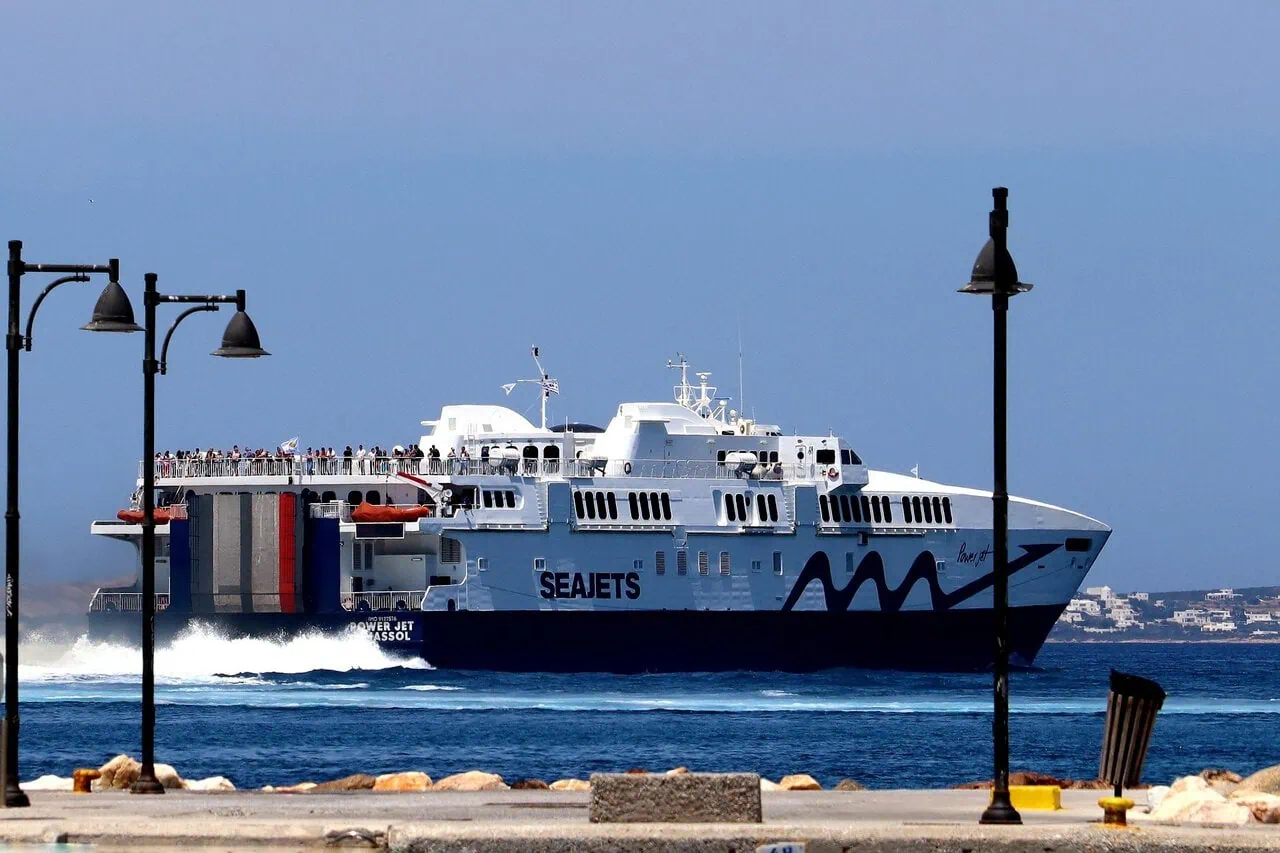
What makes this route particularly appealing is the balance between speed and experience. With modern high-speed Seajets ferries, the journey takes between 2.5 and 3 hours, making it competitive with flying when you factor in airport transfers and waiting times. At the same time, it offers something flights cannot match, a continuous connection with the sea, the islands, and the landscape that defines Greece.
The transition itself is part of the appeal. You leave behind the historic energy of Athens, with its ancient landmarks and busy streets, and arrive in Mykonos, an island known for its whitewashed buildings, windmills, and vibrant coastal atmosphere. It feels like a natural progression rather than a simple transfer.
For travellers who want a more relaxed, scenic, and immersive start to their island trip, the Athens to Mykonos ferry crossing remains one of the most rewarding options available.
Quick Overview: Key Journey Details Before You Book
Understanding the essentials of the Athens to Mykonos ferry route helps you plan with confidence and avoid surprises. The journey typically takes between 2.5 and 3 hours, depending on the vessel and sea conditions, making it a fast and efficient mainland-to-island connection.
Ferries on this route are operated by Seajets, one of the leading high-speed ferry companies in Greece. Departures leave from the Port of Piraeus, the main ferry hub for Athens, and arrive at the Mykonos New Port in Tourlos, about 2 km north of Mykonos Town, which serves as the primary gateway to the island. This is a different place from the Old Port in Chora, which now handles fishing boats, yachts and small excursion craft rather than the high-speed ferries from Athens.
Ticket options are flexible, with both one-way tickets and return journeys available. This allows you to either include Mykonos as part of a longer island-hopping route or plan a structured trip with a fixed return to Athens.
Pricing varies depending on timing and demand. One-way economy fares on the high-speed Seajets crossing generally start at around €88 (£77 / $95) per adult, with business and VIP seats reaching roughly €145 (£127 / $156) at peak times. Slower conventional ferries on the same route start nearer €44 (£38 / $47), so the real trade-off is speed against cost. Even at the higher end, the fare compares well with flying once additional airport transfer costs are considered. Tickets are issued as e-tickets, meaning you can go straight to the port and board without collecting anything in advance.
Passengers are allowed one piece of luggage up to 50 kg, which is generous compared to airline allowances. Accessibility depends on the vessel rather than the route as a whole. Seajets states that its ferries carry facilities for passengers with disabilities or reduced mobility, including designated seating and onboard wheelchairs, but not every ship working this crossing is fitted out to the same standard. If you have access needs, contact the operator at least 48 hours before departure to confirm what is available on your specific sailing.
See hotel options and places to stay in Mykonos.
Browse hotelsExplore holiday homes and apartments around Mykonos.
See holiday homesSee hotel prices from multiple booking sites in one search.
Compare ratesSea or Sky: Is the Ferry Better Than Flying to Mykonos
Choosing between the Athens to Mykonos ferry and a flight often comes down to more than just the headline journey time. While flights may appear quicker on paper, the reality is more nuanced once you factor in the full travel experience.
Flying requires travelling to Athens International Airport, arriving well in advance, passing through security, and then dealing with transfer time on arrival in Mykonos. When all of this is included, the total journey time often becomes comparable to the ferry, especially when travelling from central Athens.
By contrast, the ferry departs from Piraeus, which is easily reached by metro, taxi, or transfer. Boarding is straightforward, and there are no lengthy security procedures. You arrive, board, and begin your journey with minimal delay.
The experience itself is also very different. A flight is quick but disconnected, while the ferry offers a continuous, scenic journey across the Aegean Sea, with space to move around, relax, and enjoy the surroundings. There is also a greater sense of arrival, as you approach Mykonos by sea, watching the island gradually come into view.
For travellers who prioritise comfort, simplicity, and experience, the ferry is often the better choice. Flights still have their place, particularly for tight schedules, but for most visitors, the ferry offers a more enjoyable and less stressful way to travel.
Across Open Water: What the Ferry Journey Feels Like
The Athens to Mykonos ferry journey is longer than most inter-island crossings, and this gives it a different character. As the ferry leaves Piraeus, you pass through a busy maritime landscape before gradually moving into open water, where the horizon stretches uninterrupted in every direction.
The experience is shaped by the changing nature of the Aegean Sea. At times, the water is calm and reflective, creating a peaceful, almost meditative atmosphere. At other moments, the wind adds energy to the journey, reminding you that you are crossing a wide and open stretch of sea.
As you travel, distant islands begin to appear, first as faint shapes on the horizon, then gradually becoming more defined. The light across the water changes throughout the journey, shifting from deep blue tones to brighter, more reflective colours as the sun moves across the sky.
Because of the longer duration, there is time to fully settle into the journey. You can relax, take in the views, and enjoy the sense of movement between mainland and island. It feels less like transport and more like a transition into a different part of Greece.
Starting Your Journey: Navigating Piraeus Port with Ease
Your journey begins at the Port of Piraeus, one of the largest and busiest ferry ports in Europe. While it can feel overwhelming at first, it is well organised and designed to handle large volumes of passengers efficiently.
Getting to Piraeus from central Athens is straightforward. The Athens Metro Line 1 connects directly to the port, offering a reliable and affordable option. Taxis and private transfers provide a faster alternative, particularly if you are travelling with luggage or staying further from a metro station.
Once at the port, the key is to allow enough time. Arriving at least 30 minutes before departure is recommended, giving you time to locate your gate and prepare for boarding. During peak season, the port can be busy, so having a little extra time helps avoid unnecessary stress.
Boarding is generally smooth, especially with e-ticket access, which allows you to go straight to the ferry without collecting physical tickets. Clear signage and staff assistance make it easy to find your vessel, even if it is your first time travelling from Piraeus.
Starting your journey in this way sets the tone for the rest of the trip, moving from the energy of Athens into a more relaxed, sea-based experience as you head towards Mykonos.
Arriving in Mykonos: What to Expect at the Port
As your Athens to Mykonos ferry approaches the island, the coastline begins to take shape, with white buildings, rugged hills, and the unmistakable character of the Cyclades coming into view. Arrival is at the Mykonos New Port, which sits a short distance from the main town and acts as the island’s primary transport hub.
The port can feel busy, especially during peak season, with multiple ferries arriving throughout the day. Despite this, the process is generally well organised, and disembarkation is straightforward. Passengers leave the vessel quickly, and within minutes you are ready to continue your journey.
Transport options are available just outside the port. Taxis, local buses, and private transfers connect the port to Mykonos Town, nearby beaches, and accommodation across the island. Taxi demand can be high during busy periods, so planning ahead or considering alternative transport can save time.
The first impression is often lively and energetic, reflecting the island’s reputation. From the moment you step off the ferry, the atmosphere shifts from the steady rhythm of the sea to the vibrant pace of Mykonos, setting the tone for your stay.
Choosing Your Departure: Understanding Ferry Times and Frequency
The Athens to Mykonos ferry route operates with multiple daily departures, particularly during the summer season, giving travellers flexibility to choose a time that fits their plans. Exact schedules can vary depending on demand and operator availability, but the overall pattern remains consistent.
Morning departures are often the most popular, allowing you to arrive in Mykonos with a full day ahead. These sailings tend to offer a balanced experience, combining calmer conditions with a steady onboard atmosphere.
Midday and afternoon departures provide an alternative for those who prefer a more relaxed start. These can be particularly useful if you are travelling from elsewhere in Athens or arriving in the city the same day. The later crossings also offer a different visual experience, with changing light across the Aegean Sea as the journey progresses.
Return sailings from Mykonos to Athens follow a similar pattern, with multiple options throughout the day depending on the season. This flexibility makes it easy to plan both short visits and longer stays, without being tied to a single rigid schedule.
Booking in advance is recommended during peak travel periods, as the most convenient times can fill quickly, particularly on high-speed Seajets ferries.
Booking Smart: Tickets, Prices and Travel Strategy
When booking your Athens to Mykonos ferry, a little planning goes a long way. Ticket prices vary depending on demand, departure time, and how far in advance you book. Booking early tends to secure the lower end of the fare range, while last-minute peak-season seats on the fastest sailings push towards the top of it.
Choosing between a one-way ticket and a return journey depends on how you are structuring your trip. One-way tickets are ideal for travellers continuing on to other islands, while return tickets offer a simple and convenient option if you plan to come back to Athens.
Tickets are issued as e-tickets, making the process fast and straightforward. Once booked, you can go directly to the port without needing to collect anything in advance. This reduces friction on travel day and helps keep the experience smooth.
It is important to note that most tickets are non-refundable, so confirming your plans before booking is essential. During peak months, securing your preferred departure in advance is strongly recommended, particularly if you are travelling at popular times.
By planning ahead and understanding your options, you can make the Athens to Mykonos ferry crossing a seamless part of your overall itinerary.
Compare routes and fares for your journey to Mykonos.
Compare flightsChoose an Airalo eSIM and arrange mobile data before you arrive.
Browse eSIMsArrange a private airport pickup for your trip to Mykonos.
Check transfersPiraeus, Athens to Mykonos Ferry Times & Departures
Use Ferryhopper to check live sailings between Piraeus, Athens and Mykonos in both directions. Select your travel date to compare scheduled ferry departures, sailing times and available tickets.
Select the date you want to travel. The times shown on the right-hand side are the scheduled departure and arrival times for each ferry.
Availability can change quickly, particularly during weekends and the summer season. Some sailings may stop accepting bookings a few hours before departure. If a timetable is blank, there may be no available sailings for today. Try moving to a later date to check future services.
This is the timetable for the outward direction. Use it to check sailings from Piraeus, Athens to Mykonos for the date you plan to travel.
This is a separate timetable for the opposite direction. It does not select a return ticket for the journey above. Use it to check sailings from Mykonos to Piraeus, Athens.
Want to compare different routes and other ferry options?
Compare routes, operators, sailing times and prices with Ferryhopper or Direct Ferries.
Onboard Experience: Comfort, Space and Facilities
Travelling on a Seajets high-speed ferry offers a comfortable and efficient way to cover the distance between Athens and Mykonos. These vessels are designed for longer crossings, providing a good balance between speed and onboard comfort.
Inside, you will find air-conditioned seating areas with comfortable chairs and a clean, modern layout. The space is designed to accommodate a large number of passengers while still maintaining a relaxed environment. Large windows allow you to enjoy the changing views even when seated indoors.
There is also a bar and café onboard, where you can purchase snacks, drinks, and light refreshments during the journey. This adds a practical and enjoyable element to the crossing, especially on a journey of this length.
Passengers are allowed one piece of luggage up to 50 kg, with designated storage areas available. It is always advisable to keep personal items and valuables close to you during the journey.
The overall experience is smooth and well managed, making it easy to settle in, relax, and enjoy the transition from mainland Greece to the islands.
Essential Travel Information: Rules, Requirements and Tips
Before boarding your Athens to Mykonos ferry, there are a few key requirements to keep in mind. All passengers must carry a valid passport or national ID card, and this applies to adults, children, and infants.
Arriving at the port at least 30 minutes before departure is strongly recommended. This allows time to locate your ferry, confirm details, and board without unnecessary stress, particularly at a busy hub like Piraeus.
Luggage allowances are generous, with each passenger permitted one item up to 50 kg, but staying within these limits helps avoid additional charges and delays during boarding.
As with all Aegean ferry routes, schedules can occasionally be affected by weather conditions, particularly strong winds. While cancellations are not common, they can occur, and it is always wise to allow some flexibility in your travel plans.
Keeping your belongings secure, staying aware of announcements, and following basic travel precautions will ensure a smooth and enjoyable journey from Athens to Mykonos.
Who This Route Suits Best: Is the Ferry Right for You
The Athens to Mykonos ferry is ideal for travellers who want a more relaxed and immersive journey compared to flying. It suits those who value the experience of travel itself, not just the destination, and want to feel the transition from mainland Greece to the islands.
For first-time visitors to Greece, this route offers a strong introduction to Greek island travel, combining simplicity with a memorable setting. The process is straightforward, the journey is comfortable, and the arrival into Mykonos feels far more connected to the landscape than arriving by air.
It is also a great option for island hoppers, allowing you to move naturally from Athens into the Cyclades without needing to rely on flights. The flexibility of one-way tickets makes it easy to continue your journey across multiple islands.
Travellers who prefer to avoid airports, long security queues, and rigid boarding processes will find the ferry a far more enjoyable alternative. While flights still suit tight schedules, the ferry is often the better choice for those looking for a smoother, more enjoyable travel experience.
First Steps in Mykonos: Planning Your Arrival Smoothly
Arriving in Mykonos by ferry places you just a short distance from the island’s main attractions, but having a simple plan helps you avoid unnecessary delays. The Mykonos New Port is located outside the main town, so onward transport is usually required. The port authority page for the New Port of Mykonos sets out the passenger facilities available on site.
The most common option is to take a taxi, although availability can be limited during peak periods. Alternatively, local buses provide a more affordable way to reach Mykonos Town and other parts of the island. Many hotels also offer pre-arranged transfers, which can be one of the easiest options, particularly if you are arriving later in the day.
If you are heading straight into Mykonos Town, you will quickly find yourself surrounded by the island’s iconic features, including whitewashed buildings, narrow streets, and the famous windmills overlooking the sea. For those staying near the beaches, transport from the port is well established, with routes connecting to key areas across the island.
Taking a few minutes to plan your onward journey before arrival can save time and help you settle into your trip more smoothly.

Rupert’s Handy Travel Tips
Taking the ferry from Athens to Mykonos? Rupert has a few simple tips to help you travel smarter and enjoy the journey.
- Aim to catch an earlier sailing if possible, as this gives you more time to settle into Mykonos on arrival.
- Use the Athens Metro to reach Piraeus efficiently and avoid traffic delays.
- Choose a seat near the centre of the vessel if you are sensitive to motion, as it offers a more stable ride.
- Keep your passport or ID easily accessible for boarding checks.
- Allow extra time on arrival in Mykonos for transport, especially during busy summer periods.
Want to meet the reindeer behind our travel tips? Find out more in our page Who is Rupert?.


Frequently Asked Questions About the Athens to Mykonos Ferry
How long does the Athens to Mykonos ferry take?
The journey typically takes between 2.5 and 3 hours, depending on the vessel and sea conditions.
Where does the ferry depart from in Athens?
Ferries depart from the Port of Piraeus, the main ferry hub serving Athens.
Is the ferry better than flying to Mykonos?
For many travellers, yes. The ferry offers a more relaxed and scenic experience, and total travel time can be similar once airport procedures are considered.
Do you need to print your ticket?
No, you can board using your e-ticket on your phone, although having a backup copy is always helpful.
Is the journey rough?
Conditions on the Aegean Sea vary. High-speed ferries are generally stable, but those prone to seasickness should take precautions.
Compare hostels and budget-friendly accommodation around Mykonos.
Browse hostelsGet help with compensation, eligible lounge access and disruption support.
Explore AirHelp+Arriving before check-in or leaving later? Store your luggage and make more of your time in Mykonos.
Store your bagsPlan Your Greece Trip: Further Reading & Related Guides
After taking the Athens to Mykonos ferry, many travellers continue exploring the Cyclades, using ferry routes to move between islands with ease. If you are planning a wider journey, our Greek island ferry guides help you compare routes, understand schedules, and build a flexible island-hopping itinerary.
Once you arrive in Mykonos, it is worth exploring beyond the port. Our Mykonos travel guide covers the island’s beaches, old town, and key highlights, helping you make the most of your stay. If you are spending time in the capital before departure, our Athens (Piraeus) Port guide explain how to navigate to Piraeus without stress.
For those continuing their journey, our broader Cyclades travel content provides practical advice on combining routes, choosing ferry operators, and avoiding common mistakes when planning travel across the Greek islands.