
Reviewed by our editorial team Updated
Why Crete Is Greece’s Most Complete Island Destination
Crete is not just another Greek island. It is effectively a destination in its own right, offering a scale and variety that goes far beyond what most islands can provide. As the largest island in Greece, Crete combines historic cities, mountain landscapes, world-famous beaches, and a strong cultural identity into a single, highly diverse travel experience.
What makes Crete stand out is its depth. You are not limited to one type of experience. You can explore ancient ruins in the morning, relax on a beach in the afternoon, and dine in a mountain village in the evening. This variety makes Crete suitable for a wide range of travellers, from those seeking relaxation to those interested in history, food, and exploration.
Crete also has a distinct identity that sets it apart from the rest of Greece. The island has its own traditions, cuisine, and sense of independence, shaped by centuries of history. This gives it a strong and recognisable character, making it feel different from the Cyclades or Saronic Islands.
At the same time, Crete remains accessible and welcoming, with well-developed infrastructure and a range of accommodation options. It is this combination of scale, variety, and identity that makes Crete one of the most complete and rewarding destinations in Greece.
Understanding Crete: Regions, Cities and Key Areas
To fully appreciate Crete, it helps to think of it as a collection of regions rather than a single destination. Each part of the island offers a different experience, shaped by geography, history, and local culture.
Heraklion is the island’s largest city and main transport hub. It is the centre of modern life on Crete and provides access to major attractions, including the famous archaeological sites nearby. The city combines urban energy with historical significance, making it an important starting point for many visitors.
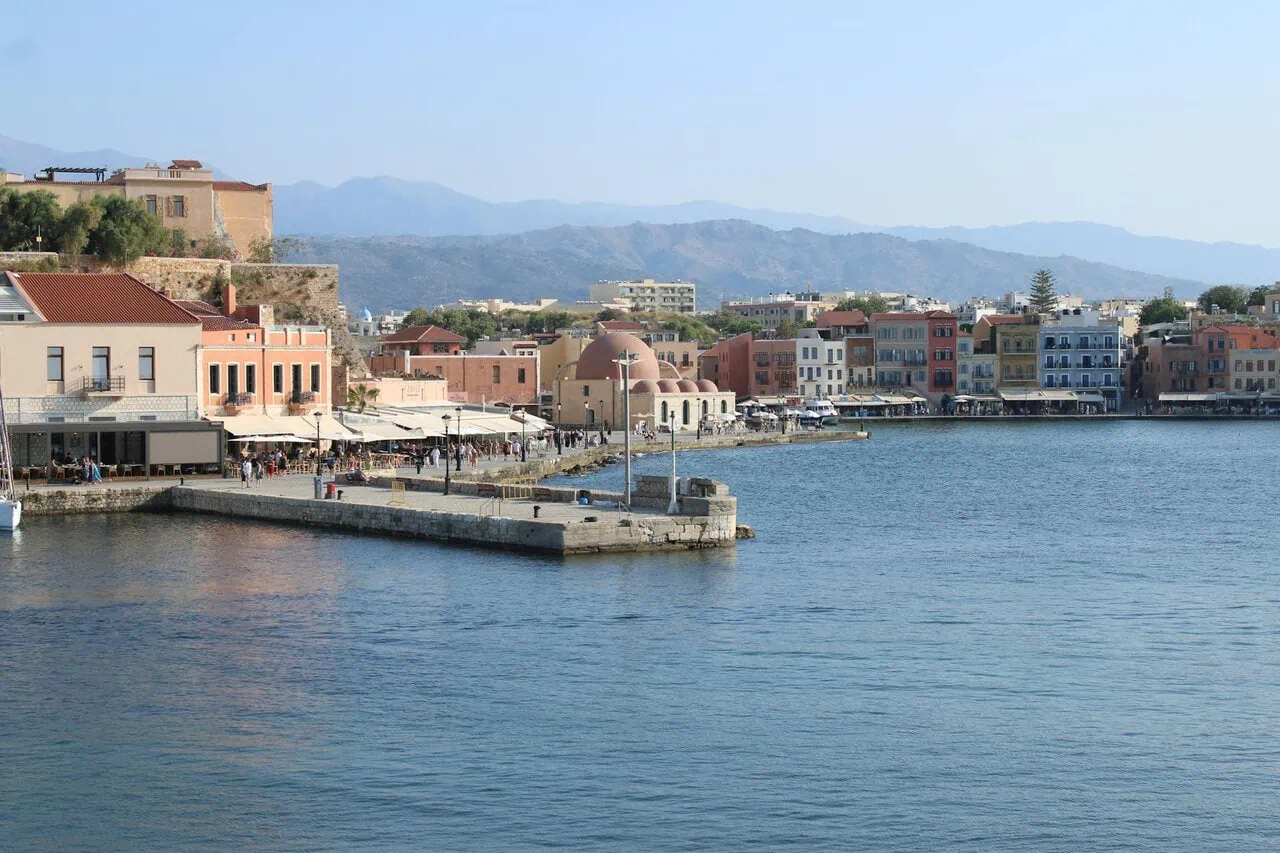
Chania, located on the western side of the island, is often considered the most attractive city. Its Venetian harbour, narrow streets, and well-preserved old town create a setting that feels both historic and vibrant. Chania is also a gateway to some of the island’s most scenic landscapes.
Rethymno offers a balance between the two, with a charming old town and a more relaxed atmosphere. It is smaller than Heraklion but still provides plenty to explore, including historic architecture and a strong cultural scene.
The eastern part of the island, including areas such as Agios Nikolaos and Elounda, is known for its coastal scenery and resort-style destinations, offering a more relaxed and polished experience.
Understanding these regions allows you to plan your trip more effectively, ensuring you experience the full range of what Crete has to offer.
See hotel options and places to stay in Crete.
Browse hotelsExplore holiday homes and apartments around Crete.
See holiday homesCompare prices for Crete hotels across multiple booking sites.
Check dealsCrete at a Glance: Essential Travel Facts
| Key Detail | Information |
|---|---|
| Location | Southern Greece, Mediterranean Sea |
| Main Cities | Heraklion, Chania, Rethymno |
| Airports | Heraklion (HER), Chania (CHQ) |
| Currency | Euro (€) |
| Language | Greek (English widely spoken) |
| Best Time to Visit | April to October |
| Ferry Access | Direct from Athens and other islands |
| Known For | History, beaches, food, landscapes |
| Driving Side | Right |
These essentials highlight the island’s scale and accessibility, as well as the variety of experiences available.
The History of Crete: From Ancient Civilisation to Modern Identity
Crete has one of the richest histories in Europe, with a timeline that stretches back thousands of years. It is widely recognised as the birthplace of the Minoan civilisation, one of the earliest advanced societies in the region.
The island’s history is visible in sites such as the Palace of Knossos, which provides insight into ancient life and mythology. This connection to early civilisation gives Crete a cultural depth that few other destinations can match.
Over the centuries, Crete has been influenced by Greek, Roman, Byzantine, Venetian, and Ottoman rule, each leaving its mark on the island’s architecture, traditions, and way of life. These layers of history are still visible in cities such as Chania and Rethymno, where Venetian buildings and Ottoman features coexist.
Despite these influences, Crete has maintained a strong sense of identity. The island’s traditions, music, and cuisine reflect a culture that is both independent and deeply rooted in its past.
Exploring Crete means engaging with this history in a way that feels immediate and real, rather than distant or abstract.
Getting Around Crete: Transport and Travel Considerations
Getting around Crete requires more planning than on smaller islands due to its size, but the options available make it manageable for most travellers.
The island has a well-developed road network, connecting major cities, towns, and attractions. Driving is one of the most effective ways to explore, as it allows you to move between regions and reach more remote locations at your own pace.
Public buses operate between key destinations, providing a reliable and affordable option for travel. These services connect cities such as Heraklion, Chania, and Rethymno, as well as many smaller towns and villages.
Taxis and private transfers are available, particularly in urban areas and near airports, offering a convenient option for shorter journeys or specific routes.
Walking is practical within cities and towns, especially in historic centres where streets are compact and pedestrian-friendly.
Because of its size, Crete is best approached as a destination where you focus on one or two regions, rather than trying to cover the entire island in a single trip. This allows for a more enjoyable and less rushed experience.
Arriving in Crete: Flights, Ferries and First Impressions
Reaching Crete is straightforward, but understanding how the island works on arrival is essential because it is vast, diverse, and spread across multiple regions. Unlike smaller Greek islands, where arrival points feel interchangeable, where you land in Crete will shape your entire trip.
Most international travellers arrive by air, with the two main gateways being Heraklion Airport in the centre of the island and Chania Airport in the west. Both airports handle a high volume of seasonal flights from across Europe, especially between May and October, when direct connections are at their peak.
Heraklion Airport is the busiest and most central arrival point. It provides access to Heraklion city, the north coast resorts, and eastern Crete, including areas such as Hersonissos, Malia, and Agios Nikolaos. The airport itself is functional and often crowded in summer, reflecting its role as the island’s main transport hub.
Chania Airport offers a very different arrival experience. Located in western Crete, it is smaller and generally calmer, and it provides access to Chania, Rethymno, and the western coastline, which is known for some of the island’s most scenic landscapes. Many travellers prefer this arrival point if they are focusing on the west of the island.
Ferries provide an alternative way to reach Crete and remain a key part of the island’s transport network. Overnight services from Piraeus Port in Athens are common, typically taking 8 to 9 hours, and allow you to travel in cabins and arrive in the morning. This can be a more relaxed and comfortable option, particularly if you prefer to avoid flying.
Crete is also connected by ferry to other islands, including Santorini, Mykonos, and Rhodes, making it an important hub for wider Greek travel routes. High-speed services are available on some routes, although weather conditions can affect reliability.
Your first impression of Crete depends heavily on where you arrive. Heraklion feels busy and practical, with a strong sense of movement and infrastructure, while Chania feels more atmospheric, particularly if you head straight towards the old town and harbour area.
What becomes clear immediately is that Crete is not a typical island destination. It feels closer to a mainland region, with long distances, varied landscapes, and a mix of cities, beaches, mountains, and villages. This sense of scale defines the entire experience and makes planning your movements essential from the start.
Airport Transfers and Getting to Your Base
Transfers in Crete are simple in principle but require careful planning due to the size of the island and the distance between key areas. Choosing the right arrival airport for your itinerary can save hours of travel time.
From Heraklion Airport, the city centre is just 10 to 20 minutes away, making it one of the easiest arrivals in Greece. However, if your accommodation is elsewhere, journey times increase quickly. Travelling west to Rethymno takes around 1 hour 15 minutes, while reaching Chania can take 2 to 2.5 hours by road.
From Chania Airport, the transfer into Chania town takes around 20 to 30 minutes, with a straightforward route along the coast. This arrival feels more relaxed and scenic, particularly if you are staying near the old town or harbour.
Taxis are available at both airports and provide a convenient door-to-door option, especially for shorter distances. For longer journeys, costs rise quickly, and pre-booking is often the better approach.
Many travellers choose to arrange private transfers in advance, particularly if they are heading to resorts or travelling as a group. This removes uncertainty and ensures a smooth arrival, which is valuable after long flights or late-night arrivals.
Car rental is one of the most common choices in Crete, and picking up a vehicle directly from the airport is often the most practical option. Given the distances involved, having your own transport allows you to explore the island far more efficiently.
Public buses operate from both airports and provide a reliable and affordable way to reach Heraklion city, Chania town, and other major destinations. However, services are timetable-based and may involve waiting or connections, especially if you are travelling outside peak hours.
The key factor when planning transfers in Crete is distance. A route that looks short on a map can still take significant time, so aligning your arrival airport with your accommodation area is one of the most important decisions you can make.
Local Public Transport Across Crete
Crete has one of the most developed public transport systems in Greece, centred around an extensive network of intercity buses operated by KTEL. This makes it possible to travel between major destinations without needing a car.
The main routes connect Heraklion, Chania, Rethymno, and Agios Nikolaos, with frequent services running throughout the day. Journey times are predictable, and buses are generally modern, comfortable, and air-conditioned, making them a reliable option for longer distances.
For example, travelling between Heraklion and Chania typically takes around 2 to 2.5 hours, while Heraklion to Rethymno takes approximately 1 hour 15 minutes. These routes are well served and are commonly used by both locals and visitors.
Buses also connect to a wide range of coastal towns, villages, and popular beaches, although frequency can vary depending on location. Well-known destinations such as Elafonissi Beach, Balos Lagoon, and Samaria Gorge access points are reachable by public transport, but often require careful timing and early departures.
While the network is strong, it is designed around fixed routes and schedules, which means flexibility can be limited. Exploring more remote areas, mountain villages, or less accessible beaches is significantly more difficult without a car.
For travellers focusing on one region of Crete, buses provide a practical and cost-effective way to get around. However, if your plan involves moving across multiple regions or discovering quieter locations, public transport alone may not be enough.
For the most reliable and up-to-date information, it is important to check the official KTEL bus websites, as Crete is served by two separate regional operators.
For travel in the west of the island, including Chania and Rethymno, use the official website.
For routes covering Heraklion, Agios Nikolaos, and eastern Crete, use the official website.
These sites provide the latest timetables, route information, and seasonal updates. While apps such as Google Maps are useful for planning, confirming your journey directly with the official operators helps avoid issues, particularly for longer routes or travel outside peak summer months.
Compare routes and fares for your journey to Crete.
Compare flightsUse an eSIM to get online without hunting for a local SIM after arrival.
See eSIM optionsArrange a private airport pickup for your trip to Crete.
Check transfersTaxis, Private Transfers and Travel Flexibility
Taxis are widely available across Crete and provide a convenient option for short journeys, airport transfers, and direct point-to-point travel. They are easy to find in cities, tourist areas, and transport hubs, and they offer a simple way to move around without relying on bus schedules.
In central areas such as Heraklion and Chania, taxi ranks are clearly marked, and availability is generally good. Booking ahead is recommended for longer journeys or early departures, particularly during the summer season when demand increases.
Private transfers offer a more structured and comfortable alternative, especially for travellers covering longer distances or travelling in groups. These services allow you to move directly between locations without stops, which is particularly useful when travelling between regions.
However, due to the scale of Crete, taxi and transfer costs can rise significantly over longer distances. A journey between major cities can take several hours, and pricing reflects both distance and time.
For this reason, taxis are best used strategically, filling gaps in your travel plans rather than acting as your primary mode of transport across the island.
In combination with buses or car rental, taxis provide an important layer of flexibility. They are particularly useful for short transfers, late arrivals, and reaching locations that are not well served by public transport, helping you move efficiently without overcomplicating your itinerary.
Driving, Parking and Car Rental in Crete
Driving is one of the most effective ways to explore Crete, particularly if you want to experience more than one region or visit locations that are not easily accessible by public transport.
Car rental is widely available at airports, cities, and tourist areas, with a broad range of vehicles to suit different needs. Booking in advance is recommended, especially during the summer months.
The island’s road network connects all major areas, but distances can be longer than expected. Travelling between cities such as Heraklion and Chania can take several hours, so planning your routes is essential.
Driving conditions vary depending on location. Main roads are generally well maintained, while smaller routes, particularly in mountainous areas, can be narrow and winding. Taking your time and driving carefully ensures a more comfortable experience.
Parking is available in most towns and cities, although it may require some patience in busier areas. Many destinations have designated parking areas just outside the centre.
For travellers who want to explore the island fully, driving provides the freedom and flexibility needed to experience Crete’s diversity.
Exploring Crete on Foot: Old Towns, Harbours and Local Streets
Walking is one of the best ways to experience the character of Crete, particularly within its historic towns and cities. While the island itself is far too large to explore entirely on foot, its old towns, harbours, and local neighbourhoods are designed for slow, detailed exploration.
In Chania, walking through the old town reveals Venetian architecture, narrow alleys, and a scenic harbourfront, where cafés and restaurants line the water. The layout encourages wandering, with small streets opening into squares and hidden corners.
Rethymno offers a similar experience, with a slightly quieter atmosphere. Its old town combines historic buildings, traditional shops, and shaded streets, creating a relaxed environment for exploring at your own pace.
In Heraklion, walking is more focused around specific areas, such as the historic centre and waterfront. While the city is larger and more modern, it still offers pockets of history and local life that are best discovered on foot.
Across the island, villages and smaller settlements provide additional walking opportunities, often with views across mountains or coastline, adding variety to the experience.
Walking allows you to connect with Crete at a more personal level, where the details of architecture, daily life, and atmosphere become most apparent.
Ferries, Ports and Island Connections from Crete
Crete is a major hub within the Greek ferry network, with multiple ports connecting the island to both the mainland and other islands. This makes it an important part of many travel itineraries.
The main ferry port is Heraklion, which offers regular services to Athens and nearby islands. Other ports, including Chania, Rethymno, and Agios Nikolaos, also provide connections, although schedules and routes vary.
Ferry travel is particularly useful for those combining Crete with destinations such as Santorini, Milos, or the Cyclades, allowing for flexible island-hopping routes.
The size of Crete means that choosing the right port is important. Travelling between ports on the island can take several hours, so it is best to plan your arrival and departure points carefully.
Ferries also play a role in accessing smaller islands and coastal areas, adding another dimension to travel within the region.
Using ferries effectively allows you to integrate Crete into a wider journey, while still appreciating its role as a destination in its own right.
| Route | Arrival Port in Crete | Duration | Frequency (Summer) | Ferry Type | Main Operators | Notes |
|---|---|---|---|---|---|---|
| Athens (Piraeus) – Heraklion | Heraklion | 8h – 9h (overnight) | Daily | Conventional (cabins) | Minoan Lines, Blue Star Ferries | Most popular route, comfortable overnight option |
| Athens (Piraeus) – Chania | Chania (Souda) | 8h – 9h (overnight) | Daily | Conventional (cabins) | ANEK Lines, Blue Star Ferries | Best for western Crete |
| Santorini – Heraklion | Heraklion | 1h 45m – 2h 30m | Frequent (2–4 daily) | High-speed | Seajets, Minoan Lines | One of the busiest island routes |
| Santorini – Chania | Chania (Souda) | 3h – 5h | Limited (seasonal) | High-speed | Seajets | Less frequent than Heraklion route |
| Mykonos – Heraklion | Heraklion | 4h – 6h | Moderate (1–2 daily) | High-speed | Seajets | Popular island-hopping route |
| Paros – Heraklion | Heraklion | 3h – 4h 30m | Moderate (1–2 daily) | High-speed | Seajets | Often part of multi-stop routes |
| Naxos – Heraklion | Heraklion | 3h 30m – 5h | Moderate (1–2 daily) | High-speed | Seajets | Good central Cyclades link |
| Rhodes – Heraklion | Heraklion | 10h – 15h | Limited (few weekly) | Conventional | Blue Star Ferries | Long-distance route across southern Aegean |
| Karpathos – Heraklion | Heraklion | 6h – 8h | Limited (few weekly) | Conventional | Blue Star Ferries | Regional connection |
| Milos – Chania | Chania (Souda) | 4h – 6h | Limited (seasonal) | High-speed | Seajets | Useful west Crete link |
| Kassos – Sitia | Sitia | 3h – 5h | Limited (few weekly) | Conventional | Blue Star Ferries | Eastern Crete access |
| Athens (Piraeus) – Sitia | Sitia | 12h – 14h | Limited (few weekly) | Conventional | Blue Star Ferries | Long route to eastern Crete |
Tourist Transport, Tours and Local Excursions
Crete offers a wide range of organised tours and transport options, reflecting its size and the diversity of experiences available. These services provide a convenient way to explore the island without needing to manage every detail independently.
Tours are available for many of the island’s key attractions, including historical sites, beaches, and natural landscapes. These often include transport, making them a practical option for visitors who prefer a structured itinerary.
Excursions to locations such as gorges, coastal areas, and traditional villages allow you to see parts of the island that might be difficult to reach using public transport alone. These trips often combine multiple stops, providing a broader overview of a specific region.
Boat trips and coastal excursions are also available, offering a different perspective on the island and access to areas that are not easily reached by road.
While independent travel is possible and often preferred, these organised options provide additional flexibility, particularly for those who want to maximise their time or avoid long journeys.
Top Things to Do in Crete: Beaches, History and Landscapes
Crete is one of the most diverse destinations in Greece, and the range of things to do reflects its scale. This is not an island where you focus on one highlight. Instead, the experience comes from combining coastal scenery, historic sites, mountain landscapes, and local culture across different regions.
Beaches are one of the biggest draws, but they vary significantly depending on where you are. The north coast offers long stretches of sand and easy access from major cities, while the west and south coasts are known for more dramatic settings, clearer water, and less developed surroundings. Travelling between different beaches quickly shows how varied the island really is.
Historical exploration is another key part of a Crete itinerary. The island is home to some of the most important archaeological sites in Greece, as well as towns shaped by Venetian and Ottoman influences. Moving between these locations gives a clear sense of how Crete has evolved over thousands of years.
The interior of the island offers a completely different experience. Areas such as the White Mountains in western Crete and the Psiloritis range in the centre provide access to gorges, hiking routes, and traditional villages that feel far removed from the coastline. Visiting these regions adds depth and balance to a trip that might otherwise focus only on beaches.
Food is also a major part of the experience. Crete is known for its strong culinary identity, with local produce, traditional dishes, and regional specialities playing an important role in everyday life. Eating in village tavernas, visiting local markets, and experiencing regional cuisine is an essential part of understanding the island.
What makes Crete stand out is how these elements come together. You can move from a historic site in the morning, to a beach in the afternoon, and a mountain village in the evening, all within the same region. This variety is what defines the island and makes it one of the most complete travel destinations in Greece.
Compare hostels and budget-friendly accommodation around Crete.
Browse hostelsFlying to Crete? Get fast compensation payouts, eligible lounge benefits and expert help when flights go wrong.
See AirHelp+ benefitsArriving before check-in or leaving later? Store your luggage and make more of your time in Crete.
Store your bagsHistoric Landmarks and Cultural Highlights of Crete
Crete’s historical landmarks are among the most significant in Greece, reflecting a long and layered past that stretches from ancient civilisations to more recent influences.
The most famous site is the Palace of Knossos, located just outside Heraklion. This vast archaeological complex is linked to the Minoan civilisation, one of the earliest advanced societies in Europe. Walking through the ruins provides a direct connection to this period, with structures, courtyards, and reconstructed areas offering insight into how the site once functioned.
Beyond Knossos, the island is home to other important archaeological locations such as Phaistos and Malia, each providing a different perspective on ancient Crete. These sites are less crowded but equally important, making them worthwhile additions for those interested in history.
The island’s cities also reflect its more recent past. Chania Old Town is one of the most atmospheric places in Crete, with a harbour area shaped by Venetian architecture, narrow streets, and historic buildings that have been preserved over time. Rethymno Old Town offers a similar experience, combining Venetian influences with later Ottoman elements, visible in its mosques, fortifications, and layout.
Across the island, fortresses, monasteries, and churches add further layers to Crete’s cultural identity. Sites such as the Fortezza in Rethymno and the Venetian walls of Heraklion show how the island was defended and developed during different periods.
What makes Crete’s history unique is its distribution. Important landmarks are not concentrated in one place but spread across the island. Exploring them requires movement between regions, which naturally brings together history, landscape, and local life into a more complete experience.
Best Beaches in Crete
Crete is home to some of the most varied and visually striking beaches in Greece, with each region offering something different. The scale of the island means that beach experiences can range from easy-access resort coastlines to remote, wild landscapes.
In western Crete, some of the island’s most famous beaches stand out for their unique scenery. Balos Lagoon is one of the most recognisable, with shallow turquoise water and pale sand creating an almost lagoon-like environment. The setting feels remote, and reaching it involves either a boat trip or a combination of driving and walking, which adds to the sense of arrival.
Nearby, Elafonissi Beach is known for its distinctive pink-tinged sand and clear, shallow water. The area is wide and open, making it suitable for swimming and walking, and it remains one of the most popular destinations on the island.
On the south coast, Preveli Beach offers a completely different landscape. Here, a river flows through a palm forest before reaching the sea, creating a rare combination of freshwater and coastal scenery. The setting is dramatic, and the approach involves a descent that reveals the beach gradually.
Along the north coast, beaches are generally easier to access and closer to major towns. Falassarna Beach combines long stretches of sand with open views and strong sunsets, while areas around Chania and Rethymno offer a mix of organised beaches with facilities and quieter sections further away from the main centres.
In eastern Crete, Vai Beach stands out for its large natural palm forest, creating a setting that feels very different from the rest of the island. The beach itself is well organised, but the surrounding landscape gives it a distinctive character.
Closer to Heraklion, beaches such as Matala Beach combine natural features with cultural history, as the cliffs above the beach are known for their rock-cut caves, once used in ancient times and later associated with alternative communities.
What defines the beaches of Crete is not just their quality, but their variety. Travelling between regions reveals completely different coastal environments, from wide sandy bays to hidden coves and dramatic cliff-backed shores.
Exploring more than one area allows you to experience the full range of what Crete offers, making the beaches not just a highlight, but a key part of understanding the island as a whole.
Hidden Gems and Lesser-Known Places in Crete
Beyond the well-known cities and headline beaches, Crete reveals its true character in the places that most visitors never reach. The island’s size makes it easy to move away from the busiest areas and discover quiet villages, remote coastlines, and landscapes that feel largely untouched.
Inland villages are some of the most rewarding places to explore. Areas such as Archanes near Heraklion, Anogeia in the mountains, and Vamos in the west offer a glimpse into traditional Cretan life. These are places where agriculture, local crafts, and community remain central, and where tavernas serve regional dishes based on seasonal ingredients. Spending time in these villages provides a completely different experience from the coastal resorts.
On the south coast, away from the main tourist zones, you will find a series of less-visited beaches and small settlements that feel far more remote. Locations such as Loutro, which is only accessible by boat or foot, and Sougia, a laid-back coastal village, offer a slower pace and a sense of isolation that is difficult to find elsewhere on the island. These areas are ideal if you are looking for space, quiet, and a more traditional atmosphere.
Crete’s coastline is also filled with smaller coves and hidden beaches that are not widely signposted. Exploring areas beyond the main access points often leads to quiet swimming spots, rocky inlets, and stretches of coastline with very few visitors, particularly outside peak season.
Natural features provide another layer of discovery. While Samaria Gorge is the most famous, there are many alternatives such as Imbros Gorge and Richtis Gorge, which offer equally impressive scenery with fewer crowds. These landscapes highlight the island’s rugged terrain and provide opportunities for walking and exploration that go beyond the typical beach itinerary.
What makes these hidden parts of Crete special is not just their location, but the way they shift the focus of your trip. Moving away from the main highlights allows you to experience a more personal, slower, and more authentic side of the island, where discovery replaces routine and each place feels more individual.

Indoor Activities and Things to Do in All Weather
Although Crete is best known for its outdoor lifestyle, it also offers a wide range of indoor experiences that ensure there is always something to do, regardless of weather or season.
Museums are one of the strongest indoor attractions on the island. The Heraklion Archaeological Museum is one of the most important in Greece and provides essential context for the island’s ancient past, particularly the Minoan civilisation. Visiting the museum alongside sites such as Knossos helps bring the history of Crete into focus in a way that outdoor ruins alone cannot.
In Chania and Rethymno, historic buildings and cultural venues provide a different type of indoor experience. Walking through covered sections of the old towns, visiting small galleries, or stepping into restored buildings allows you to explore the island’s history while remaining sheltered. These spaces often combine architecture with exhibitions, offering insight into both the past and present of the island.
Food becomes an even more central part of the experience during quieter or cooler periods. Crete’s strong culinary identity means that restaurants, cafés, and traditional tavernas are not just places to eat, but places to spend time. Long meals, local wine, and regional specialities create a relaxed indoor experience that reflects everyday life on the island.
Larger towns also offer shopping areas and local markets, some of which are partially covered or located within enclosed streets. Exploring these areas provides a way to engage with local products, crafts, and produce without relying on outdoor activities.
Workshops and small cultural experiences are also available in some regions, including cooking classes, wine tastings, and artisan demonstrations, which provide a more interactive way to spend time indoors.
These indoor options ensure that Crete remains a well-rounded destination throughout the year, offering depth and variety even when conditions are not ideal for beaches or outdoor exploration.
Shopping in Crete: Local Products, Markets and Crafts
Shopping on Crete reflects the island’s size and diversity, offering everything from local markets and artisan products to more modern retail experiences.
In cities such as Heraklion, Chania, and Rethymno, you will find a wide range of shops, including boutiques, traditional stores, and larger commercial areas. These locations provide a mix of everyday goods and items that reflect the island’s identity.
Local markets are a key part of the experience, offering fresh produce, regional foods, and handmade products. These markets provide a direct connection to the island’s agricultural traditions and are often used by locals as well as visitors.
Across the island, there is a strong emphasis on artisan goods, including ceramics, textiles, and locally produced food items. These products often reflect traditional methods and materials, giving them a distinctive character.
Shopping in Crete is less about large-scale retail and more about discovering items that are connected to the island’s culture and way of life, making it a meaningful part of your visit.
Suggested Itinerary for Exploring Crete
Planning your time in Crete requires a more strategic approach than most Greek islands. The distances are significant, the road network is varied, and each region offers a very different experience. The key is not trying to cover everything, but instead building a route that allows you to explore each area properly.
For a short stay of 3 to 4 days, it is best to focus entirely on one base. Chania is often the strongest option, as it combines a beautiful old town, access to some of the island’s most famous beaches such as Balos and Elafonissi, and proximity to natural highlights like Samaria Gorge. Alternatively, Heraklion works well if you want to prioritise history, with easy access to the Palace of Knossos, museums, and nearby coastal areas. Staying in one place reduces travel time and allows you to settle into the rhythm of the island.
A well-balanced short itinerary usually starts with exploring your base city, followed by a day dedicated to a major beach, and another day focused on history or nature. This combination gives you a clear sense of what makes Crete unique without overloading your schedule.
For a medium stay of 5 to 7 days, you can expand your itinerary to include two regions. A popular and effective combination is Chania and Rethymno, where you can experience both a lively historic harbour and a slightly quieter, more relaxed town. Another strong option is Heraklion and eastern Crete, including areas such as Agios Nikolaos and Elounda, which offer a mix of coastal scenery, resort-style relaxation, and access to sites like Spinalonga Island.
When combining regions, it is important to plan your movements carefully. Travelling between bases takes time, so it works best to split your stay into two or three nights in each location, rather than moving too frequently. This keeps the pace manageable and avoids losing full days to travel.
For a longer stay of 7 to 10 days or more, you can experience Crete as a multi-region destination. A typical route might begin in Chania, continue to Rethymno, move on to Heraklion, and finish in eastern Crete. This approach allows you to see the island’s full range, from historic towns and famous beaches to quieter coastal areas and inland landscapes.
Adding day trips into the interior is essential for understanding Crete properly. Visiting a mountain village, driving through the White Mountains, or exploring a gorge such as Samaria or Imbros provides a completely different perspective from the coastline. These experiences highlight the island’s scale and contrast, which is one of its defining features.
It is also worth factoring in travel time and road conditions. Journeys that look short on a map can take longer than expected, particularly in mountainous areas or along the south coast. Building in flexibility ensures you are not rushing between locations.
The most important principle when planning Crete is to focus on depth rather than coverage. The island rewards travellers who take the time to explore each area properly, whether that means spending longer in a single region or carefully selecting a small number of locations. Trying to see everything in one trip usually leads to unnecessary travel and a less rewarding experience overall.

Festivals, Seasonal Highlights and the Best Time to Visit Crete
Crete offers a varied experience throughout the year, with each season bringing different advantages.
The summer months provide the best weather for beaches and outdoor activities, with long days and warm temperatures. This is the busiest period, particularly in popular areas such as Chania.
Spring and early autumn are often considered the best times to visit, offering pleasant weather, fewer crowds, and a more relaxed atmosphere. These seasons are ideal for exploring both cities and natural landscapes.
Crete also has a strong tradition of local festivals and cultural events, particularly during the summer. These events often include music, food, and celebrations that reflect the island’s traditions.
Because Crete has a large permanent population, it remains active throughout the year. Even outside peak season, cities continue to function normally, providing a more authentic and less tourist-focused experience.
Choosing when to visit depends on whether you prefer lively summer energy or a quieter, more immersive experience, both of which Crete can offer.
Where and What to Eat in Crete
Food is a central part of life on Crete, and the island is widely regarded as one of the best places in Greece to experience authentic local cuisine. Cretan food is built around fresh ingredients, simple preparation, and strong regional traditions, creating meals that feel both satisfying and deeply connected to the land.
Across the island, you will find restaurants serving locally sourced vegetables, olive oil, cheeses, and meats, often produced within the surrounding area. This emphasis on freshness gives Cretan cuisine a distinctive identity, where flavour comes from quality rather than complexity.
In cities such as Chania, Heraklion, and Rethymno, the dining scene ranges from traditional tavernas to more modern restaurants, offering both classic dishes and contemporary interpretations. Coastal areas focus heavily on seafood, while inland villages highlight meat dishes and rustic cooking styles.
Eating on Crete is also a social experience. Meals are often long and relaxed, with an emphasis on sharing, conversation, and enjoying the setting. This slower pace reflects the island’s approach to life and makes dining an essential part of the overall experience.
For many visitors, food becomes one of the most memorable aspects of their trip, providing a deeper connection to the island’s culture and traditions.
Nightlife in Crete: From Lively Resorts to Relaxed Evenings
Nightlife in Crete varies dramatically depending on where you are, and this is one of the island’s biggest strengths. Unlike smaller islands with a single nightlife centre, Crete offers everything from lively resort strips and beach bars to relaxed evenings in historic towns and quiet villages.
In the main cities, particularly Chania and Heraklion, nightlife is built around a mix of bars, cafés, restaurants, and smaller venues rather than large-scale clubs. In Chania Old Town, evenings typically begin along the Venetian harbour, where waterfront restaurants and cocktail bars create a relaxed but social atmosphere. As the night progresses, the energy builds in the narrow streets behind the harbour, with a mix of late-night bars and music venues that stay open well into the early hours.
Heraklion offers a slightly more urban nightlife experience. The city has a wide range of bars, clubs, and live music venues, particularly in the centre, where locals and visitors mix. It is less scenic than Chania but often more varied in terms of nightlife options, especially outside peak tourist areas.
For travellers looking for a more energetic and resort-focused scene, areas such as Malia and Hersonissos on the north coast are the main hotspots. These destinations are known for their high-energy nightlife, busy bars, and late-night clubs, attracting a younger international crowd during the summer months. The atmosphere here is focused on socialising and partying, with venues staying open until very late.
In contrast, much of Crete offers a more relaxed approach to evenings. In places such as Rethymno Old Town, Agios Nikolaos, and smaller coastal villages, nightlife centres around long dinners, evening walks, and drinks in laid-back bars rather than high-intensity venues. The pace is slower, and the focus is on atmosphere rather than scale.
Beach bars also play an important role, particularly during the summer. Along the north coast and in resort areas, many beachside locations remain open into the evening, offering music, drinks, and sea views, creating a softer transition from day to night.
What defines nightlife in Crete is choice. You can spend one evening enjoying a quiet meal by the sea, another exploring bars in a historic town, and another in a more lively resort environment. The experience changes completely depending on your location, which makes it easy to tailor your evenings to your own preferences.

Where to Stay in Crete: Choosing the Right Region
Choosing where to stay in Crete is one of the most important decisions you will make, as the island is large enough that your base will shape your entire trip. Each region offers a different mix of scenery, accessibility, atmosphere, and activities, and moving between them takes time.
Chania is often the best all-round choice, particularly for first-time visitors. The combination of a beautiful old town, Venetian harbour, excellent restaurants, and access to some of Crete’s most famous beaches, including Balos and Elafonissi, makes it one of the most complete destinations on the island. It also provides access to the White Mountains and Samaria Gorge, adding a strong natural element to your stay.
Heraklion is the most practical and centrally located base. It is the island’s main transport hub, with the largest airport and port, making it ideal for shorter trips or for travellers planning to explore multiple regions. It also offers easy access to the Palace of Knossos and the Heraklion Archaeological Museum, making it the best choice for those focused on history. While the city itself is more functional than Chania, it still offers a good range of accommodation, dining, and local life.
Rethymno sits between Chania and Heraklion and provides a strong balance between the two. Its old town is compact, atmospheric, and less crowded, and it offers a more relaxed pace while still being well connected. It works well as a base if you want a mix of culture, beaches, and a quieter atmosphere.
In eastern Crete, Agios Nikolaos and Elounda offer a more polished and resort-focused experience. This part of the island is known for coastal scenery, upscale accommodation, and a slower pace, making it ideal for travellers looking for relaxation and comfort. It also provides access to attractions such as Spinalonga Island and the surrounding coastline.
For those seeking something more traditional or remote, smaller villages and less-developed areas offer a very different experience. Staying in these locations provides a stronger connection to local life, landscapes, and quieter surroundings, although it often requires a car for flexibility.
Because distances across Crete are significant, it is usually best to choose one or two regions and explore them properly, rather than trying to cover the entire island in a single trip. Staying longer in one area allows you to experience it in more depth and avoid spending too much time travelling.
Selecting the right base is key to shaping your trip. Whether you prioritise historic towns, beach access, nightlife, or relaxation, choosing the right region ensures that your time in Crete feels balanced, manageable, and rewarding.
Cultural Norms, Etiquette and Local Life in Crete
Understanding local customs enhances your experience of Crete, helping you connect more naturally with the island and its people. Crete has a strong sense of identity, and this is reflected in its traditions and daily life.
Respect for local culture and community is important, particularly in smaller villages and traditional settings. Visitors are generally welcomed warmly, but awareness of local norms is appreciated.
Life on Crete moves at a steady and relaxed pace, especially outside major tourist areas. Service in restaurants and cafés may take longer than expected, but this reflects a focus on enjoying the moment rather than rushing.
Simple gestures such as greeting people when entering shops or showing patience in busy situations help create positive interactions.
The island’s traditions, music, and food all play a role in daily life, and engaging with these elements provides a more authentic and meaningful experience.
eSIMs and Staying Connected in Crete
Staying connected on Crete is easy, with strong mobile coverage across cities, towns, and most coastal areas. Reliable connectivity makes it simple to navigate, plan journeys, and stay organised during your trip.
Many travellers use eSIMs to ensure they have mobile data as soon as they arrive. This is particularly useful on a large island like Crete, where you may be travelling between regions and relying on maps or transport information.
WiFi is widely available in hotels, restaurants, and cafés, especially in major towns. However, speeds can vary depending on location and demand, so having your own data connection provides greater consistency.
Being connected helps you manage your itinerary more efficiently, particularly when dealing with longer distances and multiple locations.

Laws, Safety and Practical Advice for Visiting Crete
Crete is a safe destination, with low levels of crime and a welcoming environment for visitors. Most trips take place without any issues, making it suitable for a wide range of travellers.
Basic precautions are still recommended, particularly in busy areas such as city centres, transport hubs, and popular beaches. Keeping an eye on your belongings helps avoid minor problems.
Driving requires attention due to the island’s size and terrain. Roads can be long, winding, and occasionally narrow, particularly in mountainous areas. Driving carefully and allowing extra time is essential.
Local laws are straightforward, but visitors should respect traffic rules, public behaviour standards, and local customs, particularly in traditional areas.
Healthcare services are well developed, with hospitals and medical centres located in major cities. Pharmacies are widely available across the island.
Overall, Crete offers a safe, accessible, and well-supported travel environment, allowing you to focus on enjoying the experience.

Rupert’s Handy Travel Tips
Planning a trip to Crete? Rupert has a few smart tips to help you explore this large and diverse island with ease.
- Focus on one or two regions rather than trying to see the whole island.
- Consider renting a car to explore more freely.
- Allow extra time for travel between locations due to distances.
- Mix beaches, cities, and inland areas for a balanced trip.
- Take time to enjoy the island’s food and local culture.
Want to meet the reindeer behind our travel tips? Find out more in our page Who is Rupert?.


Frequently Asked Questions About Visiting Crete
How many days do you need in Crete?
Most visitors need at least 5 to 7 days to explore one or two regions comfortably.
What is the best area to stay in Crete?
Chania is often the best all-round choice, while Heraklion is best for transport and history.
Do you need a car in Crete?
Yes, especially if you want to explore beyond major cities and visit more remote areas.
Is Crete suitable for first-time visitors to Greece?
Yes, it offers a complete and accessible experience, making it ideal for a first trip.
Is Crete good for island hopping?
It connects well to other islands, but due to its size, it is often best experienced as a destination in its own right.
Plan Your Trip: Further Reading & Related Travel Guides
After exploring this Crete travel guide, the next step is to connect your trip with the wider Greek islands. Many travellers combine Crete with destinations such as Santorini, Milos, or the Cyclades, using ferry routes to build a broader itinerary.
The Cyclades ferry routes guide provides a clear overview of how the islands connect, while the Athens ferry routes and Piraeus port guide helps you plan travel from the mainland.
If you are exploring smaller islands, the Paros, Milos, and Syros travel guides offer detailed insights into destinations that pair well with Crete.
By combining these guides, you can create a flexible and well-structured travel plan, whether you are focusing on Crete alone or incorporating it into a larger journey.











