Reviewed by our editorial team Updated
Why visit Brno?
Brno is the Czech Republic’s second-largest city, yet it remains refreshingly under-the-radar for many international travellers. Often overshadowed by Prague, Brno rewards visitors with a relaxed pace, lower prices, and a strong local identity that feels authentic rather than performative. This Brno travel guide is designed to help you explore the city with confidence, whether you’re here for a weekend break, a longer stay, or as part of a wider Central European itinerary.
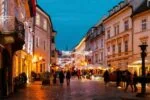
At the heart of Brno is a compact, walkable historic centre, anchored by medieval landmarks, leafy squares, and a lively café culture fuelled by the city’s large student population. Beyond the old town, Brno opens up into green hills, vineyards, and residential districts that feel surprisingly close to nature. The city is also known for its modernist architecture, thriving food scene, and craft beer culture, making it particularly appealing to curious, independent travellers.
Brno is an excellent base for exploring South Moravia, one of the Czech Republic’s most scenic and wine-producing regions. Thanks to strong rail and bus connections, it’s also easy to combine Brno with Vienna, Bratislava, or Prague. Throughout this Brno tourist guide, you’ll find practical advice, transport tips, and local insights, including recommendations for the best apps for Brno to help you get around, book tickets, and discover hidden spots with ease.
Key Neighbourhoods, Areas & Regions
Brno is made up of distinct neighbourhoods, each offering a different experience depending on whether you’re sightseeing, dining out, or deciding where to stay.
Brno-střed (City Centre) is where most visitors begin. This area includes the old town, main squares, museums, and nightlife. It’s ideal for first-time visitors who want everything within walking distance, from historic sights to cafés and bars.
Veveří sits just northwest of the centre and is popular with students and young professionals. The neighbourhood has excellent tram connections, plenty of casual restaurants, and quick access to Lužánky Park. It’s a good balance between central and residential.
Královo Pole feels more local and laid-back, with tree-lined streets and traditional pubs. Visitors staying here enjoy good transport links without tourist crowds, making it a smart choice for longer stays.
Žabovřesky and Pisárky are greener districts closer to nature, well suited to travellers who enjoy walking, cycling, or easy access to parks and forested areas. These neighbourhoods are quieter but still well connected.
Beyond the city, South Moravia offers vineyards, castles, and countryside day trips. Many travellers use Brno as a base to explore this wider region, combining city culture with rural scenery.
Best for two or three nights. The widest choice of rooms, with filters for free cancellation and included breakfast.
View staysBest for longer stays. Whole apartments and houses, so you are not eating out three times a day.
View rentalsBest as a last check before booking. Compares Brno hotel rates across several sites in one search.
Compare ratesQuick Facts
| Category | Details |
|---|---|
| Country | Czech Republic |
| Region | South Moravia |
| Population | Approx. 404,000 |
| Language | Czech |
| Currency | Czech Koruna (CZK) |
| Time Zone | Central European Time (CET) |
| Plug Type | Type E |
| Emergency Number | 112 |
| Drinking Water | Safe to drink |
| Public Transport | Extensive tram, bus & trolleybus network |
| Airport | Brno–Tuřany Airport (BRQ) |
Those essentials cover the practical basics, but they only tell part of the story. Brno’s history explains a great deal about why the city looks and feels the way it does today, so that’s a good place to pick things up next.
Brief History & Background
Brno’s history stretches back over a thousand years, shaped by its strategic position at the crossroads of Central Europe. First mentioned in the 11th century, the city grew around Špilberk Castle, which later became a formidable fortress and, at times, a feared prison.
During the Habsburg era, Brno developed into a major industrial and administrative centre, earning the nickname “the Moravian Manchester.” This period left behind grand civic buildings and early industrial architecture, many of which still define the cityscape today.
The 20th century brought upheaval. Brno experienced Nazi occupation during World War II, followed by decades under communist rule. While this era slowed development in some areas, it also preserved much of the historic centre from over-commercialisation.
Since the Velvet Revolution, Brno has reinvented itself as a university city and technology hub, attracting international students, researchers, and start-ups. Today, the city blends medieval streets, functionalist architecture, and modern culture in a way that feels natural and lived-in. Understanding this layered history adds depth to any visit and helps explain why Brno feels both historic and forward-looking at the same time.
Getting There & Around
Airport Overview & Transfers
Brno–Tuřany Airport (BRQ) is a small but efficient regional airport located around 7.5 km southeast of Brno city centre. While it doesn’t handle the same volume of traffic as Prague or Vienna, it offers a straightforward arrival experience with minimal queues and short walking distances. For many travellers using this Brno travel guide, the airport will feel refreshingly calm compared to larger European hubs.
Public transport from the airport is simple and affordable. Trolleybus line 21 connects the terminal with Brno’s main railway station during the day, running every 20 minutes since it replaced the old E76 bus in May 2026, while the N89 bus operates overnight. The journey takes a little under 20 minutes, and tickets can be purchased via ticket machines, mobile apps, or contactless payment onboard.
Taxis and ride-hailing services are readily available outside the terminal. Prices to the city centre are generally reasonable, making this a good option if you’re arriving late or travelling with luggage. Car hire desks are located inside the terminal for those planning regional exploration.
Although Brno–Tuřany has limited long-haul routes, many visitors arrive via Vienna International Airport, which is about 1.5 hours away by train or coach. This makes Brno particularly accessible for international travellers while still enjoying the benefits of a smaller city airport.
Trains
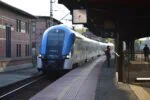
Brno is one of the Czech Republic’s most important rail hubs, making train travel the easiest and most reliable way to reach the city. Czech Railways operates frequent services connecting Brno with Prague, Vienna, Bratislava, and Ostrava, while international operators add further choice.
Brno hlavní nádraží (main station) sits right on the edge of the historic centre, allowing you to step off the train and walk straight into the old town. This central location is a major advantage and one reason Brno works so well for short city breaks.
Trains from Prague typically take 2.5 hours, while Vienna is just 90 minutes away, making Brno ideal for multi-city itineraries. Services are modern, punctual, and competitively priced, especially when booked in advance.
Tickets can be bought online, at station machines, or via mobile apps. Many travellers rely on rail-booking platforms and local transport apps, which are covered later in this Brno tourist guide. Seat reservations are usually optional on domestic routes but recommended on international services during busy periods.
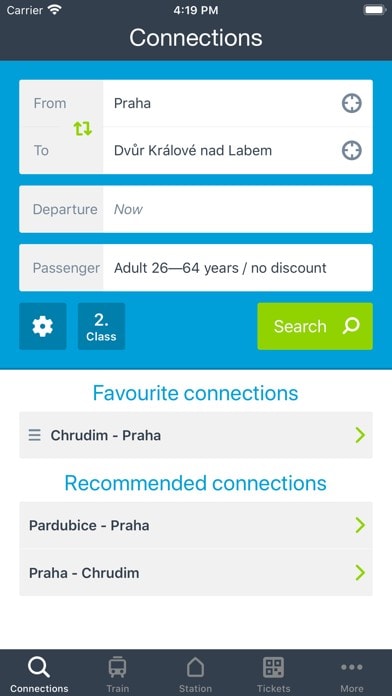
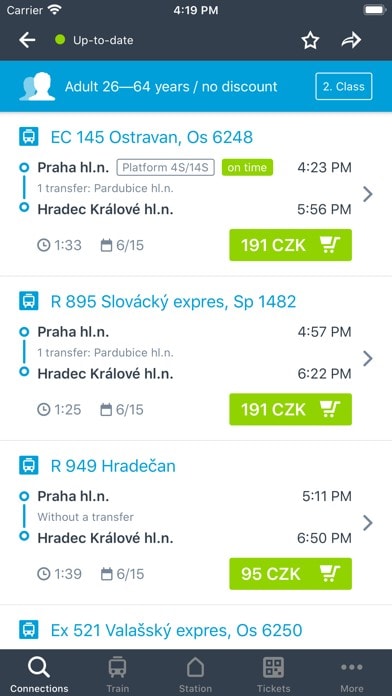
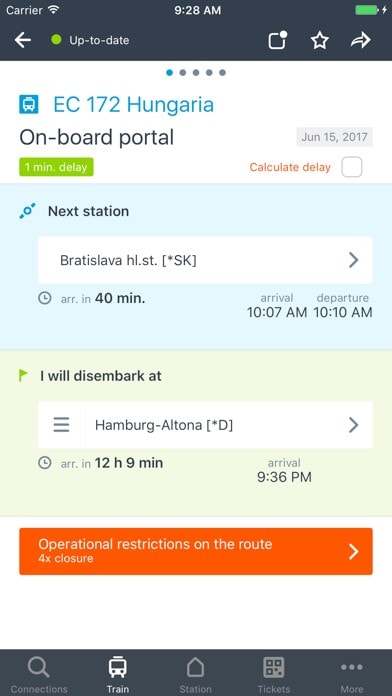
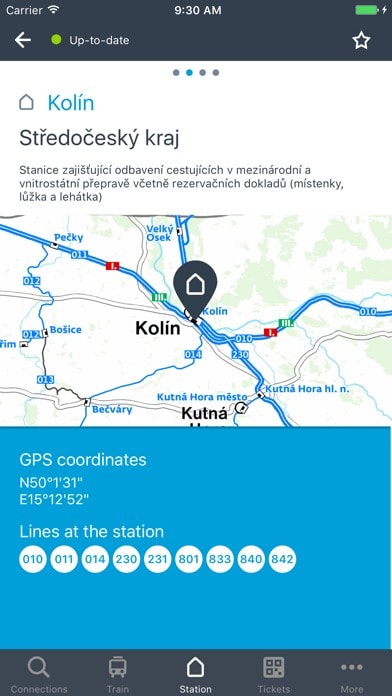
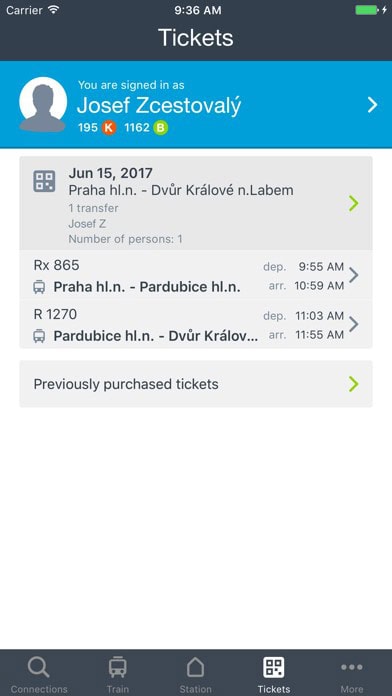
For most journeys involving Brno, the official Czech rail app should be your first choice. Czech Railways (České dráhy – ČD) operates the majority of domestic and regional trains and offers the most accurate schedules, lowest fares, and full access to seat reservations.
Using the Czech Railways app allows you to buy mobile tickets accepted nationwide, receive real-time delay and platform updates, and avoid third-party booking fees. For travellers following this Brno travel guide, it’s the single most reliable way to book trains within the Czech Republic.
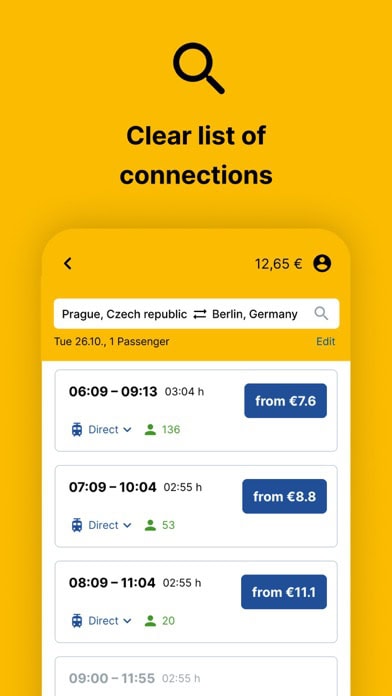
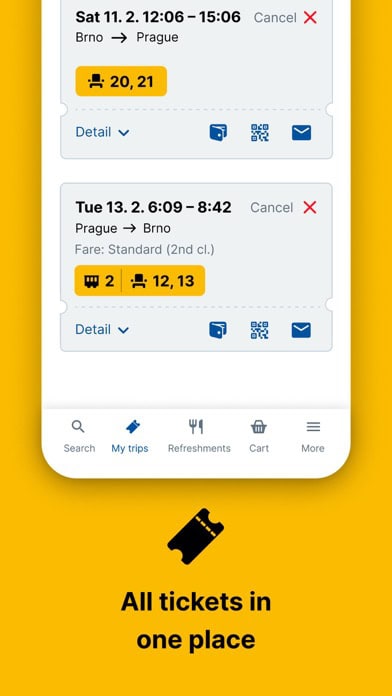
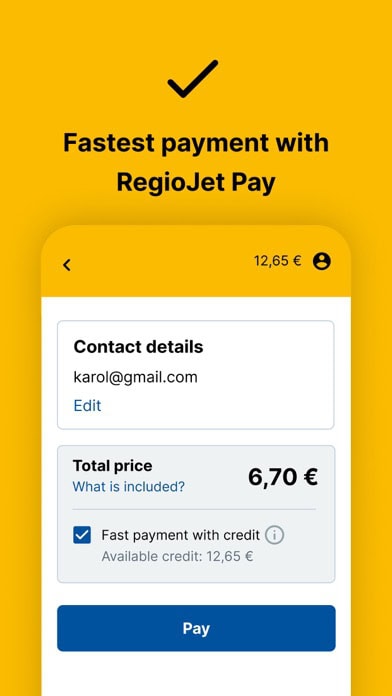
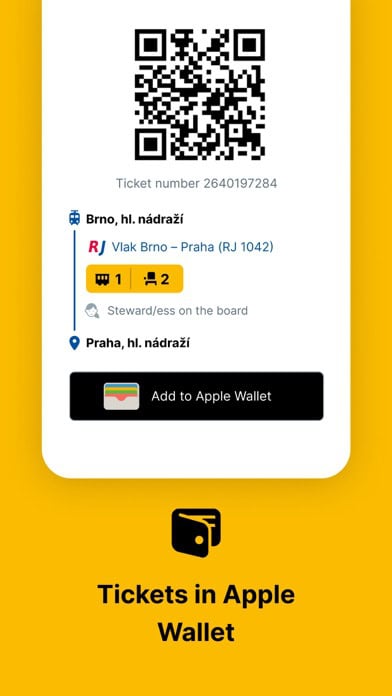
For routes between Brno, Prague, Vienna, and Bratislava, RegioJet is another excellent option. Its app is particularly user-friendly in English and is popular for its comfortable trains, clear seat selection, and competitive pricing.
Global comparison apps such as Omio or Trainline can still be useful for checking alternatives, but local apps almost always provide better value and more detailed information for train travel to and from Brno.

App availability and prices vary by country. Some of these may not appear in your local App Store or Google Play.
Buses & Coaches
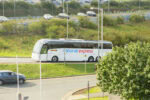
Long-distance buses are another popular way to reach Brno, particularly for budget-conscious travellers. Companies such as FlixBus operate frequent services from Prague, Vienna, Bratislava, Budapest, and other Central European cities, often at very competitive prices.
Most long-distance coaches arrive at Zvonařka Bus Station, Brno’s main bus terminal. While it’s slightly outside the historic centre, excellent tram and bus connections make onward travel quick and straightforward. Travel times from Vienna and Bratislava are often comparable to the train and sometimes cheaper.
Onboard comfort is generally good, with Wi-Fi, power sockets, and reserved seating on most services. For short to medium distances, buses can be a practical alternative, especially when train tickets are limited or more expensive.
Coach travel is also useful for reaching smaller towns and rural areas in South Moravia that are not directly served by rail. For visitors planning regional day trips, buses provide flexibility and access beyond the main rail corridors.
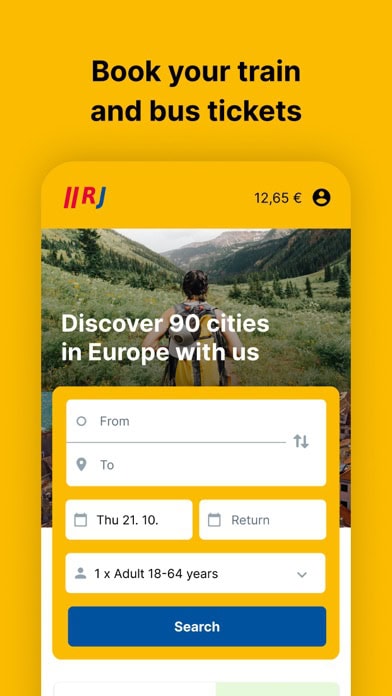
For longer bus journeys beyond the city, RegioJet should be your next stop. Its app covers regional and international routes, offers assigned seating, and stores tickets digitally, making cross-border travel straightforward.

App availability and prices vary by country. Some of these may not appear in your local App Store or Google Play.
Local Public Transport
Brno’s public transport system is reliable, extensive, and easy to use, even for first-time visitors. Operated by DPMB (Dopravní podnik města Brna), the network includes trams, buses, and trolleybuses that cover the city centre and surrounding districts.
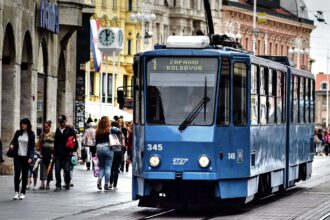
Trams form the backbone of the system and are often the fastest way to get around. Stops are clearly marked, services run frequently, and vehicles are modern and well maintained. Night services operate across the city, which is particularly useful given Brno’s active nightlife and late-opening venues.
Tickets are valid across all modes of transport, and Brno offers several straightforward ways to pay. Traditional ticket machines are still available, but most visitors now rely on contactless payment or digital tickets. Short-term passes offer excellent value for stays longer than one day.
One of the simplest options for visitors is Brno’s Beep & Go contactless system. This allows you to tap a contactless bank card, Apple Pay, or Google Pay on the onboard reader when boarding. If your journey is under 15 minutes, you should tap again when leaving so the system applies the short-ride fare rather than charging a longer ticket.
The system automatically calculates the correct fare and applies a daily cap, ensuring you never pay more than the cost of a day ticket. Rather than charging immediately, all Beep & Go journeys are totalled and processed overnight, with the final amount charged at around 3am. This means you may see the payment appear later than expected on your bank statement.
For travellers who prefer using an app, Brno’s official Poseidon app offers an alternative. It allows you to buy digital tickets and short-term passes and check live departure times for individual stops. The app is available in English and works across the entire DPMB network.
For most visitors, public transport removes the need for a car entirely while staying in Brno. Whether you use Beep & Go contactless payments or the official app, the system is affordable, dependable, and one of the easiest ways to move around the city efficiently.
Taxis & Ride Shares
Taxis and ride-share services are widely used in Brno and are a practical option for late-night journeys, airport runs, or travelling with luggage. While traditional taxis operate across the city, most visitors quickly discover that app-based ride services are simpler, cheaper, and more transparent.
The most widely used platform in Brno is Bolt. Using the app allows travellers to see prices upfront, pay cashlessly, and track their driver in real time, which removes the uncertainty sometimes associated with street taxis. Bolt works well across the city, including residential districts and nightlife areas, and is especially useful when public transport services are less frequent.
Licensed taxis can still be found at ranks near the main railway station, major hotels, and busy squares, but fares may vary and language barriers can occasionally be an issue. For visitors following this Brno travel guide, ride-hailing apps offer a smoother experience, digital receipts, and clear pickup points.
For most travellers, using a ride-share app is the easiest and most reliable way to use taxis in Brno, particularly during evenings or busy events.
Scooter & Bike Rentals
Electric scooters and shared bikes are a popular way to move around Brno, especially for short trips that are too far to walk but don’t justify public transport. The city’s layout, combined with growing cycling infrastructure, makes micromobility a convenient option in many neighbourhoods.
International scooter operators are active across Brno, with Lime being one of the most visible. Scooters can be unlocked instantly via the app, charged per minute, and left in designated zones around the city centre and nearby districts. This makes them ideal for spontaneous journeys between attractions or cafés.
Shared bikes are also available and work particularly well in parks, riverside paths, and flatter residential areas. Cobblestones in the historic centre can make riding less comfortable, so scooters and bikes are best used just outside the busiest old-town streets.
For visitors, scooter and bike apps offer flexibility without commitment, no need for deposits, and quick access without paperwork. They’re a useful addition to public transport rather than a full replacement.
Driving, Parking & Car Access
Driving in Brno is generally straightforward, but it’s rarely the most efficient way to explore the city centre. The historic core is compact, well served by trams and buses, and includes restricted traffic zones designed to limit congestion.
Parking is regulated through a zoned system, with time limits and paid spaces common in central areas. Signage is clear, but rules vary by location, making apps especially helpful. Many drivers rely on navigation and parking apps to identify legal spaces, pay digitally, and avoid fines.
Hotels often provide private parking, which is usually the least stressful option if you’re staying overnight with a car. Public garages are available near shopping centres and key attractions, though prices can add up quickly.
Driving becomes more useful if you plan to explore South Moravia’s countryside, wine villages, or castles, where public transport connections are less frequent. For city-only visits, however, most travellers find that public transport and walking are easier than driving.
Best for long or awkward journeys. Builds one itinerary out of separate flights.
View flightsBest for short trips. Install the eSIM at home and arrive in Brno with working data, no shop queue.
Browse eSIMsBest if you would rather not work out the transport on arrival. Book it now and forget it.
View transfersCar Rental
Car rental in Brno is best suited to travellers planning regional trips beyond the city, rather than sightseeing within the centre. Rental desks are located at Brno–Tuřany Airport, near the main railway station, and in commercial areas around the city.
Both international brands and regional providers operate here, offering competitive prices and a good range of vehicles. Booking in advance via an app or online platform allows you to compare prices, insurance options, and vehicle sizes before arrival.
A rental car is particularly useful for visiting vineyards, rural towns, and natural attractions in South Moravia, where flexibility matters more than speed. Roads are well maintained, signage is clear, and driving standards are generally good.

Search Car Hire Options in Brno
When public transport does not fit your plans in Brno, hiring a car can give you more control over your route and travel times.
Search both Discover Cars and EconomyBookings to compare rental prices, vehicle categories and supplier conditions.
Walking
Brno is an excellent city for exploring on foot, especially if you enjoy compact historic centres and clearly defined neighbourhoods. The historic core is the natural starting point, where most landmarks, cafés, bars, and museums sit within a short radius. Streets around the main squares are largely pedestrianised, making walking both pleasant and efficient during the day.
The Old Town (Brno-střed) is ideal for slow exploration. Here, walking reveals architectural details, inner courtyards, and narrow lanes that are easy to miss when using public transport. Distances between major sights are short, and the area is well signed, allowing visitors to wander without a fixed plan.
For slightly longer walks, routes leading up toward Špilberk Castle combine gentle uphill paths with rewarding viewpoints across the city. Another favourite is the stretch between the centre and Lužánky Park, which passes through lively residential areas and café-lined streets.
Those looking for quieter walks should head toward Denis Gardens or the edges of Veveří, where greenery and local life replace tourist crowds. Comfortable footwear is recommended, as cobbled streets are common, particularly in the historic centre. Walking works year-round in Brno, often paired with cafés in winter and parks in warmer months.
Unique & Scenic Ways to Travel
While Brno doesn’t have river ferries or cable cars, it still offers distinctive, scenic ways to experience the city simply by moving through it. One of the most rewarding is the gradual climb toward Špilberk Castle, where streets and footpaths open up into elevated viewpoints overlooking red rooftops, church spires, and the historic centre. The ascent itself becomes part of the experience rather than just a means of getting somewhere.
Several tram routes skirting the edge of the old town also function as informal sightseeing rides. These journeys pass through contrasting districts, from historic streets to greener residential areas, offering a broader sense of how Brno fits together. Early evening is particularly atmospheric, when lights come on across the city and landmarks stand out against the skyline.
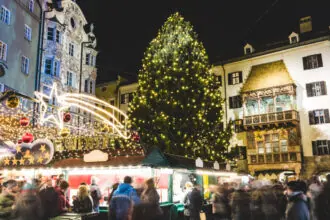
Seasonal changes add another layer. Christmas markets, summer festivals, and public events often reshape how streets and squares are used, creating pedestrian-only zones and temporary focal points that encourage wandering rather than direct travel. These moments invite slower movement and unplanned detours.
Taken together, these small, scenic transitions, from uphill walks and tram rides with a view to event-filled streets, give Brno a lived-in, authentic feel, rewarding travellers who explore at a relaxed pace rather than rushing between sights.
Mini Trains, Trams & Tourist Shuttles (Hop On Hop Off)
Brno offers a small, informal tourist sightseeing train, designed primarily for families, older visitors, and first-time travellers who want an easy orientation without extensive walking. The service is operated in cooperation with TIC BRNO and typically runs seasonally, with routes adjusted depending on demand and events.
The sightseeing train connects several of Brno’s major landmarks and viewpoints, including elevated areas that would otherwise require an uphill walk. Audio commentary provides basic historical context, making it useful as an introduction to the city rather than a deep dive. The relaxed pace and seated format make it especially suitable for those with limited mobility or visitors travelling with children.
Unlike the large hop-on-hop-off bus networks found in bigger capitals, Brno’s tourist train is low-key and intentionally modest. There are fewer stops, fewer departures per day, and no rigid loop system. This suits the scale of the city and avoids the feeling of mass tourism.
Tickets are usually purchased online via official channels or directly from tourist information points. Because services do not operate year-round and timetables can change, checking current operating days before planning is important.
For most travellers, the sightseeing train works best as a short, early-visit overview, helping you understand Brno’s layout before exploring independently on foot or by public transport.
Visiting: Top Attractions
Brno’s top attractions reflect a city shaped by medieval power, imperial rule, modernist ambition, and everyday local life. The most prominent landmark is Špilberk Castle, a former royal residence turned fortress and prison. Today, it houses museums and exhibitions and offers some of the best panoramic views in the city.
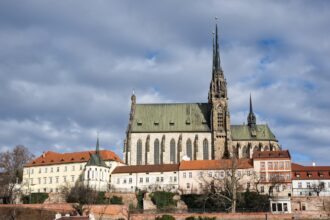
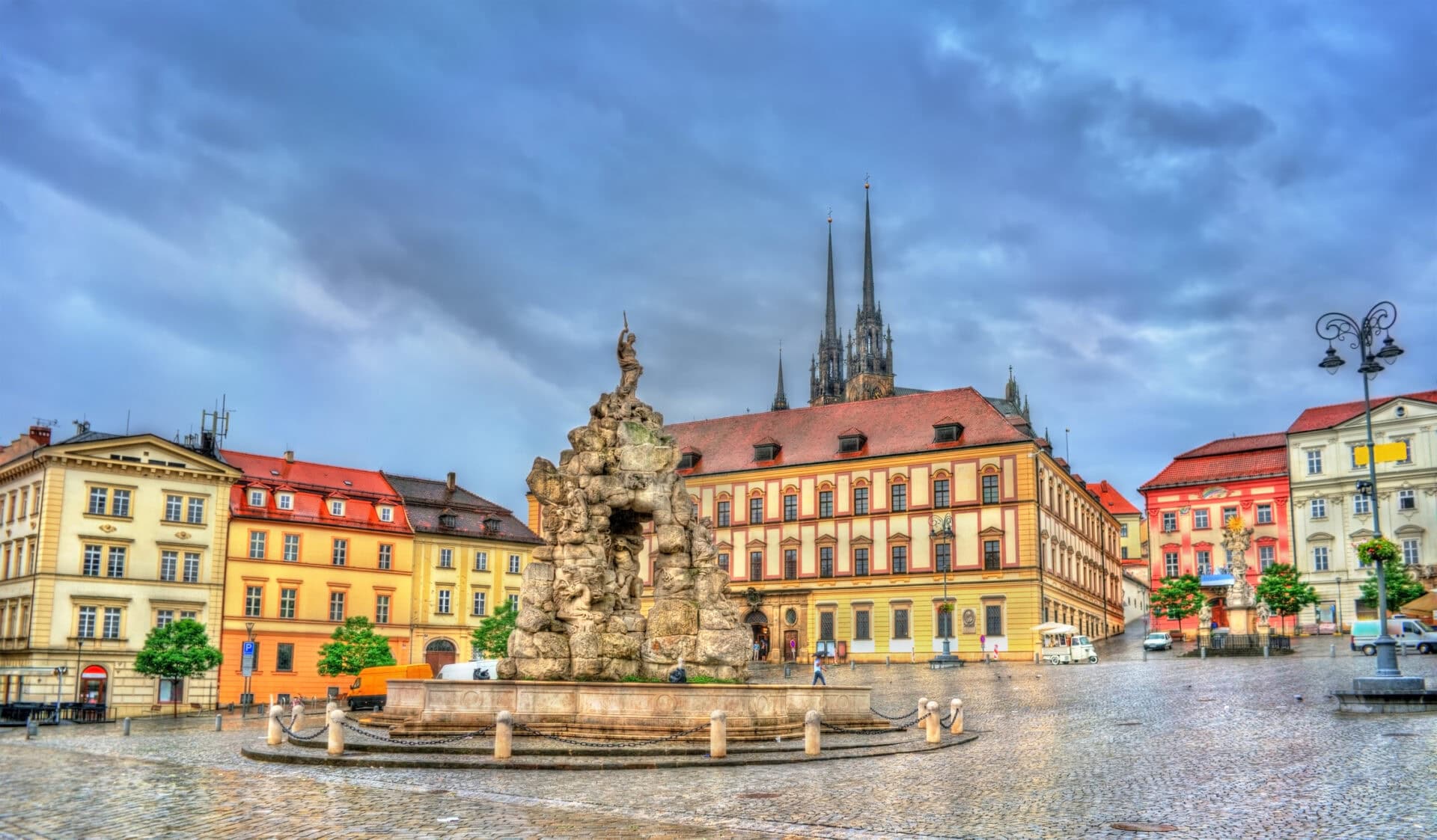
In the historic centre, the Cathedral of St. Peter and Paul stands as Brno’s most recognisable symbol. Its twin towers dominate the skyline, and its unusual tradition of ringing the noon bells at 11am reflects the city’s defensive history. Nearby squares form the social heart of Brno, lined with cafés, statues, and civic buildings.
Architecture enthusiasts are drawn to Villa Tugendhat, a UNESCO-listed modernist masterpiece located just outside the centre. Entry is strictly limited and must be planned well in advance through the official Villa Tugendhat website, as interior access is only possible with a previously purchased ticket and same-day places are rare.
Museums, underground tours, and galleries complete the attraction list, most within easy walking distance of each other. Together, these sites form a compact, walkable sightseeing core, making Brno particularly rewarding for travellers who prefer depth over scale.
Historical Highlights & Landmarks
Brno’s historical landmarks tell the story of a city shaped by defence, religion, trade, and regional authority. Towering above the city, Špilberk Castle began as a royal seat before evolving into a formidable fortress and later one of the Habsburg Empire’s most notorious prisons. Its layered history is visible in the architecture itself, from medieval walls to later military additions.
At the centre of Brno’s religious and civic identity stands the Cathedral of St. Peter and Paul, instantly recognisable by its twin spires. Beyond its architecture, the cathedral is woven into local tradition, most famously through the 11am noon bell, commemorating a historic military deception.
The Old Town Hall offers a lighter glimpse into Brno’s past. Its crooked tower, carved dragon, and symbolic elements reflect medieval civic pride and humour. Nearby, the Capuchin Crypt provides a stark contrast, housing naturally preserved remains of monks and patrons in a setting that is quiet, reflective, and deliberately unembellished.
These landmarks are clustered closely together, allowing visitors to move through centuries of history in a single walk. Visiting them in sequence provides a clear sense of how Brno developed from fortified settlement to modern regional capital.
Best for a short stop where being central matters more than the room. Dorms and private rooms both listed.
See hostelsBest arranged before you fly rather than after. Covers claim handling, plus lounge access on eligible delays.
Explore AirHelp+Best for a day with a bag and nowhere to put it. Find a storage point near where you already are.
View storageHidden Gems & Local Secrets
Brno rewards visitors who look beyond the obvious. One of its most unusual experiences is Brno Underground, a network of medieval cellars beneath the old town. These spaces reveal how goods were stored, beer was brewed, and daily life functioned below street level.
Above ground, Denis Gardens offer some of the best views in the city without heavy crowds. Popular with locals in the early evening, the gardens provide a calm counterpoint to the busy streets below. Access points are discreet, reinforcing their local feel.
Hidden courtyards scattered throughout the historic centre are another highlight. Often invisible from the street, they house cafés, galleries, and small cultural venues that feel distinctly Brno rather than tourist-oriented.
The 10-Z bunker, a Cold War nuclear shelter hidden beneath Špilberk Hill, offers a striking contrast to medieval landmarks. Tours are limited and deliberately controlled, reinforcing its atmosphere and historical context.
These quieter discoveries define Brno’s character. Rather than spectacle, the city offers layers, rewarding curiosity and unhurried exploration.
Indoor Attractions & Rainy-Day Ideas
Brno remains engaging even in poor weather thanks to its dense concentration of indoor attractions. Museums, underground sites, galleries, and cafés are all located close together, allowing visitors to move between them with minimal exposure to rain or cold.
Historic museums housed in former civic and religious buildings provide insight into Brno’s past, while modern institutions focus on science, technology, and design. Underground tours beneath the old town are particularly effective on rainy days, combining shelter with storytelling and atmosphere.
Brno’s café culture also plays an important indoor role. Many cafés are designed for lingering rather than quick stops, making them natural refuges during bad weather. These spaces often double as informal workspaces, meeting points, or cultural venues.
Because Brno’s centre is compact, indoor attractions can be easily combined into a weather-proof itinerary, alternating museums with cafés and short walks. This makes the city especially appealing outside peak summer months, when crowds thin and indoor spaces feel more relaxed.
Shopping & Markets
Shopping in Brno blends everyday convenience with local character. The city centre features a mix of international brands, Czech retailers, and department stores, all within walking distance of major sights.
For a more authentic experience, Zelný trh (Vegetable Market) remains one of Brno’s most distinctive spaces. Operating for centuries, it still functions as a working market selling fresh produce, flowers, and seasonal goods. During holidays, temporary markets bring traditional foods and crafts into the centre.
Independent shops are scattered through side streets and courtyards, often specialising in Czech design, books, glassware, and locally made products. These stores tend to be small and personal, favouring quality over volume.
Shopping in Brno is unpressured and compact, encouraging browsing rather than checklist buying. Whether visiting markets, independent boutiques, or mainstream stores, the experience feels integrated into daily city life rather than separated for tourists.

Suggested Itinerary
Brno is ideally suited to short, well-paced itineraries, thanks to its compact historic centre and logical layout. A one-day visit works best when focused tightly on the old town and surrounding hills. Start the day at Špilberk Castle, allowing time for the views before walking downhill into the historic centre. From here, explore the cathedral, Old Town Hall, and nearby squares, then end the evening with dinner and drinks close to the centre, where everything remains walkable.
With two days, Brno begins to reveal its depth. Day one covers the core sights, while day two allows space for experiences such as Brno Underground, Denis Gardens, and quieter streets just beyond the main tourist routes. This is also a good point to explore neighbourhood cafés or museums that reward slower travel rather than box-ticking.
A three-day stay suits travellers who enjoy balance. Alongside the main sights, there’s time for parks, longer café stops, and at least one short excursion beyond the centre. Many visitors use the third day to explore South Moravia or simply enjoy Brno’s everyday rhythm without rushing.
Because Brno’s attractions are clustered rather than spread out, the city lends itself to loose planning rather than rigid scheduling. Grouping nearby sights by area rather than by category helps reduce backtracking and keeps days relaxed rather than overfilled.
Events, Festivals, Seasonal Highlights & Annual Events
Brno’s event calendar reflects its identity as a student city and cultural hub, with activity rising noticeably during spring and summer. Warmer months bring outdoor concerts, food festivals, and wine-related events linked to the surrounding South Moravian region.
Several major music, theatre, and film festivals take place annually, alongside wine celebrations and large exhibitions hosted at the city’s fairgrounds. These events can significantly change the atmosphere of the city, bringing increased nightlife, temporary pedestrian zones, and a busier accommodation market.
In winter, Brno shifts inward. Christmas markets, seasonal performances, and indoor exhibitions dominate the calendar, giving the city a quieter but still lively feel. These months suit travellers who prefer atmosphere over crowds.
Because event dates and venues vary from year to year, the most reliable source of information is TIC BRNO, which maintains up-to-date official listings. Checking events in advance is particularly important if you plan to visit during trade fairs or university term time, when accommodation fills quickly.
Timing your visit around a festival can enhance the experience, but even without events, Brno maintains a steady cultural rhythm throughout the year.
City Passes, Discount Cards & Tourism Bundles
Brno does not heavily promote all-in-one city passes, and for most visitors this is actually an advantage. Individual attraction prices are generally reasonable, allowing travellers to pay only for what they genuinely want to see.
Where passes do offer value is in public transport. Short-term transport passes provide unlimited travel across trams, buses, and trolleybuses and are particularly cost-effective for stays of more than one day. These passes remove the need to calculate individual fares and simplify daily movement around the city.
Occasionally, seasonal or event-specific discount bundles appear, usually linked to festivals or exhibitions. These are not permanent offers and change regularly, so they are best checked through official tourist information channels rather than relied upon in advance.
For most travellers following this Brno travel guide, the best-value approach is a combination of a transport pass and pay-as-you-go attraction entry. This keeps plans flexible and avoids paying for bundled attractions you may not use.

Parks, Gardens & Green Spaces
Brno stands out for the amount of green space woven directly into daily city life. Parks and gardens sit alongside residential streets, historic areas, and major routes, making them easy to incorporate into sightseeing days.
Lužánky Park, the city’s oldest public park, is a favourite with locals. Its wide paths, open lawns, and café spots make it ideal for walking, picnics, or simply taking a break from sightseeing. The park is flat and accessible, appealing to all ages.
Hillside gardens such as Denis Gardens provide some of the best views in Brno, especially in the evening. These spaces feel informal and local rather than curated for tourists, reinforcing the city’s relaxed character.
Larger green areas on the edges of the city offer woodland walks and longer routes for those staying several days. Because parks are well connected by tram, they’re easy to combine with other activities rather than requiring dedicated trips.
Brno’s green spaces act as natural pauses in the day, helping balance culture, food, and walking without feeling rushed.
Where & What to Eat
Brno has one of the strongest food scenes in the Czech Republic outside Prague, shaped by its student population, regional Moravian traditions, and growing international influence. Traditional dishes such as svíčková, goulash, and roast meats remain widely available, but the city also excels at casual modern dining.
The historic centre and surrounding districts are packed with bistros, bakeries, cafés, and informal restaurants, many focusing on quality ingredients rather than formality. Vegetarian and international options are easy to find, reflecting Brno’s younger, diverse population.
Craft beer plays a central role in Brno’s dining culture, with small breweries and specialist bars offering both classic Czech styles and experimental brews. South Moravian wine is also prominent, often better value here than elsewhere in the country.
Unlike larger capitals, Brno does not rely heavily on reservation-only dining. Many places welcome walk-ins, though popular spots fill quickly in the evenings. Booking directly through restaurant websites or contacting venues directly is usually the most reliable approach.
Overall, eating in Brno feels approachable rather than performative, rewarding curiosity without demanding advance planning.
Nightlife
Brno’s nightlife is lively, affordable, and deeply shaped by its university population, giving the city an energetic but unpretentious after-dark character. Bars, pubs, and late-night venues are tightly clustered around the historic centre, which makes it easy to move between places on foot without committing to a single venue for the entire evening.
The city is especially known for its craft beer bars, informal pubs, cocktail lounges, and relaxed cafés that stay open late. Prices are noticeably lower than in Prague, and the atmosphere tends to be social rather than performative. Most venues attract a mix of locals, international students, and travellers, rather than organised nightlife tourism.
Brno doesn’t rely heavily on large-scale nightclubs, though they do exist. Instead, evenings usually unfold organically: a drink in a pub, a second stop at a wine bar, then perhaps a late café or music venue. This flexibility suits Brno’s compact layout and walkable streets.
Public transport runs through the night, but after midnight many visitors prefer Bolt, especially when travelling back to accommodation outside the centre or after long evenings. Ride-hailing removes language barriers and keeps journeys straightforward.
Overall, Brno’s nightlife feels local, social, and accessible, rewarding curiosity rather than planning and offering plenty of options without overwhelming choice.

Day Trips
Brno is an excellent base for exploring South Moravia, a region known for vineyards, castles, historic towns, and gentle countryside. Many popular day trips sit within 30–90 minutes, making them easy to combine with a city stay.
Wine villages and cellar towns are among the region’s biggest draws, particularly from spring through early autumn. Several are reachable by train, while others require a short bus connection. For rail journeys, the Czech Railways network provides reliable coverage across the region.
Historic towns, manor houses, and small castles offer quieter alternatives to major tourist centres. These destinations reward travellers willing to move at a slower pace and plan return journeys carefully, as evening services can be limited.
Guided day trips exist but are not essential. Independent travel works well if you check timetables in advance and allow buffer time for connections. For visitors seeking maximum flexibility, particularly for vineyards or rural stops, renting a car for a single day can open up areas not well served by public transport.
Brno’s location allows travellers to experience urban culture and rural South Moravia in the same trip, without long travel days or early starts.
Cultural Norms & Etiquette
Brno shares many cultural norms with the rest of the Czech Republic, with daily interactions that are polite, calm, and understated. Locals value personal space and directness, though service may feel reserved compared to Southern Europe.
Basic courtesies such as greeting staff and saying thank you are appreciated, even when spoken in English. In restaurants and cafés, table service is standard, and tipping around 10% is customary but not obligatory. When paying, it’s common to state the total amount you wish to hand over rather than leaving coins on the table.
Public behaviour tends to be quiet and orderly. Loud conversations on public transport are uncommon, queues are respected, and crossing streets only at designated crossings is expected, particularly in busy areas.
Dress codes are generally casual, though religious sites and some cultural venues expect modest attire. Photography restrictions may apply in churches and museums.
Understanding these small norms helps interactions feel smooth and respectful, allowing visitors to blend in comfortably rather than feeling like outsiders.
Where to Stay
Brno offers a wide range of accommodation, from boutique hotels in historic buildings to modern international chains and well-priced apartments. For most visitors, staying within or close to the historic centre provides the best balance of convenience and atmosphere.
Central areas suit first-time visitors and short stays, allowing easy walking access to sights, dining, and nightlife. Neighbourhoods just outside the centre offer quieter surroundings and often better value, while still being well connected by tram.
Because Brno hosts trade fairs, university events, and festivals, accommodation availability can change quickly. Prices may rise sharply during busy periods, so booking ahead is recommended if your travel dates coincide with major events.
Apartments are popular for longer stays, while hotels remain a good option for short visits or travellers wanting on-site services. Wherever you stay, Brno’s compact size ensures you’re rarely far from the centre.
Choosing accommodation in Brno is less about proximity to individual attractions and more about matching the neighbourhood to your travel style.

Toilets & Accessibility
Public toilets in Brno exist but are not evenly distributed, particularly outside major attractions and shopping centres. The most reliable facilities are found in museums, large shopping centres, transport hubs, and cafés, where a small purchase may be expected.
Many public toilets charge a small fee and may require coins or contactless payment. Opening hours can vary, especially in the evening.
Accessibility across the city is improving. Low-floor trams and buses are common on central routes, and newer public buildings tend to be well equipped. However, the historic centre includes cobbled streets, narrow pavements, and uneven surfaces, which may present challenges for wheelchair users or those with reduced mobility.
Step-free access is not guaranteed at older attractions, and lifts may be limited. Visitors with specific accessibility needs benefit from checking venue details in advance and allowing extra time for movement.
While not flawless, Brno is generally manageable for travellers with mobility concerns, particularly when focusing on the central areas and newer facilities.
Weather & Best Time to Visit
Brno experiences four clearly defined seasons, each giving the city a different character. Summer (June to August) is warm and lively, with long daylight hours, outdoor dining, festivals, and events filling the streets and squares. This is the most animated time to visit, though it can also be the busiest.
Winter (December to February) is colder, with shorter days and occasional snowfall. While outdoor sightseeing is more limited, Brno remains active thanks to its strong café culture, museums, indoor attractions, and seasonal markets. The city feels quieter and more local during this period, appealing to travellers who prefer fewer crowds.
Spring (April to May) and early autumn (September to October) are widely considered the best times to visit. Temperatures are mild, crowds are lighter, and conditions are ideal for walking, parks, and day trips into South Moravia. These shoulder seasons offer the best balance between atmosphere and comfort.
Weather in Brno can be changeable, particularly in spring and autumn, so checking short-term forecasts is useful when planning outdoor activities. Services such as Yr.no and AccuWeather are commonly used for their reliable hourly outlooks.
Keeping an eye on the forecast helps with planning walking-heavy days, outdoor viewpoints, and park visits, and reduces the risk of being caught out by sudden rain or temperature drops.
eSIMs & Connectivity
Staying connected in Brno is straightforward. Free Wi-Fi is common in cafés, hotels, and public buildings, but mobile data is essential for navigation, transport apps, and ticket bookings.
Travellers arriving from outside the EU may benefit most from using an eSIM rather than buying a local SIM card. Airalo is a popular choice, offering Czech Republic and Europe-wide data plans that can be activated instantly before arrival.
Using an eSIM allows visitors to access maps, transport apps, and booking confirmations immediately, without searching for a phone shop. Setup is done via QR code and usually takes only a few minutes.
EU travellers can generally roam without extra charges, but checking fair-use limits is still recommended. Reliable mobile data is one of the simplest ways to make navigating Brno smooth and stress-free.
Religious Customs & Behaviour in Sacred Spaces
Brno’s churches and religious sites are active places of worship as well as historic landmarks, and respectful behaviour is expected, even from casual visitors. The most prominent churches are located in the city centre and are easy to encounter while sightseeing.
When entering churches, dress modestly. Shoulders and knees should be covered, particularly during services. Hats should be removed indoors, and photography may be restricted in certain areas. If photography is allowed, flash is generally discouraged.
Visitors are welcome to enter outside service times, but quiet behaviour is expected. Speaking softly, silencing phones, and avoiding walking in front of people who are praying helps maintain the atmosphere. During services, tourists should remain near the back unless actively participating.
Understanding and respecting these customs ensures visits feel comfortable rather than intrusive and helps preserve Brno’s religious spaces for both locals and visitors.
Laws, Safety & Warnings
Brno is a safe and orderly city, and most travellers experience no issues. Violent crime is rare, and the city centre feels comfortable both day and night. Standard urban awareness is usually sufficient.
Petty theft, such as pickpocketing, can occur in busy areas, particularly around major events or on crowded public transport. Keeping valuables secure and using zipped bags is generally enough to avoid problems.
Czech laws are straightforward but should be respected. Alcohol consumption is legal, but public drunkenness can attract police attention. Smoking is banned in indoor public spaces, including bars and restaurants. Drug laws are stricter than some visitors expect, so possession is best avoided entirely.
Jaywalking is discouraged, and crossing only at marked crossings is expected, especially in busy areas. Fines can be issued for ignoring signals.
Emergency services can be reached by dialling 112. For most travellers, Brno feels calm, predictable, and well policed, making it one of the easier Central European cities to navigate safely.

Rupert’s Handy Travel Tips
Visiting Brno for the first time? Rupert’s picked up a few handy tips to help you get around and enjoy the city like a local:
- Expect the bells early: Brno’s main cathedral rings the noon bells at 11am – it’s a long-standing local tradition.
- Wear good shoes: Cobblestones are common in the historic centre, especially around the old town and castle paths.
- Validate transport tickets: Ticket checks are frequent on trams and buses, so always activate or validate before boarding.
- Book ahead during busy weeks: Trade fairs and university events can fill hotels quickly, even outside peak tourist season.
- Slow down and wander: Some of Brno’s best cafés and courtyards sit just off the main streets – allow time for unplanned detours.
Want to meet the reindeer behind our travel tips? Find out more in our page Who is Rupert?.

Frequently Asked Questions
Is Brno worth visiting compared to Prague?
Yes. Brno offers fewer crowds, lower prices, and a more local feel. While it lacks Prague’s scale, it compensates with atmosphere, walkability, and regional character.
How many days do you need in Brno?
Two days is ideal for most visitors. This allows time for the historic centre, key attractions, cafés, and at least one hidden gem. Three days suits slower travel or day trips.
Is English widely spoken in Brno?
Yes, particularly among younger people and in tourism-facing roles. English is common in restaurants, hotels, and transport hubs.
Do you need cash in Brno?
Card payments are widely accepted. Cash is useful for small purchases, markets, or public toilets, but it’s not essential for most visits.
Is Brno good for public transport?
Very much so. Trams, buses, and trolleybuses are reliable, frequent, and easy to use, making a car unnecessary within the city.
Further Reading & Related Travel Guides
Want to plan your wider journey or explore beyond Brno? These guides pair perfectly with this Brno travel guide.
If you’re planning to explore beyond the city, our Czech Interrail Pass Guide explains how to use Interrail to travel between Brno, Prague, Ostrava, and beyond, with routes, tips, and advice on who the pass suits best. Once you’ve settled into the city itself, our Things to Do in Brno guide rounds up the castles, crypts, and hidden attractions only touched on here, while our Best Day Trips from Brno guide covers the castles, wine regions, and nature escapes within easy reach of the city.
A handful of apps make travelling around Brno considerably easier. Our Local Transport Apps Guide covers the most useful public transport and ticketing apps for European cities, while our Train Booking Apps Guide compares the official rail apps and booking platforms worth having on hand for longer journeys.
It’s also worth sorting out connectivity and forecasting before you travel. Our eSIM Apps Guide compares the best eSIM options for Czech Republic and Europe-wide travel, and our Weather Apps Guide helps you plan sightseeing days confidently with accurate forecasts and alerts.