Reviewed by our editorial team Updated
Why Visit Bletchley Park?
Few attractions in Britain combine world-changing history, groundbreaking technology and genuine wartime atmosphere as effectively as Bletchley Park. Located in Bletchley, part of Milton Keynes, this former country estate became one of the most secret locations in the Allied war effort during the Second World War. Thousands of mathematicians, linguists, engineers, military personnel and intelligence specialists worked behind its fences, helping to crack enemy codes and provide information that shaped the course of the conflict.
Today, visitors have the rare opportunity to walk through the actual buildings where these operations took place. Unlike many museums that rely heavily on reconstructions, Bletchley Park retains much of its original layout and atmosphere. The famous codebreaking huts, wartime offices and operational buildings allow visitors to stand in the same locations where some of the twentieth century’s most important intelligence work was carried out.
The site also appeals to a remarkably broad audience. History enthusiasts come to understand the secret world of wartime intelligence, technology fans are drawn by the origins of modern computing, while general visitors often find themselves captivated by the stories of ordinary people who performed extraordinary work under intense pressure. The connection to Alan Turing, one of Britain’s most influential mathematicians and computer pioneers, adds another layer of significance.
Whether you are interested in military history, cryptography, computing or simply one of Britain’s most important heritage attractions, Bletchley Park delivers an experience that is both educational and genuinely memorable.
Quick Facts About Bletchley Park
| Feature | Details |
|---|---|
| Location | Bletchley, Milton Keynes, Buckinghamshire |
| Famous For | WWII Codebreaking Centre |
| Most Famous Figure | Alan Turing |
| Opened as Visitor Attraction | 1990s |
| Time Needed | 4 to 6 hours |
| Parking | Available On Site |
| Nearest Station | Bletchley Station |
| Accessibility | Good Accessibility Across Most Areas |
| Café Facilities | Yes |
| Gift Shop | Yes |
| Family Friendly | Yes |
| National Museum of Computing | Separate Admission |
| Best For | WWII History, Computing, Dark Tourism, Technology |
See hotel options and places to stay for your trip.
Browse hotelsBrowse apartments, homes and self-catering accommodation.
Browse rentalsCompare hotel prices across multiple booking sites.
Compare ratesThe History of Bletchley Park
Long before it became one of the most important intelligence centres in history, Bletchley Park was a Victorian country estate. The mansion and surrounding grounds offered a peaceful setting in rural Buckinghamshire, far removed from the political tensions that would soon engulf Europe. Everything changed as the threat of war grew during the late 1930s.
The British government recognised that future conflicts would rely heavily on communications and intelligence gathering. Bletchley Park’s location proved ideal. It was close enough to London for government access while remaining far enough away to provide a degree of security. The estate was acquired and rapidly transformed into a secret operational headquarters where specialists could work on deciphering enemy communications.
As the war expanded, so did the site. Temporary huts and operational blocks appeared across the grounds to accommodate thousands of personnel. Mathematicians, linguists, chess champions, academics and military specialists arrived from across Britain and beyond. Many worked in strict secrecy, often without fully understanding how their contribution fitted into the wider intelligence picture.
Following the war, the achievements of Bletchley Park remained largely hidden from public view for decades. Much of the work undertaken there was classified, and many of those involved were unable to discuss their contributions. It was only in the latter part of the twentieth century that the true scale of the operation became widely known. Today, the site serves as both a museum and a memorial to one of the most remarkable intelligence successes in modern history.
Why Bletchley Park Changed the Course of World War II
The importance of Bletchley Park extends far beyond the boundaries of Britain. Intelligence produced here influenced military decisions across Europe, the Atlantic and beyond. Historians generally agree that the work undertaken at Bletchley shortened the war and saved countless lives.
One of the site’s greatest achievements involved breaking messages encoded using the German Enigma machine. German military commanders believed Enigma communications were secure, allowing them to transmit operational plans, troop movements and naval instructions with confidence. By successfully deciphering many of these messages, Allied commanders gained access to information that was never intended for their eyes.
This intelligence proved particularly valuable during the Battle of the Atlantic. German U-boats threatened Britain’s vital supply lines, and understanding their movements helped Allied forces protect merchant shipping carrying food, fuel and military equipment. Intelligence from Bletchley Park contributed directly to reducing losses and maintaining Britain’s ability to continue fighting.
The information generated by the codebreakers also played an important role in preparations for major operations including D-Day. By understanding German deployments and intentions, Allied planners could make better strategic decisions and reduce uncertainty. While victory depended on countless factors, intelligence from Bletchley Park became one of the war’s most valuable hidden weapons.
The remarkable achievement is that all of this was accomplished without the enemy fully realising their communications had been compromised. That combination of secrecy, innovation and determination is one of the reasons why Bletchley Park remains one of the most significant historical sites in Britain today.
What Can You See at Bletchley Park?
One of the reasons Bletchley Park consistently ranks among Britain’s most important historical attractions is the sheer variety of experiences available across the site. Rather than being confined to a single museum building, visitors are free to explore the original wartime estate, moving between the historic Mansion, the famous codebreaking huts, operational blocks and interactive exhibitions that collectively tell the story of one of the greatest intelligence operations in history.
The attraction succeeds because it combines both the human story and the technological story. Visitors discover how thousands of ordinary men and women contributed to extraordinary achievements while learning about the machines, systems and intelligence techniques that helped shape the outcome of the Second World War. The exhibits reveal not only how codes were broken but also how information was transformed into intelligence capable of influencing military operations across Europe and beyond.
Many first-time visitors arrive expecting a specialist military museum and leave surprised by how broad the experience actually is. Bletchley Park appeals equally to history enthusiasts, technology fans, families and those interested in espionage, cryptography and wartime Britain. The combination of authentic buildings, personal stories, original artefacts and modern interpretation creates an attraction that remains engaging throughout a full-day visit.
Among the highlights are The Mansion, the legendary codebreaking huts, the interactive exhibitions within Block B, displays dedicated to the Enigma machine, and the wider estate grounds where thousands of personnel once worked in complete secrecy. Together, these locations provide one of the most immersive wartime experiences available anywhere in the United Kingdom.

The Mansion
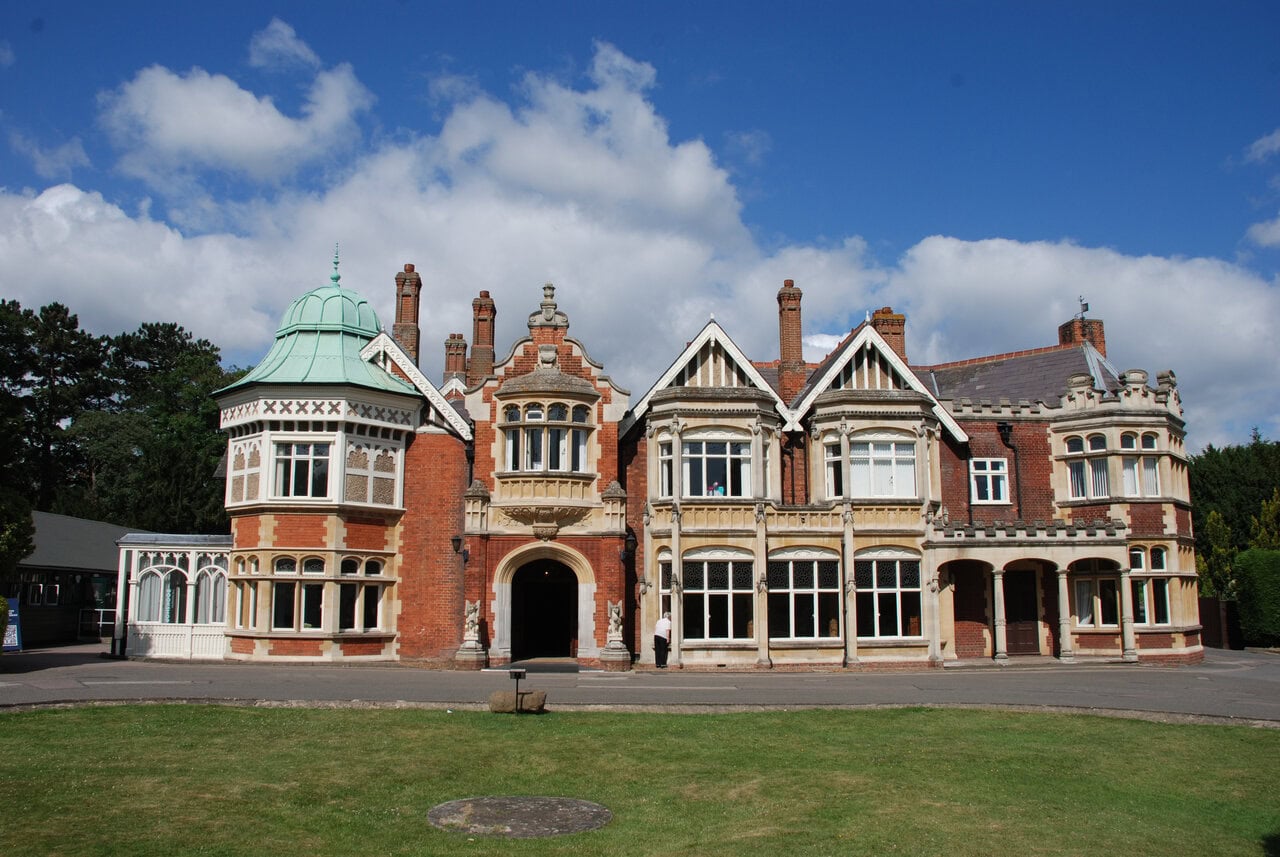
At the centre of Bletchley Park stands The Mansion, an elegant Victorian country house that became the administrative heart of Britain’s wartime codebreaking operation. Before the outbreak of war, this was a peaceful private estate surrounded by countryside. During the conflict, however, it evolved into a critical headquarters where intelligence personnel coordinated activities taking place across the rapidly expanding site.
Today, visitors can explore a range of beautifully restored rooms that showcase both the estate’s pre-war history and its wartime transformation. Walking through the building highlights the remarkable contrast between the grandeur of a Victorian country house and the urgent demands of a secret intelligence operation. It is a powerful reminder that some of the most important decisions of the war were made within surroundings originally designed for entirely different purposes.
Several rooms contain exhibitions explaining how Bletchley Park developed during the conflict and how the various departments worked together. Historic photographs, personal stories, official documents and wartime artefacts help bring the period to life, illustrating how the site expanded from a relatively modest estate into one of the most important intelligence centres in the world.
The Mansion also provides essential context for the rest of the visit. Before exploring the famous operational areas, visitors gain a deeper understanding of the organisation, leadership and logistical challenges behind the codebreaking effort. This broader perspective makes the later exhibitions even more meaningful and helps reveal the true scale of what was achieved at Bletchley Park.
The Famous Codebreaking Huts
The most iconic structures at Bletchley Park are undoubtedly the famous codebreaking huts, simple wooden buildings that played a central role in one of the greatest intelligence successes of the twentieth century. Although modest in appearance, these huts housed teams of mathematicians, linguists, analysts and intelligence specialists whose work helped alter the course of the Second World War.
Among the most celebrated locations is Hut 8, where Alan Turing and his colleagues focused on breaking naval Enigma communications. The intelligence produced here contributed directly to Allied efforts against German U-boats operating in the Atlantic Ocean, helping protect vital supply routes that Britain depended upon for survival. Nearby huts handled equally important responsibilities, including translation, intelligence analysis and the distribution of decrypted information to military commanders.
Visitors can walk through reconstructed wartime offices designed to reflect the conditions faced by the codebreakers. Desks covered with documents, communication equipment, maps and typewriters help create an atmosphere that feels remarkably authentic. Rather than presenting codebreaking as a glamorous spy story, the exhibitions reveal the reality of long hours, relentless concentration and painstaking analytical work carried out under immense pressure.
What makes these huts particularly powerful is their authenticity. Visitors are not viewing replicas built elsewhere. They are standing within the actual buildings where history unfolded. Few museums can offer such a direct connection to the events they interpret, and this authenticity is one of the main reasons the codebreaking huts remain the highlight of a visit for many guests.
Block B and the Modern Exhibitions
While the wartime huts provide atmosphere and historical authenticity, Block B delivers some of the most comprehensive and engaging exhibitions at Bletchley Park. This modern exhibition space helps visitors understand the technical, strategic and operational aspects of codebreaking while presenting complex subjects in a clear and accessible way.
The exhibitions explain how encrypted messages were intercepted, processed, analysed and ultimately transformed into intelligence that could influence military operations. Through a combination of interactive displays, multimedia presentations and original artefacts, visitors gain a much deeper appreciation of the challenges faced by wartime codebreakers and the extraordinary level of innovation required to overcome them.
One of the greatest strengths of Block B is its ability to make difficult subjects understandable. Topics such as encryption, cryptanalysis, signals intelligence and machine-assisted codebreaking can seem highly technical, yet the displays break these concepts down into engaging explanations suitable for visitors with no prior knowledge. This ensures that the significance of Bletchley Park can be appreciated by everyone, regardless of their background.
For many visitors, Block B is where the full story finally comes together. The combination of personal accounts, technical explanations, wartime context and interactive exhibits helps reveal why the work carried out at Bletchley Park remains one of the most important intelligence achievements in history. By the time visitors leave, they usually have a far deeper understanding of how this remarkable site helped shape the modern world.
Compare routes and fares for your next trip.
Compare flightsBrowse Airalo eSIM options for convenient travel data.
Check eSIMsArrange a private pickup before travel instead of sorting transport after landing.
Book a transferAlan Turing and His Legacy
Few individuals are as closely associated with Bletchley Park as Alan Turing, the brilliant mathematician whose work helped transform both wartime intelligence and the future of computing. Although thousands of people contributed to the success of the codebreaking operation, Turing’s achievements have become symbolic of the extraordinary innovation that took place behind the fences of this once-secret estate.
Arriving at Bletchley Park shortly before the outbreak of the Second World War, Turing became a leading figure in efforts to break the German Enigma cipher. His work on the development of the Bombe machine dramatically increased the speed at which encrypted messages could be analysed, helping Allied intelligence gain access to information that German commanders believed was secure.
Visitors to Bletchley Park can learn about Turing’s contributions through dedicated exhibitions, personal stories and displays explaining the challenges faced by the wartime codebreakers. Rather than presenting him as a lone genius, the exhibitions place his work within the wider team effort that made the intelligence operation successful. This approach provides a more balanced understanding of both Turing’s brilliance and the collaborative nature of wartime codebreaking.
Turing’s influence extended far beyond the war. His research laid important foundations for modern computer science, artificial intelligence and the digital technologies that shape everyday life today. As visitors explore the site, it becomes clear that Bletchley Park was not simply a wartime intelligence centre. It was also one of the places where the modern technological world began to take shape.
The Enigma Machine Explained
Among the most famous objects associated with Bletchley Park is the legendary Enigma machine, a device that has become synonymous with wartime codebreaking. Originally developed in Germany, Enigma was used by the German military to encrypt communications, allowing messages to be transmitted across Europe while remaining unreadable to anyone who did not possess the correct settings.
The machine worked by scrambling letters through a series of rotating components known as rotors. Each key press altered the encryption process, creating an extraordinarily complex system that produced millions of possible combinations. German commanders believed the system was effectively unbreakable, giving them confidence that sensitive military information could be transmitted securely.
The challenge facing the codebreakers at Bletchley Park was immense. Every day brought new settings, new message traffic and new opportunities for error. Teams of mathematicians, linguists and analysts worked continuously to identify weaknesses in the system and exploit them before the information became outdated. The eventual success of these efforts remains one of the greatest intelligence achievements of the twentieth century.
Visitors can see examples of Enigma machines, learn how the encryption process worked and explore interactive exhibits explaining the techniques used to defeat it. Even for those without a technical background, the displays make it clear why Enigma became such an important symbol of both wartime secrecy and Allied ingenuity.
The National Museum of Computing
Located on the wider Bletchley Park site, the National Museum of Computing is often considered an essential addition to the main visitor experience. Although it operates separately and requires its own admission ticket, many visitors choose to combine both attractions into a full-day exploration of computing, intelligence and technological history.
The museum’s most famous exhibit is the working reconstruction of Colossus, widely regarded as the world’s first programmable electronic digital computer. Built to help process encrypted German communications, Colossus represented a major technological breakthrough and played a significant role in wartime intelligence operations. Seeing the machine in operation provides a remarkable insight into the origins of modern computing.
Beyond Colossus, visitors can explore an extensive collection of historic computers spanning decades of technological development. From early mainframes and pioneering business computers to personal computers that transformed everyday life, the exhibits demonstrate how rapidly computing evolved after the war. For technology enthusiasts, this section of the site can be every bit as fascinating as the codebreaking exhibits at Bletchley Park itself.
Many visitors find that combining Bletchley Park with the National Museum of Computing creates a more complete experience. While Bletchley explains the intelligence story, the museum reveals how those wartime innovations influenced the computers, software and digital systems that now shape the modern world.
Is Bletchley Park Dark Tourism?
The question of whether Bletchley Park qualifies as dark tourism is an interesting one. The site is unquestionably linked to the Second World War, one of the deadliest conflicts in human history, and the intelligence produced here directly influenced military operations across multiple theatres of war. In that sense, it shares characteristics with many locations commonly associated with dark tourism.
However, Bletchley Park occupies a very different position from sites associated with battlefields, concentration camps, disasters or mass casualties. Visitors are not confronted with scenes of destruction or memorials to tragedy. Instead, the focus is on intelligence gathering, technological innovation and the people whose work helped shorten the war. As a result, many historians classify the attraction as wartime heritage tourism or military history tourism rather than traditional dark tourism.
That said, the site does explore subjects such as conflict, loss, secrecy and the enormous human cost of war. The intelligence generated at Bletchley Park influenced campaigns in which countless lives were at stake, and the exhibits do not shy away from explaining the wider context of the conflict. This connection places the attraction firmly within the broader dark tourism landscape, even if it represents one of the more educational and less emotionally intense examples.
For visitors interested in Britain’s wartime history, Bletchley Park offers a unique perspective. Rather than focusing on destruction, it highlights how intelligence, mathematics and technology contributed to victory. This makes it one of the most thought-provoking historical attractions in the United Kingdom and a fascinating addition to any exploration of wartime heritage sites.
Tickets, Opening Times and Facilities
A visit to Bletchley Park is straightforward to organise, with the attraction offering a range of facilities designed to accommodate casual visitors, families, history enthusiasts and technology fans. Unlike many museums where a few hours may be sufficient, Bletchley Park rewards visitors who allow plenty of time to explore the estate, exhibitions and historic buildings at a comfortable pace.
Admission tickets provide access to the main Bletchley Park attraction, including The Mansion, the famous codebreaking huts, Block B and the wider exhibition spaces. One of the most appealing aspects of admission is that tickets are typically converted into an annual pass, allowing visitors to return throughout the year without purchasing another standard admission ticket. This provides excellent value for anyone living locally or planning a second visit to explore areas they may have missed.
Visitors will find a good range of facilities across the site. Several cafés and refreshment areas provide meals, snacks and drinks throughout the day, while the main gift shop stocks books, souvenirs, historical publications and computing-themed merchandise. Clean and modern toilet facilities are available throughout the estate, and most visitor areas offer strong accessibility provision, including step-free access to many of the main exhibitions.
Parking is available on site and is one of the major advantages of visiting Bletchley Park. Unlike many historic attractions located in city centres, visitors can usually park close to the entrance and begin exploring immediately. However, during school holidays and special events, arriving earlier in the day is often advisable. Opening hours can vary seasonally, so checking the official website before travelling remains a sensible precaution.
Getting to Bletchley Park
One of the strengths of Bletchley Park is its excellent accessibility. Located close to major road and rail networks, the attraction is easy to reach from London, Milton Keynes, Northampton, Oxford, Birmingham and much of southern England. This convenient location has helped establish it as one of the country’s most popular historical attractions.
For rail travellers, Bletchley Station is the most convenient arrival point. The station sits within walking distance of the attraction and is served by trains from London Euston, Milton Keynes Central, Northampton, Watford Junction and other destinations along the West Coast Main Line corridor. Visitors arriving by train can usually reach the entrance within a few minutes of leaving the station.
Those travelling by car benefit from direct access via the surrounding motorway and trunk road network. Milton Keynes, the M1 motorway and several major regional routes are all located nearby, making Bletchley Park a practical destination for day trips from across central and southern England. The combination of road access and on-site parking removes many of the challenges associated with visiting city-centre museums.
Visitors based in London can often reach Bletchley Park in around an hour using direct rail services, making it one of the easiest major historical attractions to visit as a day trip from the capital. Meanwhile, travellers staying in Northampton can usually reach the site in around thirty minutes by road or train, making it a popular excursion for visitors exploring the wider region.
Compare hostels and lower-cost accommodation for your trip.
Search hostelsAccess compensation support, eligible lounge benefits and faster payouts.
See the benefitsLeave your luggage somewhere convenient and explore hands-free.
View storageHow Long Do You Need at Bletchley Park?
The amount of time required at Bletchley Park depends largely on your interests, but most visitors should plan for at least four to six hours to experience the attraction properly. The site is considerably larger than many people expect, and rushing through the exhibitions often means missing some of the stories and details that make the visit so rewarding.
A half-day visit is possible for those focusing primarily on the major highlights. Visitors following this approach can comfortably explore The Mansion, the most important codebreaking huts, Block B and the principal exhibitions explaining the story of Enigma and wartime intelligence. This provides a solid overview of the site’s history and significance.
History enthusiasts and technology fans will often find that a full day is more appropriate. The combination of extensive exhibitions, personal stories, original artefacts and interactive displays encourages visitors to spend time absorbing the information rather than simply moving between rooms. The pace of the experience is part of its appeal, allowing the significance of the site’s achievements to become fully apparent.
Those planning to visit both Bletchley Park and the nearby National Museum of Computing should strongly consider allocating an entire day. Together, the two attractions provide one of the most comprehensive explorations of wartime intelligence and computing history available anywhere in the world.
Nearby Attractions
While Bletchley Park can easily occupy most of a day, it also sits within easy reach of several other notable attractions. Visitors exploring the area often combine the site with a wider itinerary that includes history, technology, countryside and motorsport experiences.
The closest major destination is Milton Keynes, which offers shopping, entertainment venues, parks and a growing collection of cultural attractions. Although often associated with modern urban planning, the city also serves as a convenient base for exploring the surrounding region and provides a large selection of accommodation options for overnight stays.
Motorsport enthusiasts may wish to combine Bletchley Park with a visit to Silverstone Circuit, located a relatively short drive away. As the home of the British Grand Prix, Silverstone offers circuit tours, motorsport history and events throughout the year. The contrast between wartime codebreaking and modern Formula One technology creates an unexpectedly interesting combination.
Visitors interested in historic estates can explore nearby Woburn Abbey, while those willing to cross into neighbouring Northamptonshire will find attractions such as Althorp House, Stoke Bruerne and the wider Northamptonshire countryside. Together, these destinations make the region an excellent choice for travellers seeking a mixture of history, heritage and uniquely British experiences.

Rupert’s Handy Travel Tips
Planning a visit to Bletchley Park? A little preparation can help you get the most from one of Britain’s most important historic sites.
- Allow more time than you think: Most visitors spend at least half a day at Bletchley Park, while history enthusiasts can easily spend a full day exploring the huts, mansion, exhibitions and interactive displays.
- Arrive by train if possible: Bletchley railway station is within walking distance of the attraction and offers a convenient alternative to driving.
- Visit the Codebreaking Huts: The restored wartime huts are among the most fascinating parts of the site and help bring the stories of the codebreakers to life.
- Don’t miss the Bombe machines: These reconstructed machines demonstrate how encrypted German messages were decoded during the Second World War.
- Read the information panels carefully: The human stories behind the codebreaking operation are every bit as interesting as the technology itself.
- Combine with Milton Keynes attractions: Bletchley Park works well as part of a wider day out exploring the surrounding area.
Want to meet the reindeer behind our travel tips? Find out more in our page Who is Rupert?.




Frequently Asked Questions About Bletchley Park
Is Bletchley Park worth visiting?
Absolutely. Bletchley Park is one of Britain’s most important historical attractions and combines wartime history, intelligence operations, computing innovation and fascinating personal stories. Even visitors with little prior knowledge of codebreaking often find it one of the most memorable museums in the country.
Can you see an Enigma machine at Bletchley Park?
Yes. Visitors can view Enigma machines, learn how they worked and discover how Allied codebreakers eventually overcame what was considered one of the most secure encryption systems of the era.
How much time should I allow for a visit?
Most visitors should allow 4 to 6 hours. Those also planning to visit the National Museum of Computing should consider allocating a full day.
Is Alan Turing featured at Bletchley Park?
Yes. Alan Turing is one of the site’s most important figures, and several exhibitions explore his role in codebreaking, computing and the wider wartime intelligence effort.
Is parking available at Bletchley Park?
Yes. On-site parking is available for visitors and is one of the easiest ways to access the attraction if travelling by car.
Is the National Museum of Computing included in the ticket price?
No. The National Museum of Computing operates separately and normally requires its own admission ticket.

Further Reading & Related Guides
A visit to Bletchley Park pairs particularly well with other destinations connected to British history, transport and technology. If you’re exploring the wider region, our Northamptonshire Travel Guide covers nearby attractions including Stoke Bruerne, Althorp House and other highlights across the county. Motorsport fans may also enjoy our Silverstone Guide, which explores the home of the British Grand Prix and one of Britain’s most famous sporting venues.
Travellers interested in wartime heritage can continue their journey through Britain’s military history by exploring our growing collection of historical and dark tourism guides, including our full Dark Tourism Travel Guide. Visitors arriving from overseas should also read our eSIM Apps Guide, which explains the easiest ways to stay connected while travelling around the United Kingdom. If you’re planning a broader itinerary, our Hotel Booking Apps Guide can help you find accommodation near major attractions, transport hubs and historic destinations.