Reviewed by our editorial team Updated
Ceuta Travel Guide: Visiting Spain’s City in North Africa
Visiting Ceuta is one of the most unusual travel experiences you can have from southern Europe, offering a rare opportunity to step onto the African continent while remaining within Spanish territory. In just over an hour, you can leave mainland Spain behind and arrive somewhere that feels geographically distant, yet culturally familiar.
What makes Ceuta so compelling is its strong sense of contrast within a very compact space. You can walk through historic fortifications that once guarded a strategic gateway between continents, follow coastal promenades along the Mediterranean, and stand within sight of Morocco, all within the same visit. This is not a destination that requires long travel days or complex planning. Everything is close, accessible, and easy to experience.
There is also a noticeable absence of mass tourism, which gives Ceuta a more authentic and less commercialised atmosphere than many better known destinations. It feels like a place that has not been overexplained or overdeveloped, and that sense of discovery adds real value to the experience. You are not following a typical tourist route. You are exploring somewhere genuinely different.
Whether you are planning a focused day trip or a short overnight stay, Ceuta offers a distinctive cross-continental experience that combines geography, history, and culture in a way that very few destinations can match.
Where Is Ceuta and Why It Is So Unique
Ceuta’s identity is defined entirely by its location, and understanding this is key to understanding the destination itself.
The city sits on the north coast of Africa, directly across the Strait of Gibraltar from southern Spain. Despite this, it is a Spanish autonomous city, fully governed as part of Spain and closely aligned with European systems. This creates a rare situation where you can travel to a different continent without leaving the political and cultural framework of Europe.
The short journey from Algeciras highlights this contrast immediately. You leave mainland Spain and arrive in Africa in around an hour, yet you are still surrounded by Spanish language, infrastructure, and administration. This is not just unusual, it is genuinely unique on a global level.
Ceuta also shares a direct land border with Morocco, which brings another layer to the experience. The physical proximity of two continents is not abstract here. It is visible, immediate, and part of everyday life. You can stand within the city and look towards a completely different country and cultural environment just a short distance away.
This combination creates a destination that feels both familiar and completely different at the same time. It is not simply about visiting somewhere new. It is about experiencing a place where geography, politics, and culture intersect in a way that is rarely encountered elsewhere.
See hotel options and places to stay in Spain.
Browse hotelsExplore holiday homes and apartments around Spain.
See holiday homesCompare prices for Spain hotels across multiple booking sites.
Check dealsKey Areas and How the City Is Laid Out
Ceuta’s relatively small size is one of its greatest strengths, making it easy to understand, easy to navigate, and highly efficient to explore. You are not dealing with a sprawling city or complicated transport systems. Instead, you have a compact destination where the main areas naturally connect.
The city centre forms the core of most visits, with streets that are straightforward to walk and a layout that allows you to move between key points without effort. This makes Ceuta particularly well suited to day trips, as you can cover a significant amount of ground in a short period of time without feeling rushed.
One of the most important focal points is the area around the Royal Walls of Ceuta, which acts as both a historical landmark and a central reference point. This is where the city’s past becomes immediately visible, with defensive structures, open spaces, and water features creating a setting that feels both functional and visually striking.
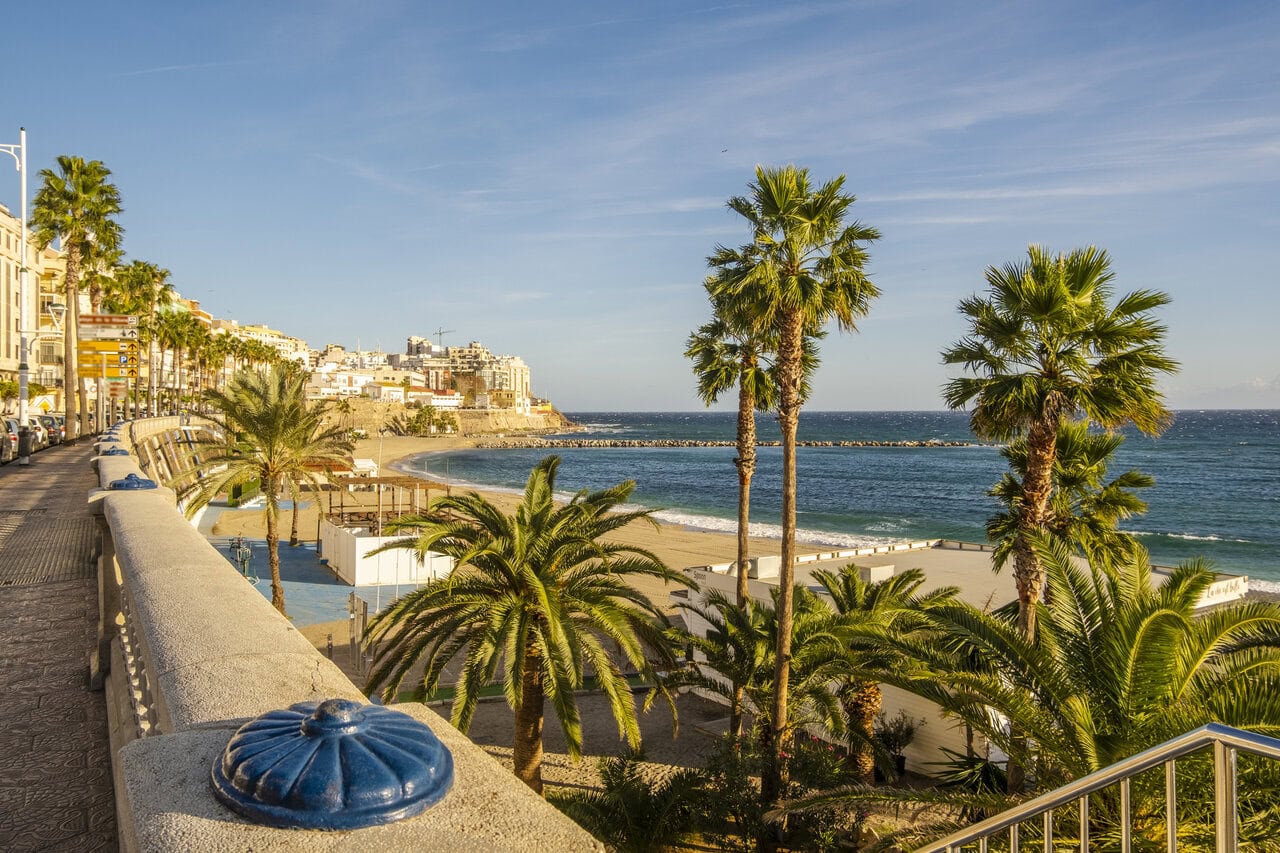
Moving away from the centre, the waterfront areas provide a completely different atmosphere. Here, the pace slows down, and the focus shifts towards open views, coastal air, and leisure spaces such as the Parque Marítimo del Mediterráneo. These areas are ideal for breaking up a day of sightseeing and adding a more relaxed element to your visit.
Further out, locations such as Monte Hacho introduce elevation and perspective, offering wide views across the surrounding coastline and towards Morocco. These viewpoints help reinforce the geographical uniqueness of Ceuta and give you a clearer sense of its position between continents.
Because everything is relatively close together, the city works extremely well as a self-guided destination, where you can move freely between areas without needing to plan routes in detail.
How to Get to Ceuta from Spain and Beyond
Reaching Ceuta is straightforward, but it is important to understand that the city is only accessible by specific routes, which shapes how you plan your trip.
The most common and practical route is via the ferry from Algeciras, which takes approximately one hour. This is the primary connection between mainland Spain and Ceuta and is used by the majority of visitors.
Ferries run multiple times per day, making it easy to plan both day trips and longer stays. The short crossing time means that Ceuta is one of the most accessible cross-continental destinations in the world.
It is also possible to reach Ceuta from other parts of Spain by first travelling to Algeciras, which is well connected by road and rail. This makes the destination accessible from major hubs along the Costa del Sol.
Ceuta can also be accessed via its land border with Morocco, although this route is more complex and involves additional documentation and border procedures.
For most travellers, the ferry route remains the simplest, fastest, and most reliable way to visit Ceuta, and it plays a central role in shaping the overall travel experience.
Using the booking widget below allows you to compare sailings from operators including Baleària, DFDS (formerly FRS) and Naviera Armas, helping you find the best departure time and fare for your journey. Ferries operate throughout the day, with some routes offering departures from early morning until late evening.
If you are travelling with a car, motorhome, motorcycle or pet, be sure to check the ticket options carefully before booking, as facilities and prices can vary between operators. During busy periods, particularly summer weekends and holiday periods, booking in advance is highly recommended to secure your preferred sailing.
Use the live comparison tool below to check the latest schedules, availability and prices for your travel dates.
Algeciras to Ceuta Ferry Times & Departures
Use Ferryhopper to check live sailings between Algeciras and Ceuta in both directions. Select your travel date to compare scheduled ferry departures, sailing times and available tickets.
Select the date you want to travel. The times shown on the right-hand side are the scheduled departure and arrival times for each ferry.
Availability can change quickly, particularly during weekends and the summer season. Some sailings may stop accepting bookings a few hours before departure. If a timetable is blank, there may be no available sailings for today. Try moving to a later date to check future services.
This is the timetable for the outward direction. Use it to check sailings from Algeciras to Ceuta for the date you plan to travel.
This is a separate timetable for the opposite direction. It does not select a return ticket for the journey above. Use it to check sailings from Ceuta to Algeciras.
Want to compare different routes and other ferry options?
Compare routes, operators, sailing times and prices with Ferryhopper or Direct Ferries.

Arriving in Ceuta by Helicopter
Although most visitors reach Ceuta by ferry, the city is also served by Hélity’s scheduled helicopter services from Algeciras and Málaga Airport. The flight from Algeciras takes around 10 minutes, while the journey from Málaga takes approximately 30 minutes, making it one of the quickest ways to travel between mainland Spain and North Africa.
Ceuta Heliport is conveniently located within the port area, just a short distance from the city centre, allowing visitors to begin exploring almost immediately after landing. The service is particularly popular with business travellers, day-trippers and passengers connecting from international flights at Málaga Airport.
If you’re deciding whether to travel by ferry or helicopter, our dedicated Hélity Helicopter Guide explains the routes, ticket prices, baggage allowances and everything you need to know before booking.
Top Things to Do and See in Ceuta
Despite its size, Ceuta delivers a surprisingly concentrated set of standout experiences, all within easy reach of each other. The city is not about ticking off a long list of attractions. It is about experiencing a small number of places that clearly define its character.
The Royal Walls of Ceuta are the most important starting point. This defensive complex immediately establishes the city’s strategic importance, with thick stone fortifications surrounded by water and open space. Walking through this area gives you a strong sense of how Ceuta functioned as a fortified gateway between continents. It is one of the most visually distinctive and historically significant locations in the city.
In contrast, the Parque Marítimo del Mediterráneo offers a completely different experience. This modern coastal complex is designed for relaxation, with saltwater pools, landscaped areas, and views across the sea. It provides a clear break from the historical focus of the city and gives you a chance to slow the pace of your visit.
For wider perspective, Monte Hacho is essential. From here, the scale of Ceuta becomes clear, along with its position between Europe and Africa. The views extend across the Mediterranean and towards Morocco, reinforcing the geographical uniqueness that defines the destination.
The city centre itself is also a key part of the experience, not just a space between attractions. As you walk through the streets, the blend of influences becomes more apparent, visible in architecture, shops, and daily life. This is where Ceuta’s identity is felt most clearly.
Focusing on these core locations allows you to experience the city properly without overcomplicating your itinerary, making Ceuta a high-impact destination even on limited time. The official Ceuta tourist board covers the same monuments, museums and beaches in more detail.
History, Culture and the Story Behind Ceuta
Ceuta’s history is not just background information. It is central to understanding why the city feels the way it does today.
Over thousands of years, Ceuta has been shaped by multiple civilisations, including Phoenician, Roman, and Islamic influences, before becoming part of Spain. Each period has left a visible mark, creating a layered identity that is still evident in the city’s layout and structures.
The Royal Walls are the clearest physical expression of this history, reflecting centuries of adaptation, defence, and strategic importance. These are not isolated monuments. They are part of the city’s structure and continue to define how the space is experienced today.
Ceuta’s position between continents has also shaped its cultural identity. Spanish traditions dominate in language, governance, and everyday life, but there are clear influences from North Africa that appear in subtle but noticeable ways. This creates a cultural environment that feels stable yet slightly different from mainland Spain.
What stands out is the sense that Ceuta is not trying to present a curated identity. Instead, it reflects a natural outcome of geography and history, where different influences have coexisted over time rather than being packaged for visitors.
Understanding this context transforms a visit from simple sightseeing into something more meaningful, allowing you to see Ceuta as a place defined by connection, contrast, and continuity across continents.
Compare routes and fares for your journey to Spain.
Compare flightsUse an eSIM to get online without hunting for a local SIM after arrival.
See eSIM optionsCheck private pickup options and plan your onward journey before arrival.
View transfersBeaches, Coastline and Relaxing by the Sea
Ceuta may not be widely known as a beach destination, but it offers easy access to the Mediterranean and several well-maintained urban beaches that add real value to a visit. The coastline is fully integrated into the city, which means you can move from historic landmarks to the sea within minutes, without needing transport or careful planning.
The two main beaches are Playa de la Ribera and Playa del Chorrillo, both located close to the city centre. Playa de la Ribera is the most central and convenient, making it ideal if you want to combine sightseeing with time by the water. It is well kept, easily accessible, and supported by nearby cafés and facilities, creating a straightforward and comfortable beach experience.
Playa del Chorrillo sits just a short distance away and offers a slightly quieter and more relaxed atmosphere. While still easy to reach, it tends to feel less busy, which makes it a better option if you prefer a calmer setting. Both beaches provide clean water, manageable conditions, and a layout that works well for short visits rather than full beach days.
Beyond these main areas, Ceuta’s coastline includes smaller and less developed stretches, where the atmosphere feels more local and less structured. These are not major tourist beaches, but they reinforce the city’s character as a place that has not been heavily commercialised.
What makes Ceuta stand out is not the scale of its beaches, but the convenience and contrast they offer. You can explore fortifications, walk through the city centre, and then be by the sea in a matter of minutes. This creates a balanced experience, where relaxation becomes a natural part of the visit rather than something that requires separate planning.
Overall, Ceuta’s beaches are best seen as a complement to the city’s history and location, providing space to slow down and enjoy the Mediterranean setting while exploring one of Europe’s most unusual destinations.
Food, Dining and What to Expect
Food in Ceuta reflects its position between continents, creating a simple but distinctive dining experience that blends familiar Spanish elements with subtle North African influence.
The overall approach to food is straightforward. You will find a mix of cafés, casual restaurants, and traditional dining spots rather than a highly developed or trend-driven food scene. This suits the character of the city, where the focus is on authenticity and ease rather than presentation or complexity.
Seafood is one of the strongest options, supported by the city’s coastal location. Dishes are typically prepared in a simple way that highlights freshness and flavour, reflecting the wider Mediterranean approach to cooking. This is not about elaborate menus. It is about quality ingredients handled well.
At the same time, there are noticeable influences that reflect Ceuta’s proximity to Morocco. These appear in flavours, ingredients, and occasional dishes, adding variety without dominating the overall food scene. This subtle blend reinforces the city’s identity without feeling forced.
The town centre is the most practical place to eat, with a concentration of restaurants that makes it easy to stop during a day of exploring. Dining here is not just functional. It becomes part of the experience, giving you time to pause and take in the atmosphere of the city.
Overall, food in Ceuta is best approached with the expectation of simple, satisfying meals in a relaxed setting, rather than a destination focused on high-end dining. It fits the pace of the city and complements the overall travel experience.
Getting Around Ceuta: Simple, Walkable and Easy to Navigate
One of Ceuta’s biggest strengths is how effortless it is to move around, especially when compared to larger or more complex destinations. The city is compact, clearly structured, and designed in a way that naturally supports exploration on foot.
Most of the key attractions are located within a short walking distance of each other, particularly around the city centre and the Royal Walls. This means you can move between major points without needing to plan routes, check schedules, or rely on transport. For many visitors, especially those on a day trip, walking becomes the most practical and enjoyable way to experience the city.
The layout works in your favour. Streets are straightforward, distances are manageable, and there is a natural flow between historical areas, waterfront spaces, and central streets. This allows you to explore at your own pace without feeling restricted or rushed.
For locations slightly further out, such as Monte Hacho, taxis provide a simple and efficient option. Journeys are short, widely available, and typically affordable, making them a useful addition rather than a necessity.
Public transport does exist, but it plays a limited role for most visitors. The size of the city means that buses are rarely required unless you are staying longer or exploring beyond the main areas.
Overall, Ceuta is a destination where you can focus on experiencing the place rather than navigating it, which adds significantly to its appeal as a simple and accessible trip.
Where to Stay: Best Areas and Accommodation Options
Although many travellers visit on a day trip, staying overnight in Ceuta allows you to experience the city at a much more relaxed pace, especially in the evening when it becomes noticeably quieter.
The town centre is the best area to stay, particularly around the port and main shopping streets. This location gives you immediate access to restaurants, cafés, and key sights such as the Royal Walls, all within a short walk. It is the most practical choice, especially if you are arriving by ferry and want to avoid unnecessary movement with luggage.
Ceuta’s accommodation offering is relatively small, so it is important to understand what is available. You will find a mix of mid-range hotels, a small number of higher-end options, and limited budget accommodation. This is not a destination with a wide range of hostels or boutique stays, and expectations should be set accordingly.
For a more premium stay, Parador de Ceuta is the standout option, offering a well-established hotel experience with a pool, gardens, and a central location. It is one of the most reliable choices for comfort and consistency, particularly for travellers who prefer a higher standard of accommodation.
Mid-range hotels dominate the market, typically offering clean, functional rooms with straightforward amenities. These are well suited to short stays and provide everything needed without unnecessary extras. The focus here is convenience rather than luxury.
Budget options do exist, but they are more limited and can vary in quality. If you are looking for lower-cost accommodation, it is worth checking recent reviews carefully and booking early, as availability is not always consistent.
Waterfront properties offer a slightly different experience, with views across the Mediterranean and a quieter setting, but the trade-off is a slightly longer walk to the main centre. Given the city’s size, this is rarely a major issue.
Overall, accommodation in Ceuta is best approached with a focus on location and practicality rather than variety or uniqueness. Staying centrally in a reliable mid-range hotel is the most effective way to maximise your time and keep the experience simple.
Weather and the Best Time to Visit Ceuta
Ceuta benefits from a mild Mediterranean climate, making it a destination that can be visited comfortably throughout much of the year.
Spring and autumn are generally the most balanced times to visit. Temperatures are moderate, conditions are comfortable for walking, and the overall experience feels less pressured. These seasons allow you to explore the city fully without the intensity of peak summer conditions.
Summer brings warmer weather and longer daylight hours, which can be appealing if you want to combine sightseeing with time by the sea. However, this is also when visitor numbers increase, and the pace of the city can feel slightly busier.
Winter offers a quieter alternative, with milder conditions than much of mainland Europe. While there may be occasional rain or cloud cover, the city remains accessible and easy to explore, making it a viable option for off-season travel.
Because Ceuta sits on the coast, there can be some variation in conditions, particularly with wind. However, these changes are usually minor and do not significantly impact the overall travel experience.
In practical terms, Ceuta is a destination that works well in most seasons, with the best time to visit depending on whether you prioritise comfortable temperatures, quieter conditions, or longer days.
Safety, Travel Advice and What to Be Aware Of
Ceuta is generally considered a safe and straightforward destination, making it suitable for a wide range of travellers.
As with any location, it is important to take basic precautions, particularly in busier areas. Keeping an eye on personal belongings and staying aware of your surroundings is always advisable.
One important aspect to be aware of is the proximity to the Moroccan border. While this does not affect most visits, it is important to understand that crossing into Morocco involves additional checks and procedures. For a simple trip, remaining within Ceuta keeps the experience easy and stress-free.
Carrying valid identification is essential, as passport checks may be required at different points during your journey. Having your documents easily accessible helps avoid delays.
The city itself is well organised, with a relaxed atmosphere that makes it easy to explore. Visitors generally find it to be welcoming, manageable, and comfortable, even for short stays.
Overall, Ceuta offers a travel experience that is both safe and easy to navigate, allowing you to focus on enjoying the destination.

Rupert’s Handy Travel Tips
Rupert loves Ceuta because it is one of those rare places where you can experience two continents without complicated travel, making it perfect for a simple but memorable adventure.
- Take the early ferry: it gives you more time to explore.
- Focus on a few key sights: the city is small but full of character.
- Keep your passport handy: you may need it at different points.
- Enjoy the contrast: Ceuta feels different from typical Spanish destinations.
- Take time to relax: the coastal setting is part of the experience.
Want to meet the reindeer behind our travel tips? Find out more in our page Who is Rupert?.


Browse hostels and budget-friendly stays around Spain.
See hostelsGet help with compensation, eligible lounge access and disruption support.
Explore AirHelp+Leave your luggage somewhere convenient and enjoy Spain hands-free.
View storageFrequently Asked Questions About Visiting Ceuta
Is Ceuta worth visiting
Yes, Ceuta is worth visiting for its unique location in North Africa, rich history, and blend of cultures, all within a compact and easy-to-explore city.
Can you visit Ceuta in one day
Yes, many travellers visit Ceuta on a day trip from Algeciras, with enough time to see the main attractions and explore the city centre.
Do you need a passport to visit Ceuta
Yes, you should carry a valid passport, as border checks are in place when travelling to and from Ceuta.
How do you get to Ceuta from Spain
The most common way is by taking the ferry from Algeciras, which takes around one hour and runs multiple times per day.
Is Ceuta part of Spain or Africa
Ceuta is politically part of Spain, but it is located on the African continent, which is what makes it so unique.
Further Reading and Related Ceuta Travel Guides
To fully plan your visit, it helps to connect this guide with more detailed travel pages that cover specific parts of the journey.
If you are organising your trip from Spain, the Algeciras to Ceuta ferry guide explains everything you need to know about crossing the Strait, including ticket options, schedules, and onboard experience.
For a structured short visit, the day trip to Ceuta guide provides a clear itinerary and practical advice to help you make the most of your time in the city.
If you’re weighing up the crossing itself, our Hélity helicopter guide compares the ten minute flight from Algeciras with the standard ferry crossing, useful if speed matters more than cost on the day you travel.
Staying connected while travelling between Spain and North Africa is essential. Using one of the best eSIM apps for travel ensures you have reliable access to maps, bookings, and updates throughout your journey.
By combining these guides, you can turn a simple visit into a well-planned and seamless travel experience, covering everything from transport to exploration.