
Reviewed by our editorial team Updated
Why Santorini Is One of the World’s Most Iconic Travel Destinations
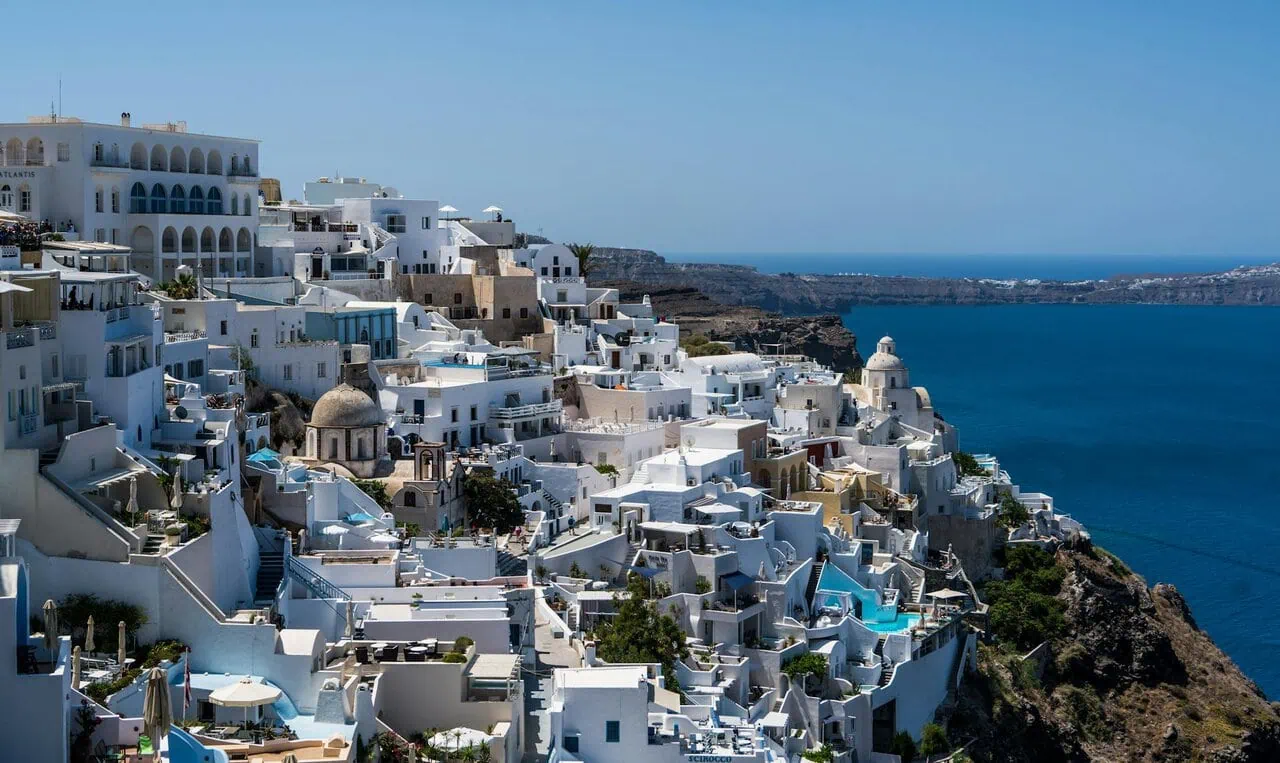
Santorini is one of the most recognisable destinations in the world, known for its dramatic cliffside views, whitewashed buildings, and unforgettable sunsets. Unlike most Greek islands, Santorini’s appeal is not built around beaches or variety, but around a single, powerful visual identity that defines the entire experience.
The island’s unique shape is the result of a volcanic eruption, which created the famous caldera cliffs that rise above the Aegean Sea. Towns such as Oia and Fira are built along these cliffs, offering panoramic views that have become synonymous with Greece itself.
What makes Santorini special is how this landscape shapes everything you do. Whether you are walking through narrow streets, dining at a restaurant, or watching the sunset, the focus is always on the view and the atmosphere.
Santorini is also one of the most developed islands in Greece, with a strong emphasis on hospitality, accommodation, and curated experiences. This makes it easy to visit, but also means it feels more structured and refined than other destinations.
For many travellers, Santorini is about experiencing something iconic. It is not just a place to visit, but a destination that delivers a specific and memorable version of the Greek island experience.
Understanding Santorini: Oia, Fira and Key Areas
Santorini is relatively small, but its layout is shaped by the caldera, creating distinct areas that offer different perspectives on the island.
Fira is the island’s main town and central hub. It is located along the caldera and offers restaurants, shops, transport connections, and nightlife. Fira is often the busiest part of the island, but it provides the most convenient base for exploring.
Oia, located at the northern tip of the island, is the most famous area. It is known for its sunset views, narrow streets, and high-end accommodation, making it one of the most photographed places in Greece. Oia offers a more polished and scenic experience, although it can become crowded during peak times.
Other areas such as Imerovigli and Firostefani sit between Fira and Oia, offering similar views with a slightly quieter atmosphere. These locations are often preferred by travellers who want the caldera experience without the busiest crowds.
Away from the cliffs, the island also has beach areas and smaller settlements, which provide a different perspective on Santorini. These locations are less visually dramatic but offer more space and relaxation.
Understanding these areas helps you choose where to stay and how to experience the island, as each location offers a slightly different balance of views, convenience, and atmosphere.
See hotel options and places to stay in Santorini.
Browse hotelsBrowse apartments, holiday homes and self-catering stays in Santorini.
View rentalsCompare prices for Santorini hotels across multiple booking sites.
Check dealsSantorini at a Glance: Essential Travel Facts
| Key Detail | Information |
|---|---|
| Location | Cyclades, Greece |
| Main Town | Fira |
| Famous Area | Oia |
| Airport | Santorini (Thira) International Airport (JTR) |
| Currency | Euro (€) |
| Language | Greek (English widely spoken) |
| Best Time to Visit | May to October |
| Ferry Access | Direct from Athens and Cyclades islands |
| Known For | Caldera views, sunsets, luxury stays |
| Driving Side | Right |
These essentials highlight Santorini’s role as a high-profile destination with a clear identity and global appeal.
The Volcanic History That Shaped Santorini
The defining feature of Santorini is its volcanic history, which has shaped both its landscape and its identity. The island was formed by a massive volcanic eruption thousands of years ago, creating the caldera that now defines its appearance.
This geological event resulted in steep cliffs rising from the sea, with towns built along their edges. The contrast between the dark volcanic rock and white buildings creates the striking visual effect that Santorini is known for.
The island’s volcanic past is also visible in its beaches, soil, and surrounding islands, which all reflect the same geological processes. This gives Santorini a character that is very different from other Greek islands, where landscapes are more uniform.
Beyond its physical impact, the volcanic history also contributes to the island’s cultural and historical significance. It is often linked to ancient stories and has played a role in shaping the region’s development.
Understanding this background helps explain why Santorini feels so dramatic and distinctive, and why it remains one of the most unique destinations in Greece.
Getting Around Santorini: Transport and Accessibility
Getting around Santorini is relatively simple in theory, but in practice it requires a bit more planning due to the island’s layout, steep terrain, and heavy visitor numbers during peak season. Distances are short, but travel times can vary depending on traffic and location.
The island is built around the caldera cliffs, with major towns such as Fira, Oia, and Imerovigli located along the western edge, while beaches and quieter areas sit on the opposite side. This means that moving between locations often involves crossing the island rather than following a single coastal route.
Public buses provide a reliable and widely used transport option. The network connects Fira with Oia, Kamari, Perissa, Akrotiri, and other key locations, making it possible to explore much of the island without driving. However, because Fira acts as the central hub, most journeys require passing through the town, even when travelling between two other locations.
Taxis are available but limited in number, which can make them difficult to rely on during busy periods. Waiting times are common, particularly in summer and at key locations such as the airport and ferry port.
Many visitors choose to rent a car, ATV, or scooter, which provides far greater flexibility. This is especially useful for reaching less crowded beaches, viewpoints, and inland villages, where public transport options are more limited.
Walking also plays a major role, particularly in Fira, Oia, and Imerovigli, where narrow streets and pedestrian pathways define the experience. Exploring on foot is often the best way to take in the views, architecture, and atmosphere.
Overall, getting around Santorini is about balancing convenience with planning, choosing the right mix of transport depending on where you are staying and what you want to see.
Arriving in Santorini: Flights, Ferries and First Impressions
Reaching Santorini is straightforward, but the arrival experience is one of the most memorable parts of the journey. Whether you arrive by air or sea, the island delivers an immediate and dramatic first impression.
Flying is the fastest option, with direct routes from across Europe during the main season. As your plane descends, the view of the caldera, volcanic cliffs, and deep blue sea creates a striking introduction. The airport itself is relatively small but efficient, located close to the centre of the island.
Arriving by ferry is even more dramatic. Ships enter the caldera and dock at Athinios Port, which sits at the base of steep cliffs. From here, the journey up to the main towns involves navigating a series of tight switchback roads, offering incredible views but also highlighting the island’s unique geography.
Unlike many destinations where the experience builds gradually, Santorini makes an instant visual impact. The contrast between the dark volcanic landscape, whitewashed buildings, and the Aegean Sea creates a sense of arrival that feels distinct from anywhere else in Greece.
Airport Transfers and Getting to Fira or Oia
Transfers on Santorini require more planning than on most islands, largely due to the terrain, road network, and concentration of accommodation in elevated areas.
From Santorini Airport, the journey to Fira typically takes between 10 and 20 minutes, making it the most convenient base for arrivals. Travelling to Oia takes longer, usually between 25 and 40 minutes, depending on traffic conditions.
Taxis are available at the airport, but numbers are limited and demand is high, particularly when multiple flights arrive at the same time. Waiting times can be significant during peak season.
Private transfers are often the most efficient option. These can be arranged in advance and provide a smoother experience, particularly if you are staying in a caldera hotel, where direct vehicle access may not always be possible and short walks or assistance may be required.
Public buses connect the airport with Fira, offering a cost-effective alternative. However, services may not align perfectly with flight arrivals, and onward travel to other areas often requires changing buses.
If you arrive by ferry, transfers from Athinios Port can take longer due to traffic and the steep, winding road. Pre-arranging transport is strongly recommended to avoid delays and ensure a smoother arrival.
Local Public Transport on Santorini
The bus network on Santorini is one of the most commonly used transport options and provides a practical way to move between key locations on the island.
Routes connect Fira with Oia, Kamari, Perissa, Akrotiri, and other major destinations, making it possible to reach beaches, towns, and archaeological sites without needing a car. The system is designed around visitor demand and works well for straightforward journeys.
Fira acts as the central hub, which means most routes either start or pass through the town. While this makes navigation simple, it also means that travelling between two locations often involves changing buses in Fira.
Buses are generally reliable and increase in frequency during the summer months. They are particularly useful for day trips to beaches and short journeys between towns.
However, demand can be high, especially on the Fira to Oia route, which is one of the busiest on the island. During peak times, buses can become crowded, and waiting for the next service is sometimes necessary.
For travellers who prefer not to drive, buses provide a cost-effective and functional way to explore Santorini, as long as you plan around schedules and allow for flexibility.
Search routes and flight options for your trip to Santorini.
Search flightsChoose an Airalo eSIM and arrange mobile data before you arrive.
Browse eSIMsArrange a private airport pickup for your trip to Santorini.
Check transfersTaxis, Transfers and Getting Around Easily
Taxis on Santorini are available but limited, which makes them less reliable as a primary transport option during busy periods. The island’s popularity means demand often exceeds supply, particularly in summer.
Taxi ranks can be found in Fira, Oia, the airport, and Athinios Port, but queues are common, and waiting times can be unpredictable. Booking in advance is often the best way to secure a taxi for a specific journey.
Private transfers offer a more structured and dependable alternative. These services can be arranged through hotels or local providers and are particularly useful for airport arrivals, ferry transfers, and longer journeys across the island.
Within towns such as Fira and Oia, taxis are rarely needed, as these areas are designed for walking. Narrow streets, steps, and pedestrian zones mean that exploring on foot is often faster and more enjoyable.
For longer distances, taxis and transfers are best used selectively, filling the gaps where public transport is less convenient.
Overall, taxis and transfers work best as a supporting option, complementing buses, walking, and vehicle hire to create a flexible and manageable way of getting around Santorini.
Driving, Parking and Vehicle Rental on Santorini
Renting a vehicle is one of the most flexible ways to explore Santorini, particularly if you want to visit areas beyond the main caldera towns.
Car rental, as well as ATVs and scooters, are widely available across the island. These options provide the freedom to explore beaches, smaller villages, and less crowded parts of Santorini at your own pace.
Driving on the island is generally manageable, although roads can be narrow and busy, particularly in popular areas. Traffic increases significantly during peak season, and navigating through Fira or Oia can require patience.
Parking can be one of the biggest challenges, especially in Oia, where space is limited. Many visitors choose to park outside the main areas and walk into the town.
Despite these challenges, having your own vehicle allows you to experience a side of Santorini that many visitors miss, including quieter beaches and less developed areas.
For travellers who want to move beyond the main viewpoints and explore more freely, renting a vehicle is a valuable option.
Exploring Santorini on Foot: Caldera Walks and Scenic Routes
Walking is one of the defining ways to experience Santorini, particularly along the caldera edge, where the island’s most famous views are found. Unlike many other destinations, walking here is not just about getting from place to place, but about immersing yourself in the landscape and atmosphere.
The route between Fira and Oia is one of the most well-known walks on the island. This path follows the cliff edge, offering continuous views across the caldera, volcanic islands, and the Aegean Sea. The walk takes several hours, depending on pace, and passes through areas such as Firostefani and Imerovigli, each providing slightly different perspectives.
Within towns such as Oia and Fira, walking is essential. Narrow streets, steps, and pedestrian pathways define these areas, making vehicles impractical in many parts. Exploring on foot allows you to discover hidden viewpoints, small shops, and quieter corners that are not immediately visible.
The combination of elevation, scenery, and layout makes walking on Santorini both visually rewarding and physically engaging, adding an active element to the experience.
Ferries, Boat Tours and Caldera Experiences
While Santorini is often experienced from the cliffs, the island’s caldera and surrounding waters offer a completely different perspective that should not be overlooked.
Ferries connect Santorini with other islands such as Crete, Milos, Paros, and Mykonos, making it a key part of many island-hopping itineraries. The main departure point is Athinios Port, which handles the majority of ferry traffic.
Beyond transport, boat tours and caldera cruises are among the most popular activities on the island. These trips allow you to explore the volcanic landscape from the water, including visits to hot springs, smaller volcanic islands, and swimming spots.
Seeing the island from the sea provides a better understanding of its formation, with the cliffs rising dramatically above the water. It also offers a more relaxed way to experience Santorini, away from the busiest areas.
Many tours include sunset views from the water, adding another layer to one of the island’s most famous experiences.
For many visitors, a caldera cruise becomes a highlight, offering a different and more immersive perspective on Santorini.
| Route | Arrival / Departure Port | Duration | Frequency (Summer) | Ferry Type | Main Operators | Notes |
|---|---|---|---|---|---|---|
| Athens (Piraeus) – Santorini | Athinios | 5h – 8h | 2–5 daily | High-speed & conventional | Seajets, Blue Star Ferries | Most common route, wide choice of sailings |
| Athens (Rafina) – Santorini | Athinios | 4h – 6h | Limited (1–2 daily) | High-speed | Seajets | Less frequent but closer to airport |
| Mykonos – Santorini | Athinios | 2h – 3h | Frequent (3–5 daily) | High-speed | Seajets, Golden Star Ferries | One of the busiest island routes |
| Paros – Santorini | Athinios | 1h 30m – 3h | Frequent (2–5 daily) | High-speed | Seajets | Very popular Cyclades connection |
| Naxos – Santorini | Athinios | 2h – 3h 30m | Frequent (2–4 daily) | High-speed | Seajets | Often part of multi-stop routes |
| Ios – Santorini | Athinios | 35m – 1h | Very frequent (4–8 daily) | High-speed & ferry | Seajets, Blue Star Ferries | One of the shortest crossings |
| Crete (Heraklion) – Santorini | Athinios | 1h 45m – 2h 30m | Frequent (2–4 daily) | High-speed | Seajets, Minoan Lines | Key route between Cyclades and Crete |
| Milos – Santorini | Athinios | 2h – 4h | Moderate (1–3 daily) | High-speed | Seajets | Direct and popular route |
| Folegandros – Santorini | Athinios | 45m – 1h 30m | Moderate (1–3 daily) | High-speed | Seajets | Short island hop |
| Rhodes – Santorini | Athinios | 10h – 15h | Limited (few weekly) | Conventional | Blue Star Ferries | Long-distance route across Aegean |
Tourist Transport, Cable Cars and Local Shuttles
Santorini offers a range of additional transport options that reflect the island’s steep terrain, layered towns, and unique geography. These systems are not just conveniences, but essential parts of moving around the island efficiently.
One of the most recognisable features is the cable car connecting Fira with the Old Port below. This short but steep journey provides a fast and scenic alternative to the climb up the cliff, which involves hundreds of steps. The cable car runs frequently throughout the day and offers impressive views across the caldera, making it both a practical and memorable experience.
Local shuttle services and organised transfers operate between key locations such as Fira, Oia, Kamari, and Perissa, as well as between hotels and major transport hubs. These services are particularly useful during peak periods when buses are crowded and taxis are difficult to secure. Many hotels also arrange private shuttles, especially for guests staying in areas with limited vehicle access.
The island’s layout also means that certain areas require a combination of transport and walking. In caldera towns such as Oia and Imerovigli, many hotels and viewpoints are only accessible via footpaths, steps, and narrow lanes, which adds to the experience but also requires some planning.
Traditional donkey routes still exist, particularly between the Old Port and Fira. These reflect historic methods of transport on the island and remain part of Santorini’s identity, although most visitors now choose the cable car or walking route instead.
These additional transport systems highlight how Santorini adapts to its environment, offering practical solutions that make it possible to move between different levels of the island while still enjoying its dramatic setting.
Top Things to Do in Santorini: Views, Sunsets and Experiences
The appeal of Santorini is built around a small number of defining experiences, each centred on the island’s caldera views, volcanic landscape, and atmosphere.
The most famous experience is watching the sunset in Oia, where visitors gather along the cliffs and viewpoints to see the light change across the caldera. This daily event shapes the rhythm of the island, with restaurants, terraces, and walkways filling as evening approaches. It is one of the most iconic moments in Greece and a key part of any visit.
Exploring the main towns is another essential activity. Walking through Oia, Fira, and Imerovigli allows you to experience the island’s architecture and layout, with narrow pathways, whitewashed buildings, and constant views over the sea. The Fira to Oia coastal walk is particularly popular, offering a continuous route along the caldera with panoramic views throughout.
Dining is also central to the Santorini experience, particularly in locations where restaurants are positioned along the cliff edge. Eating with a view of the caldera, especially in the evening, is one of the defining moments of a stay on the island.
Boat trips provide a completely different perspective. Excursions around the caldera often include stops at the volcanic islands, hot springs, and remote swimming spots, allowing you to see Santorini from the water and understand its geological formation more clearly.
Santorini is not about doing many different things. It is about fully experiencing a small number of high-impact moments, where the setting, atmosphere, and timing combine to create something memorable.
Compare hostels and budget-friendly accommodation around Santorini.
Browse hostelsGet help with compensation, eligible lounge access and disruption support.
Explore AirHelp+Leave your luggage somewhere convenient and enjoy Santorini hands-free.
View storageHistoric Landmarks and Cultural Highlights of Santorini
Although Santorini is best known for its scenery, it also has a strong historical and cultural layer that adds depth to the experience.
The most important site is Akrotiri, an ancient settlement preserved under volcanic ash following the eruption that shaped the island. Often compared to Pompeii, this site provides a detailed insight into life during the Minoan period, with well-preserved structures and evidence of a highly developed society. The Greek Ministry of Culture publishes the opening hours and ticket prices for Akrotiri.
The island’s volcanic history is central to its identity. The caldera itself is the result of a massive eruption, and understanding this background helps explain the landscape that defines Santorini today. Visiting volcanic areas and learning about this history adds context to the views.
Across the island, churches and traditional buildings form an important part of the cultural landscape. The blue-domed churches of Oia and Fira are among the most photographed in Greece, but they also reflect local architectural traditions and religious life.
In towns such as Fira and Pyrgos, historic elements are woven into the modern environment. Small museums, galleries, and cultural spaces provide additional insight into the island’s development, showing how past and present exist side by side.
These landmarks may not dominate the itinerary in the same way as the views, but they provide important context, helping you understand Santorini as more than just a visual destination.
Hidden Gems and Quieter Sides of Santorini
While Santorini is known for its busy caldera towns, there are still places where you can experience a quieter and more relaxed side of the island.
Moving inland, villages such as Pyrgos and Megalochori offer a completely different atmosphere. These areas are less crowded, with traditional architecture, small squares, and a slower pace of life. Exploring these villages provides a more local perspective, away from the main tourist flow.
On the eastern side of the island, beaches such as Kamari and Perissa offer more space and a flatter landscape. These areas are less dramatic than the caldera but provide a more relaxed environment for swimming and spending time by the sea.
For something more remote, the southern part of the island around Akrotiri offers quieter beaches and fewer crowds, along with access to historical sites and open landscapes.
Even within Fira and Oia, it is possible to find quieter areas by moving away from the main viewpoints. Exploring side streets, early mornings, and less obvious paths allows you to experience these towns in a more personal way.
Discovering these quieter locations adds balance to a Santorini trip, allowing you to combine the island’s iconic highlights with moments of calm and space.
Indoor Activities and Things to Do in All Weather
Although Santorini is primarily an outdoor destination, there are still plenty of ways to enjoy the island when you want a break from the sun or when conditions are less ideal.
Museums provide insight into the island’s history and geology. The Museum of Prehistoric Thera in Fira is one of the most important, displaying artefacts from Akrotiri and helping to explain the island’s ancient past. The Archaeological Museum of Thera and smaller local museums add further context.
Indoor spaces in Fira and Oia also include galleries, cultural venues, and shops, offering a way to explore the island without being exposed to heat or weather conditions. These areas combine retail, art, and architecture, creating a more relaxed indoor experience.
Food remains a central part of the experience, and restaurants provide comfortable indoor settings where you can enjoy local cuisine. This is particularly useful during the hottest parts of the day, when stepping away from direct sun becomes important.
Wine is another key element of Santorini’s culture, and indoor wine tastings and winery visits offer a structured way to spend time while learning about the island’s volcanic soil and unique grape varieties.
These indoor activities ensure that Santorini remains a flexible and well-rounded destination, allowing you to enjoy the island regardless of weather or time of day.

Best Beaches in Santorini
Santorini’s beaches are very different from those found on other Greek islands. Formed by volcanic activity, they are defined by dark sand, dramatic cliffs, and unique coastal landscapes, rather than long stretches of soft white sand. Exploring them is an important part of understanding the island beyond its caldera views.
On the eastern side of the island, Kamari Beach is one of the most accessible and popular options. The beach stretches for several kilometres, with black volcanic sand, clear water, and a well-organised promenade lined with restaurants, cafés, and hotels. It is an easy choice for a full beach day, particularly if you are staying nearby.
Just south of Kamari, Perissa Beach offers a similar setting but often feels slightly more relaxed. The long, open coastline provides plenty of space, and the beach is well equipped with sunbeds, beach bars, and water sports facilities. It is a good balance between comfort and atmosphere.
One of the most distinctive beaches on the island is Red Beach, located near Akrotiri. Surrounded by high red volcanic cliffs, the setting is visually striking and unlike anywhere else in Greece. Access involves a short walk, and while the beach is smaller and can get busy, it remains one of Santorini’s most memorable locations.
Nearby, White Beach provides an even more secluded experience. Accessible mainly by boat or water taxi, it is backed by pale cliffs and offers a quieter, more remote environment. The contrast between the white rock and dark sand makes it particularly unique.
For something more rugged, Vlychada Beach stands out for its unusual landscape. The coastline is shaped by wind and erosion, creating smooth, sculpted rock formations that give the area an almost lunar appearance. It is less crowded than Kamari or Perissa and has a more natural feel.
Further north, Monolithos Beach is one of the best options for families. The water is shallow, the sand is softer, and the area is well organised with facilities and space to relax. It is also one of the more sheltered beaches on the island.
Santorini’s beaches are not about soft sand and calm bays in the traditional sense. They are about contrast, colour, and geological character. Visiting a mix of locations, from the organised eastern beaches to the more dramatic southern coastline, gives you a much better understanding of what makes the island unique.
Taking the time to explore beyond one beach adds an entirely different dimension to a Santorini trip, balancing the intensity of the caldera with more open, relaxed coastal settings.
Shopping in Santorini: Boutiques, Local Products and Luxury Items
Shopping on Santorini reflects the island’s premium positioning, with a mix of boutiques, local products, and higher-end retail options.
In Fira and Oia, you will find a wide range of shops offering clothing, jewellery, and souvenirs, often presented in a more refined and curated way than on other islands. The focus is on quality and presentation, matching the overall feel of the destination.
Local products are also widely available, including items that reflect the island’s traditions and environment. These provide a more authentic connection to Santorini while still fitting within its polished retail scene.
The shopping experience is integrated into the towns themselves, with stores located along narrow streets and scenic routes, making it a natural part of exploring the island.
Rather than being purely functional, shopping on Santorini is part of the overall experience, combining style, atmosphere, and location.
Suggested Itinerary for Exploring Santorini
Planning your time in Santorini is relatively straightforward, as the island’s main experiences are concentrated along the caldera and a handful of key locations. The focus is less on covering distance and more on timing, atmosphere, and sequencing your days properly.
On your first day, base yourself in Fira and use it as an introduction to the island. Spend time exploring the town’s streets, viewpoints, and terraces, getting your first uninterrupted views of the caldera and volcanic cliffs. This is the moment where Santorini starts to make sense visually, and it sets the tone for the rest of your trip.
Your second day should be dedicated to Oia, which is one of the defining experiences of Santorini. Arrive early to explore the streets before crowds build, take time to walk through the village, and identify your preferred viewpoint for sunset. Staying for sunset is essential, but planning where you watch it from makes a big difference to the overall experience.
Another day can be used for a caldera walk or a boat trip. The walk between Fira and Oia is one of the best ways to understand the island’s layout, offering continuous views along the cliffs. A boat trip provides the opposite perspective, allowing you to see Santorini from the water and visit the volcanic islands and hot springs.
If you have additional time, shift away from the caldera and explore the eastern side of the island, including beaches such as Kamari and Perissa, or quieter inland villages such as Pyrgos. This adds balance and gives you a more complete view of Santorini beyond its most photographed locations.
The key to planning Santorini is not to overfill your itinerary. The island works best when you allow time for slow exploration, relaxed meals, and simply taking in the views, rather than trying to move constantly between locations.

Festivals, Seasonal Highlights and the Best Time to Visit Santorini
The experience of visiting Santorini is heavily shaped by the time of year, as the island’s atmosphere changes significantly between seasons.
The summer months from June to September deliver the classic Santorini experience, with long sunny days, warm evenings, and a lively atmosphere. This is when the island is at its most active, but also when crowds are at their peak, particularly in Oia and Fira, where space around key viewpoints becomes limited.
Spring and early autumn, particularly April to May and September to October, are often the best times to visit. During these periods, the weather remains warm and clear, but the crowds are reduced, making it easier to move around and enjoy the island at a more relaxed pace. These months offer the best balance between conditions and comfort.
In winter, Santorini becomes much quieter. Many hotels and restaurants close, and the island takes on a more local and slower atmosphere. While this is not the typical tourist experience, it can appeal to those looking for peace, space, and a different perspective.
Seasonal events also play a role. The Santorini International Music Festival and various cultural events take place during the summer, adding another layer to the island’s offering.
Weather is particularly important in Santorini because the experience is so visually driven. Clear skies and good visibility enhance the impact of the caldera, making timing a key part of planning your visit.
Where and What to Eat in Santorini
Dining in Santorini is as much about the setting as it is about the food. The island has built a reputation for offering restaurants with some of the best views in Greece, where meals are framed by the caldera and the open sea.
In Fira and Oia, many restaurants are positioned along the cliff edge, creating a dining experience centred around panoramic views, sunset light, and atmosphere. These locations are particularly popular in the evening, and booking ahead is often essential during peak season.
The cuisine is rooted in Greek traditions, with a strong local identity shaped by the island’s volcanic soil. Ingredients such as Santorini tomatoes, fava beans, and white aubergine are local specialities, often prepared in simple ways that highlight their flavour. Fresh seafood is also widely available, particularly in coastal areas.
Away from the caldera, you will find more traditional tavernas where the focus shifts towards authentic cooking and a slower pace. In areas such as Pyrgos, Megalochori, and the eastern beaches, dining tends to be less about views and more about local character.
Wine is another important part of the experience. Santorini is known for its Assyrtiko wines, produced from grapes grown in volcanic soil. Visiting a winery or enjoying a wine tasting adds another dimension to the island’s food culture.
Eating in Santorini is rarely rushed. Meals are designed to be slow, social, and immersive, combining food, setting, and timing into one of the most memorable parts of a visit.
Nightlife in Santorini: Bars, Views and Evening Atmosphere
Nightlife in Santorini is defined by atmosphere rather than intensity, with a focus on bars, views, and social settings rather than large-scale clubbing.
Fira is the centre of the island’s nightlife, offering the widest range of bars and venues. After sunset, the town becomes increasingly lively, with visitors moving from restaurants into cocktail bars and late-night venues. The atmosphere is social and energetic, but generally more controlled than the major party islands.
In contrast, Oia offers a quieter and more refined evening experience. Nightlife here is centred around wine bars, terraces, and relaxed venues, where the focus remains on views and ambience rather than volume or energy.
Across the island, many venues are designed to take advantage of the landscape, with outdoor seating and caldera views remaining central even after dark. This creates a nightlife experience that feels consistent with Santorini’s overall identity.
Santorini’s evenings are less about late-night intensity and more about gradual transitions from sunset to drinks to relaxed social spaces, making it ideal for travellers who want atmosphere without the pressure of a high-energy party scene.

Where to Stay in Santorini: Choosing the Right Location
Where you stay in Santorini has a major impact on your experience, as each area offers a different balance of views, convenience, and atmosphere.
Oia is the most iconic location, known for its luxury accommodation, caldera views, and famous sunsets. Staying here offers one of the most recognisable experiences on the island, but it also comes with higher prices and larger crowds.
Fira is the most practical base. It offers easy access to transport, restaurants, nightlife, and connections across the island, making it a strong choice for travellers who want flexibility. It combines convenience with a full range of facilities.
Imerovigli and Firostefani provide a quieter alternative while still offering the same caldera views and proximity to Fira. These areas are ideal if you want the scenery without the intensity of Oia.
Away from the cliffs, the eastern beach areas such as Kamari and Perissa offer a completely different experience. Here, accommodation is often more spacious and affordable, and the focus shifts towards relaxation, beach access, and ease of movement.
Choosing the right location depends on what you prioritise. If you want iconic views and a premium experience, Oia is the standout. If you want convenience and flexibility, Fira is the best option. For a quieter but still scenic stay, Imerovigli works well, while beach areas offer a more relaxed alternative.
The right base allows you to shape your Santorini experience around your priorities, ensuring a stay that feels both manageable and memorable.
Cultural Norms, Etiquette and Local Life on Santorini
Understanding local customs helps you navigate Santorini more comfortably, particularly given its popularity and the mix of visitors it attracts.
While the island is highly accustomed to tourism, it still retains elements of traditional Greek culture, particularly in quieter areas and local communities.
Respect for public spaces, local customs, and the environment is important, especially in crowded areas where behaviour can impact the experience for others.
Life on Santorini moves at a steady pace, but the high number of visitors can create pressure in certain areas. Showing patience and awareness helps ensure a smoother experience.
Simple actions such as respecting queues, avoiding blocking pathways for photos, and being considerate in busy locations contribute to a more positive and enjoyable visit for everyone.
eSIMs and Staying Connected in Santorini
Staying connected on Santorini is generally easy, with strong mobile coverage across the island, particularly in towns and along the caldera.
Many travellers use eSIMs to ensure they have immediate access to mobile data upon arrival. This is particularly useful for navigation, bookings, and checking transport schedules.
WiFi is widely available in hotels, restaurants, and cafés, especially in Fira and Oia. However, speeds can vary depending on demand, particularly during peak periods.
Having reliable connectivity helps you manage your time more effectively, especially when moving between locations or planning activities.

Laws, Safety and Practical Advice for Visiting Santorini
Santorini is a safe destination, with low levels of crime and a well-developed tourism infrastructure. Most visitors experience the island without any issues.
Basic precautions are still recommended, particularly in busy areas where crowds are common. Keeping an eye on your belongings and being aware of your surroundings helps avoid minor problems.
The island’s layout presents some practical challenges, including steep paths, steps, and uneven surfaces, particularly in areas such as Oia. Wearing appropriate footwear and taking care when moving around helps ensure a comfortable experience.
Transport systems can become busy during peak season, so planning ahead is important when using buses, taxis, or ferries.
Overall, Santorini offers a safe and accessible environment, with a few practical considerations linked to its popularity and geography.

Rupert’s Handy Travel Tips
Heading to Santorini? Rupert has a few smart tips to help you make the most of this iconic destination.
- Visit popular spots like Oia early or late to avoid peak crowds.
- Book restaurants with a view in advance, especially for sunset.
- Stay in Imerovigli or Firostefani for a quieter caldera experience.
- Use buses or a vehicle to explore beyond the main towns.
- Allow time to simply enjoy the views and atmosphere.
Want to meet the reindeer behind our travel tips? Find out more in our page Who is Rupert?.


Frequently Asked Questions About Visiting Santorini
How many days do you need in Santorini?
Most visitors find that 2 to 3 days is enough to experience the main highlights.
Is Santorini worth visiting?
Yes, it offers one of the most iconic and visually striking experiences in Greece.
What is the best area to stay in Santorini?
Oia for views and luxury, Fira for convenience, and Imerovigli for a quieter experience.
Do you need a car in Santorini?
Not essential, but useful if you want to explore beaches and less crowded areas.
Is Santorini expensive?
It is one of the more expensive islands, particularly for accommodation and dining with views.
Plan Your Trip: Further Reading & Related Travel Guides
After exploring this Santorini travel guide, the next step is to connect your trip with the wider Greek islands. Many travellers combine Santorini with destinations such as Milos, Paros, or Crete, using ferry routes to build a broader itinerary.
The Cyclades ferry routes guide helps you understand how the islands connect, while the Athens ferry routes and Piraeus port guide provides essential information for travel from the mainland.
For a deeper exploration of the region, the Milos, Paros, and Syros travel guides offer detailed insights into nearby islands that complement a Santorini visit.
By combining these guides, you can create a well-balanced and efficient island-hopping plan, making the most of your time in Greece.











