
Why Visit the Aeolian Islands
The Aeolian Islands are one of the most dramatic island groups in the entire Mediterranean, combining active volcanoes, black sand beaches, fishing villages, thermal landscapes and some of the most memorable ferry journeys in Italy. Located off the northern coast of Sicily, the islands feel completely different from mainland Italy. Life moves slower, the scenery is more rugged, and each island has its own personality.
A proper Aeolian Islands travel guide is essential because this is not a simple beach destination. Travellers need to understand ferry logistics, volcanic activity, seasonal schedules and which islands actually suit their style of trip. Some islands are lively and glamorous, while others feel remote and almost untouched. Picking the wrong base can completely change the experience.
The biggest draw for many visitors is Stromboli, one of the world’s most famous active volcanoes. Watching lava bursts light up the night sky from a boat or volcanic viewpoint is something few European destinations can match. Meanwhile Vulcano offers steaming fumaroles and sulphur landscapes, Lipari provides the best overall transport hub, and Salina delivers green mountains, vineyards and quieter luxury.
Unlike many crowded Mediterranean islands, the Aeolian Islands itinerary experience still feels adventurous. Ferries connect tiny ports surrounded by cliffs and volcanic peaks rather than giant cruise terminals. Small towns are filled with family-run restaurants, scooters, fishing boats and whitewashed houses instead of huge resort complexes. Even during summer, parts of the archipelago still feel wonderfully isolated.
The islands also work brilliantly alongside a wider Sicily trip. Many travellers combine the archipelago with Palermo, Catania, Taormina, or even longer routes across southern Italy. Because the islands depend heavily on ferries and hydrofoils, transport planning becomes part of the adventure itself, making this one of the best destinations in Europe for travellers who enjoy slow travel, island hopping and scenic journeys.
Quick Facts About the Aeolian Islands
The Aeolian Islands are a volcanic island chain in the Tyrrhenian Sea, north of Sicily, and are recognised as a UNESCO World Heritage Site because of their geological importance. The archipelago consists of seven main inhabited islands alongside several smaller volcanic outcrops and rock formations.
| Topic | Information |
|---|---|
| Country | Italy |
| Region | Sicily |
| Number of Main Islands | 7 |
| Largest Island | Lipari |
| Famous Volcano | Stromboli |
| UNESCO Status | Yes |
| Main Ferry Gateway | Milazzo |
| Best Months to Visit | May to October |
| Car Recommended? | Usually no |
| Main Language | Italian |
| Currency | Euro (€) |
The seven main islands are Lipari, Vulcano, Salina, Stromboli, Panarea, Filicudi and Alicudi. Each island has a very different atmosphere. Panarea is known for luxury tourism and nightlife, while Alicudi has almost no roads and feels completely detached from modern life.
Most travellers arrive through the ferry port of Milazzo on the northern coast of Sicily. Hydrofoils and ferries then spread out across the islands throughout the day. During summer, there are also seasonal direct ferry routes from places like Palermo, Messina, Naples and Reggio Calabria.
One of the most important things to understand when planning an Aeolian Islands island hopping trip is that ferry schedules change heavily depending on the season and weather. Winter services are more limited, while strong winds or rough seas can occasionally disrupt connections even during summer. Building flexibility into your itinerary is extremely important.
Despite the volcanic landscapes, the islands are generally safe for tourism. Active volcanoes like Stromboli are monitored closely, and access restrictions are updated when volcanic activity changes. Travellers should still check local guidance before attempting volcano hikes or boat tours.
Browse hotels and accommodation for your journey.
View staysExplore holiday homes and apartments for your trip.
See holiday homesCompare prices from multiple hotel booking sites.
Check dealsWhere Are the Aeolian Islands?
The Aeolian Islands sit roughly 25 to 50 kilometres north of Sicily, floating in the deep blue waters of the Tyrrhenian Sea. Geographically they belong to Italy, but culturally they feel like a world of their own. Their volcanic origins dominate the scenery everywhere you look, from smoking craters to dark cliffs dropping into turquoise water.
For most visitors, the islands are reached from the Sicilian port town of Milazzo, which lies west of Messina and east of Palermo. This makes the islands surprisingly accessible despite their remote appearance. From Catania Airport, it is possible to reach Milazzo in roughly two hours using trains, buses or private transfers.
The closest major mainland city outside Sicily is Naples, which also operates seasonal long-distance hydrofoil services to some islands during summer. However, for most travellers Sicily remains the main launch point.
Geographically, the islands spread across a fairly large area, which is why choosing the right island base matters so much. Lipari sits centrally and acts as the transport hub. Vulcano is the nearest island to Sicily. Stromboli lies much further northeast and takes considerably longer to reach. The western islands of Filicudi and Alicudi are the most isolated and least visited.
One reason the islands remain so visually spectacular is because of their volcanic origins. The entire archipelago was formed through volcanic activity over thousands of years, and several islands remain volcanically active today. This creates landscapes unlike almost anywhere else in Europe, with black beaches, steaming cliffs, crater hikes and jagged lava formations dominating the scenery.
Because the islands are scattered rather than concentrated together, ferry travel becomes a major part of the experience. Distances that look small on maps can still take time to cover due to indirect ferry routes or weather conditions. Travellers planning a short stay should avoid trying to visit every island and instead focus on building a realistic itinerary around a few carefully chosen bases.
How to Get to the Aeolian Islands
For most travellers, reaching the Aeolian Islands begins with getting to Sicily. The two main airport gateways are Catania Airport and Palermo Airport, although Catania is generally the easiest option because of its stronger transport links to Milazzo, the islands’ primary ferry port.
From Catania Airport, travellers can use direct buses, regional trains or private transfers to reach Milazzo. Direct buses are often the simplest option because they avoid train changes and usually take around two hours depending on traffic. Regional trains are cheaper but normally require a transfer at Messina. Private transfers are the fastest and most comfortable option, particularly for families or travellers carrying luggage for longer island hopping trips.
Once in Milazzo, passengers board ferries or hydrofoils to the islands. Hydrofoils are significantly faster and are usually preferred by tourists travelling light. Traditional ferries are slower but can carry vehicles and larger luggage loads. Companies operating routes include Liberty Lines and Siremar, both of which dominate transport across the archipelago.
Travellers should pay close attention to ferry timings when booking flights. Missing the final hydrofoil of the day can result in an unexpected overnight stay in Milazzo. This is especially important outside peak summer season when evening departures become less frequent.
Direct routes also operate seasonally from Palermo, Naples, Messina and sometimes Reggio Calabria, although these are less frequent and often slower. Visitors coming from mainland Italy sometimes use overnight ferries to Sicily before continuing onward to the islands.
Weather is one of the most important practical factors in any Aeolian Islands itinerary. Strong winds and rough seas occasionally cause cancellations, especially during shoulder season or winter. Smart travellers avoid planning extremely tight onward connections and build some flexibility into their journey. The islands reward slower travel far more than rushed itineraries anyway.
Best Islands to Visit in the Aeolian Islands
Choosing the right island is one of the biggest decisions when planning a visit because every island offers a completely different experience. Some are ideal for nightlife and restaurants, while others focus more on hiking, volcanoes or complete isolation. Most travellers underestimate just how varied the archipelago really is.
Lipari is the best overall base for first-time visitors. It has the largest population, the widest range of hotels, the strongest ferry connections and the biggest selection of restaurants, supermarkets and organised tours. The town itself is lively without feeling overwhelming, and the island’s central position makes day trips much easier. If somebody only visits one island, Lipari is usually the safest choice.
Vulcano is famous for its steaming volcanic landscape and sulphur vents. Arriving into the port feels almost surreal, with smoke rising from the ground and dramatic crater slopes towering above the harbour. Many visitors come specifically to hike the volcano or experience the island’s thermal atmosphere. It is one of the easiest islands to reach from Milazzo, making it very popular for shorter trips.
The beaches on Vulcano are also very different from traditional Mediterranean resort beaches. Black volcanic sand dominates much of the coastline, and the scenery feels rugged rather than polished. Travellers wanting classic sandy beach resorts may prefer other islands, but visitors interested in geology and unusual landscapes often find Vulcano unforgettable.
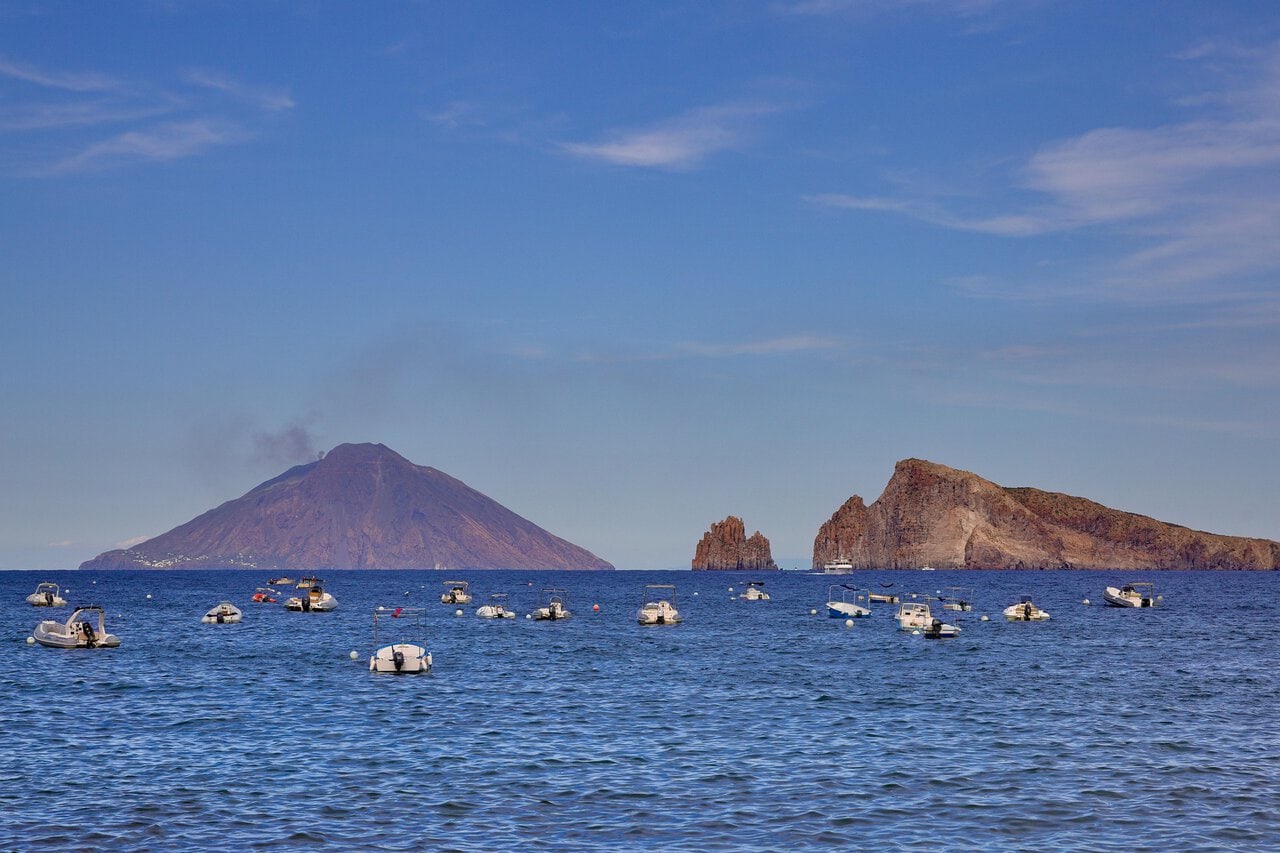
Stromboli is the most iconic island in the entire archipelago thanks to its permanently active volcano. Seeing explosions from the crater after dark is one of the greatest natural spectacles in Europe. Boat excursions circle the island at sunset, allowing visitors to watch glowing eruptions from the sea while lava fragments burst into the sky.
The atmosphere on Stromboli feels more adventurous than elsewhere in the islands. Roads are small, villages are compact, and the volcano dominates everything visually and psychologically. Travellers should understand that volcanic access rules can change rapidly depending on activity levels. Guided hikes may be restricted during periods of heightened volcanic activity.
Despite its fame, Stromboli is less practical as a long-term base because ferry connections are more limited and journeys take longer. Many travellers include it as part of a wider Aeolian Islands island hopping route rather than staying exclusively there.
Salina is often considered the greenest and most elegant island in the chain. Unlike the harsher volcanic landscapes elsewhere, Salina has lush vegetation, vineyards and mountain scenery. It is particularly popular with couples and travellers looking for a slower, more refined atmosphere.
The island became internationally famous after appearing in the film Il Postino, and many visitors still come because of the island’s cinematic scenery. Salina is also one of the best islands for food, with excellent seafood restaurants, capers and local wines forming a major part of the experience.
Accommodation here tends to feel more boutique and upscale than on some other islands. The atmosphere is quieter than Lipari or Panarea, making it ideal for travellers prioritising scenery, relaxation and food rather than nightlife or transport convenience.

Aeolian Islands Ferry Guide
Ferries are the lifeblood of the Aeolian Islands. Unlike many island destinations where ferries are simply a transport method, here they become a major part of the overall travel experience. Watching volcanic islands rise from the sea during a hydrofoil crossing is one of the defining memories of visiting the archipelago.
The main gateway port is Milazzo, located on Sicily’s northern coast. Almost every traveller passes through here at some stage. The port is well organised, with separate terminals for hydrofoils and conventional ferries. During summer the area becomes extremely busy, particularly in the mornings when large numbers of tourists transfer to the islands.
The two main operators are Liberty Lines and Siremar. Liberty Lines mainly operates high-speed hydrofoils which are much faster and preferred by most tourists. Siremar operates larger conventional ferries capable of carrying vehicles. Hydrofoils are usually the best option for passengers travelling without cars because journey times are dramatically shorter.
Typical ferry times from Milazzo are approximately
| Route | Approximate Time |
|---|---|
| Milazzo to Vulcano | 45 minutes |
| Milazzo to Lipari | 1 hour |
| Milazzo to Salina | 1 hour 40 minutes |
| Milazzo to Stromboli | 2 to 3 hours |
| Milazzo to Panarea | 2 hours |
| Milazzo to Alicudi | 3 to 5 hours |
Journey times vary depending on whether the service is direct or stops at multiple islands along the route.
Travellers should always book ferries in advance during July and August, especially for routes involving Stromboli, Panarea or weekend departures from Sicily. Summer demand can become intense, and last-minute tickets may disappear entirely on busy sailings.
Weather also plays a major role in ferry reliability. Hydrofoils are faster but more sensitive to rough seas. Strong winds occasionally cause cancellations, particularly during spring and autumn. Travellers connecting directly to flights should leave generous time buffers rather than relying on the final departure of the day.
One of the smartest strategies for any Aeolian Islands itinerary is to avoid changing islands every single night. Constant ferry transfers consume time and create stress when weather conditions change. Staying at least two or three nights on each island creates a far more relaxed and enjoyable experience.
Many visitors also underestimate luggage practicality. Ports often involve ramps, uneven surfaces and uphill walks into villages. Travelling with extremely large suitcases quickly becomes frustrating. Smaller luggage or backpacks work much better for island hopping around the archipelago.
Ferry tickets can usually be purchased online, through port ticket offices or via local travel agencies in Sicily. During summer, online booking is highly recommended because queues at Milazzo can become very long, especially before morning departures.

Check Ferry Sailings for Aeolian Islands with Direct Ferries
If your plans include travelling by ferry to or from Aeolian Islands, Direct Ferries provides a convenient way to search sailings and compare ticket options.
You can review different operators together instead of checking individual ferry company websites one by one.
Want to compare ferry prices? You can also check Ferryhopper and FerryScanner before booking.
Island Hopping in the Aeolian Islands
One of the biggest attractions of the Aeolian Islands is the ability to move between completely different landscapes and atmospheres within a relatively small area. A proper Aeolian Islands island hopping trip can include luxury beach clubs, active volcanoes, fishing villages and remote mountain scenery all within the same holiday.
The biggest mistake travellers make is trying to visit all seven islands too quickly. Ferry schedules, weather conditions and transfer times mean the islands work best at a slower pace. Most visitors find that focusing on two to four islands creates a much more enjoyable experience than constantly rushing between ports every morning.
For first-time visitors, a very balanced route is Lipari, Vulcano and Stromboli. This combination delivers the best mix of convenience, volcanic scenery and dramatic landscapes. Lipari works brilliantly as a transport hub and gives access to day trips across the archipelago. Vulcano adds crater hikes and black sand beaches, while Stromboli provides the unforgettable active volcano experience.
Travellers wanting a quieter and more scenic experience often prefer Salina alongside one of the busier islands. Salina offers vineyards, mountain villages and slower-paced luxury. It works particularly well for couples and travellers interested in food, wine and hiking rather than nightlife.
The most remote islands, Filicudi and Alicudi, are best suited to travellers specifically seeking isolation. These islands are far less developed for tourism and have fewer transport connections, restaurants and accommodation options. In return, they offer some of the most authentic and peaceful scenery in the entire archipelago.
Island hopping timings matter enormously. Ferry schedules can consume large chunks of the day, particularly when indirect routes are involved. A journey that looks short on maps may still require multiple stops across the islands. This is why experienced travellers often stay at least two or three nights per island, avoiding the stress of daily packing and transfers.
Luggage is another practical consideration many visitors underestimate. The ports are not designed around huge wheeled suitcases, and accommodation may involve steep uphill walks, stone staircases or narrow village streets. Smaller luggage or backpacks make moving between islands dramatically easier.
Public Transport in the Aeolian Islands
Public transport in the Aeolian Islands is surprisingly useful considering how remote and volcanic the islands are. Most visitors do not need a car, and in many cases travelling without one actually makes the experience easier. Ferries, local buses, taxis, scooters and walking routes combine to create a fairly practical transport network across the archipelago.
The most important form of transport is the ferry system itself. Ferries and hydrofoils effectively act as the islands’ equivalent of intercity trains, connecting places such as Lipari, Vulcano, Salina and Stromboli several times per day. Most island travel revolves around ferry schedules, and many villages are naturally built around their ports.
On the islands themselves, Lipari has the strongest local bus network. Small public buses connect Lipari Town with beaches, villages and coastal viewpoints across the island. Services are generally timed around ferry arrivals during busier months, making it relatively easy for visitors to move around without hiring a vehicle.
The buses on Lipari are operated by local Sicilian transport companies and usually depart from the main port area near Marina Lunga. Tickets are inexpensive and can normally be purchased directly from small kiosks, cafés or onboard depending on the route. During peak summer, buses can become crowded, especially on routes towards popular beaches.
Salina also has local bus services linking the island’s main villages including Santa Marina Salina, Malfa and Rinella. However, services are less frequent than on Lipari, particularly outside summer season. Travellers staying on Salina often rely on a combination of buses, walking and taxis.
On smaller islands like Stromboli and Panarea, public transport becomes much more limited because the settlements themselves are compact. Walking is usually the main way to move around. On Stromboli, many streets are too narrow for large vehicles anyway, which helps preserve the island’s quieter atmosphere.
Taxis exist across most of the islands, although they often operate more informally than in large cities. Small electric vehicles, golf cart-style taxis and tuk tuk-style transfers are common on islands with narrow roads. Prices can be relatively high for short journeys due to the islands’ geography and seasonal tourism demand.
Scooter rental is extremely popular throughout the archipelago and often acts as the middle ground between public transport and private cars. On larger islands such as Lipari and Salina, scooters provide enough flexibility to explore beaches, villages and viewpoints without worrying about parking restrictions or large vehicles on narrow roads.
Walking remains one of the best ways to experience the islands properly. Historic villages, harbour areas and coastal viewpoints are often best explored slowly on foot rather than rushing between attractions. Many travellers discover that the slower pace becomes one of the most enjoyable aspects of visiting the Aeolian Islands.
Compare hostels and lower-cost accommodation for your trip.
Search hostelsGet fast compensation payouts, eligible lounge benefits and expert help when flights go wrong.
See AirHelp+ benefitsLeave your luggage somewhere convenient and explore hands-free.
View storageUNESCO Status & Geological Importance
The Aeolian Islands are officially recognised as a UNESCO World Heritage Site, giving the archipelago international protection and recognition as one of the world’s most important volcanic landscapes. The islands were added to the UNESCO list in 2000 because of their extraordinary geological value and their importance for the scientific understanding of volcanic activity.
Unlike many UNESCO destinations that are recognised for architecture or ancient monuments, the Aeolian Islands UNESCO designation is focused primarily on geology and volcanology. The islands are considered one of the best natural laboratories anywhere on Earth for studying volcanic processes, eruptions and island formation.
The UNESCO designation covers all seven main islands including Lipari, Vulcano, Stromboli, Salina, Panarea, Filicudi and Alicudi. Together, they showcase a remarkable range of volcanic features including active craters, lava flows, fumaroles, obsidian deposits and dramatic coastal formations shaped by thousands of years of eruptions.
Among the most scientifically important islands is Stromboli, whose eruption patterns became so internationally significant that the term “Strombolian eruption” is now used globally within volcanology. The island’s near-continuous volcanic activity has made it one of the most studied volcanoes in the world and one of the most visually spectacular natural attractions in Europe.
Vulcano also played an important role in scientific understanding of volcanic systems. In fact, the modern word “volcano” itself is believed to derive from the island’s name. The island’s smoking crater, sulphur vents and geothermal landscapes continue to attract scientists alongside tourists.
The UNESCO recognition also protects the islands from excessive overdevelopment. Strict planning rules and environmental protections help preserve the dramatic volcanic scenery that makes the archipelago so distinctive. While tourism remains extremely important to the local economy, large-scale resort expansion has remained relatively limited compared with many other Mediterranean islands.
For travellers, the UNESCO designation means visiting a destination that combines spectacular scenery with genuine global scientific importance. Few places in Europe allow visitors to stand beside active volcanic systems while simultaneously exploring protected landscapes, ancient island communities and centuries of Mediterranean maritime history.
The UNESCO status also strengthens the islands’ appeal for travellers interested in geology, natural history, dark tourism, volcanic landscapes and unusual destinations beyond the standard Mediterranean beach holiday experience.
Learn More from UNESCO
This destination is connected to a UNESCO World Heritage Site, recognised for its outstanding cultural, historical, or natural importance. You can explore official listings, background information, and protected heritage sites through UNESCO’s global database.
Volcanoes & Natural Wonders
The volcanic landscapes are what truly separate the Aeolian Islands from almost every other island destination in Europe. These islands were created through volcanic activity, and the raw geological power remains visible everywhere from smoking crater rims to black lava beaches and steaming cliffs.
The most famous volcano is undoubtedly Stromboli, which has been erupting almost continuously for thousands of years. The volcano’s regular explosions are so consistent that sailors historically used it as a natural lighthouse while navigating the Mediterranean Sea. Today, visitors travel from across the world to witness eruptions lighting up the night sky.
Boat tours around Stromboli are one of the highlights of any Aeolian Islands holiday. Most excursions depart in the late afternoon, circle the island at sunset and pause offshore near the volcanic side of the island after dark. Seeing glowing lava bursts erupt against the black volcanic slopes is genuinely unforgettable.
Volcanic hiking on Stromboli is heavily regulated and depends entirely on current activity levels. Access rules change regularly based on monitoring by Italian authorities. During periods of heightened volcanic activity, summit access may be prohibited completely. Travellers should always check official local guidance rather than relying on outdated information online.
Vulcano offers a very different volcanic experience. Instead of explosive eruptions, the island is known for steaming fumaroles, sulphur vents and crater hikes. The smell of sulphur is often noticeable immediately upon arriving at the port, giving the island an almost otherworldly atmosphere. Hiking to the crater rim is one of the most popular activities in the archipelago and rewards visitors with extraordinary views across the surrounding islands.
The coastline across the islands also showcases dramatic volcanic geology. Black sand beaches, lava rock formations, sea caves and towering cliffs dominate much of the scenery. In places, the islands feel more like another planet than a traditional Mediterranean beach destination.
Some of the most spectacular natural experiences happen offshore. Boat tours regularly visit hidden coves, volcanic rock arches and isolated swimming spots only accessible from the sea. Sunset cruises around Panarea and Stromboli are especially popular because they combine volcanic scenery with some of the best coastal views in the entire Tyrrhenian Sea.
Historical Sites & Ancient History of the Aeolian Islands
Although most travellers associate the Aeolian Islands with volcanoes, boat trips and dramatic coastal scenery, the islands also contain thousands of years of Mediterranean history. Long before tourism arrived, these islands were important centres of trade, maritime navigation and volcanic resource extraction.
The most important historical attraction in the archipelago is the Lipari Archaeological Museum, located inside the historic fortified citadel above Lipari Town. This museum is considered one of the finest archaeological collections in southern Italy and helps explain how strategically important the islands once were within the ancient Mediterranean world.
The museum contains artefacts from the Bronze Age, Greek, Roman and later historical periods, including ceramics, burial objects, maritime artefacts and ancient amphorae recovered from shipwrecks around the islands. For travellers interested in ancient history, it adds an entirely different dimension to a typical Aeolian Islands itinerary.
One of the most fascinating historical stories connected to the islands is the ancient obsidian trade. Obsidian is a naturally occurring volcanic glass formed during eruptions, and in prehistoric times it was highly valuable for creating tools, blades and weapons. The volcanic origins of the Aeolian Islands made them one of the Mediterranean’s most important obsidian sources thousands of years ago.
Archaeological evidence shows that obsidian from islands such as Lipari travelled across huge parts of prehistoric Europe and the Mediterranean basin. Long before modern ferries connected the islands to Sicily, ancient maritime traders were already transporting volcanic materials across international sea routes.
The fortified citadel area above Lipari Harbour also reflects the islands’ long defensive history. Due to their strategic position between mainland Italy, Sicily and wider Mediterranean trade routes, the islands were repeatedly exposed to pirate raids, invasions and naval conflicts over the centuries. Defensive walls, elevated lookout positions and fortified religious buildings helped protect local populations from attacks arriving by sea.
Traditional island villages across Salina, Lipari and other islands also preserve elements of historic Aeolian architecture. Whitewashed houses, narrow lanes, fishing harbours and terraced agricultural slopes still reflect centuries of adaptation to volcanic landscapes and maritime life.
Religious traditions remain deeply important throughout the archipelago as well. Historic churches dedicated to patron saints connected with sailors, fishermen and volcanic protection appear across many island settlements. Seasonal festivals continue to preserve customs and traditions that have shaped island identity for generations.
For travellers interested in combining UNESCO landscapes, Mediterranean history and volcanic geology, the Aeolian Islands offer far more depth than many visitors initially expect. Beneath the beaches and ferry routes lies one of the Mediterranean’s oldest continuously inhabited island cultures.
Top Things to Do in the Aeolian Islands
The best experiences in the Aeolian Islands combine volcanic landscapes, boat travel, historic villages and some of the most dramatic scenery anywhere in the Mediterranean. While many visitors initially arrive for beaches or island hopping, the range of activities across the archipelago is far broader than most travellers expect.
One of the absolute highlights is taking a sunset boat tour around Stromboli. These excursions usually leave in the late afternoon and circle the island as darkness falls. Boats pause offshore near the volcanic side of the island, allowing passengers to watch glowing lava bursts erupt into the night sky. Few experiences in Europe feel as raw or unforgettable as seeing an active volcano from the sea after sunset.
Another essential activity is hiking the crater trails on Vulcano. The island’s smoking fumaroles, sulphur vents and volcanic landscapes create an almost lunar atmosphere. The hike to the crater rim rewards visitors with sweeping views across the surrounding islands and the deep blue waters of the Tyrrhenian Sea. Conditions can become extremely hot during summer, so early morning hikes are usually the most comfortable option.
Exploring Lipari Town is another major highlight, especially for travellers interested in local culture and history. The historic citadel area above the harbour contains narrow streets, churches, defensive walls and the excellent Lipari Archaeological Museum. Wandering through the old town in the evening after the ferries quiet down is one of the best ways to experience the atmosphere of the islands properly.
Boat trips between hidden coves and coastal caves are also hugely popular throughout the archipelago. Many of the islands’ best swimming locations are inaccessible by road and can only be reached from the sea. These tours often include stops for swimming in crystal-clear volcanic waters surrounded by lava cliffs and rock arches.
Food and wine experiences are another underrated part of visiting the islands. On Salina, visitors can sample local Malvasia wine, fresh seafood and the island’s famous capers while overlooking vineyards and coastal scenery. Long seafood lunches beside small harbours are part of the rhythm of island life here.
Travellers wanting a slower experience often spend entire days simply moving between beaches, cafés and ferry ports. Watching hydrofoils arrive beneath volcanic cliffs while eating granita or seafood pasta becomes part of the attraction itself. Unlike destinations built around fast-paced sightseeing, the Aeolian Islands itinerary experience works best when travellers embrace the slower island atmosphere.
Photography is another major draw. The combination of black sand beaches, whitewashed villages, volcanic craters, fishing boats and dramatic Mediterranean sunsets creates extraordinary opportunities throughout the islands. Sunrise and sunset are particularly spectacular around Stromboli, Panarea and Salina.
For more adventurous visitors, kayaking, diving and snorkelling are increasingly popular across the archipelago. Volcanic underwater landscapes, sea caves and exceptionally clear water make the islands one of the most interesting marine environments in southern Italy.
Best Beaches in the Aeolian Islands
Travellers expecting endless stretches of soft golden Mediterranean sand may be surprised by the beaches in the Aeolian Islands. These are volcanic islands, and the beaches reflect that identity. Instead of huge resort coastlines, visitors find black sand beaches, lava coves, rocky swimming platforms and incredibly clear water framed by dramatic volcanic scenery.
One of the most famous beaches is Spiaggia Sabbie Nere on Vulcano. This striking black sand beach sits close to the main port and is backed by volcanic hills and steaming fumaroles. The contrast between the dark volcanic sand and the bright blue sea creates one of the most visually distinctive beach settings in all of Italy. Water shoes are often useful here because the dark sand can become extremely hot during summer afternoons.
Canneto Beach on Lipari is one of the most practical and accessible beaches in the archipelago. Located a short distance from Lipari Town, it offers calm water, beach clubs, restaurants and easier facilities for families. The beach itself is made up mainly of pebbles rather than sand, which is common across the islands, but the water quality is excellent.
For travellers seeking more dramatic scenery, Stromboli offers beaches unlike almost anywhere else in Europe. Swimming beneath an active volcano creates an atmosphere that feels both surreal and unforgettable. The beaches here are darker, wilder and more rugged than elsewhere in the Mediterranean, with black volcanic sand and dramatic coastal backdrops dominating the experience.
Salina is often considered one of the best islands for scenic swimming spots. The coastline combines rocky coves with deep clear water and greener surroundings than the harsher volcanic landscapes found elsewhere. The island’s quieter atmosphere also means beaches rarely feel as crowded as those on more famous Mediterranean destinations.
Many of the best swimming locations in the Aeolian Islands are only accessible by boat. Small boat tours regularly visit hidden coves, sea caves and isolated bays where visitors can swim directly from the boat into crystal-clear volcanic waters. For many travellers, these boat-access swimming experiences become some of the strongest memories of the entire trip.
Food & Drink in the Aeolian Islands
Food is a major part of the Aeolian Islands experience, blending classic Sicilian cuisine with strong local island traditions. Seafood dominates many menus, but the volcanic soil also produces exceptional local ingredients including capers, wine, olive oil and fresh vegetables.
One of the most famous products from the islands is the caper, particularly those grown on Salina. Aeolian capers are regarded among the best in Italy and appear in everything from pasta dishes to salads and seafood recipes. Travellers will quickly notice that local restaurants take pride in using regional ingredients rather than relying purely on generic tourist menus.
Fresh seafood is everywhere across the archipelago. Swordfish, tuna, octopus, anchovies and shellfish regularly appear on menus, often served extremely simply to let the ingredients speak for themselves. Many waterfront restaurants display the daily catch directly outside the restaurant, reinforcing how closely tied island life remains to the sea.
The islands are also known for Malvasia wine, a sweet dessert wine traditionally produced on Salina. Vineyards covering volcanic hillsides create some of the most beautiful scenery in the archipelago. Wine tasting experiences are increasingly popular, especially among visitors wanting a slower and more food-focused itinerary.
One of the best things about dining in the Aeolian Islands is the setting itself. Restaurants are often positioned beside small fishing harbours, overlooking ferry ports or perched on terraces above the sea. Even relatively simple meals can feel memorable because of the dramatic volcanic scenery surrounding them.
Prices vary considerably between islands. Panarea and some parts of Salina can feel relatively upscale and expensive during peak summer, while smaller local restaurants on Lipari or Vulcano often offer much better value. Travellers visiting during July and August should expect restaurant reservations to become important, especially in more fashionable areas.
Where to Stay in the Aeolian Islands
Choosing where to stay is one of the most important decisions in any Aeolian Islands itinerary because the islands differ so dramatically in atmosphere, transport links and accommodation style. The right base depends entirely on whether travellers prioritise convenience, volcanoes, beaches, nightlife or complete relaxation.
For most first-time visitors, Lipari is the strongest overall choice. It has the widest selection of hotels, apartments and guesthouses alongside the best ferry connections in the archipelago. Staying on Lipari makes it easier to organise day trips, adapt to weather disruptions and access supermarkets, pharmacies and restaurants. The island feels lively without becoming overwhelmingly touristy.
Travellers specifically interested in volcanic landscapes often choose Stromboli or Vulcano. Staying overnight on Stromboli creates a completely different experience from visiting on a day trip because the island becomes quieter and more atmospheric after evening excursion boats depart. Watching volcanic activity after dark while staying directly beneath the volcano is one of the most unique accommodation experiences in Europe.
Salina appeals strongly to couples and travellers seeking a quieter, more upscale atmosphere. Boutique hotels, vineyard stays and scenic guesthouses dominate much of the accommodation market here. The island’s greener landscapes and slower pace make it ideal for travellers wanting relaxation rather than busy sightseeing schedules.
For luxury travellers, Panarea is the glamorous centre of the archipelago. Stylish boutique hotels, designer beach clubs and celebrity visitors have helped create the island’s exclusive reputation. Accommodation prices here can become extremely expensive during peak summer season, particularly in July and August.
Travellers on tighter budgets usually find the best value on Lipari or Vulcano, especially outside the busiest summer weeks. Booking early matters enormously because accommodation capacity across the islands is relatively limited. Last-minute availability during summer can become both scarce and extremely expensive.
Location within each island also matters more than many travellers expect. Staying close to the ferry port reduces luggage stress and makes island hopping easier, while more remote accommodation often provides far better views and quieter surroundings. Visitors should carefully balance convenience against atmosphere when selecting accommodation.
Best Time to Visit the Aeolian Islands
The best time to visit the Aeolian Islands depends heavily on what kind of trip travellers want. Weather, ferry schedules, prices and crowd levels change dramatically throughout the year, and the islands feel very different between quiet spring months and the intense peak summer season.
For most travellers, the ideal period is between May and June or September and early October. During these months, temperatures are warm, ferry schedules operate frequently and the islands feel lively without becoming overwhelmingly crowded. The sea is also pleasant for swimming, especially later in the season after the water has warmed throughout summer.
July and August bring the hottest weather and the busiest crowds. This is peak Italian holiday season, and islands like Panarea, Lipari and Stromboli become extremely busy. Ferry tickets, hotels and restaurants should all be booked well in advance during this period. Prices rise sharply, and the atmosphere becomes much more energetic and nightlife-focused.
Despite the crowds, summer has advantages. Ferry schedules are at their most extensive, boat tours operate frequently and nearly all restaurants, hotels and excursion companies remain fully open. Travellers wanting the classic lively Mediterranean island atmosphere may actually prefer this period despite the higher costs.
Spring is one of the most underrated times for a visit. Landscapes appear greener, temperatures are comfortable for hiking and volcanic exploration, and accommodation prices remain much lower than summer peaks. This is especially appealing for travellers planning volcano hikes on Vulcano or longer walking routes across Salina.
Winter is a very different experience altogether. Ferry schedules reduce significantly, many hotels and restaurants close and weather disruptions become more common. However, travellers looking for authentic island life without tourism may still find winter fascinating, particularly on islands like Lipari where local communities remain active year-round.
Weather conditions should always be monitored carefully regardless of season. Strong winds and rough seas occasionally disrupt hydrofoil services even during warmer months. Flexible itineraries are strongly recommended because the islands still operate according to the realities of the sea and volcanic geography rather than rigid tourist schedules.
Costs & Budget Tips
The Aeolian Islands are not the cheapest destination in Italy, but costs vary enormously depending on the island, travel season and style of trip. Travellers expecting ultra-budget backpacking prices may be surprised, especially during peak summer, yet the islands can still be explored without spending luxury-level money if trips are planned carefully.
Accommodation is usually the largest expense. During July and August, hotel prices rise sharply across the archipelago, particularly on Panarea, Salina and Stromboli. Even fairly simple guesthouses can become expensive when demand peaks. Travelling during May, June or September often cuts accommodation costs dramatically while still providing excellent weather.
Lipari generally offers the best balance between price, facilities and transport convenience. Because it has the largest range of accommodation, travellers are more likely to find affordable apartments, guesthouses and smaller family-run hotels there compared with some of the smaller islands.
Ferry costs can also add up quickly during an Aeolian Islands island hopping trip. High-speed hydrofoils are convenient but relatively expensive when used repeatedly over multiple days. Travellers trying to visit every island often spend far more on transport than expected. Staying longer on fewer islands usually creates both a better experience and a lower overall budget.
Food prices vary heavily depending on location and season. Waterfront restaurants in fashionable areas of Panarea or tourist-heavy sections of Stromboli can be expensive, particularly for seafood dinners at sunset. However, smaller local restaurants away from the busiest port areas often provide much better value and more authentic food.
Supermarkets and bakeries are important for budget-conscious travellers. Buying breakfast supplies, picnic food or snacks before boat trips can significantly reduce daily spending. This becomes particularly useful during island hopping days when restaurant choices near ferry terminals may be limited or overpriced.
Boat tours and volcano excursions are among the most memorable activities in the islands, but costs should be factored into budgets early. Sunset cruises around Stromboli, guided volcano hikes and private boat charters are rarely cheap, especially during high season. Travellers planning multiple excursions should budget accordingly rather than treating them as small add-ons.
Aeolian Islands Without a Car
One of the best things about the Aeolian Islands is that most visitors do not need a car at all. In fact, bringing a vehicle can sometimes make the experience more stressful rather than easier, especially during busy summer months when parking becomes difficult and roads feel extremely congested.
Many of the islands are naturally suited to slow-paced exploration. Villages are compact, ferry ports are centrally located and distances are often much shorter than they initially appear. On islands like Stromboli and Panarea, the atmosphere actively encourages walking rather than driving.
Several islands also restrict vehicle access during peak periods. Non-residents may face seasonal rules limiting car transport onto certain islands, particularly during busy summer weeks. This is another reason why most travellers simply rely on ferries, local buses, taxis and scooters instead.
Lipari has the strongest public transport network in the archipelago. Local buses connect the main town with beaches, villages and viewpoints across the island. The services are relatively straightforward to use and remove much of the need for private transport.
Scooter rental is extremely popular throughout the islands, particularly on Lipari, Salina and Vulcano. Scooters provide flexibility while remaining practical for narrow roads and limited parking areas. However, travellers should still feel confident riding on steep roads and uneven surfaces before renting one.
Boat tours also act as a major transport experience rather than simply an excursion. Many beaches, swimming spots and coastal landscapes are easier to access from the sea than by road. Visitors often discover that organised boat trips replace the need for independent driving entirely.
Walking remains one of the best ways to experience the islands properly. Exploring Lipari Town, wandering the narrow streets of Stromboli, or hiking volcanic trails on Vulcano allows travellers to absorb the atmosphere much more naturally than rushing around by car.
Travellers arriving from mainland Europe are sometimes tempted to bring vehicles across from Sicily, particularly during longer road trips. In most cases this only becomes worthwhile for visitors staying extensively on larger islands or travelling outside the main tourist season. For standard island hopping itineraries, travelling without a car is usually the smarter choice.
Suggested Aeolian Islands Itineraries
A successful Aeolian Islands itinerary depends on balancing ferry logistics with enough time to actually enjoy each island. Trying to rush through the archipelago too quickly usually leads to stress, missed experiences and excessive time spent waiting in ports.
For a shorter trip of around 3 to 4 days, most travellers should focus on Lipari and either Vulcano or Stromboli. Staying mainly on Lipari works particularly well because the island acts as the transport centre of the archipelago. Day trips to nearby islands then become relatively easy without constantly changing accommodation.
A classic 5 to 7 day itinerary often includes Lipari, Salina and Stromboli. This combination gives travellers a balanced experience of island life, volcanic landscapes and slower scenic relaxation. Lipari provides convenience and transport flexibility, Salina offers greener scenery and food experiences, while Stromboli delivers the unforgettable volcano atmosphere.
Travellers wanting a more luxurious and relaxed trip frequently combine Salina and Panarea. These islands focus more heavily on boutique hotels, elegant restaurants and scenic coastal experiences rather than fast-paced sightseeing. This style of itinerary works particularly well for couples and honeymoon trips.
Adventure-focused travellers often build itineraries around volcanic experiences and hiking opportunities. Combining Vulcano, Stromboli and parts of Salina creates one of the most dramatic volcanic island experiences anywhere in Europe.
Longer stays of 10 days or more finally allow visitors to include the remote western islands of Filicudi and Alicudi. These islands require more transport time but reward travellers with extraordinary peace, isolation and scenery far removed from mainstream Mediterranean tourism.
One of the smartest planning strategies is leaving some flexibility within the itinerary itself. Weather disruptions occasionally affect ferry schedules, especially outside high summer. Travellers who avoid tightly packed connections usually enjoy the islands much more because they can adapt naturally to changing sea conditions and slower island rhythms.

Rupert’s Handy Travel Tips
Rupert recommends treating the Aeolian Islands as a slow travel destination rather than trying to race through every island in a few days. Ferry delays, volcanic weather conditions and long lunches beside the harbour are all part of the experience here, and travellers who slow down usually enjoy the islands far more.
- Book your main Milazzo to Lipari ferry tickets early during July and August, especially for morning hydrofoils.
- Pack lighter than you normally would. Many island streets involve steep hills, stone staircases and uneven surfaces near ferry ports.
- Try to spend at least one evening on Stromboli. Watching volcanic activity after dark is completely different from a rushed daytime visit.
- Carry some cash for smaller cafés, beach bars and local boat operators, particularly on quieter islands like Filicudi and Alicudi.
- Travelling in May, June or September usually gives the best balance between weather, ferry frequency and lower accommodation prices.
Want to meet the reindeer behind our travel tips? Find out more in our page Who is Rupert?.


Frequently Asked Questions About the Aeolian Islands
How do you get to the Aeolian Islands from Sicily?
Most travellers reach the Aeolian Islands by ferry or hydrofoil from Milazzo on the northern coast of Sicily. Milazzo is accessible from both Catania Airport and Palermo Airport using trains, buses or private transfers. Hydrofoils operated by companies such as Liberty Lines are usually the fastest option.
Which is the best island to stay on in the Aeolian Islands?
For first-time visitors, Lipari is usually the best overall base because it has the strongest ferry connections, the largest range of accommodation and the widest choice of restaurants and services. Travellers wanting luxury often prefer Panarea or Salina, while visitors focused on volcanoes may prefer Stromboli or Vulcano.
How many days do you need in the Aeolian Islands?
Most travellers need at least 4 to 7 days to properly experience the islands without rushing. Shorter trips usually focus on Lipari and one nearby island, while longer itineraries allow time for volcanic hikes, boat trips and slower-paced island hopping.
Can you visit Stromboli safely?
Yes, Stromboli is generally safe for tourism, but volcanic activity is monitored closely by Italian authorities. Hiking access rules can change depending on activity levels, and summit access is sometimes restricted. Boat tours around the volcano remain one of the most popular and safest ways to experience eruptions.
Do you need a car in the Aeolian Islands?
Most visitors do not need a car. Ferries, local buses, walking routes and scooters are usually enough for getting around. Some islands actively discourage vehicle use during summer, and narrow roads can make driving stressful during busy periods.
What is the best time to visit the Aeolian Islands?
The best period is usually May to June or September to early October when the weather remains warm but the islands are less crowded than peak summer. July and August offer the liveliest atmosphere but also bring higher prices and much larger crowds.
Are the Aeolian Islands expensive?
The islands can become expensive during peak summer season, especially on Panarea and parts of Salina, but costs vary significantly depending on accommodation choices and ferry usage. Travelling during shoulder season often provides much better value.
Which island has the best beaches?
This depends on personal preference. Vulcano is famous for its dramatic black sand beaches, Salina offers scenic swimming spots and quieter coves, while Lipari provides the most accessible beaches and facilities for families.
Further Reading & Related Guides
Travellers planning a trip around the Aeolian Islands often combine the archipelago with a much wider Sicily adventure. If you are flying into the region, our guides to Catania Airport Transfers, Palermo Airport Transfers, Trapani Airport Transfers and Comiso Airport Transfers explain the best ways to reach Sicily’s major cities, ferry ports and coastal destinations.
For visitors continuing around the island itself, our detailed Sicily Ferry Guide covers ferry routes between Sicily, mainland Italy, Malta and surrounding islands, while the Sicily Train Guide explains how to travel between places like Palermo, Catania, Messina and Ragusa using regional rail services. Travellers arriving from mainland Italy should also read our Rome to Sicily Sleeper Train Guide, which covers one of Europe’s most unusual overnight train journeys, including the famous train ferry crossing across the Strait of Messina.
If your trip includes wider rail travel across Italy, our Interrail Italy Guide explains pass validity, reservation rules and scenic train routes throughout the country. Travellers wanting reliable mobile data while island hopping between ferries, ports and volcanic viewpoints should also read our eSIM Apps Guide, which compares the best travel eSIM options for Italy and wider European travel.
Travellers arriving from mainland Italy by sea may also find our Naples to Sicily Ferry guide useful, especially for overnight crossings and cabin advice, while the Villa San Giovanni to Messina Ferry page explains the main ferry crossing between mainland Italy and Sicily itself.
If your itinerary continues into southern Italy beyond Sicily, our Bari Airport to City Centre guide and wider Ferry Routes from Bari page cover ferry links towards Greece, Albania and the wider Adriatic region, making them particularly useful for longer Mediterranean travel itineraries.