Reviewed by our editorial team Updated
Why Vienna Is One of Europe’s Best Christmas Market Cities
Few cities in Europe feel as naturally suited to the festive season as Vienna. The Austrian capital already possesses many of the ingredients travellers associate with classic Christmas imagery including grand imperial architecture, illuminated boulevards, historic cafés, horse drawn carriages, classical music, gothic churches, and elegant public squares. Once the festive markets arrive, the city transforms into one of the most atmospheric winter destinations anywhere in Europe.
One of the biggest reasons the Vienna Christmas markets stand out is the sheer scale and variety available across the city. Rather than relying on one single market, Vienna hosts numerous festive villages spread throughout the capital, each with its own atmosphere, food stalls, decorations, and setting. Some markets focus heavily on traditional crafts and gifts, while others feel more modern, artistic, or food focused.
The settings themselves are extraordinary. Markets appear in front of huge landmarks such as Vienna City Hall, Schönbrunn Palace, Belvedere Palace, and St Stephen’s Cathedral, creating spectacular festive backdrops that few cities can rival. The combination of illuminated baroque architecture, decorated trees, mulled wine stalls, and winter lighting gives Vienna a particularly cinematic atmosphere after dark.
Another major advantage is walkability. Many of the best Christmas markets in Vienna sit relatively close together or are easily connected using the city’s excellent tram and U-Bahn network. This allows visitors to experience multiple markets in a single day without complicated transport planning.
Vienna also balances tourism and authenticity unusually well during the festive season. While the city is undeniably popular with international visitors, many locals continue actively using the markets for socialising, eating, shopping, and seasonal traditions. This helps the markets feel lively and genuine rather than purely commercial tourist attractions.
Food and drink play a huge role in the overall experience as well. Visitors can try traditional Austrian sausages, roasted chestnuts, pastries, gingerbread, cheeses, soups, baked potatoes, and huge varieties of seasonal desserts while warming up with Glühwein, punch, or hot chocolate.
The atmosphere changes dramatically depending on the time of day. Mornings often feel calmer and more relaxed, afternoons become increasingly busy, and evenings transform the city into a glowing landscape of lights, music, market stalls, and illuminated architecture.
Another reason Vienna works so well as a Christmas destination is the wider cultural setting surrounding the markets. Visitors can combine festive shopping with classical concerts, palace visits, museums, coffee houses, river cruises, and elegant evening walks through the historic centre.
For many travellers, visiting the Vienna Christmas markets becomes less about shopping itself and more about experiencing one of Europe’s most beautiful festive city atmospheres.
Quick Guide to Vienna Christmas Markets
| Christmas Market | Location | Nearest Station | Best For | Entry Cost | Famous For | Typical Dates |
|---|---|---|---|---|---|---|
| Rathausplatz Christmas Market | Vienna City Hall | Rathaus | Biggest atmosphere | Free | Giant Christmas tree, ice skating, huge festive village | Mid November to late December |
| Schönbrunn Palace Christmas Market | Schönbrunn Palace | Schönbrunn | Imperial scenery | Free | Palace backdrop, crafts, elegant setting | Mid November to early January |
| Belvedere Palace Christmas Market | Upper Belvedere | Quartier Belvedere | Photography and atmosphere | Free | Palace reflections, romantic setting | Paused for 2026 (construction) |
| St Stephen’s Cathedral Market | Stephansplatz | Stephansplatz | Historic centre location | Free | Gothic cathedral backdrop | Mid November to late December |
| Maria-Theresien-Platz Christmas Village | Between major museums | Volkstheater | Food and central sightseeing | Free | Museum surroundings, large market layout | Mid November to late December |
| Karlsplatz Art Advent Market | Karlsplatz | Karlsplatz | Handmade crafts and artistic gifts | Free | Art focused stalls, local crafts | Mid November to Christmas |
| Spittelberg Christmas Market | Spittelberg Quarter | Volkstheater | Cosy atmosphere | Free | Narrow streets, local feel | Mid November to late December |
| Am Hof Christmas Market | Am Hof Square | Herrengasse | Handicrafts and quieter atmosphere | Free | Quality handicrafts, choral singing | Mid November to late December |
| Freyung Old Vienna Christmas Market | Freyung Square | Schottentor | Traditional atmosphere | Free | Historic character, old style stalls | Mid November to late December |
Best if you want daily housekeeping and a front desk. Filter by area first, then by price.
Check availabilityBest for groups who want one address and separate bedrooms rather than three hotel rooms.
See holiday homesBest for double-checking. Runs the same Vienna search across several booking sites so you are not leaving money behind.
Compare pricesVienna Christmas Market Opening Dates for 2026
Most Vienna Christmas markets usually begin opening in mid November and continue until Christmas Eve or shortly afterwards, although exact dates vary slightly between locations each year. Some larger markets remain open into early January, particularly around major tourist areas such as Schönbrunn Palace.
The earliest markets normally begin operating around the second or third week of November. This period is often one of the best times to visit because the festive atmosphere is already fully established while crowd levels remain slightly more manageable compared with the busiest December weekends.
The huge Rathausplatz Christmas Market, officially known as Vienna Christmas World, is typically one of the longest running and most important markets in the city. The market usually operates from mid November until around 26 December, although some surrounding festive attractions can continue slightly longer.
The elegant Schönbrunn Palace Christmas Market often remains open beyond Christmas itself and may continue into early January with a modified New Year style market atmosphere after the main festive period ends.
Smaller markets such as the artistic Karlsplatz Art Advent Market or the cosy Spittelberg Christmas Market sometimes close slightly earlier depending on the calendar structure of the season.
Travellers should also understand that opening hours vary significantly throughout the week. Most markets become busiest during late afternoons and evenings, especially on Fridays, Saturdays, and Sundays. Visiting earlier in the day often provides a calmer atmosphere and better photography conditions.
Another important factor is weather. Vienna’s markets operate throughout cold winter conditions, and occasional snow can dramatically improve the atmosphere. However, temperatures frequently fall close to freezing during evenings, particularly in December.
The period between late November and mid December is often considered the ideal balance between festive atmosphere and crowd levels. The closer the city gets to Christmas Eve, the busier the markets become, especially around weekends.
Travellers visiting Vienna specifically for the markets should also book accommodation early. Hotels near the Historic Centre, Ringstrasse, and major market locations become extremely busy during peak festive periods.
For the best overall experience, many visitors aim to spend at least three days in Vienna during Christmas market season, allowing enough time to explore multiple festive villages while also enjoying the city’s wider attractions, cafés, museums, and evening atmosphere.
Rathausplatz Christmas Market (Vienna Christmas World)
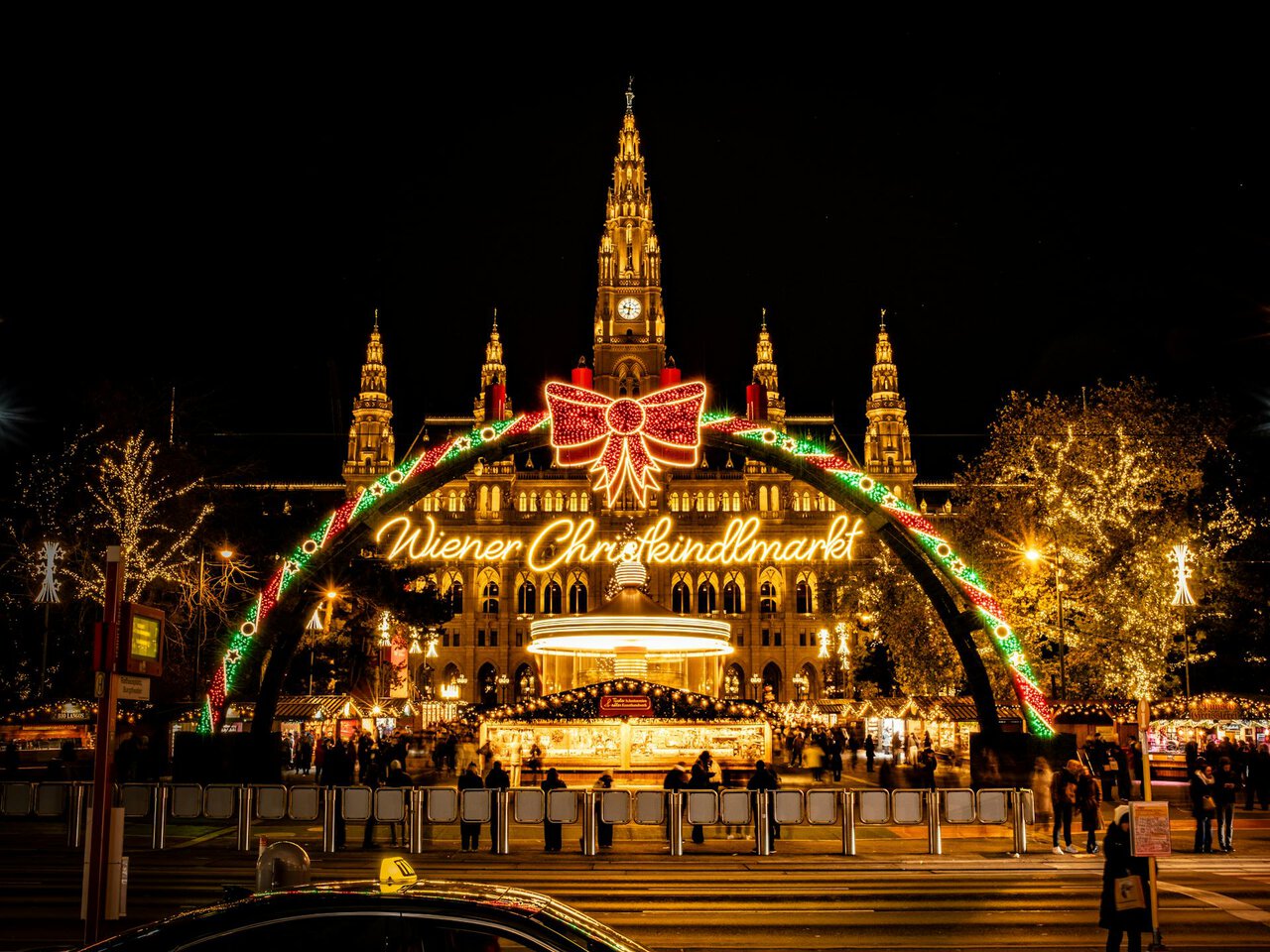
The enormous Rathausplatz Christmas Market is the centrepiece of Vienna’s festive season and one of the most famous Christmas markets in Europe. Officially known as Vienna Christmas World, the market spreads across the huge square in front of the spectacular Vienna City Hall, creating one of the most visually impressive festive settings anywhere on the continent.
The first thing most visitors notice is the scale. Rows of illuminated wooden stalls fill the square beneath the huge neo gothic façade of Rathaus, while giant decorated trees, lighting displays, arches, and festive installations transform the entire area into a vast winter village.
The famous illuminated tree at the centre of the market has become one of Vienna’s most recognisable festive symbols. Surrounding it are dozens of food stalls, craft vendors, drink stands, sweet shops, and seasonal decorations attracting huge crowds throughout the Christmas season.
One reason Rathausplatz feels so impressive is the architecture surrounding it. The enormous City Hall, nearby Parliament Building, Burgtheater, and sections of the Ringstrasse create a dramatic imperial backdrop unlike almost any other Christmas market setting in Europe.
Food is a huge part of the experience. Visitors can try traditional Austrian sausages, baked potatoes, pretzels, pastries, gingerbread, roasted chestnuts, cheeses, and various regional winter specialities while warming up with Glühwein or festive punch.
The market is also extremely family friendly. Seasonal attractions often include illuminated walking trails, festive decorations, children’s activities, and the huge Wiener Eistraum ice rink wrapping around the square, one of Europe’s largest outdoor skating attractions.
Another major advantage is the location. The market sits directly within central Vienna and connects easily with many of the city’s biggest attractions. Visitors can easily combine the market with walks along the Ringstrasse, museum visits, concerts, or evening sightseeing.
The atmosphere changes dramatically after dark. Once the lights fully illuminate the square, Rathausplatz becomes one of the most atmospheric locations anywhere in Vienna. The combination of gothic architecture, festive music, warm food stalls, and winter lighting creates an almost cinematic environment.
Because it is the city’s most famous festive attraction, Vienna Christmas World becomes extremely busy during weekends and evenings in December. Travellers wanting calmer conditions often visit during weekday mornings or earlier afternoons.
For many visitors, the Rathausplatz Christmas Market becomes the emotional centre of the entire Vienna Christmas experience because it combines architecture, food, music, lighting, and festive atmosphere on an enormous scale.
Skate at the Wiener Eistraum
Immediately behind the market stalls on Rathausplatz sits Vienna’s largest winter attraction that is not a Christmas market at all: the Wiener Eistraum (Vienna Ice Dream), a network of ice rinks and skating paths that wraps around the square and the City Hall Park. It runs as its own ticketed attraction each winter, entirely separate from the Christmas market stalls beside it.
The scale is genuinely impressive. The rink covers more than 10,000 square metres across four connected ice surfaces linked by winding skating paths through the park, plus a raised Sky Rink viewing platform, making it one of the largest outdoor ice rinks in Europe.
Admission for the 2026 to 2027 season runs from €9.50 (£8.50 / $10.50) for adults and €6.70 (£6 / $7.50) for children, with around 2,000 pairs of skates available to rent on site in sizes to fit almost any visitor, along with helmets and double blade skates for younger children.
The rink typically opens from mid November to early January, running daily from 10am to 10pm, with shorter hours on Christmas Eve and a full closure on New Year’s Eve, before a second Viennese Ice Dream season picks up from late January into March.
It sits directly on Rathausplatz, so it shares the same Rathaus tram and U-Bahn stop as the Christmas market, and skating after dark, with the illuminated City Hall façade overhead and the market lights glowing nearby, is one of the more memorable things to do in Vienna in winter.
Booking online ahead of a visit is worthwhile during peak periods, since it comes with a discount of around 10% and helps guarantee entry during the busiest weekend afternoons.
Walk the Illuminated Ringstrasse at Christmas
One of the most magical experiences during the festive season in Vienna is simply walking along the illuminated Ringstrasse after dark. While the Christmas markets themselves attract most of the attention, the wider atmosphere across the Austrian capital is equally important, and nowhere captures this better than Vienna’s grand imperial boulevard during December evenings.
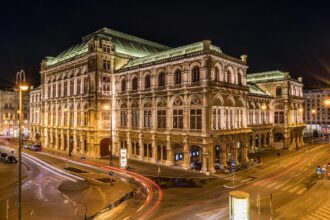
The Ringstrasse circles the historic core of Vienna and passes many of the city’s greatest buildings including the Vienna State Opera, Parliament Building, City Hall, Burgtheater, major museums, and sections of the former imperial palace complex. During Christmas season, many of these monumental structures become beautifully illuminated, creating one of the most elegant festive cityscapes anywhere in Europe.
One of the reasons the atmosphere feels so distinctive is the combination of architecture and lighting. Vienna’s huge nineteenth century buildings were designed to project imperial power and prestige, and during winter evenings the decorative façades, domes, arches, statues, and chandeliers become even more dramatic beneath festive lighting.
The famous trams moving along the boulevard add heavily to the atmosphere as well. Watching illuminated trams pass grand historic buildings while Christmas lights glow above the streets creates a scene that feels uniquely Viennese.
Another major advantage of exploring the Ringstrasse at Christmas is how many experiences overlap naturally. Within a relatively short distance, visitors can move between Christmas markets, coffee houses, museums, concert halls, shopping streets, and palace districts without needing complicated transport arrangements.
The atmosphere changes constantly depending on the section of boulevard. Areas near Rathausplatz feel busy and festive because of the huge Christmas market crowds, while stretches closer to the museums or opera district often feel calmer and more refined.
Photography enthusiasts especially enjoy the Ringstrasse during December because the lighting conditions are exceptional. Illuminated architecture, reflections on wet streets, decorated trees, and moving trams create some of the best winter photography opportunities in the city.
Another reason evening walks work so well in Vienna is the city’s overall cleanliness and organisation. Wide pavements, efficient public transport, and relatively compact central districts make it easy to explore comfortably even during colder weather.
For many visitors, some of the best memories of Vienna at Christmas come not from individual attractions but from simply walking through the illuminated city after dark with music, market lights, and historic architecture surrounding them.
Schönbrunn Palace Christmas Market
The spectacular Schönbrunn Palace Christmas Market is one of the most visually impressive festive markets in Vienna and one of the most beautiful Christmas market settings anywhere in Europe. Located directly in front of the enormous imperial palace, the market combines festive stalls, seasonal food, winter lighting, and baroque architecture within one unforgettable setting.
The first thing most visitors notice is the extraordinary backdrop. The huge yellow façade of Schönbrunn Palace towers above the market, creating a festive scene that feels almost theatrical during the evening when the palace and market lights illuminate the square together.
Compared with the enormous crowds at Rathausplatz, the atmosphere at Schönbrunn often feels slightly more elegant and spacious. The layout is wider, the setting feels more open, and the imperial surroundings give the market a particularly refined atmosphere.
Food and drink remain central to the experience. Visitors can enjoy mulled wine, hot punch, sausages, pastries, roasted chestnuts, sweets, cheeses, and various traditional Austrian winter dishes while standing beneath the illuminated palace.
One of the biggest advantages of visiting this market is the ability to combine multiple attractions in a single area. Travellers can explore Schönbrunn Palace, walk through the palace gardens, visit the famous Vienna Zoo, and experience the Christmas market all within the same broader complex.
The atmosphere becomes especially impressive after sunset when the market lights reflect across the palace forecourt and the illuminated façade dominates the background. During colder evenings or light snowfall, the setting becomes one of the most atmospheric places anywhere in Vienna.
Another major advantage is the transport connection. The market is extremely easy to reach using the Vienna U-Bahn, making it convenient even during busy festive periods when road traffic around the city becomes heavier.
The market also tends to attract a slightly broader mixture of visitors. Families, photographers, couples, tour groups, and local residents all contribute to the lively but relatively relaxed atmosphere.
Because Schönbrunn Palace is already one of Vienna’s biggest tourist attractions, the Christmas market can become extremely busy during weekends and evenings in December. Earlier daytime visits often provide a calmer experience and better opportunities for photography.
For many travellers, the Schönbrunn Palace Christmas Market becomes one of the visual highlights of their entire trip to Vienna because it combines imperial architecture, festive atmosphere, food, lighting, and winter scenery so naturally together.
Warm Up in Vienna’s Historic Coffee Houses
After spending time exploring Vienna’s festive markets in cold winter weather, few experiences feel more satisfying than stepping inside one of the city’s famous historic coffee houses. During Christmas season, Vienna’s cafés become even more atmospheric, offering warm interiors, chandeliers, pastries, coffee, and a slower pace that contrasts perfectly with the busy outdoor markets.
The traditional Viennese coffee house experience is already deeply connected to the city’s identity, but winter enhances the atmosphere significantly. Cold streets, illuminated windows, heavy coats, warm drinks, and elegant interiors combine to create exactly the type of festive Central European environment many travellers imagine before visiting Vienna.
Some of the city’s most famous cafés such as Café Central, Café Sacher, Café Landtmann, and Demel become especially popular during Christmas market season because visitors naturally move between outdoor festive villages and warm indoor café culture throughout the day.
One of the biggest reasons these cafés work so well during winter is the atmosphere itself. Marble tables, velvet seating, chandeliers, historic paintings, newspaper stands, and polished wood interiors create a setting that feels deeply connected to Vienna’s imperial and intellectual history.
Food is obviously a major part of the experience. Winter visitors often spend long periods trying Sachertorte, apple strudel, pastries, cakes, chocolates, and rich desserts alongside traditional Viennese coffee specialities such as the famous Melange.
The cafés also provide a useful opportunity to slow down. Christmas market visits can involve long periods outdoors walking through crowded festive streets, so stopping inside a historic coffee house often becomes an important break rather than simply a meal stop.
Another major advantage is flexibility. Some travellers stop briefly for coffee before continuing sightseeing, while others spend hours relaxing inside cafés watching winter weather and Christmas crowds move through the streets outside.
The atmosphere becomes particularly impressive during evenings when the cafés glow beneath warm lighting while festive decorations and illuminated streets remain visible outside the windows.
For many visitors, Vienna’s coffee houses become just as memorable as the Christmas markets themselves because they capture the city’s slower, more elegant, and more intimate side during the festive season.
Best for finding routes the airlines do not sell as a single ticket. Combines carriers to bring the fare down.
Search flightsBest for short trips. Install the eSIM at home and arrive in Vienna with working data, no shop queue.
Browse eSIMsBest if you would rather not work out the transport on arrival. Book it now and forget it.
View transfersBelvedere Palace Christmas Market
2026 update: the market’s operator has confirmed the Christmas market normally held in front of Belvedere Palace is pausing at its traditional site for the 2026 season because of planned redevelopment work, with a replacement location not yet confirmed at the time of writing. The description below reflects how the market has run in previous years and is worth double-checking against Vienna’s official Christmas market listings before building travel plans specifically around it.
The elegant Belvedere Palace Christmas Market is often considered one of the most romantic festive markets in Vienna. Set directly in front of the magnificent Upper Belvedere Palace, the market combines baroque architecture, seasonal lighting, food stalls, and palace reflections within one of the city’s most photogenic winter settings.
Unlike the enormous scale of Rathausplatz, the atmosphere at the Belvedere Christmas Market feels slightly calmer and more refined. The market itself is relatively compact, but the spectacular palace backdrop gives the entire setting an unusually elegant atmosphere.
The illuminated Upper Belvedere Palace dominates the scene behind the festive stalls, while the reflecting pools and landscaped grounds create some of the best Christmas photography opportunities anywhere in Vienna.
One of the biggest advantages of visiting the market is the ability to combine it with one of Vienna’s most important cultural attractions. The palace itself houses the famous Belvedere Museum, including Gustav Klimt’s The Kiss, one of the most recognisable paintings in Europe.
Many visitors therefore spend part of the day exploring the galleries before returning outside to experience the Christmas market atmosphere during the evening.
The market focuses heavily on traditional seasonal food, festive drinks, handmade crafts, decorations, and smaller gift stalls. The atmosphere often feels slightly quieter and more relaxed than some of the larger central markets.
Another major advantage is the location. The Belvedere Palace area sits relatively close to central Vienna while still feeling slightly removed from the busiest tourist crowds around the historic centre.
The atmosphere becomes especially impressive after dark when the illuminated palace reflects across the water and the market lights create a glowing winter scene beneath the baroque architecture.
Because of the visual setting, the Belvedere Christmas Market is particularly popular with photographers, couples, and travellers looking for a more scenic and romantic festive atmosphere.
For many visitors, the combination of palace architecture, winter lighting, festive stalls, and the nearby art museum makes the Belvedere Palace Christmas Market one of the most memorable Christmas experiences anywhere in Vienna.
Explore Vienna’s Christmas Lights and Decorations
During the festive season, large parts of Vienna become transformed by elaborate Christmas lighting displays, decorated streets, illuminated trees, and festive window decorations. While the markets themselves are the main attraction, the wider city atmosphere often becomes just as memorable, especially after dark when Vienna’s imperial architecture glows beneath winter lighting.
The city’s most prominent tree, in front of the Rathaus, has its own dedicated lighting ceremony each year. In 2025 the Rathausplatz tree, a 28 metre spruce decorated with around 2,000 LED lights, was switched on 15 November in the presence of Vienna’s governor, marking the unofficial start of the city’s Advent season. A confirmed date for the 2026 ceremony had not been published at the time of writing, but it has consistently fallen in the second half of November in recent years, around the time the surrounding Christmas market opens.
One of the best aspects of Vienna at Christmas is how much of the city participates in the festive atmosphere. Decorations are not limited to a single square or market. Entire districts, boulevards, shopping streets, and public spaces become illuminated, creating a citywide festive environment.
The famous shopping streets around Graben, Kohlmarkt, and Kärntner Strasse are particularly impressive. Huge lighting installations stretch above the streets while luxury shop windows, decorated façades, and illuminated cafés create one of the most elegant festive shopping districts in Europe.
The combination of Christmas lighting with Vienna’s imperial architecture is especially powerful. Baroque façades, gothic churches, monumental public buildings, and grand nineteenth century boulevards all respond beautifully to winter illumination.
Another major highlight is the huge number of decorated trees spread across the city. Large Christmas trees appear in front of major landmarks, inside public squares, beside markets, and throughout shopping areas, reinforcing the festive atmosphere almost everywhere visitors go.
One reason the lighting feels so effective in Vienna is the city’s urban layout. Many central streets are relatively wide and visually open, allowing visitors to fully appreciate the illuminated buildings and decorative displays while walking through the historic centre.
The atmosphere becomes particularly magical during evenings with light snowfall or cold winter fog. Reflections from the lighting across wet streets, tram tracks, and palace façades create some of the most atmospheric winter city scenery anywhere in Central Europe.
Another major advantage is how naturally the lighting integrates into the city itself. Vienna’s historic architecture already feels elegant and theatrical, so the festive decorations enhance rather than overwhelm the environment.
Photography enthusiasts especially enjoy Vienna during Christmas season because the city offers endless opportunities for festive night photography including illuminated streets, market stalls, gothic churches, decorated cafés, and glowing palace façades.
For many travellers, simply walking through the illuminated streets of Vienna at Christmas becomes one of the most memorable parts of the entire festive experience.
St Stephen’s Cathedral Christmas Market
The festive market surrounding St Stephen’s Cathedral is one of the most atmospheric and centrally located Christmas markets in Vienna. Set directly beside the huge gothic cathedral in the heart of the historic centre, the market combines festive stalls, winter lighting, and one of the city’s most iconic landmarks within a dramatic medieval setting.
The enormous silhouette of Stephansdom dominates the entire area. Its gothic towers, patterned roof, and dark stone façade create a much more historic and intimate atmosphere compared with some of Vienna’s larger palace markets.
One of the biggest strengths of this market is location. Positioned directly in the centre of Vienna, the market naturally becomes part of wider sightseeing routes through the Historic Centre, shopping streets, cafés, and nearby attractions.
The surrounding area around Stephansplatz is constantly busy during December, with shoppers, tourists, musicians, and tram passengers all moving through the illuminated square beneath the cathedral towers.
The market itself focuses heavily on traditional festive stalls selling decorations, crafts, food, sweets, mulled wine, and winter snacks. While smaller than the huge market at Rathausplatz, the atmosphere often feels more compact and historic.
Another major advantage is the ability to combine the market with visits inside St Stephen’s Cathedral itself. Many visitors explore the gothic interior, climb the cathedral tower, or visit the catacombs before returning outside to experience the festive atmosphere in the square.
The area becomes particularly impressive after dark when the cathedral is illuminated against the winter sky and the surrounding Christmas lights reflect across the crowded square below.
The market also benefits heavily from the surrounding shopping streets. Visitors can move easily between festive stalls, luxury stores, cafés, pastry shops, and traditional Viennese coffee houses within only a few minutes’ walk.
Another reason this market works so well is the constant energy surrounding the square. Street performers, musicians, church bells, tram sounds, and crowded winter streets all combine to create a lively and unmistakably urban festive atmosphere.
For many travellers, the St Stephen’s Cathedral Christmas Market captures the classic image of a historic European Christmas city better than almost anywhere else in Vienna.
Ride Vienna’s Trams During Christmas Season
One of the most underrated festive experiences in Vienna is simply riding the city’s famous tram network during the Christmas season. While most visitors focus mainly on the markets themselves, Vienna’s illuminated trams moving through decorated streets become part of the festive atmosphere in their own right.
The city’s extensive tram network connects many of Vienna’s major Christmas markets, shopping streets, museums, and historic districts, making it one of the easiest and most enjoyable ways to explore the Austrian capital during winter.
One of the best routes for visitors is travelling along sections of the famous Ringstrasse, where trams pass illuminated landmarks such as the Vienna State Opera, Parliament Building, City Hall, and major museums while festive lights glow across the boulevard outside.
The atmosphere inside the trams often feels surprisingly festive as well. Passengers carrying shopping bags, mulled wine cups, winter coats, and Christmas gifts create a distinctly seasonal urban atmosphere throughout December.
Another major advantage is convenience. Vienna’s winter weather can become cold, windy, and occasionally snowy, so the tram network allows visitors to move efficiently between markets without constantly walking long outdoor distances.
The contrast between Vienna’s historic architecture and modern public transport also creates a uniquely Central European atmosphere. Watching illuminated trams glide past baroque buildings, gothic churches, and Christmas decorations becomes one of the defining visual experiences of the city during winter.
Some visitors even use the trams as informal sightseeing routes, riding through different districts simply to enjoy the decorated streets and festive city scenery from the windows.
Evening journeys are especially atmospheric because reflections from Christmas lights, illuminated cafés, and market stalls create a constantly changing winter cityscape outside the tram windows.
The trams also connect markets with very different atmospheres. Visitors can move from the huge crowds at Rathausplatz to the more elegant setting at Schönbrunn Palace or the artistic atmosphere around Karlsplatz within a relatively short time.
Because Vienna’s public transport system is so efficient, many travellers rely almost entirely on trams and the U-Bahn throughout their Christmas market trip.
For visitors wanting to experience the wider festive atmosphere of the city rather than only individual markets, riding Vienna’s trams during December becomes one of the simplest and most enjoyable experiences available.
Maria-Theresien-Platz Christmas Village
Located between the magnificent Natural History Museum and Kunsthistorisches Museum, the festive market at Maria-Theresien-Platz is one of the most elegant and visually balanced Christmas markets in Vienna.
The setting itself is extraordinary. Huge museum buildings, imperial façades, symmetrical gardens, statues, and decorative lighting surround the market, creating one of the city’s most architecturally impressive festive squares.
Compared with some of Vienna’s busier markets, the atmosphere here often feels slightly more spacious and relaxed while still remaining lively throughout the festive season.
The market contains a large number of traditional wooden stalls selling decorations, crafts, winter food, mulled wine, sweets, candles, and handmade gifts. The central pathways and symmetrical layout make the market especially pleasant for slower evening walks.
One of the biggest strengths of Maria-Theresien-Platz is the combination of markets and museums. Visitors can easily spend the day exploring the nearby Kunsthistorisches Museum, Natural History Museum, or MuseumsQuartier before moving directly into the festive atmosphere outside.
The market is particularly attractive during the evening when the illuminated museum façades and decorative lighting create a dramatic winter scene beneath the large central monument to Empress Maria Theresa.
Another major advantage is the location. The market sits very close to several major sightseeing areas including the Ringstrasse, Hofburg Palace, MuseumsQuartier, and the shopping streets of central Vienna.
Food options are excellent as well, with visitors able to try traditional Austrian winter dishes alongside pastries, roasted chestnuts, sausages, cheeses, and seasonal drinks.
Because the square itself is large and visually open, the market often feels slightly less claustrophobic than some of Vienna’s narrower festive streets during peak evening periods.
The combination of museums, imperial architecture, Christmas stalls, and elegant lighting makes Maria-Theresien-Platz one of the most visually satisfying festive areas anywhere in Vienna.
For travellers wanting a balanced mixture of culture, architecture, food, and festive atmosphere, the Maria-Theresien-Platz Christmas Village is one of the strongest Christmas market experiences in the Austrian capital.
Try Traditional Austrian Christmas Food and Drinks
One of the best parts of visiting the Vienna Christmas markets is the food. Across the city, festive stalls fill the cold winter air with the smell of sausages, pastries, roasted chestnuts, melted cheese, mulled wine, and sweet baked desserts. For many visitors, eating and drinking their way through the markets becomes just as important as shopping or sightseeing.
One of the most famous festive drinks is Glühwein, the traditional hot mulled wine served throughout Austria and much of Central Europe during winter. Usually flavoured with spices, citrus, cinnamon, cloves, and sugar, it is designed specifically for cold evenings walking between market stalls.
Many markets also serve different varieties of festive punch including fruit punch, rum punch, apple punch, and non alcoholic versions for children or visitors avoiding alcohol. Each market often has slightly different specialities and recipes.
Food stalls are everywhere throughout Vienna during Christmas season. Traditional Austrian sausages remain one of the most popular choices, often served with bread, mustard, or sauerkraut. The smell of grilled sausages drifting through the winter air becomes one of the defining sensory experiences of the city during December.
Sweet food is equally important. Visitors can try gingerbread, biscuits, chocolates, pastries, waffles, pancakes, baked apples, and numerous traditional Austrian desserts while walking through the illuminated markets.
Roasted chestnuts are another classic winter speciality. Small chestnut stands appear throughout Vienna during Christmas season, especially near major markets and busy shopping streets.
One of the biggest highlights for many travellers is finally trying proper Sachertorte or warm apple strudel in Vienna itself. While these are available year round, they feel especially satisfying during cold winter evenings alongside coffee or hot chocolate.
Cheese dishes also appear frequently throughout the markets, particularly alpine inspired comfort foods designed for cold weather. Potato dishes, soups, and baked breads are common as well.
Another major advantage of Vienna’s festive food scene is the atmosphere surrounding it. Eating outdoors beneath illuminated palace façades, gothic churches, or giant Christmas trees creates a very different experience from simply eating inside restaurants.
The markets also provide an excellent opportunity to try smaller seasonal foods that travellers might never order inside formal restaurants. Visitors often end up sampling far more Austrian winter dishes than they originally expected.
For many people, the food and drink become one of the defining memories of visiting the Vienna Christmas markets because they combine warmth, atmosphere, tradition, and winter comfort so perfectly together.
Best for a short stop where being central matters more than the room. Dorms and private rooms both listed.
See hostelsBest arranged before you fly rather than after. Covers claim handling, plus lounge access on eligible delays.
Explore AirHelp+Best for the gap between checking out and your train. Drop bags at a shop or hotel nearby and carry on.
Store your bagsKarlsplatz Art Advent Christmas Market
The festive market at Karlsplatz offers one of the most distinctive Christmas experiences in Vienna because it focuses far more heavily on handmade crafts, local art, design, and creative products than many of the city’s larger traditional markets.
Officially known as the Art Advent Market, the atmosphere here feels more artistic, alternative, and local compared with some of Vienna’s more tourist heavy festive squares. Many visitors specifically seek out this market because it provides a different style of Christmas experience within the city.
The setting is excellent as well. The market sits directly beside the magnificent Karlskirche, one of Vienna’s greatest baroque churches. The huge dome and illuminated façade create a dramatic backdrop behind the festive stalls, particularly after dark.
One of the biggest strengths of the market is the quality of the products on sale. Visitors often find handmade jewellery, ceramics, artwork, textiles, decorations, candles, crafts, and independent designer goods that feel much more personal than generic souvenir market items.
Food and drink still remain central to the experience. Traditional Austrian winter dishes, pastries, punch, mulled wine, and snacks appear throughout the market, although the atmosphere generally feels slightly calmer and less commercial than some of Vienna’s larger festive locations.
The market also attracts a slightly different crowd. Students, artists, younger locals, and creative professionals often mix with tourists, helping the atmosphere feel more varied and contemporary.
Another major advantage is the location itself. Karlsplatz sits close to several major attractions including the Vienna State Opera, Naschmarkt, the Ringstrasse, and central shopping districts, making it easy to combine with wider sightseeing.
The illuminated church becomes one of the major highlights during evening visits. Reflections from the market lights against the baroque façade create one of Vienna’s most visually striking festive scenes.
Visitors can also combine the market with classical music experiences inside Karlskirche, including famous performances of Vivaldi’s Four Seasons, creating an especially atmospheric winter evening.
For travellers wanting something slightly more artistic, independent, and creative than the larger mainstream festive markets, the Karlsplatz Art Advent Christmas Market is one of Vienna’s most interesting seasonal destinations.
Am Hof Christmas Market
Tucked into one of Vienna’s oldest squares, the Am Hof Christmas Market sits a short walk from Freyung and the Graben, in a courtyard-shaped space that has hosted markets since the medieval period. The square is framed by the baroque Church of the Nine Choirs of Angels and a row of elegant historic townhouses, giving the market an intimate, enclosed feel rather than the open-plaza scale of Rathausplatz.
Handicrafts are the market’s real focus rather than mass produced souvenirs. Stalls sell hand blown glass ornaments, ceramics, woodcarvings, and traditional nativity figures from small Austrian producers, and the standard is noticeably higher than at some of the city’s larger, more tourist-facing markets.
Am Hof is also one of the few Vienna markets where choral singing and live Christmas music form part of the daily atmosphere rather than an occasional extra, with carol groups and small ensembles performing among the stalls through the afternoon and evening.
The market typically runs from 13 November to 23 December, with food service continuing until around 10pm. Weekday opening starts slightly later in the morning than at weekends and on public holidays.
Because it sits just off the well-walked route between Freyung and the Graben, Am Hof works well as a quieter stop between two busier markets rather than a standalone destination, and it rarely sees the crowds that build up around Rathausplatz on weekend evenings.
The nearest station is Herrengasse on the U3 line, with Schottentor on the U2 also within easy walking distance.
Spittelberg Christmas Market
The Spittelberg Christmas Market spreads across a cluster of narrow cobbled lanes in Vienna’s Biedermeier quarter, just behind the MuseumsQuartier, rather than occupying a single open square. Small 18th and 19th century townhouses line streets such as Spittelberggasse, Stiftgasse, Schrankgasse and Gutenberggasse, each lined with its own run of wooden stalls.
The market has built its reputation on sustainable, local and fair trade goods rather than mass produced decorations, with many stallholders selling handmade jewellery, organic food, and small batch crafts made specifically for the market.
The compact, low-rise setting gives Spittelberg a genuinely cosy, neighbourhood atmosphere that larger markets cannot easily replicate. Fairy lights strung between the historic buildings and the narrow width of the lanes make the market feel intimate even on a busy evening.
It typically runs from 13 November to 23 December, with shorter opening hours on weekdays from early afternoon, and longer hours across the weekend and on public holidays.
Spittelberg sits within easy walking distance of the MuseumsQuartier and Maria-Theresien-Platz, making it straightforward to combine with a museum visit or with the Christmas Village a few minutes away.
The nearest station is Volkstheater, served by the U2 and U3 lines, with several tram routes also stopping close by.

Freyung Old Vienna Christmas Market
The Freyung Christmas Market, formally the Altwiener Christkindlmarkt, is Vienna’s most historic festive market, with a version of it trading on this square since 1772. It sits in the shadow of the Schottenkirche and several grand baroque palaces in the First District, a short walk from Am Hof and the Graben.
Freyung deliberately keeps a traditional, old-fashioned character. Stalls concentrate on hand blown glass decorations, ceramics, traditional nativity scenes, and craftwork rather than the wider mix of food and gift stands found at bigger markets.
Festive Advent music plays a real role here, with live performances from around 4pm daily adding to the market’s slower, more contemplative pace compared with the bustle of Rathausplatz or Maria-Theresien-Platz.
The market runs from 14 November to 23 December, open daily from around 10am to 9pm, a longer daily window than several of the smaller neighbourhood markets.
Its central location makes Freyung easy to combine with a walk down the Graben and Kohlmarkt, or with a stop at Am Hof five minutes away, so it works well as part of an Old Town market crawl rather than a dedicated trip on its own.
The nearest station is Schottentor on the U2 line, also served by several tram routes along the Ringstrasse.
Enjoy Live Music, Choirs and Christmas Concerts
Music is a genuine part of the Vienna Christmas market experience rather than background noise, and several markets build a real programme around it. At Am Hof, choral groups and small ensembles perform among the stalls through the afternoon and evening, while Freyung runs festive Advent music from around 4pm daily.
The most famous musical pairing is at Karlsplatz, where the Art Advent market sits beside the baroque Karlskirche, which hosts evening performances of Vivaldi’s Four Seasons through the winter season. Combining a ticket for one of these concerts with an evening at the market is one of the more distinctive things to do in Vienna at Christmas.
St Stephen’s Cathedral also holds its own seasonal concert programme, with organ recitals and choral performances staged inside the cathedral during Advent, a short walk from the Stephansplatz market stalls outside.
On a larger scale, Vienna’s tradition of classical concerts continues throughout December in venues across the city, from the Musikverein to smaller chamber venues, giving visitors the option of an evening at the markets followed by a concert, or the reverse.
None of this needs advance planning to enjoy passively. Walking between markets in the early evening, visitors will regularly cross paths with buskers, brass groups and carol singers working the crowds around Rathausplatz, the Graben and Kärntner Strasse.
For a more structured evening, booking a concert at Karlskirche or St Stephen’s in advance is worthwhile, since seating is limited and popular dates sell out during the festive season.
Best Areas to Stay for Vienna Christmas Markets
Choosing the right area to stay can make a huge difference when visiting the Vienna Christmas markets. Because the city spreads its festive attractions across multiple districts, staying somewhere with strong transport connections and easy walking access can dramatically improve the overall experience.
For first time visitors, the best overall option is usually the Historic Centre, also known as the Innere Stadt. Staying here places travellers within walking distance of St Stephen’s Cathedral, shopping streets, cafés, restaurants, festive lighting, and several major Christmas markets.
The biggest advantage of staying centrally is atmosphere. During December, Vienna’s historic core becomes especially beautiful after dark, and staying nearby allows visitors to experience the illuminated streets, trams, and markets without constantly relying on transport late at night.
Areas around the Ringstrasse also work extremely well because they provide quick access to major markets such as Rathausplatz, Maria-Theresien-Platz, and the museum district.
Travellers wanting a quieter and slightly more elegant atmosphere often prefer areas near Schönbrunn Palace or the Belvedere Palace districts. These neighbourhoods provide easier access to some of Vienna’s most scenic festive markets while remaining well connected to the city centre via the U-Bahn.
Another excellent option is staying close to Karlsplatz. This area provides strong transport connections alongside easy access to the Art Advent Market, Karlskirche, the opera district, and several important sightseeing areas.
Budget travellers sometimes choose districts slightly outside the historic core while relying heavily on Vienna’s excellent public transport network. Because the city’s trams and metro systems are extremely efficient, staying slightly further out is often much easier than in many other European capitals.
Another important consideration is airport transfers. Hotels near major U-Bahn connections make arrival and departure logistics much smoother during the busy Christmas period.
Travellers visiting specifically for the markets should also book accommodation early. Vienna becomes extremely busy during December weekends, especially from late November onwards, and centrally located hotels often sell out months in advance.
Another useful strategy is prioritising hotels near tram routes. Vienna’s trams become part of the festive experience itself during winter, and staying near key routes can make moving between markets especially convenient.
For most travellers, the ideal approach is balancing atmosphere, transport convenience, and walking access rather than focusing purely on hotel price. Vienna during Christmas is at its best when visitors can easily move between markets, cafés, concerts, and illuminated streets throughout the day and evening.

Vienna Christmas Market Food Guide
The food available across the Vienna Christmas markets is far more varied than many visitors initially expect. While sausages and mulled wine dominate the classic festive image, Vienna’s winter markets actually offer a huge mixture of traditional Austrian comfort food, pastries, sweets, alpine dishes, seasonal desserts, and regional specialities.
One of the most common foods visitors encounter is the famous Austrian sausage stands scattered throughout the city. These stalls serve numerous varieties of sausages with bread, mustard, ketchup, and sauerkraut, often cooked fresh directly in front of customers, typically for around €5 to €9 (£4.50 to £8 / $5.50 to $10) a plate depending on the dish and the market.
Another festive favourite is Käsespätzle, a rich alpine comfort dish combining soft egg noodles with melted cheese and crispy onions. During cold December evenings, it becomes one of the most satisfying meals available at the markets.
Potato dishes are also extremely popular. Baked potatoes with cheese, garlic sauces, meats, or winter toppings appear throughout Vienna’s festive stalls, especially around the larger markets such as Rathausplatz.
Sweet foods are equally important to the overall experience. Gingerbread, chocolate coated fruit, waffles, pastries, pancakes, sugared nuts, and warm desserts fill the markets with constant smells of cinnamon, sugar, chocolate, and spices.
Traditional Austrian pastries become especially important during winter. Visitors frequently stop inside cafés between market visits for slices of Sachertorte, apple strudel, or cream filled cakes alongside coffee or hot chocolate.
Another winter classic is the roasted chestnut stands spread throughout Vienna’s busiest festive streets. These small stalls have become strongly associated with Christmas season across the city.
Drinks obviously play a major role as well. A cup of Glühwein or Punsch typically costs €3.50 to €7.50 (£3 to £6.50 / $3.80 to $8) depending on the market and the blend, on top of a refundable mug deposit of around €3 to €5 (£2.50 to £4.50 / $3.50 to $5.50), and visitors can also try fruit punches, hot cider style drinks, hot chocolate, and stronger festive punch variations containing rum or liqueurs.
One reason Vienna’s festive food scene works so well is the atmosphere surrounding it. Eating outdoors beside illuminated palaces, gothic churches, giant Christmas trees, and historic squares creates a much more memorable experience than standard restaurant dining.
For many travellers, trying different foods at multiple markets becomes one of the main highlights of visiting the Vienna Christmas markets, especially because each market tends to develop slightly different culinary specialities and atmospheres.
Best Things to Buy at Vienna Christmas Markets
Shopping is a huge part of the Vienna Christmas market experience, but the city’s festive stalls offer far more than generic tourist souvenirs. Across Vienna, visitors can find traditional Austrian crafts, handmade decorations, artisan foods, winter gifts, candles, ceramics, textiles, and seasonal products strongly connected to local culture and Central European festive traditions.
One of the most popular purchases is Christmas decorations themselves. Many stalls sell handcrafted ornaments made from glass, wood, straw, metal, or ceramics, often designed using traditional Austrian or alpine styles. These decorations are especially popular because they feel much more authentic than mass produced festive items found in ordinary shops.
Candles are another major speciality. Visitors will find elaborately decorated candles, scented winter candles, hand painted designs, beeswax products, and festive centrepieces throughout many of Vienna’s markets.
Wooden crafts remain strongly associated with Austrian Christmas traditions as well. Handmade nativity scenes, carved figures, toys, decorative houses, and small alpine themed items appear across the festive stalls, especially at more traditional markets such as Freyung and Schönbrunn Palace.
Food products are also extremely popular gifts. Visitors frequently buy chocolates, gingerbread, biscuits, jams, honey, teas, herbal products, spices, and regional liqueurs to take home from the markets.
One of the biggest advantages of Vienna’s festive markets is the quality of many of the handmade products. Markets such as the Karlsplatz Art Advent Market focus heavily on independent designers and local artists, meaning visitors can often find much more original items than at purely commercial Christmas markets elsewhere in Europe.
Winter clothing and textiles are common as well. Scarves, hats, gloves, wool products, and handmade accessories become especially popular during colder December weather.
Another major attraction is the variety of artisan craft stalls. Jewellery, ceramics, pottery, paintings, candles, soaps, and decorative home products often feel far more personal and unique than standard tourist merchandise.
The atmosphere also makes shopping more enjoyable. Buying gifts beneath illuminated palaces, beside gothic churches, and surrounded by festive music creates a much more memorable experience than ordinary retail shopping.
Some travellers specifically visit Vienna’s markets to collect festive mugs from different stalls. Seasonal Glühwein mugs have become popular souvenirs because many markets use specially designed cups unique to each year or location.
For visitors wanting authentic seasonal gifts, handmade crafts, or festive Austrian products, shopping at the Vienna Christmas markets becomes one of the most enjoyable parts of the entire winter city break experience.
How Cold Is Vienna at Christmas?
Travellers visiting the Vienna Christmas markets should prepare for genuine winter conditions. While temperatures vary from year to year, Vienna during late November and December is usually cold enough to require proper winter clothing, especially during evenings spent outdoors exploring festive markets.
Typical daytime highs in Vienna in December fall from around 5°C in early December to 3°C by New Year, while overnight lows drop from close to freezing to around minus 2°C by the end of the month, broadly similar to Budapest and slightly milder than Prague or Munich at the same time of year. Cold winds can also make conditions feel significantly colder, particularly in large open squares around the major markets.
Snow is possible but not guaranteed. On average, only around 3% of December days bring snow on their own, and citywide accumulation typically builds gradually across the month, from a few centimetres in early December to a little over 6cm by New Year, so a proper White Christmas is the exception rather than the rule. Even without fresh snowfall, however, Vienna usually maintains a very wintery atmosphere thanks to cold temperatures, seasonal lighting, and frequent grey winter skies.
One of the biggest surprises for some visitors is how much time they actually spend outdoors during Christmas market trips. Walking between markets, sightseeing through the historic centre, waiting for trams, and standing beside food stalls can involve many hours outside in cold weather conditions.
Evenings naturally feel colder than daytime visits, especially after sunset when temperatures drop further. Because many travellers prefer visiting markets after dark to enjoy the lighting atmosphere, warm clothing becomes extremely important.
Another factor is wind exposure. Large open areas such as Rathausplatz, palace forecourts, and sections of the Ringstrasse can feel particularly cold during windy conditions.
The good news is that Vienna is extremely well suited to winter tourism. Historic cafés, museums, churches, restaurants, shopping arcades, and public transport systems provide plenty of opportunities to warm up between outdoor market visits.
The cold weather also contributes heavily to the overall festive atmosphere. Warm drinks, illuminated cafés, steaming food stalls, winter clothing, and cold evening air all combine to create the classic Central European Christmas market experience many travellers specifically visit Vienna to enjoy.
For many visitors, light snow falling across the illuminated streets, palaces, and market stalls becomes one of the most memorable parts of the entire trip.

What to Wear for Vienna Christmas Markets
Packing properly for the Vienna Christmas markets is extremely important because most festive activities involve long periods outdoors in cold winter weather. Visitors who dress correctly usually enjoy the experience far more comfortably, especially during evening market visits.
The most important item is a proper winter coat. Temperatures in Vienna during December regularly fall close to freezing, especially after dark, so lightweight jackets are rarely sufficient for long evenings outside.
Layering is also essential. Many travellers move constantly between cold outdoor markets and warm indoor cafés, museums, restaurants, and public transport systems throughout the day. Wearing multiple layers makes it much easier to adjust comfortably as temperatures change.
Comfortable waterproof footwear is particularly important because visitors often walk far more than expected. Exploring multiple Christmas markets, palace grounds, shopping streets, and historic districts can involve many kilometres of walking across cold pavements or occasionally wet and snowy streets.
Scarves, gloves, and hats are strongly recommended as well, especially during evenings around large open markets such as Rathausplatz or Schönbrunn Palace where wind exposure can become significant.
Another important consideration is evening sightseeing. Many of Vienna’s most atmospheric festive experiences happen after dark, including illuminated market visits, tram rides, and evening walks along the Ringstrasse, so warm clothing for nighttime conditions is essential.
Travellers planning to visit churches, classical concerts, or elegant restaurants may also want slightly smarter winter clothing because Vienna still retains a relatively formal atmosphere in some cultural venues.
Backpacks or crossbody bags work particularly well during Christmas market trips because visitors frequently carry gloves, scarves, shopping purchases, snacks, cameras, and extra layers throughout the day.
One advantage of Vienna is that winter fashion feels completely normal within the city during December. Heavy coats, boots, wool clothing, and cold weather accessories are standard everywhere during Christmas season.
For most visitors, the ideal approach is dressing warmly enough for extended outdoor market visits while still remaining comfortable for museums, cafés, restaurants, and public transport throughout the day.
Using Public Transport During Christmas Market Season
One of the biggest advantages of visiting the Vienna Christmas markets is the city’s excellent public transport system. Even during the busy festive season, Vienna remains remarkably easy to navigate thanks to its extensive tram, U-Bahn, bus, and suburban rail network.
Many of the city’s most famous Christmas markets are directly connected by public transport, allowing visitors to move efficiently between locations without needing taxis or long walks through cold weather.
The U-Bahn is usually the fastest option for longer journeys across the city. Markets such as Schönbrunn Palace, Karlsplatz, Stephansplatz, and the Historic Centre are all easily reachable using the metro network.
Vienna’s famous trams become especially useful during Christmas season because many routes travel directly past illuminated streets, festive shopping districts, and major attractions. Riding the trams at night often becomes part of the overall Christmas atmosphere itself.
Another major advantage is ticket simplicity. Vienna’s transport system is relatively easy for tourists to understand, and short term travel passes often provide excellent value for visitors planning multiple market visits across the city.
The transport network also remains highly reliable during winter weather compared with many other European cities. Even during colder conditions, services generally continue operating efficiently throughout the festive period.
One important thing travellers should remember is that markets become extremely busy during evenings and weekends, particularly in December. Public transport around major areas such as Rathausplatz and Stephansplatz can therefore become crowded at peak times.
Another advantage of Vienna’s system is the integration between transport modes. Visitors can move easily between trams, metro lines, buses, and suburban trains using the same ticket structures.
Airport transfers are also straightforward during Christmas season. The city centre remains well connected to Vienna International Airport using rail services and airport transport links.
For most visitors, relying heavily on public transport is the smartest way to experience Vienna during Christmas because it allows easy movement between markets while avoiding expensive taxis and long winter walks carrying shopping bags or gifts.
The combination of efficient transport, illuminated trams, historic streets, and festive city scenery is one reason Vienna remains one of the easiest and most enjoyable Christmas market cities to explore in Europe.
Shop Opening Hours in Vienna During December
Austria enforces a strict Sunday trading law (the Ladenschlussgesetz), and this applies in Vienna just as much during the festive season as at any other time of year. With a small number of exceptions, ordinary shops, supermarkets and shopping centres are closed all day on Sundays, including the Sundays of Advent.
On weekdays, most shops in the city centre open from around 9am or 10am until 7pm, with larger department stores and shopping centres such as those on Mariahilfer Strasse sometimes staying open slightly later during the run-up to Christmas. Saturday hours are typically shorter, with many shops closing by 5pm or 6pm.
The main exceptions to Sunday closing are at transport hubs. Supermarkets inside Vienna’s main railway stations, such as Hauptbahnhof and Praterstern, and at the airport, are legally permitted to open on Sundays and often run extended hours, roughly 6am to 10pm, since they are classed as travel retail rather than ordinary shops.
A handful of bakeries open for a few hours on Sunday mornings, but visitors relying on general grocery shopping should plan around the closure rather than assume they can shop on a Sunday.
This does not affect the Christmas markets themselves, which operate on their own schedules and typically run seven days a week throughout the season, Sundays included. It is specifically ordinary retail, supermarkets and shopping centres that follow the Sunday closing rule.

Shops, Transport and Attractions Over Christmas and New Year
Austria observes both 25 and 26 December as public holidays (Christmas Day and Stefanitag, St Stephen’s Day), alongside 1 January for New Year’s Day, and the vast majority of ordinary shops, banks and offices in Vienna close on all three dates.
Many attractions run reduced hours on 24 December, closing early to mid afternoon, with several museums, including the Belvedere, Albertina and Kunsthistorisches Museum, shutting between 2pm and 3pm, and a handful, such as the Leopold Museum, closing all day. Book any museum visit for the 24th for the morning rather than the afternoon.
On 25 and 26 December, some of Vienna’s biggest attractions stay open, including Schönbrunn Palace (gardens and palace tours), Schönbrunn Zoo, St Stephen’s Cathedral, and the Sisi Museum at the Hofburg, though many smaller museums and most shops remain closed on both days.
Wiener Linien public transport keeps running throughout the holiday period, with a Saturday-style schedule on Christmas Eve daytime switching to a reduced evening service, and continuous overnight U-Bahn service bridging 24 into 25 December. Services on 25 and 26 December generally follow a Sunday and public holiday timetable rather than stopping altogether.
On 1 January, most shops stay closed, but several major attractions, including Schönbrunn’s palace and grounds, remain open, and public transport again runs on a public holiday schedule. It is worth checking individual attraction websites directly before visiting on any of these three dates, since hours can change from year to year.
Are Vienna Christmas Markets Expensive?
Compared with some other major European Christmas destinations, the Vienna Christmas markets sit somewhere in the middle in terms of overall cost. Vienna is not a cheap city, but it is often more manageable than visitors initially expect, especially when compared with cities such as Zurich, London, or parts of Scandinavia during peak festive season.
One of the biggest advantages is that entry to almost all of the major Christmas markets in Vienna is completely free. Visitors can explore the festive villages, enjoy the atmosphere, watch performances, and walk through the illuminated streets without needing attraction tickets.
The one notable exception is the Wiener Eistraum ice rink beside Rathausplatz, which is ticketed separately from the market itself, at around €9.50 (£8.50 / $10.50) for adults and €6.70 (£6 / $7.50) for children, plus skate hire if needed.
Food and drink, however, can add up quickly. A mug of Glühwein, festive punch, or hot chocolate usually costs €3.50 to €7.50 (£3 to £6.50 / $3.80 to $8), which is reasonable individually, but costs rise steadily throughout the day once travellers begin adding food, desserts, snacks, and multiple drinks across several markets.
Traditional Austrian winter food such as sausages, pastries, roasted chestnuts, and baked potato dishes is generally affordable by Western European capital city standards, typically €5 to €9 (£4.50 to £8 / $5.50 to $10) per dish, although palace markets and the busiest central locations are usually slightly more expensive than smaller neighbourhood markets.
Accommodation is often the biggest expense during the festive season. Hotels in central Vienna become extremely busy during late November and December, especially around weekends. Prices rise significantly closer to Christmas, particularly near the Historic Centre, Stephansplatz, and major market locations.
Public transport, however, remains excellent value. Vienna’s trams and U-Bahn system allow visitors to move efficiently between markets without spending heavily on taxis or ride sharing services.
Another important factor is shopping. Handmade decorations, artisan gifts, candles, crafts, and festive products can become surprisingly expensive, especially at higher quality markets focusing on independent craftspeople and local artists.
One reason some travellers consider Vienna relatively good value is the sheer amount of atmosphere available for free. Simply walking through illuminated streets, admiring palace façades, exploring markets, and enjoying the festive environment provides a huge amount of entertainment without constant spending.
Coffee houses and restaurants vary significantly in price. Historic cafés such as Café Central or Café Sacher are part of the wider Vienna experience but are noticeably more expensive than ordinary cafés elsewhere in the city.
Budget conscious travellers can still enjoy Vienna very successfully by focusing on walking, public transport, market atmosphere, and selective food experiences rather than constantly purchasing drinks, gifts, and premium dining experiences.
For most visitors, the Vienna Christmas markets feel expensive enough to require planning but not so expensive that the city becomes inaccessible for ordinary festive city breaks.
Best Time of Day to Visit Vienna Christmas Markets
The atmosphere at the Vienna Christmas markets changes dramatically throughout the day, and choosing the right visiting time can have a huge impact on the overall experience. Some travellers prefer calmer daytime conditions, while others specifically visit after dark when the city becomes fully illuminated.
For photography and quieter exploration, mornings are often ideal. Most markets feel significantly calmer earlier in the day, making it easier to browse stalls, take photographs, and enjoy the surroundings without heavy crowds.
Daytime visits also work particularly well for travellers wanting to combine Christmas markets with museums, palace visits, shopping streets, or café culture throughout the rest of the day.
However, the markets become most visually spectacular after sunset. Once the lights illuminate the stalls, trees, palaces, and surrounding architecture, Vienna transforms into one of the most atmospheric winter cities anywhere in Europe.
Evening visits are especially impressive at markets such as Rathausplatz, Schönbrunn Palace, and Belvedere Palace, where the illuminated architecture creates dramatic festive backdrops impossible to fully appreciate during daylight hours.
Another major factor is crowd levels. Friday evenings and weekends become extremely busy throughout December, particularly at the largest and most famous markets. Travellers wanting calmer conditions should therefore consider weekday visits whenever possible.
Late afternoon is often the ideal compromise. Arriving before sunset allows visitors to experience the markets first during daylight and then watch the lighting atmosphere gradually develop into the evening.
The weather also influences timing heavily. Cold temperatures often become much more noticeable after dark, especially in open areas exposed to winter winds.
Food and drink experiences tend to feel most atmospheric during the evening as well. Warm Glühwein, festive lighting, music, and illuminated stalls combine much more effectively after sunset than during brighter daytime conditions.
Some visitors intentionally revisit the same markets at different times of day because the atmosphere changes so significantly between morning, afternoon, and evening.
For most travellers, the strongest overall strategy is combining daytime sightseeing with evening market visits, allowing them to experience both the architectural beauty of Vienna during daylight and the full festive atmosphere after dark.
How Many Days Do You Need for Vienna Christmas Markets?
Most travellers should spend at least three days in Vienna during Christmas market season to properly experience the city without rushing constantly between attractions. While shorter trips are absolutely possible, Vienna works best when visitors have enough time to enjoy both the festive markets and the wider atmosphere of the city itself.
A single day is enough to see one or two major markets such as Rathausplatz and St Stephen’s Cathedral, but this usually feels rushed and leaves little time for museums, coffee houses, concerts, or slower evening walks through the illuminated city.
Two days allows visitors to experience several major markets alongside some of Vienna’s key attractions such as Schönbrunn Palace, the Belvedere, or the Historic Centre. However, even this schedule can still feel relatively busy during peak festive periods.
Three or four days usually provides the best balance. This allows enough time to explore multiple markets properly, enjoy Vienna’s famous café culture, visit museums, attend classical concerts, and experience the city at different times of day.
One of the biggest mistakes travellers make is underestimating how much time they actually spend at the markets themselves. Between food stalls, shopping, photography, warm drinks, and simply enjoying the atmosphere, visits often last far longer than expected.
Another important factor is weather and daylight. December days are relatively short in Vienna, so spreading activities across multiple days creates a much more relaxed pace compared with trying to fit everything into one packed itinerary.
The city’s evening atmosphere is also a major part of the experience. Illuminated streets, trams, palace façades, and festive lighting all become far more impressive after dark, meaning travellers benefit heavily from having multiple evenings available.
Visitors interested in photography, shopping, food, or classical music often end up wanting even longer stays because Vienna offers so many overlapping seasonal experiences during winter.
Another advantage of longer stays is flexibility. Weather conditions, snowfall, market crowds, and evening events can all change rapidly during December, and extra time allows travellers to adapt more comfortably.
For travellers combining Vienna with other Central European Christmas market cities such as Bratislava, Prague, or Budapest, Vienna also works extremely well as part of a wider festive rail itinerary.
For most visitors, however, around three days in Vienna at Christmas provides the strongest balance between sightseeing, festive atmosphere, relaxation, and seasonal experiences.
Easy Day Trips From Vienna at Christmas
One of the biggest advantages of visiting Vienna at Christmas is the city’s excellent position within Central Europe. Several other festive destinations sit within easy rail distance of the Austrian capital, allowing travellers to combine multiple Christmas market cities within a single winter trip.
The easiest and most popular option is undoubtedly Bratislava. The Slovak capital sits only around an hour away by train from Vienna, making it one of the simplest international day trips anywhere in Europe. During December, Bratislava Christmas markets create a smaller and more intimate festive atmosphere compared with Vienna while still offering historic squares, mulled wine, traditional food, and illuminated old town streets.
Another major festive destination is Salzburg, which combines baroque architecture, alpine scenery, classical music heritage, and one of Austria’s most famous Christmas market settings. The city’s smaller scale creates a much cosier atmosphere than Vienna, especially during snowy winter conditions.
Budapest is another strong option for travellers wanting a longer or more ambitious festive excursion. Hungary’s capital offers enormous Christmas markets, dramatic architecture, thermal baths, illuminated bridges, and one of the most visually impressive winter cityscapes in Europe.
Travellers with more time sometimes continue onwards towards Prague, another famous Christmas market destination filled with gothic architecture, medieval squares, festive lighting, and historic cafés.
One of the reasons these day trips work so well is the strength of Central European rail infrastructure. Vienna’s excellent rail connections allow visitors to move between major capitals relatively quickly and comfortably even during winter.
Another major advantage is contrast. Each city approaches Christmas slightly differently. Vienna feels imperial and elegant, Bratislava feels compact and intimate, Budapest feels dramatic and energetic, while Salzburg feels deeply alpine and traditional.
River cruises along the Danube can also form part of wider festive itineraries, particularly between Vienna and Bratislava during certain parts of the winter season.
Travellers should still plan carefully around winter weather and shorter daylight hours, especially for longer rail journeys during December.
For visitors wanting to maximise their festive travel experience, Vienna works exceptionally well as the centrepiece of a much wider Central European Christmas market itinerary.
New Year’s Eve in Vienna: The Silvesterpfad
Vienna closes out the festive season with one of Europe’s largest public New Year’s Eve celebrations, the Silvesterpfad (New Year’s Eve Trail). Rather than a single fireworks display, it is a free, sprawling network of stages and zones across the First District, spanning Stephansplatz, the Graben, Kärntner Strasse, Am Hof, Neuer Markt and Rathausplatz, each with its own music, food and atmosphere.
The trail is entirely free to attend, with no ticket required for any of the zones, and runs from early afternoon on 31 December through to around 2am on 1 January. Various caterers serve food and drink along the route, with beverages served in returnable cups requiring a small deposit, typically €2 to €5 (£1.50 to £4.50 / $2 to $5.50), refunded when the cup is returned.
At midnight, Vienna does not rely on a single organised fireworks show over the city. Private fireworks and sparklers are widely set off across the city, though not permitted inside the trail zones themselves, and the atmosphere across the First District is loud, crowded and genuinely festive as the new year arrives.
The following morning, on 1 January at 11.15am, the Vienna Philharmonic’s New Year’s Concert is broadcast live on big screens to Stephansplatz and Riesenradplatz, letting anyone in the city watch one of the world’s most famous classical music events for free, alongside the ticketed audience inside the Musikverein.
Because the trail draws huge crowds into a relatively compact area, transport and security measures change for the evening. Stephansplatz U-Bahn station typically closes from around 9pm for crowd safety, and trams and buses run at reduced or diverted routes through the late evening before switching to a more frequent night service.
For visitors, the Silvesterpfad is worth building an entire evening around rather than treating as an afterthought to Christmas market visits earlier in the trip, since it is one of the most distinctive things Vienna does all winter.
Rupert’s Handy Travel Tips
Rupert thinks the secret to enjoying the Vienna Christmas markets is slowing down properly rather than trying to rush through every festive stall in a single evening.
- Visit markets both during the day and after dark: The atmosphere changes completely once the festive lights illuminate the city.
- Use Vienna’s trams and U-Bahn: Public transport is fast, warm, reliable, and ideal during cold December weather.
- Do not skip the coffee houses: Warming up inside historic cafés between market visits is one of the best parts of a Vienna winter trip.
- Wear proper winter shoes: You will probably walk much further than expected between markets, museums, shopping streets, and festive squares.
- Try different markets: Each Christmas market in Vienna has a completely different atmosphere, from the huge crowds at Rathausplatz to the artistic vibe at Karlsplatz.
Want to meet the reindeer behind our travel tips? Find out more in our page Who is Rupert?.



Frequently Asked Questions About Vienna Christmas Markets
When do Vienna Christmas markets open?
Most Vienna Christmas markets usually open in mid November and continue until Christmas Eve or slightly beyond, depending on the market.
Which is the best Christmas market in Vienna?
The huge Rathausplatz Christmas Market is the most famous and largest market in Vienna, but many travellers also love Schönbrunn Palace and Karlsplatz for their atmosphere and scenery. Note that the Belvedere Palace market is paused for the 2026 season due to construction work.
Are Vienna Christmas markets free to enter?
Yes. Almost all major Christmas markets in Vienna are completely free to enter, although food, drinks, rides, and shopping naturally cost extra.
How cold is Vienna during Christmas market season?
Temperatures in Vienna during December often range between around 0°C and 7°C, with evenings frequently feeling colder because of wind and winter weather.
What food should you try at Vienna Christmas markets?
Popular festive foods include Austrian sausages, roasted chestnuts, gingerbread, pastries, potato dishes, cheeses, apple strudel, and Sachertorte.
What is Glühwein?
Glühwein is traditional hot mulled wine flavoured with spices and citrus. It is one of the most popular drinks at Christmas markets across Austria and Central Europe.
How many Christmas markets are there in Vienna?
Vienna hosts numerous festive markets spread across the city, ranging from huge famous markets such as Rathausplatz to smaller local and artistic markets.
Is Vienna good for a Christmas city break?
Absolutely. Vienna is widely considered one of the best Christmas market cities in Europe because of its imperial architecture, festive lighting, classical music culture, and huge variety of markets.
Can you visit Vienna Christmas markets without speaking German?
Yes. Vienna is extremely tourist friendly, and English is widely spoken across hotels, restaurants, cafés, attractions, and Christmas markets.
How many days do you need for Vienna Christmas markets?
Most travellers should spend around three days in Vienna to properly experience the markets alongside the city’s museums, cafés, concerts, and festive atmosphere.
Further Reading & Related Guides
If you are planning a festive winter trip to Vienna, our detailed guide to Vienna Airport to the City Centre explains the fastest airport trains, metro connections, airport buses, and transfer options into central Vienna during the busy Christmas season.
Visitors wanting to explore beyond the Christmas markets should also read our guide to the best things to do in Vienna, covering imperial palaces, museums, classical concerts, cafés, riverside nightlife, and major attractions across the Austrian capital.
If you are planning wider rail travel during your winter trip, our European Railway Journeys Guide explains some of the continent’s most scenic train routes, cross border rail experiences, and festive city connections across Europe.
Travellers exploring Austria by train should also read our detailed Interrail Austria Guide, covering Austrian rail routes, reservation advice, scenic journeys, and how to use rail passes across the country.
To stay connected while moving between Christmas markets, train stations, and sightseeing areas, our detailed eSIM apps guide explains the best mobile data options for travellers visiting Austria and wider Europe.
Comparing Vienna against other festive cities before booking? Our European Christmas Markets Guide rounds up markets across the continent, from Vienna’s own imperial squares to the more affordable, less crowded stalls of Sofia.