Reviewed by our editorial team Updated
Why Vienna Is One of Europe’s Great City Breaks
Few cities in Europe combine imperial grandeur, classical music, historic cafés, world class museums, and efficient public transport quite like Vienna. The Austrian capital feels elegant without being overwhelming, historic without feeling frozen in time, and cultural without becoming inaccessible to ordinary travellers. Whether you are visiting for a weekend break, a longer Central Europe itinerary, or a same day trip from nearby cities such as Bratislava, Vienna offers an enormous range of experiences packed into a surprisingly manageable city.
One of the biggest strengths of Vienna is its balance. The city contains huge landmarks such as Schönbrunn Palace, St Stephen’s Cathedral, and the grand buildings lining the Ringstrasse, yet it also feels highly liveable and relaxed. Wide boulevards, extensive parks, efficient trams, and excellent metro connections make it easy to move between attractions without the stress often associated with larger capitals.
Vienna is also one of the strongest cities in Europe for travellers interested in music, art, and history. This was the city of Mozart, Beethoven, Schubert, Mahler, and the powerful Habsburg Empire, and their influence still shapes much of the modern city today. Visitors can attend classical concerts inside historic churches, explore palaces filled with imperial treasures, and view masterpieces by artists such as Gustav Klimt inside some of Europe’s finest galleries.
Another major advantage is the city’s excellent infrastructure for tourists. Public transport is reliable, streets are clean, airport transfers are simple, and many attractions sit relatively close together. This makes Vienna sightseeing remarkably efficient compared with many other historic European capitals.
Food and café culture are equally important parts of the experience. Traditional Viennese coffee houses remain central to city life, and many visitors spend just as much time enjoying cakes, coffee, and elegant interiors as they do inside museums or palaces. The city also balances tradition with modernity extremely well, combining imperial architecture with contemporary galleries, nightlife districts, and modern riverside developments along the Danube Canal.
One reason Vienna city breaks remain so popular is the sheer variety available. You can spend the morning inside an imperial palace, the afternoon exploring a food market, the evening listening to Vivaldi in a baroque church, and the night walking through beautifully illuminated historic streets. Few cities offer such a broad mixture of experiences within such a compact and well connected urban environment.
Quick Guide to the Best Things to Do in Vienna
| Attraction / Experience | Type | Area of Vienna | Typical Visit Time | Best For | Ticket Needed |
|---|---|---|---|---|---|
| Schönbrunn Palace and Gardens | Imperial palace | Schönbrunn | 3 to 5 hours | History, architecture, gardens | Yes |
| Vienna Coffee Houses | Cultural experience | Historic Centre | 1 to 2 hours | Food, atmosphere, relaxing | No |
| Vivaldi’s Four Seasons at Karlskirche | Classical concert | Karlsplatz | 75 minutes | Music, culture, evening experiences | Yes |
| Historic Centre of Vienna | Walking and sightseeing | Innere Stadt | 2 to 5 hours | Architecture, photography, atmosphere | No |
| Upper Belvedere Palace | Art museum and palace | Landstraße | 2 to 3 hours | Klimt, art, gardens | Yes |
| Naschmarkt | Food market | Wieden / Mariahilf | 1 to 3 hours | Food, local atmosphere | No |
| Danube River Cruise | Sightseeing cruise | Danube / Danube Canal | 75 minutes to several hours | Relaxing sightseeing, photography | Yes |
| MuseumsQuartier | Museum and cultural district | Neubau | 2 to 4 hours | Modern art, cafés, culture | Optional |
| Vienna Zoo at Schönbrunn | Zoo | Schönbrunn | 3 to 5 hours | Families, animal lovers | Yes |
| Vienna Christmas Markets | Seasonal attraction | Various locations | 2 to 4 hours | Winter travel, food, festive atmosphere | No |
| Danube Tower | Observation tower | Donaustadt | 1 to 2 hours | Panoramic views, photography | Yes |
| Vienna Historic Trams | Public transport experience | Citywide | Flexible | Sightseeing, transport | Yes |
| St Stephen’s Cathedral | Cathedral and museum | Stephansplatz | 1 to 2 hours | History, architecture, panoramic views | Optional |
| Imperial Vienna at Night | Evening walking experience | Historic Centre / Ringstrasse | 1 to 3 hours | Night photography, atmosphere | No |
| Kunsthistorisches Museum | Art museum | Ringstrasse | 2 to 4 hours | Art, imperial collections | Yes |
| Hidden Courtyards and Passageways | Walking and exploration | Innere Stadt | 1 to 3 hours | Photography, hidden gems | No |
| Time Travel Vienna Experience | Interactive attraction | Historic Centre | 1 hour | Families, history, entertainment | Yes |
| Danube Canal Walk | Riverside walking area | Leopoldstadt / City Centre | 1 to 3 hours | Nightlife, street art, local atmosphere | No |
See hotel options and places to stay in Vienna.
Browse hotelsBrowse apartments, holiday homes and self-catering stays in Vienna.
View rentalsSee hotel prices from multiple booking sites in one search.
Compare ratesVisit Schönbrunn Palace and Gardens
Few attractions define Vienna more completely than Schönbrunn Palace. Once the summer residence of the powerful Habsburg dynasty, this enormous imperial complex is now one of the most visited attractions in Austria and one of the true highlights of any trip to the Austrian capital.
The scale of Schönbrunn Palace is immediately impressive. The vast yellow façade stretches across huge landscaped grounds filled with fountains, statues, formal gardens, wooded paths, and panoramic viewpoints. The palace itself contains lavish ceremonial rooms, chandeliers, gilded interiors, and detailed decorations reflecting centuries of imperial power and royal life.
One of the most fascinating parts of visiting Schönbrunn is the insight it provides into the world of the Habsburg Empire and figures such as Empress Maria Theresa and Emperor Franz Joseph. The palace allows visitors to see not only grand state rooms but also more personal spaces connected to imperial daily life.
The gardens themselves are just as important as the palace interiors. Many travellers spend hours exploring the grounds, walking uphill towards the impressive Gloriette, which provides one of the best panoramic views across Vienna. During warmer months, the gardens become one of the city’s most enjoyable open spaces, combining formal landscaping with shaded walking routes and ornamental fountains.
Another major advantage of visiting Schönbrunn Palace is the excellent surrounding transport infrastructure. The site is easily reachable using the Vienna U-Bahn, making it extremely convenient even for travellers staying in other parts of the city.
Because the palace is one of Vienna’s most famous attractions, queues can become very long during peak periods. Skip the line tickets and guided tours are therefore particularly valuable during summer weekends, holidays, and Christmas market season.
The wider Schönbrunn complex also includes additional attractions such as the famous Schönbrunn Zoo, carriage museum, maze gardens, palm house, and extensive parkland. This means visitors can easily spend half a day or even a full day exploring the area properly.
For travellers visiting Vienna for the first time, Schönbrunn Palace remains one of the essential experiences in the city because it combines imperial history, architecture, gardens, panoramic viewpoints, and classic Austrian atmosphere within a single enormous attraction.
Explore Vienna’s Coffee House Culture
One of the most atmospheric things to do in Vienna is simply slowing down inside one of the city’s historic coffee houses. While many European cities have café culture, Vienna coffee houses feel different. They are not simply places to drink coffee quickly before leaving. Traditionally, they functioned as social spaces, reading rooms, meeting places, and intellectual hubs where writers, politicians, artists, and musicians spent hours discussing ideas.
The classic Viennese coffee house experience is built around atmosphere as much as food or drink. Marble tables, wooden interiors, chandeliers, newspapers, velvet seating, and uniformed waiters all help create an elegant environment that still feels deeply connected to the city’s imperial past.
Some of the most famous historic cafés include Café Central, Café Sacher, Café Landtmann, and Café Demel. These establishments are not only famous for their interiors but also for their historical connections to important cultural and political figures. Many visitors come specifically to experience the traditional ritual of sitting with coffee and cake inside one of these grand old cafés.
Food is a major part of the experience as well. Sachertorte, one of Vienna’s most famous desserts, remains hugely popular with visitors, while apple strudel, pastries, and rich chocolate cakes appear across cafés throughout the city. Traditional Viennese coffee styles such as the Melange are also deeply tied to the city’s identity.
One of the reasons Vienna’s café culture feels so distinctive is that it encourages lingering. Historically, customers were expected to stay for long periods, reading newspapers, writing, or meeting friends. Even today, many cafés still retain this slower and more relaxed atmosphere compared with modern chain coffee shops.
Coffee houses also provide a useful break from sightseeing. After walking through museums, palaces, churches, and shopping streets, spending an hour inside a traditional café becomes part of the overall Vienna experience rather than simply a meal stop.
During winter, the atmosphere becomes especially appealing. Cold weather outside combined with warm interiors, cakes, chandeliers, and coffee creates exactly the kind of romantic Central European atmosphere many travellers associate with Vienna city breaks.
While many attractions in Vienna focus on imperial grandeur or classical culture, the city’s coffee houses reveal a softer and more personal side of local life. For many travellers, these cafés become just as memorable as the palaces and museums themselves.
Watch Vivaldi’s Four Seasons at Karlskirche
One of the most unforgettable cultural experiences in Vienna is listening to Vivaldi’s Four Seasons performed inside the magnificent Karlskirche, also known as St Charles Church. Combining classical music with one of the city’s most spectacular baroque interiors, this concert experience captures the atmosphere of Vienna more completely than almost any other attraction.
The setting itself is extraordinary. Karlskirche is one of Vienna’s architectural masterpieces, with its huge green dome, richly decorated interior, dramatic lighting, and ornate baroque details creating an almost theatrical environment for live music performances. Even visitors who are not regular classical music listeners often find the atmosphere deeply memorable.
The concerts usually feature professional ensembles performing Antonio Vivaldi’s Four Seasons, one of the most recognisable pieces of classical music ever written. Hearing the music performed live inside such a historic church creates a completely different experience compared with listening through headphones or recordings.
One reason this attraction works so well for visitors is accessibility. Vienna’s deep musical heritage can sometimes feel intimidating to travellers unfamiliar with opera or classical concerts, but performances of The Four Seasons are much easier for casual visitors to enjoy because the music itself is already so familiar and emotionally engaging.
The location of Karlskirche also makes the experience easy to combine with other Vienna sightseeing. The church sits close to many central attractions, including the Ringstrasse, Naschmarkt, and several important museums, making evening concerts particularly convenient after a full day exploring the city.
Inside the church, the combination of live strings, candlelit style illumination, frescoes, and baroque architecture creates an atmosphere that feels uniquely Viennese. The experience is not simply about the music itself but about the setting, acoustics, and sense of historical continuity connected to Vienna’s role as one of the world’s great musical capitals.
Because these concerts are extremely popular, tickets frequently sell out during busy travel periods such as Christmas, New Year, summer weekends, and major holiday seasons. Booking in advance is therefore highly recommended for travellers wanting guaranteed entry.
For many visitors, watching Vivaldi’s Four Seasons at Karlskirche becomes one of the emotional highlights of their entire trip to Vienna, combining music, architecture, history, and atmosphere in a way few other attractions can match.
Walk Through the Historic Centre of Vienna
One of the very best things to do in Vienna is simply wandering through the city’s magnificent Historic Centre, which is recognised as a UNESCO World Heritage Site and contains some of the most beautiful streets, squares, and imperial buildings in Europe. Unlike many capitals where major attractions are spread far apart, central Vienna feels remarkably walkable, allowing visitors to move easily between grand architecture, historic churches, elegant cafés, museums, and shopping streets.
Many of Vienna’s most famous attractions sit within its protected historic centre, and our dedicated Vienna UNESCO guide explains the imperial landmarks, historic streets and cultural treasures that earned the city its prestigious UNESCO World Heritage status.
The heart of the city revolves around the famous Innere Stadt, Vienna’s historic first district. Here, visitors encounter an extraordinary concentration of baroque architecture, imperial palaces, ornate churches, elegant courtyards, and monumental public buildings connected to centuries of Habsburg rule.
One of the defining features of central Vienna is the incredible consistency of the architecture. Huge sections of the city still feel visually connected to the imperial period, with ornate façades, decorative statues, chandeliers, arches, domes, and monumental avenues appearing in almost every direction. Walking through the historic centre often feels more like exploring an enormous open air museum than a modern capital city.
The famous Ringstrasse is especially important. This grand circular boulevard surrounds the historic core and passes many of Vienna’s most famous landmarks including the Vienna State Opera, Parliament Building, City Hall, Burgtheater, and several major museums. The avenue itself is one of the great urban planning projects of nineteenth century Europe and remains one of the most impressive boulevards anywhere on the continent.
As you walk deeper into the old city, the atmosphere changes constantly. Some streets feel grand and ceremonial, while others become narrow medieval lanes lined with small shops, cafés, and hidden passageways. Areas around Graben, Kohlmarkt, and Stephansplatz are particularly atmospheric and remain among the busiest and most visually striking parts of Vienna.
The towering St Stephen’s Cathedral dominates much of the historic centre and acts as one of Vienna’s main orientation points. Its enormous patterned roof, gothic tower, and dramatic silhouette make it visible from large parts of the city centre.
Another major advantage of walking through central Vienna is how many different experiences overlap naturally. Within a relatively short distance, visitors can move between imperial palaces, luxury shopping streets, hidden courtyards, classical concert venues, coffee houses, museums, and historic churches without needing public transport.
The atmosphere changes again after dark. Illuminated façades, glowing chandeliers, lit trams, and floodlit palaces create some of the most beautiful night time city scenery in Central Europe. Vienna’s historic centre is therefore just as rewarding during the evening as it is during the daytime.
For first time visitors especially, spending time simply walking through the Historic Centre of Vienna is absolutely essential because it allows you to experience the city’s architecture, atmosphere, scale, and rhythm far beyond the major ticketed attractions.
Learn More from UNESCO
This destination is connected to a UNESCO World Heritage Site, recognised for its outstanding cultural, historical, or natural importance. You can explore official listings, background information, and protected heritage sites through UNESCO’s global database.
Visit the Upper Belvedere and See Klimt’s The Kiss
Few artworks attract visitors in Vienna quite like The Kiss by Gustav Klimt, and the best place to see this world famous masterpiece is inside the magnificent Upper Belvedere Palace. Combining imperial architecture, landscaped gardens, and one of Europe’s greatest art collections, the Belvedere is one of the absolute highlights of any trip to Vienna.
The palace itself is stunning even before entering the galleries. Originally built as a summer residence for Prince Eugene of Savoy, the Upper Belvedere sits above beautifully landscaped gardens with panoramic views back towards central Vienna. The building is one of the great masterpieces of baroque architecture in Austria and remains one of the city’s most photographed landmarks.
Inside, the palace houses an extraordinary collection of Austrian art, but the clear centrepiece is Klimt’s The Kiss. Few paintings are as instantly recognisable as this golden masterpiece, and seeing it in person is dramatically different from viewing reproductions online or in books. The scale, texture, gold detailing, and emotional atmosphere become far more powerful when viewed directly.
The gallery also contains numerous other important works by Gustav Klimt, alongside paintings from artists such as Egon Schiele and Oskar Kokoschka. This makes the Belvedere one of the best places anywhere in the world for understanding the development of Viennese modernism and early twentieth century Austrian art.
Another major advantage of the Belvedere Palace is the balance between the collection itself and the wider environment. Many visitors spend just as much time enjoying the gardens, fountains, terraces, and exterior architecture as they do inside the galleries.
The location also works extremely well within a broader Vienna itinerary. The palace sits relatively close to the city centre and is easily reachable using trams, buses, or walking routes through several elegant districts of Vienna.
Because The Kiss is one of the most famous paintings in Europe, the museum can become extremely busy during peak tourism periods. Advance tickets are therefore strongly recommended, especially during summer weekends, Christmas market season, and holiday periods.
Even travellers who do not normally consider themselves major art enthusiasts often find the Upper Belvedere surprisingly engaging because the experience combines architecture, gardens, history, and iconic artwork within one relatively manageable attraction.
For many visitors, seeing Klimt’s The Kiss inside the Upper Belvedere Palace becomes one of the defining moments of their entire Vienna trip.
Explore the Naschmarkt Food Market
One of the best ways to experience a more local and contemporary side of Vienna is visiting the famous Naschmarkt, the city’s best known food market and one of the liveliest areas in the Austrian capital. Stretching for hundreds of metres near the centre of the city, the market combines fresh produce, international cuisine, cafés, restaurants, street food, and traditional Viennese food culture within one constantly busy space.
The atmosphere at Naschmarkt feels very different from the formal elegance of Vienna’s imperial palaces and grand boulevards. Here, the city becomes louder, more relaxed, more international, and more informal. Market traders call out to customers, restaurant terraces fill with people, and visitors move constantly between food stalls, spice vendors, bakeries, wine bars, and small cafés.
One of the biggest strengths of the market is the sheer variety of food available. Visitors can find traditional Austrian dishes, pastries, cheeses, meats, and desserts alongside Turkish, Middle Eastern, Asian, Mediterranean, and Balkan influences reflecting Vienna’s diverse population and historical trading connections.
The market is particularly popular around lunchtime when both locals and tourists gather to eat at the many small restaurants and food stands lining the market lanes. Sitting outside with food and coffee while watching the crowds pass through the market becomes part of the experience itself.
Another major advantage of Naschmarkt is its location. The market sits relatively close to many central attractions and can easily be combined with visits to places such as Karlskirche, the MuseumsQuartier, or the Vienna State Opera.
The atmosphere also changes depending on the time of day. Mornings tend to feel more focused on fresh produce and local shopping, while afternoons and evenings become increasingly social and restaurant driven. Saturdays are especially lively because of the additional flea market that appears nearby.
For travellers interested in food, people watching, and local atmosphere, Naschmarkt provides one of the strongest contrasts to Vienna’s more formal imperial image. The market reveals a city that is modern, multicultural, energetic, and constantly evolving while still remaining deeply connected to its culinary traditions.
Even visitors who are not specifically searching for food experiences often end up spending far longer at Naschmarkt than expected because the atmosphere is so engaging and visually dynamic.
Compare routes and fares for your journey to Vienna.
Compare flightsChoose an Airalo eSIM and arrange mobile data before you arrive.
Browse eSIMsHave a private airport pickup arranged before you travel.
Book a transferTake a Danube River Cruise
The Danube River has shaped the identity of Vienna for centuries, and one of the most relaxing ways to experience the city is from the water itself. A Danube river cruise offers a completely different perspective on Vienna, allowing visitors to see the city’s skyline, bridges, waterfront developments, and surrounding landscapes from one of Europe’s most important rivers.
Unlike some historic European capitals where the river flows directly through the medieval core, Vienna’s relationship with the Danube is more complex. The river network includes the main Danube channel, the Danube Canal, islands, waterfront promenades, and modern developments stretching across different parts of the city. Cruising along these waterways reveals a side of Vienna many visitors never fully experience on foot.
Some cruises focus primarily on sightseeing within the city itself, while others travel further along the river towards surrounding countryside, modern waterfront districts, or nearby towns. Short panoramic cruises are particularly popular with visitors wanting a more relaxed sightseeing experience after walking extensively around the city centre.
One of the biggest advantages of a Vienna river cruise is the contrast between old and new architecture. During the journey, passengers often see imperial era buildings, modern skyscrapers, green riverside areas, industrial sections, and contemporary urban developments all within the same route.
The cruises are especially enjoyable during warmer months when outdoor decks provide excellent panoramic views across the city skyline. Evening cruises can be particularly atmospheric because many riverside buildings, bridges, and waterfront areas become illuminated after dark.
Another major advantage is the slower pace. Vienna’s museums, palaces, churches, and shopping districts can create very busy sightseeing days, so spending time on the river often feels like an effective way to break up a packed itinerary while still continuing to explore the city.
Some cruises also include meals, drinks, or themed experiences, while others focus purely on sightseeing and photography opportunities. Longer Danube journeys departing from Vienna can even continue towards destinations such as Bratislava or Budapest, connecting the Austrian capital to the wider Danube corridor of Central Europe.
The riverside areas around the Danube Canal are also among Vienna’s most modern and energetic districts, particularly during summer when bars, cafés, murals, and open air social spaces become extremely active.
For travellers wanting a calmer and more panoramic experience, taking a Danube river cruise in Vienna offers one of the most relaxing and visually rewarding ways to experience the Austrian capital.
Relax in the MuseumsQuartier
One of the most interesting places to experience modern Vienna is the huge MuseumsQuartier, often shortened to MQ. While many visitors associate Vienna mainly with imperial palaces, classical music, and baroque architecture, the MuseumsQuartier reveals a much more contemporary side of the city filled with modern art, creative culture, cafés, design spaces, exhibitions, and social gathering areas.
The scale of the complex is immediately impressive. Built within former imperial stables near the historic centre, the MuseumsQuartier is now one of the largest cultural complexes in Europe. The area combines historic architecture with bold modern buildings, creating a fascinating contrast between old and new Vienna.
One of the reasons the MuseumsQuartier works so well is the atmosphere. Unlike some museum districts that feel formal or intimidating, MQ feels open, social, and relaxed. Large courtyards fill with people sitting outside, drinking coffee, meeting friends, working on laptops, or simply relaxing between exhibitions.
The district contains several important museums including the Leopold Museum, the MUMOK Museum of Modern Art, and the Kunsthalle Wien, but many visitors enjoy the wider environment just as much as the galleries themselves.
The Leopold Museum is especially famous for its collection of works by Egon Schiele, one of Austria’s most important artists. Meanwhile, the striking dark cube of MUMOK focuses on modern and contemporary art, creating a dramatic visual contrast against the surrounding historic buildings.
Another major strength of the MuseumsQuartier is flexibility. Travellers can spend hours visiting museums in depth or simply enjoy the atmosphere without entering any galleries at all. The cafés, bookshops, terraces, restaurants, and outdoor seating areas make the district feel active throughout the day and well into the evening.
The location is excellent as well. The MuseumsQuartier sits close to many major Vienna attractions including the Hofburg Palace, the Ringstrasse, Naschmarkt, and the Natural History Museum. This makes it extremely easy to combine with other sightseeing plans.
During summer, the courtyards become especially lively with open air events, film screenings, temporary installations, and outdoor seating. In winter, the atmosphere shifts again with lighting displays and seasonal events adding to the district’s appeal.
For travellers wanting to see a more youthful, creative, and modern side of Vienna, the MuseumsQuartier provides one of the most interesting contrasts to the city’s imperial image.
Visit Vienna Zoo at Schönbrunn
Located within the grounds of Schönbrunn Palace, Vienna Zoo is one of the oldest zoos in the world and remains one of the city’s most surprisingly enjoyable attractions. Officially known as Tiergarten Schönbrunn, the zoo combines historic imperial surroundings with modern conservation work, creating a very different atmosphere from many traditional city zoos.
Originally founded in the eighteenth century by the Habsburg monarchy, the zoo still retains traces of its imperial origins. Some of the historic pavilions and layouts remain visible today, giving the attraction a distinctive character rarely found elsewhere in Europe.
One of the biggest strengths of Vienna Zoo is the setting itself. Because it sits inside the wider Schönbrunn complex, visitors experience landscaped gardens, tree lined paths, and elegant architecture alongside the animal exhibits. The result feels much calmer and greener than many urban zoos.
The zoo contains a huge variety of species including giant pandas, elephants, polar bears, big cats, penguins, tropical birds, reptiles, and rainforest habitats. The giant pandas are especially famous because relatively few zoos in Europe house them successfully.
Another major advantage is how well the attraction works for different types of travellers. Families obviously enjoy the zoo, but many adult visitors without children still find it worthwhile because of the beautiful surroundings and surprisingly high quality animal environments.
The zoo is also very well integrated into a wider Vienna sightseeing itinerary. Many travellers combine Schönbrunn Palace, the palace gardens, the Gloriette, and the zoo itself into one large day exploring the western side of Vienna.
Because the attraction is extremely popular, queues can become long during holidays, weekends, and summer periods. Skip the line entry tickets are therefore particularly useful during busy travel seasons.
One often overlooked aspect of Vienna Zoo is the amount of walking involved. The site is large and includes slopes, shaded woodland sections, and extensive pathways, so comfortable shoes are strongly recommended.
For travellers spending several days in Vienna, especially families or visitors wanting a break from museums and palaces, Vienna Zoo provides one of the city’s most enjoyable and surprisingly scenic attractions.

Explore Vienna’s Christmas Markets
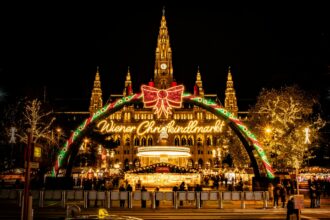
Few cities in Europe embrace the festive season quite like Vienna. During late November and December, the Austrian capital transforms into one of the continent’s great Christmas market destinations, with illuminated squares, wooden chalets, decorations, mulled wine stalls, and festive concerts appearing across the city.
One of the reasons Vienna’s Christmas markets feel so special is the setting. The combination of imperial architecture, gothic churches, baroque façades, grand boulevards, and seasonal lighting creates an atmosphere that feels almost cinematic during winter evenings.
The most famous market is the huge Vienna Christmas World in front of City Hall, also known as the Rathausplatz Christmas Market. This enormous market contains dozens of food stalls, decorations, ice skating areas, gift stands, and illuminated pathways filled with visitors throughout the festive season.
Another major favourite is the market outside Schönbrunn Palace, where the imperial backdrop creates one of the most visually impressive festive settings anywhere in Europe. Smaller markets appear throughout the city as well, each with its own atmosphere and character.
Food and drink are central to the experience. Visitors can try mulled wine, sausages, roasted chestnuts, pastries, gingerbread, cheeses, and numerous traditional Austrian winter dishes while moving between the different markets.
The atmosphere becomes particularly magical after dark when the city’s buildings, trees, and market stalls become illuminated. Vienna’s historic architecture works exceptionally well with festive lighting, creating some of the best winter city scenery in Europe.
Another major advantage of Vienna during Christmas market season is how walkable the experience becomes. Many of the markets sit relatively close together, allowing visitors to move easily between them while exploring different districts of the city.
Classical music also becomes an even bigger part of the atmosphere during December. Concerts, church performances, and festive musical events appear throughout Vienna, reinforcing the city’s identity as one of Europe’s great cultural capitals.
The markets are especially appealing for travellers who enjoy slower and more atmospheric city breaks focused on food, music, lighting, and seasonal ambience rather than simply rushing between major attractions.
For many visitors, seeing Vienna at Christmas becomes one of the most memorable European travel experiences possible because the city’s architecture, café culture, music, and festive traditions combine so naturally together.
Climb the Danube Tower
For one of the best panoramic views in Vienna, head to the top of the famous Danube Tower, also known as the Donauturm. Rising high above the city skyline, this modern observation tower offers a completely different perspective on Vienna compared with the city’s historic streets and imperial landmarks.
Built during the 1960s, the Danube Tower remains one of the tallest structures in Austria and continues to be one of the most recognisable landmarks in the city’s modern skyline. Unlike Vienna’s baroque palaces and gothic churches, the tower represents a more futuristic and contemporary side of the Austrian capital.
The observation deck provides extraordinary panoramic views across Vienna, the Danube River, the surrounding countryside, and even distant mountain areas during clear weather conditions. From the top, visitors can see the scale of the city far more clearly, including the contrast between the historic centre, modern districts, green parks, and riverside developments.
One of the most interesting aspects of visiting the tower is seeing how much green space surrounds Vienna. From street level, the city often feels densely urban and imperial, but from above it becomes obvious how many parks, wooded areas, and open spaces exist throughout the Austrian capital.
The tower is also famous for its revolving restaurant, which slowly rotates while guests eat or drink, creating constantly changing views across the city. Even visitors who do not book a full meal often enjoy stopping for coffee or drinks while watching Vienna move below them.
Another major advantage of the Danube Tower is the surrounding location. The tower sits within the large Danube Park area, giving visitors opportunities to combine panoramic city views with green open space and riverside walking routes.
The attraction works particularly well during clear weather or around sunset when the city becomes illuminated gradually as daylight fades. Night time visits can be especially impressive because Vienna’s historic core, bridges, and major boulevards become visible beneath the evening lights.
The tower is easily reachable using Vienna’s excellent public transport system, making it a straightforward addition to most city itineraries despite sitting slightly outside the historic centre.
For travellers wanting a break from museums, churches, and palaces, climbing the Danube Tower provides one of the most visually dramatic and modern sightseeing experiences in Vienna.
Ride Vienna’s Historic Trams
One of the simplest yet most enjoyable things to do in Vienna is riding the city’s famous tram network. While many visitors focus mainly on palaces, museums, and classical concerts, Vienna’s trams are actually one of the best ways to experience the city itself. The network is extensive, reliable, affordable, and deeply connected to everyday life in the Austrian capital.
Vienna’s relationship with trams goes back more than a century, and the system remains one of the largest and most efficient urban tram networks in the world. Unlike some cities where trams feel more like tourist novelties, Vienna’s trams are genuine core transport infrastructure used constantly by locals throughout the city.
One of the most popular routes for visitors is the tram line running along sections of the famous Ringstrasse. Riding these routes allows travellers to pass many of Vienna’s most important landmarks without needing to walk huge distances. From the windows, passengers can see the Vienna State Opera, Parliament Building, City Hall, Burgtheater, museums, monumental boulevards, and grand imperial architecture passing by almost continuously.
The atmosphere inside Vienna’s trams is also part of the appeal. Some services use modern vehicles, while others still retain more traditional styling that feels closely connected to the city’s transport history. Watching the trams move through narrow historic streets and grand avenues becomes part of the wider Vienna experience itself.
Another major advantage is efficiency. Vienna’s public transport system is exceptionally well integrated, meaning trams connect smoothly with the U-Bahn, buses, and regional trains. For travellers wanting to explore large parts of the city quickly, the tram system is often far more useful than relying entirely on walking.
The trams also provide excellent opportunities for casual sightseeing. Unlike underground metro systems where the city disappears from view, Vienna’s tram routes allow travellers to continuously observe architecture, neighbourhoods, cafés, parks, and daily urban life while moving between attractions.
The famous yellow and red trams are particularly atmospheric after dark when the illuminated city centre creates one of the most elegant urban transport environments in Europe. During winter, the combination of lit trams, Christmas decorations, and imperial architecture becomes especially memorable.
For travellers wanting a slower and more observational way to experience Vienna, simply boarding a tram and riding through different districts can become one of the most rewarding activities in the city.
Compare hostels and lower-cost places to stay in Vienna.
Search hostelsFlying to Vienna? Get fast compensation payouts, eligible lounge benefits and expert help when flights go wrong.
See AirHelp+ benefitsUse convenient luggage storage around Vienna between arrival, check-in and departure.
Check storageVisit St Stephen’s Cathedral and Dom Museum Wien
At the heart of Vienna’s Historic Centre stands the enormous St Stephen’s Cathedral, known locally as Stephansdom. This gothic masterpiece is one of the most recognisable landmarks in Austria and has dominated the Vienna skyline for centuries.
The cathedral’s huge patterned roof, towering south spire, ornate stonework, and dramatic gothic interior make it one of the most visually striking religious buildings in Central Europe. No matter how many times visitors see it, the scale of the structure remains impressive, especially when emerging suddenly into the busy square of Stephansplatz.
Inside, the cathedral feels equally dramatic. High vaulted ceilings, candlelit chapels, stone columns, altars, and centuries of religious artwork create a powerful atmosphere that contrasts strongly with the busy shopping streets surrounding the square outside.
One of the highlights for many visitors is climbing the cathedral tower. The views from above provide an excellent perspective across the rooftops of Vienna’s historic centre and allow travellers to appreciate just how dominant the cathedral remains within the urban landscape.
The cathedral also contains catacombs beneath the structure itself, where visitors can explore underground burial chambers connected to Vienna’s religious and imperial history. These darker subterranean spaces provide a fascinating contrast to the bright and ornate gothic architecture above ground.
Another important part of the experience is the nearby Dom Museum Wien, which contains religious art, treasures, historical objects, and exhibitions connected to the cathedral and the wider history of Vienna. The museum helps provide additional context for understanding the importance of Stephansdom within Austrian history and culture.
The location of St Stephen’s Cathedral makes it impossible to miss during most visits to Vienna. The surrounding area forms one of the busiest and most central parts of the city, filled with shopping streets, cafés, restaurants, and historic buildings.
The cathedral becomes particularly atmospheric during concerts, religious celebrations, Christmas season, and evening illumination. The gothic exterior lit against the night sky creates one of Vienna’s most iconic scenes.
For first time visitors especially, St Stephen’s Cathedral remains one of the essential experiences in Vienna because it combines architecture, religion, history, panoramic views, and the very centre of the city’s identity within a single landmark.
Explore Vienna’s Imperial Architecture at Night
Vienna is beautiful during the daytime, but the city often becomes even more atmospheric after dark. As evening falls, the Austrian capital transforms into one of Europe’s most elegant illuminated cities, with floodlit palaces, glowing boulevards, chandeliers, grand theatres, and historic façades creating an almost cinematic atmosphere.
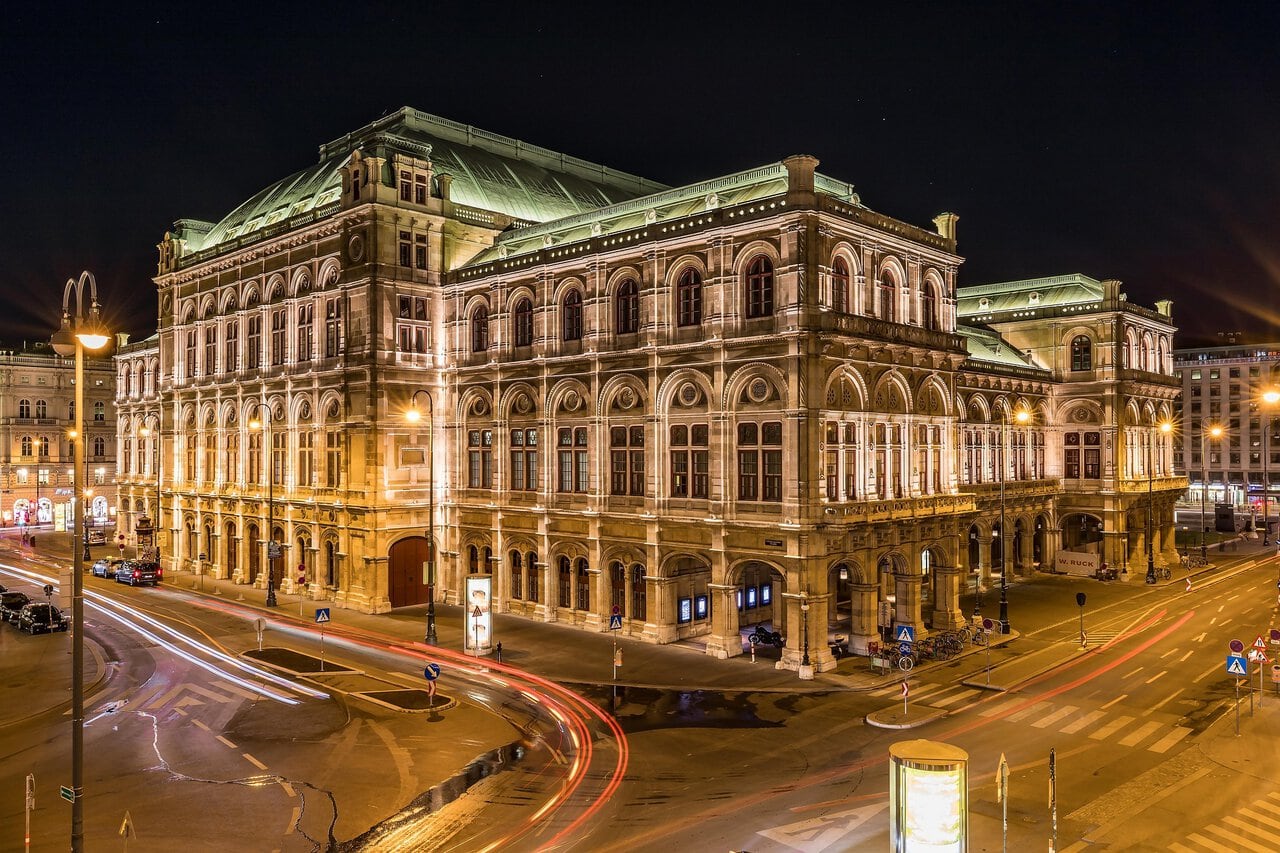
One of the best ways to experience Vienna at night is simply walking through the Historic Centre and along the Ringstrasse. Many of the city’s greatest buildings become dramatically illuminated after sunset, including the Vienna State Opera, Hofburg Palace, Parliament Building, City Hall, and numerous museums and churches.
The atmosphere changes completely once the daytime crowds begin to thin out. Streets become quieter, horse drawn carriages continue moving through the old city, and the golden lighting reflecting off the imperial architecture creates a far more romantic and theatrical environment.
The Ringstrasse is especially impressive after dark because the huge nineteenth century buildings lining the boulevard were designed to project power, prestige, and grandeur. Under evening lighting, the decorative façades, statues, domes, arches, and columns become even more dramatic than during the daytime.
Another major advantage of exploring Vienna at night is the calmer pace. During the day, areas around Stephansplatz, Graben, and the palace districts can become extremely busy with tourists. In the evening, these same locations often feel much more relaxed and atmospheric.
Classical music venues, cafés, restaurants, and bars also contribute heavily to Vienna’s evening character. Visitors frequently move between illuminated streets, coffee houses, concert halls, and riverside bars, creating a city break experience that feels elegant without becoming overwhelming.
Winter evenings are particularly atmospheric because the colder weather, lit cafés, trams, and seasonal lighting combine perfectly with Vienna’s architecture. During Christmas market season, the city can feel almost surreal after dark.
Photography enthusiasts especially enjoy Vienna during the evening because the city’s architecture responds exceptionally well to night lighting. Reflections, illuminated façades, chandeliers, and tram lines create excellent urban photography opportunities throughout the historic centre.
For travellers wanting to experience the Austrian capital at its most atmospheric, walking through Vienna’s imperial architecture at night becomes one of the most memorable experiences in the city.
Visit the Kunsthistorisches Museum
The magnificent Kunsthistorisches Museum is one of the greatest museums in Europe and an essential stop for travellers interested in art, history, and imperial collections. Located along the famous Ringstrasse, the museum itself is almost as impressive as the treasures it contains.
Commissioned by the Habsburg dynasty, the building was designed specifically to house the enormous imperial collections accumulated over centuries of royal power and patronage. Even before entering the galleries, visitors encounter grand staircases, marble halls, domes, chandeliers, frescoes, and richly decorated interiors reflecting the immense wealth of the former empire.
Inside, the collections are extraordinary. The museum contains masterpieces by artists such as Bruegel, Rubens, Raphael, Velázquez, Titian, and Caravaggio, alongside huge collections of decorative arts, Egyptian artefacts, classical antiquities, coins, armour, and imperial treasures.
One of the museum’s greatest highlights is the collection of works by Pieter Bruegel the Elder, including the famous Hunters in the Snow. Few museums anywhere in the world hold such an important concentration of Bruegel’s paintings.
Another major strength of the Kunsthistorisches Museum is the atmosphere of the building itself. Many visitors spend just as much time admiring the architecture, staircases, ceilings, and decorative details as they do looking at individual artworks.
The museum also reflects Vienna’s historic role as the centre of the Habsburg Empire. The sheer diversity of objects collected from across Europe and beyond demonstrates the enormous cultural and political reach once held by the dynasty.
Because the museum is so large, many visitors choose to focus on selected galleries rather than attempting to see everything in a single visit. Art lovers can easily spend several hours exploring the collections in depth.
The location works extremely well within a wider Vienna itinerary as well. The museum sits close to the Natural History Museum, MuseumsQuartier, Hofburg Palace, and several other major attractions in central Vienna.
For travellers interested in imperial history, Renaissance art, baroque collections, and grand museum architecture, the Kunsthistorisches Museum remains one of the absolute highlights of Vienna and one of the finest museums anywhere in Europe.

Discover Vienna’s Hidden Courtyards and Passageways
Beyond Vienna’s grand imperial palaces, monumental boulevards, and famous museums lies another side of the city that many visitors completely overlook. Hidden behind elegant façades and busy shopping streets are quiet courtyards, narrow passageways, historic arcades, and secluded internal squares that reveal a far more intimate side of Vienna.
One of the most fascinating things about central Vienna is how much of the city remains concealed from immediate view. Large Habsburg era buildings often hide internal courtyards, while historic apartment blocks contain decorative entrances, staircases, hidden gardens, and enclosed spaces invisible from the main streets outside.
Areas around Stephansplatz, Graben, Kohlmarkt, and the older parts of the Innere Stadt are especially rewarding for travellers willing to slow down and explore carefully. Small side alleys frequently lead into peaceful courtyards filled with cafés, boutiques, galleries, fountains, and architectural details that many tourists walk past without ever noticing.
Some of the most atmospheric passageways still preserve traces of medieval Vienna beneath the city’s later imperial expansion. Stone arches, narrow lanes, hidden chapels, and old merchant courtyards reveal fragments of the city that existed long before the grand nineteenth century rebuilding projects transformed Vienna into one of Europe’s great imperial capitals.
One reason these hidden spaces feel so rewarding is the contrast they create with the busy streets outside. A crowded shopping avenue can suddenly open into a quiet courtyard filled with plants, historic stonework, soft lighting, and outdoor café seating only metres away from the crowds.
The famous Ferstel Passage is one of the best examples. This elegant historic arcade combines cafés, boutiques, decorative ceilings, chandeliers, marble details, and nineteenth century architecture within one beautifully restored passageway. Nearby hidden courtyards around the Hofburg Palace area are equally atmospheric.
Another major advantage of exploring Vienna’s quieter spaces is photography. Many of these hidden courtyards contain ornate ironwork, staircases, archways, old lanterns, decorative windows, and textured stone surfaces that create some of the city’s best photography opportunities away from the busiest tourist locations.
The atmosphere changes completely after dark. Illuminated passageways, quiet courtyards, glowing café windows, and softly lit historic façades create one of the most elegant evening environments anywhere in Central Europe.
For travellers wanting to experience a more personal and atmospheric side of Vienna, exploring the city’s hidden courtyards and historic passageways becomes one of the most rewarding experiences in the Austrian capital.
Try the Time Travel Vienna Experience
For visitors wanting a more interactive and entertaining introduction to the history of Vienna, the popular Time Travel Vienna Experience offers something completely different from the city’s traditional museums and imperial palaces. Combining multimedia effects, moving sets, sound design, underground vaults, and immersive storytelling, the attraction takes visitors through key moments from Vienna’s past in a much more accessible and fast paced way.
Located beneath central Vienna inside historic underground vaults, the experience explores several centuries of Austrian history including the Habsburg Empire, medieval Vienna, plague outbreaks, Ottoman sieges, classical music culture, and famous historical figures connected to the city.
One of the biggest reasons the attraction works so well is accessibility. Vienna’s history can sometimes feel overwhelming because of the sheer number of emperors, wars, dynasties, composers, and political changes involved. Time Travel Vienna simplifies much of this information into a visually engaging experience that works well even for visitors with little prior knowledge of Austrian history.
The attraction uses a mixture of projections, reconstructed environments, special effects, animatronics, lighting, and guided storytelling to create a much more theatrical experience than a traditional museum. Some sections are humorous and playful, while others focus more heavily on major moments from Vienna’s past.
Another major advantage is the location. Situated close to the Historic Centre, Stephansplatz, and several major shopping streets, the experience is easy to combine with wider sightseeing plans around central Vienna.
Families often enjoy the attraction because it keeps younger visitors engaged far more effectively than many conventional museums. However, adults frequently appreciate it as well because it provides useful context for understanding Vienna’s palaces, churches, imperial buildings, and historic districts afterwards.
The underground setting adds heavily to the atmosphere. Stone vaults, enclosed corridors, dim lighting, and echoing spaces create a much more immersive feeling than standard exhibition halls.
Because the attraction focuses on broad storytelling rather than academic detail, it works particularly well near the beginning of a Vienna city break. Many travellers use it as a foundation before exploring the city’s major landmarks in greater depth afterwards.
For visitors wanting a more entertaining and immersive introduction to Vienna’s history, the Time Travel Vienna Experience provides one of the city’s most unusual and accessible attractions.
Walk Along the Danube Canal
While many visitors focus mainly on Vienna’s imperial architecture and historic centre, the area around the Danube Canal reveals one of the city’s most modern, creative, and energetic atmospheres. Over recent decades, the canal has transformed from a heavily industrial waterway into one of Vienna’s most interesting social spaces filled with riverside bars, cafés, murals, restaurants, cycling paths, music venues, and open air gathering areas.
Walking along the Danube Canal provides a completely different perspective on Vienna compared with the formal grandeur of the Ringstrasse, the Hofburg Palace, or the city’s baroque churches. Here, the atmosphere feels younger, more relaxed, and much more contemporary.
One of the canal’s most striking features is the huge amount of street art and graffiti lining the walls beside the water. Large murals, colourful artwork, and constantly changing urban art installations create one of the most visually dynamic areas in the Austrian capital.
During warmer months, the canal becomes especially lively. Temporary beach bars, outdoor terraces, food stands, pop up restaurants, music venues, and waterfront seating areas attract both locals and tourists throughout the day and late into the evening.
Cyclists, joggers, students, office workers, tourists, and groups of friends all share the riverside space, creating a far more local and casual atmosphere than many of Vienna’s more formal tourist districts.
Another major advantage of the canal area is flexibility. Some visitors simply walk sections of the waterfront casually, while others stop for drinks, nightlife, food, photography, or boat trips. The area works equally well during both daytime and evening hours.
The canal also offers excellent views of several important Vienna landmarks from unusual angles. Historic churches, modern office towers, bridges, riverside architecture, and contemporary developments all combine to create an interesting contrast between historic and modern Vienna.
At night, the atmosphere changes again as bars fill, coloured lighting reflects across the water, and the canal becomes one of the city’s most socially active districts. Compared with Vienna’s elegant imperial image, the canal reveals a much more youthful and creative side of the Austrian capital.
For travellers wanting to experience a different side of Vienna beyond palaces, museums, and classical concerts, walking along the Danube Canal provides one of the city’s most enjoyable and unexpectedly modern experiences.

Rupert’s Handy Travel Tips
Rupert thinks the secret to enjoying Vienna properly is balancing the huge imperial attractions with slower local experiences such as cafés, tram rides, markets, and evening walks through the historic centre.
- Start palace visits early: Attractions such as Schönbrunn Palace and the Belvedere become much busier later in the day, especially during summer.
- Use Vienna’s public transport: The city’s trams, U-Bahn, and buses are extremely efficient and make sightseeing far easier.
- Do not rush the coffee houses: Traditional Viennese cafés are designed for relaxing slowly rather than grabbing quick drinks.
- Explore Vienna after dark: The illuminated imperial architecture around the Ringstrasse and historic centre becomes especially beautiful during the evening.
- Wear comfortable shoes: Many of Vienna’s best experiences involve long walks through palace grounds, museum districts, markets, and historic streets.
Want to meet the reindeer behind our travel tips? Find out more in our page Who is Rupert?.





Frequently Asked Questions About Vienna
How many days do you need in Vienna?
Most travellers should spend at least three to four days in Vienna to properly experience the city’s major palaces, museums, coffee houses, markets, and classical music culture. Shorter trips are still worthwhile, but Vienna rewards slower exploration far more than rushed sightseeing.
What is the number one attraction in Vienna?
For many visitors, Schönbrunn Palace is the most famous attraction in Vienna because it combines imperial history, palace interiors, formal gardens, panoramic viewpoints, and several additional attractions within one enormous complex.
Is Vienna expensive to visit?
Compared with some cities in Western Europe, Vienna can feel relatively manageable, although attractions, concerts, and accommodation in central areas are not especially cheap. Public transport, however, is excellent value and helps reduce overall sightseeing costs significantly.
What is Vienna best known for?
Vienna is most famous for its imperial architecture, classical music heritage, Habsburg history, coffee house culture, grand museums, and elegant atmosphere. The city is strongly associated with figures such as Mozart, Beethoven, Gustav Klimt, and the powerful Habsburg dynasty.
Is Vienna walkable?
Yes. Much of central Vienna is extremely walkable, especially around the Historic Centre, Ringstrasse, and major sightseeing districts. The city’s excellent tram and U-Bahn network also makes longer journeys very easy.
What is the best time to visit Vienna?
Spring, summer, and December Christmas market season are especially popular. Summer offers long daylight hours and outdoor café culture, while winter transforms Vienna into one of Europe’s most atmospheric festive destinations.
Are Vienna’s Christmas markets worth visiting?
Absolutely. Vienna’s Christmas markets are among the best in Europe because of the combination of imperial architecture, festive lighting, mulled wine stalls, concerts, and historic surroundings.
Can you visit Vienna on a budget?
Yes, although careful planning helps. Many of Vienna’s best experiences involve walking through historic districts, exploring markets, riding trams, relaxing in cafés, and visiting public spaces rather than only expensive attractions.
What food should you try in Vienna?
Travellers should try Sachertorte, apple strudel, Wiener Schnitzel, sausages, pastries, and traditional Viennese coffee house specialities such as the famous Melange coffee.
Is Vienna safe for tourists?
Vienna is generally considered one of the safest major cities in Europe. As with any large capital city, travellers should still remain aware of pickpocketing in busy tourist areas and on public transport.
Further Reading & Related Guides
If you are arriving into Austria by air, our detailed guide to Vienna Airport to the City Centre explains the fastest airport rail services, metro links, taxis, buses, and transfer options into Vienna.
Visitors travelling during the festive season should also read our full Vienna Christmas Markets Guide, covering the city’s best festive squares, winter food, Christmas shopping, decorations, and seasonal events.
If you are visiting during Eurovision season, our detailed Vienna Eurovision 2026 Guide explains the fan zones, public screenings, nightlife districts, viewing parties, and major Eurovision venues across the city.
Travellers planning wider train travel across Europe should also explore our European Railway Journeys Guide, featuring some of the continent’s most scenic rail routes and major international train experiences.
If you are travelling around Austria by rail, our detailed Interrail Austria Guide explains scenic Austrian train journeys, reservation advice, rail passes, and the country’s major railway hubs.
Visitors wanting reliable mobile data while exploring Vienna, booking tickets, navigating public transport, or travelling across Europe should also read our detailed eSIM apps guide.