Reviewed by our editorial team Updated
Why Train Travel Is One of the Best Ways to Explore Europe
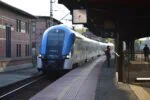
Train travel remains one of the most effective and rewarding ways to explore Europe. Unlike air travel, which often requires early arrivals, security queues, and travel to out-of-town airports, rail journeys typically begin and end in the centre of major cities, allowing for a far smoother and more direct experience.
One of the biggest advantages of European rail travel is efficiency. High-speed trains connect key destinations at speeds that rival or beat short-haul flights once total journey time is considered. Routes such as Paris to Amsterdam or Milan to Rome allow you to move between cities quickly without losing time to airport processes.
There is also a strong flexibility advantage. Train travel allows you to adjust your journey more easily, especially when using a rail pass. You can extend your stay in a city, change your next destination, or take a different route without needing to completely rebook your plans.
Comfort is another key factor. European trains offer more space, easier boarding, and a more relaxed environment compared to flights. You can move around, access dining services, and enjoy the journey rather than simply endure it.
Finally, there is the experience itself. Travelling by rail allows you to see the landscape change between destinations, turning transport into part of the journey rather than something separate. This combination of speed, comfort, and visibility is what makes rail travel such a powerful way to explore Europe.
How European Railway Journeys Work
European railway journeys operate through a combination of national rail networks and international high-speed connections, all linked together into a system that allows relatively seamless cross-border travel.
Most countries operate their own rail services, but these are connected through shared agreements that allow trains to move between borders without requiring passengers to change systems. This means you can travel from one country to another using a single continuous journey, often without needing to think about the underlying operators.
There are two main types of trains that shape the experience. High-speed trains connect major cities quickly, often travelling at speeds above 250 km per hour. These are used on routes such as Paris to Lyon or Madrid to Barcelona and form the backbone of long-distance travel. Regional and intercity trains operate at lower speeds but provide greater coverage, connecting smaller cities and rural areas.
Journeys can be either direct or involve connections. In many cases, changing trains is straightforward, with well-timed transfers and clear station layouts. Major hubs such as Frankfurt, Paris, and Vienna are designed to handle these movements efficiently.
Ticketing depends on the approach you take. You can either buy individual point-to-point tickets or use a rail pass system such as Interrail (sold as Eurail for residents outside Europe, under the same company since the 2026 rebrand), which allows more flexibility across multiple journeys.
The system may appear complex at first, but in practice it is built around connectivity and consistency, allowing travellers to move across Europe with relative ease.
Compare hotels and other places to stay for your trip.
Check availabilityBrowse apartments, holiday homes and self-catering stays.
View rentalsCompare hotel deals from multiple booking sites in one search.
Compare pricesHigh-Speed City to City Routes
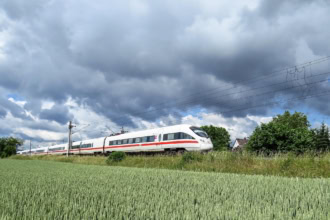
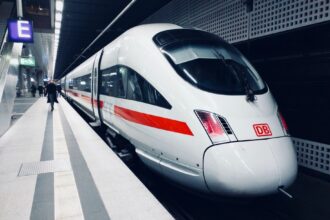
High-speed rail is the foundation of modern European train travel, connecting major cities with fast, reliable, and frequent services. These routes are designed to compete directly with air travel, and in many cases they provide a more efficient overall journey.
Routes such as London to Paris, Paris to Amsterdam, and Rome to Milan are among the most heavily used. These connections typically run multiple times per day and offer journey times that make them highly competitive. For example, travelling between central London and central Paris by train often takes less time overall than flying when airport processes are included.
The advantage of these routes is not just speed, but also convenience and frequency. Trains depart from central stations, arrive in central locations, and require far less preparation time. This allows travellers to build itineraries that are both faster and more flexible.
High-speed trains are also designed for comfort. Seating is spacious, luggage allowances are generous, and there is no need to deal with restrictive airline policies. This makes longer journeys far more manageable.
In many cases, these routes are the most efficient way to move between cities, particularly when travelling distances of 200 to 800 kilometres. Beyond that range, flying may become more competitive, but within it, rail often dominates.
For travellers planning multi-city trips, high-speed routes form the core structure of a European rail itinerary, linking together major destinations with minimal friction.
London to Paris
The London to Paris high-speed route is one of the most iconic rail journeys in Europe, operated by the Eurostar. Trains run through the Channel Tunnel, linking the UK and France in a journey that typically takes just over two hours.
What makes this route stand out is its city centre to city centre efficiency. Departures from St Pancras International arrive at Gare du Nord, removing the need for airport transfers and reducing overall travel time. When security and check-in are considered, rail is often faster than flying.
The experience itself is smooth and comfortable, with spacious seating, generous luggage allowances, and minimal disruption. This makes it particularly attractive for both leisure and business travel.
For travellers planning multi-city trips, this route acts as a gateway into mainland Europe, connecting directly into the wider high-speed rail network.
Paris to Amsterdam
The Paris to Amsterdam high-speed route is one of the most efficient ways to travel between France and the Netherlands, operated by Thalys and now integrated into the wider European network. Journey times typically sit at around three hours and twenty minutes.
This route connects two major European capitals with frequent daily departures, making it highly flexible for travellers building itineraries. The train departs from Gare du Nord and arrives at Amsterdam Centraal, both centrally located and easy to navigate.
One of the key advantages is the consistency of service. Trains are reliable, fast, and well-equipped, allowing you to travel comfortably without the interruptions associated with air travel.
The route also passes through Belgium, offering the option to stop in cities such as Brussels or Antwerp, which adds further flexibility.
For travellers moving across western Europe, this route is a core link between major cultural and economic centres.
Rome to Milan
The Rome to Milan high-speed route is one of the busiest domestic rail connections in Europe, operated by both Trenitalia and Italo. Journey times are typically around three hours, linking Italy’s political and financial centres.
This route is a clear example of how rail can outperform air travel. With trains departing from central stations and running frequently throughout the day, it offers a high level of convenience and flexibility.
The trains themselves are modern, fast, and designed for comfort, with spacious seating and onboard services that make the journey feel smooth and efficient. The ability to arrive directly in the centre of both cities removes the need for additional transfers.
For travellers exploring Italy, this route forms a key backbone connection, making it easy to combine Rome, Florence, and Milan within a single itinerary.
Madrid to Barcelona
The Madrid to Barcelona high-speed route is one of Europe’s most successful rail corridors, operated by AVE along with competing operators. Journey times are typically around two and a half to three hours.
This route has largely replaced air travel between the two cities due to its speed, frequency, and convenience. Trains depart from Madrid Atocha and arrive at Barcelona Sants, both centrally located and well connected to local transport.
One of the key strengths of this route is its high frequency, with multiple departures per hour during peak periods. This allows travellers to plan flexible itineraries without being tied to specific times.
The trains are modern and comfortable, offering a high-quality travel experience with minimal friction.
For travellers moving across Spain, this route provides a fast and reliable connection between two of the country’s most important cities.
Scenic Railway Journeys
While high-speed routes focus on efficiency, scenic railway journeys focus on experience and landscape. These are the routes where the journey itself becomes one of the highlights of the trip.
Some of the most famous scenic railways are found in countries such as Switzerland, Norway, and Austria. These routes pass through mountain ranges, valleys, lakes, and dramatic natural landscapes, offering views that are simply not accessible by road or air.
In Switzerland, alpine routes wind through mountain passes and alongside glacial lakes, creating a constantly changing visual experience. In Norway, railway lines cut through fjords and coastal terrain, offering some of the most striking scenery in Europe.
What makes these journeys different is the pace. They are not designed to be the fastest way to travel, but rather the most immersive. Large windows, slower speeds, and carefully designed routes allow passengers to take in the landscape in a way that feels deliberate and considered.
These routes are often used as standalone experiences rather than simple connections between cities. Travellers may plan entire days around a single journey, treating it as a core part of the itinerary rather than a means of transport.
For those looking to go beyond simple city hopping, scenic railway journeys offer a way to experience Europe that is visually rich, slower, and far more memorable.
Glacier Express, Switzerland
The Glacier Express is one of the most famous scenic rail journeys in the world, connecting Zermatt and St. Moritz across the Swiss Alps. Operated by Glacier Express, the full journey takes around eight hours and is designed entirely around the experience rather than speed.
What sets this route apart is its panoramic design. Carriages feature large windows that extend into the roof, allowing uninterrupted views of mountains, valleys, and alpine villages. The train passes through deep gorges, high mountain passes, and over iconic viaducts, including the Landwasser Viaduct.
The pace is deliberately slow, allowing travellers to absorb the landscape rather than rush through it. Onboard service includes dining options, adding to the overall experience.
This is not simply transport. It is a full-day journey designed to showcase the Swiss Alps, making it one of Europe’s most memorable rail experiences.
Bernina Express, Switzerland to Italy
The Bernina Express offers one of the most dramatic cross-border rail journeys in Europe, linking Chur in Switzerland with Tirano in Italy. Operated by Bernina Express, the route takes around four hours and crosses the Alps without tunnels at its highest points.
This journey is known for its extreme elevation changes and engineering feats. The train climbs to over 2,200 metres above sea level, passing glaciers, lakes, and mountain peaks before descending into the Italian countryside.
One of the most recognisable features is the circular Brusio Viaduct, where the train loops over itself to manage the steep gradient. The contrast between alpine landscapes and Mediterranean scenery is a defining part of the experience.
Large panoramic windows enhance visibility, and the route is designed to maximise views throughout the journey.
This is one of the few routes where you experience a complete landscape transition within a single journey, making it uniquely rewarding.
Flåm Railway, Norway
The Flåm Railway is one of the steepest standard-gauge railway lines in the world, running between Myrdal and the village of Flåm in western Norway. Operated by Flåm Railway, the journey takes around one hour but delivers a highly concentrated scenic experience.
What makes this route exceptional is its vertical descent through dramatic terrain. The train drops from mountain plateau to fjord level, passing waterfalls, cliffs, and deep valleys along the way.
The line is engineered to handle steep gradients, with tunnels carved directly into the mountainside. At certain points, the train slows to allow passengers to take in key landmarks, including the Kjosfossen waterfall, one of the route’s highlights.
Despite its short length, the density of scenery makes it one of the most visually striking rail journeys in Europe.
The Flåm Railway is best seen as a high-impact scenic experience, ideal for travellers exploring Norway’s fjord region.
West Highland Line, Scotland
The West Highland Line is one of the most atmospheric railway journeys in Europe, running from Glasgow to Mallaig in the Scottish Highlands. Operated by ScotRail, the journey takes around five hours and offers a slow, immersive experience of remote landscapes.
This route is defined by its wild, open scenery. The train passes lochs, moorlands, and mountains, with long stretches of uninhabited terrain that highlight the scale and isolation of the Highlands.
One of the most famous sections includes the Glenfinnan Viaduct, known for its sweeping curves and cinematic appearance. The route also provides views of Ben Nevis, the UK’s highest mountain.
The pace of the journey allows for a gradual build-up of scenery, rather than a single dramatic moment. This creates a strong sense of place and continuity.
The West Highland Line is less about spectacle and more about depth and atmosphere, making it one of the most distinctive rail journeys in Europe.
Night Trains: Sleeping Your Way Across Europe
Night trains are enjoying a genuine revival across Europe, and the appeal for pass holders is obvious. Covering a long distance overnight means arriving in a new city with a full day still ahead, while skipping a night’s hotel bill in the process.
ÖBB Nightjet remains the backbone of the network, linking Austrian hubs such as Vienna, Graz, Innsbruck and Salzburg with German cities including Berlin, Hamburg, Munich and Cologne. From there, routes extend to Zurich and Basel, Amsterdam, Rome, Florence, Bologna and Venice, with further connections into Croatia, Poland, Slovakia, Slovenia and Hungary.
Each Nightjet runs three comfort tiers: private sleeping cars for one to three people, shared couchette or mini-cabin compartments, and standard reclining seats. This range makes it easy to match comfort against budget depending on the length of the journey.
A newer, independent operator is reshaping the picture too. European Sleeper’s core route links Brussels, Antwerp, Rotterdam and Amsterdam with Berlin, continuing on to Dresden and Prague three times a week, with a same-station Eurostar connection from London. It also runs a separate Paris and Brussels to Berlin service, plus a Brussels to Zurich, Como and Milan route.
Neither operator includes the reservation in an Interrail Pass itself, so a berth or seat supplement always applies on top of an active travel day. Demand has grown sharply, and booking early matters, with Nightjet now taking reservations up to 360 days ahead.

Cross-Border Railway Journeys in Europe
One of the defining strengths of European rail travel is how easily it allows you to move between countries. Unlike many parts of the world where crossing a border introduces complexity, Europe’s rail network is designed to feel connected, continuous, and largely frictionless.
Cross-border journeys are built into the system. High-speed and intercity trains run between major cities in different countries as part of integrated timetables and shared infrastructure agreements. In many cases, you can travel from one country to another without changing trains, without switching ticket systems, and without even noticing the border beyond a change in scenery.
What makes this particularly powerful is the consistency of the travel experience. Stations operate in similar ways, onboard services follow familiar standards, and booking systems are aligned across much of the network. This allows travellers to move between regions with confidence, even when crossing multiple borders in a single trip.
There are two main types of cross-border journeys. Some are high-speed direct connections linking major cities, while others are slower regional routes that require connections but offer broader coverage. Both play an important role, depending on the route and travel style.
For travellers using an Interrail pass (Eurail for residents outside Europe), cross-border travel becomes even more seamless. You are not switching tickets or systems as you move between countries. You are simply continuing your journey across a network that is designed to function as a single, interconnected travel system.
This is what makes European rail travel unique. It is not just about moving within countries, but about moving across them with ease, clarity, and consistency.
Paris to Barcelona
The Paris to Barcelona high-speed route is one of the most efficient ways to travel between France and Spain, linking two major cultural cities in a journey that typically takes around six and a half hours. Services are operated by SNCF and Renfe using modern high-speed trains.
What makes this route particularly effective is its direct cross-border connection. There is no need to change trains, and the transition between countries is seamless, with the journey running smoothly from central Paris to central Barcelona.
The route passes through southern France before crossing into Spain, offering changing landscapes along the way. While not purely scenic, it provides a clear sense of distance and movement across regions.
This journey is a strong example of how European rail networks integrate across borders, allowing long-distance travel without the complexity of separate systems.
For travellers moving between western and southern Europe, this route is a key strategic connection.
Vienna to Budapest
The Vienna to Budapest route is one of the most popular short cross-border journeys in central Europe, with a typical journey time of around two and a half hours. Services are operated by ÖBB and MÁV, with frequent daily departures.
This route stands out for its simplicity and accessibility. Both cities are well connected by central stations, and the journey itself is straightforward, making it ideal for travellers combining multiple destinations in a single trip.
The train passes through relatively flat terrain, with views of countryside and small towns rather than dramatic landscapes. The focus here is on efficient travel rather than scenery, allowing you to move quickly between two major capitals.
Because of its short duration and high frequency, this route is often used as part of a wider itinerary that includes cities such as Prague or Bratislava.
It is a core central European connection, particularly suited to flexible, multi-city travel.
Munich to Prague
The Munich to Prague route connects Germany and the Czech Republic in a journey that typically takes around five to six hours. While not a high-speed route throughout, it remains an important cross-border connection operated by Deutsche Bahn and Czech Railways.
This journey is notable for its blend of efficiency and scenery. The route passes through southern Germany and into the Czech countryside, with sections that offer forested landscapes and rolling terrain.
Unlike some high-speed routes, this journey involves a more traditional rail experience, with a slower pace and a greater connection to the landscape. This can make the trip feel more immersive, particularly for travellers looking to experience regional travel rather than simply move between cities.
The connection between Munich and Prague is also strategically important, linking two major cultural destinations with very different architectural and historical identities.
For travellers exploring central Europe, this route offers a balanced mix of practicality and experience.
Brussels to Cologne
The Brussels to Cologne high-speed route is one of the fastest cross-border connections in Europe, with journey times typically just under two hours. Services are operated by ICE and other high-speed operators.
This route is defined by its speed and efficiency. It connects Belgium and Germany with minimal travel time, making it ideal for both business and leisure travellers looking to move quickly between cities.
The journey itself is not heavily focused on scenery, as much of it runs at high speed through developed regions. The emphasis is on connectivity and reliability, rather than visual experience.
Both Brussels and Cologne have major central stations, allowing for easy onward connections across their respective rail networks. This makes the route particularly useful as part of a wider European itinerary.
For travellers navigating western Europe, this is a high-performance link between key economic and cultural centres.
Short Regional Railway Journeys in Europe
Not every European rail journey needs to be long or high-speed to be effective. Some of the most useful and frequently travelled routes are short regional connections, linking nearby cities in a way that is fast, simple, and highly practical.
These journeys typically run between destinations that are less than two hours apart, making them ideal for day trips, short stays, or adding extra stops to a wider itinerary. In many cases, trains run frequently throughout the day, allowing you to travel without heavy planning or long wait times.
What makes these routes particularly valuable is their ease of use. Stations are centrally located, ticketing is straightforward, and the overall experience is far less complex than long-distance travel. You can move between cities quickly, often with minimal preparation.
Short regional journeys also provide strong value. Advance tickets are often affordable, and the need for reservations is rare, making them a flexible and accessible option for travellers.
For anyone building a European itinerary, these routes are not secondary. They are essential connectors that allow you to explore more destinations with minimal effort.
Florence to Pisa
The Florence to Pisa route is one of the most popular short rail journeys in Italy, connecting two historic cities in just over one hour. Services are operated by Trenitalia, with frequent departures throughout the day.
This route is defined by its simplicity and reliability. Trains run regularly from Firenze Santa Maria Novella to Pisa Centrale, making it easy to plan a day trip without needing to book far in advance.
The journey itself passes through the Tuscan countryside, offering a brief but pleasant change of scenery between urban centres. While not a scenic highlight, it provides a sense of regional travel that adds to the experience.
Pisa is compact and easily explored on foot, making this route particularly effective for travellers based in Florence. The ability to travel out and return on the same day with minimal effort makes it one of the most efficient additions to an Italian itinerary.
This is a classic short-distance European rail journey, combining convenience, frequency, and cultural value.
Nice to Monaco
The Nice to Monaco route is a short but highly effective coastal journey along the French Riviera, taking around twenty minutes. Services are operated by SNCF and run frequently throughout the day.
This route stands out for its coastal setting and speed. The train runs along the Mediterranean, offering views of the sea, cliffs, and coastal towns along the way. Despite its short duration, the journey feels visually distinct.
Both Nice and Monaco are well connected by central stations, allowing for quick movement between the two without the need for taxis or complicated transfers. This makes the route particularly useful for travellers exploring the Riviera.
Because of its frequency and short travel time, the journey can be made at almost any point in the day, providing a high level of flexibility.
This route is a strong example of how short rail connections can deliver both practical value and a sense of place within a very limited timeframe.
Amsterdam to Brussels
The Amsterdam to Brussels route is a key short international connection, linking the Netherlands and Belgium in around two hours. Services are operated by NS International alongside high-speed operators.
This route offers a balance between regional accessibility and cross-border efficiency. While faster high-speed options are available, standard intercity trains provide a more flexible and often more affordable alternative.
The journey connects two major cities with strong cultural and economic ties, making it a common route for both tourists and business travellers. Departures are frequent, and both Amsterdam Centraal and Brussels Midi are major hubs with strong onward connections.
The route itself passes through relatively flat landscapes, with the focus firmly on efficient travel rather than scenery.
For travellers moving between northern European cities, this route acts as a reliable and flexible link that fits easily into wider itineraries.
Most Popular European Train Routes at a Glance
When planning a trip across Europe, it helps to have a clear overview of the routes that are used most often. These journeys form the core structure of European rail travel, connecting major cities with reliable, high-frequency services that are designed for both speed and convenience.
What defines these routes is not just popularity, but consistency and practicality. They run multiple times per day, operate on well-developed infrastructure, and connect stations that are located in the heart of each city. This allows travellers to move efficiently without needing to rely on complex transfers or long planning cycles.
Another key advantage is predictability. These routes are well established, meaning travel times are stable, onboard experience is standardised, and connections to other services are easy to manage. This makes them ideal for building multi-city itineraries where timing and reliability matter.
The table below provides a clear overview of some of the most commonly used routes, including typical journey times, train types, and whether reservations are required. It acts as a quick reference point for comparing options and understanding how different journeys fit into a wider European trip.
| Route | Journey Time | Train Type | Reservation Needed | Notes |
|---|---|---|---|---|
| London to Paris | ~2h 15m | High-speed | Yes | Channel Tunnel route |
| Paris to Amsterdam | ~3h 20m | High-speed | Yes | Direct international service |
| Rome to Milan | ~3h | High-speed | Recommended | Frequent daily departures |
| Madrid to Barcelona | ~2h 45m | High-speed | Recommended | Competes with air travel |
| Vienna to Budapest | ~2h 30m | Intercity | No | Short cross-border route |
| Amsterdam to Brussels | ~2h | Intercity / High-speed | Optional | Flexible ticket options |
| Munich to Prague | ~5h 30m | Intercity | No | Scenic regional sections |
Search routes and flight options for your journey.
Search flightsChoose an Airalo eSIM and arrange mobile data before you arrive.
Browse eSIMsArrange a private pickup before travel instead of sorting transport after landing.
Book a transferTravel Times Between Major European Cities
Understanding travel times is one of the most important parts of planning a rail journey. Distances in Europe can be misleading, as the rail network is designed to make city-to-city travel faster and more efficient than expected.
In many cases, journeys between major cities fall within a range that makes rail highly competitive with air travel. Routes under three hours are almost always faster by train when you factor in airport transfers and waiting times. Journeys between three and six hours often remain practical by rail, particularly when travelling between well-connected regions.
Cities in western and central Europe are especially well linked. Paris, Brussels, Amsterdam, and London form a tight network where travel is fast and frequent. Similarly, cities such as Vienna, Prague, and Budapest are connected by short and efficient routes that make multi-city travel straightforward.
Southern Europe also performs strongly, with high-speed lines connecting cities such as Rome, Milan, Florence, and Naples. Spain’s network offers similar efficiency between Madrid, Barcelona, and other major destinations.
The key is to think in terms of rail corridors rather than straight-line distance. Once you understand how these corridors operate, planning becomes far more intuitive and effective.
Train vs Plane in Europe: When Rail Wins
The decision between train and plane in Europe often comes down to more than just travel time. While flights may appear faster on paper, rail frequently offers a more efficient overall experience once the full journey is considered.
One of the biggest advantages of rail is location. Train stations are typically located in city centres, while airports are often outside urban areas. This reduces transfer time significantly and allows you to start and end your journey more directly.
There is also a major difference in pre-departure requirements. Train travel does not involve long security queues or early check-in times. You can arrive shortly before departure and board quickly, which reduces total travel time.
Comfort plays a role as well. Trains offer more space, easier movement, and fewer restrictions on luggage. This makes longer journeys more manageable and less tiring.
Rail also performs strongly on routes of up to five or six hours, where the combination of speed, convenience, and comfort often outweighs the advantages of flying.
For many journeys, particularly between major cities, rail is not just an alternative. It is often the better option.
Using Rail Passes for European Journeys
Rail passes such as Interrail (Eurail for non-European residents) are designed to simplify travel across multiple routes, but they work best when used in the right context. Understanding how they fit into your journey is essential to getting value from them.
A rail pass allows you to travel on multiple routes using a system of flexible travel days, rather than booking individual tickets for each journey. This is particularly useful when moving between several cities or countries, as it reduces the need for constant booking and adjustment.
The key advantage is flexibility. You can adapt your itinerary, extend stays, or change routes without needing to restructure your entire plan. This is especially valuable on longer trips where uncertainty is part of the experience.
However, passes are not always the best option. On shorter routes or fixed itineraries, individual tickets can sometimes be more cost-effective, particularly when booked in advance.
The most effective approach is to use rail passes for longer, cross-border journeys, while relying on individual tickets for shorter connections where appropriate. This creates a balanced strategy that maximises both flexibility and value.
Seat Reservations, Costs and What to Expect
A rail pass gives you access to the network, but it does not remove the need to understand how seat reservations and additional costs work. This is one of the most important aspects of European rail travel, and getting it right makes a significant difference to your overall experience.
On many regional and standard intercity trains, you can simply board with your pass and find a seat. However, on high-speed services, international routes, and overnight trains, reservations are often required or strongly recommended. These reservations secure your place on the train and are separate from the pass itself.
Costs vary depending on the route and operator. Some reservations are inexpensive, while others, particularly on premium high-speed routes, can add a noticeable extra cost. Availability can also become limited on busy routes, which means planning ahead is important for key journeys.
The balance to understand is this. The rail pass provides flexibility and access, while reservations provide certainty and structure. Using both correctly allows you to move freely while still securing the journeys that matter most.

Plan Your Train Journey with Rail Europe
Booking train tickets in Europe can become complicated when different operators, routes, and booking systems are involved. Rail Europe makes it easier to search routes, compare fares, and buy train tickets in one place.
It is especially useful for international rail journeys, European city-to-city travel, and travellers looking to book both regular rail tickets and passes. Instead of checking multiple train operators separately, you can plan your journey faster and book with confidence.
Apps and Tools for Planning Railway Journeys
Modern European rail travel is supported by a range of digital tools that make planning and navigating journeys significantly easier. While the rail network itself is extensive, these tools provide the visibility and control needed to use it effectively.
Timetable apps are essential. They allow you to check live departure times, platform information, and connections in real time. This becomes particularly important when working with a flexible itinerary, as it allows you to make decisions quickly and adjust your route as needed.
Booking platforms are also important, especially for reservations on high-speed and international routes. These tools help you secure seats in advance, reducing uncertainty and ensuring that key parts of your journey run smoothly.
Navigation apps play a supporting role by helping you move between stations, accommodation, and local transport systems. This is especially useful when arriving in unfamiliar cities.
The rail pass provides access to the system, but these tools provide precision, planning, and confidence, which are essential for making the most of your journey.

Rupert’s Handy Travel Tips
Rupert treats European rail travel as a system to understand, not just a way to get around. Once you see how the routes connect and where the time savings really come from, planning becomes far easier and the journeys themselves feel more natural.
- Build your trip around key high-speed routes, then layer in regional journeys
- Check reservation requirements early so your main routes are secured
- Use trains for distances where city centre travel saves the most time
- Allow time to enjoy scenic routes rather than treating every journey as a transfer
Want to meet the reindeer behind our travel tips? Find out more in our page Who is Rupert?.




Frequently Asked Questions About European Railway Journeys
What is the best train journey in Europe?
The answer depends on what you value most. For speed and efficiency, high-speed routes between major cities are often the best choice. For scenery, alpine and coastal routes provide a more immersive experience.
Are trains expensive in Europe?
Costs vary depending on the route, timing, and booking method. Advance tickets can be affordable, while last-minute travel on popular routes can be more expensive. Rail passes offer value when used across multiple long-distance journeys.
Do you need to book trains in advance?
Not always. Regional trains can often be used without advance booking, but high-speed and international services may require reservations, particularly during busy periods.
Is train travel better than flying in Europe?
For many routes, particularly those under five hours, train travel is often more efficient due to central stations, reduced waiting times, and a more comfortable experience.
Can you travel between countries easily by train?
Yes. The European rail network is designed for seamless cross-border travel, with many direct connections between major cities and straightforward transfers where needed.
Browse hostels and budget-friendly stays.
See hostelsGet fast compensation payouts, eligible lounge benefits and expert help when flights go wrong.
See AirHelp+ benefitsUse convenient luggage storage between arrival, check-in and departure.
Check storageFurther Reading & Related Guides
If you are planning to use rail travel across multiple countries, it is worth understanding how passes fit into the wider system. Our Eurail vs Interrail guide explains the key differences and helps you decide which pass applies to your trip, while our Interrail Global Pass guide shows how to use flexible travel days effectively across longer journeys.
If you are comparing rail with other booking options, our train booking apps guide breaks down when point-to-point tickets make more sense and how to secure the best fares across Europe. For staying connected while navigating routes, checking platforms, and managing reservations, our eSIM apps guide ensures you stay online without relying on expensive roaming.
Once you arrive in each destination, moving beyond the station is just as important. Our local transport apps guide helps you connect rail travel with metros, buses, and city navigation, allowing your journey to continue smoothly from arrival to accommodation.