Reviewed by our editorial team Updated
Getting from Manchester to Liverpool: What You Need to Know
Travelling from Manchester to Liverpool is one of the easiest and most frequent intercity journeys in the UK. The two cities are close together, well connected, and served by multiple transport options throughout the day, which makes this a route that works well for day trips, events, shopping, sightseeing, and flexible last-minute travel.
One of the biggest advantages of this journey is frequency. You are not relying on a limited service pattern or awkward connection. Trains and buses run regularly, so even if you have not planned every detail in advance, you can usually still travel with very little difficulty. That flexibility is a major reason why this route feels so straightforward for most travellers.
The distance between the two cities is relatively short, at around 35 miles, and journey times are quick enough to make Liverpool an easy half-day or full-day trip from Manchester. Whether you are heading across for the waterfront, museums, shopping, football, nightlife, or a major event, the route is built to handle high volumes of travellers efficiently.
Unlike many international or longer domestic journeys, there are no borders, no airport-style logistics, no complicated transfer patterns, and no major planning barriers to think about. This is a simple point-to-point journey, so the main decision is usually whether you want the speed and convenience of the train or the lower cost of the bus.
Because of that, most travellers naturally choose the train, but that does not mean the other options are irrelevant. Depending on your budget, your timing, and how much flexibility you want, there are still clear reasons to consider the bus or car instead.
A Historic Route: The World’s First Passenger Railway
Travelling from Manchester to Liverpool today may feel like a routine and highly practical trip, but it follows one of the most important transport corridors in world history. This is not just another short rail route. It is the corridor where modern passenger rail travel truly began.
The Liverpool and Manchester Railway, which opened in 1830, is widely recognised as the world’s first fully operational intercity passenger railway. It linked the two cities using regular scheduled services powered entirely by steam locomotives, creating a model that would go on to influence railway development far beyond Britain.
What makes this route so historically significant is not simply that it came first. It helped establish the foundations of what people now take for granted in rail travel, including timetables, ticketing, dedicated stations, scheduled departures, and reliable passenger services. The systems that feel completely normal now were, at the time, part of a transport revolution.
Before this railway, rail travel was still limited, experimental, or mainly focused on freight. The success of the line between Liverpool and Manchester proved that large-scale passenger transport by rail was practical, commercially viable, and transformative. It quickly became a model copied across the UK, Europe, and the wider world.
Today’s journey is obviously faster, smoother, and more comfortable, but the historical importance remains. When you travel between Manchester and Liverpool now, you are still moving along a route that helped shape global transport history. It is a short trip, but it carries an unusually big story behind it.
Best for two or three nights. The widest choice of rooms, with filters for free cancellation and included breakfast.
View staysBest for groups who want one address and separate bedrooms rather than three hotel rooms.
See holiday homesBest as a last check before booking. Compares Liverpool hotel rates across several sites in one search.
Compare ratesTrain from Manchester to Liverpool: Fastest and Most Convenient Option
For most travellers, the train is the best way to travel from Manchester to Liverpool. It is fast, frequent, reliable, and city-centre to city-centre, which makes it the most convenient option for day trips, short stays, and flexible travel plans.
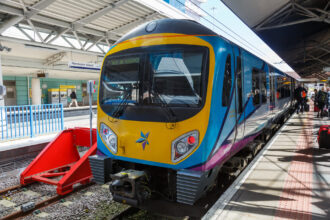
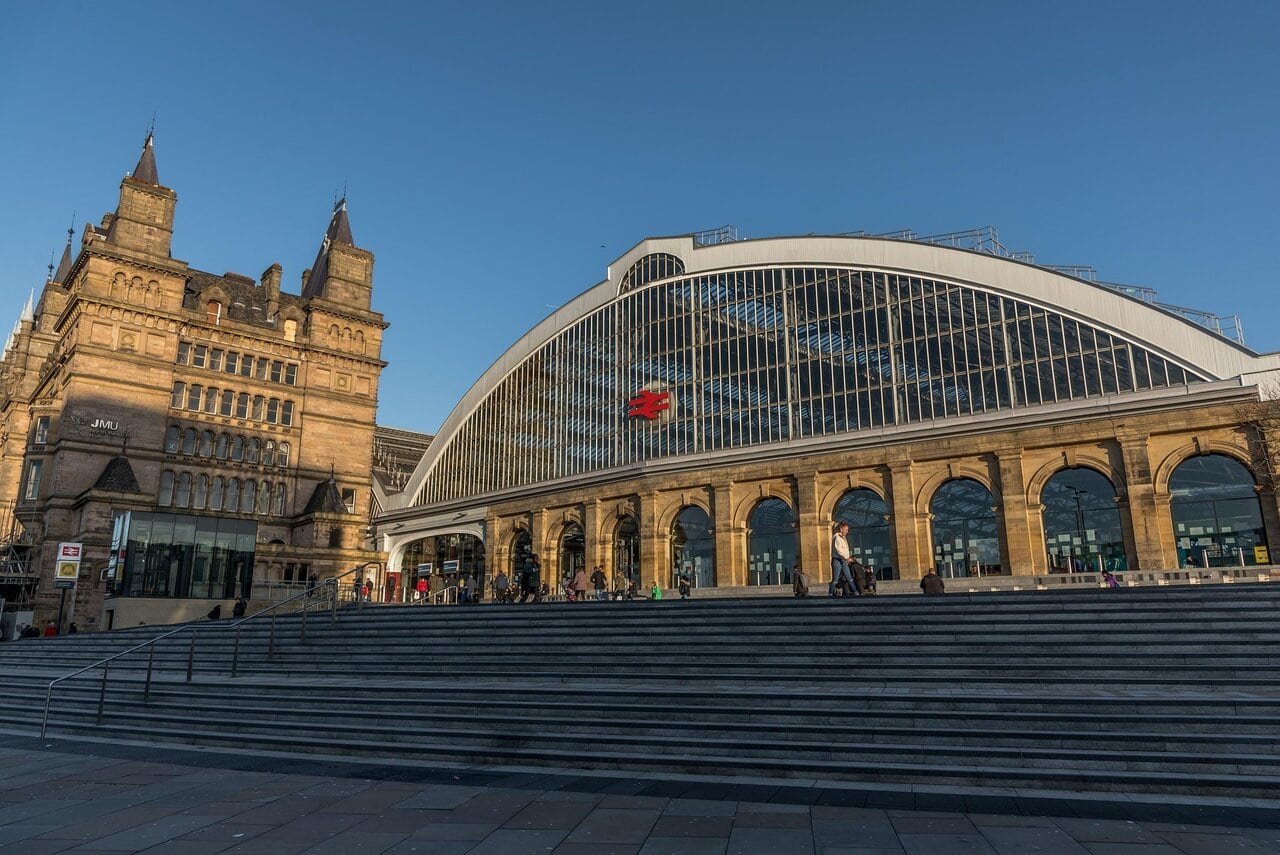
Trains usually depart from Manchester Piccadilly and Manchester Victoria, the two main stations most travellers will use for this route. Both offer regular services to Liverpool Lime Street, which is Liverpool’s main railway station and sits right in the heart of the city centre. That direct arrival point is a major advantage, because it puts you within easy reach of shops, landmarks, museums, and the waterfront without needing extra transport.
Journey times are typically between 30 and 50 minutes, depending on the service. Some trains are quicker semi-fast services with fewer stops, while others call at more intermediate stations along the route. Even the slower services are still very manageable, which is one of the reasons rail dominates on this journey.
Another major benefit is frequency. Services generally run every 15 to 30 minutes throughout the day, so you usually do not need to plan too rigidly. That makes the train ideal for travellers who want flexibility, are meeting friends, attending events, or simply do not want to commit to a narrow departure window.
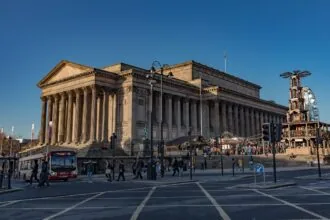
The main operators on this route are Northern and TransPennine Express, along with East Midlands Railway, although Northern runs most of the services travellers are likely to use. All trains arrive at Liverpool Lime Street, which is well placed for St George’s Hall, the shopping district, central hotels, and onward walks toward the waterfront.
Ticket prices vary depending on time of day, ticket type, and how early you book. Advance fares can sometimes be found for around £5 to £8 (around $6–$10 / €6–€9), while typical off-peak tickets are often around £10 to £15 (around $13–$19 / €12–€17). If you buy on the day, especially during commuter hours, prices can be higher.
One of the strongest advantages of travelling by train is pure convenience. You can arrive at the station shortly before departure, board with minimal fuss, and get into central Liverpool quickly without worrying about traffic, motorway delays, or parking costs. For that reason, the train gives most travellers the best overall combination of speed, reliability, and simplicity.

Book Your Manchester Rail Journey with Omio
Omio can help you organise rail travel involving Manchester by bringing routes, departure times and ticket options together in a single search.
This is especially handy when your itinerary uses more than one transport company or you are travelling between cities in different European countries.
Scan to open
on your phone

Bus from Manchester to Liverpool: Cheapest Option
Taking the bus from Manchester to Liverpool is usually the cheapest way to travel between the two cities, and it can be a very sensible option if train fares are high, you are booking late, or your priority is simply keeping costs down.
Several operators run this route, with the main names being National Express, FlixBus, and Megabus. Services generally run throughout the day, often every one to two hours, although frequencies are usually a little lower later in the evening. That means the bus is less flexible than the train, but still frequent enough for many travellers.
Journey times are normally around 1 hour to 1 hour 30 minutes, although this depends heavily on traffic conditions. Because buses rely on the motorway network rather than rail infrastructure, delays are more likely, especially when leaving Manchester, entering Liverpool, or travelling during rush hour, weekends, or major event periods.
Most services leave from Manchester Coach Station on Chorlton Street, which is close to Manchester Piccadilly and easy to reach on foot, by tram, or by taxi. Some departures also use Shudehill Interchange, which is more convenient if you are coming from around Manchester Victoria or the Northern Quarter.
In Liverpool, buses usually arrive at Liverpool ONE Bus Station, which is actually a very useful arrival point for visitors. It places you close to Albert Dock, the waterfront, the main shopping district, and a wide range of hotels, while Liverpool Lime Street is roughly a 10 to 15 minute walk away.
Bus fares are usually lower than rail fares. If you book ahead, you can often find tickets for around £4 to £6 (around $5–$8 / €5–€7), while more typical fares tend to sit around £6 to £10 (around $8–$13 / €7–€12). Even last-minute prices are often still competitive, which is one of the main reasons the bus remains appealing.
The biggest advantage of the bus is clearly price. The biggest drawback is journey time and traffic dependence. If you are on a tighter schedule, the train is usually the better choice. If your main goal is to travel as cheaply as possible, though, the bus is a perfectly reasonable and often very good-value option between Manchester and Liverpool.
Book Your Manchester Coach Journey with Busbud
Busbud can help you organise bus and coach travel involving Manchester by bringing routes, timetables and ticket options together in one search.
This can be especially useful when travelling between cities or across regions where multiple coach companies operate.
Driving from Manchester to Liverpool: Flexible but Traffic Dependent
Driving from Manchester to Liverpool gives you the most flexibility, but it is not always the fastest or easiest option, especially during busy travel times.
The journey between Manchester and Liverpool is around 35 miles and usually takes between 45 minutes and 1 hour, depending on traffic. The main route is via the M62 motorway, which directly connects the two cities and is the most straightforward route for most drivers.
The biggest advantage of driving is flexibility and convenience. You can leave whenever you want, stop along the way if needed, carry luggage easily, and travel directly to your final destination without needing taxis or public transport at either end.
However, the main downside is traffic. The M62 is a very busy motorway, particularly during morning and evening rush hours, and delays are quite common. Accidents or roadworks can also quickly increase journey times, so driving is not always predictable.
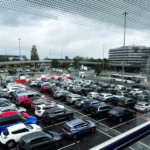
Parking in Liverpool is generally easy to find, but city centre parking can be expensive. There are several large car parks near Liverpool ONE, Albert Dock, and Liverpool Lime Street, but you should expect to pay city centre parking rates, especially during weekends and events.
If you are visiting Liverpool for the day, the train is often easier because you arrive directly in the city centre without needing to park. However, if you are travelling as a group, staying outside the city centre, or continuing your journey elsewhere, driving can make more sense.
Overall, driving is a straightforward route via the M62, but for most visitors travelling between city centres, the train is usually still the simpler option.
Best Option for Most Travellers: What We Recommend
If you are planning a Manchester to Liverpool trip and want the simplest and most reliable option, the answer is clear: take the train.
The train is the fastest option, runs frequently throughout the day, and takes you directly into Liverpool city centre without any complications. There is no need to worry about traffic, parking, or long transfer times, which makes it the most efficient choice for most travellers.
One of the biggest advantages is flexibility. Because services run so regularly, you do not need to commit to a fixed departure time. You can simply arrive at the station, board the next available service, and be in Liverpool within under an hour.
For most travellers, this comes down to predictability and ease. The train offers consistent journey times and avoids the delays that can affect both road travel and buses, which is especially important if you are working to a schedule or planning a day trip.
That said, there are situations where other options make sense. If you are travelling on a tighter budget, the bus can be cheaper, although you will need to allow more time. If you are already driving or want complete independence, the car offers flexibility, but with the added risk of delays and parking costs.
For the majority of travellers, however, the train provides the best overall balance of speed, convenience, and reliability, which is why it remains the recommended choice.
How Long to Spend in Liverpool
When planning a Manchester to Liverpool trip, it is important to think about what you want to get out of your visit, because Liverpool offers far more depth than many travellers expect.
Liverpool is very easy to explore in a short amount of time because many of the main attractions are concentrated around the city centre, waterfront, and Albert Dock area. This compact layout means you can see a lot without needing complicated planning, especially if you already have a clear idea of what you want to prioritise.
If you are unsure where to start, it is worth reviewing a full Liverpool travel guide before you go, as this will help you map out the main highlights and avoid missing key areas.
If you are aiming for a simple visit, such as walking along the waterfront, exploring Albert Dock, seeing the Royal Liver Building, and stopping for food or shopping, then around 4 to 6 hours is usually enough. This makes Liverpool a very manageable half-day or relaxed day trip from Manchester.
However, if you want a more complete experience, a full day is strongly recommended. Liverpool has several standout attractions that are worth allowing proper time for. For example, the The Beatles Story is one of the most popular experiences in the city and can easily take a couple of hours on its own.
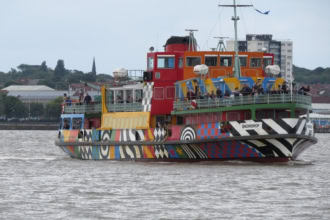
Similarly, taking a Mersey Ferries sightseeing cruise offers a completely different perspective of the city, giving you views of the skyline and waterfront that you simply do not get from land.
One of Liverpool’s biggest advantages is how walkable the city centre is. You can move from Liverpool Lime Street to Albert Dock in around 15 to 20 minutes, with most major attractions sitting within this area. This makes it one of the easiest cities in the UK to explore on foot, even if you are visiting for the first time.
Many travellers arrive expecting a quick visit and are surprised by how much there is to see. If your schedule allows, it is usually better to arrive early and leave later in the day, rather than trying to rush everything into a short visit.
Overall, Liverpool works extremely well as a day trip from Manchester, but it also rewards those who give themselves enough time to explore properly and experience more than just the highlights.
What to Expect When You Arrive
Arriving in Liverpool feels noticeably different from Manchester, even though the two cities are so close. The atmosphere shifts from a busy commercial centre to a more open, waterfront-focused environment, with a strong sense of identity and history.
If you arrive by train, you will step out at Liverpool Lime Street, placing you immediately in the city centre. From there, it is a short walk to the main shopping streets, cultural landmarks, and routes leading down toward the waterfront.
As you move through the city, the layout gradually opens up, particularly as you approach the Albert Dock and River Mersey. This is one of Liverpool’s defining features, with wide open spaces, historic buildings, and views across the water that create a very different feel compared to inland cities.
Liverpool offers a strong mix of historic architecture, museums, shopping areas, restaurants, and open waterfront spaces, all within a relatively compact area. This makes it easy to explore without feeling overwhelmed, even during busier periods.
The city can become busy at weekends, during major events, or on match days, but its layout helps absorb crowds effectively. Movement around the centre is usually straightforward, and most areas are easy to navigate on foot.
Liverpool is a city that rewards exploration rather than rushing. The more you walk, the more you discover, particularly as you move between the city centre and the waterfront.

Rupert’s Handy Travel Tips
Rupert loves Liverpool for one simple reason: the waterfront. Give him sea air, big open views, and a wander around Albert Dock, and he’s happy. He’s even tried the local dish, scouse, and now insists every visit should include a stop for food before heading back to Manchester. After a few trips across, he’s picked up some simple habits that make the journey smoother every time.
- Check your departure station carefully: Manchester Piccadilly and Victoria both run trains, so make sure you are heading to the right one.
- Avoid peak commuter times: weekday mornings and evenings can be busy, especially on popular services.
- Save your ticket offline: signal can drop in stations, so having your ticket ready avoids delays at the gate.
- Allow extra time for events: football matches and concerts in Liverpool can increase demand and crowd levels.
- Plan your return journey: late evening services run less frequently, so check your options before you travel.
Want to meet the reindeer behind our travel tips? Find out more in our page Who is Rupert?.


Frequently Asked Questions
Is it better to take the train or bus from Manchester to Liverpool?
For most travellers, the train is the best option. It’s faster, more frequent, and takes you directly into the city centre. Buses can be cheaper, but the journey is longer and more dependent on traffic.
How long is the journey from Manchester to Liverpool?
The train typically takes around 35 to 50 minutes, depending on the service. Buses can take 1 hour to 1 hour 30 minutes, while driving times vary based on traffic.
Can you do Liverpool as a day trip from Manchester?
Yes, and it’s one of the easiest day trips in the UK. The short travel time makes it ideal, and you can comfortably explore the city in a few hours or stay for a full day.
Do I need to book train tickets in advance?
Not always. Turn-up-and-go tickets are widely available, but booking in advance can help you save money if you’re travelling at a fixed time.
Is Liverpool easy to get around without a car?
Yes. The city centre is very walkable, and most major attractions are close together. Public transport is available, but many visitors won’t need it.
Best if you can move a day either way. Shows how the fare to Liverpool changes across the month.
Compare flightsBest for short trips. Install the eSIM at home and arrive in Liverpool with working data, no shop queue.
Browse eSIMsBest when public transport has stopped, or when you are travelling with children and bags.
Book a transferFurther Reading & Related Guides
If you are planning your trip in more detail, it is worth starting with our full Liverpool travel guide, which breaks down the city’s main attractions, neighbourhoods, and must-see highlights so you can make the most of your time once you arrive. This is especially useful if you are deciding how long to stay or what to prioritise during a day trip.
To experience Liverpool from a different perspective, our Mersey Ferries sightseeing guide explains how to see the waterfront from the river, including routes, ticket options, and what to expect on the cruise. It is one of the easiest ways to understand the layout of the city while also enjoying some of its best views.
If you are interested in Liverpool’s music history, our guide to The Beatles Story takes you through one of the city’s most popular attractions, helping you plan your visit and understand what makes it such a key stop for first-time visitors.
If you are travelling via Manchester, it is also worth checking our Manchester travel guide to help you navigate the city before departure, as well as our Manchester Airport train guide if you are arriving by air and need the fastest route into the city centre.
Finally, to make your journey smoother, our guides to the best train booking apps and bus booking apps will help you compare tickets, find better prices, and manage your travel more efficiently across the UK and beyond.