Reviewed by our editorial team Updated
Why July Is Peak Travel Season Around the World
July is one of the busiest travel months of the year, and for good reason. School holidays, warm weather across Europe, and long daylight hours in northern countries make it one of the easiest times of year to plan a trip. Whether you are looking for beaches, mountains, city breaks, wildlife or a longer multi-stop journey, July offers a huge range of destinations that are at their best during mid-summer.
Across Europe, July means outdoor dining, festivals, open-air concerts, and lively city atmospheres. Coastal destinations are in full summer mode, ferry routes and transport networks are running at maximum frequency, and tourist attractions are open long hours. Everything is open, everything is running, and destinations feel alive, which makes July very easy for travel planning.
However, July also has some downsides. Popular cities like Rome, Athens, and Seville can become extremely hot, and many Mediterranean destinations are very busy and more expensive. This means choosing the right destination becomes more important in July than in shoulder season months like May or June.
Some of the best places to visit in July are actually in northern Europe, mountain regions, or wildlife destinations, where the weather is warm but not unbearably hot. Countries like Norway, Switzerland, Scotland, Canada, and Iceland are often at their absolute best during July, with long days, green landscapes, and excellent conditions for road trips and outdoor travel.
If you plan carefully and choose the right region, July can be one of the best months of the year for travel, especially for scenic trips, festivals, beaches, and outdoor adventures.
Best Places to Visit in July at a Glance
| Destination | Best for in July | July advantage | Main trade-off |
|---|---|---|---|
| Swiss Alps | Mountain railways and hiking | Open trails, green valleys and full summer transport | Peak-season prices can be high |
| Norwegian Fjords | Scenic rail, ferries and road trips | Very long days and strong summer access | Accommodation and transport need early booking |
| Edinburgh | City breaks and Scottish day trips | Long daylight and lively pre-Fringe atmosphere | Weather can still be changeable |
| Greek Islands | Beaches and island hopping | Warm seas and frequent ferry schedules | Heat, crowds and high prices |
| Algarve | Atlantic beaches and boat trips | Reliable summer sun and full coastal activity | Popular resorts are busy |
| Canadian Rockies | Road trips and national parks | Long days and broad summer access | Very high visitor demand |
| Iceland | Road trips and landscapes | Near-continuous daylight for sightseeing | No realistic northern-lights viewing |
| Tanzania & Kenya | Safari and wildlife | Dry season and Great Migration activity | Peak safari pricing and lodge demand |
| Hokkaido | Cooler Japanese summer and outdoor travel | Flower fields, national parks and milder conditions | Popular flower areas book up early |
Best if you want daily housekeeping and a front desk. Filter by area first, then by price.
Check availabilityBest for groups who want one address and separate bedrooms rather than three hotel rooms.
See holiday homesBest if you have already picked a hotel. Checks the big booking sites for the same room and shows who is cheapest.
Check dealsJuly Destinations in Detail
July is a fantastic month for a wide range of travel styles, from city breaks and beach holidays to mountain trips, road trips, wildlife travel and longer multi-stop journeys. The key to choosing where to travel in July is understanding that southern destinations can be very hot, coastal areas are busy, and northern destinations are often at their most accessible.
For travellers who enjoy scenery and outdoor travel, places like the Swiss Alps, Norwegian fjords, Iceland, and the Canadian Rockies are among the best destinations in the world during July. Snow has melted, hiking routes are open, lakes are bright blue, and daylight lasts well into the evening.
If you are looking for beaches and hot weather, the Mediterranean is still one of the best options. The Greek Islands, southern Spain, Portugal’s Algarve coast, and Croatia are all excellent choices for sunshine, sea, and lively summer atmosphere. July is peak beach season across Europe, and coastal towns are at their most vibrant.
July also opens up several destinations that reward a longer journey, including East Africa for safari trips, Hokkaido in northern Japan, and major national-park regions in North America. The common thread is not flight distance but a strong seasonal window that is difficult to reproduce at other times of year.
Overall, July works best when you match the trip to the season rather than forcing every destination into the same summer pattern. Mountain and scenic regions suit travellers who want cooler outdoor days, coastal destinations work for those who actively want peak beach season, and northern road-trip regions make the most of the month’s long daylight hours.
The destinations below are some of the best choices for July travel.
Swiss Alps, Switzerland: Mountain Railways, Lakes and High-Summer Hiking
The Swiss Alps are one of the best places to visit in July if you enjoy mountains, scenery, hiking, and beautiful landscapes. July is peak summer in the Alps, which means green valleys, wildflowers, open hiking trails, and clear views of mountains and lakes.
Popular areas such as Interlaken, Zermatt, Lucerne, Grindelwald, and Lauterbrunnen are all excellent bases for exploring the region. Cable cars and mountain railways run frequently in summer, allowing you to reach high viewpoints without needing to hike long distances. The views from places like Jungfraujoch, Schilthorn, and the Matterhorn region are some of the most famous in Europe.
July is also perfect for lake activities. Lakes such as Lake Lucerne, Lake Brienz, and Lake Geneva are warm enough for boat trips, swimming, and lakeside walks. Many towns hold summer festivals, outdoor concerts, and food markets during July, which adds to the atmosphere.
One of the biggest advantages of visiting the Swiss Alps in July is the weather. Temperatures are usually warm during the day but cool in the evenings, which makes it very comfortable for walking and sightseeing compared to extremely hot cities elsewhere in Europe.
The Swiss Alps are not a cheap destination, but July is one of the best times to make the rail network part of the trip rather than simply using it to get from A to B. Our European rail-pass guide explains some of the ticket options worth comparing, while the official Switzerland Tourism Swiss Travel Pass page gives the current coverage, validity and mountain-rail discounts before you buy.
Norwegian Fjords: Scenic Railways, Waterfalls and Midnight-Sun Road Trips
Norway is another destination that is at its absolute best in July. The Norwegian fjords are famous for dramatic cliffs, waterfalls, deep blue water, and small villages surrounded by mountains. July offers long daylight hours, mild weather, and excellent road trip conditions, making it one of the best months to explore the country.
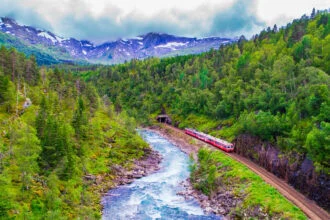
Famous fjords such as Geirangerfjord, Nærøyfjord, and Sognefjord are among the most scenic places in Europe. Many travellers explore the region by combining ferry journeys, scenic train routes, and road trips between Bergen, Ålesund, and Trondheim. Our Bergen Line guide, Flåm Railway guide and Bergen ferry guide are useful starting points for building that kind of July itinerary.
One of the most unique things about travelling in Norway during July is the long daylight hours. In northern Norway, the sun barely sets, and even in southern Norway it stays light very late into the evening. This gives you much more time to explore each day and makes road trips feel far more relaxed.
Outdoor activities are a major reason to visit Norway in July. Hiking, kayaking, boat trips, and scenic drives are all at their best during summer. The famous Atlantic Ocean Road and Trollstigen mountain road are particularly popular driving routes at this time of year.
Norway is known for being expensive, but the scenery, landscapes, and travel experience are among the most impressive in Europe, and July is widely considered one of the best months to visit the Norwegian fjords.

Edinburgh, Scotland: Long Evenings, Castle Views and Pre-Fringe Energy
Edinburgh is one of the best European cities to visit in July, especially if you enjoy history, architecture, and lively summer atmosphere. The city feels completely different in summer compared to winter, with outdoor seating, street performers, festivals, and long daylight hours that make sightseeing much more enjoyable.
The historic centre of Edinburgh is compact and easy to explore on foot. The Royal Mile, Edinburgh Castle, Holyrood Palace, and Arthur’s Seat are all major highlights, and July is an excellent time to walk around the city because the weather is usually mild rather than hot. The views across the city from Calton Hill and Arthur’s Seat are particularly impressive on clear summer evenings.
July is also the build-up to the famous Edinburgh Festival Fringe in August, so the city already has a lively atmosphere with performers, events, and visitors arriving early. Restaurants, pubs, and cafés are busy late into the evening, and the city has a very energetic summer feel.
Edinburgh is also a great base for exploring more of Scotland. Our Things to Do in Edinburgh guide covers the city itself, while the Day Trips from Edinburgh guide opens up castles, coastline and the Highlands. If you want a mix of city break and scenic travel, Edinburgh is one of the strongest July options.
Compared to southern Europe, temperatures are much cooler, which makes walking and sightseeing far more comfortable during mid-summer.
Greek Islands: Peak Ferry Season, Warm Seas and Late-Night Island Life
The Greek Islands are one of the classic July holiday destinations, particularly if you are looking for guaranteed sunshine, beaches, and island hopping. Islands such as Santorini, Mykonos, Crete, Rhodes, Corfu, and Naxos are all excellent choices during July.
July is peak summer season in Greece, which means hot weather, warm sea temperatures, and very lively towns and resorts. The islands are busy, but they also have a great atmosphere with late-night restaurants, beach bars, boat trips, and festivals.
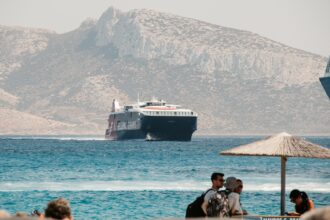
Island hopping is one of the best ways to experience Greece in July. Ferries run frequently between islands, and routes between Athens, Santorini, Mykonos, Paros, and Naxos are particularly popular. This allows you to combine different islands in one trip rather than staying in just one place.
One important thing to consider is that some islands are much busier than others. Santorini and Mykonos are very popular and can be expensive, while islands like Naxos, Paros, and Corfu often offer a more relaxed atmosphere and better value accommodation.
If your main goal is sunshine, beaches, and classic summer holiday atmosphere, the Greek Islands are among the best places to visit in July.
Algarve, Portugal: Atlantic Beaches, Boat Trips and Full Summer Sun
The Algarve region in southern Portugal is one of the most reliable beach destinations in Europe during July. Expect hot weather, clear skies, and some of the best beaches in Europe, with dramatic cliffs, golden sand, and clear Atlantic water.
Popular towns in the Algarve include Lagos, Albufeira, Faro, Portimão, and Tavira. Faro is particularly useful as both a destination and a base, with an attractive old town and easy access to the Ria Formosa islands. Our Things to Do in Faro guide covers the city in more depth, while the Day Trips from Faro guide helps build out the wider Algarve.
Boat trips along the Algarve coast are one of the highlights of visiting the region. Many tours visit sea caves, hidden beaches, and famous rock formations such as Benagil Cave. These trips are very popular in July because the sea is usually calm and the weather is almost always sunny.
The Algarve is also a good destination if you want a mix of relaxing beach days and exploring towns and markets. Portugal is often slightly cheaper than Spain, Italy, or Greece, which can make it a good choice for a July holiday when prices are high across much of Europe.
For travellers looking for hot weather, beaches, and good value compared to other summer destinations, the Algarve is one of the best July travel destinations in Europe.
Best if you can move a day either way. Shows how the fare changes across the month.
Compare flightsBest for anyone whose home plan charges by the megabyte abroad. Pay a fixed price up front.
Check eSIMsBest if you would rather not work out the transport on arrival. Book it now and forget it.
View transfersCanadian Rockies, Canada: Turquoise Lakes, Wildlife and Full Summer Road Access
If you prefer scenery, wildlife, and outdoor travel rather than beaches, the Canadian Rockies are one of the best places in the world to visit in July. Banff and Jasper National Parks are famous for mountains, glaciers, forests, and bright blue lakes such as Lake Louise and Moraine Lake.
July is peak season in the Canadian Rockies because many roads, hiking trails, and scenic routes are open after the winter snow, although local closures and restrictions can still apply, and the lakes have thawed and turned their famous turquoise colour. Wildlife is also very active during summer, and it is common to see elk, deer, bears, and mountain goats.
One of the most popular trips in this region is driving the Icefields Parkway between Banff and Jasper, which is often considered one of the most scenic drives in the world. The route passes glaciers, waterfalls, lakes, and mountain viewpoints along the way.
Many travellers combine the Canadian Rockies with cities such as Vancouver or Calgary, creating a larger road trip across western Canada. July offers warm days, cool evenings, and very long daylight hours, which gives you more time to explore each day.
For scenic travel, road trips, and nature holidays, the Canadian Rockies are one of the best places to visit in July anywhere in the world.
Iceland: Midnight Sun, Open Highlands and Maximum Road-Trip Freedom
Iceland is one of the most unique destinations in the world, and July is one of the very best months to visit. The biggest reason is the extremely long daylight hours, often close to 24 hours of light, which allows you to explore far more each day than you normally could on a trip.
July is ideal for driving the famous Ring Road around Iceland, visiting waterfalls such as Seljalandsfoss and Skógafoss, exploring glaciers and volcanoes, and seeing black sand beaches along the south coast. Many of Iceland’s highland roads and more remote areas are only accessible in summer, so July gives you access to parts of the country that are closed for much of the year.
The weather in Iceland is mild rather than hot, usually around 12–18°C, which is perfect for hiking, sightseeing, and road trips. You can comfortably explore all day without worrying about extreme heat or cold, which makes Iceland very easy for active travel.
Whale watching is also very popular in July, particularly from towns like Húsavík and Akureyri in the north of the country. Puffins can also be seen along many coastal cliffs during summer.
Iceland is not a cheap destination, but if you are planning a road trip, a nature trip, or a photography trip, July is widely considered the best month of the year to visit Iceland.
Tanzania & Kenya: Dry-Season Safaris and Great Migration Wildlife
July is one of the best months of the year for safari trips in East Africa, particularly in Tanzania and Kenya. This is the dry season, which means animals gather around water sources and are much easier to spot than during the rainy season when vegetation is thick.
One of the biggest wildlife events in the world, the Great Migration, usually takes place around July and August, when millions of wildebeest and zebras move between Tanzania’s Serengeti and Kenya’s Maasai Mara. Seeing river crossings during the migration is considered one of the most spectacular wildlife experiences in the world.
Game drives are very good during July because roads are dry, wildlife is active, and temperatures are warm but not extremely hot. Early morning and evening safaris are usually the best times to see lions, elephants, giraffes, and other animals.
Many travellers combine a safari with a beach holiday in Zanzibar after their safari, which creates a very balanced trip combining wildlife and relaxation.
Safaris are not cheap, but July is one of the absolute best months for wildlife viewing, which is why it is peak safari season in East Africa.
Hokkaido, Japan: Cooler Summer Weather, Flower Fields and National Parks
Hokkaido is one of Japan’s strongest July choices because summer is generally cooler than in cities such as Tokyo, Kyoto and Osaka. That makes the island particularly attractive for travellers who want Japanese food, scenery and culture without building the whole trip around hot and humid city sightseeing.
July is particularly good for Hokkaido’s flower fields, national parks and outdoor landscapes. Furano and Biei are known for colourful summer fields, while areas such as Daisetsuzan National Park offer hiking, volcanic scenery and cooler mountain conditions. Sapporo adds a city element, so the trip does not have to be entirely rural.
Hokkaido also works well for travellers who want to move around rather than stay in one place. Rail links connect Sapporo with cities such as Otaru, Asahikawa and Hakodate, while a hire car can make rural flower fields, lakes and national parks much easier to reach. July is popular, so accommodation around major flower areas should still be booked early.
Hokkaido can also be easier to pace than a city-heavy Japan itinerary. You can combine Sapporo with flower fields, lakes, mountain areas and smaller towns without spending the whole trip moving through dense urban environments, which is part of what makes it such a good fit for July.
For travellers who want a cooler Japanese summer with scenery, rail travel and outdoor time, Hokkaido is one of July’s strongest alternatives to the hotter cities further south.
Best European City Breaks in July
Europe in July is lively, busy, and full of events, and it is one of the best times of year for city breaks if you plan carefully. The key is choosing cities that are warm but not unbearably hot, and cities that have parks, rivers, or coastal locations where you can cool down.
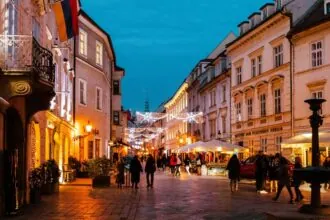
Northern and Central European cities are often the best choices in July. Cities such as Amsterdam, Copenhagen, Stockholm, Edinburgh, Dublin, Prague, and Vienna all have warm weather, long daylight hours, and lots of outdoor events during summer. Restaurants and bars spill out into squares and riversides, and many cities host outdoor cinemas, concerts, and festivals.
Southern European cities like Rome, Athens, and Seville can be extremely hot in July, often exceeding 35°C, which can make sightseeing tiring. Coastal cities such as Barcelona, Lisbon, and Nice are usually better choices because sea breezes keep temperatures more comfortable.
July is also one of the best months for walking tours, river cruises, rooftop bars, and outdoor dining across Europe, which makes city breaks feel very different compared to visiting in winter.
Best Beach Destinations in July
July beach travel is much broader than the Mediterranean. The best choice depends on whether you want classic high-summer heat, tropical dry-season conditions, reef and wildlife experiences, or a beach trip where the weather is warm without being at its hottest.
Across the Mediterranean and Atlantic Europe, the Greek Islands, Croatia and Portugal’s Algarve offer classic July conditions with warm seas, busy waterfronts and full ferry or boat-tour schedules. The Algarve gives the section a slightly different feel because its Atlantic beaches and towns such as Faro, Lagos and Tavira work well for travellers who want coast plus day trips rather than an all-inclusive resort stay.
In East Africa, Zanzibar works well as a beach extension to a Tanzania or Kenya safari, giving July travellers a very different combination of wildlife and Indian Ocean coast. In the South Pacific and tropical Australia, the Whitsundays are also worth considering: July falls within the region’s drier winter period, with mild conditions, reef trips and the chance to see humpback whales moving through the area.
The Caribbean needs a more careful July choice because Atlantic hurricane season is underway. Aruba and Curaçao sit farther south than many of the islands most exposed to tropical systems, but no Caribbean trip should be planned from a simple ‘safe island’ label. Check current forecasts and cancellation terms, especially if weather certainty matters more than price.
If your main goal is sun and sea, July offers some of the best beach conditions of the entire year, particularly around the Mediterranean and parts of Southeast Asia.
Best for short city stops where being central matters more than the room. Dorms and private rooms both listed.
See hostelsBest if you have ever given up on a claim. AirHelp checks whether the flight qualifies and pursues it for you.
See the benefitsBest for a day with a suitcase and nowhere to put it. Find a storage point near where you already are.
View storageDestinations Worth a Longer July Trip
July can justify a longer trip when the destination offers something that is hard to replicate closer to home: major wildlife migrations, huge national parks, Arctic daylight, or a cooler regional climate such as Hokkaido. The useful question is not whether a destination is ‘long haul’, because that depends on where the reader starts, but whether the seasonal experience is strong enough to justify the journey.
Canada and the northern United States are excellent in July. Cities like Vancouver, Toronto, and Seattle have warm weather, and national parks such as Banff, Jasper, Yellowstone, and Yosemite are fully open and accessible. Road trips are particularly popular in North America during July, with long daylight hours and good driving conditions.
East Africa is also at its best in July due to safari season and the Great Migration, while northern Japan, particularly Hokkaido, offers a cooler summer alternative with flower fields, national parks and outdoor travel.
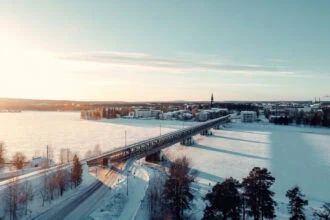
Scandinavia is another strong July choice for travellers who want something different from peak Mediterranean summer. Norway, Sweden and Finland have extremely long days, and outdoor travel is at its best. How practical the journey is depends on where you are starting, so it is more useful to compare travel time from home than to apply a fixed haul label.
Where Is Hot in July? Quick Destination Comparison
If you are choosing a destination based mainly on temperature and sunshine, July offers many hot-weather destinations across Europe, the Middle East, Asia, and the Caribbean. However, some places are hot but comfortable, while others are extremely hot and better suited for resort holidays rather than sightseeing.
Southern Europe is one of the easiest options for UK travellers looking for hot weather. Spain, Portugal, Italy, Greece, and Turkey are usually between 28°C and 35°C in July, with very reliable sunshine. Coastal areas are usually more comfortable than inland cities.
The Canary Islands are also a good choice because they are warm year-round but usually not as extremely hot as mainland Spain. This makes them a reliable summer destination.
Dubai and the Middle East are extremely hot in July, often above 40°C, but this results in very cheap luxury hotels. These destinations are best if you plan to stay mostly in hotels, shopping centres, and resorts rather than sightseeing outdoors.
Southeast Asia is mixed in July because monsoon patterns vary sharply by region, so country-wide labels are not very useful. The Caribbean is also hot, but Atlantic hurricane season is underway, which makes flexibility and good cancellation terms more important than simply chasing the highest temperatures.
If hot weather is the priority, Mediterranean and Atlantic-coast destinations can work well in July, but tropical regions need a more careful regional weather check rather than a one-line country recommendation.
Cheap Holidays in July: Where Your Money Goes Further
July is peak travel season, which means many destinations are expensive, especially during school holidays. However, there are still places where your money goes much further, particularly if you avoid the most famous tourist hotspots and look at alternative regions.
Eastern Europe is often one of the best value regions in July. Cities such as Budapest, Krakow, Sofia, Bucharest, and Zagreb offer warm weather, beautiful historic centres, and much lower prices than cities like Paris, Rome, or Amsterdam. Accommodation, restaurants, and public transport are usually significantly cheaper, which can make a big difference to the total cost of a trip.
Portugal can also offer good value compared to many Mediterranean destinations, particularly outside the most expensive resort areas. Northern Spain is another good option, with cities like Bilbao, Santander, and San Sebastián offering beaches and great food without the extreme heat of southern Spain.
For travellers considering a longer journey, parts of Southeast Asia can still offer relatively low daily costs in July, although weather varies sharply between Indonesia, Thailand and Vietnam. Compare the exact region rather than assuming one climate applies across Southeast Asia, and weigh the lower day-to-day costs against potentially higher peak-season airfares from your own starting point.

July Festivals, Events and Seasonal Highlights
One of the reasons July is such a popular travel month is the number of festivals, events, and seasonal activities taking place around the world. Many cities host outdoor concerts, food festivals, cultural events, and national celebrations during mid-summer.
Across Europe, July is peak festival season. Many towns host local food and wine festivals, outdoor cinemas, and music events. Coastal towns are particularly lively, with night markets, waterfront restaurants, and late-night summer atmosphere.
In Scotland, the Edinburgh festival season begins in late July and continues into August, bringing performers and visitors from around the world. Spain hosts many local festivals during summer, while France and Italy have outdoor markets and evening events in many towns and cities.
Scandinavia is also very lively in July due to the long daylight hours. People spend a lot of time outdoors, and many towns host summer celebrations, concerts, and cultural events.
July is also excellent for nature and wildlife travel. National parks in Canada and the USA are fully open, safari season is underway in East Africa, and mountain regions across Europe are at their best for hiking and scenic travel.
Planning a trip around festivals or seasonal events can often make a July trip much more memorable, rather than just visiting a destination without knowing what is happening locally.
In July, Latitude and Altitude Can Matter More Than Sunshine
July is one of the months when chasing the highest temperature can actively make a trip worse. Southern European cities can be extremely hot, while northern and mountain destinations are enjoying some of their most usable weather of the year. That is why Norway, Scotland, the Swiss Alps and Hokkaido can be more rewarding July choices for travellers who want to spend most of the day outdoors.
The practical difference is how much of the day you can comfortably use. A July itinerary in the Alps or Norwegian fjords can revolve around hiking, rail journeys and long scenic evenings, while a hotter city may require early starts and a slower afternoon. Instead of treating cooler weather as a compromise, July is a month when it can be the main advantage.
Make the Journey Part of the July Holiday
July is also one of the best months for building an itinerary around transport rather than treating every journey as dead time. Switzerland’s mountain railways, Norway’s scenic trains and fjord ferries, and the dense summer ferry network across the Greek Islands are all operating in their strongest seasonal window. Long daylight hours make it easier to turn a transfer day into a sightseeing day.
This works particularly well for multi-stop trips. A Swiss itinerary can combine lakes, panoramic trains and mountain towns without a car; Norway can link Oslo, Bergen and the fjords by rail and ferry; and Greece can become a sequence of islands rather than one resort stay. July’s crowds mean reservations matter, but the transport itself can be one of the reasons to travel.

When July Is Not the Best Time to Go
July is peak season in many of the destinations people most want to visit, so the biggest problem is often not whether a place is good in July but whether it suits the type of trip you want. Heat, wildfire conditions, storm-season risk and very high demand can turn a theoretically ideal destination into a poor personal fit.
Inland and southern European cities can be uncomfortable during hot spells, particularly if your itinerary depends on walking for hours in the middle of the day. Rome, Athens, Seville and other hot cities are not automatically off limits, but travellers who struggle with heat may get more from northern Europe, coastal areas or mountain regions. Our Sunstroke Travel Guide explains the warning signs and practical precautions for very hot trips.
Mediterranean road trips and rural areas can also be affected by wildfire risk during hot, dry summer periods. Conditions vary by country and from week to week, so this is a reason to monitor local alerts rather than avoid an entire region. Our Wildfire Survival Guide for Travellers covers what to check before departure and what to do if conditions deteriorate while you are away.
Caribbean trips require more flexibility because Atlantic hurricane season is underway in July. Many holidays are completely unaffected, but travellers who need maximum weather certainty may prefer a different region or a booking with strong cancellation terms. The Hurricane and Typhoon Survival Guide explains how to prepare without overstating the risk.
Switzerland, Norway, the Greek Islands and the Canadian Rockies are excellent in July precisely because conditions are so good, but that also means accommodation, scenic trains, ferries, popular trails and major attractions can sell out. Travellers who want spontaneity and low prices may find June or September easier even if July offers the strongest full-summer atmosphere.

Rupert’s Handy Travel Tips
If you’re planning a trip in July, a little forward planning can make your holiday much easier and often much cheaper:
- Book early: July is peak travel season, so flights and hotels increase in price quickly as availability drops.
- Avoid the hottest cities: Cities like Rome, Athens, and Seville can be extremely hot in July, so consider coastal or northern destinations instead.
- Start sightseeing early: In hot destinations, explore in the morning, relax in the afternoon, and go out again in the evening.
- Check festival dates: Summer festivals can make destinations busier but also much more exciting to visit.
Want to meet the reindeer behind our travel tips? Find out more in our page Who is Rupert?.




Frequently Asked Questions About Travelling in July
Is July a good month to travel?
Yes, July is one of the most popular months to travel because the weather is warm across most of Europe and North America, and many destinations are in peak season with festivals, events, and long daylight hours. However, it can also be busy and more expensive than shoulder season months.
Where is hot in July but not too expensive?
Portugal, northern Spain, Croatia, and parts of Greece can offer a good balance of hot weather and reasonable prices. Eastern Europe can also be good value in July compared to Western Europe.
Are European cities too hot in July?
Some are. Cities like Rome, Athens, and Seville can be extremely hot in July. Northern European cities such as Amsterdam, Edinburgh, Copenhagen, and Stockholm are usually much more comfortable for sightseeing.
Is the Caribbean good in July?
The Caribbean is hot in July, but it is hurricane season in some areas. Islands such as Aruba, Barbados, and Curaçao are often considered safer options during this period.
Is July expensive for travel?
July is usually one of the most expensive months to travel due to school holidays and peak summer demand. Booking flights and hotels early is usually the best way to keep costs down.
Further Reading & Related Travel Guides
If your dates are flexible, compare July with our Best Places to Visit in June and Best Places to Visit in August guides. June can offer slightly lighter crowds and better value, while August pushes further into peak festival and beach season, so a few weeks can materially change prices, heat and availability.
For trips built around transport as part of the experience, our Bergen Line guide, Flåm Railway guide and Greek Ferries guide are particularly relevant to July. They work well with the month’s long days and full seasonal schedules, when rail and ferry journeys can become a genuine part of the holiday rather than just a transfer.
For the practical side of a multi-country summer trip, the Best eSIM Apps for Travel guide can help with staying connected, while Local Transport Apps Every Traveller Needs is useful when moving between unfamiliar cities, airports, rail stations and ferry ports.