Reviewed by our editorial team Published
Barcelona rewards visitors who give it real time, because this is a city built in layers rather than a single postcard view. Antoni Gaudí’s unfinished cathedral rises above the Eixample grid a short walk from grand Modernista mansions, while the medieval lanes of the Gothic Quarter sit only minutes from a working city beach. The result is a place where a morning inside a UNESCO-listed basilica can end with an afternoon barefoot on the sand.
This guide works through the city methodically, covering the headline Gaudí sites first before moving on to the museums, markets, parks and neighbourhoods that make Barcelona far more than its most photographed buildings. Because the city is genuinely dense and its Metro network is excellent, every attraction below is paired with its nearest station so wayfinding never becomes the obstacle it can be elsewhere.
A few practical notes apply across the whole page. Sagrada Família and Park Güell both require advance, timed-entry booking and regularly sell out days ahead in peak season, so these two should be the first tickets bought on any Barcelona trip, not an afterthought. A single Metro ticket costs around €3 (£3/$3), and a 10-trip T-Casual card covers most of what follows for around €13 (£11/$14).
Expect a genuine mix in the sections ahead: architectural icons, a working football stadium, two of the world’s great small museums, a hilltop fortress, a market that has fed the city for centuries, and honest coverage of where to shop, drink and eat once the sightseeing slows down. Prices and booking details were checked immediately before publishing, but Barcelona’s major sights change ticketing systems often, so it’s always worth confirming current times on the official site before travelling.
Barcelona’s Top Sights at a Glance
Before diving into the full guide, here’s a quick-scan summary of the page’s headline attractions, each paired with its nearest Metro stop and whether advance booking genuinely matters. Full detail on prices, hours and booking links follows in each attraction’s own section below.
| Attraction | Nearest Metro | Best For | Advance Booking Needed? |
|---|---|---|---|
| Sagrada Família | Sagrada Família (L2, L5) | Gaudí’s unfinished basilica | Yes, essential |
| Park Güell | Lesseps or Vallcarca (L3) | Gaudí’s mosaic hillside park | Yes, essential |
| Casa Batlló | Passeig de Gràcia (L2, L3, L4) | Gaudí’s dragon-roofed house | Recommended |
| Gothic Quarter | Jaume I (L4) or Liceu (L3) | Medieval lanes, free wandering | No |
| Barceloneta Beach | Barceloneta (L4) | City beach, seafront walks | No |
| Camp Nou | Palau Reial or Les Corts (L3) | FC Barcelona stadium tour | Recommended |
| Picasso Museum | Jaume I (L4) | Picasso’s formative years | Recommended |
| Montjuïc (Castle & Cable Car) | Paral·lel (L2, L3) plus funicular | Hilltop views and gardens | Recommended for cable car |
| La Boqueria Market | Liceu (L3) | Historic working food market | No |
| Barcelona Cathedral | Jaume I (L4) | Gothic cathedral and cloister | No |
Sagrada Família: Gaudí’s Unfinished Basilica
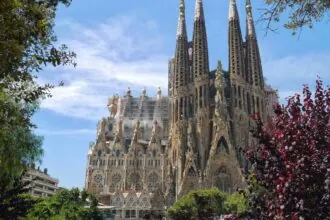
No building in Spain generates more curiosity than the Sagrada Família, Gaudí’s still-unfinished basilica that has been under construction since 1882. Its facades tell entirely different stories, the Nativity facade dense with carved nature, the Passion facade stark and angular, and inside, a forest of tilting stone columns filters coloured light through some of the most striking stained glass in Europe.
The basilica’s central towers were finally completed in October 2025, making this the most complete the building has ever looked in its 140-plus year history. A small amount of exterior work continues around the site, but it does not meaningfully affect a visit, and the interior is fully open to ticket holders as normal.
Booking ahead is not optional here. Basic entry runs from approximately €26 (£23/$28) for adults, with children under 11 entering free, while a ticket that adds access up to the towers costs from approximately €40 (£35/$43) and sells out fastest of all. Same-day tickets are rarely available, and slots can disappear a week or more in advance during summer, Easter and Christmas.
The basilica sits directly above its own Metro stop, making it one of the easiest major sights in the city to reach. Take L2 or L5 to Sagrada Família station, which opens almost onto the building’s plaza, and allow at least ninety minutes inside once towers or an audio guide are added to a basic visit.
Best for a short trip. Compare rooms by neighbourhood, price and guest rating before you book.
Compare hotelsBest for groups who want one address and separate bedrooms rather than three hotel rooms.
See holiday homesBest as a last check before booking. Compares hotel rates across several sites in one search.
Compare ratesPark Güell: Gaudí’s Joyful Mosaic Park
Park Güell began life as a failed housing development and became instead one of Gaudí’s most joyful public spaces, a hillside park scattered with mosaic-covered benches, tilted stone colonnades and the famous lizard fountain guarding its entrance staircase. The Monumental Zone is the ticketed core, while the rest of the park remains free and open all day.
What makes the Monumental Zone worth paying for is the concentration of Gaudí’s signature trencadís mosaic work packed into a small area, plus a genuinely sweeping view across the city to the sea from the main terrace. It photographs beautifully in soft morning light, before the terrace fills up later in the day.
Like Sagrada Família, this is a timed-entry attraction and advance booking is strongly advised rather than optional. Adult tickets run from approximately €18 (£16/$19), children aged 7 to 12 pay around €14 (£12/$15), and under-7s enter free, with each ticket valid for a thirty-minute entry window rather than a fixed visit length.
The park sits uphill from the city centre, so plan extra time for the approach. The nearest Metro stops are Lesseps or Vallcarca, both on L3, followed by a signposted walk of fifteen to twenty minutes that includes outdoor escalators partway up the hill.
Casa Batlló: Barcelona’s Strangest Building
Casa Batlló is the strangest building on the elegant Passeig de Gràcia, a private house Gaudí remodelled into something that looks part dragon, part ocean floor. The rippling, bone-like balconies and the shimmering ceramic-scaled roof have made it one of the most photographed facades in Barcelona, and the interior is just as unusual.
Inside, an immersive audio guide leads visitors through curved corridors, a light well tiled in graduating shades of blue, and an attic shaped like the ribcage of a whale. It is a genuinely different experience from the Sagrada Família, more domestic and strange rather than monumental, and works well paired with Casa Milà a short walk away.
The standard Blue ticket runs from approximately €29 (£25/$31) for adults booked online, with children under 12 entering free. Booking in advance is worthwhile, since walk-up prices at the door run noticeably higher and queues build quickly once the surrounding streets fill with day-trip crowds.
Casa Batlló sits directly on Passeig de Gràcia, making it as easy to reach as any attraction in the city. The nearest stop is Passeig de Gràcia station, served by L2, L3 and L4, putting the entrance within a two-minute walk of the exit.
Casa Milà: Barcelona’s Rippling Stone Quarry
A few blocks up from Casa Batlló stands Casa Milà, better known locally as La Pedrera, or “the stone quarry”, for its rippling grey limestone facade with barely a straight line in it. It is Gaudí’s largest residential project, and unlike his other houses, it still functions partly as a working apartment building today.
The real highlight is the rooftop, where sculptural chimneys and ventilation towers twist upward like armoured soldiers, a design so distinctive it reportedly influenced later science-fiction film sets. Below the roof, the undulating attic space and a restored period apartment round out a visit that runs a little differently to Batlló’s more theatrical staging.
Essential admission starts from approximately €29 (£25/$31) for adults, with children under 12 free, and an evening rooftop experience with music and projections runs as a separate, pricier ticket in warmer months. Advance booking online is recommended, particularly for the evening slots, which sell out well before the standard daytime visit does.
The nearest Metro station is Diagonal, served by both L3 and L5, sitting almost directly opposite the building’s entrance. Renfe’s Passeig de Gràcia station and FGC’s Provença stop both work as alternatives if arriving from further out of the city.
Sant Pau: A Palace-Like Former Hospital
Hospital de la Santa Creu i Sant Pau is Barcelona’s other great Modernista project, a sprawling former hospital complex designed by Lluís Domènech i Montaner rather than Gaudí. Pavilions linked by underground tunnels are dressed in ceramic tiles, mosaics and sculpture, making the complex look more like a palace than a working hospital.
The site opened in stages between 1902 and 1930 and treated patients until 2009, when care moved to a modern building next door. Restoration since then has turned the original pavilions into a museum, and the complex shares its UNESCO World Heritage status with Palau de la Música Catalana, covered elsewhere on this page.
Self-guided entry runs from approximately €17 (£15/$18) booked online, with a small discount for tickets bought before early afternoon and free admission for children under twelve with a paying adult. Allow around ninety minutes to see the grounds and pavilions properly, longer for one of the guided tours that run on selected days.
Sant Pau sits a short walk beyond Sagrada Família, making the two easy to combine in a single morning. Take L5 to Sant Pau | Dos de Maig station, or L4 to Guinardó | Hospital de Sant Pau, both of which sit close to the complex’s entrances.
Barcelona Hop-On Hop-Off Bus Tour
Barcelona’s official hop-on hop-off bus is an open-top double-decker service running on two interlinking routes that together cover almost every major sight in this guide. A single ticket allows unlimited boarding and re-boarding for its full validity, making it a flexible way to string together sights that sit far apart on the map.
Stops sit close to attractions already covered on this page, including Sagrada Família, Park Güell, Casa Milà and Camp Nou, plus a route down toward Montjuïc. For visitors on a first day in the city, it doubles as a low-effort orientation tour before switching to the Metro network for the rest of a trip.
A 24-hour ticket runs from approximately €33 (£29/$36), with a 48-hour version from around €44 (£38/$48), and both include a free audio guide available in sixteen languages. Vouchers stay valid for ninety days after purchase, so tickets can be bought well ahead and activated only once the bus is actually boarded.
The main departure point sits at Plaça de Catalunya, a short walk from La Rambla and within easy reach of the Gothic Quarter covered earlier in this guide. It suits anyone wanting to cover ground quickly on a tight schedule, though it’s a slower way to see the city than the Metro network described throughout this page.
The Gothic Quarter: Barcelona’s Medieval Heart
Barri Gòtic, the Gothic Quarter, is the medieval heart of Barcelona, a genuine warren of narrow stone streets that predates Gaudí by several centuries. Some of it dates back to the Roman settlement of Barcino, with fragments of the old Roman wall still visible tucked between later Gothic and Renaissance buildings throughout the district.
Wandering without a fixed plan is genuinely the point here, since the quarter rewards getting a little lost among its squares, tucked-away churches and small workshop-style shops. Plaça Reial, with its palm trees and Gaudí-designed lampposts, and the quiet cloister of Santa Maria del Pi are both worth building time around.
Walking the whole quarter costs nothing beyond a coffee or two, which makes it one of the best value ways to spend a few hours in the city. Evenings bring a different atmosphere entirely, as small squares fill with locals over a glass of vermouth and lamplight replaces the daytime crowds.
The quarter is best reached via Jaume I or Liceu stations, both on L4 and L3 respectively, either of which drops visitors straight into the maze of streets. Barcelona Cathedral, covered later in this guide, sits at its northern edge and makes a natural anchor point.
Best for long or awkward journeys. Builds one itinerary out of separate flights.
View flightsBest if you want maps and messaging working the moment you switch your phone on.
See eSIM plansBest if you would rather not work out the transport on arrival. Book it now and forget it.
View transfersLa Rambla: Barcelona’s Most Famous Street
La Rambla is Barcelona’s most famous street, a tree-lined pedestrian boulevard running roughly 1.2 kilometres from Plaça de Catalunya down to the waterfront at Port Vell. It is unashamedly touristy in places, but it remains a genuinely useful spine through the city that links several of this guide’s other attractions.
Along the way sit the Liceu opera house, one of Europe’s great historic theatres, the entrance to La Boqueria market covered later on this page, and a scatter of street performers whose quality varies wildly. The final stretch opens onto the Columbus Monument, marking the point where the old city meets the harbour.
Walking the full length costs nothing and takes roughly twenty minutes without stopping, though most visitors take considerably longer once the side streets start pulling them off course. It is worth knowing this area sees heavy pickpocket activity, so keep bags zipped and phones out of back pockets while moving through the busiest sections.
La Rambla runs directly between two Metro stations, Catalunya at the top on L1 and L3, and Drassanes at the bottom on L3, making it easy to join or leave the walk from either end depending on where the day is headed next.
Barcelona Aquarium
L’Aquarium de Barcelona sits at Port Vell, right where La Rambla meets the harbour, and its centrepiece is a transparent underwater tunnel running through a huge tank of sand tiger sharks, sandbar sharks and rays. It’s one of the larger aquariums in Europe and works well as a change of pace after a morning of walking.
Beyond the shark tunnel, exhibits move through Mediterranean ecosystems, a tropical river section with piranhas and turtles, and a penguin habitat that’s a reliable hit with younger visitors. The Planeta Aqua zone rounds things off, focused on marine life adapted to genuinely extreme ocean environments.
Standard adult tickets run from approximately €29 (£25/$32), with combined tickets that bundle in a Golondrinas harbour boat tour, covered elsewhere on this page, from around €36 (£31/$39). Opening hours run roughly from 10am to between 7pm and 9pm depending on the season, and visiting after 3pm tends to mean noticeably thinner crowds.
Allow one to two hours for a standard visit, longer with children exploring the interactive zones. The aquarium sits only a few minutes from where La Rambla ends at the Columbus Monument, making it a natural stop between La Rambla and Barceloneta Beach, both covered elsewhere in this guide.
Barceloneta Beach, Steps from the Old Town
Barceloneta is proof that Barcelona is as much a beach city as a cultural one, a broad stretch of golden sand backed by a lively former fishing neighbourhood of narrow grid streets. Unlike many European capitals, the beach sits genuinely within walking distance of the old town rather than requiring a separate day trip.
The beach itself is free and open year-round, with showers, lifeguard cover in season, and a long seafront promenade that runs north toward the Olympic Port and its marina full of restaurants. Sunbeds and umbrellas can be hired informally from vendors along the sand, though renting isn’t necessary to enjoy the beach properly.
The neighbourhood behind the sand is worth its own hour or two, with tight streets full of seafood restaurants, small squares, and the striking Museu d’Història de Catalunya housed in a former harbour warehouse. Weekday mornings are notably quieter than weekend afternoons, when local families crowd the sand alongside visitors.
The area takes its name from its Metro stop, so reaching it could not be simpler. Take L4 to Barceloneta station, then walk roughly ten minutes through the neighbourhood’s grid streets to reach the sand.

Camp Nou: A Stadium Still Under Renovation
Camp Nou is FC Barcelona’s home ground and, even mid-renovation, one of the most visited football stadiums in the world. Matches resumed here in August 2026 after the club played temporarily elsewhere, though the wider rebuild is not yet finished, so what a visitor sees today looks different from the finished stadium eventually planned.
The classic pitchside walking tour has not yet returned while construction continues, but the club has opened an alternative in its place, the FC Barcelona Immersive Tour and Museum, combining interactive exhibits, a 360-degree show and an elevated viewing platform overlooking the construction itself. It’s a genuinely different experience from the old tour rather than a lesser one.
Tickets run from approximately €21 (£18/$23) for adults, with a reduced rate of around €16 (£14/$17) for children aged 4 to 10 and for seniors. Booking online in advance saves against on-site pricing and secures a fixed entry time slot, which is worth doing regardless of how busy a visit looks likely to be.
The stadium sits southwest of the centre, reachable via Palau Reial or Les Corts on L3, or Collblanc on L5 and L9 Sud, each roughly an eight to ten minute walk from the entrance depending on which side of the stadium is being approached.
El Born: The Cathedral of the Sea
El Born is old Barcelona’s other great district, distinct from the Gothic Quarter next door and centred on the soaring Gothic basilica of Santa Maria del Mar. Built between 1329 and 1383 largely by local dockworkers and merchants, it is often called the cathedral of the sea.
Beyond the basilica, narrow medieval streets radiate out toward Passeig del Born, a tree-lined promenade lined with independent boutiques, wine bars and the striking ironwork of the old Born market. That former marketplace now houses excavated ruins of an eighteenth-century neighbourhood destroyed after the War of Spanish Succession.
Santa Maria del Mar charges around €8 (£7/$9) for access to the towers, galleries and crypt during set visiting hours, though the nave itself is free to enter outside those windows. The old market building’s archaeological site is also free to view, with paid tours from around €4 (£3/$4) for the full exhibition.
El Born sits directly east of the Gothic Quarter and pairs naturally with an afternoon spent wandering both. The nearest stop is Jaume I station on L4, putting Santa Maria del Mar and the old market within a five-minute walk of the exit.
Barcelona Zoo
Barcelona Zoo occupies a large corner of Parc de la Ciutadella, the green space behind El Born covered earlier in this guide, and spreads across roughly thirteen hectares of gardens, aviaries and animal enclosures. It has been part of the park since the 19th century and remains one of the city’s most visited family attractions.
The aviary alone holds more than seventy bird species, and the terrarium, open since 1972, houses one of Europe’s larger reptile and amphibian collections. The zoo was long famous internationally as home to Snowflake, the only known albino gorilla, and more recently to Yoyo, an African elephant who lived into her nineties.
Adult admission runs from approximately €23 (£20/$25), with reduced rates for children and family tickets that make a longer visit more affordable. Booking online in advance is worthwhile in peak season, since the zoo draws heavy weekend crowds from both visitors and Barcelona families.
The zoo sits inside the same park as the Cascada monumental fountain and Barcelona’s Parliament building, an easy add-on to a morning spent around El Born or the Picasso Museum, both covered elsewhere on this page. The nearest stop is Arc de Triomf station on L1, a short walk from the park’s northern gate.
Best for short city stops where being central matters more than the room. Dorms and private rooms both listed.
See hostelsBest for anyone flying more than once or twice a year. Handles the compensation claim so you are not chasing the airline.
See AirHelp+Best for the gap between checking out and your train. Drop bags at a shop or hotel nearby and carry on.
Store your bagsPicasso Museum: His Formative Years in Barcelona
The Picasso Museum occupies a run of connected medieval mansions in the Born district, and its real strength is depth rather than breadth. Instead of a survey of Picasso’s most famous works, it focuses heavily on his formative years in Barcelona, making it one of the best places anywhere to understand how his style actually developed.
The collection of over four thousand pieces includes early academic paintings that look nothing like the Picasso most visitors expect, alongside his later, radical reworking of Velázquez’s Las Meninas as an extended series. The courtyard buildings themselves are worth lingering in, with carved stone staircases and Gothic windows predating the art inside by centuries.
Standard adult admission runs from approximately €12 (£10/$13) booked online, with free entry for under-18s and several free-entry windows built into the calendar, including the first Sunday of most months and certain Thursday evenings. These free slots need reservation in advance too, so they aren’t a genuine walk-up saving.
The museum sits in the heart of El Born, easily reached from Jaume I station on L4, followed by a five-minute walk through the district’s narrow streets. It pairs naturally with an afternoon exploring El Born’s surrounding boutiques and bars.
Golondrinas Harbour Boat Tour
Las Golondrinas has run small passenger boats around Barcelona’s harbour since 1888, making it one of the longest-running tourist activities anywhere in the city, predating almost every other sight covered on this page. Boats depart from the foot of La Rambla at Port Vell, just below the Columbus Monument, close to the aquarium covered elsewhere on this page.
The classic short route loops inside Port Vell itself, passing the clock tower, the Maremàgnum complex and the harbour’s swing bridge before returning to the same dock. A longer route running further out along the breakwater and toward Port Olympic is also on offer for anyone wanting more time on the water.
The short harbour loop takes around forty minutes and costs from approximately €8 (£7/$9) for adults, with an optional English audio guide available for a couple of euros more and reduced rates for children. It’s a genuinely relaxed way to see the waterfront skyline from an angle no walking route can match, particularly once the afternoon light softens.
The dock sits a short walk from both the Picasso Museum and Montjuïc, both covered elsewhere in this guide, making the boat a natural way to break up a day spent moving between the old town and the hill to the south.
Montjuïc Castle: Commanding Views over the Port
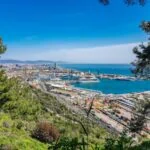
Montjuïc Castle is a 17th-century fortress sitting on the hill of the same name, with commanding views out over the port and the Mediterranean beyond. It has a genuinely difficult history, having been used at various points as a military prison, and today that context is explained through exhibitions inside the restored fortress walls.
Beyond the history, most visitors come simply for the panorama, which stretches across the whole city, the harbour and, on a clear day, well out to sea. The surrounding hillside is planted with gardens, making the walk up worthwhile in its own right rather than just a means to the fortress.
Entry runs from approximately €12 (£10/$13) for adults and €8 (£7/$9) for children, with free entry every Sunday from 3pm and all day on the first Sunday of each month. Checking which category a planned visit falls into can genuinely save the full ticket price.
The castle sits at the very top of Montjuïc hill, reached most comfortably via the cable car covered in the next section, or on foot from Paral·lel station on L2 and L3 via the Montjuïc funicular, which is included on standard Metro tickets.
Montjuïc Cable Car: The Scenic Way Up
The Telefèric de Montjuïc is the most scenic way up the hill, a cable car strung between the upper funicular station and the castle that opens out over the city, the port and the sea as it climbs. Even as a ride alone, it counts as one of the better short experiences in Barcelona.
Cabins run continuously rather than on a timetable, so there’s rarely a long wait once at the station, and the journey itself takes only a few minutes each way. Clear afternoons offer the best visibility, though the ride still delivers on an overcast morning, when the crowds thin considerably.
A round-trip ticket runs from approximately €19 (£17/$21) for adults and €13 (£11/$14) for children aged 4 to 12, with under-4s travelling free, and a modest online discount is usually available against the standard rate. One-way tickets exist too, but they’re sold only at the station, not online in advance.
The lower cable car station connects to the Montjuïc funicular, itself reached from Paral·lel station on L2 and L3, making the whole ascent, funicular then cable car, straightforward from central Barcelona without needing a taxi or bus.
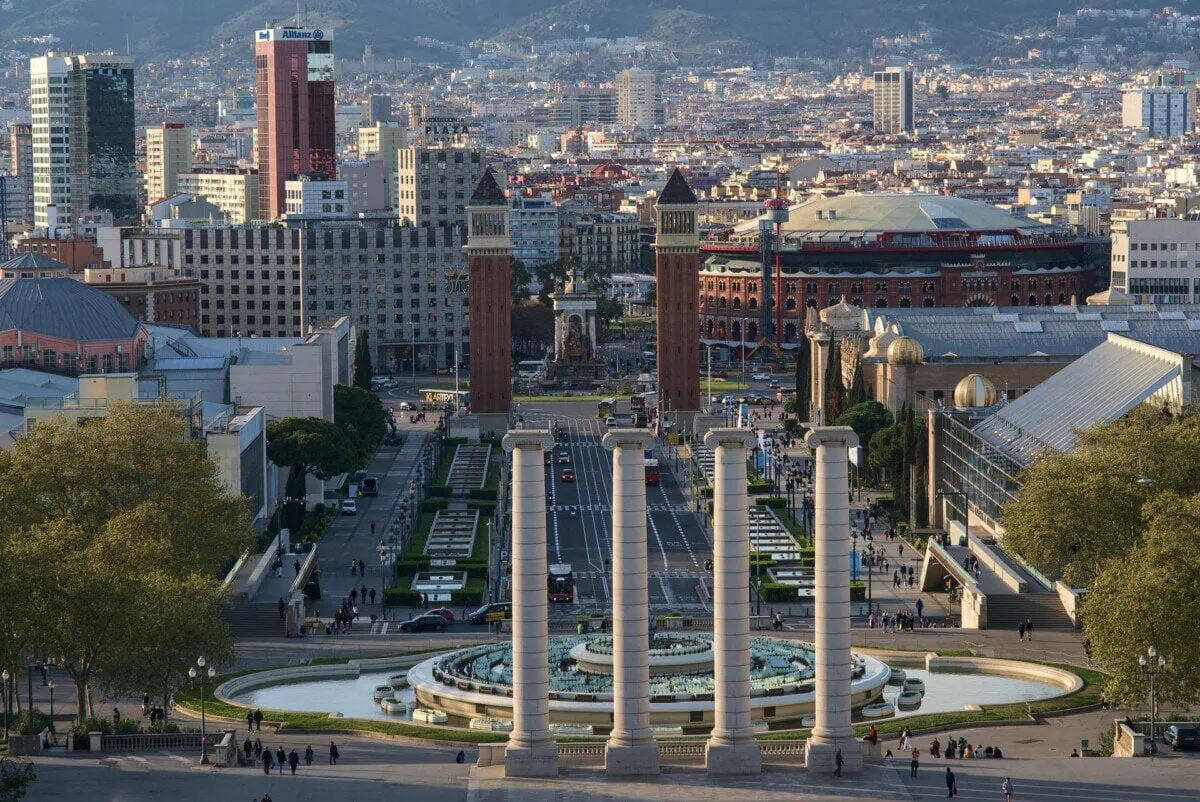
Magic Fountain: Free Water and Light Shows
The Font Màgica, or Magic Fountain, sits at the foot of Montjuïc below the National Art Museum, and its evening water, light and music shows have been a genuine free Barcelona tradition since the 1929 International Exposition. Synchronised jets rise and fall to music while coloured lighting sweeps across the water in choreographed sequences.
When running, shows typically take place on Thursday, Friday and Saturday evenings, with exact times shifting by season, generally later in summer and earlier once the clocks change in autumn. Each display lasts around twenty minutes and repeats several times across the evening.
It’s worth flagging honestly that the fountain’s schedule has been disrupted by drought-related water restrictions in recent years, with shows periodically paused and reopening dates shifting more than once. Always check the current schedule on Barcelona City Council’s own page before planning an evening around it, since reporting on its status has been inconsistent this year.
The fountain sits directly below Plaça d’Espanya, making it simple to reach. Take L1, L3 or L8 to Espanya station, then walk five minutes up Avinguda de la Reina Maria Cristina toward the museum building on the hill.
Palau de la Música Catalana: Barcelona’s Ornate Hall
The Palau de la Música Catalana is a working concert hall and one of the most ornate Modernista buildings anywhere in Europe, packed with stained glass, ceramic mosaics and an extraordinary inverted stained-glass skylight above the main auditorium. It is a UNESCO World Heritage Site in its own right, separate from Gaudí’s contributions elsewhere in the city.
A daytime guided tour is the standard way to see the interior, walking through the foyer, the ornate facade close-up and finally the main hall itself, where the ceiling’s sunburst of coloured glass is the undisputed highlight. Attending an actual evening concert is the other option, and arguably the richer experience for anyone with the time.
Guided tours run from approximately €24 (£21/$26) for adults, with children under 10 entering free when accompanied by a paying adult. Tours run on a fairly tight schedule through the day, so booking a specific time slot in advance is worth doing rather than turning up on spec.
The building sits at the edge of the Gothic Quarter, reached from Urquinaona station on L1 and L4, then a two-minute walk through a narrow street that opens out suddenly onto the elaborate facade.

La Boqueria: A Genuine Working Market
Mercat de la Boqueria has fed Barcelona from its site just off La Rambla since the 13th century in one form or another, and it remains a genuine working market rather than a purely tourist attraction, even with the crowds it now draws. Stalls sell everything from glistening seafood to towers of tropical fruit and jamón hung in rows.
The best approach is to walk the full length first without buying anything, since the market is large enough that the first appealing stall isn’t necessarily the best one. Several counters toward the back and sides serve cooked food and tapas, generally at fairer prices than the busiest stalls right at the entrance.
Entry is completely free, and the market operates Monday to Saturday, generally from around 8am to 8.30pm, but it closes entirely on Sundays, which catches a surprising number of visitors out when planning a single free morning around it.
La Boqueria sits directly on La Rambla, making it one of the easiest stops in the city to fold into a longer walk. The nearest stop is Liceu station on L3, right outside the market’s main entrance arch.
Barcelona Cathedral: Views over the Gothic Quarter
Barcelona Cathedral, formally the Cathedral of the Holy Cross and Saint Eulalia and often called simply La Seu, anchors the northern edge of the Gothic Quarter with a soaring Gothic facade and a genuinely peaceful palm-filled cloister home to thirteen resident geese, one for each year of the young martyr Eulalia’s life.
Inside, the nave rises dramatically over the crypt of Saint Eulalia herself, and a lift to the rooftop delivers one of the best free-standing views across the Gothic Quarter’s rooftops toward the sea. The rooftop access is usually bundled into the standard cultural-visit ticket rather than sold separately.
Pricing here varies noticeably by ticket provider and exactly what’s included, running from approximately €11-16 (£10-14/$12-17) for the standard cultural visit, so it’s worth comparing the official site against the ticket type before paying. Entry is free during specified worship hours, though the cloister, choir and rooftop stay closed during those windows.
The cathedral sits a short walk from Picasso Museum and Palau de la Música Catalana, both covered earlier, making it a natural anchor for a Gothic Quarter afternoon. The nearest stop is Jaume I station on L4, roughly five minutes away on foot.
Mirador Torre Glòries
Torre Glòries, designed by architect Jean Nouvel and known until 2015 as Torre Agbar, is one of Barcelona’s most distinctive modern buildings, a bullet-shaped tower clad in thousands of coloured glass panels that shimmer differently through the day depending on the light and the weather. Its observation deck has become one of the city’s newer viewpoints, opened well after most of the sights covered elsewhere on this page.
The Mirador sits 125 metres up, reached by lift, and offers a 360-degree panorama taking in Sagrada Família, the Montjuïc hillside, the Mediterranean and the grid of Eixample streets below. An add-on ticket includes Cloud Cities Barcelona, a walkable sculptural installation strung inside the building’s dome, plus the Hipermirador audio-visual experience.
Standard entry runs from approximately €18 (£16/$20), with combined tickets that add Cloud Cities Barcelona from around €24 (£21/$26). Both are worth booking online ahead, since entry times are timed and the deck can sell out on clear afternoons when visibility is at its best.
The tower sits out toward Plaça de les Glòries Catalanes, a little further from the Gothic Quarter and Barcelona Cathedral covered earlier in this guide, but easily reached via Glòries station on L1, making it a worthwhile detour on a day already spent around the Eixample sights.

Parc de la Ciutadella: Barcelona’s Grandest Green Space
Parc de la Ciutadella is Barcelona’s grandest green space, laid out on the site of a former military citadel and home today to the city’s zoo, the Catalan Parliament building and a monumental cascading fountain that a young Gaudí helped design early in his career. It offers a genuine break from pavement in the middle of a busy city.
Rowing boats can be hired on the small lake at the park’s centre, and wide lawns make it a popular spot for locals to picnic, particularly on weekend afternoons when the surrounding paths fill with families and joggers alike. The ornate cascade fountain remains the park’s undisputed centrepiece and best photo opportunity.
Walking the grounds costs nothing, and the park stays open daily from early morning until sunset, adjusting seasonally. The zoo inside charges its own separate admission, but seeing the park’s main landscaped areas requires no ticket at all.
The park sits between two useful stations depending on the approach: Arc de Triomf on L1 to the north, or Barceloneta on L4 to the south, both putting visitors within a five-minute walk of the gates.
Tibidabo: Among the World’s Oldest Amusement Parks
Tibidabo sits on the highest hill overlooking Barcelona, and it holds a genuine claim as one of the oldest amusement parks in the world, opened in 1899 and still running several of its original early-20th-century rides today. The setting is the real draw, a fairground with panoramic city views stretching all the way to the Mediterranean.
Vintage rides sit alongside newer additions, and the neighbouring Temple del Sagrat Cor church, with its own rooftop viewpoint, adds another layer to a visit beyond the fairground itself. Getting there is genuinely part of the experience, involving a historic tram and funicular combination rather than a simple bus ride.
Full park entry runs from approximately €39 (£34/$42) for adults over 120cm tall, with a junior ticket for children between 90 and 120cm costing around €16 (£14/$17), and under-90cm visitors entering free. This covers the park, panoramic area and both the tram and funicular connections up the hill.
Reaching Tibidabo takes real planning, since no TMB Metro line climbs the hill directly. The standard route is FGC’s L7 line from Plaça Catalunya to Avinguda Tibidabo, followed by the vintage Tramvia Blau and then the Tibidabo funicular, a journey of roughly forty to sixty minutes door to door.
Shopping in Barcelona
Barcelona’s shopping splits fairly cleanly into distinct zones depending on what’s being bought. Passeig de Gràcia is the city’s answer to Paris’s Avenue Montaigne, lined with international flagship stores and luxury houses, running conveniently past both Casa Batlló and Casa Milà covered earlier in this guide.
El Born, by contrast, is where independent Barcelona designers operate out of small shopfronts tucked among the medieval streets around the Picasso Museum, selling leather goods, ceramics and locally made jewellery that won’t turn up in any airport shop. It rewards slow browsing rather than a fixed shopping list.
For something more affordable and chaotic, Portal de l’Àngel, running off Plaça de Catalunya, is one of the busiest shopping streets in Spain by footfall, packed with high street chains. Meanwhile La Boqueria and the smaller Mercat de Sant Antoni are the places to buy food to take home, from saffron to cured meats.
Most shops in the tourist core stay open through typical lunch hours, though smaller, family-run stores outside the centre still sometimes close for a midday break, so it’s worth checking opening hours before making a special trip to a specific independent shop.

Barcelona’s Nightlife
Barcelona’s nightlife scatters across several genuinely different neighbourhoods rather than concentrating in one strip, which makes choosing where to spend an evening a real decision. El Born leans toward wine bars and cocktail spots tucked into medieval buildings, quieter and more grown-up than the city’s rowdier options.
Gràcia, further uphill, has a distinctly local feel, its small squares filling with residents over cheap beer and vermouth long before any visiting crowd arrives. It’s the neighbourhood to pick for an evening that feels like actual Barcelona life rather than a curated tourist circuit.
Down by the water, the beach clubs around Barceloneta and the Olympic Port run a completely different register, loud, glossy and firmly aimed at a party crowd through the warmer months. Port Olímpic in particular clusters several large clubs together, making it easy to move between venues on a single night out.
Late-night transport is a genuine consideration here, since the regular Metro stops running around midnight on weeknights, slightly later on weekends. The Nitbus night bus network covers the gap after that, running through the small hours across most of the city.
Barcelona’s Food Scene
Catalan food culture runs on its own distinct rhythm, built around small plates and a genuinely social approach to eating rather than one large evening meal. Tapas here sit alongside a specifically Catalan tradition, pintxos-style small bites in some bars and larger shared raciones in others, so it pays to ask what a bar actually specialises in.
The single dish worth learning before arriving is pa amb tomàquet, bread rubbed with ripe tomato, olive oil and salt, which turns up as an accompaniment to almost everything and is treated as a genuine Catalan staple rather than a garnish. In late winter, calçots, a sweet local spring onion grilled over open flame and dipped in romesco sauce, become a genuinely seasonal obsession worth timing a trip around.
The city’s vermut tradition deserves its own mention too, a pre-lunch ritual of sweet, herbal vermouth served with olives and a small snack, most strongly associated with Sunday late mornings in neighbourhoods like Gràcia and El Born. It’s a genuinely local habit that visitors are warmly welcome to join rather than an insider-only tradition.
Beyond La Boqueria, covered earlier, Mercat de Sant Antoni and Mercat de la Barceloneta both offer a quieter, more local market food experience with considerably fewer visitors. Both sit a short Metro ride from the centre and reward a lunchtime detour for anyone genuinely curious about everyday Catalan cooking.
Barcelona Neighbourhoods at a Glance
Barcelona Tourism itself organises the city around its neighbourhoods rather than a single checklist of sights, and that framing genuinely helps with planning. Each district has its own character, so knowing roughly what each area is like makes it far easier to decide where to base a stay or spend a free afternoon.
The Gothic Quarter is Barcelona’s medieval core, a warren of stone lanes, small squares and the cathedral covered earlier on this page. It suits visitors who want to wander without a fixed plan, and it sits within easy walking distance of almost everything else in the old town.
El Born, covered in its own section above, is the Gothic Quarter’s quieter, more boutique-driven neighbour, built around Santa Maria del Mar and the old market. It suits an evening of wine bars and independent shopping rather than headline sights, though the Picasso Museum sits at its heart.
Eixample is the grid of wide, straight streets north of the old town where most of the city’s Modernista mansions stand, Casa Batlló and Casa Milà among them. Its long, arcaded blocks suit visitors who want broad pavements and grand architecture rather than medieval narrowness.
Gràcia sits uphill from Eixample and keeps a genuinely local feel, with small squares, independent cafes and residents outnumbering visitors even in peak season. It works well as a base for anyone wanting everyday Barcelona life alongside easy access to Park Güell just above it.
Barceloneta, covered earlier for its beach, is a former fishing neighbourhood of tight grid streets between the sand and the old town. It suits a relaxed, low-key stay close to seafood restaurants and the seafront, though it can feel touristy right along the beachfront strip itself.
Poble-sec and the Montjuïc hill above it sit southwest of the centre, mixing an unpretentious residential neighbourhood with the castle, cable car and gardens covered earlier. It suits visitors chasing views, green space and museums over shopping or nightlife, and rewards a full afternoon rather than a quick stop.
Poble Espanyol
Poble Espanyol is an open-air architecture museum built on Montjuïc for the 1929 International Exposition, gathering 117 full-scale replica buildings drawn from towns and regions right across Spain into a single walkable village. It sits close to Montjuïc Castle and the Magic Fountain, both covered earlier in this guide.
Streets modelled on Andalusian, Castilian, Basque and Catalan towns wind between genuine artisan workshops, where glassblowers, potters and other craftspeople work in view of visitors, alongside a scatter of restaurants and bars that keep the site open well into the evening. It functions as a genuine night-time destination, not only a daytime museum.
Tickets are bookable online in advance, with standard, family and audio-guide options available, and the site typically stays open until midnight from Tuesday to Sunday, later than almost anywhere else covered on this page. Combined tickets bundling other Montjuïc attractions are sometimes available and worth comparing against buying entries separately.
Allow two to three hours to see the village properly, more if stopping for food or a craft demonstration along the way. The nearest stop is Espanya station on L1, L3 or L8, the same station used for the Magic Fountain covered earlier, making the two easy to combine in one Montjuïc afternoon.
Planning a Barcelona Itinerary
Barcelona’s headline sights are spread across genuinely different parts of the city, so grouping them by geography saves real time. Sagrada Família and Sant Pau sit together on the Eixample and Guinardó edge, Park Güell sits uphill near Gràcia, and Montjuïc rises on its own hill to the south.
With two days, spend one on the old town, working through the Gothic Quarter, El Born, La Rambla and a Barceloneta beach afternoon. Spend the other on Gaudí’s Eixample sights, Sagrada Família, Casa Batlló and Casa Milà, finishing with an early evening at Park Güell if the light allows.
A third day is best spent entirely on Montjuïc, combining the castle, cable car and Magic Fountain with the National Art Museum and gardens on the hill. This keeps the uphill walking and funicular connections confined to one day rather than doubling back across the city.
A fourth day suits either Camp Nou for football fans, or a slower loop through Gràcia, Sant Pau and the Picasso Museum for anyone who prefers architecture and food over a stadium tour. Either option avoids reopening ground already covered on the previous days.
What Needs Booking in Advance?
Several of Barcelona’s biggest attractions genuinely cannot be booked on the morning of a visit, particularly in peak season. Treating these as the first tickets bought on any trip, rather than an afterthought, avoids the most common disappointment travellers report about the city.
Sagrada Família is the strictest of all, with timed slots that can disappear a week or more ahead during summer, Easter and Christmas, and same-day availability rare even outside those peaks. Booking as soon as travel dates are confirmed is the safest approach.
Park Güell sells out almost as fast, with weekend and high-season slots commonly gone within a day or two of release, since tickets can be bought up to three months ahead. Waiting until arrival in the city risks missing the Monumental Zone entirely.
Casa Batlló rarely sells out completely, but its most popular morning and weekend slots go days or weeks ahead in peak season, and walk-up prices at the door run noticeably higher than booking online. A few days’ notice is usually enough outside August.
Casa Milà, the Camp Nou immersive tour and Palau de la Música’s guided tours all run on fixed time slots too, and while they sell out less dramatically than Sagrada Família, arriving without a booking still risks a long wait or a sold-out afternoon. A day or two ahead generally suffices for these three.
Barcelona City Passes
Several of the paid attractions covered on this page, among them Sagrada Família, Park Güell, the Picasso Museum and the aquarium and zoo, can often be bundled more cheaply through a city pass rather than bought one ticket at a time. These passes bundle a set number of attractions, or unlimited entry across a fixed number of days, into a single upfront price.
The right pass depends heavily on how many paid sights are actually planned and over how many days, since a pass built for five attractions offers little value to someone visiting only two. Some passes also bundle public transport, which changes the maths again for visitors planning to use the Metro heavily.
Working out which option actually saves money means comparing what each pass includes against this page’s individual prices, rather than assuming a pass automatically comes out cheaper. Our dedicated Barcelona City Passes guide compares the main options attraction by attraction, working out which pass suits which kind of trip.
As a general rule, passes make the most sense for visitors planning three or more paid sights over several days, while a short trip focused on just one or two attractions is usually cheaper booked directly, ticket by ticket. The full guide linked above covers current pricing and inclusions for each pass in detail.

Rupert’s Handy Travel Tips
Planning a trip to Barcelona? Here are a few tips to help you make the most of your visit.
- Book Sagrada Família and Park Güell first: both sell out days ahead in peak season, so lock in your timed entry before booking anything else.
- Get a T-Casual card: ten Metro trips for one price beats buying single tickets if you’re covering more than two or three attractions a day.
- Skip Sunday for La Boqueria: the market closes entirely, so build your market visit into a weekday or Saturday instead.
- Watch your bag on La Rambla: it’s the single most reported pickpocket area in the city, so keep valuables zipped away while walking it.
- Visit Montjuïc Castle on a Sunday afternoon: entry is free from 3pm, which can save the full ticket price if your schedule allows it.
- Check the Magic Fountain’s schedule before you go: its shows have been paused by drought conditions more than once, so confirm the current status on the day.
Want to meet the reindeer behind our travel tips? Find out more in our page Who is Rupert?.



Frequently Asked Questions
Do I need to book Sagrada Família and Park Güell in advance?
Yes, both require timed-entry tickets bought online, and same-day availability is rare, especially in summer, Easter and around Christmas. Booking a week or more ahead is the safest approach during peak season.
How many days do I need to see Barcelona properly?
Three full days covers the Gaudí sites, the Gothic Quarter, a beach afternoon and one museum comfortably. Four or five days allows a more relaxed pace with room for Montjuïc, Tibidabo and a proper look at the food scene.
Is the Camp Nou stadium tour still running during renovation?
The classic pitchside tour is currently unavailable while construction continues, but the FC Barcelona Immersive Tour and Museum runs in its place, including a viewing platform over the ongoing works.
What’s the easiest way to get around Barcelona?
The Metro is fast, frequent and covers almost every attraction in this guide within a short walk. A T-Casual card of ten trips is usually the most practical option for a multi-day visit. Our Barcelona public transport guide covers every ticket type and the whole network in depth.
Is La Boqueria market worth visiting if it’s so touristy?
Yes, it’s still a genuinely working market rather than purely a tourist stop, and walking past the busiest entrance stalls toward the back reveals better value food and produce.
Do Barcelona Cathedral and Sagrada Família charge the same kind of ticket?
No, Sagrada Família always requires a paid, timed-entry ticket booked online, while Barcelona Cathedral offers free entry during specific worship hours, though the cloister and rooftop stay closed during those windows.
Is Barcelona safe for visitors?
Broadly yes, violent crime is rare, but pickpocketing is a genuine and well-documented issue around La Rambla, on crowded Metro carriages and near major attractions, so normal city precautions matter here.
When is the best time of year to visit Barcelona?
Late spring and early autumn offer the most comfortable weather and thinner crowds than peak summer, when the city gets genuinely hot and its main attractions are at their busiest.
Further Reading
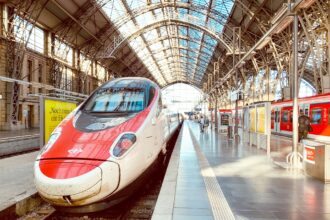
Barcelona sits at the end of one of Europe’s busiest high-speed rail corridors, and anyone arriving from Madrid should read our European High-Speed Rail guide before booking, since it covers exactly how fast and how frequent that connection really is. For a longer multi-city Spanish itinerary built around Barcelona, our Spain Rail Pass Guide lays out when a Renfe pass actually saves money against buying tickets individually.
Travellers stacking Barcelona onto a wider European trip may also find our Eurail vs Interrail comparison useful for working out which pass suits a longer route through Spain and beyond. Barcelona’s summers run genuinely hot, so it’s worth a quick read of our sunstroke and heatstroke guide before a July or August visit, particularly with children in tow.
Finally, anyone juggling luggage between a Gothic Quarter hotel checkout and a late flight home might want to look at our Stasher review, which covers city-centre luggage storage options that work well for a final free day spent between the beach and the Gaudí sites covered above.