Reviewed by our editorial team Published
Barcelona packs one of Europe’s most compact, tourist-friendly transport networks into a genuinely walkable city, and almost everything a visitor needs sits inside a single fare zone. Zone 1 covers the entire city centre plus El Prat Airport, so most trips need only the cheapest ticket band rather than a complicated zone calculation.
Several separate operators share the same integrated ticketing across that core zone. TMB runs the eleven-line metro and the city’s buses, two independently operated tram networks cover the eastern and western suburbs, and FGC, the Catalan government’s own railway, reaches places the metro simply does not.
Working out which ticket to buy is usually the biggest hurdle for a first-time visitor. A single ride, a ten-trip T-Casual, and the unlimited Hola Barcelona travel card cover almost every itinerary, and this guide walks through exactly when each one earns its price.
It is also worth knowing early what the Hola Barcelona card is not. It covers transport only, with no free museum entry or attraction discounts bundled in, a distinction that matters enough to get its own section further down this page and a fuller comparison on our separate Barcelona city passes guide.
The sections below cover the metro, the buses and trams, FGC’s role for day trips like Tibidabo and Montserrat, every practical ticket type, the Hola Barcelona card itself, and the apps worth having installed before you land. Prices throughout are given as an approximate guide in euros, pounds and dollars.
Which Barcelona Ticket Is Actually For You?
Barcelona’s ticket options can feel like a lot to weigh up before a single trip has even started. The table below skips the theory and matches each common situation straight to the ticket that actually fits, with the reasoning explained in the paragraphs underneath.
| Situation | Best Option in Barcelona |
|---|---|
| Making only a couple of journeys | Single tickets, or a T-Casual if a third trip looks likely |
| Using transport all day, one day only | T-Dia unlimited day pass |
| Staying two or three days | T-Casual, topped up as needed |
| Staying four days or more, moving constantly | Hola Barcelona travel card |
| Travelling as a family or small group | T-Familiar, shared on one card |
| Travelling from the airport | Airport Ticket, R2 Nord Rodalies, Aerobús or Hola Barcelona, not a standard T-Casual |
| Avoiding ticket machines repeatedly | Hola Barcelona or a contactless bank card |
The T-Casual is for you if you are in Barcelona for a short break and expect more than a couple of journeys but nowhere near constant use. Ten shareable trips at approximately €13 (£11/$15) comfortably cover a long weekend of sightseeing without paying for singles each time.
The T-Familiar is for you if you are travelling as a small group or family and want one ticket to cover everyone rather than juggling several. It works the same way as the T-Casual, ten trips shared across the group on a single card, at a broadly similar price.
The T-Usual is for you only if you are staying in Barcelona for close to a month, since it is a thirty-day unlimited pass built for residents and long-term commuters rather than visitors. Current pricing runs to approximately €20-40 (£17-34/$23-45) depending on active subsidies, so it rarely pays off on a shorter trip.
Hola Barcelona is for you if you know you will be riding transport constantly across several days and would rather stop thinking about individual fares altogether. It bundles in one return airport metro journey regardless of the length chosen, which neither the T-Casual nor the T-Familiar cover.
How to Buy a Ticket at a Machine, Step by Step
Every metro and FGC station has at least one ticket machine near the entrance gates, and the process is the same at each one. Tapping the screen brings up a language selection first, including English, so there is no need to navigate anything in Catalan or Spanish.
Next comes the ticket type itself, sorted into simple categories such as single ticket, T-Casual or T-Dia rather than a long alphabetical list. Selecting T-Casual asks how many cards you want, since one card can be shared by several people making the same number of trips.
Payment accepts coins, notes and contactless cards, and the machine calculates change automatically when paying in cash. Contactless bank cards can also skip the machine entirely at some gates, tapping directly to pay and validate a single journey in one motion.
What comes out is a small paper ticket with a magnetic stripe for a single or T-Dia, or a reloadable plastic card for T-Casual and T-Familiar that the machine can top up again later. No separate card purchase is needed for a first T-Casual, since the machine issues that card itself at no extra charge.
Best for a short trip. Compare rooms by neighbourhood, price and guest rating before you book.
Compare hotelsBest for longer stays. Whole apartments and houses, so you are not eating out three times a day.
View rentalsBest if you have already picked a hotel. Checks the big booking sites for the same room and shows who is cheapest.
Check dealsUsing the Barcelona Metro: Entering, Changing and Exiting
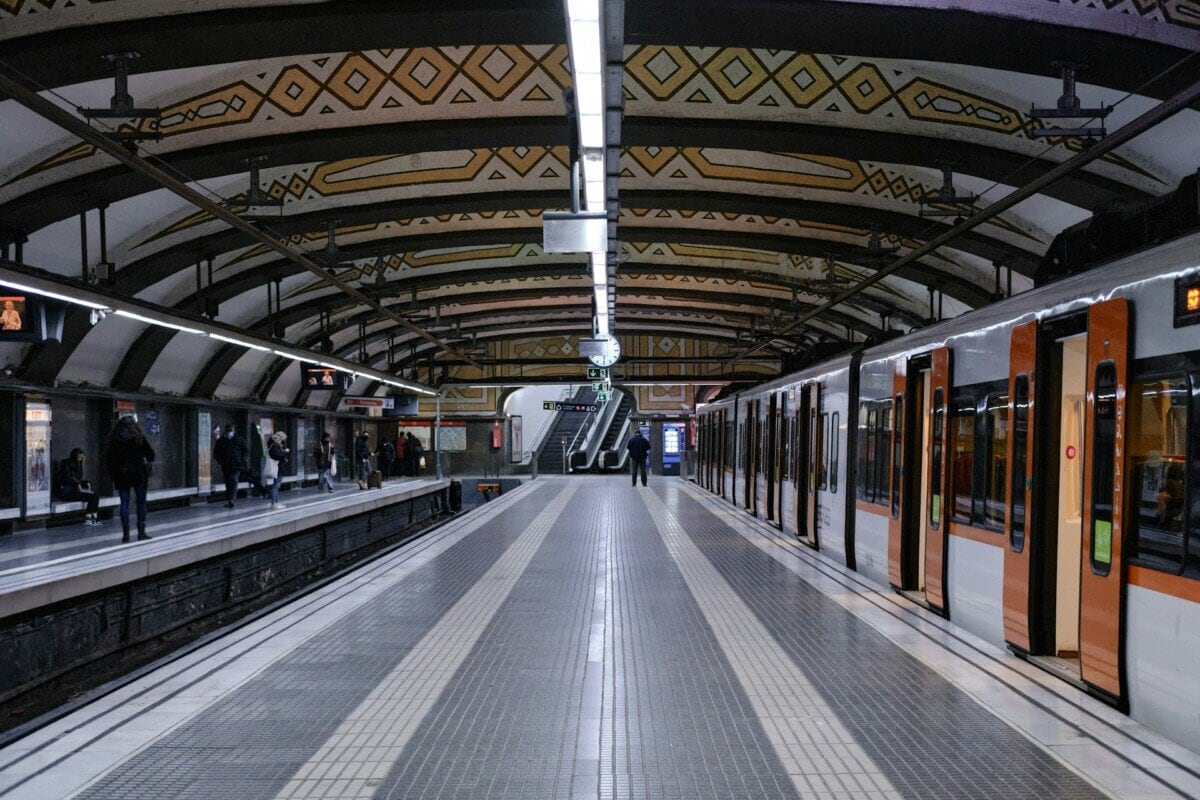
Entering a Barcelona metro station means tapping a validated ticket or contactless card at the barrier gates, which open briefly and close again quickly, so there is no lingering once through. Signs overhead point towards each line by number and colour rather than by station name.
Finding the right platform means choosing a direction by its final station, not by compass point, since Barcelona’s platforms are labelled with the terminus at the end of the line. Checking a map for which end you are heading towards before descending the stairs avoids walking to the wrong platform.
Changing lines partway through a journey means following signs for the next line’s colour and number to a connecting corridor, occasionally with an extra flight of stairs or an escalator involved. No extra tap or payment is needed at the change, since one ticket covers the whole journey until you actually exit.
Exiting simply means walking through an open gate at the top of the stairs, and unlike the entry gates these rarely require another tap. Barcelona’s metro does not charge by distance, so there is nothing to settle up at the far end the way some other cities’ systems work.
How to Use Barcelona’s Buses
Bus stops in Barcelona are marked with a pole showing the route numbers that call there, usually alongside a digital screen showing live arrival times. There is no need to signal the driver the way some cities require, since Barcelona buses stop at every marked stop along the route by default.
Boarding happens through the front doors only, where the driver can see tickets being validated, while the middle and rear doors are for getting off. A T-Casual or single ticket gets tapped on the small validator machine mounted just behind the driver as you step on.
Contactless bank cards work the same way, tapping directly on the validator to pay and validate in one motion without needing a separate ticket at all. Requesting a stop means pressing one of the red buttons mounted along the handrails well before your stop, since drivers do not stop automatically if nobody has asked.
For live running information, the TMB App shows real-time arrivals for every route down to the minute, which is generally more reliable than the roadside screens during disruption. Google Maps and Citymapper both pull from the same underlying data, so either works reasonably well too.
The Metro Network: Barcelona’s Backbone
TMB operates eleven metro lines across Barcelona, numbered L1 through L11, with L9 and L10 each split into Nord and Sud branches that do not physically connect end to end. Together with the Montjuïc funicular, which shares the same ticket, the network reaches almost every neighbourhood a visitor is likely to want.
Zone 1 fares cover the whole city, which genuinely includes El Prat Airport on the L9 Sud line running out to both terminals. That single fact removes most of the confusion visitors have about whether a standard ticket will get them into town straight from a flight.
One important exception sits inside that same convenience. The T-Casual ten-trip ticket is not valid at the two airport stations on L9 Sud, so anyone arriving by metro needs either the separate Airport Ticket supplement or a Hola Barcelona travel card instead, both covered further down this page.
Trains run frequently through the day, typically every few minutes on the busier central lines and dropping off, but rarely disappearing, in the evenings. Stations are clearly signed in Catalan and Spanish, and the whole system is straightforward to navigate within a day of arriving.
Buses and Barcelona’s Separate Tram Networks
TMB’s bus network fills in everywhere the metro cannot reach, running dozens of daytime routes on the exact same ticket as the trains. A dedicated NitBus network of night routes takes over once the metro closes, radiating out from Plaça de Catalunya through the small hours.
Trams are a different story, and a genuinely useful thing to know before relying on one. Barcelona actually runs two entirely separate tram systems, Trambaix and Trambesòs, and they are not physically connected anywhere on the map.
Trambaix covers three lines west of the centre around Baix Llobregat and Les Corts, while Trambesòs runs its own three lines east from Glòries out towards Sant Adrià and Badalona. The two networks interchange with the metro rather than with each other, most usefully at Glòries station.
Despite running as separate operations, both networks accept exactly the same tickets as the metro and bus, so there is no separate fare to think about once you are holding a valid Zone 1 ticket. Stops are clearly marked and both networks feel modern, low-floor and easy to use.
The Metro’s Major Lines
Beyond the airport line already covered above, five other metro lines carry the bulk of everyday journeys around the city. Each is known as much by its colour as by its number, and visitors quickly learn to navigate by colour on the platform signage rather than memorising line numbers alone.
L3, the Green Line, is the one most visitors ride most often, running from Zona Universitària through Liceu in the Gothic Quarter up through Passeig de Gràcia and Diagonal into Gràcia and the northern Vall d’Hebron area. L4, the Yellow Line, cuts across the city from Trinitat Nova to La Pau, serving El Born and Barceloneta on its way through the old town towards the beach.
L5, the Blue Line, runs as a long diagonal cutting right across the city, linking Cornellà Centre in the southwest to Vall d’Hebron via Sants Estació and Sagrada Família. L1, the Red Line, and L2, the Purple Line, both run roughly north to south through the centre, with L2 the direct route to Sagrada Família itself and L1 sharing tunnels with mainline Rodalies trains at Catalunya.
Together these five lines cover almost every major sight in the city centre without needing to change onto a bus. Checking which coloured line serves a specific stop before setting off, rather than the number alone, is the quickest way to read Barcelona’s metro map at a glance.
Barcelona’s Major Interchange Stations
Three stations do the heaviest lifting when it comes to changing lines in central Barcelona. Plaça de Catalunya, beneath the city’s central square, is the biggest of all, where metro lines L1 and L3 meet FGC’s L6 and L7 services and several Rodalies commuter lines under one roof.
Passeig de Gràcia is nearly as central, bringing together metro L2, L3 and L4 with Rodalies regional trains and some longer-distance services heading north towards Girona and the French border. It sits a short walk from Plaça de Catalunya, so the two hubs effectively cover the whole city centre between them.
Diagonal station, further up towards the Eixample, is where L3 and L5 cross, and TMB ranked it as the network’s second-busiest station in 2024. The two lines sit at different levels connected by an underground corridor fitted with moving walkways, so the transfer takes only a couple of minutes on foot.
A fourth, smaller interchange worth knowing is Urquinaona, just east of Plaça de Catalunya, where L1 and L4 meet. It rarely appears on tourist itineraries by name, but it is a genuinely useful shortcut for cutting between the two lines without doubling back through the busier central hubs.
Best if you can move a day either way. Shows how the fare changes across the month.
Compare flightsBest for short trips. Install the eSIM at home and arrive with working data, no shop queue.
Browse eSIMsBest when public transport has stopped, or when you are travelling with children and bags.
Book a transferBarcelona’s Major Train Stations
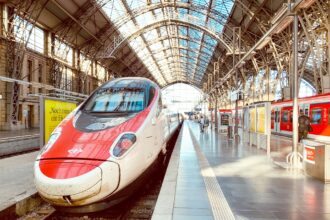
Barcelona Sants is the city’s principal station, handling almost all long-distance and international rail traffic. AVE high-speed trains reach Madrid in around two and a half hours, and TGV services to Paris run directly since the Perpignan-Barcelona high-speed line opened, alongside six dedicated high-speed platforms and eight further platforms for regional Rodalies trains.
Sants connects directly to the metro through the adjoining Sants Estació station, where L3 and L5 both call, plus an adjacent bus station handling international coach services. For most visitors arriving by train from elsewhere in Spain or from France, Sants is where the journey actually begins and ends.
Passeig de Gràcia functions as a secondary stop for some AVE and Avant services, particularly those running north towards Girona and Figueres, useful for visitors staying centrally who would rather not detour out to Sants. It doubles as one of the busiest metro interchanges in the city, covered in more detail above.
Estació de França, near the Born and the harbour, now handles mostly regional Rodalies trains and a handful of medium-distance Renfe services, having lost its international role when the old overnight sleeper trains to France stopped running. It has no metro station of its own, though Barceloneta on L4 is a five-minute walk away.
Barcelona’s Bus Stations
Long-distance coaches run on a different network entirely from the TMB city buses covered earlier on this page, and almost all of them arrive and depart from one place. Barcelona Nord, officially Estació d’Autobusos de Barcelona Nord, occupies the west wing of the old Estació del Nord building and is the city’s principal coach terminal.
The station sits directly beside Arc de Triomf, whose L1 metro and Rodalies trains make onward journeys into the centre straightforward. Forty-seven angled bus bays handle everything from regional Catalan routes to international coaches heading into France, alongside ticket offices, shops and an underground car park for anyone being dropped off.
A smaller number of long-distance coach services also use Barcelona Sants, in the international bus station attached to the main railway building, which suits travellers already passing through on a connecting train. It is worth checking which terminal a specific operator uses before booking, since the two are not within easy walking distance of each other.
For most visitors, though, Barcelona Nord is the one to know. It rarely features on a first-time itinerary, but anyone arriving by coach from elsewhere in Spain, or continuing on to France or another part of Catalonia, is almost certainly passing through it.
FGC: The Route to Tibidabo and Montserrat
FGC, short for Ferrocarrils de la Generalitat de Catalunya, is a separate railway run by the Catalan regional government rather than the city’s TMB network. Within Barcelona itself its Zone 1 services are covered by the same T-Casual or Hola Barcelona ticket as the metro, which keeps things simple for most trips.
The L7 line is the one most visitors actually need, running from Plaça de Catalunya out to Avinguda Tibidabo. From there, the vintage Tramvia Blau and the Cuca de Llum funicular carry passengers the rest of the way up the hill, together turning a short train ride into most of a morning’s outing.
FGC’s R5 line from Plaça d’Espanya is the standard route to Montserrat, reaching either the Montserrat-Aeri cable car station or Monistrol de Montserrat for the Cremallera rack railway. Both mountain connections are genuine current options, with the rack railway acting as the reliable fallback whenever high wind suspends the cable car.
Trips that stay within Zone 1 cost the same as any other FGC journey, but Montserrat and other destinations further out sit in separate fare zones with their own pricing. It is worth checking the current fare on FGC’s own tourist rail pages before travelling, since zone-based pricing beyond the city changes more often than the core metro fares.
Ticket Types Explained
Barcelona’s fare system is genuinely simple once the basic options are clear, and almost every visitor only ever needs one of four tickets. A single ticket costs approximately €3 (£3/$4) and covers one journey with transfers between modes within a set time window.
For anyone making more than a couple of trips, the T-Casual is the better buy, bundling ten journeys into one reloadable ticket at approximately €13 (£11/$15), shareable between several people travelling together. It covers the metro, bus and both tram networks, though not the two L9 Sud airport stations noted earlier.
Visitors planning a genuinely full day of sightseeing may prefer the T-Dia, an unlimited one-day pass priced at approximately €12 (£10/$14), while families travelling together can look at the T-Familiar at a similar price. Contactless bank cards also work directly at many metro gates and on every bus, though coverage across every station access point is still expanding.
Whichever ticket is chosen, it needs validating at the start of every journey, not simply carried. On the metro and FGC this means tapping a contactless card or paper ticket against the reader built into the entry gate, while aboard a bus or tram it means scanning that same ticket on the small validator machine fitted near the doors.
Inspectors do check periodically, and an unvalidated ticket counts as travelling without one, usually triggering an on-the-spot fine even when a valid ticket happens to be sitting unused in a pocket. Contactless bank cards are the one exception worth knowing, since tapping one at a gate pays for and validates the journey in the same motion.
TMB’s own official fares page lists the current prices in full and is worth a quick check before a longer stay.
| Ticket Type | Approximate Price | Covers |
|---|---|---|
| Single ticket | €3 (£3/$4) | One journey, Zone 1, with transfers within a set window |
| T-Casual (10 trips) | €13 (£11/$15) | Metro, bus, both tram networks; not valid at the two L9 Sud airport stations |
| T-Dia (unlimited day) | €12 (£10/$14) | Unlimited Zone 1 travel for 24 hours from first use |
| T-Familiar | €12 (£10/$13) | Ten trips shared across a small group on one card |
| Airport Ticket (L9 Sud) | €6 (£5/$7) | Single supplement for the two airport metro stations |
How Ticket Validation Actually Works
A ticket needs validating once at the start of every separate journey, not once for the whole day, and a T-Casual works by deducting one of its ten trips each time it gets tapped. Changing lines underground without leaving the barriers does not count as a new journey, so no second tap is needed.
On the metro and FGC, that means tapping at the entry gate only, since there is no tap-out requirement anywhere in the Barcelona system. Buses and trams work slightly differently, with the validator positioned just inside the doors rather than at a gate, though the same one-tap-per-journey rule applies.
A single ticket allows one validated interchange between different modes within a set time window, typically just over an hour, without needing to buy a second ticket. A T-Casual trip works the same way, so one bus-to-metro connection within that window still only uses a single trip from the ten.
Keep the physical ticket or card for the whole journey rather than discarding it after the first tap, since inspectors board buses and trams and check platforms without warning. An unvalidated or expired ticket is treated the same as travelling without one, even if a valid replacement is sitting in the same pocket.
The Airport Exception: Metro, Rodalies and Aerobús Compared
The single detail that trips up more visitors than anything else on this page is that the metro to the airport is not covered by a standard T-Casual. L9 Sud reaches both terminals, but the two airport stations sit outside the normal Zone 1 fare and need the separate Airport Ticket or a Hola Barcelona card instead.
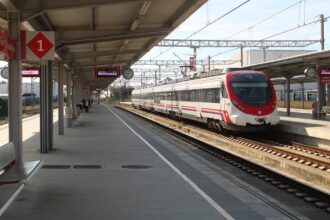
Rodalies’ R2 Nord train is the exception to the exception, since that route to Terminal 2 is fully covered by a standard T-Casual or single ticket with no supplement at all. It is a genuinely useful alternative for anyone already holding a T-Casual who would rather not buy a separate airport fare.
The Aerobús runs as its own separate coach service entirely outside the integrated ticket system, at approximately €7 (£6/$8) one way, and needs its own ticket regardless of what else you are holding. It generally runs more frequently than R2 Nord at peak times and drops off directly at Plaça de Catalunya.
As a rough rule, R2 Nord suits anyone already holding a T-Casual, the Airport Ticket or Hola Barcelona suits anyone planning to use the metro anyway, and the Aerobús suits anyone who wants a direct run into the centre without changing trains. Our Barcelona Airport Transfers guide compares all three in more depth.
Best for solo travellers and anyone watching the budget. Dorm beds and private rooms in the same search.
Browse hostelsBest for anyone flying more than once or twice a year. Handles the compensation claim so you are not chasing the airline.
See AirHelp+Best for a day with a suitcase and nowhere to put it. Find a storage point near where you already are.
View storageThe Hola Barcelona Travel Card
The Hola Barcelona travel card is built for visitors who know they will be moving constantly and want to stop thinking about tickets entirely. It is a transport-only product, covering unlimited travel on the metro, buses, both tram networks, NitBus, the Montjuïc funicular and Zone 1 of both FGC and Rodalies commuter trains.
It comes in four durations running from forty-eight hours up to five full days, and one return airport metro journey is bundled into the price regardless of which length is chosen. Current pricing runs from approximately €19 (£17/$21) for the shortest duration up to around €44 (£38/$48) for the full five days, though it is worth confirming the exact current figure at checkout since prices are updated periodically.
The one thing worth being genuinely clear about is what this card does not include. Unlike the separate Barcelona Card sold by the city’s tourism board, Hola Barcelona carries no museum entry, no attraction discounts and no sightseeing bundle of any kind, a distinction our dedicated Barcelona city passes guide covers in full.
For a visitor whose priority is simply getting around efficiently rather than stacking up museum visits, that narrower focus is actually the point. Buying it directly through Hola Barcelona’s official site or at any metro station avoids paying attraction-bundle pricing for transport most visitors would use anyway.
Metro vs Bus vs Walking in Barcelona
Barcelona is compact enough that the metro is not always the fastest option, even though it often feels like the default choice. A one or two-stop metro ride frequently takes longer door to door than simply walking, once the time spent going down stairs, waiting on a platform and coming back up again is counted.
Central neighbourhoods like the Gothic Quarter, El Born and the Eixample are genuinely walkable, and a journey that looks like two metro stops on a map is often a short walk at street level instead. Checking the walking time on a map app before automatically heading underground is worth the extra few seconds.
Buses earn their keep on longer cross-city trips where the metro would require an awkward change of lines, since a single bus route often runs in a straight line where the metro zigzags. A trip between Gràcia and the seafront, for example, can be a single bus ride against two separate metro changes.
As a general guide, walk anything under about fifteen minutes, take the metro for longer trips that run directly along one line, and consider a bus whenever the metro route on the map involves more than one change. None of the three is always right, and mixing them through a single day is completely normal.
Apps and Journey Planning
The official TMB App is the single most useful download for getting around Barcelona, covering live departures, route planning and digital ticket purchase across the metro, bus and both tram networks in one place. It is free on both major app stores and works well even on a patchy connection.
For journeys on FGC or the Rodalies commuter trains, each operator runs its own separate app with live timetables, worth having installed before a day trip to Montserrat or an airport run via R2 Nord. General mapping apps such as Google Maps and Citymapper also handle most of Barcelona’s public transport well, pulling from the same underlying data.
Downloading offline maps for at least the city centre before setting off is a sensible habit, since mobile signal underground on the metro is inconsistent between stations even with a working data plan. A short-term travel eSIM or local SIM is worth arranging in advance for anyone planning to rely on live journey planning throughout their stay.
Whichever combination of apps ends up on your phone, the practical routine stays the same. Check the TMB App first for anything within the city itself, fall back to the relevant operator’s own app for FGC or Rodalies legs, and keep a paper ticket in reserve for the rare moment none of it is working.
Common Mistakes and What Google Maps Won’t Tell You
The most common mistake is assuming the airport metro works like every other line, buying nothing extra and then finding the ticket rejected at the barrier. The fix is simple: budget for the separate Airport Ticket or use Hola Barcelona whenever the plan includes an airport metro journey.
A second common mistake is boarding the right line in the wrong direction, since Barcelona’s platforms are labelled by terminus rather than by compass point. Checking which end of the line you actually want before descending the stairs avoids a needless round trip.
Google Maps generally routes Barcelona journeys well, but it rarely flags which station entrance is closest to a specific exit, which matters at larger interchanges with several street-level entrances spread a few hundred metres apart. It also will not warn about the airport ticket exception covered above, so a route it suggests can look valid while the ticket in your pocket is not.
It is also easy to buy an unnecessary airport-specific ticket when a Hola Barcelona card already includes the return airport journey in its price. Finally, remember that a T-Casual or T-Familiar is genuinely shareable between several people travelling together, while a personal Hola Barcelona card generally is not once it has been activated.
Getting Around Barcelona with Luggage, Wheelchairs and Pushchairs
Barcelona’s metro has become largely step-free in recent years, with lifts installed at the large majority of its stations across the network. A handful of older central stations, including Plaça de Sants and Verdaguer, still lack a lift, so it is worth checking a station-specific accessibility map before relying on one for a connection.
Buses are generally the more reliable option for anyone travelling with a wheelchair, a pushchair or heavy luggage, since the entire fleet has used low-floor vehicles with retractable ramps for many years. Boarding through the front doors with the driver’s help is usually more straightforward than navigating stairs at an older metro station.
FGC and Rodalies trains vary more by station, and some smaller stops outside the city centre still rely on steps rather than a lift or ramp. Checking the specific station on the operator’s own accessibility page before a day trip to Montserrat or Tibidabo is worth doing in advance rather than discovering it on arrival.
TMB publishes a dedicated accessibility page listing which stations currently lack a lift, updated as new installations finish. For a pushchair rather than a wheelchair, most visitors find the bus network simplest throughout a stay rather than switching between modes station by station.
Late-Night Transport in Barcelona
The metro typically runs from around 5am until midnight on Sunday through Thursday nights, stretching to approximately 2am on Friday nights and running non-stop right through Saturday night into Sunday. Times can shift around public holidays, so it is worth a quick check on TMB’s own site before planning a very late journey.
Once the metro closes, the NitBus network of night buses takes over, radiating out from Plaça de Catalunya on routes that broadly mirror the busiest daytime metro lines. Standard tickets, including T-Casual and single fares, are valid on NitBus at the same price as daytime travel.
For anyone travelling somewhere NitBus does not reach directly, or simply travelling alone late at night, taxis and ride-hailing apps such as Uber and Cabify operate throughout the city around the clock. Fares are broadly comparable to other major European cities and taxis can be flagged on the street or booked through an app.
As a rough rule, plan around the midnight cutoff Sunday to Thursday, treat Friday and Saturday nights as running later or continuously, and keep a taxi app installed as the fallback for anywhere NitBus does not cover well. None of this needs pre-booking, since all three options are available on the spot.

What Happens If There’s Disruption
Disruption on the metro or bus network is best checked through the TMB App or TMB’s own website, both of which post live service alerts alongside the usual journey planner. Google Maps and Citymapper generally pick up major disruptions too, since they draw on the same live data feed.
When a metro line is suspended for engineering work or an incident, TMB typically runs a replacement bus service along the same route on the same ticket, clearly signed at the affected stations. These buses stop at every station the closed section would normally serve, just at street level instead.
For FGC or Rodalies disruption affecting a day trip to Montserrat or the airport, each operator posts its own alerts separately from TMB’s system, so it is worth checking both apps rather than assuming one covers everything. A taxi or ride-hailing app remains the simplest fallback for a single missed connection.
Strikes are the one disruption worth planning around in advance, since Spanish transport strikes are typically announced with several days’ notice and usually keep a reduced minimum service running rather than stopping entirely. Checking the news or TMB’s site shortly before a planned journey is a sensible habit during a longer stay.
Useful Journeys Visitors Actually Make
A handful of journeys account for most of what visitors actually need Barcelona’s transport for. The table below covers the routes asked about most often, alongside the option that generally works best for each one.
| Route | Best Option |
|---|---|
| Airport to the city centre | R2 Nord Rodalies with a T-Casual, or L9 Sud metro with an Airport Ticket |
| Sants station to the city centre | Metro L3 or L5, one stop to Plaça Espanya or Sants Estació onward |
| City centre to Sagrada Família | Metro L2 or L5 direct, no other line needed |
| City centre to Park Güell | Metro L3 to Vallcarca, then a signed uphill walk |
| City centre to Camp Nou | Metro L3 to Palau Reial, then a short walk |
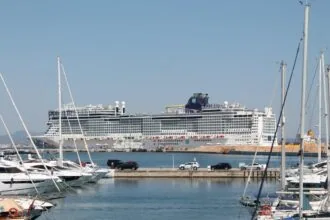
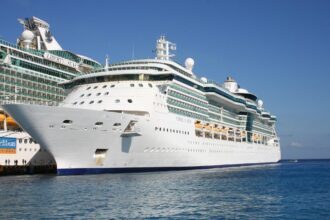
| City centre to the cruise port | Bus or taxi, since no metro line reaches the terminals directly |
Every route above uses the same T-Casual or Hola Barcelona card already covered on this page, with the single exception of the airport metro noted earlier. Nothing on this list needs a separate ticket beyond what most visitors are already carrying.
A Walkthrough: Plaça de Catalunya to Sagrada Família
Standing in Plaça de Catalunya with a validated T-Casual, the route to Sagrada Família starts by taking the L3 green line two stops to Diagonal, following signs for the direction away from Zona Universitària. Diagonal is one of the network’s busiest interchanges, but the corridor to the connecting platform is well signed throughout.
At Diagonal, change onto the L5 blue line and look for a platform signed towards Vall d’Hebron rather than Cornellà Centre, since the two directions serve opposite ends of the city. Sagrada Família is only a couple of stops further along in that direction.
The whole journey takes around fifteen minutes including the change, and Sagrada Família station opens with signed exits pointing directly towards the basilica’s entrance queue. One line change is all this particular trip needs, which makes it a reasonably gentle introduction to interchanging on Barcelona’s network.

Which Barcelona Transport Ticket Should You Buy?
With three main products covering broadly the same network, the right choice comes down to trip length and priorities rather than any one ticket being objectively best. The comparison below matches each option to the visitor it actually suits.
| Ticket | Typical Cost | Best For |
|---|---|---|
| T-Casual | €13 (£11/$15) for 10 shareable trips | A short city break with a handful of journeys |
| Hola Barcelona | €19-44 (£17-38/$21-48) for 48-120 hours, unlimited | Several days of constant public transport use |
| Barcelona Card | €53-71 (£46-61/$60-80) for 72-120 hours | Heavy museum and attraction sightseeing |
A visitor on a short two-day city break making six or seven journeys around town, plus perhaps a metro ride each way to a museum, usually gets the best value from the T-Casual. Ten shareable trips at €13 (£11/$15) comfortably cover that itinerary, though the airport leg itself still needs a separate Aerobus, train or Airport Ticket fare.
Someone staying four days or longer and using transport heavily, several sightseeing trips a day plus the airport run at both ends, tends to come out ahead on Hola Barcelona instead. A 96-hour card runs to around €34-36 (£29-31/$38-41) and already includes the return airport metro journey, so there is no separate ticket to buy on arrival or departure.
A visitor who wants museum entry bundled in, rather than buying transport and admission separately, is the one genuine case for the Barcelona Card. A 72-hour card costs around €53 (£46/$60) and already includes unlimited transport plus free entry to more than twenty museums, which usually beats paying for both separately once three or four sights are visited.
As a rough rule, the T-Casual suits light, short-stay use, Hola Barcelona suits anyone riding transport constantly across several days, and the Barcelona Card only earns its higher price once serious museum visiting is part of the plan. Mixing a T-Casual with individually bought museum tickets is often still cheaper for a visitor who only wants one or two sights.

Rupert’s Handy Travel Tips
Planning to use public transport in Barcelona? Here are a few tips to help you make the most of it.
- Buy a T-Casual on day one: ten shareable trips almost always beat singles once you’re making more than two or three journeys.
- Skip T-Casual for the airport metro: L9 Sud needs the Airport Ticket supplement or a Hola Barcelona card instead.
- Don’t expect Trambaix and Trambesòs to connect: they’re separate networks, so route any cross-city tram trip via the metro instead.
- Validate every ticket before boarding: an unvalidated ticket counts as travelling without one if an inspector checks.
- Check the weather before Montserrat: the cable car suspends in high wind, so the Cremallera rack railway is the reliable back-up.
- Download the TMB App before you land: it beats hunting for a ticket machine at a busy station on your first morning.
Want to meet the reindeer behind our travel tips? Find out more in our page Who is Rupert?.




Frequently Asked Questions
How many metro lines does Barcelona have?
TMB runs eleven metro lines, numbered L1 through L11, with L9 and L10 each split into separate Nord and Sud branches that don’t physically connect.
Does the metro go to the airport?
Yes, L9 Sud reaches both terminals at El Prat, though the standard T-Casual ticket isn’t valid there and a different fare applies instead. Our Barcelona Airport Transfers guide compares this with the Aerobus, train and taxi options.
Are Trambaix and Trambesòs the same tram network?
No, they are two entirely separate systems that don’t physically connect anywhere, though both accept the same tickets as the metro and bus.
What’s the difference between T-Casual and T-Dia?
T-Casual bundles ten separate journeys onto one reloadable ticket, while T-Dia is an unlimited day pass, so the better choice depends on how many trips you’ll actually make.
Does the Hola Barcelona card include museum entry?
No, Hola Barcelona covers transport only, with no attraction discounts or free entry bundled in, unlike the separate Barcelona Card sold by the tourism board.
Can I use a contactless bank card on the metro?
Yes, contactless cards work at many metro gates and on every bus, though coverage across every single station access point is still expanding.
How do I get to Montserrat by public transport?
FGC’s R5 line runs from Plaça d’Espanya to Montserrat-Aeri for the cable car, or to Monistrol de Montserrat for the Cremallera rack railway.
Is FGC covered by the same ticket as the metro?
Within Zone 1, yes, but destinations further out such as Montserrat sit in separate fare zones with their own pricing on top.
Further Reading & Related Guides
Once Barcelona’s own network is second nature, many visitors use the city as a base for exploring further afield by rail. Our Spain Rail Pass Guide covers the Renfe passes and discount cards worth considering for a longer trip stringing together Barcelona with Madrid, Valencia or Seville, rather than buying single long-distance tickets each time.
Barcelona’s port is also the starting point for a genuine onward option many visitors overlook. Regular ferries sail from the city to Mallorca and the wider Balearic Islands, and our Mallorca Ferry Routes guide covers the operators, crossing times and what to expect from the mainland connection specifically.
Staying connected makes all of the above considerably easier in practice, since checking a live departure or buying a digital ticket depends on a working data connection the moment you land. Arranging a short-term travel eSIM in advance avoids relying on patchy station WiFi to plan your very first journey into the city.
Coming from Madrid rather than flying in? Our European High-Speed Rail guide covers the AVE route between the two cities in full, including typical journey times and how the frequent high-speed service compares with flying.