Reviewed by our editorial team Published
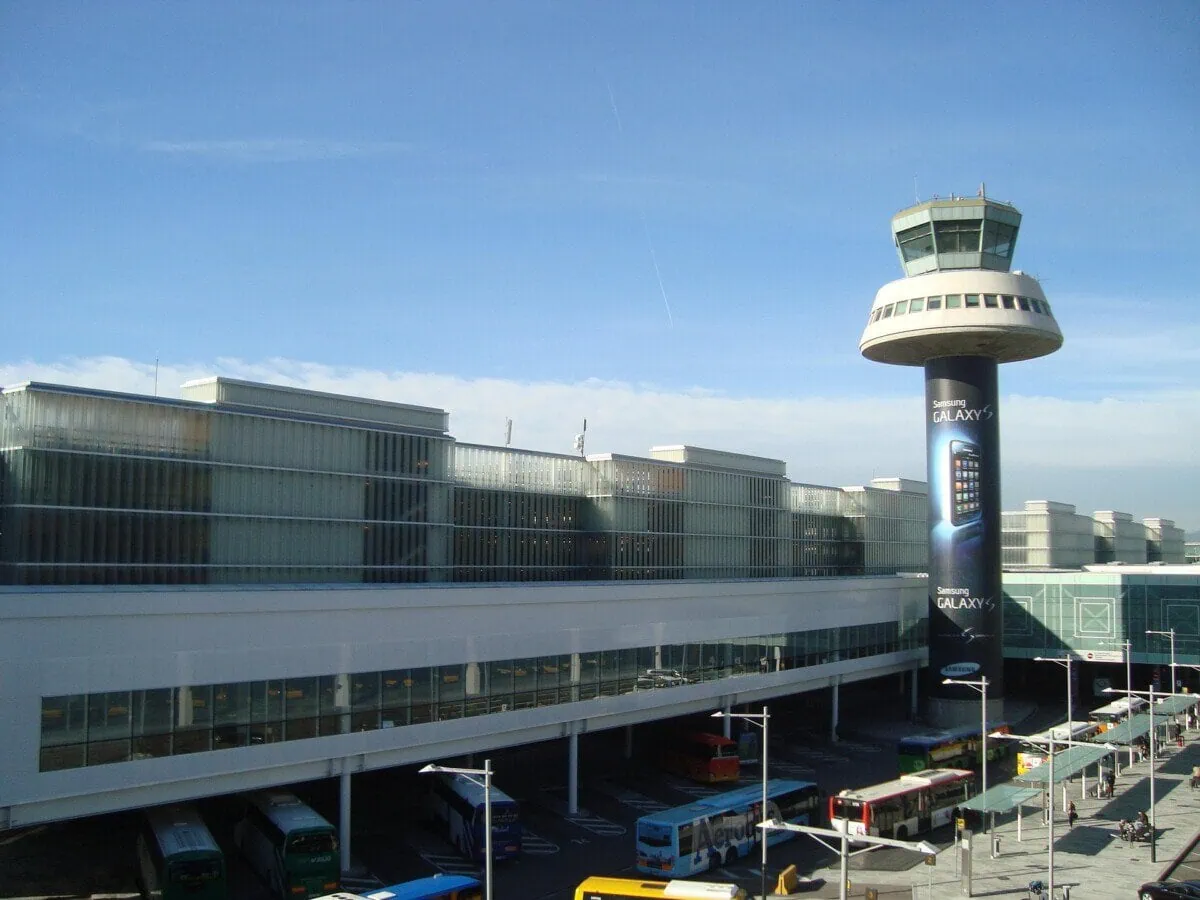
Barcelona’s El Prat Airport sits roughly 12 kilometres (7.5 miles) southwest of the city centre, close enough that even the slowest transfer option rarely takes much more than 40 minutes. The airport splits across two terminals, and knowing which one applies changes almost every decision covered in this guide.
Terminal 1 is the larger, newer building and handles Vueling, Iberia and most full-service international carriers, including KLM, Air France, Lufthansa and Emirates, while Terminal 2, split into sub-terminals A, B and C, mostly serves low-cost carriers such as Ryanair, easyJet and Wizz Air. The two terminals sit a few kilometres apart and are linked by a free shuttle bus, so confirming which one applies before travelling is worth the extra minute.
Six broad options genuinely make sense for reaching the city: the dedicated Aerobus coach, the R2 Nord Rodalies train, the metro’s L9 Sud line, a taxi, a pre-booked private transfer, or hiring a car. Each suits a different combination of budget, luggage and timing, and this guide walks through every one honestly.
Where a figure genuinely varies by source, such as the true taxi fare into town, we say so rather than quoting a single confident number that might not hold up on the day. A short comparison table below gives the quick version before the fuller detail on each option follows.
Whichever route a visitor picks, it helps to know upfront that Barcelona’s standard T-Casual travel card does not work at the airport’s own metro stations, and that the fastest coach option is not always the cheapest way to reach Plaça Catalunya. The sections below explain why.
| Transfer Option | Typical Journey Time | Approximate Cost | Best For |
|---|---|---|---|
| Aerobus | ~35 minutes to Plaça Catalunya | €8 (£7/$9) one-way | Speed and simplicity |
| Rodalies Train (R2 Nord) | ~20-27 minutes (T2 only) | €5 (£4/$6) | Budget travellers, Sants or Passeig de Gràcia |
| Metro (L9 Sud) | ~32 minutes | Airport Ticket €6 (£5/$7) | Heavy luggage, many stations |
| Taxi | 20-40 minutes | €21-40 (£18-35/$24-46) | Door-to-door, late arrivals |
| Private Transfer | 20-40 minutes | From €45 (£39/$52) | Families, guaranteed pickup |
| Car Hire | Flexible | Varies by season | Exploring beyond Barcelona |
How Your Arrival Terminal Changes the Journey
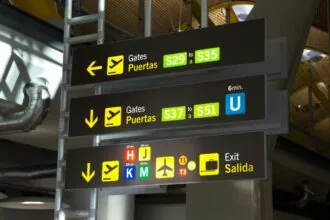
Barcelona’s two terminals do not serve every transfer option the same way, and working out which building applies is worth doing before choosing a route. Landing at the wrong platform or shuttle stop is one of the most common airport mistakes visitors make here.
The free inter-terminal shuttle bus that links them runs every 5 to 7 minutes around the clock, so the bus itself is rarely what costs time. Stops sit right outside Terminal 1’s arrivals level and beneath the bridge outside Terminal 2B, with the crossing itself taking roughly 10 to 15 minutes depending on direction.
The Aerobus runs two separate lines that mirror the terminals directly, A1 for Terminal 1 and A2 for Terminal 2, both ending at the same stop on Plaça Catalunya. Travellers only need to find the coach matching their own terminal rather than worry about which line goes where.
The Rodalies train is the option that genuinely changes with terminal, since its only station sits at Terminal 2. Anyone landing at Terminal 1 needs the free inter-terminal shuttle bus first, which adds roughly 10 to 15 minutes before a train can even be boarded.
Metro line L9 Sud is the simplest option here, since it runs its own station at each terminal, Aeroport T1 and Aeroport T2, both on the same line into the city. That makes it a safe default for anyone unsure which terminal their onward journey actually needs.
Taxi ranks and private transfer pickup points sit directly outside both terminals, so neither option is meaningfully affected by which building a flight lands at. Car hire desks are also present at both terminals, though not every provider operates from each one.
Aerobus: The Coach Straight to Plaça Catalunya
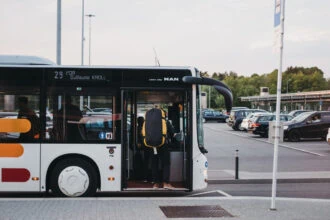
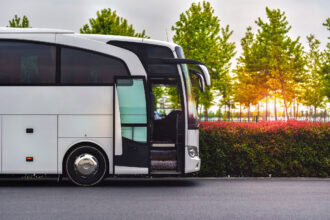
The Aerobus is Barcelona’s dedicated airport shuttle coach, running non-stop between both terminals and the city centre with nothing to change and no ticket integration to think about. It is the option most first-time visitors reach for, and for good reason.
Buses run frequently, roughly every 5 minutes at peak times and dropping to every 10 to 20 minutes outside them, with services generally operating from around 6am until shortly after midnight. That frequency means a missed departure rarely costs more than a short wait.
The full run to Plaça Catalunya takes around 35 minutes, though the coach also calls at Plaça d’Espanya, Gran Via-Borell and Plaça Universitat along the way, so travellers heading to those areas can hop off earlier. Both the A1 and A2 lines follow a broadly similar route through the centre.
A one-way fare costs around €8 (£7/$9), with a return ticket working out cheaper per journey at roughly €13 (£11/$15). Fares have crept up slightly in recent updates, so it is worth treating these as an approximate guide rather than a fixed price on the day.
The Aerobus suits solo travellers and couples with manageable luggage who want the fastest simple option without hunting for a train platform or haggling over a taxi fare. It is less practical for very early or very late flights, when frequency drops right back.
Best for a short trip. Compare rooms by neighbourhood, price and guest rating before you book.
Compare hotelsBest for longer stays. Whole apartments and houses, so you are not eating out three times a day.
View rentalsBest as a last check before booking. Compares hotel rates across several sites in one search.
Compare ratesThe Rodalies Train Into the City
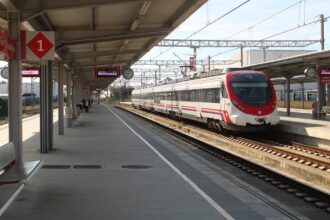
The R2 Nord Rodalies train is the fastest and cheapest rail option here, running directly into central Barcelona without the intermediate stops the Aerobus makes. Its own station sits at Terminal 2, reached by a short walk from arrivals.
Trains reach Barcelona Sants in around 20 minutes and Passeig de Gràcia in around 27 minutes, both useful interchange points for onward metro or long-distance rail travel. A single fare costs around €5 (£4/$6), separate from any onward metro or bus ticket needed at the other end.
Services run roughly every 30 minutes on the R2 Nord itself, with the shared stretch into Sants seeing more frequent trains overall once other regional lines merge onto the same tracks. First departures start around 5am and the last trains run past midnight.
Anyone landing at Terminal 1 cannot board directly, since the station only sits at Terminal 2. The free inter-terminal shuttle bus covers the gap in a few minutes, but it is worth building that extra step into the journey time rather than assuming a train is right outside arrivals.
This is the option that makes most sense for budget-conscious travellers and anyone continuing straight onto Spain’s wider rail network, since Sants connects onward to high-speed services across the country. It suits light luggage better than a full suitcase, given the platform gap and no dedicated luggage space.
The Metro Line to the City Centre
Metro line L9 Sud runs directly from both terminals into the city, with its own station at each, making it the most flexible single option covered here. Unlike the Aerobus or train, it reaches a genuinely wide spread of stations without needing a change.
The catch is ticketing: the standard T-Casual travel card is not valid at the airport’s own metro stations. Travellers instead need the dedicated Airport Ticket supplement, priced at around €6 (£5/$7), or a Hola Barcelona travel card that already includes the airport journey.
The full journey to central stations takes around 32 minutes, calling at a long run of stops through the south and west of the city before reaching interchanges with several other metro lines. That makes it especially useful for anyone whose hotel sits nowhere near Plaça Catalunya or Sants.
Fares and validity rules are confirmed on TMB’s own fares page, worth checking directly since airport ticketing has changed more than once in recent years. Buying the wrong ticket at the airport gate machine is a genuinely common first-time mistake.
This option suits travellers heading to a station well away from the centre, or anyone who would rather reach their exact stop directly than change at Sants or Plaça Catalunya. It is less appealing for a first-time visitor unfamiliar with the network, since the ticketing step trips people up.
Taking a Taxi from El Prat
A licensed taxi rank sits directly outside arrivals at both terminals, with vehicles generally available around the clock. It remains the simplest door-to-door option for anyone who would rather skip working out tickets or timetables altogether.
Pricing here is genuinely less certain than for the other options on this page. Sources agree on a minimum fare of around €21 (£18/$24), but that minimum will not actually reach the city centre, and a realistic fare into town commonly runs closer to €25-40 (£22-35/$29-46) depending on traffic and exact destination.
Journey time usually falls somewhere between 20 and 40 minutes, with the wide range coming down to traffic on the approach roads rather than distance, since the airport itself sits only around 12km out. Small supplements for luggage and night-time journeys are standard practice.
A taxi earns its higher cost for late-night arrivals, heavy luggage, or a small group splitting the fare between several people, when it can work out cheaper per person than separate Aerobus or metro tickets. It also removes any need to navigate an unfamiliar station with bags in tow.
Official Barcelona taxis are black and yellow and only pick up from the marked rank, so it is worth avoiding anyone approaching inside the terminal offering a ride. Asking for an approximate fare before setting off is a reasonable, normal request rather than something to feel awkward about.
Booking a Private Transfer
A pre-booked private transfer is arranged before travel rather than found on arrival, with a driver typically waiting in the arrivals hall holding a name board. That removes any uncertainty after a long flight, especially for anyone travelling with children or a lot of luggage.
Because the price is agreed in advance, there is no surprise if traffic on the approach roads is heavier than expected. Fixed-price transfers to central Barcelona typically start from around €45 (£39/$52) for a standard car, reflecting the guaranteed pickup rather than any real difference in distance.
Journey times run broadly in line with a taxi, usually 20 to 40 minutes depending on traffic and the exact drop-off address. The real advantage here is certainty rather than speed, since nothing about the fare or pickup changes once it is booked.
Most operators also offer larger vehicles for groups or families with extra luggage, at a higher price than a standard car. This suits anyone who would otherwise need two taxis, or who simply wants to avoid splitting up on arrival.
A private transfer is especially worth considering for very early or very late flights, when Aerobus and train frequency drops right back overnight. Booking ahead also avoids any risk of a long taxi queue building up during a particularly busy arrivals period.

Compare Airport Transfer Companies
Pre-booking your airport transfer can save time and reduce stress when you arrive. Whether you need a private taxi, shared shuttle or executive transfer, comparing providers can help you find the best price and service for your journey.
We’ve selected three trusted airport transfer companies so you can compare prices, vehicle options, cancellation policies and customer reviews before you travel.
Terravision: A Lower-Cost Shuttle Alternative
Terravision does run a bus between El Prat and the city centre, though it works differently from the Aerobus most visitors default to. Its Barcelona product is a door-to-door shared shuttle, dropping passengers at participating hotels rather than running to one fixed city-centre stop.
Terravision’s own site quotes a one-way door-to-door fare of around €14 (£12/$15), and a cheaper fixed-stop standard fare from around €9 (£8/$10), with the journey taking roughly 35 minutes. Independent bus-comparison sites tracking El Prat operators list only Aerobus, Flybus and From2 Travel on this route, so Terravision’s presence here looks smaller than at some other European airports it serves.
Terravision is far better established at Girona and Reus, where it runs door-to-door coaches from both airports to Costa Brava and Costa Dorada resort towns such as Lloret de Mar, Calella and Salou. This is where the operator genuinely suits travellers flying into Spain on a low-cost routing that lands well outside Barcelona itself.
Anyone landing at Girona or Reus who actually wants central Barcelona, rather than the coast, will not reach it directly on a Terravision coach. A connecting Sagalés or Monbus service into Barcelona, followed by Rodalies or metro, is the more realistic route into the city from either airport.

Travel from the Airport to Barcelona with Terravision
For selected European airports, Terravision offers direct coach services into Barcelona, helping you avoid arranging onward transport after landing.
Pre-booking can make the arrival process easier, particularly when you want a direct city-centre service with a known fare before your trip begins.
Hiring a Car at El Prat Airport
Major rental car desks operate at both terminals, generally clustered together on the arrivals level or a short walk away, including the usual mix of international and local operators. Booking online in advance is usually noticeably cheaper than arriving without a reservation.
Rates vary considerably by season and vehicle class, with summer and major event weekends pushing prices up sharply. A hire car earns its cost mainly for exploring beyond the city, along the Costa Brava or into inland Catalonia, rather than for reaching central Barcelona itself.
Driving inside the city is rarely worth it. Barcelona operates a low emission zone covering most of the central area, narrow streets in districts like the Gothic Quarter are effectively impassable by car, and metered or resident-only parking makes leaving a car anywhere near a hotel genuinely difficult.
Hiring a car purely to reach the centre, then leaving it parked for the whole stay, is an easy way to overspend on a Barcelona trip. In that scenario, the Aerobus or metro works out both cheaper and considerably less stressful.
The travellers who genuinely benefit here are those planning day trips to Sitges, Girona or further into Catalonia at their own pace, rather than anyone whose plans stay within the well-connected city centre. For everyone else, one of the public transport options above makes more sense.
Explore Barcelona with a Hire Car
Hiring a car can open up more of Barcelona and its surrounding region, giving you the freedom to travel beyond the main public transport routes.
Compare offers from Discover Cars and EconomyBookings before booking so you can check both price and rental conditions.
Best for long or awkward journeys. Builds one itinerary out of separate flights.
View flightsBest for short trips. Install the eSIM at home and arrive with working data, no shop queue.
Browse eSIMsBest after a long flight or a late landing. Price agreed before you travel, and no taxi queue.
Check transfersWhich Transfer Actually Suits Your Trip
The right Barcelona airport transfer genuinely depends on luggage, budget and how many people are travelling together, more than any single option being objectively best. A quick look at the comparison table above is a useful starting point before reading the detail on whichever option fits.
Travellers with heavy luggage and a hotel well away from the centre are usually best served by the L9 Sud metro, since it reaches a wide spread of stations directly, or by a taxi if the walk from any station feels like too much with bags in tow.
Anyone travelling on a tighter budget should lean towards the Rodalies train, since it is the cheapest option here by some margin and still reaches Sants and Passeig de Gràcia quickly. It suits light luggage far better than a full suitcase, given the walk involved at both ends.
For pure speed and simplicity into the heart of the city, the Aerobus remains the strongest all-round choice, running non-stop to Plaça Catalunya with frequent departures and no ticketing complications. It is the option most visitors default to for good reason.
As a general rule, use the Aerobus or Rodalies train for light luggage and a straightforward budget trip, the metro for a hotel off the beaten path, and a taxi or private transfer for families, late arrivals or heavy bags. Car hire only earns its keep for exploring well beyond the city.
The Best Transfer for Where You’re Actually Headed
Matching the transfer to the actual destination, not just to price, is where the T1/T2 split matters most. The five journeys below cover the destinations visitors ask about most often, with the terminal distinction already built into each recommendation.
For Plaça Catalunya, the Aerobus is the strongest match from either terminal, since both the A1 and A2 lines run non-stop there in around 35 minutes with nothing to change. It beats the Rodalies train here, which stops short at Passeig de Gràcia and still needs a short walk or metro hop onward.
For Barcelona Sants, the Rodalies train wins outright from Terminal 2, reaching the station directly in around 20 minutes for a fraction of the Aerobus fare. Landing at Terminal 1 tips the balance towards the L9 Sud metro instead, since adding the shuttle bus before boarding a train rarely beats a direct metro ride.
The Gothic Quarter‘s narrow, largely pedestrianised streets make the Aerobus to Plaça Catalunya the sensible choice from either terminal, followed by a short walk into the old town. A taxi can get closer to a specific address, though several streets inside the quarter are closed to traffic entirely.
Reaching Sagrada Família directly is best handled by the L9 Sud metro from either terminal, changing once at Collblanc onto the L5 line for a total journey of around 50 minutes. It avoids the detour of reaching Plaça Catalunya first and then backtracking across the city by metro or bus.
No metro or train line reaches the cruise port directly, which makes a taxi or pre-booked private transfer the realistic single best option from either terminal. Budget 25 to 40 minutes depending on traffic, since combining the Aerobus with a second taxi or a long walk from Drassanes rarely saves meaningful time.
Onward Train Journeys from Barcelona Sants
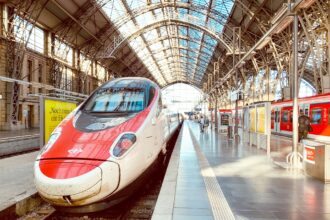
Barcelona Sants is not just a stop on the Rodalies airport line, it is the city’s main long-distance rail hub, with high-speed services departing from the same station travellers arrive into. Anyone continuing beyond Barcelona rather than staying in the city can pick up an onward train without needing to cross town first.
The fastest domestic links run to Madrid in around 2 hours 30 minutes and to Zaragoza in around 1 hour 30 minutes, both on frequent AVE services now shared between Renfe, Ouigo and iryo. Valencia, Seville and Málaga are also reachable directly, though each takes considerably longer given the distance travelled.
Heading up the coast, Rodalies regional trains reach Girona in around 1 hour 20 minutes on the R11 line, useful for anyone without an AVE reservation. For a genuine international connection, TGV services run daily from Barcelona Sants to Paris Gare de Lyon in around 6 hours 30 minutes, calling at Girona, Figueres and Perpignan along the way.
Fares on these routes vary hugely by how far ahead they are booked, so it is worth checking Renfe’s own site directly rather than assuming a flat price applies across the board. The table below gives journey time and service type only, since pricing here is too changeable to quote with any confidence.
| Destination | Approx. Journey Time | Typical Service |
|---|---|---|
| Madrid | ~2h 30m | AVE |
| Zaragoza | ~1h 30m | AVE |
| Valencia | ~2h 45m-4h | Euromed / AVE |
| Seville | ~6h 15m | AVE |
| Málaga | ~6h 10m | AVE |
| Girona | ~1h 20m | Rodalies (R11) |
| Paris | ~6h 30m | TGV |

Rupert’s Handy Travel Tips
Landing at Barcelona El Prat? Here are a few tips to help you get into the city smoothly.
- Buy your Aerobus ticket online before you fly: it is a little cheaper than buying at the kiosk and skips a queue on arrival.
- Confirm your terminal before you set off: the Aerobus splits into A1 and A2, and the Rodalies train station only sits at Terminal 2.
- Don’t try to use a T-Casual card at the airport metro: you’ll need the Airport Ticket supplement or a Hola Barcelona card instead.
- Ask for an approximate taxi fare before setting off: pricing genuinely varies more here than official figures suggest.
- Only hire a car if you’re leaving the city: Barcelona’s low emission zone and narrow old-town streets make driving in the centre more hassle than it’s worth.
- Book a private transfer for very early or late flights: Aerobus and train frequency both drop right back overnight.
Want to meet the reindeer behind our travel tips? Find out more in our page Who is Rupert?.




Frequently Asked Questions
What is the fastest way from El Prat Airport to central Barcelona?
A taxi is usually fastest door-to-door at 20-40 minutes depending on traffic, though the Aerobus in around 35 minutes is the simplest option for most travellers.
Does the T-Casual travel card work on the airport metro?
No. The T-Casual is not valid at the Aeroport T1 or Aeroport T2 metro stations; travellers need the dedicated Airport Ticket supplement or a Hola Barcelona card instead.
Do I need a shuttle bus if I land at Terminal 1?
Only for the train. The Rodalies station sits at Terminal 2, so anyone landing at Terminal 1 needs the free inter-terminal shuttle first; the Aerobus and metro both serve Terminal 1 directly.
How much does the Aerobus cost?
A one-way ticket costs around €8 (£7/$9), with a return priced at roughly €13 (£11/$15), though it is worth checking the current fare before travel.
Is there a fixed taxi fare from the airport to the city centre?
Not exactly. There is an official minimum fare of around €21 (£18/$24), but a realistic fare into the centre commonly runs closer to €25-40 (£22-35/$29-46) depending on traffic.
Which Aerobus line do I need, A1 or A2?
A1 serves Terminal 1 and A2 serves Terminal 2; both end at the same stop on Plaça Catalunya, so simply match the line to your own terminal.
Is a private transfer worth the extra cost over a taxi?
It suits families, very early or late flights, and anyone who wants a guaranteed price and pickup agreed in advance rather than the walk-up taxi rank.
Should I hire a car just to reach central Barcelona?
Generally not. Barcelona’s low emission zone and narrow old-town streets make driving in the centre impractical; car hire makes more sense for exploring beyond the city.

Further Reading & Related Guides
Continuing onward by rail after landing? Our Spain Rail Pass Guide explains when a Renfe pass genuinely beats buying tickets individually for a longer trip beyond Barcelona, whether that means Madrid, Seville or the Basque Country.
The Madrid-Barcelona corridor is one of Europe’s busiest high-speed lines, and our European High-Speed Rail guide covers how the AVE compares with flying for that specific route, alongside the rest of the continent’s fastest lines.
For a lower-cost coach alternative used at several other European airports, our Terravision review looks at how that shuttle network compares on price and reliability, including its own Barcelona routes.
Leaving Barcelona by sea rather than flying home? Our Barcelona Cruise Port Guide covers the city’s cruise terminals and how to get from ship to city and back again.