Reviewed by our editorial team Published
Madrid rewards visitors who come prepared to walk, eat well and linger in squares that have barely changed in centuries. Spain’s capital sits at the country’s geographic heart, and its compact historic core means many of the biggest sights sit within a short Metro ride or a comfortable stroll of each other. This is a city built for wandering between a world-class art museum, a royal palace still used for state occasions, and a tapas bar that has served the same three dishes since the 1930s.
The so-called Golden Triangle of Art anchors any serious visit, with the Prado, Reina Sofía and Thyssen-Bornemisza museums sitting within a few hundred metres of each other along Paseo del Prado. Beyond the galleries, Madrid’s thirteen-line Metro network makes reaching almost anywhere in the city straightforward, and this guide names the nearest station for every attraction covered, since knowing exactly which stop to aim for saves real time in a city this dense.
This guide works through Madrid’s essential sights one at a time, from the Royal Palace and Almudena Cathedral in the historic centre out to Retiro Park’s Crystal Palace and the Temple of Debod’s sunset terrace, before covering the city’s shopping districts, its nightlife neighbourhoods and the food scene that turns a simple bar crawl into an education in Spanish cooking. Many of Madrid’s major museums close for at least one day a week, most commonly Monday or Tuesday.
Because of that, this guide flags exact closure days throughout rather than leaving readers to discover them at the door, and gives real approximate pricing in euros, pounds and dollars rather than vague “affordable” framing. Expect honest, practical detail on how to actually get there and how much time each place genuinely deserves, not just a list of names to recognise before moving on to the next one. Several of the sights below are also covered by discounts on the Madrid City Card, which our guide to Madrid’s city passes explains in full.
Here’s a quick-scan comparison of the page’s headline sights before the full detail below, covering the nearest Metro stop and whether advance booking is genuinely worth arranging.
| Attraction | Nearest Metro | Best For | Advance Booking Needed? |
|---|---|---|---|
| Prado Museum | Banco de España (Line 2) | World-class Spanish art | Recommended, especially weekends |
| Reina Sofía Museum | Atocha (Line 1) | Guernica and modern art | Recommended |
| Royal Palace of Madrid | Ópera (Lines 2 & 5) | State rooms and Royal Armoury | Recommended |
| Retiro Park | Retiro (Line 2) | Green space and boating lake | Not needed |
| Plaza Mayor | Sol (Lines 1, 2 & 3) | Historic square and cafés | Not needed |
| Gran Vía | Gran Vía (Lines 1 & 5) | Shopping and theatres | Not needed |
| Santiago Bernabéu Stadium Tour | Santiago Bernabéu (Line 10) | Real Madrid fans | Recommended |
| Temple of Debod | Plaza de España (Lines 2, 3 & 10) | Sunset views | Free, but timed slot needed for interior |
| Mercado San Miguel | Sol / Ópera | Gourmet food hall grazing | Not needed |
Prado Museum: Home to Velázquez, Goya and Bosch
The Museo Nacional del Prado is Spain’s national gallery and one of the finest art museums anywhere in the world, holding the single largest collection of Spanish painting ever assembled. Its halls trace a direct line through Velázquez’s Las Meninas, Goya’s Black Paintings and an extraordinary run of Bosch, Titian and El Greco, all hung in a purpose-built neoclassical building dating to 1785.
Give the Prado a genuine half-day rather than a rushed hour, since the permanent collection alone runs to more than 1,700 paintings across two full floors. A timed entry ticket is required and should be booked in advance during busy periods, particularly weekends and the summer months when queues at the Goya entrance can stretch well beyond the posted opening time.
Entry costs approximately €15 (£13/$16) for adults, with a reduced rate for seniors and students and free entry for under-18s at all times. The museum also opens free of charge during its final two hours most weekday evenings, a genuinely useful trick for a shorter, focused visit rather than a full ticketed day.
Unusually for a major Madrid museum, the Prado has no weekly closure day, staying open Monday to Saturday from 10am to 8pm and Sundays and public holidays from 10am to 7pm, with only January 1, May 1 and December 25 closed entirely. The nearest stop is Banco de España Metro station on Line 2, a two-minute walk from the main entrance on Paseo del Prado.
Reina Sofía Museum: Home to Picasso’s Guernica
The Museo Reina Sofía is Madrid’s home for twentieth-century Spanish art, and its single biggest draw is Picasso’s Guernica, hung alone in Room 206 of the Sabatini Building where visitors can take in its full 7.76-metre width from across the gallery. The museum’s collection continues through major works by Dalí, Miró and a strong run of Spanish surrealism most visitors never expect.
Unlike the Prado’s classical galleries, the Reina Sofía occupies a former eighteenth-century hospital building, with a striking glass-and-steel extension by Jean Nouvel added in 2005 housing temporary exhibitions and the museum’s library. Photography is prohibited specifically in the Guernica room, a rule enforced closely given the painting’s fragility and significance.
Adult admission runs approximately €12 (£10/$13), with free entry for under-18s and for students aged 18 to 25 who show valid accreditation. Free general admission also applies most evenings and all day Sunday afternoon for anyone willing to visit within those specific windows.
The museum is closed every Tuesday, the one day of the week to avoid entirely, and otherwise opens Monday and Wednesday to Saturday from 10am to 9pm, with Sundays running a shorter 10am to 2.30pm schedule. The closest station is Atocha Metro on Line 1, directly opposite the museum’s main entrance and a natural pairing with a visit to nearby Atocha rail station’s indoor tropical garden.
Best if you want daily housekeeping and a front desk. Filter by area first, then by price.
Check availabilityBest for longer stays. Whole apartments and houses, so you are not eating out three times a day.
View rentalsBest if you have already picked a hotel. Checks the big booking sites for the same room and shows who is cheapest.
Check dealsMadrid Hop-On Hop-Off Bus Tour
The Madrid City Tour is the city’s official hop-on hop-off bus network, running three interconnecting routes, Historic Madrid, Modern Madrid and Madrid Today, across roughly 34 stops. It’s a genuinely practical option for stitching together sights that sit too far apart to comfortably walk between in a single day.
Boarding at any stop works well as a change of pace between the Golden Triangle museums covered on this page, since the network also passes the Royal Palace, Retiro Park and reaches out as far as the Santiago Bernabéu stadium and Salamanca’s shopping streets covered later in this guide. It doubles as a genuinely useful orientation tool on a first morning in the city.
Each seat comes with a multilingual onboard audioguide covering ten languages, narrating the history behind major landmarks as the bus passes, which suits visitors who’d rather listen and look than juggle a guidebook. Buses run at frequent intervals throughout the day, and tickets let riders hop off at any stop, explore at their own pace, then rejoin a later bus on the same loop.
Tickets cover all three routes and come in 24-hour and 48-hour options, priced from approximately €33 (£29/$36) for the shorter pass, with online booking typically working out cheaper than buying on the day. It’s worth checking the current route map before boarding, since stops and timings are occasionally adjusted outside peak season.
Thyssen-Bornemisza Museum: Completing Madrid’s Golden Triangle
The Thyssen-Bornemisza completes Madrid’s Golden Triangle of Art, built around one of the largest private art collections ever assembled and acquired by the Spanish state from the Thyssen-Bornemisza family in 1993. Where the Prado is overwhelmingly Spanish and the Reina Sofía overwhelmingly modern, the Thyssen fills the gaps between them with an unbroken sweep from medieval Italian panels through Impressionism to American pop art.
Housed inside the eighteenth-century Villahermosa Palace, the collection is arranged chronologically across three floors, making it genuinely possible to walk the entire history of Western painting in a single visit. Highlights include Holbein, Caravaggio, Degas and a substantial Hopper holding that draws its own dedicated following among visitors.
Admission costs approximately €14 (£12/$15) for adults, with free entry for under-18s and a reduced rate for those over 65. A genuinely useful workaround for budget-conscious visitors is the museum’s free access window every Monday from midday to 4pm, sponsored entry that covers the full permanent collection.
Opening hours run roughly 10am to 7pm most days, with Mondays restricted to that free afternoon slot and Saturdays extending later into the evening. The museum sits directly opposite the Prado on Paseo del Prado, making Banco de España Metro station on Line 2 the nearest stop for both in the same short walk.
Zoo Aquarium Madrid: Pandas, Dolphins and More
Tucked inside the vast Casa de Campo park on Madrid’s western edge, the Zoo Aquarium Madrid combines a traditional zoo, a saltwater aquarium, a dolphinarium and a walk-through aviary on a single 20-hectare site. It is genuinely one of Europe’s more complete family days out, holding more than 6,000 animals across roughly 500 species under one ticket.
The zoo is one of only a handful outside China to keep giant pandas, alongside gorillas, chimpanzees and a large primate collection that draws steady crowds. Its dolphinarium runs regular shows with a resident pod of bottlenose dolphins, while the aquarium holds close to two million litres of saltwater across its tanks.
The park sits on Madrid’s western side, a longer trip out than a stop on the same walking loop as the Temple of Debod and Plaza de España. Metro Line 10 runs directly to Casa de Campo station, roughly 900 metres from the entrance, with the Teleférico cable car offering an alternative scenic route in from Parque del Oeste when it is operating.
Online adult tickets cost around €20 (£17/$21), noticeably cheaper than buying at the gate, and booking ahead is worth it during busy school holiday weeks. Allow a genuine half day to see the pandas, dolphin show and aquarium properly, and note the neighbouring Parque de Atracciones amusement park if little ones want more after the animals.
Royal Palace of Madrid: Western Europe’s Largest
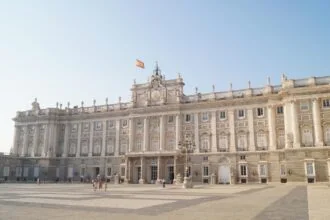
The Palacio Real is the official residence of the Spanish royal family, though they no longer actually live there, choosing the more modest Zarzuela Palace on the city’s outskirts instead. With more than 3,400 rooms, it is the largest functioning royal palace in Western Europe, and around fifty of those rooms are open to the public on a self-guided or guided visit.
Highlights inside include the lavish Throne Room, the Royal Armoury’s genuinely spectacular collection of medieval and Renaissance weaponry, and a Stradivarius string quintet still used for state occasions. The palace continues to host official ceremonies, including the changing of the guard, held on the first Wednesday of each month at noon outside the Prince’s Gate.
Self-guided adult entry costs approximately €18 (£15/$19), with children aged 5 to 16 charged around €9 (£8/$10) and under-5s admitted free. Guided tours run a little higher and are worth booking in advance during peak season, since the palace closes entirely and without notice on days when official state events are scheduled.
Winter opening hours run 10am to 6pm Monday to Saturday and 10am to 4pm on Sundays, extending to 7pm on Saturdays through the summer months. The nearest stop is Ópera Metro station on Lines 2 and 5, a five-minute walk from the palace’s main courtyard entrance, and the same stop that serves Almudena Cathedral next door.
Almudena Cathedral: Consecrated by Pope John Paul II
Standing directly opposite the Royal Palace, Almudena Cathedral is a genuinely unusual sight for a European capital in that its construction only finished in 1993, giving it a striking neoclassical grey-and-white facade that contrasts with a surprisingly modern, colourful interior ceiling. Pope John Paul II consecrated the cathedral personally, making it one of the newest cathedrals of its stature anywhere in Europe.
Inside, the geometric stained glass and brightly painted vaulted ceiling feel closer to contemporary art than traditional Gothic gloom, a deliberate choice that divides opinion among visitors expecting something older. A small crypt beneath the main cathedral, built decades earlier than the structure above it, holds an entirely different and more traditionally Romanesque atmosphere worth the short detour.
General entry to the cathedral is free, with a modest one-euro donation requested at the door, while the small on-site museum and dome viewing area charge a separate fee of around €7 (£6/$8). The cathedral closes its doors periodically throughout the day during religious services, so visitors hoping to see the full interior should build a little flexibility into their timing.
Opening hours run 10am to 8.30pm daily from September to June, extending to 9pm during July and August. The cathedral shares its nearest stop with the Royal Palace at Ópera Metro station on Lines 2 and 5, making the two an obvious pairing on the same visit.
Las Ventas Bullring Tour
Standing well east of the historic centre, Plaza de Toros de Las Ventas is Madrid’s principal bullring and, with room for around 23,000 spectators, one of the largest anywhere in the world. Constructed from 1929 and inaugurated in 1931 to a striking Neo-Mudéjar design by architect José Espeliú, its horseshoe arches and patterned brickwork make it a genuine architectural landmark in its own right.
A self-guided audio tour lets visitors explore the arena itself, the chapel where bullfighters traditionally pray before entering the ring, and an extensive bullfighting museum tracing the tradition’s costumes, posters and history. Interactive elements, including a virtual bullfighting game, are aimed at visitors curious about the spectacle without necessarily wanting to attend an actual fight.
The full visit runs to well under an hour, making it an easy addition to a day already built around the Royal Palace and Almudena Cathedral covered above, though it’s best treated as a separate outing given the distance rather than squeezed into the same walking loop. An audioguide covering multiple languages is included with entry, narrating the building’s history stop by stop.
Las Ventas sits well outside the compact historic core, so allow time to travel there rather than treating it as a quick stop, and check opening days in advance since the venue occasionally closes for scheduled events. The nearest stop is Ventas Metro station on Lines 2 and 5, a short walk from the bullring’s main gate.
Best for long or awkward journeys. Builds one itinerary out of separate flights.
View flightsBest for anyone whose home plan charges by the megabyte abroad. Pay a fixed price up front.
Check eSIMsBest if you would rather not work out the transport on arrival. Book it now and forget it.
View transfersPlaza Mayor: Coronations, Bullfights and Executions
Plaza Mayor is Madrid’s grandest public square, a rectangular arcaded plaza dating back to 1619 that has served over the centuries as a marketplace, a bullring, a site of royal coronations and, more grimly, public executions during the Spanish Inquisition. Today its ground-floor arcades hold cafés, souvenir shops and the odd street performer, while the upper floors remain genuine residential apartments.
At the square’s centre stands an equestrian statue of King Philip III, who originally commissioned the plaza’s construction, and the surrounding buildings are unified by a single deep red-brown facade that gives the whole space real visual consistency. Look up at the Casa de la Panadería on the north side for its striking painted murals, added far more recently than the building itself.
Entry is free at all times, and the square is genuinely worth passing through more than once during a stay, since its character shifts noticeably between a quiet morning coffee and a lively evening crowd. It also hosts one of Madrid’s largest Christmas markets each December, filling the arcades with festive stalls through early January.
The plaza sits within easy walking distance of most of the historic centre, and the nearest station is Sol Metro on Lines 1, 2 and 3, roughly a four-minute walk away, with Ópera Metro on Lines 2 and 5 offering an equally short approach from the west.
Puerta del Sol: Home of Kilómetro Cero
Puerta del Sol is Madrid’s true centre in the most literal sense, marked by the Kilómetro Cero plaque set into the pavement that measures distance to every point on Spain’s national road network. The square has served as the city’s civic heart for centuries and remains its busiest meeting point, where locals and visitors alike gather beneath the illuminated Tío Pepe sign.
Its most recognisable landmark is the statue of El Oso y El Madroño, a bear reaching into a strawberry tree that appears on Madrid’s official coat of arms, and it is also where huge crowds gather each New Year’s Eve to eat twelve grapes on the twelve strokes of midnight beneath the square’s clock tower. A statue of King Charles III on horseback stands nearby, a figure widely credited with modernising the city during his eighteenth-century reign.
There is no admission charge to visit, since Puerta del Sol is simply a public square rather than a ticketed attraction, and most visitors pass through it several times a day given its central position. It also functions as one of the city’s key transport interchanges, connecting Metro, regional rail and several major bus routes.
The square sits directly above its own station, Sol Metro on Lines 1, 2 and 3, making it one of the easiest landmarks in the entire city to find and one of the most natural starting points for exploring the historic centre on foot.
Gran Vía: Known as Spain’s Broadway
Often nicknamed Spain’s Broadway, Gran Vía is Madrid’s grandest boulevard, a sweeping curved avenue lined with early twentieth-century theatres, flagship department stores and ornate facades that earned it a reputation as the city’s showcase street when it was first cut through the old town in 1910. Cinema marquees and illuminated signage still dominate its skyline after dark, giving it a genuinely theatrical feel most other Madrid streets lack.
Architecturally, the street is a genuine open-air museum of early modern Spanish design, running from the ornate Metrópolis Building at its eastern end, topped by a golden winged figure, through to the Art Deco Telefónica Building that was once the tallest structure in Spain. Walking the full length takes around thirty minutes without stopping, though most visitors take considerably longer once the shopfronts start competing for attention.
There is no cost to walk Gran Vía itself, and it works well as a connecting route between Plaza de España and the historic centre rather than a single fixed destination. Several rooftop bars along its length charge for entry or a minimum drink spend, offering some of the best elevated views over the city after sunset.
Two stations sit directly beneath the street itself, Gran Vía Metro on Lines 1 and 5 and Callao Metro on Lines 3 and 5, both placing visitors right in the middle of the action within a minute of surfacing.
Retiro Park: Madrid’s Former Royal Garden
El Retiro is Madrid’s principal green space, a genuinely vast 125-hectare former royal garden that opened fully to the public in 1868 and remains the single most popular place in the city for a picnic, a run or simply an hour away from traffic. Its scale means a full circuit takes hours, so most visitors pick a handful of specific spots rather than attempting the whole park.
The park’s centrepiece is a large ornamental lake where rowing boats can be rented for around €6-8 (£5-7/$6-9) per forty-five minutes, overlooked by a grand semicircular colonnade and a towering equestrian monument to King Alfonso XII. Elsewhere, the Rose Garden and the Fallen Angel statue, one of the only public monuments anywhere depicting Lucifer, both reward a slower wander off the main paths.
Entry to the park is completely free, with no ticket required for the grounds themselves, and only optional extras like boat hire or a guided tour carrying any charge. The park stays open long into the evening during summer, running 6am to midnight from April to September and 6am to 10pm through the colder months.
The nearest stop is Retiro Metro station on Line 2, sitting right at the park’s northern edge, while Ibiza on Line 9 and a short walk from Atocha both offer alternative approaches depending which part of the park a visit is aimed at.
Crystal Palace: Retiro Park’s Glass Showpiece
Tucked inside Retiro Park itself, the Palacio de Cristal is a soaring glass-and-metal pavilion built in 1887 to house a display of exotic plants brought back from the Philippines, then a Spanish colony. Its design, closely modelled on London’s original Crystal Palace, makes it one of the most photographed structures in Madrid and a genuinely striking sight against the surrounding trees.
Rather than remaining a static period piece, the building now functions as a working exhibition space run by the Reina Sofía Museum, hosting rotating contemporary art installations that regularly transform its light-filled interior. The small ornamental lake directly in front reflects the entire glass structure on calm days, a detail worth timing a visit around if photography is a priority.
Entry is free for whatever exhibition happens to be showing at the time, since it operates as a public gallery rather than a ticketed monument, though exhibitions do occasionally close between installations for changeover. It’s a short, genuinely worthwhile detour that rarely takes more than fifteen or twenty minutes to fully appreciate.
Opening hours broadly follow the seasons, running from around 10am until early evening, and the closest access is the same Retiro Metro station on Line 2 that serves the wider park, followed by a ten-minute walk through the gardens to reach the pavilion itself.
Temple of Debod: Genuine Ancient Egypt in Madrid
The Temple of Debod is a genuine ancient Egyptian temple, dismantled stone by stone and gifted to Spain in 1968 by the Egyptian government in gratitude for Spanish help saving monuments threatened by the construction of the Aswan Dam. Dating originally to the second century BC, it is one of the very few Egyptian temples that can be seen outside Egypt in anything close to its authentic form.
Rebuilt on a raised hilltop park overlooking western Madrid, the temple has become best known locally for its sunset views, with the Royal Palace and Casa de Campo park silhouetted beyond the water pools surrounding the structure. Arrive around forty-five minutes before sunset in the warmer months to secure a decent spot, since the terrace fills quickly on clear evenings.
Entry to the surrounding grounds is free at all times, while stepping inside the temple chambers themselves is also free but requires booking a timed slot in advance due to limited capacity of around thirty visitors per group. The temple is closed on Mondays, opening Tuesday to Sunday from 10am to 8pm in winter and 10am to 7pm during the summer months.
Three Metro stations serve the site within a short walk: Plaza de España on Lines 2, 3 and 10, Príncipe Pío on Lines 6 and 10, and Ventura Rodríguez on Line 3, giving visitors a genuine choice depending which direction they’re approaching from.
Best for short city stops where being central matters more than the room. Dorms and private rooms both listed.
See hostelsBest arranged before you fly rather than after. Covers claim handling, plus lounge access on eligible delays.
Explore AirHelp+Best for a day with a suitcase and nowhere to put it. Find a storage point near where you already are.
View storagePlaza de España: Cervantes Monument and Fountains
Plaza de España anchors the western end of Gran Vía and has undergone one of the city’s most dramatic recent transformations, reopened in 2021 after a major renovation that removed traffic lanes and added extensive new pedestrian space and greenery around its central monument. The square now reads as far more of a genuine park than the traffic roundabout it used to be.
At its centre stands a grand monument to Miguel de Cervantes, author of Don Quixote, flanked by bronze statues of the Don himself and his loyal squire Sancho Panza atop their respective horse and donkey. The square is also framed by two of Madrid’s most recognisable skyscrapers, the Torre de Madrid and the recently reopened Edificio España, both dating to the 1950s.
There is no charge to visit the square itself, and it works well as a natural stopping point between Gran Vía and the Temple of Debod given its position roughly halfway between the two. The renovated fountains and expanded green space have made it a genuinely pleasant place to sit rather than simply pass through, especially since the redesign.
The square sits directly above its own interchange, Plaza de España Metro station on Lines 2, 3 and 10, making it one of the most straightforward landmarks in the city to reach from almost anywhere else on the network.
Santiago Bernabéu: Real Madrid’s Storied Home
Home to Real Madrid since 1947, the Santiago Bernabéu is one of the most storied football stadiums in world sport and has hosted multiple European Cup finals alongside the club’s own record haul of Champions League titles. A major renovation completed in recent years added a retractable roof and a striking new exterior facade, making the current building genuinely different from the stadium longtime fans remember.
The self-guided tour takes visitors through the changing rooms, the players’ tunnel and pitch-side seating, before finishing in an extensive trophy room and museum tracing the club’s full history. On non-matchday visits, the sheer scale of the bowl is often the most striking part, something photographs of a packed stadium never quite capture.
Self-guided adult tickets start from approximately €25 (£21/$27), with children aged 5 to 13 priced from around €19 (£16/$21), though guided tour options and matchday premiums run noticeably higher, so it’s worth checking the official Real Madrid site for the exact current tier before booking. Under-5s go free throughout.
The stadium opens Monday to Saturday from 9am to 7pm and Sundays and public holidays from 9.30am to 6.30pm, closing only on December 25 and January 1. It sits directly above its own stop, Santiago Bernabéu Metro station on Line 10, one of the very few attractions in this guide with a station named after it.
Mercado San Miguel: Madrid’s Gourmet Food Hall
Mercado de San Miguel is Madrid’s most famous covered market, housed inside a striking early twentieth-century wrought-iron and glass structure that originally served as a genuine neighbourhood produce market before its 2009 transformation into a gourmet food hall. Today it’s packed wall to wall with small stalls selling everything from oysters and jamón ibérico to specialist vermouth and elaborate pastries.
The format works best as a grazing experience rather than a sit-down meal, with most stalls serving small plates designed to be eaten standing at high tables scattered throughout the hall. It gets genuinely crowded during peak evening hours, so an early lunch or a mid-afternoon visit tends to offer a noticeably calmer experience.
There is no entry fee to browse the market itself, since visitors pay only for what they actually order from individual stalls, and prices vary considerably depending on which vendor is chosen. It’s worth treating as one stop among several rather than the single defining tapas experience of a trip, since prices here run higher than most neighbourhood bars.
Opening hours run Sunday to Thursday from 10am to midnight, extending to 1am on Fridays, Saturdays and the eve of public holidays. The market sits a short walk from both Sol Metro station on Lines 1, 2 and 3 and Ópera on Lines 2 and 5, right beside Plaza Mayor’s western edge.
CaixaForum Madrid: Home to a Vertical Garden
CaixaForum is one of the more architecturally daring buildings in Madrid, a former electrical power station converted into a contemporary cultural centre that appears to float above a plaza thanks to a dramatic cantilevered design completed in 2008. Its most photographed feature isn’t even inside, but the enormous vertical garden covering the adjacent wall, one of Europe’s largest living plant facades.
Inside, the centre hosts a genuinely varied programme of rotating exhibitions spanning photography, contemporary art and design, alongside regular talks, concerts and family-oriented workshops. Because the space doesn’t hold a permanent collection, it rewards a repeat visit on a later trip far more than most single-collection museums in the city.
Standard exhibition admission costs approximately €6 (£5/$6) for adults, with free entry for under-16s and various other concessions depending on the current exhibition programme. Certain dates through the year, including several in May and November, offer free admission for all visitors regardless of age.
The centre opens daily, including public holidays, from 10am to 8pm, closing only on December 25 and January 1 and 6. It sits directly across Paseo del Prado from the Reina Sofía, making Atocha Metro station on Line 1 the nearest stop and a natural pairing with a visit to the neighbouring museum.
Sorolla Museum: Inside the Painter’s Own Home
The Museo Sorolla occupies the former home and studio of Joaquín Sorolla, the Valencian painter often described as Spain’s answer to the Impressionists for his luminous beach and garden scenes. The house itself, built to the artist’s own specifications in the early twentieth century, is as much a part of the experience as the paintings, complete with an Andalusian-style courtyard garden Sorolla designed himself.
The collection covers the full range of Sorolla’s career, from intimate family portraits and sunlit Valencia beach scenes through to preparatory sketches for his monumental Vision of Spain commission, a set of murals now housed permanently in New York. It’s a genuinely different, quieter museum experience than the city’s three big galleries, built around one artist’s life rather than a sweeping collection.
At the time of writing, the museum is temporarily closed for renovation and expansion, with a reopening expected during 2026, so visitors should check the museum’s official status directly before planning a trip around it, since exact pricing and hours cannot be confirmed while it remains shut.
When open, the museum has traditionally sat in the Chamberí neighbourhood, with Rubén Darío Metro station on Line 5 the closest stop, followed by Gregorio Marañón on Lines 7 and 10 a short walk further away.
El Rastro: Madrid’s Historic Sunday Flea Market
El Rastro is Madrid’s largest and most famous flea market, sprawling down the sloped Calle de la Ribera de Curtidores and its surrounding side streets in the La Latina neighbourhood every single Sunday. Stalls sell everything from genuine antiques and vintage clothing to cheap phone cases and leather goods, and the sheer density of the crowd is as much a part of the experience as anything actually for sale.
The market has run in some form since the medieval period, originally connected to the leather trade and slaughterhouses once based in this part of the city, hence the name Rastro, meaning trail or track. Arrive earlier in the morning for the best selection and noticeably thinner crowds, since the atmosphere shifts considerably as the late morning rush builds.
Browsing the market is entirely free, and it pairs naturally with a wander into La Latina’s tapas bars once the stalls begin packing away, since the two experiences bleed into each other on a typical Sunday. Keep a close eye on bags in the busiest stretches, since pickpocketing is a genuine, well-documented risk in this specific crowd.
The market runs from around 9am until roughly 3pm every Sunday, with stalls beginning to pack up from about 2.30pm onward. Three stations sit within easy reach: La Latina Metro on Line 5, Tirso de Molina on Line 1, and Puerta de Toledo on Line 5.

Matadero Madrid: A Slaughterhouse Turned Arts Hub
Matadero Madrid is a genuine example of industrial-to-cultural conversion done well, a sprawling former municipal slaughterhouse and livestock market built in the early twentieth century that now operates as one of the city’s most interesting contemporary arts complexes. Its red-brick warehouse buildings host everything from design exhibitions to experimental theatre and an active film archive, all under one converted industrial roof.
The site rewards visitors happy to wander without a fixed plan, since its various pavilions run independent programming that changes constantly, from pop-up markets to architecture talks and a genuinely popular open-air cinema during summer months. It sits beside the Manzanares River, within an easy walk of the Madrid Río park that now runs along the water where an elevated motorway once stood.
Access to the open outdoor spaces and most exhibition halls is free, with the Nave 0 exhibition space specifically closed on Mondays and running afternoon and evening hours the rest of the week. It’s a strong option for visitors who’ve already covered the main historic centre and want a genuinely different, more local side of Madrid’s cultural scene.
The open spaces stay accessible daily from 9am to 10pm, extending later through the Plaza de Legazpi entrance on some nights. The nearest stop is Legazpi Metro station on Lines 3 and 6, right at the site’s main entrance.
Shopping in Madrid
Madrid’s shopping splits cleanly into distinct neighbourhoods depending on what a visitor is actually after. Gran Vía handles the high street end of things, with large flagship branches of major international chains, department stores and a genuine mix of everyday and mid-range fashion clustered along its full length between Plaza de España and the historic centre.
For something considerably more upmarket, the Salamanca district east of Retiro Park is Madrid’s answer to a luxury shopping quarter, with Calle Serrano and Calle Ortega y Gasset lined with Spanish and international designer boutiques in a noticeably quieter, more residential setting than the crowds around Sol. It’s an easy contrast to the market stalls elsewhere in the city, and a neighbourhood worth a slower wander even for visitors not planning to buy anything.
For something entirely different again, El Rastro covers the market and secondhand end of the spectrum every Sunday, detailed in its own section above, while the narrower streets around Fuencarral and Malasaña hold a denser concentration of independent boutiques, vintage clothing shops and small local designers than almost anywhere else in the city.
Salamanca’s core shopping streets sit closest to Serrano Metro station on Line 4, with Velázquez on the same line offering an alternative entry point, while Gran Vía and Fuencarral remain best served by Gran Vía and Tribunal Metro stations respectively.
Madrid’s Nightlife
Madrid genuinely earns its reputation as one of Europe’s latest-running cities, and its nightlife splits across a handful of distinct neighbourhoods rather than one single strip. Malasaña is the natural starting point for a younger, alternative crowd, its narrow streets around Plaza Dos de Mayo packed with independent bars, vintage record shops and a genuinely creative, slightly grungy energy that dates back to the countercultural Movida Madrileña movement of the 1980s.
A short walk away, Chueca is Madrid’s established LGBTQ+ district and one of its most consistently lively neighbourhoods after dark, with a dense concentration of bars, clubs and late-night restaurants radiating out from Plaza de Chueca itself. The area hosts some of the city’s biggest Pride celebrations each summer, drawing crowds that spill well beyond the neighbourhood’s own streets.
For something more traditional, La Latina is where tapas bar-hopping turns into an evening activity in its own right, especially along Calle Cava Baja, where a short crawl between four or five small bars, each ordering just one dish and one drink, is the genuinely local way to spend a Friday or Saturday night. Sunday evenings here get especially busy once El Rastro’s stalls have packed up for the day.
Malasaña centres on Tribunal Metro station on Lines 1 and 10, Chueca has its own stop of the same name on Line 5, and La Latina is served by its own station on Line 5, making all three neighbourhoods straightforward to reach and to move between across a single night out.

Madrid’s Food Scene
Madrid’s food culture runs on tapas more than any single signature dish, built around the idea of small plates shared across a table rather than one large individual meal. The genuine local habit is to order lightly at each of several bars over an evening rather than settling into one restaurant for the whole night, a rhythm that takes a little getting used to for visitors used to a single sit-down meal.
The city’s own signature dish is cocido madrileño, a slow-cooked chickpea stew built around several cuts of meat and traditionally served in three separate courses from a single pot, a hearty winter staple that many long-running Madrid restaurants still serve exactly as their grandparents did. Equally beloved but considerably cheaper is bocadillo de calamares, a simple fried squid sandwich sold from stalls around Plaza Mayor that has become something of an unofficial city dish despite its humble origins.
Beyond Mercado de San Miguel, covered in its own section above, the smaller and noticeably less touristy Mercado de San Antón in Chueca offers a similar grazing format with a strong rooftop terrace, while neighbourhood markets scattered across residential districts give a far more everyday sense of how madrileños actually shop and eat day to day.
For a genuinely local tapas crawl, La Latina and Cava Baja, covered in the nightlife section above, remain the single best-value stretch in the city, while Chamberí and Huertas both offer quieter, slightly more residential alternatives worth exploring on a longer stay.
How to Spend 2, 3 or 4 Days in Madrid
Madrid’s official tourism board frames a visit in twenty-four, forty-eight and seventy-two-hour blocks, and that same logic translates neatly into a day-by-day plan built around the sights already covered above. The right length mostly depends on how much of the Golden Triangle of Art a visitor actually wants to see in full.
Day 1 should anchor around the historic centre, starting with the Royal Palace and Almudena Cathedral before working through Plaza Mayor and Puerta del Sol on foot. Save the evening for a first tapas stop in La Latina, since the walking route between all four fits comfortably inside a single day.
Day 2 belongs to the Golden Triangle of Art, and choosing one or two museums properly beats rushing all three in one go. Follow the Prado or Reina Sofía with an afternoon in Retiro Park and the Crystal Palace, then time an evening walk to Temple of Debod for sunset.
With a third day, add whichever museum got skipped, plus Gran Vía and Plaza de España as a connecting afternoon walk between them. Football fans should slot the Santiago Bernabéu tour in here too, since it sits well outside the historic centre and deserves its own dedicated trip across the Metro.
A fourth day is where Madrid rewards slower exploration, pairing Mercado San Miguel or El Rastro, if it falls on a Sunday, with a neighbourhood most short visits skip entirely. It is also the easiest day to build around whichever museum closure days ruled out an earlier option.
Which Madrid Neighbourhood Should You Explore?
Madrid reads very differently depending which neighbourhood a visitor actually spends time in, and the sights covered above sit scattered across several distinct areas of the city. Here is the character behind each one, useful for deciding where to eat, shop or simply wander once the major sights are ticked off.
Centro and the Austrias quarter covers the historic core around Plaza Mayor, the Royal Palace and Puerta del Sol, the oldest part of the city and unavoidably the most tourist-heavy. It suits a first-time visitor building an itinerary around the major sights, though prices on the main squares reflect the footfall.
La Latina sits just south of the centre and is where Madrid’s tapas culture feels most genuine, especially along Calle Cava Baja and around Sunday’s El Rastro market. It suits visitors chasing an authentic bar crawl over a polished restaurant meal, and gets especially lively once the market stalls pack away.
Malasaña grew out of the countercultural Movida Madrileña movement of the 1980s and still carries that creative, slightly scruffy energy through its vintage shops, record stores and independent bars around Plaza Dos de Mayo. It suits a younger crowd, or anyone after Madrid’s alternative, less polished side after dark.
Chueca is Madrid’s established LGBTQ+ district and one of the city’s most consistently lively neighbourhoods, its streets radiating out from Plaza de Chueca packed with bars, restaurants and late-night venues. It suits visitors wanting a welcoming, sociable evening scene, and hosts some of the city’s biggest Pride celebrations each summer.
Salamanca, east of Retiro Park, is Madrid’s upmarket quarter, its wide residential streets around Calle Serrano lined with designer boutiques in a noticeably calmer, quieter setting than the centre. It suits visitors after a slower, more polished wander, or serious shopping rather than souvenir stalls.
Lavapiés is Madrid’s most multicultural neighbourhood, a dense, low-rise district known for its international restaurants and independent galleries, with a genuinely different, grittier character than almost anywhere else in the centre. It suits visitors keen to see a side of Madrid shaped by decades of immigration rather than postcard sights alone.

Madrid City Passes
Several of the paid attractions covered in this guide, including the Prado, Royal Palace and Santiago Bernabéu tour, can work out considerably cheaper when bundled together on a city pass rather than bought as separate tickets. These passes group entry to a handful of major sights onto one prepaid card, often with fast-track entry thrown in as a genuine time-saver during busy periods.
The concept works best for visitors planning to tick off several museums and monuments within a short stay, since the savings scale with how many included attractions actually get used, and barely make sense for a slower trip built around just one or two sights. Most passes run on a fixed validity window, so it’s worth mapping out a rough itinerary before buying one.
Because pass options, inclusions and pricing change fairly often, and because not every attraction in this guide is covered by every pass, this page won’t attempt a full comparison here. Our dedicated Madrid City Passes guide breaks the main options down side by side, including exactly which sights each one covers.
For a short trip built mainly around the Golden Triangle of Art and the Royal Palace, a pass can be genuinely worth the upfront cost, while a longer, slower stay often works out cheaper on individual tickets instead. The full comparison is worth reading before committing either way, since the right choice depends heavily on which sights make the final itinerary.
Madrid Viewpoints
Beyond the Temple of Debod’s sunset terrace, Madrid’s tourism board treats rooftop and panoramic viewpoints as their own category of sightseeing, and three stand out for genuinely different reasons. Each charges a small entry fee and rewards a clear day, so it’s worth checking the forecast before building one into a tight schedule.
The Círculo de Bellas Artes rooftop sits fifty-six metres above Calle Alcalá, reached by a glass-doored lift straight from the lobby, and ranks among the most central of Madrid’s viewpoints. Entry costs €6 (£5/$7), the terrace opens daily from mid-morning into the early hours, and it doubles as a bar worth timing for an evening drink.
Mirador Madrid, on the eighth floor of the Palacio de Cibeles, gives a 360-degree view over Gran Vía, Paseo de la Castellana and Retiro Park, reached by lift to the sixth floor followed by an eighty-eight-step staircase. Entry costs €4 (£3/$5), visits run every half hour Tuesday to Sunday, and the deck is closed on Mondays.
Faro de Moncloa is the highest of the three, a panoramic lift carrying visitors ninety-two metres up a former telecommunications tower to views stretching towards the Sierra de Guadarrama on a clear day. Entry costs €4 (£3/$5), it opens Tuesday to Sunday, and each visit is capped at thirty minutes on the deck.
Madrid in the Heat or Rain
Madrid’s summer heat is not a minor inconvenience, with July and August afternoons routinely passing thirty-five degrees and the city emptying out during the siesta hours as locals retreat indoors. Outdoor sightseeing, whether Retiro Park, Temple of Debod or the Bernabéu tour, works best scheduled for morning or early evening instead.
Use the hottest hours for whichever museum is still on the list, since the Prado, Reina Sofía and Thyssen-Bornemisza are all fully air-conditioned and stay open straight through the hours most locals spend indoors. A long lunch in a shaded terrace, followed by an evening walk once temperatures drop, suits Madrid’s rhythm better than fighting the midday sun.
Madrid’s museum concentration also makes a wet day easy to plan around, since the Golden Triangle of Art, the Royal Palace and CaixaForum all sit fully indoors within a short Metro ride of each other. Swap an outdoor stop like El Rastro or Retiro Park for whichever gallery hasn’t been ticked off yet, and treat the rain as a reason to go deeper rather than a wasted day.

Rupert’s Handy Travel Tips
Planning a trip to Madrid? Here are a few tips to help you make the most of your visit.
- Book timed museum tickets ahead: the Prado and Royal Palace both sell out timed slots on weekends and through summer, so booking online a few days ahead avoids standing in a queue that eats into your visit.
- Learn the Monday and Tuesday closures: the Temple of Debod and Matadero’s Nave 0 close Mondays, while the Reina Sofía closes Tuesdays, so plan your museum days around whichever is open.
- Eat like a local, not on Plaza Mayor: the cafés directly on Plaza Mayor and around Puerta del Sol are priced for footfall, not quality, so walk a few streets into La Latina or Malasaña for genuinely better tapas at a fairer price.
- Carry a paper or offline metro map: Madrid’s thirteen Metro lines are excellent, but mobile signal can drop underground, and knowing your line colour in advance saves confusion at busy interchange stations like Sol or Plaza de España.
- Time the Temple of Debod for sunset: arrive around forty-five minutes before sunset in spring or summer to get a decent spot on the terrace before it fills with photographers.
- Watch your bag at El Rastro: the Sunday flea market’s dense crowds are a well-known pickpocketing hotspot, so keep valuables in a zipped front pocket rather than a loose bag or back pocket.
Want to meet the reindeer behind our travel tips? Find out more in our page Who is Rupert?.




Frequently Asked Questions
How many days do you need to see Madrid’s main attractions?
Three to four days covers the city’s essentials comfortably, including the Golden Triangle of Art, the Royal Palace, Retiro Park and at least one proper tapas crawl, though the museums alone could easily fill a longer stay.
Which Madrid museums are closed on Mondays?
The Temple of Debod and Matadero’s Nave 0 exhibition space both close on Mondays, while the Prado, Royal Palace, Thyssen-Bornemisza and CaixaForum stay open that day, so Monday is actually a reasonable day for the bigger galleries.
Is the Reina Sofía Museum closed on any particular day?
Yes, the Reina Sofía closes every Tuesday, which makes it the one major Madrid museum to specifically avoid planning a visit around that day of the week.
Do I need to buy tickets in advance for the Prado Museum?
It isn’t strictly required but is strongly recommended, since the Prado uses timed entry and queues at the door can run long during weekends and the summer season, particularly for the free evening entry window.
Is Madrid’s Metro easy to use for visitors?
Yes, the thirteen-line network is generally considered one of the best in Europe, with frequent trains, clear colour-coded lines and English signage throughout most central stations, making it far more practical than driving in the city centre.
What is the best neighbourhood for a Madrid tapas crawl?
La Latina, particularly along Calle Cava Baja, is generally considered the most authentic and consistently good area for hopping between small bars, especially on a Sunday evening once El Rastro’s stalls have packed away.
Is the Sorolla Museum currently open?
No, it’s temporarily closed for renovation and expansion with a reopening expected during 2026, so it’s worth checking the museum’s official status directly before building it into a trip itinerary.
Where can I see the changing of the guard at the Royal Palace?
The full ceremony takes place outside the Prince’s Gate on the first Wednesday of each month at noon, weather and official events permitting, and is free to watch from the surrounding public areas.
Further Reading
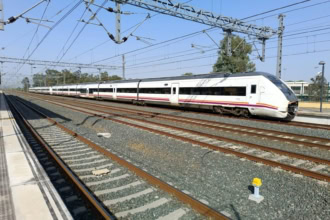
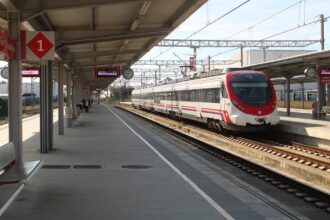
If Madrid is one stop on a wider Spanish itinerary, our Spain Rail Pass Guide explains how Renfe’s own discount cards compare against a broader Eurail or Interrail pass, useful reading before booking onward journeys to Barcelona, Seville or Toledo. It breaks down when the flexibility of a multi-city pass genuinely pays off against buying individual AVE tickets as you go.
For travellers planning a longer rail-based trip that includes Madrid alongside other Spanish cities, our Interrail Spain Pass guide covers AVE seat reservations and how the regional rail network fits together, both genuinely useful details that catch out first-time visitors expecting Interrail to work the same way it does elsewhere in Europe.
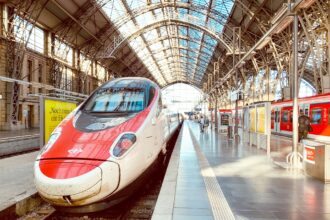
And for the wider journey to Madrid itself, our European High-Speed Rail guide covers how the city connects into the continent’s fastest routes, worth a read if a rail journey rather than a flight is on the cards for reaching the Spanish capital in the first place.