Reviewed by our editorial team Published
Madrid’s public transport network is one of the most complete and easy to use in Europe, combining an extensive Metro, a commuter rail system called Cercanías, and a dense city bus network run by EMT. For visitors used to piecing together buses and taxis elsewhere, Madrid feels refreshingly straightforward, since nearly everywhere a tourist wants to go sits within a short walk of a Metro station.
The system runs on a zone model, with Zone A covering the whole of central Madrid and its immediate surroundings, and outer zones stretching into the wider region for anyone heading further out. A single ticket generally works across Metro, EMT buses and the ML1 tram line within Zone A, which removes a lot of the guesswork that trips up first time visitors elsewhere in Europe.
Services run from around six in the morning until shortly after midnight, with a small window of overnight closure covered by a dedicated night bus network so nobody is ever fully stranded. Most visitors get by comfortably with nothing more than a Metro map and a loaded travel card, and the system is generally considered one of the more forgiving in Europe for anyone new to city transport.
This guide walks through the Metro, Cercanías, EMT buses, the main ticket types, and how the network connects the city to popular day trip towns beyond Madrid, plus the apps worth having open on a phone. None of it requires fluent Spanish, and even a first time visitor with no advance planning can usually work out the right ticket and platform within a few minutes of arriving.
Which Ticket Should You Buy
Most of the confusion around Madrid’s tickets disappears once a trip is matched to a specific pattern rather than a specific fare. The table below lines up common visitor situations against whichever option tends to work out simplest and best value in each case.
| Situation | Best Option in Madrid |
|---|---|
| Staying just one day | Single Zone A tickets bought as needed, or a one-day Tourist Travel Pass if making several trips |
| Making two or three journeys | Single Zone A tickets from a station machine |
| Using transport all day, every day | A Metrobús ten-trip bundle loaded on a Tarjeta Multi, or a multi-day Tourist Travel Pass |
| Staying three days or longer | A matching multi-day Tourist Travel Pass, Zone A |
| Travelling from the airport | Metro Line 8 or Cercanías Line C1 with the mandatory airport supplement added, or a Tourist Travel Pass which already includes it |
| Travelling as a family with children | A shared Tarjeta Multi loaded with adult and half-price child tickets |
| Avoiding ticket machines repeatedly | A Tarjeta Multi loaded with a multi-day pass or ten-trip bundle on the first day |
| Combining the city with a day trip | A Zone T Tourist Travel Pass, or a standalone Renfe ticket for a single trip |
None of these choices are locked in for the whole trip, since a Tarjeta Multi can simply be reloaded with something else if plans change halfway through. The sections below walk through exactly how each ticket type is bought, used and validated, station by station.
The Madrid Metro: Lines and Zones Explained
Madrid’s Metro is one of Europe’s largest underground networks, with thirteen colour coded lines covering the city and reaching well beyond it into the surrounding region. Trains run frequently throughout the day, and central stations are rarely more than a few minutes’ walk from any major sight, hotel or attraction visitors are likely to be heading toward.
Fares are based on the zone system, with Zone A covering the entire city centre and most places a typical visitor will want to reach. A single Zone A ticket costs from around €2 (£2/$2) for a short hop, rising a little for longer journeys, and the fare is charged automatically based on distance travelled.
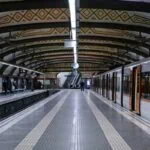
Stations are generally well signposted with clear line colours and direction boards, and most platforms display the next train’s arrival time. Interchange stations between lines can involve a genuine walk underground, so it’s worth building in a few extra minutes when connecting between two busy lines during peak hours.
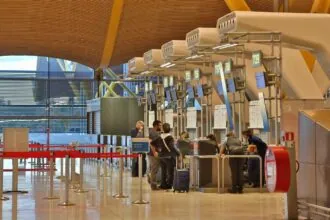
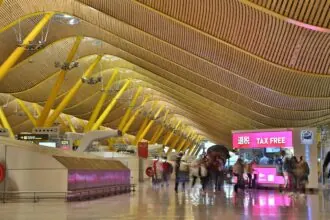
Line 8, shown in pink on the map, is the one most visitors use without realising it, since it links central Madrid directly to Adolfo Suárez Madrid-Barajas Airport. The journey from Nuevos Ministerios takes around fifteen to twenty minutes depending on which terminal you’re heading to, making it one of the simplest airport connections in Europe. For a full breakdown of every route, price and terminal, see our Madrid Airport Transfers guide.
Best for two or three nights. The widest choice of rooms, with filters for free cancellation and included breakfast.
View staysBest for groups who want one address and separate bedrooms rather than three hotel rooms.
See holiday homesBest as a last check before booking. Compares hotel rates across several sites in one search.
Compare ratesUsing the Madrid Metro for the First Time
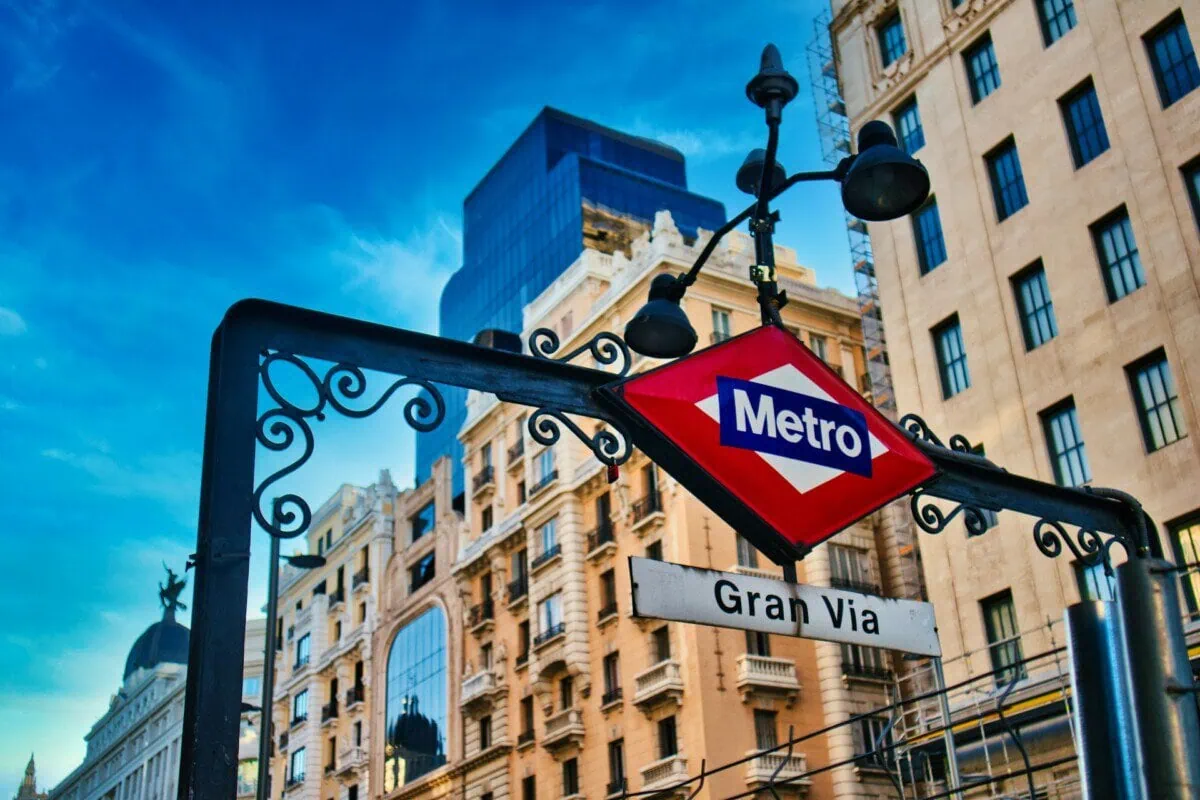
Every Metro entrance is marked with a red diamond logo, and once inside, the first job is finding the right line by its colour and number rather than its name. Overhead signs list every station the line serves in order, so it’s worth spotting your destination on that list before heading for a platform.
Madrid signs direction by the terminus station, the very last stop on that branch, rather than by compass direction or a simple “northbound” label. Platform signs show that end-of-line name in large text, so check which terminus matches the direction you actually need before walking down to the platform.
Changing lines partway through a journey means following coloured “Correspondencia” signs to the next platform, and on busy interchanges like Sol or Nuevos Ministerios this can involve a genuine few minutes’ walk underground. It’s rarely complicated, since the signage repeats the line colour and terminus name at every junction along the corridor.
Entering requires a single tap of a ticket or Tarjeta Multi card at the barrier, which won’t open without a valid fare loaded, and no second tap is needed at the end of the journey. Exiting simply means following “Salida” signs toward street level, usually with several numbered exits leading to different corners of the same junction above ground.
Cercanías: Madrid’s Commuter Rail Network
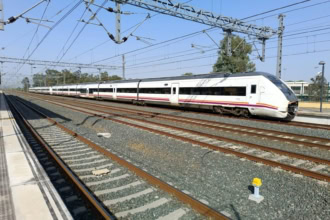
Cercanías is Renfe’s commuter rail network, running on a much wider scale than the Metro and reaching towns across the wider Madrid region rather than staying within the city itself. It’s less essential for a short city break but becomes genuinely useful the moment a visitor wants to head somewhere outside central Madrid.
The network runs through two central hub stations, Atocha and Chamartín, both of which also handle long distance and high speed trains, so they can feel busier and more complex than a typical Metro station. Line C1 is especially useful for visitors, since it runs directly between Chamartín and the airport’s Terminal 4.
Line C3 heads south from Atocha toward Aranjuez, while line C8a threads out through Chamartín and Atocha toward El Escorial, both popular half day trip destinations from the city. Exact journey times vary by service and time of day, so it’s worth treating any published minute count as approximate rather than fixed.
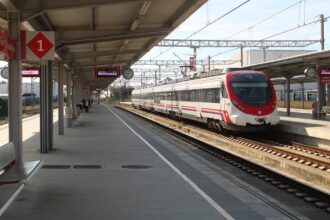
Cercanías tickets are covered by the same fare system as Metro and buses when travelling within Zone A, but journeys into the outer zones need a wider zone ticket bought before boarding. Platforms are generally well signed in Spanish and English, and departure boards show both the destination and the next few scheduled trains.
Metro or Cercanías: Which Is Faster
For a handful of specific journeys, Cercanías genuinely beats the Metro on time rather than just covering more ground. Travelling directly between Atocha and Chamartín, Cercanías runs straight through in around ten to fifteen minutes with no change of train at all.
The equivalent Metro trip usually means riding Line 1 to Nuevos Ministerios and changing onto Line 10, which adds an interchange walk and a wait for the second train. Unless a stop along that Metro route is the actual destination, the direct Cercanías tunnel between the two stations is usually the quicker choice.
Airport journeys can go either way depending on where a trip starts. From Chamartín, the Cercanías C1 line runs directly to Terminal 4 in around a quarter of an hour, while from central stations closer to Nuevos Ministerios, Metro Line 8 is usually the more direct option without a change of station first.
As a rough rule, Cercanías tends to win on long straight hops between the two big rail hubs, while the Metro wins for anything closer to the historic centre where its stations sit more densely. Journey planning apps generally get this comparison right, so it’s worth letting one suggest the route rather than guessing.
EMT Buses and Madrid’s Night Bus Network
EMT runs Madrid’s extensive daytime bus network, with well over a hundred routes criss crossing the city and reaching plenty of spots the Metro doesn’t cover directly. Buses are a genuinely useful backup for shorter hops or for reaching neighbourhoods slightly off the main Metro grid without doubling back through a central interchange.
Stops display real time arrival boards on most central routes, showing how many minutes until the next couple of buses arrive, which takes a lot of the guesswork out of waiting. Tickets and travel cards used on the Metro work identically on EMT buses, so there’s no separate fare system to learn.
Once the Metro closes for its short overnight break, EMT’s night bus network, known locally as the Búhos, or owls, takes over completely. Around two dozen numbered night routes fan out from Plaza de Cibeles across the city, running through the small hours roughly every half hour on weeknights and more frequently on weekend nights.
The Búho network is a genuine lifeline after a late dinner or a night out, and it’s worth knowing Plaza de Cibeles as the central departure point even before you need it. Route numbers and stop locations are clearly signed, and the same travel card used all day continues to work on these overnight services.
Using Madrid’s EMT Buses Step by Step
EMT stops are marked with a yellow and red pole listing every route number that calls there, and it’s worth standing close enough to the pole itself to be clearly visible as a bus approaches. Madrid’s buses generally do stop automatically at a signed stop, but raising a hand as one nears is a sensible habit if it looks like it might sail past.
Boarding happens through the front doors only, where a ticket or Tarjeta Multi is tapped once against the reader beside the driver, and the same card used on the Metro works identically here. There’s no need to tap again on the way out, since EMT fares within Zone A aren’t distance based.
A red stop button mounted on the poles and handrails needs pressing to request the next stop, since buses don’t automatically pull in at every one along the route. Exiting is through the rear doors, and it’s worth moving toward them a stop or two before the one you need, especially on a crowded service.
Most central stops display live arrival screens counting down the next couple of buses in minutes, and the same information appears inside the EMT Madrid app and on Google Maps. Switching from a bus onto the Metro or a Cercanías train counts as a fresh journey, so a new tap is needed at the next barrier rather than carrying over the previous fare.
Once the Metro’s short overnight closure begins, the same tap-once rule applies on the Búho night buses, whose numbered routes, N1 through to N27, all fan out from Plaza de Cibeles. They run roughly every thirty five minutes on weeknights and considerably more often on Saturday nights, covering the gap until the Metro reopens around six in the morning.
For a late finish somewhere the Búho network doesn’t reach conveniently, licensed taxis and ride hailing apps including Uber, Cabify and Free Now operate throughout the night across Madrid. Fares are metered and generally reasonable for short central hops, making them a sensible backup rather than a first resort.
Madrid’s Major Train Stations
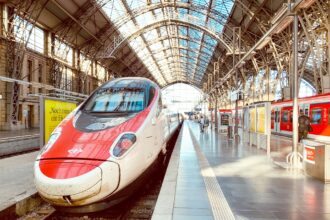
Atocha is Madrid’s largest and oldest major station, its original 1892 train shed now home to a striking indoor tropical garden rather than any platforms at all. Modern platforms nearby handle AVE high speed trains to Barcelona, Seville, Málaga and Granada, alongside regional services, eight separate Cercanías lines and a direct Metro Line 1 connection.
Confusingly, Atocha is really two connected stations rather than one, with the historic Atocha Cercanías building handling commuter and regional trains passing through, while the modern Puerta de Atocha terminus next door handles AVE and other long distance departures. The two are linked by an internal walkway, so it’s worth checking which building a ticket names before arriving.
Chamartín, officially Madrid-Chamartín-Clara Campoamor, is the city’s other major long distance hub, focused on routes north and east rather than south. AVE and long distance trains run from here toward Valladolid, León, Bilbao and Santander, as well as Valencia and Alicante, with Metro lines 1 and 10 connecting directly beneath the station.
The two stations are linked underground by a Cercanías tunnel running beneath the city centre, so switching between them rarely means leaving the rail network at all. Several Cercanías lines run straight through, calling at Nuevos Ministerios and Sol along the way, which makes a same day connection between Atocha and Chamartín straightforward.
Best for finding routes the airlines do not sell as a single ticket. Combines carriers to bring the fare down.
Search flightsBest for short trips. Install the eSIM at home and arrive with working data, no shop queue.
Browse eSIMsBest after a long flight or a late landing. Price agreed before you travel, and no taxi queue.
Check transfersMadrid’s Major Interchange Stations
Beyond the two big rail stations, a handful of dedicated interchange stations do the heavy lifting of connecting Madrid’s Metro, Cercanías and bus networks together. Knowing just three of these by name makes navigating an unfamiliar transfer far less stressful than working it out platform by platform.
Nuevos Ministerios is arguably Madrid’s busiest interchange, bringing together Metro lines 6, 8 and 10 with several Cercanías lines under one roof. It’s also where most visitors join Line 8 toward the airport, so it’s worth knowing the station even on a trip that otherwise never needs an interchange.
Príncipe Pío combines Metro lines 6, 10 and the short Ramal branch with Cercanías services and a dedicated intercity bus terminal, all inside a converted 19th century train shed. It sits at the foot of Madrid’s cable car and a short walk from the Royal Palace, making it useful for sightseeing days too.
Avenida de América stacks four Metro lines, numbers 4, 6, 7 and 9, above an underground coach station used by both city buses and long distance operators. It’s less central than Príncipe Pío or Nuevos Ministerios, but genuinely useful for anyone connecting onward to northern Spain or nearby regional towns.
Madrid’s Stations Are Bigger Than You Think
A station name on a map often hides just how much walking sits underneath it, and Madrid’s busiest hubs are a good example. Sol alone spans three Metro lines across several linked underground levels, and a same-station change here can take a genuine five minutes or more on foot.
Nuevos Ministerios and Atocha are similarly deceptive, since both combine Metro platforms with Cercanías platforms that sit a proper walk away rather than across a single shared platform. Chamartín spreads its Metro, Cercanías and long distance platforms across a genuinely large building, so a tight connection there is worth avoiding where possible.
Not every interchange needs the extra caution, though. Changing between Line 1 and Line 10 at Nuevos Ministerios, or between Metro and the Ramal branch at Príncipe Pío, tends to be quick and clearly signed, so it’s really the big rail hubs that deserve the wider time buffer rather than the network as a whole.
For visitors travelling with luggage, a wheelchair or a pushchair, roughly three quarters of Madrid’s Metro stations now have a step free route from street to platform, though central stations built into older, curved sections of Line 1 remain among the more likely to have gaps or stairs only. Lift outages are also fairly common across the network, so checking the Metro de Madrid app before setting out is worth the minute it takes.
Where a station’s accessibility looks uncertain, EMT buses are frequently the easier option, since modern low floor buses and ramps make boarding straightforward without depending on a working lift underground. It’s a reasonable default for a heavy suitcase day even for travellers who don’t otherwise need step free access.
Madrid’s Bus Stations
Long distance and regional coach travel in Madrid runs through dedicated bus stations rather than ordinary EMT stops, and it’s worth knowing the difference before booking a ticket. Two stations handle the vast majority of these services, both connected into the Metro and Cercanías network for an easy onward journey.
Estación Sur de Autobuses, also known as Méndez Álvaro, is Spain’s busiest intercity coach terminal and Madrid’s main hub for long distance routes, used by operators including ALSA for destinations across the country and into Portugal and France. It sits beside a Cercanías station and Metro Line 6, keeping onward connections into the city simple.
This is a different network entirely from the EMT city buses covered earlier, since Estación Sur handles regional and international coach routes rather than local hops around Madrid. Tickets are bought directly from the coach operator rather than with a Tarjeta Multi or Metrobús bundle.
Avenida de América handles a smaller share of regional coach services, mainly routes toward the north east of the region, alongside the Metro and city bus connections already covered above. It’s worth checking which of the two stations a specific coach operator actually uses before setting out.

The Metro’s Major Lines
Line 1, shown in light blue, is one of the network’s original and busiest routes, running diagonally from Pinar de Chamartín in the north down to Valdecarros in the south east. It threads through the historic centre via Sol, Gran Vía and Tirso de Molina, making it the line most visitors end up using without planning to.
Line 6, coloured grey and nicknamed the Circular, loops all the way around the city rather than running point to point like the others. It calls at several of the interchanges covered above, including Nuevos Ministerios, Príncipe Pío, Avenida de América and Méndez Álvaro, making it genuinely useful for cutting across the city without detouring through the centre.
Line 10, in dark blue, runs from Hospital Infanta Sofía in the far north down to Puerta del Sur in the south west, passing through Nuevos Ministerios, Chamartín and Príncipe Pío along the way. It’s a useful line for reaching the Cuatro Torres business district and for connecting between the interchange stations covered above without surfacing.
Line 5, in light green, cuts across the city from Casa de Campo, home to the zoo and amusement park, out to Alameda de Osuna in the east, calling at Callao and Gran Vía along the way. It’s a handy shortcut between the central shopping streets and the city’s western green spaces without changing lines.
Ticket Types and How to Pay
Madrid’s ticketing can feel like a lot of options at first glance, but in practice most visitors only need to choose between two or three. A single ticket covers one journey within Zone A, priced from around €2 (£2/$2) depending on distance, and can be bought from station machines using cash or card.
For anyone making more than a couple of journeys a day, the Metrobús ten trip bundle is noticeably better value, priced from around €7 (£6/$8) and valid across Metro, EMT buses and the ML1 tram within Zone A. It can be shared between several people travelling together, tapping once per person per journey.
Multi trip tickets need to be loaded onto a reusable Tarjeta Multi card, which costs from around €3 (£3/$3) and can be topped up repeatedly for the rest of a trip, so it’s worth keeping hold of rather than buying a fresh one each visit to a station. Visitors planning several days of sightseeing alongside their travel may also want to compare the Madrid City Card and other multi-day options in our Madrid city passes guide.
Contactless bank card and phone payment is increasingly accepted directly at Metro gates and on EMT buses, though coverage isn’t universal at every single station entrance yet. Visitors planning a short trip with light transport needs may find it simplest to tap a contactless card directly rather than bothering with a physical ticket at all.
Metro gates need just a single tap on entry to validate a ticket or Tarjeta Multi card, since the barrier won’t open without a valid fare loaded, and no tap is needed on the way out. Cercanías works differently, calculating fares by distance, so passengers must tap in at departure and tap out on arrival or risk being charged the maximum fare, while EMT buses need only a single tap when boarding.
Buying a Ticket at the Machine and Using the Tarjeta Multi
Station ticket machines default to Spanish, but a flag icon in the corner of the opening screen switches the whole interface to English and several other languages with a single tap. From there, the machine asks whether you already hold a Tarjeta Multi card or need a new one, before moving on to ticket type and payment.
A brand new Tarjeta Multi costs around €3 (£3/$3) on top of whatever ticket is loaded onto it, and this reusable plastic card is what almost every Madrid ticket, from a single fare to a multi-day pass, is actually loaded onto. Cash and card payment are both accepted, and the machine prints a receipt rather than a separate paper ticket once the card is topped up.
Tourists do generally need one, since Madrid has largely moved away from disposable paper tickets for anything beyond a single ride bought at direct contactless enabled gates. A Metrobús ten-trip bundle can be shared between several travellers on one card, tapping once per person per journey, as long as the group stays together until everyone has exited.
A multi-day Tourist Travel Pass, by contrast, is tied to the individual card holder and generally needs one card per person rather than being shareable in the same way. The card itself stays valid for years, so it’s worth holding onto after a trip rather than discarding it, since a return visit can simply top it back up.
Best for short city stops where being central matters more than the room. Dorms and private rooms both listed.
See hostelsBest arranged before you fly rather than after. Covers claim handling, plus lounge access on eligible delays.
Explore AirHelp+Best for the gap between checking out and your train. Drop bags at a shop or hotel nearby and carry on.
Store your bagsReaching Day Trip Towns by Public Transport
One of the quiet strengths of Madrid’s network is how easily it stretches beyond the city itself, putting several genuinely worthwhile day trip towns within reach without needing a car or an organised tour. Cercanías and regional Renfe services handle almost all of it, running from Atocha or Chamartín depending on the direction.
Toledo and Segovia are reached on fast Avant services rather than the slower Cercanías lines, both taking well under an hour from the city, while Aranjuez and El Escorial sit directly on the Cercanías network itself and suit a more relaxed, unhurried half day out.
Not every worthwhile town has a train station, and it’s worth checking this before planning a trip around it. Chinchón, for example, is reached only by a regional bus from Plaza de Conde de Casal rather than any rail line, so it needs a slightly different approach to the towns above.
Buying a ticket for these longer regional journeys generally means stepping outside the everyday Zone A system used for the Metro and buses, either at a station machine or through the Renfe app in advance. It’s worth allowing a little extra time at unfamiliar stations, since regional platforms are laid out differently to central Metro stops.
Apps and Journey Planning Tools
Madrid is one of those cities where Google Maps genuinely handles public transport journey planning well, combining Metro, Cercanías and EMT buses into a single set of directions with realistic walking and interchange times built in. For most visitors, it’s the only app needed for day to day navigation around the city.
The official Metro de Madrid app is worth adding for anyone spending several days in the city, offering an offline map, live service status and step free route options for travellers who need accessible stations rather than the shortest possible journey time.
The regional transport authority also runs the CRTM app, which covers the wider network including Cercanías and regional buses beyond the city, and can be genuinely useful when planning one of the day trips covered above rather than a journey within central Madrid itself.
Keeping a downloaded offline map or screenshot of your planned route is a sensible habit in areas with patchy underground signal, since several central Metro stations sit deep enough that mobile data can drop out briefly between platforms and street level.
All three apps show real time service status, which is worth checking before setting out during engineering works or on public holidays, when a handful of lines occasionally run a reduced timetable. A quick glance before leaving the hotel avoids an unnecessary wait on a platform for a train that isn’t coming for a while.
What Maps and Apps Don’t Tell You in Madrid
Google Maps handles Madrid’s routing well, but it consistently underplays station entrances, sending walkers toward the nearest exit number on the map rather than the one that actually lines up with a specific hotel or attraction above ground. Checking the numbered exits once inside the station, rather than trusting the pin’s exact walking line, avoids an unnecessary loop around the block.
It also has no reliable way of showing platform direction at a glance, so a suggested route can leave a visitor standing on the correct line but facing the wrong terminus. The direction-by-terminus signs covered earlier are the more trustworthy check at the platform itself rather than the app’s arrow.
Most journey planners also quietly leave out Madrid’s mandatory airport supplement, quoting a fare that looks like an ordinary Zone A ticket when travelling to or from Barajas actually needs the extra charge added separately. It’s worth budgeting for that supplement regardless of what an app’s fare estimate shows.
During engineering works or a strike, replacement bus services often run in place of closed Metro or Cercanías sections, and these rarely appear cleanly inside a standard route planner. The Metro de Madrid and CRTM apps both post live service alerts that are worth checking directly rather than relying on Google Maps to already know about the disruption.
When something is genuinely disrupted, the sensible fallback is usually a nearby EMT bus route or a short taxi hop rather than waiting out an unclear delay on a platform. Checking the official status page or app before setting out takes a minute and avoids discovering the problem only after arriving at a closed station.
What Should You Actually Buy
With so many ticket types on offer, it helps to work backwards from how a trip actually looks rather than trying to learn every fare in advance. The table below matches four common visitor profiles to the ticket that suits them best, based on the products covered in this guide.
| Traveller | Best Ticket | Why |
|---|---|---|
| 3-day visitor staying centrally | Tourist Travel Pass, Zone A | Unlimited Metro, bus and Zone A Cercanías travel for €23 (£20/$25) beats buying several single tickets a day, and the airport supplement is already included. |
| Family making lots of journeys | Metrobús ten-trip bundle on a shared Tarjeta Multi | At around €7 (£6/$8), one bundle covers several people’s trips across a few days without the higher cost of a multi-day pass for each traveller. |
| Visitor mainly walking | Single Zone A tickets | From about €2 (£2/$2) each, buying as needed avoids paying for unused travel when the Metro is only an occasional top-up to walking. |
| Cercanías day-tripper | Zone T Tourist Travel Pass for several day trips, or a standalone Renfe ticket for just one | Zone T folds every Cercanías line into one multi-day price; a single day trip is usually cheaper bought separately at the station. |
The Tourist Travel Pass and Contactless Payment
Madrid’s official tourism board specifically promotes the Tourist Travel Pass, a reloadable Tarjeta Multi preloaded with unlimited travel, as the simplest option for visitors. Zone A passes cost from €10 (£9/$11) for one day up to €43 (£37/$48) for seven, with children under eleven paying half price.
A wider Zone T version, priced from €15 (£13/$16) to €63 (£53/$65) for seven days, extends coverage across every Cercanías line and intercity buses toward Toledo and Guadalajara. Both versions exclude AVE, Avant and other long-distance Renfe services, which need separate tickets regardless of pass held.
Separately, from June 2026 Metro de Madrid began enabling direct contactless bank card and mobile wallet payment at ticket gates network-wide, letting passengers tap through without buying a ticket first. Early reporting suggests this first phase covers single-trip fares rather than multi-trip bundles, so anyone planning several journeys a day may still find the Tarjeta Multi the more practical option for now.
Airport Transport Uses a Different Ticket
It’s worth being clear that ordinary city tickets don’t automatically cover airport journeys. Reaching or leaving the airport by Metro adds a mandatory supplement of around €3 (£3/$4) on top of the standard Zone A fare, charged specifically at the Aeropuerto T1-T2-T3 or Aeropuerto T4 stations.
A single Zone A ticket or a Metrobús bundle bought for ordinary city journeys doesn’t include this supplement on its own, so it needs adding separately, either at an airport station’s machine or via a direct contactless tap where that is already enabled, before continuing the journey. The Tourist Travel Pass and Madrid City Card both build the supplement into the price already, removing that extra step entirely.
Our Madrid Airport Transfers guide covers the full Metro, Cercanías and bus picture for reaching Barajas specifically, including which terminal each rail option actually serves.

Common Mistakes Tourists Make in Madrid
One of the most frequent slip ups is buying a Zone A only ticket for a trip that actually needs a wider zone, such as a day trip toward Aranjuez or El Escorial, and then being charged the maximum fare for failing to tap out correctly. Checking the destination zone before boarding avoids this entirely.
Throwing away the Tarjeta Multi card after a single use is another common waste, since the card itself is reusable for years and only the ticket loaded onto it gets used up. It’s worth keeping in a wallet for the rest of a trip rather than binning it alongside a used paper receipt.
Confusing the Metro and Cercanías networks trips up plenty of first time visitors, particularly at shared stations like Atocha or Nuevos Ministerios where both systems sit close together but require different tapping rules. Checking the train’s own signage, rather than assuming both networks work identically, avoids being caught out at the barrier.
Boarding the right line in the wrong direction is easy to do when a terminus name means nothing yet, and it usually only becomes obvious a stop or two later. Doubling back costs little more than a few minutes, but checking the terminus board before descending to the platform avoids it altogether.
Finally, plenty of visitors buy a separate airport specific ticket without realising a Tourist Travel Pass or Madrid City Card already has the supplement built in. Checking which pass is already held before queuing at an airport station machine can save an unnecessary extra purchase.
Journeys Visitors Actually Make
A handful of journeys account for most of what a typical visitor actually needs from Madrid’s network, and it’s worth knowing the sensible option for each in advance. The table below covers the ones that come up again and again on a first visit.
| Journey | Best Option |
|---|---|
| Airport to the city centre | Metro Line 8 from the airport to Nuevos Ministerios, or Cercanías C1 from Terminal 4 to Chamartín |
| Atocha or Chamartín to the centre | Metro Line 1 from Atocha, or Metro Lines 1 and 10 from Chamartín, both direct to Sol |
| City centre to Santiago Bernabéu | Metro Line 10 to Santiago Bernabéu station, a short walk from the stadium entrance |
| City centre to Estación Sur coach station | Metro Line 6 to Méndez Álvaro, right beside the terminal building |
| City centre to the Prado Museum | Metro Line 1 or Line 2 to Banco de España, followed by a short walk |
A concrete example makes this easier to picture. Starting at Puerta del Sol, the Prado Museum is a genuinely walkable fifteen minutes away on foot, or one quick stop on Metro Line 2 to Banco de España followed by a five minute walk east.
Reaching the Santiago Bernabéu from the same starting point means taking Metro Line 1 north from Sol, changing at Nuevos Ministerios onto Line 10, and riding two further stops to the Santiago Bernabéu station itself. The whole journey, including the change, generally takes around twenty five minutes door to door.
Both journeys use the same single Zone A ticket or Tarjeta Multi tap, with no supplement or special fare needed for either one. It’s a fair snapshot of how straightforward most sightseeing days in Madrid actually turn out to be once the direction-by-terminus habit clicks into place.

Rupert’s Handy Travel Tips
Planning to use public transport in Madrid? Here are a few tips to help you make the most of it.
- Get a Tarjeta Multi on day one: it’s reusable for the rest of your trip, so it’s worth the small upfront cost even for a short visit.
- Metrobús beats singles fast: if you’ll take more than two or three trips a day, the ten trip bundle pays for itself quickly and can be shared between travellers.
- Know Plaza de Cibeles as the night bus hub: if you’re out late and the Metro’s closed, that’s where the Búho routes fan out from.
- Avant isn’t the same as AVE: Toledo and Segovia use the faster regional Avant service, not the full high speed AVE, but it’s still quick and comfortable.
- Check Chinchón’s a bus, not a train: it’s easy to assume every day trip town has a Cercanías line, and Chinchón simply doesn’t.
- Download your route before going underground: signal drops on some deeper platforms, so a saved map avoids any last minute scrambling.
Want to meet the reindeer behind our travel tips? Find out more in our page Who is Rupert?.




Frequently Asked Questions
Is Madrid’s public transport easy for visitors to use?
Yes, the system is generally considered one of the more visitor friendly networks in Europe, with clear signage, frequent services and a single ticket that covers Metro, buses and the tram within the city.
What’s the difference between the Metro and Cercanías?
The Metro is Madrid’s underground network focused on the city itself, while Cercanías is Renfe’s commuter rail network, reaching much further out into the surrounding region and connecting to nearby towns.
Do I need a different ticket for the airport?
Taking the Metro to the airport uses a standard ticket plus a small mandatory supplement rather than an entirely separate fare, and the same Tarjeta Multi card can usually be used to pay it.
What happens once the Metro closes at night?
EMT’s night bus network, the Búhos, takes over during the Metro’s short overnight closure, running numbered routes from Plaza de Cibeles across the city through the small hours.
Is contactless payment accepted on Madrid’s public transport?
Contactless bank card and phone payment is increasingly accepted at Metro gates and on EMT buses, though it’s not yet guaranteed at every single station entrance across the network.
Can I reach day trip towns like Toledo or Segovia by public transport?
Yes, both are reached on fast Avant rail services taking well under an hour from central Madrid, making them comfortable half day or full day trips without needing a car.
Which app is best for planning journeys in Madrid?
Google Maps handles Metro, Cercanías and bus journeys well for most visitors, while the official Metro de Madrid app and the regional CRTM app are useful additions for longer stays or day trips.
Further Reading and Related Guides
Madrid’s public transport network makes an easy base for exploring the wider region, and several of the day trip towns mentioned above connect into longer Spanish rail journeys too. If your trip stretches beyond Madrid to other Spanish cities, our Spain Rail Pass Guide covers the discount cards and multi journey passes worth knowing about for AVE and long distance routes.
Anyone combining Madrid with several other countries on a single wider trip might also find our Interrail Spain Pass guide useful, since it explains when an unlimited travel pass makes more sense than booking individual tickets city by city.
Travellers whose trip includes a hop to Barcelona may also want to read our European High-Speed Rail guide, which covers the Madrid to Barcelona AVE corridor in more depth, including typical journey times and how seat reservations work on Spain’s fastest trains.