Reviewed by our editorial team Published
The Port of Barcelona is one of the busiest cruise gateways in the Mediterranean, and the port authority describes it as the region’s largest cruise port outright. More than 3.56 million cruise passengers passed through in the first ten months of 2025 alone, a rise of roughly 10% on the previous year, making a Barcelona call one of the most common stops on any Mediterranean itinerary.
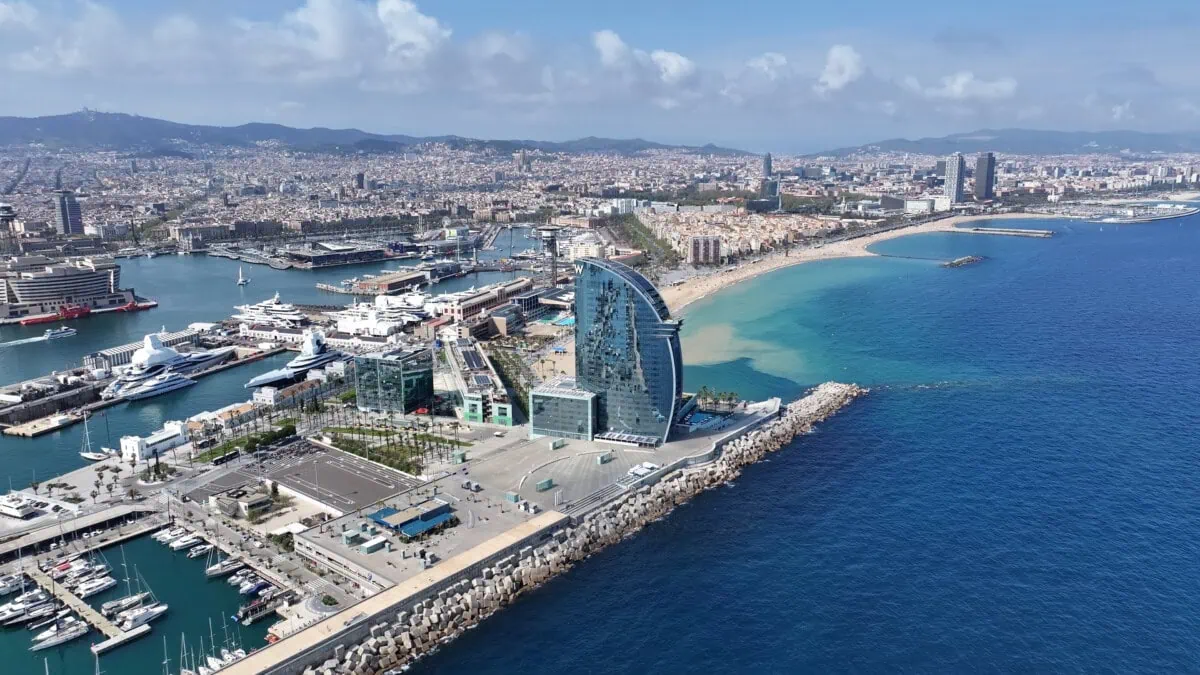
Unlike ports with a single terminal, Barcelona actually has two quite different arrival points. The World Trade Center terminal sits right on the city’s own waterfront, while a cluster of larger terminals along Moll Adossat (the Adossat Quay) lies further from the centre and needs proper transport to reach.
Which terminal a ship uses matters more here than at most cruise ports, since it genuinely changes how a day ashore should be planned. A ship docking at the World Trade Center can have passengers strolling La Rambla within minutes, while one docking on Adossat Quay needs a shuttle bus, taxi or metro connection before sightseeing can properly begin.
This guide covers both quay areas honestly, the PortBus shuttle and its official fare, taxi options, whether the metro is genuinely useful, and how to plan a single day ashore whether independently or via a ship-organised excursion. Passengers should always check their cruise line’s own documentation for the exact terminal letter their ship is assigned to, since this can change between sailings even on the same cruise line.
Terminal assignments at Barcelona have shifted in recent years as the port has expanded capacity, so a specific terminal letter mentioned in an older blog post or a previous cruise may no longer be accurate today. This guide reflects the current terminal structure, checked directly against the Port of Barcelona’s own published information, and hedges anywhere a detail could not be independently confirmed.
Barcelona’s Cruise Terminals at a Glance
The table below summarises where things stand before the detailed sections that follow, checked directly against the Port of Barcelona’s own current terminal listing rather than relying on older third-party descriptions. Exact walking times for the Adossat terminals other than MSC are drawn from independent cruise guides rather than the port authority itself, so treat them as approximate.
| Terminal | Quay | Distance to Centre | Getting Ashore |
|---|---|---|---|
| WTCB | Barcelona Quay (World Trade Center) | Around 400m, roughly 5 minutes | Walk, or Drassanes metro (L3) |
| Terminals A, B, C | Moll Adossat | Approx. 25-35 minute walk (not recommended) | PortBus shuttle, taxi |
| Terminal D (Palacruceros) | Moll Adossat | Approx. 35-45 minute walk (not recommended) | PortBus shuttle, taxi |
| Terminal E (Helix) | Moll Adossat | Approx. 35-45 minute walk (not recommended) | PortBus shuttle, taxi |
| Terminal MSC | Moll Adossat | Confirmed 3.9km, not walkable | PortBus shuttle, taxi |
The World Trade Center Terminal (WTCB)
The World Trade Center terminal, usually referred to by its code WTCB, is the only cruise terminal actually located on Barcelona Quay rather than out on Moll Adossat. It sits inside the World Trade Center building itself, a business and exhibition complex that also handles conferences and events when no ship is in port.
According to the Port of Barcelona’s own published information, WTCB sits just five minutes, or roughly 400 metres, from the city centre. That makes it by some distance the most convenient terminal for a passenger wanting to reach La Rambla, the Gothic Quarter or Barceloneta beach without organised transport.
The terminal itself can handle up to two medium-sized ships at once, with around 5,000 square metres of terminal space and capacity for roughly 1,400 passengers moving through at a time. It is a genuinely pleasant, modern building rather than an industrial shed, reflecting its dual role as both a cruise terminal and a business venue.
Not every Barcelona-bound cruise uses WTCB, and larger modern ships are more commonly assigned to the Adossat Quay terminals covered in the next section, simply because Adossat has more berths and can accommodate bigger vessels. Passengers should never assume WTCB just because a previous Barcelona call used it, since terminal assignment is decided ship by ship.
For anyone whose ship does dock here, WTCB is worth treating as a genuine bonus, since it removes almost all of the transport planning that other Barcelona-bound cruise passengers have to think through. The walk into the historic centre is short enough that even a modest four or five hour call still leaves proper time to explore on foot.
Best for a short trip. Compare rooms by neighbourhood, price and guest rating before you book.
Compare hotelsBest for groups who want one address and separate bedrooms rather than three hotel rooms.
See holiday homesBest as a last check before booking. Compares hotel rates across several sites in one search.
Compare ratesThe Adossat Quay Terminals
The majority of cruise ships calling at Barcelona dock along Moll Adossat, a long working quay south of the city centre that holds six separate passenger terminals. These are named Terminal A, B, C, D (Palacruceros), E (Helix) and Terminal MSC, confirmed directly against the port authority’s own current terminal listing.
This is a genuine change from how the port used to be organised, since a reorganisation in recent years moved terminals that were once associated with the World Trade Center area onto Adossat Quay instead. Older blog posts describing an “A to C near town, D onward further out” split should be treated as outdated, since every lettered terminal now sits on Adossat.
Distances vary noticeably between the six terminals, and the port authority itself confirms Terminal MSC sits roughly 3.9 kilometres from the city centre, a distance no passenger should attempt on foot. The terminals closer to the quay’s city-facing end are somewhat nearer, though still far enough that walking is not realistically comfortable for most travellers.
Unlike WTCB, none of the Adossat terminals have direct, convenient public transport access right outside the gangway, which is precisely why the PortBus shuttle exists. Passengers docking here should plan on using the shuttle, a taxi or a pre-arranged transfer rather than expecting to simply walk into town.
Adossat Quay is also where Barcelona accommodates its largest modern cruise ships, since the quay has more berths and deeper water than the single World Trade Center site. Anyone sailing on a larger contemporary vessel should assume an Adossat terminal by default and plan transport into the city accordingly.
The PortBus Shuttle
For passengers docking at Moll Adossat, the PortBus shuttle is the port authority’s own recommended way into the city centre. According to the Port of Barcelona’s official transport information, a one-way ticket costs approximately €4 (£3/$4) and a return ticket costs approximately €5 (£4/$5).
These are the figures published directly by the port authority itself, worth noting since some independent travel blogs quote a slightly different fare, closer to €3-4 (£3/$3-4) for a return trip. Where the two disagree, the port’s own published pricing should be treated as the more reliable figure.
The shuttle picks up passengers outside the Adossat terminals and drops them at the Columbus Monument, right at the foot of La Rambla, making it a genuinely useful link between the working quay and the heart of the tourist centre. From there, the Gothic Quarter, Barceloneta and the wider old town are all within easy walking reach.
The Port of Barcelona’s own guidance points passengers to the dedicated Cruise Bus website for full timetables, and this is worth checking directly before a sailing since exact frequency can vary depending on how many ships are in port that day. On a busy multi-ship day, buses generally run more often to cope with demand.
For most passengers arriving on Adossat Quay, the PortBus shuttle represents the simplest and most cost-effective way ashore, cheaper than a taxi for a single traveller and considerably less walking than the alternative. It is worth having euros or a card ready before boarding, since fares are collected on departure rather than in advance.
Taxis From the Port
Taxi ranks operate at all of Barcelona’s cruise terminals, both at WTCB and along Moll Adossat, offering a door-to-door alternative to the PortBus shuttle or a long walk. For groups, families or anyone with heavy luggage, a taxi is often the most comfortable option regardless of which terminal a ship happens to use.
A dependable, officially sourced fare from the Adossat terminals to the city centre could not be confirmed at the time of writing, so any figure quoted here should be treated as a rough guide rather than a fixed price. Some independent Barcelona guides cite a short taxi hop from the nearer Adossat terminals at somewhere around €15 (£13/$17), though this figure comes from third-party sources rather than the port authority itself.
Fares naturally rise the further a terminal sits from the centre, so a taxi from Terminal MSC, roughly 3.9 kilometres out, will cost more than the same journey from a terminal closer to the quay’s city-facing end. Traffic and the time of day can also affect the metered fare noticeably.
From WTCB, a taxi is barely necessary given how close the terminal already sits to the centre, though one remains a reasonable option for anyone travelling with mobility needs or young children. The short distance means the fare here should be modest compared with an Adossat pickup.
As with any cruise port, it is worth agreeing or confirming the fare before setting off where a meter is not clearly running, and keeping the ship’s berth and terminal name to hand in case a return taxi is needed later in the day. A pre-booked private transfer is also available through most cruise lines for passengers who would rather arrange transport in advance.
Walking Into the City From the World Trade Center Terminal
For passengers docking at WTCB, walking into central Barcelona is not just possible but genuinely the easiest way ashore. The route runs along the quay past the Onades monument, a distinctive sculpture of steel hoops, before joining Moll de Drassanes on the final approach into town.
From there, the walk leads directly to the Christopher Columbus Monument, the tall column marking the foot of La Rambla and the same drop-off point used by the PortBus shuttle from Adossat Quay. Given the terminal’s roughly 400 metre distance from the centre, most passengers cover the whole route in well under ten minutes at a relaxed pace.
The path itself is flat, paved and easy to follow, running along the harbourside rather than through any industrial dock area. Signage around the World Trade Center complex generally points clearly towards the city-facing exit, so passengers should not need a map to find their way once ashore.
Once at the Columbus Monument, La Rambla, the Gothic Quarter and Barceloneta beach are all realistically reachable on foot from there, with La Rambla itself stretching directly ahead towards Plaça Catalunya. This makes WTCB one of the most walkable cruise terminals anywhere in the Mediterranean.
The only real caveat is the return leg later in the day, since the same short walk still needs to be built into a passenger’s all-aboard planning, however easy it feels on the way out. A short stop for a coffee or a wrong turn in the old town’s narrow streets can eat into that buffer more than expected.
Is the Metro a Realistic Option?
For passengers docking at WTCB, the nearest metro station is Drassanes, served by Line 3 (the green line), sitting a short walk from both the terminal and the PortBus drop-off point at the Columbus Monument. Given how close WTCB already is to the centre on foot, the metro is more a convenience than a necessity from this specific terminal.
From the Adossat Quay terminals, the metro is a far less straightforward option, since none of the six terminals there sit within an easy walk of a metro station. Passengers docking on Adossat Quay wanting to use the metro would first need to reach the city centre by PortBus or taxi, making it a second leg of the journey rather than a direct option from the ship.
Barcelona’s TMB metro network is otherwise excellent once in the city, covering the whole of Zone 1 including the airport, with a single ticket costing approximately €3 (£3/$4) and multi-trip cards available for longer stays. Our Barcelona public transport guide covers every ticket type in full. For a single cruise call, though, most passengers will find they simply do not need it if their day is centred on the old town.
Travellers planning to venture further afield, such as to Park Güell, Sagrada Família or Camp Nou, will find the metro genuinely useful once they have reached central Barcelona by whichever route their terminal requires. It is worth having a contactless bank card ready, since this typically works directly at metro gates without needing a separate ticket machine.
In short, the metro is a realistic, useful option once ashore, but it should not be relied on as the primary way off the ship itself from either terminal area. It works best as the second step of a journey that starts with either a short walk from WTCB or a shuttle bus from Adossat Quay.
Independent Exploring or a Ship-Organised Excursion
Barcelona is one of the clearer cases among Mediterranean cruise ports where independent exploring genuinely suits most passengers well, particularly anyone docking at WTCB with the old town just minutes away. The Gothic Quarter, La Rambla and Barceloneta are all easy to navigate without a guide, and public transport within the city is straightforward once ashore.
Passengers docking on Adossat Quay face a slightly different calculation, since reaching the centre first requires the PortBus shuttle or a taxi before independent sightseeing can properly begin. Once in town, though, the same case for exploring alone still applies, and the extra transport step does not meaningfully change how walkable Barcelona’s core actually is.
A ship-organised excursion still makes sense in specific situations, particularly for passengers wanting a guided introduction to Gaudí’s architecture, a trip further afield to Montserrat, or simply the certainty of a fixed return time on a tighter port call. Excursions also remove any risk of misjudging transport back to an Adossat terminal on a longer sailing day.
For a single port day, the old town alone is usually enough to fill the time comfortably, and trying to combine it with a longer excursion such as Montserrat or the wider Costa Brava often leaves too little time for either properly. Passengers with a genuinely full day in port have more flexibility to combine a morning of independent sightseeing with an afternoon excursion.
Whichever approach is chosen, building in a proper return buffer matters more at Barcelona than at some other Mediterranean ports, given the added transport step from Adossat Quay and the sheer size of the city to navigate. Missing an all-aboard time over an underestimated journey back to the terminal is an entirely avoidable mistake.
Best for finding routes the airlines do not sell as a single ticket. Combines carriers to bring the fare down.
Search flightsBest if you want maps and messaging working the moment you switch your phone on.
See eSIM plansBest after a long flight or a late landing. Price agreed before you travel, and no taxi queue.
Check transfersGetting From the Cruise Terminal to Barcelona’s Top Sights
Once ashore, reaching a specific sight takes a different route depending on distance and whether a metro change is involved. The breakdown below assumes arrival at the Columbus Monument already, whether on foot from WTCB or via the PortBus shuttle from Adossat Quay.
Sagrada Família sits around 4km from the port, too far to walk from either terminal. A taxi covers it directly in roughly 15-20 minutes, while the metro route, Line 3 from Drassanes to Diagonal then a change onto Line 2, takes closer to 30-40 minutes door to door.
The Gothic Quarter barely needs transport planning at all. From WTCB, Columbus Monument sits right at its southern edge, a level five to ten minute stroll into the medieval lanes, and the PortBus from Adossat Quay drops passengers at that same spot, so the old town starts the moment the shuttle stops.
Park Güell is the trickiest call-day destination, sitting north of the centre up a genuine hill. A direct taxi from either terminal takes around 15-20 minutes and costs roughly €15 (£13/$17) for up to four people, while the metro alternative, changing onto Line 3 towards Lesseps or Vallcarca then a steep uphill walk, can take closer to an hour.
El Prat Airport sits around 17km from the port, and a direct taxi covers it in roughly 15-25 minutes for a broadly fixed fare of approximately €45 (£39/$53). A cheaper combination of the Aerobus or airport train to Plaça d’Espanya or Sants, followed by a short taxi onward, costs closer to €25-27 (£22-23/$29-32) but takes about 30-35 minutes.
Barcelona Sants, the main train station, sits directly on Line 3 with no change needed from Drassanes, one of the more straightforward connections available from WTCB. From Adossat Quay, the same PortBus-to-Drassanes combination works just as well, or a taxi covers the whole distance in around 15-20 minutes.
What Can You Realistically See on a 6/8/10-Hour Port Call?
Plenty of online lists promise a full Barcelona highlight reel on a single port call, but that rarely survives contact with real transport times and a fixed return deadline. The honest breakdown below assumes a genuine return buffer rather than cutting it close, and varies noticeably depending on which terminal a ship actually uses.
On a six-hour call, the old town is the sensible target regardless of terminal. From WTCB, that means a relaxed loop through the Gothic Quarter, La Rambla and Barceloneta with time to spare, while from Adossat Quay the shuttle eats around forty minutes of the day each way, so the same loop should be treated as the whole plan rather than stretched further.
An eight-hour call opens up one further sight beyond the old town, most realistically Sagrada Família with a pre-booked skip-the-line ticket. From WTCB, a taxi there and back plus an hour inside fits comfortably alongside a shorter old-town walk, while from Adossat Quay the same plan still works but leaves less slack, so a taxi rather than the metro protects the return buffer.
A ten-hour call is genuinely long enough to combine two sights beyond the old town, such as Sagrada Família in the morning and Park Güell in the early afternoon, provided taxis rather than the metro link each stop. It is also long enough for an organised Montserrat excursion instead, though that trades away most of the old town given the round-trip travel time involved.

Rupert’s Handy Travel Tips
Arriving in Barcelona by cruise ship? Here are a few tips to help you get ashore smoothly.
- Check your exact terminal first: WTCB is a short walk from town, while Terminals A-E and MSC on Moll Adossat all need the shuttle or a taxi.
- Trust the port authority’s PortBus fare: officially €4 (£3/$4) one-way and €5 (£4/$5) return, rather than the slightly different figure some blogs quote.
- Head for the Columbus Monument: both the WTCB walking route and the PortBus shuttle end here, right at the foot of La Rambla.
- Use Drassanes metro from WTCB only: it’s the nearest station to that terminal, but not a realistic option from Adossat Quay.
- Keep taxi fares flexible: no fixed official rate has been published from port to centre, so treat any figure quoted online as a rough guide.
- Set a generous return buffer: the walk from WTCB is short, but a shuttle or taxi back from Adossat Quay takes real time.
Want to meet the reindeer behind our travel tips? Find out more in our page Who is Rupert?.




Frequently Asked Questions
Where do cruise ships dock in Barcelona?
At one of two areas: the WTCB terminal on Barcelona Quay, right by the city centre, or one of six terminals (A, B, C, D, E and MSC) along Moll Adossat, further from town.
Can you walk into Barcelona from the cruise terminal?
Yes, from WTCB, roughly 400 metres and about five minutes to the city centre. Walking from the Adossat terminals is not realistic given the distance involved.
How much does the PortBus shuttle cost?
The Port of Barcelona’s own published fare is approximately €4 (£3/$4) one-way and €5 (£4/$5) return, from the Adossat terminals to the Columbus Monument.
Is there a metro station near the cruise port?
Drassanes, on Line 3, sits close to the WTCB terminal. None of the Adossat Quay terminals are within an easy walk of a metro station.
How do I know which terminal my ship will use?
Check your cruise line’s own port documentation, since terminal assignment can change between sailings and is not fixed by cruise line or ship size alone.
Is a taxi available at the cruise port?
Yes, at both WTCB and every Adossat terminal, although no fixed official fare from port to centre has been published, so treat any price quoted as approximate.
Should I book a shore excursion or explore independently?
Independent exploring suits most passengers well, especially from WTCB, though an excursion can make sense for Gaudí sites further out or a trip to Montserrat.
How far is Terminal MSC from the city centre?
The port authority confirms roughly 3.9 kilometres, too far to walk, so plan on the PortBus shuttle or a taxi from this specific terminal.
Further Reading
Anyone combining a Barcelona cruise call with a longer trip around Spain by rail may find our Spain Rail Pass Guide useful for planning onward journeys to Madrid, Valencia or Seville, since Renfe’s passes and discount cards can make a multi-city trip considerably better value than buying single tickets as you go.
Barcelona is also a genuine ferry hub in its own right, and travellers curious about onward sea connections should read our Sardinia Ferry Routes guide, which covers the Barcelona to Porto Torres crossing. It is worth noting this ferry service uses a separate terminal at Moll de Sant Bertran, distinct from both the cruise terminals covered on this page.
Flying in before your cruise or out after it? Our Barcelona Airport Transfers guide covers the Aerobus, train, metro and taxi options between El Prat Airport and the city centre.