Reviewed by our editorial team Updated
Sardinia by Sea: Choosing Your Crossing
Sardinia has no direct flights from many parts of Europe, and even where flights exist, travelling by sea remains one of the most popular ways to reach the island, particularly for anyone bringing a car, a campervan, or simply preferring a slower, scenic start to their trip.
Ferries connect Sardinia to mainland Italy from ports including Genoa, Livorno, Civitavecchia and Naples, to France from Toulon, Nice and Marseille, and to Corsica via the short hop between Bonifacio and Santa Teresa Gallura. Between them, these routes cover almost every practical way of arriving by water.
This guide is the island-wide hub for all of that: an overview of every major crossing, the operators running them, realistic journey times, and how each mainland Sardinian port fits into a wider trip once you arrive.
Sardinia’s three main ferry gateways are Olbia in the northeast, Porto Torres in the northwest, and Cagliari in the south, each served by a different mix of Italian, French and Spanish routes depending on where you are travelling from.
We also cover the short inter-island hop from Palau to La Maddalena, since many visitors treat it as part of the same trip, and point you toward our dedicated guides to Olbia Ferry Routes and Porto Torres Ferry Routes for full detail on those two ports specifically.
Whether you are driving down through France, flying into Rome and continuing by sea, or island-hopping from Corsica, the sections below will help you work out which route, port and operator suits your itinerary best.
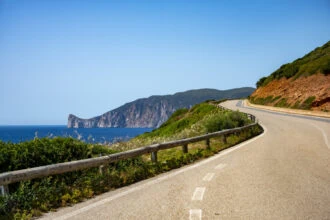
Sailing to Sardinia rather than flying also opens up a different style of holiday entirely, whether that means bringing your own car for a proper road trip, travelling with a campervan, or simply enjoying a slower, more scenic transition between countries.
Prices and schedules on these routes shift considerably between low season and August, so treat every duration and frequency figure below as a realistic guide rather than a fixed promise, and always confirm the current timetable before booking.
This page focuses specifically on getting to and around Sardinia by sea; if you are still deciding whether to fly or sail at all, weigh the extra time of a ferry crossing against the flexibility of arriving with your own vehicle already at your disposal.
Sardinia’s Ferry Ports at a Glance
It helps to think of Sardinia’s ferry network around its three main gateways rather than as a single list of routes, since each port serves a different set of origins and suits a different kind of trip.
Olbia, in the northeast, is the busiest of the three and the natural choice if you are heading for the Costa Smeralda, Palau or the La Maddalena archipelago. It receives the highest volume of sailings from Civitavecchia, Livorno and Genoa, especially in summer.
Porto Torres, in the northwest near Alghero and Sassari, is Sardinia’s genuinely international port. As well as Italian mainland connections, it is the main arrival point for ferries from France and Spain, making it the obvious choice for anyone driving down through Provence or Catalonia.
Cagliari, in the south, mainly serves longer overnight routes from Civitavecchia, Naples and occasionally Palermo, and suits travellers whose trip is centred on the south coast or the Sulcis region rather than the north of the island.
A smaller fourth port, Arbatax on the east coast, has a limited seasonal service from Civitavecchia and is worth knowing about if your trip focuses on Sardinia’s less-visited eastern side, though frequency is far lower than the three main gateways.
Choosing the right port usually comes down to where in Sardinia you are actually staying: arriving in the wrong corner of a large island can easily add two or three hours of driving to the start of your holiday.
It is also worth remembering that Sardinia is considerably larger than many first-time visitors expect, roughly 270 kilometres from north to south, so the choice of arrival port genuinely shapes the practical shape of your entire trip.
Many visitors combine two ports in a single trip, for example arriving into Olbia from the mainland and later taking a domestic flight or a long drive home from Cagliari, which can work well if your itinerary already loops around the island.
Best for a short trip. Compare rooms by neighbourhood, price and guest rating before you book.
Compare hotelsBest for longer stays. Whole apartments and houses, so you are not eating out three times a day.
View rentalsBest if you have already picked a hotel. Checks the big booking sites for the same room and shows who is cheapest.
Check dealsOvernight from Tuscany: Genoa and Livorno Crossings
Genoa is one of the busiest mainland departure points for Sardinia, with regular overnight sailings to Porto Torres taking around 10 hours, run primarily by Moby Lines and Tirrenia, both offering cabins for the overnight crossing.
Tirrenia in particular runs a frequent year-round timetable on this route, with up to seven weekly sailings in peak season, making Genoa one of the more flexible mainland departure points if your schedule is not fixed.
Livorno, further down the Tuscan coast, connects primarily to Olbia, with a crossing time of roughly 7 to 9 hours. Several operators serve this route seasonally, and it is a popular choice for travellers combining a Tuscany trip with a Sardinian holiday.
Both routes carry vehicles as standard, and travelling overnight with a cabin is the norm rather than the exception, since daytime sailings on these longer crossings are less common outside peak summer months.
Booking several weeks ahead in July and August is strongly advisable on both routes, particularly if you are bringing a car, as vehicle capacity sells out well before passenger cabins on the most popular sailing times.
Both Genoa and Livorno are easily reached by train from major Italian cities, which makes either port a practical choice even if you are not driving, since foot passenger tickets are considerably cheaper and simpler to arrange than a vehicle booking.
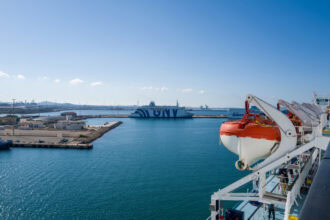
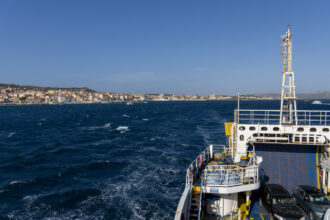
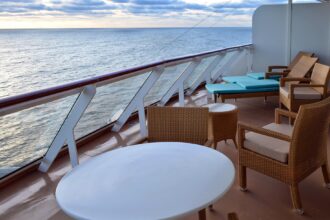
Onboard facilities on these overnight sailings typically include a restaurant, a bar and a small shop, and most ships have outdoor deck space that is worth using in the evening as you leave the Italian coast behind.
Genoa to Porto Torres, Sardinia Ferry Times & Departures
Use Ferryhopper to check live sailings between Genoa and Porto Torres, Sardinia in both directions. Select your travel date to compare scheduled ferry departures, sailing times and available tickets.
Select the date you want to travel. The times shown on the right-hand side are the scheduled departure and arrival times for each ferry.
Availability can change quickly, particularly during weekends and the summer season. Some sailings may stop accepting bookings a few hours before departure. If a timetable is blank, there may be no available sailings for today. Try moving to a later date to check future services.
This is the timetable for the outward direction. Use it to check sailings from Genoa to Porto Torres, Sardinia for the date you plan to travel.
This is a separate timetable for the opposite direction. It does not select a return ticket for the journey above. Use it to check sailings from Porto Torres, Sardinia to Genoa.
Want to compare different routes and other ferry options?
Compare routes, operators, sailing times and prices with Ferryhopper or Direct Ferries.
Civitavecchia: Rome’s Gateway to Sardinia’s Three Ports
Civitavecchia, Rome‘s main port around an hour from the capital, is arguably the most useful mainland gateway to Sardinia, since it serves all three of the island’s major ports rather than just one.
Civitavecchia to Olbia is the fastest of the three, typically 5.5 to 8 hours depending on the operator and time of year, with several daily sailings during the summer peak run by multiple companies.
Civitavecchia to Porto Torres, mainly operated by Grimaldi Lines, takes around 8 hours, usually overnight, and is a practical option if your Sardinian base is in the northwest near Alghero rather than the northeast.
Civitavecchia to Cagliari, also with Grimaldi Lines, is a longer overnight sailing of around 12 hours, well suited to travellers heading straight for the south of the island without needing to drive the length of Sardinia first.
A seasonal Civitavecchia to Arbatax service also runs with Grimaldi Lines, taking roughly 10 hours, useful if you are exploring Sardinia’s quieter east coast rather than the more visited north and south.
Because Civitavecchia serves all three main ports, it is often the deciding factor for travellers flying into Rome first, since it removes the need to choose a mainland departure city based purely on which Sardinian port it happens to serve.
The port itself has a regular train connection to Rome‘s city centre, and a shuttle bus service links the station to the ferry terminal, making Civitavecchia a workable option even without your own transport on the mainland side.
Civitavecchia, Rome to Olbia, Sardinia Ferry Schedules & Tickets
Check the current Civitavecchia, Rome to Olbia, Sardinia ferry schedule with Ferryhopper. Change the date to compare available crossings, departure times and bookable tickets for both directions.
Select the date you want to travel. The times shown on the right-hand side are the scheduled departure and arrival times for each ferry.
Availability can change quickly, particularly during weekends and the summer season. Some sailings may stop accepting bookings a few hours before departure. If a timetable is blank, there may be no available sailings for today. Try moving to a later date to check future services.
This is the timetable for the outward direction. Use it to check sailings from Civitavecchia, Rome to Olbia, Sardinia for the date you plan to travel.
This is a separate timetable for the opposite direction. It does not select a return ticket for the journey above. Use it to check sailings from Olbia, Sardinia to Civitavecchia, Rome.
Want to compare alternative ferry routes and more sailing options?
Compare routes, operators, sailing times and prices with Ferryhopper or Direct Ferries.
Sailing North from Naples, and Sicily’s Limited Links
From Naples, Grimaldi Lines runs an overnight service to Cagliari taking approximately 15 hours, one of the longest crossings on this list, but a genuinely useful option for travellers already in southern Italy who want to avoid a long drive north first.
This route typically operates a few times a week rather than daily, so it suits a planned itinerary better than a spontaneous departure, and booking a cabin well ahead is recommended given the length of the crossing.
Direct ferries between Sicily and Sardinia are limited and vary by season; where they run, Palermo is the most likely departure point, typically connecting toward Cagliari, though schedules change from year to year and are worth checking directly with operators.
Many travellers coming from Sicily instead choose to route via mainland ports like Naples or Civitavecchia, since the connecting mainland trains and the wider choice of daily sailings often work out more reliable than a seasonal direct link.
Naples itself is worth a stopover in its own right if your schedule allows, and combining a few days in the city with the overnight sailing to Cagliari is a popular way to link southern Italy and Sardinia into a single trip.
As with the other long overnight routes on this page, booking a cabin on the Naples to Cagliari crossing is well worth the extra cost given the length of time spent on board.
If you are travelling from further south in Italy, reaching Naples itself is straightforward by train from most major cities, making this route a genuine option even without a car for the mainland leg of the journey.
Check current schedules carefully before relying on a Sicily to Sardinia connection specifically, since these seasonal services are the most likely on this page to be reduced or withdrawn from one year to the next.
Naples to Cagliari, Sardinia Ferry Crossings & Times
Compare ferry crossings between Naples and Cagliari, Sardinia with Ferryhopper. The live timetable shows scheduled departure and arrival times so you can choose a suitable sailing in either direction.
Select the date you want to travel. The times shown on the right-hand side are the scheduled departure and arrival times for each ferry.
Availability can change quickly, particularly during weekends and the summer season. Some sailings may stop accepting bookings a few hours before departure. If a timetable is blank, there may be no available sailings for today. Try moving to a later date to check future services.
This is the timetable for the outward direction. Use it to check sailings from Naples to Cagliari, Sardinia for the date you plan to travel.
This is a separate timetable for the opposite direction. It does not select a return ticket for the journey above. Use it to check sailings from Cagliari, Sardinia to Naples.
Looking for different ferry routes or other ferry options?
Compare routes, operators, sailing times and prices with Ferryhopper or Direct Ferries.
Crossing from Provence: Toulon, Nice and Marseille
For travellers driving down through France, Corsica Ferries operates the main direct services to Sardinia, all arriving at Porto Torres rather than Olbia or Cagliari, which is worth bearing in mind when planning your onward route.
Toulon to Porto Torres is the longest of the three French routes, typically around 13 to 15 hours, with a handful of weekly sailings rather than a daily service; full details of Toulon’s wider Mediterranean network are in our Ferry Routes from Toulon guide.
Nice to Porto Torres runs at roughly 10.5 hours, generally overnight, with around one sailing a week depending on the season; see our Ferry Routes from Nice guide for the full picture of Nice’s Corsica and Sardinia connections.
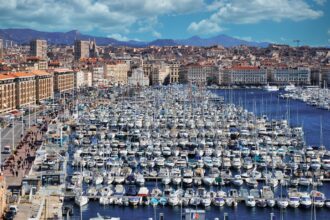
Marseille does not currently offer a frequent direct sailing to Sardinia in the way Toulon and Nice do, but it remains a useful departure point for reaching Corsica, from where the short Bonifacio to Santa Teresa Gallura crossing continues on to Sardinia; see our Marseille Ferry Routes guide for the wider network.
All three French routes are long enough that booking a cabin, rather than a reclining seat, makes a real difference to comfort, and vehicle space should be booked well in advance for July and August departures.
Travelling from France also means factoring in the drive down through the country beforehand; Toulon and Nice both sit within a reasonable day’s drive of much of southern and central France, making a French departure port genuinely practical for a road trip.
Since none of these French routes serve Olbia or Cagliari directly, anyone heading for the northeast or south of Sardinia from France should factor in an additional few hours’ drive across the island after disembarking at Porto Torres.
Toulon to Porto Torres, Sardinia Ferry Timetable & Tickets
View the Ferryhopper timetable for ferries between Toulon and Porto Torres, Sardinia. Select a date to check sailing times, available departures and ticket options for the outbound and return journey.
Select the date you want to travel. The times shown on the right-hand side are the scheduled departure and arrival times for each ferry.
Availability can change quickly, particularly during weekends and the summer season. Some sailings may stop accepting bookings a few hours before departure. If a timetable is blank, there may be no available sailings for today. Try moving to a later date to check future services.
This is the timetable for the outward direction. Use it to check sailings from Toulon to Porto Torres, Sardinia for the date you plan to travel.
This is a separate timetable for the opposite direction. It does not select a return ticket for the journey above. Use it to check sailings from Porto Torres, Sardinia to Toulon.
Compare other ferry routes, sailings and ticket options.
Compare routes, operators, sailing times and prices with Ferryhopper or Direct Ferries.
The Corsica Shortcut: Bonifacio to Santa Teresa Gallura
The shortest way of all to reach Sardinia by sea is the crossing between Bonifacio, at Corsica’s southern tip, and Santa Teresa Gallura on Sardinia’s northern coast, a crossing of only around 50 minutes.
Two operators run this route, Moby Lines and Ichnusa Lines, both carrying vehicles as well as foot passengers, with up to seven daily sailings in peak summer and a reduced but still practical service through the rest of the year.
This route works well for anyone combining a Corsica trip with Sardinia, or road-tripping down through France, across Corsica, and finishing in Sardinia rather than taking one of the longer direct sailings from the French mainland.
The crossing can be affected by strong Mistral winds funnelling through the Strait of Bonifacio, so build in some flexibility around your onward plans if you are travelling in a period of unsettled weather, particularly outside summer.
Santa Teresa Gallura itself is a pleasant small town worth an hour or two before continuing onward, with a scenic clifftop position and views back across the strait toward Corsica on a clear day.
From Santa Teresa Gallura, it is a short drive along the coast to Palau and onward to the La Maddalena archipelago, making this crossing a natural fit for anyone building a north Sardinia itinerary around the coastline near Olbia.
Because sailings are so frequent and the crossing so short, many travellers treat this route almost like a border crossing rather than a proper ferry journey, arriving without a booking and simply buying a ticket at the port.
If you are touring Corsica by car and plan to bring the vehicle onward into Sardinia, this route is generally the most straightforward and least expensive way to do so compared with the longer French mainland crossings.
Bonifacio, Corsica to Santa Teresa Gallura, Sardinia Ferry Departures & Schedules
Use Ferryhopper to compare scheduled ferry departures between Bonifacio, Corsica and Santa Teresa Gallura, Sardinia. Choose your travel date to see available sailings, journey times and tickets in both directions.
Select the date you want to travel. The times shown on the right-hand side are the scheduled departure and arrival times for each ferry.
Availability can change quickly, particularly during weekends and the summer season. Some sailings may stop accepting bookings a few hours before departure. If a timetable is blank, there may be no available sailings for today. Try moving to a later date to check future services.
This is the timetable for the outward direction. Use it to check sailings from Bonifacio, Corsica to Santa Teresa Gallura, Sardinia for the date you plan to travel.
This is a separate timetable for the opposite direction. It does not select a return ticket for the journey above. Use it to check sailings from Santa Teresa Gallura, Sardinia to Bonifacio, Corsica.
Want to check different routes and more ferry choices?
Compare routes, operators, sailing times and prices with Ferryhopper or Direct Ferries.
Olbia: Sardinia’s Busiest Ferry Gateway
Olbia handles more ferry traffic than any other Sardinian port, thanks to its position close to the Costa Smeralda and its short crossing times from Civitavecchia and Livorno compared with the routes into Cagliari or Porto Torres.
In peak summer, several operators run multiple daily sailings from mainland Italy into Olbia, and the port itself has good onward connections by road and rail to the rest of northern Sardinia, including Palau and the La Maddalena archipelago.
Because it is the busiest gateway, Olbia is also where booking ahead matters most; last-minute vehicle space in August can be genuinely difficult to find on the most convenient sailing times.
Our dedicated Olbia Ferry Routes guide covers every operator serving the port in detail, along with journey times and practical advice for arriving at the terminal itself.
The port sits close enough to Olbia‘s town centre and airport that combining a ferry arrival with onward travel by taxi, bus or hire car is straightforward, without the longer transfer some other Sardinian ports require.
For visitors continuing to the Costa Smeralda or Palau, Olbia‘s road links north along the coast are generally quick and well maintained, making it easy to be settled at your accommodation within an hour or so of disembarking.
Olbia also has its own regional airport nearby (see our Olbia Airport Transfers guide), so it is possible to fly in and only use the ferry for a onward inter-island hop, or to fly one way and sail the other on a longer trip.
If your plans include exploring Olbia itself before heading further afield, our Things to Do in Olbia guide covers the town’s historic centre, archaeological sites and nearby beaches in full.
Best for long or awkward journeys. Builds one itinerary out of separate flights.
View flightsBest for short trips. Install the eSIM at home and arrive in Sardinia with working data, no shop queue.
Browse eSIMsBest after a long flight or a late landing. Price agreed before you travel, and no taxi queue.
Check transfersPorto Torres: Gateway to Spain and France
Porto Torres is Sardinia’s most international port, and the only one of the three major gateways with regular direct connections to both France and Spain, alongside its Italian mainland routes from Genoa and Civitavecchia.
Grimaldi Lines runs the Barcelona to Porto Torres service, while Corsica Ferries covers the French routes from Toulon and Nice, giving travellers coming from Spain or southern France a direct sea route without needing to cross into mainland Italy first.
The port also sits conveniently close to Alghero and Sassari, making it the natural arrival point for anyone basing their trip in the island’s northwest rather than around Olbia or Cagliari.
For the full detail on every route into this port, including operators, prices and terminal practicalities, see our dedicated Porto Torres Ferry Routes guide.
Compared with Olbia, Porto Torres sees noticeably less traffic overall, which can mean a calmer arrival experience even in peak summer, though it also means slightly less frequent sailings on some of the mainland Italy routes.
The nearby city of Sassari is well connected by train and road, offering a useful base if you want easy access to both the port and Sardinia’s northwestern interior.
If your trip is centred on Alghero, our Things to Do in Alghero guide is a natural next stop once you have your Porto Torres arrival sorted, since the two towns sit only a short drive apart. If you are flying in instead, our Alghero Airport Transfers guide covers that side of the journey.
Because this port handles genuinely international traffic from three separate countries, it is worth double-checking which country’s public holidays might affect your specific sailing, since French and Spanish schedules do not always follow the Italian calendar.
Barcelona to Porto Torres, Sardinia Ferry Tickets, Times & Crossings
Check Ferryhopper for upcoming ferries between Barcelona and Porto Torres, Sardinia. The live schedule lets you compare crossing times, departure times and available tickets for both legs of the journey.
Select the date you want to travel. The times shown on the right-hand side are the scheduled departure and arrival times for each ferry.
Availability can change quickly, particularly during weekends and the summer season. Some sailings may stop accepting bookings a few hours before departure. If a timetable is blank, there may be no available sailings for today. Try moving to a later date to check future services.
This is the timetable for the outward direction. Use it to check sailings from Barcelona to Porto Torres, Sardinia for the date you plan to travel.
This is a separate timetable for the opposite direction. It does not select a return ticket for the journey above. Use it to check sailings from Porto Torres, Sardinia to Barcelona.
Still comparing ferry routes, crossing times and prices?
Compare routes, operators, sailing times and prices with Ferryhopper or Direct Ferries.
Cagliari’s Overnight Gateway from Civitavecchia and Naples
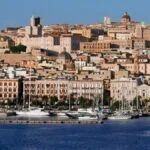
Cagliari, Sardinia’s capital and largest city, is served mainly by long overnight routes from Civitavecchia and Naples rather than the shorter crossings that serve Olbia and Porto Torres.
The port sits within easy reach of Cagliari‘s historic centre, making it a straightforward arrival point if your trip is focused on the south of the island, the Sulcis coastline, or the archaeological sites nearby.
Because both mainland routes into Cagliari are overnight sailings of 12 hours or more, most travellers book a cabin rather than a reclining seat, and vehicle check-in typically opens a couple of hours before departure.
If Cagliari is your base, our Cagliari Cruise Port Guide also covers the wider port area and how to reach the city centre, useful background whether you are arriving by ferry or cruise ship.
Arriving in Cagliari also puts you within easy reach of the island’s southern beaches and archaeological sites without needing to drive the length of Sardinia first, which suits itineraries that skip the busier north entirely.
Our Things to Do in Cagliari and Day Trips from Cagliari guides both make a natural next read once you have your ferry arrangements settled.
Cagliari also has its own international airport a short distance from the city (see our Cagliari Airport Transfers guide), so combining a flight one way with a ferry the other is a genuinely practical option if you want to bring a car home without retracing your outbound route.
Taxis and local buses run regularly between the ferry terminal and the city centre, so arriving without your own vehicle is still entirely manageable if you plan to explore Cagliari on foot.
Inter-Island Ferries: Palau to La Maddalena
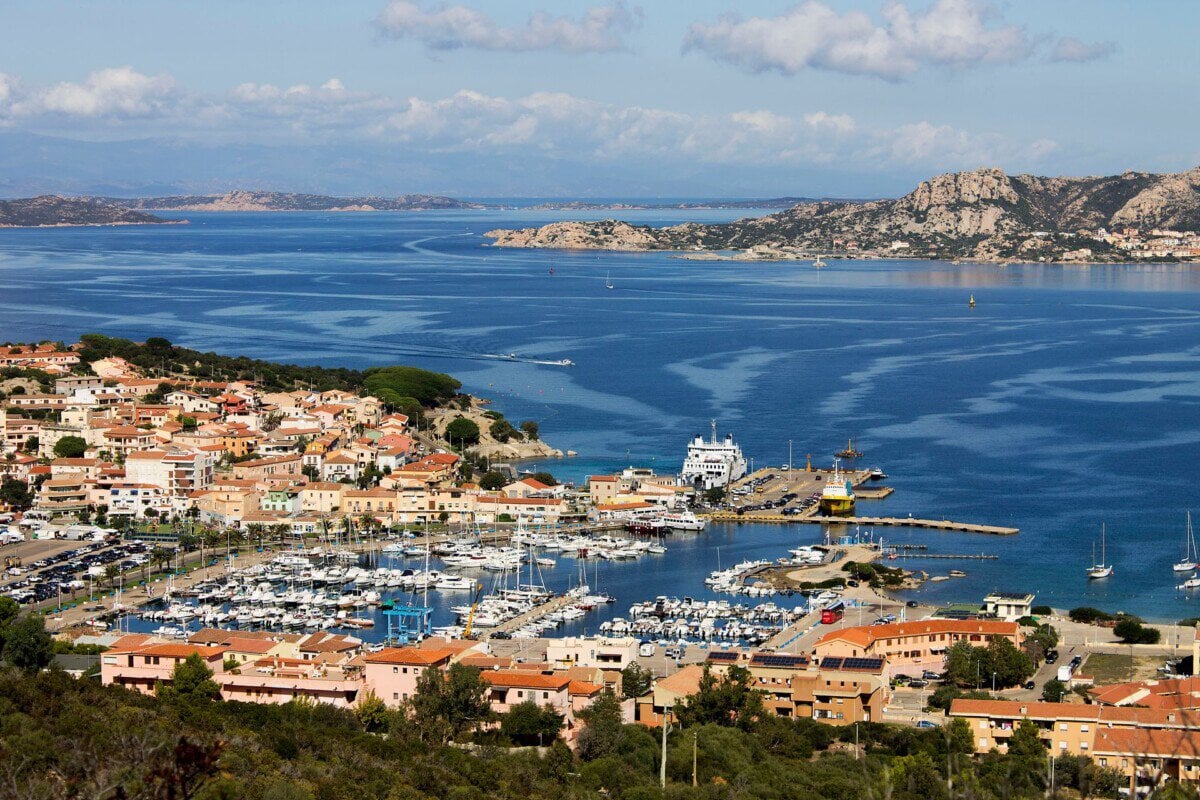
Once you have reached Sardinia itself, one further short crossing is worth knowing about: the hop from Palau to the La Maddalena archipelago, a completely different kind of journey from the long international routes above.
This crossing takes only around 15 to 20 minutes, runs year-round with Delcomar and seasonally with Maddalena Lines, and departs roughly every 20 to 45 minutes depending on the time of year, more like a harbour shuttle than an international ferry.
It is an easy add-on to a trip through the north of Sardinia, particularly if you are already passing through Olbia or staying along the Costa Smeralda, and both foot passengers and vehicles are carried.
Full detail on operators, prices and timetables is in our dedicated Palau to La Maddalena Ferry guide, alongside our Things to Do in Palau guide for the wider area.
Because it operates so frequently, this crossing rarely needs advance planning in the way the longer international routes do, and it is entirely reasonable to simply turn up at the Palau terminal and catch the next available sailing.
Many itineraries treat this as a single day trip from wherever they are staying on the mainland side of Sardinia, rather than an overnight stay on La Maddalena itself, though both approaches work well.
Unlike every other route on this page, this crossing carries no long-distance planning burden at all; it is best thought of as a local shuttle rather than part of the international ferry network covered elsewhere in this guide.
Because of that, it is easy to combine with almost any of the mainland arrival ports above, provided your Sardinian itinerary passes through the north of the island at some point during your stay.
Palau, Sardinia to La Maddalena Ferry Operators, Times & Tickets
Check Ferryhopper for available services between Palau, Sardinia and La Maddalena, including scheduled times and the ferry operators shown for your selected date. Compare sailings and ticket availability in both directions.
Select the date you want to travel. The times shown on the right-hand side are the scheduled departure and arrival times for each ferry.
Availability can change quickly, particularly during weekends and the summer season. Some sailings may stop accepting bookings a few hours before departure. If a timetable is blank, there may be no available sailings for today. Try moving to a later date to check future services.
This is the timetable for the outward direction. Use it to check sailings from Palau, Sardinia to La Maddalena for the date you plan to travel.
This is a separate timetable for the opposite direction. It does not select a return ticket for the journey above. Use it to check sailings from La Maddalena to Palau, Sardinia.
Looking for another ferry route or a different sailing option?
Compare routes, operators, sailing times and prices with Ferryhopper or Direct Ferries.
Ferry Operators Compared
Several operators cover the routes above, each with its own strengths, and knowing roughly what each one offers helps when comparing options for the same crossing.
| Operator | Main Routes | Notes |
|---|---|---|
| Tirrenia | Genoa, Civitavecchia to Olbia/Porto Torres/Cagliari | Long-standing Italian state-linked operator, frequent sailings |
| Moby Lines | Genoa, Livorno; Bonifacio to Santa Teresa | Large car ferries, family-friendly onboard facilities |
| Grimaldi Lines | Civitavecchia, Naples, Barcelona to Sardinia | Cruise-style ferries with cabins, longer routes |
| Corsica Ferries | Toulon, Nice to Porto Torres | Main French mainland operator to Sardinia |
| Ichnusa Lines | Bonifacio to Santa Teresa Gallura | Smaller operator on the short Corsica crossing |
Tirrenia and Moby Lines tend to dominate the shorter Italian mainland routes, while Grimaldi Lines covers most of the longer overnight sailings, including the international Barcelona service.
Corsica Ferries is effectively the only major operator running scheduled services from France into Sardinia, so if you are travelling from Toulon or Nice, their timetable is the one to check first.
Ferry aggregator sites let you compare several operators for the same route at once, which is often the quickest way to see which company has availability and the best fare for your travel dates.
On the short Bonifacio to Santa Teresa Gallura crossing, both Moby Lines and Ichnusa Lines run broadly comparable services, so it is worth checking both directly for whichever departure time suits your schedule best.
Smaller regional operators occasionally run seasonal services not listed on the major comparison sites, so it is worth a direct search for the specific port pairing you need if the usual names do not show what you expect.
Loyalty schemes and multi-trip discounts exist with several of these operators, which can be worth investigating if you are planning to use the same ferry company more than once, for example on a round trip.
Reviews of onboard comfort vary between operators and even between individual ships within the same fleet, so it is worth a quick search for the specific vessel on your booking if onboard comfort matters to you on a long crossing.
Tickets, Prices and Booking
Prices vary enormously depending on route, season and how far ahead you book, but as a rough guide, a foot passenger fare on a mainland Italy to Sardinia crossing typically runs from around €25 to €60 (£22-52 / $27-65) one way.
Adding a standard car generally costs an extra €60 to €150 (£52-131 / $65-164) depending on the route length and season, with the longer international crossings from France and Spain sitting at the higher end of that range.
A private cabin on overnight routes adds further cost but is well worth it on anything over eight hours, both for comfort and for a proper night’s sleep before arriving to start your holiday.
Booking through each operator’s own website is usually cheapest, though ferry comparison sites are useful for checking availability across several companies at once before committing to a specific sailing.
For travel in July and August, booking at least a month ahead is strongly recommended, particularly for vehicle space on the busiest Civitavecchia to Olbia and Genoa to Porto Torres routes.
Prices generally follow demand closely, so booking early in the season for a summer crossing often secures a noticeably better fare than waiting until a few weeks before travel, particularly on the longer overnight routes.
Refund and change policies vary between operators, so it is worth reading the terms carefully at booking, especially if your travel dates are not yet fully confirmed when you reserve a sailing.
Travelling with a Car or Campervan
Bringing a car or campervan is one of the main reasons travellers choose the ferry over flying, since it removes the cost and hassle of hiring a vehicle once you arrive in Sardinia.
Vehicle check-in generally opens 90 minutes to 2 hours before departure on the longer routes, and arriving with plenty of time to spare is sensible given the queues that can build at busy ports in peak season.
Campervans and larger vehicles are charged by length rather than a flat car rate, so check the specific tariff for your vehicle’s dimensions when booking, since this can significantly affect the total fare.
If you are planning a longer road trip once you arrive, our Road Trip Around Sardinia guide shows how a ferry arrival at any of the island’s main ports fits into a wider driving itinerary.
Hire car agreements sometimes exclude ferry travel between countries, so anyone bringing a rental vehicle from mainland Italy or France onto a Sardinia-bound ferry should double-check the terms of their contract before booking.
Once on board, most ferries require you to leave your vehicle for the duration of the crossing, so keep anything you need during the sailing, including documents and any medication, with you rather than locked in the car.
Roof boxes, bike racks and trailers are generally accepted but may incur an additional charge or require advance notice, so declare any unusual load when booking rather than at the port on the day of travel.
Fuel prices in Sardinia are broadly comparable with the Italian mainland, so there is little practical benefit to filling up specifically before boarding unless your onward drive from the port is a particularly long one.
Best if you would rather spend the money on Sardinia than on the room. Compare hostels by location and rating.
Search hostelsBest arranged before you fly rather than after. Covers claim handling, plus lounge access on eligible delays.
Explore AirHelp+Best for the gap between checking out and your train. Drop bags at a shop or hotel nearby and carry on.
Store your bagsBest Time to Book and Travel
Ferry frequency to Sardinia changes dramatically with the seasons. In July and August, most routes run at or near their maximum schedule, with multiple daily sailings on the busiest crossings into Olbia.
Outside peak summer, from October to April, several routes reduce to just a few sailings a week, and some seasonal services, including the France to Porto Torres routes, may pause entirely for parts of the winter.
Shoulder season, roughly May, June and September, often offers the best balance: reasonably frequent sailings, lower prices than August, and considerably shorter queues at the ports themselves.
Whatever time of year you travel, check the current timetable directly with the operator before finalising plans, since schedules on the international France and Spain routes in particular can shift from one season to the next.
Weather also plays a bigger role in winter, with occasional delays or cancellations on the longer open-water crossings during storms, so building a day or two of flexibility into a winter itinerary is a sensible precaution.
If your travel dates are flexible, shifting a trip by even a week either side of the August peak can make a noticeable difference to both price and the ease of securing your preferred sailing time.
Public holidays around the Italian Ferragosto break in mid-August see the single busiest window of the year for both ports and roads, so avoiding travel in the days immediately either side of it can ease the whole journey considerably.
Early booking also tends to offer a wider choice of cabin types and vehicle deck positions, which matters more than it might seem once you are several hours into a long overnight crossing.
Which Route Is Right for You?
If you are flying into Rome and continuing by sea, Civitavecchia is by far the most flexible choice, with routes to all three major Sardinian ports and the widest range of sailing times.
If you are driving down through France or coming from Spain, Porto Torres is the obvious gateway, with direct routes from Toulon, Nice and Barcelona landing you in Sardinia’s northwest.
If your trip is centred on Corsica, the short Bonifacio to Santa Teresa Gallura crossing is by far the quickest and most convenient way to continue into Sardinia afterwards.
And if the Costa Smeralda, Palau or the La Maddalena archipelago are your priority, Olbia’s frequent mainland connections and proximity to the inter-island ferry make it the most practical port of arrival.
For a longer trip covering several regions of Sardinia, it is entirely possible to arrive at one port and depart from another, which can save considerable backtracking if your itinerary already loops around the island.
When in doubt, working backward from your accommodation’s location, rather than simply picking the cheapest or fastest sailing, usually gives the most useful answer to which port and route actually suits your trip.
Families travelling with young children often prioritise the shortest possible crossing over the cheapest fare, in which case Civitavecchia to Olbia or the Bonifacio to Santa Teresa Gallura hop tend to work better than an overnight sailing.
Solo travellers without a car, meanwhile, have more freedom to pick based purely on price and timetable, since none of the practical constraints around vehicle space and check-in times apply to a foot passenger booking.
Practical Tips for Ferry Travel to Sardinia
Always double-check which port your ferry actually arrives at rather than assuming; Corsica Ferries’ French routes, for example, all land at Porto Torres even though some search tools list them simply as “Sardinia”.
Pack essentials for the crossing itself, especially on overnight routes; even with a cabin booked, having snacks, water and entertainment on hand makes an 8 to 15 hour sailing far more comfortable.
Keep travel documents and vehicle paperwork easily accessible, since check-in staff will ask for them at the port gate well before you reach the boarding ramp itself.
Build in a buffer day either side of a long ferry crossing where possible; delays of an hour or two are not unusual on the longer international routes, particularly in poor weather.
If you are travelling without a car, our guide to Getting Around Sardinia Without a Car explains how to continue your journey by train and bus once you step off the ferry.
Check your phone’s roaming arrangements before crossing between countries, particularly on the France to Sardinia routes, since data charges can catch travellers out during a long crossing spent browsing or streaming to pass the time.

Rupert’s Handy Travel Tips
Arriving in Sardinia by ferry is one of my favourite ways to start an island trip, here is how to make the crossing itself as smooth as possible.
- Book vehicles early for August: car spaces on the busiest routes into Olbia sell out weeks before passenger seats do.
- Choose Civitavecchia for flexibility: it is the only mainland port with regular sailings to all three major Sardinian ports.
- Double-check your arrival port: French routes from Toulon and Nice all land at Porto Torres, not Olbia or Cagliari.
- Pack for the crossing: snacks, water and entertainment make a real difference on the longer overnight sailings.
Want to meet the reindeer behind our travel tips? Find out more in our page Who is Rupert?.




Frequently Asked Questions
Which Sardinian port should I choose?
It depends on your route: Olbia suits the northeast and Costa Smeralda, Porto Torres suits France, Spain and the northwest, and Cagliari suits the south.
How long does the ferry from mainland Italy take?
Anywhere from around 5.5 hours on the fastest Civitavecchia to Olbia route up to 15 hours on the Naples to Cagliari crossing.
Can I take a car on the ferry to Sardinia?
Yes, all the major routes listed here carry vehicles, and most travellers bringing a car should book well ahead in peak summer.
Is there a direct ferry from France to Sardinia?
Yes, Corsica Ferries runs direct sailings from Toulon and Nice to Porto Torres, both generally overnight services.
What is the shortest way to reach Sardinia by ferry?
The Bonifacio to Santa Teresa Gallura crossing from Corsica, at around 50 minutes, is by far the shortest route onto the island.
Do I need to book a cabin for overnight crossings?
It is not compulsory, but strongly recommended on anything over 8 hours; reclining seats are available but less comfortable for a full night.
How far ahead should I book in summer?
At least a month ahead for July and August travel, especially if bringing a vehicle on the busiest Olbia and Porto Torres routes.
Can I combine a Corsica trip with a Sardinia ferry crossing?
Yes, the short Bonifacio to Santa Teresa Gallura route makes it easy to visit both islands on one trip.
Further Reading
For full detail on Sardinia’s two busiest gateway ports, see our dedicated guides to Olbia Ferry Routes and Porto Torres Ferry Routes, both covering operators, prices and terminal practicalities in depth.
If your trip includes the La Maddalena archipelago, our Palau to La Maddalena Ferry guide covers that short inter-island crossing, while travellers arriving via France can read more in our Ferry Routes from Toulon, Ferry Routes from Nice and Marseille Ferry Routes guides.
Once you have arrived, our Getting Around Sardinia Without a Car and Road Trip Around Sardinia guides cover onward travel around the island, whichever port you land at.