Reviewed by our editorial team Updated
Discover the Best of Cagliari
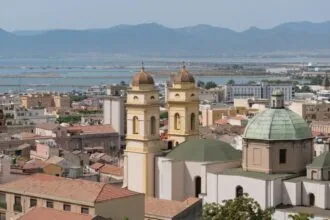
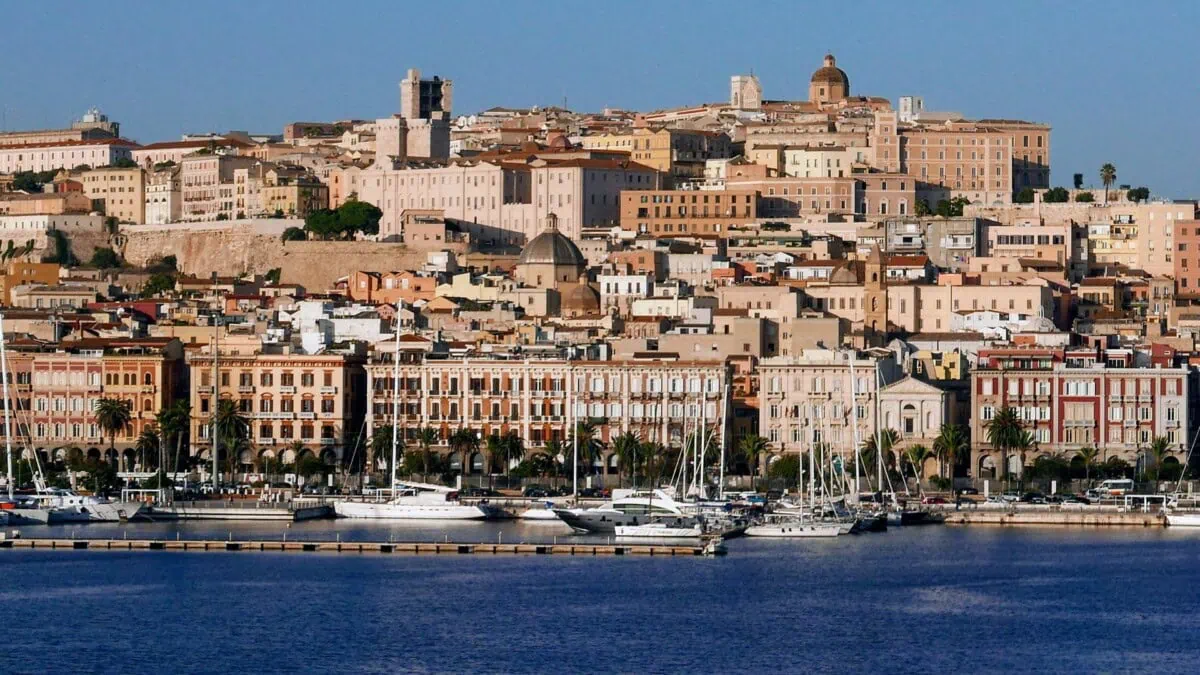
Cagliari is Sardinia’s capital and its most rewarding city break, a sun-bleached port that rises in tiers from a working harbour to a hilltop citadel. Roman ruins, Phoenician necropolises and Spanish-era bastions sit within a ten-minute walk of each other, so a compact itinerary covers an unusual amount of history.
The Castello district forms the historic core, its honey-coloured walls enclosing a cathedral, two medieval towers and a clutch of small museums. Below it, the grid streets of Marina and Stampace hold the best restaurants, while Poetto beach stretches for roughly 8 kilometres along the eastern shore.
Unlike Sardinia’s resort towns, Cagliari works well year-round. Winter brings mild, walkable weather and quiet museums, while summer adds beach days, boat trips and the lively Sant’Efisio festival in early May, one of the island’s oldest religious processions.
This guide covers the city’s essential sights: the Castello quarter, the Roman amphitheatre, the Tuvixeddu necropolis, the covered San Benedetto market, Cagliari’s beaches and viewpoints, and the best boat trips out of the harbour. Two or three days is enough to see the highlights at an easy pace.
We’ve also included Cagliari‘s neighbourhoods, its festival calendar and family-friendly options, so whether you’re passing through for a day or basing yourself here for a week, you’ll find enough to fill the time comfortably.
If you’re arriving by air, see our guide to Cagliari Airport transfers for train, bus and taxi options into the centre. Cruise passengers should check our Cagliari Cruise Port Guide for the walk from the dock.
Cagliari also makes a natural base if you plan to see more of southern Sardinia. Frequent trains and buses connect it to Barumini, Nora, Pula and the coastal towns further east, so you can return to the same hotel each night rather than packing and repacking.
Expect a mix of pace across the day: brisk sightseeing through the cooler morning hours, a slower lunch in the local style, then either a beach afternoon or a second wave of museums before the evening passeggiata begins.
Before diving into each attraction, here’s a quick overview of Cagliari‘s main sights, roughly grouped by type, with approximate visit times and whether there’s an entry fee.
| Attraction | Type | Typical Visit Time | Entry Fee |
|---|---|---|---|
| Castello District | Historic quarter | 2-3 hours | Free to walk |
| Cagliari Cathedral | Church | 30-45 minutes | Free (small fee for crypt/bell tower) |
| Roman Amphitheatre | Ancient ruin | 30-45 minutes | Approx. €5-8 (£4-7 / $5-9) |
| Tuvixeddu Necropolis | Archaeological park | 1 hour | Free (guided tour extra) |
| National Archaeological Museum | Museum | 1-1.5 hours | €10 (£9/$11) full, €5 (£4/$5) reduced |
| San Benedetto Market | Covered market | 45 minutes | Free |
| Bastione di Saint Remy | Viewpoint | 20-30 minutes | Free |
| Poetto Beach | Beach | Half day | Free (sunbed hire extra) |
| Sella del Diavolo | Hike/viewpoint | 1.5-2 hours | Free |
| Molentargius Flamingos | Nature reserve | 1-2 hours | Free |
| Boat Trips | Excursion | 2-4 hours | Approx. €30-60 (£26-52 / $33-65) |
Explore the Castello District
Castello is Cagliari‘s fortified hilltop quarter and the natural place to start any visit. Its narrow lanes were laid out under Pisan and later Spanish rule, and much of the perimeter wall still stands, punctuated by watchtowers with sweeping views over the rooftops and harbour below.
Two medieval towers anchor the quarter: the Torre dell’Elefante and the Torre di San Pancrazio, both built in the 14th century as part of Pisan defences. Climbing either one costs €3 (£3 / $4) full price, or €2 (£2 / $2) reduced for under-26s, over-65s and larger groups, and rewards you with panoramic views across the old town to the Gulf of Cagliari.
Wander the pedestrian streets around Piazza Palazzo and you’ll find the old Royal Palace, the Archbishop’s Palace and a scatter of artisan shops selling Sardinian ceramics and filigree jewellery. The district feels quieter and more residential than the harbourfront, especially in the early morning.
Beneath the streets, Cagliari hides a network of tunnels and shelters, some dating to the Second World War and others far older. A guided underground tour is the only way to see sections such as the Santa Restituta crypt, a small chapel built into an ancient cistern. Entry to the crypt itself costs €3 (£3 / $4) full price or €2 (£2 / $2) reduced, while escorted tours covering it alongside the wider underground network typically run €25-60 (£22-52 / $27-65) per person depending on group size and inclusions.
The quarter also holds several small, easily missed museums, including the Cittadella dei Musei complex near the archaeological museum, which houses a wax anatomy collection and a gallery of Pisan-era artwork worth an hour if you have time to spare.
Allow at least 2-3 hours to explore Castello properly, more if you stop for coffee on one of its many terraces. Comfortable shoes are worth packing; the cobbled lanes climb steeply in places and some staircases have no handrail.
Early risers are rewarded here more than almost anywhere else in the city: arrive by 8:00am and you’ll often have the towers and viewpoints to yourself before tour groups and the midday heat arrive.
Best for a short trip. Compare rooms by neighbourhood, price and guest rating before you book.
Compare hotelsBest for longer stays. Whole apartments and houses, so you are not eating out three times a day.
View rentalsBest as a last check before booking. Compares Sardinia hotel rates across several sites in one search.
Compare ratesCagliari Cathedral and Its Crypt
The Cagliari Cathedral (Cattedrale di Santa Maria) sits at the heart of Castello on Piazza Palazzo. Founded in the 13th century and remodelled several times since, it mixes Romanesque, Gothic and Baroque elements behind a 20th-century Pisan-style facade.
Inside, look for the pair of stone pulpits carved in the 12th century, originally made for Pisa Cathedral before being gifted to Cagliari. The crypt beneath holds the tombs of Sardinian nobility and Spanish viceroys, carved into the rock and worth the short detour.
The cathedral is typically open daily from around 9:00am to 8:00pm, with the bell tower accessible on a more limited schedule (roughly 1:00pm to 4:00pm, Monday to Saturday) for €3 (£3 / $4). Climbing it adds a different angle on the rooftops than the towers offer.
Mass times aren’t ideal for sightseeing visits, so if you want to photograph the interior without disruption, aim for a mid-morning weekday visit rather than a Sunday or public holiday.
The piazza outside is one of Castello‘s most pleasant spots to pause, with a handful of small cafes offering shaded outdoor seating and a good vantage point for people-watching between sightseeing stops.
Dress codes are casually enforced but shoulders and knees should be covered to enter, standard practice for churches across Italy, so pack a light scarf or shawl in summer if you’re wearing sleeveless tops or shorts.
The cathedral is free to enter, with only the crypt (around €2-3 / £2-3 / $2-3) and the €3 (£3 / $4) bell tower carrying a charge, making it one of the better value stops in a city where paid attractions can otherwise add up quickly.
Bastione di Saint Remy and City Viewpoints
The Bastione di Saint Remy is Cagliari’s grandest viewpoint: a monumental limestone terrace and staircase built between 1899 and 1902 to connect Castello with the lower town. Its broad terrace looks out over the harbour, the salt pans and, on clear days, the hills beyond.
Sunset is the best time to visit, when the stone glows orange and the terrace fills with locals rather than tour groups. The nearby streets around Via Santa Croce offer a quieter alternative view for those who prefer fewer crowds.
Beneath the main terrace, the Umberto I Gallery runs through the bastion itself and occasionally hosts small exhibitions, giving you a shaded route between levels on hot afternoons.
The bastion is free to visit and sits within Castello, so it pairs naturally with the towers and cathedral in a single loop. Budget around 30 minutes, longer if you linger for a drink at one of the terrace bars nearby, such as Libarium Nostrum.
For a different perspective on the city, the terrace at the Bonaria Basilica, covered later in this guide, offers a similar sunset view but from the opposite side of the harbour, useful if you want to avoid the bastion’s peak-season crowds.
Photographers should note that the bastion faces roughly west, so the light is most flattering in the hour before sunset, while morning visits give softer, cooler tones over the harbour instead.
Street performers and the occasional artisan stall set up on the terrace during the busier summer months, adding a lively backdrop, though it’s usually quiet enough for a peaceful evening view outside of July and August.
The Roman Amphitheatre
Cagliari’s Roman Amphitheatre (Anfiteatro Romano) is the largest Roman monument in Sardinia, carved directly into the rock of a hillside in the 2nd century AD. It’s estimated to have held around 10,000 spectators for gladiatorial games and animal fights.
Much of the structure is now exposed rock terracing rather than intact seating, but the scale is still striking, and information panels explain how the arena and access tunnels once worked. Bring your imagination; it takes a little effort to picture the roaring crowds that once filled it.
The site is typically open daily from around 9:00am to 5:00pm, with a modest entry fee of roughly €5-8 (£4-7 / $5-9). Shade is limited, so a summer visit is more comfortable in the early morning or an hour or two before closing.
In summer, the amphitheatre occasionally hosts open-air concerts and performances, a nod to its original purpose as a public entertainment venue nearly two thousand years ago. Check local listings if you’re visiting in July or August.
The amphitheatre sits an easy 10-minute walk from Castello, making it simple to combine with a visit to Tuvixeddu, covered next, without doubling back through the city centre.
There’s little natural shade around the seating tiers, so a hat and sunscreen are worth carrying even on an overcast day, since the exposed stone reflects heat back up from below.
Unlike some Roman sites elsewhere in Italy, the amphitheatre rarely feels crowded, since it sits slightly off the main tourist trail through Castello, making it a comparatively peaceful stop even in peak season.
Tuvixeddu Necropolis
A short walk uphill from the amphitheatre leads to the Tuvixeddu Necropolis, the largest surviving Punic burial ground in the Mediterranean. Hundreds of rock-cut tombs, dating from the 6th to 3rd century BC, are scattered across a hillside park that’s free to enter and rarely crowded.
The park itself is a pleasant green space in its own right, planted with wild Mediterranean scrub and offering views over the city that most visitors miss entirely. Paths wind between the tomb openings, some fenced for protection and others open to peer into.
A handful of the more significant tombs, including the elaborately painted Tomba dell’Ureo, can only be visited on a guided tour booked in advance, since they’re kept locked to protect fragile decoration inside.
Because the site is unshaded and exposed, it’s best visited in the cooler parts of the day, and sturdy shoes help on the uneven paths. Allow around an hour for a self-guided walk through the main areas.
Combined, the amphitheatre and necropolis make an excellent half-day of ancient history, best paired with a visit to the National Archaeological Museum described below to see the artefacts recovered from sites like these.
The surrounding Tuvixeddu-Tuvumannu park has been the subject of long-running conservation debate, since parts of the wider hillside were once earmarked for development; today the necropolis itself is protected and freely accessible.
Late afternoon light picks out the texture of the rock-cut chambers particularly well, making it a rewarding stop for photography as well as history, especially in the hour or two before sunset.
National Archaeological Museum
For a deeper dive into the region’s ancient past, the National Archaeological Museum (Museo Archeologico Nazionale) on Piazza dell’Arsenale is the best single stop in Cagliari. It anchors the wider Cittadella dei Musei complex within Castello.
Its collection spans the island’s Nuragic, Phoenician, Punic and Roman periods, with bronze votive figurines, jewellery and ceramics recovered from sites across Sardinia, including many that inform the day trips covered later in our companion guide.
The undisputed highlight is the display of the Mont’e Prama Giants, monumental stone statues of warriors, boxers and archers discovered in central Sardinia and dating back roughly 2,800 years. They’re unlike anything else found in the Mediterranean from that period.
The museum is usually open from around 9:00am to 8:00pm and closed on Tuesdays, with entry costing €10 (£9 / $11) full price, or €5 (£4 / $5) reduced for under-26s and other eligible groups. Combined tickets covering several Cittadella museums can offer better value if you plan to see more than one.
Allow at least an hour to 90 minutes to do the collection justice, longer if archaeology is a particular interest. Information panels are in Italian and English throughout.
The Cittadella complex also includes a small pinacoteca (art gallery) and a museum of anatomical wax models, both easy add-ons if the main archaeological collection leaves you wanting more.
Guided tours in English run periodically through the busier months and can add helpful context to the Mont’e Prama statues in particular, whose discovery and interpretation are still debated among archaeologists.
San Benedetto Market and Local Food
The San Benedetto Market is one of the largest covered food markets in Italy, spread across two floors near Via Sardegna. The ground floor is dedicated to fish and seafood, with counters piled high with tuna, sea urchins and local shellfish landed that morning.
Upstairs holds fruit, vegetables, cheeses and butchers, along with stalls selling Sardinian pecorino, cured meats and bottles of local wine. It’s a genuinely local market rather than a tourist attraction, so it’s busiest in the mid-morning when residents do their shopping.
Note that the historic market building has undergone renovation work in recent years, so stalls may operate from a temporary location nearby; check current signage or ask locally if the main building looks closed. Either way, it’s free to wander and a good spot to pick up picnic supplies.
A few stalls run informal tasting counters where you can try local cheeses or cured meats before buying, and it’s an easy, cheap way to sample Sardinian produce without committing to a full restaurant meal.
Beyond the market, Cagliari’s food scene is worth building time around. Look for malloreddus (a saffron-flecked pasta), culurgiones (stuffed pasta parcels) and fregola con arselle (toasted pasta with clams) on menus around Marina and Stampace.
Finish with seadas, a fried pastry filled with pecorino cheese and drizzled with honey, best found in the small trattorias tucked into the side streets away from the main squares, where prices tend to be noticeably lower.
Vernaccia and Cannonau are the two Sardinian wines most worth seeking out with dinner, and many restaurants offer them by the glass alongside a mixed antipasti board as an affordable way to sample local produce.
Coffee culture here follows the wider Italian pattern: a quick espresso standing at the bar costs a fraction of the same drink taken sitting at a table, especially around the busier squares in Castello.
Best for finding routes the airlines do not sell as a single ticket. Combines carriers to bring the fare down.
Search flightsBest for short trips. Install the eSIM at home and arrive in Sardinia with working data, no shop queue.
Browse eSIMsBest if you would rather not work out the transport on arrival. Book it now and forget it.
View transfersCagliari’s Neighbourhoods: Marina, Stampace and Villanova
Below Castello, the grid-planned Marina district runs from the harbourfront up towards the citadel walls. Once the sailors’ and fishermen’s quarter, it’s now the city’s densest concentration of restaurants and bars, particularly along Via Sardegna.
To the west, Stampace is quieter and more residential, with a scattering of Baroque churches and some of the best-value trattorias in the city, popular with locals rather than tour groups.
East of Castello, Villanova is Cagliari’s oldest suburb outside the walls, with a village-like feel, narrow streets and the small Church of San Giacomo, worth a wander if you have a spare hour and want to escape the more touristed core.
All three neighbourhoods are within easy walking distance of Castello, so there’s no need to plan separate excursions; simply factor an extra hour or two into your itinerary to wander beyond the main sights.
Evenings are when these neighbourhoods come alive, with aperitivo crowds spilling onto the pavements of Marina from around 7:00pm, making it a good base for dinner regardless of where you’ve spent the day.
Accommodation across these three neighbourhoods varies considerably in price; Marina and Castello command a premium for their location, while Stampace and Villanova often offer better value within an equally short walk of the main sights.
Sunday mornings bring a noticeably quieter, more local atmosphere to Stampace and Villanova, with many shops closed and residents heading to church, a good contrast if you’ve spent the previous day in the busier tourist core.
Where to Stay in Cagliari
Choosing a base in Cagliari mostly comes down to atmosphere, since the compact centre puts almost any central neighbourhood within easy reach of the sights above. The hilltop Castello district keeps you inside the old walls near the towers and cathedral, while Marina sits closer to the harbourfront and ferry terminals.
Rooms inside Castello are usually small boutique conversions of historic townhouses, prized for panoramic views but reached via steep, cobbled lanes rather than a driveway. Expect a premium here, typically €90-160 (£78-139 / $98-174) a night for a comfortable double.
Marina suits travellers who want to be steps from dinner and the evening passeggiata, since this grid-planned quarter below Castello holds the city’s densest concentration of restaurants and bars. Mid-range hotels here typically run €70-120 (£61-104 / $76-131) a night.
Stampace and Villanova, just beyond Castello’s walls, generally offer better value without sacrificing much walking distance to the main sights. Budget doubles in these quieter residential streets often start around €50-80 (£44-70 / $55-87) a night.
Travellers who’d rather prioritise beach time can base themselves near Poetto instead, where apartments and small hotels line the promenade. It trades hilltop views for a shorter walk to the sand, with buses back into Castello taking a reliable 15-20 minutes.
Book well ahead if your trip falls around the Sant’Efisio festival in early May or anywhere in July and August, since rooms in Castello and Marina sell out fastest during both. Outside those peaks, rates drop noticeably across the shoulder months of April, June and September.
Poetto: Cagliari’s 8-Kilometre City Beach
Poetto Beach is Cagliari’s urban beach, a broad ribbon of fine white sand stretching for roughly 8 kilometres along the eastern edge of the city. Shallow, calm water makes it popular with families, and a promenade backs the whole length with bars, gelaterias and bike hire.
It’s easily reached by local bus (the PF or PQ lines from the centre take around 15-20 minutes) and gets busy in July and August, when locals and visitors alike head there after work. Free public sections sit alongside paid lido areas with sunbeds and umbrellas for hire.
The beach is divided into informal stretches, each with its own character: quieter sections near Marina Piccola, livelier ones popular with younger crowds further along, and calmer family-friendly stretches towards the Sella del Diavolo end.
Watersports operators along the promenade rent kayaks, paddleboards and windsurfing gear through the summer months, and a handful of beach clubs offer sunbeds with waiter service for those who prefer a more resort-style day.
Outside summer, Poetto still draws a steady stream of joggers, cyclists and dog walkers along the promenade, and several restaurants stay open year-round, making it a pleasant lunch stop even in the cooler months.
A cycle path runs the full length of the promenade, and several shops along it rent bikes by the hour, a pleasant way to cover Poetto‘s considerable length without relying on the bus.
Free showers and changing facilities are available at intervals along the public sections of the beach, useful if you’re combining a swim with an afternoon of further sightseeing back in the centre.
Sella del Diavolo
At the eastern end of Poetto, the promontory of Sella del Diavolo (the “Devil’s Saddle”) rises sharply from the sea. A well-marked trail from Calamosca beach climbs to a panoramic viewpoint in around an hour, taking in old military bunkers and sweeping coastal views.
The trail is unshaded and rocky in places, so it’s best tackled in the early morning or late afternoon during summer, with sturdy shoes and plenty of water. The reward is one of the best panoramic views over the Gulf of Cagliari anywhere in the city.
The promontory takes its name from a Sardinian legend involving Lucifer himself. After being defeated by the Archangel Michael for trying to claim the beautiful Gulf of Cagliari, the devil was thrown from his horse; one version has him turning to stone as he fell into the gulf, another has him hurling his horse’s saddle into the water in rage, leaving behind the saddle-shaped ridge you see today.
At the tip of the headland, on the adjoining Capo Sant’Elia promontory, a lighthouse built in 1860 still guides ships into the Gulf of Cagliari. Its 21-metre tower and attached keeper’s house are best appreciated from the trail itself, since the lighthouse compound is run by the Italian navy and isn’t generally open to visitors.
Sella del Diavolo sits close enough to Poetto that the hike pairs naturally with a beach day, tackled either before the heat builds or as a cooler late-afternoon add-on once you’ve had your fill of the water.
Watching Wild Flamingos at Molentargius
Just inland from Poetto, the Molentargius Nature Reserve is one of the best places in Sardinia to see wild flamingos. Entry is free and the reserve is open roughly 8:00am-8:00pm in summer, shorter hours in winter; bring binoculars if you have them.
The reserve’s flat, easy paths make it a good option for anyone who wants nature without the exertion of the Sella del Diavolo climb, and it’s a rewarding stop even for visitors with limited mobility or young children in tow.
The wetland covers around 1,600 hectares between Cagliari and Quartu Sant’Elena, and its salt pans once supported one of the region’s biggest industries before large-scale production wound down. More than 200 bird species have been recorded here over the years, from herons and black-winged stilts to the greater flamingos that give the reserve its postcard reputation.
Guided birdwatching tours run through Molentargius in spring and early summer, when flamingo numbers peak alongside other wetland species, though the flamingos are typically visible year-round in smaller numbers.
A small visitor centre near the reserve’s main entrance has information panels on the wetland’s history as a former saltworks, useful context before setting out along the paths. It sits close enough to Poetto to slot into the same beach day as a low-effort nature detour.
Bonaria Basilica: A Hilltop Pilgrimage and Harbour View
The Bonaria Basilica sits on a rise overlooking the harbour, roughly midway between the city centre and Poetto. Founded in the 14th century, it’s an important pilgrimage site for Sardinians and offers one of the best free viewpoints in the city.
The basilica itself remains an active place of worship, so quiet, respectful visits are expected, particularly around Mass times; check the noticeboard outside for the current schedule before wandering in.
Beneath the basilica, a small museum displays votive offerings left by sailors over the centuries, model ships among them, a reminder of Cagliari‘s long relationship with the sea and the risks once faced by those who worked it.
The basilica is free to enter and rarely crowded, making it a peaceful counterpoint to the busier Castello sights; photographers in particular find its terrace worth a dedicated sunset visit.
It’s a short taxi or bus ride from the centre, or a pleasant 20-minute walk along the harbourfront if the weather is cooperative, making the basilica easy to combine with a wider loop towards Poetto.
Best for a short stop where being central matters more than the room. Dorms and private rooms both listed.
See hostelsBest arranged before you fly rather than after. Covers claim handling, plus lounge access on eligible delays.
Explore AirHelp+Best if your room is not ready yet. Left luggage booked in advance, so you are not hunting for a locker.
Check storageThe Monumental Cemetery
Adjoining the basilica, Cagliari’s monumental cemetery is an unexpected highlight: an open-air gallery of elaborate 19th- and 20th-century funerary statuary, with sculpture ranging from simple crosses to grand family mausoleums.
Opened on 1 January 1829 and designed by the military engineer Luigi Damiano, the cemetery was built partly in response to a cholera epidemic a decade earlier that made Cagliari’s old church burial grounds a public health concern. Sculptors including Fadda, Sartorio and Galavoni later filled it with tombs spanning neoclassicism, realism and the flowing Liberty style, Italy’s take on Art Nouveau, making a walk through the grounds as much an open-air sculpture museum as a cemetery visit.
The cemetery is at its most atmospheric in the soft light of early morning or late afternoon, when long shadows fall across the statuary and the site is at its quietest. A handful of the older graves date back over 150 years, and family plots are still tended by descendants who visit regularly.
Below the ridge, the harbourfront road towards Marina Piccola offers a scenic, mostly flat alternative walking route back into the centre after visiting the cemetery, passing small fishing boats and a quieter stretch of waterfront than the main port area.
Boat Trips from Cagliari
Cagliari’s marina is the departure point for a range of boat trips along the southern coast, most running from late spring through early autumn. A popular option heads to Sella del Diavolo and the coves beneath it, with stops for snorkelling in clear water inaccessible from land.
RIB (rigid inflatable boat) tours are the fastest way to cover ground, typically running 2-3 hour trips from around €40-60 (£35-52 / $44-65) per person, often including snorkel gear. Slower catamaran or sailboat trips run longer, sometimes half-day, and add lunch or an aperitivo stop.
Some operators combine a Cagliari coastal cruise with a visit to Poetto beach from the water, dropping anchor offshore for a swim before returning to the harbour. Others venture further along the coast towards Villasimius, covered in more depth in our day trips from Cagliari guide.
Sunset cruises are especially popular in high summer, when the light over the gulf turns a deep gold and operators often add a drink or light snack to the standard itinerary.
Booking a day or two ahead is sensible in July and August, when the most popular sunset cruises sell out. Outside peak season, availability is far more relaxed and prices often dip.
Most boat trips depart from the marina close to Via Roma, an easy walk from anywhere in the centre, so there’s rarely any need to arrange transport just to reach the departure point.
Seasickness is rarely an issue on the sheltered stretches of coast covered by most Cagliari boat trips, though it’s still worth checking sea conditions if you know you’re prone to it.
Sant’Efisio and Cagliari’s Festival Calendar
The Sant’Efisio festival, held every year from 1 to 4 May, is one of Sardinia’s oldest and most important religious processions. It commemorates a 17th-century vow made during a plague outbreak and draws participants from villages across the island.
Thousands of people in traditional Sardinian costume, along with decorated ox carts and horseback riders, accompany a statue of the saint on a multi-day journey between Cagliari and the town of Pula, passing many of the sights covered in this guide.
If your visit coincides with the festival, expect road closures and crowded streets around the processional route, but also a genuinely special atmosphere that’s hard to find outside of Sardinia.
Outside of Sant’Efisio, Cagliari’s calendar includes smaller seasonal events, from summer concerts at the amphitheatre to Christmas markets in Castello, so it’s worth checking local listings if your visit lines up with a public holiday.
Accommodation books up well in advance for the festival period, so if your trip coincides with the start of May, secure a room in Castello or Marina as early as possible.
Even without a specific event, early evening in Cagliari has its own rhythm, the passeggiata, when locals stroll the harbourfront and main squares before dinner; joining in is one of the simplest ways to feel part of the city rather than just passing through it.
Sant’Efisio‘s route also passes near several sights covered earlier in this guide, so visitors keen to see both the festival and the everyday city are rarely far from a quieter spot to retreat to if the crowds become too much.

Family Days Out: Beaches, Flamingos and Underground Tunnels
Cagliari is an easy city to visit with children, thanks to its compact centre, shallow beach and relatively low traffic in the historic core. Poetto beach is the obvious anchor for a family day, with shallow water and plenty of space to spread out.
The Molentargius flamingo reserve is a genuine hit with younger children, who tend to be more excited by wild flamingos than by ancient ruins, and its flat paths are manageable with a buggy.
Climbing the towers in Castello appeals to older children, and the underground tunnel tours add an adventurous element that works well for families looking for something a little different from standard sightseeing.
Gelato stops are never far away in Cagliari, and the wide, flat promenade along Poetto is ideal for scooters or bikes if you’re travelling with equipment for younger children.
Buggies cope reasonably well with the flatter parts of Marina and the harbourfront, but Castello‘s steep staircases and uneven cobbles make a baby carrier a more practical choice for the historic quarter.
Most restaurants outside the most formal spots welcome children without fuss, and a simple bowl of pasta is rarely hard to find even away from tourist-focused menus.
Pharmacies around the centre are well stocked with sun cream and basic supplies, useful given how quickly the Sardinian sun can catch out children unused to the intensity of summer heat here.
Which Cagliari Sights Should You Prioritise?
With only a single day in Cagliari, focus on Castello: the two towers, the cathedral and the Bastione di Saint Remy, followed by lunch in Marina and a sunset drink on the bastion terrace. This covers the city’s most photogenic and historically rich corner in a manageable loop.
With two days, add the Roman amphitheatre and Tuvixeddu necropolis on day one, then dedicate day two to Poetto beach, the Molentargius flamingos and a boat trip if the season allows. Food lovers should slot the San Benedetto market into whichever morning suits.
Travellers with a third day are best served leaving the city altogether. The archaeological sites at Nora, the beaches around Chia and Villasimius, and the UNESCO nuraghe at Barumini are all within reach; see our day trips from Cagliari guide for full details.
Families with young children often get the most out of Poetto beach and the flamingo reserve, both easy and low-effort, while history-focused travellers should weight their time towards Castello and the archaeological sites instead.
Food-focused visitors should build a morning around San Benedetto market and an evening around the Marina and Stampace restaurant streets, leaving the middle of the day free for whichever sight most appeals.
Whatever your priorities, it’s worth building in some unstructured time. Cagliari rewards aimless wandering as much as it does a tight itinerary, and some of its best moments come from streets that weren’t on any list.
If you’re torn between two options, err towards fewer sights seen properly rather than rushing through everything on this list; Cagliari‘s charm is often in the details, not the checklist.
Practical Tips for Visiting Cagliari
Cagliari is a genuinely walkable city, but Castello‘s steep, cobbled streets and staircases mean comfortable, closed-toe shoes make a real difference. Several public lifts and escalators connect the lower town to the citadel if you’d rather skip the climb.
Many museums, including the cathedral bell tower, close for a long midday break, so it’s worth checking specific hours before setting out rather than assuming continuous opening. A combined ticket covering several of Castello’s municipal sites, including both medieval towers and the Santa Restituta crypt, costs around €8 (£7 / $9) and is valid for a week, useful if you’re planning to see more than one. Separately, the citywide Your City Card Cagliari offers discounts of around 10% on restaurants, tours and activities across the city, though it’s a general discount card rather than a museum-specific pass.
Summer temperatures regularly climb above 30°C, so plan outdoor sightseeing (Castello, the amphitheatre, the necropolis) for morning or early evening and save the middle of the day for the beach or an air-conditioned museum.
The city centre is compact enough that a car isn’t necessary, and parking in Castello is limited and largely restricted. If you’re planning to explore beyond the city, our Getting Around Sardinia Without a Car guide covers train and bus options island-wide.
Restaurants in the main tourist squares tend to be pricier and less authentic; walking two or three streets back usually finds better food at lower prices, particularly around Stampace and the Marina quarter’s side alleys.
Tap water is safe to drink throughout the city, and free public drinking fountains are dotted around Castello and the harbourfront, worth using to refill a bottle rather than buying water in summer heat.
English is widely spoken in hotels, restaurants and the main museums, though a few polite Italian phrases go a long way, particularly at the San Benedetto market and smaller family-run trattorias away from the centre. A simple buongiorno or grazie is always well received, even from stallholders used to dealing with tourists.

Rupert’s Handy Travel Tips
A few things I picked up exploring Cagliari‘s hills and harbour that might save you time.
- Climb Castello early: the towers and bastion get hot and crowded by midday in summer, so visit before 10am for cooler temperatures and better light for photos.
- Use the public lifts: free elevators and escalators link the lower town to Castello if the steep staircases aren’t for you.
- Check market hours first: San Benedetto’s stalls thin out by early afternoon, so go before midday for the best selection.
- Book boat trips ahead in summer: the popular sunset cruises around Sella del Diavolo sell out days in advance during July and August.
Want to meet the reindeer behind our travel tips? Find out more in our page Who is Rupert?.




Frequently Asked Questions
How many days do you need in Cagliari?
Two to three days covers the main sights comfortably, including Castello, the Roman amphitheatre, San Benedetto market and time at Poetto beach. A single day is enough for a highlights-only visit.
Is Cagliari worth visiting if I’m only in Sardinia briefly?
Yes. It packs an unusual amount of history, food and beach time into a walkable centre, and it’s the island’s best-connected city by air, train and ferry.
Is Poetto beach clean and safe for swimming?
Poetto is a well-maintained urban beach with shallow, calm water, popular with families. It’s cleaned regularly through the summer season and has lifeguard cover in the busiest months.
Do I need to book museum tickets in advance?
It’s rarely essential outside peak summer weekends, but booking the Archaeological Museum or amphitheatre online can save queuing time in July and August.
Can I visit Cagliari’s sights without a guide?
Most sights, including Castello, the towers and the market, are easy to visit independently. The underground tunnels require a guided tour, as does access to some closed archaeological areas.
What’s the best time of year to visit Cagliari?
May, June and September offer warm weather without the peak-summer heat and crowds. Winter is mild and quiet, ideal for museums and food, though beach days are unlikely.
Is Cagliari expensive compared to the rest of Sardinia?
It’s generally cheaper than the Costa Smeralda resorts around Olbia, particularly for food and accommodation away from the main tourist squares.
Is it easy to get around Cagliari without a car?
Yes. The centre is compact and walkable, buses connect the outer districts and Poetto, and parking in Castello is limited, so most visitors are better off without one.
Further Reading
If you’re planning beyond the city itself, our Day Trips from Cagliari guide covers the Roman ruins at Nora, the UNESCO-listed nuraghe at Barumini and the beaches around Chia and Villasimius, all reachable in under two hours.
Arriving by air? See our Cagliari Airport Transfers guide for train, bus, taxi and private transfer options, and if you’re arriving by sea, our Cagliari Cruise Port Guide covers the walk from the dock into Castello.
Travelling onward without a car? Our Getting Around Sardinia Without a Car guide explains train and bus links across the island, while our Road Trip Around Sardinia guide plots a route taking in Cagliari alongside Alghero and the Costa Smeralda.