Reviewed by our editorial team Updated
Plan an Unforgettable Sardinia Road Trip
Sardinia rewards drivers more generously than almost anywhere else in Italy. Its interior mountains, hidden coves and quiet inland villages sit well beyond the reach of trains and buses, so a hire car genuinely unlocks a different island than the one most tourists see.
This guide maps a full driving loop connecting Cagliari, Alghero, the wild north coast, the glamorous Costa Smeralda and the beaches in between, with practical driving tips woven in at every stage.
Most visitors tackle this route over 10-14 days, though a tighter 7-day version is entirely possible if you focus on fewer stops and accept longer driving days. We’ll flag where to linger and where a single night suffices.
Sardinia has no motorway tolls, which keeps costs down, but its roads are frequently narrow, hilly and slower than distances on a map suggest. Budget more driving time than you would for the same mileage on the mainland.
Unlike a fly-and-flop beach holiday, this itinerary asks you to move base every few days, so it suits travellers who enjoy variety over sitting still, and who don’t mind packing and unpacking a car regularly.
If you’d rather skip the driving altogether, our Getting Around Sardinia Without a Car guide lays out which parts of this same route work by train, bus and ferry instead.
Along the way, we’ll cover where to eat, the best viewpoints and photo stops, and how to extend the loop into Sardinia’s wilder interior if your itinerary has room for it.
Here’s the full loop at a glance, stop by stop, with a rough day range for a 12-13 day version of the trip. Treat the day numbers as a flexible guide rather than a fixed schedule, since Bosa and a couple of the shorter northern stops are easy to combine, extend or skip depending on how much time you have.
| Day | Stop | Location | Distance from Previous Stop | Approx. Drive Time | Suggested Overnight Base |
|---|---|---|---|---|---|
| Days 1-2 | Start: Cagliari | Cagliari (south) | Starting point | – | Cagliari |
| Days 3-4 | Southwest Coast | Pula, Chia & Nora | ~35 km | ~40 minutes | Pula or Chia |
| Day 5 (en route) | Interior Crossing | Oristano (lunch stop) | ~110 km | ~1.5-2 hours | No overnight; lunch stop only |
| Days 5-7 | Alghero | Alghero (west coast) | ~105 km | ~2 hours | Alghero |
| Day 8 (optional) | Bosa Detour | Bosa | ~49 km | ~45-75 minutes | Bosa, or stay based in Alghero |
| Day 8 | Stintino & La Pelosa | Stintino | ~41 km | ~1-1.5 hours | Stintino |
| Day 9 | Castelsardo | Castelsardo | ~60 km | ~1-1.5 hours | Castelsardo |
| Day 10 | Santa Teresa Gallura | Santa Teresa Gallura | ~65 km | ~1 hour | Santa Teresa Gallura |
| Day 10 (side trip) | Palau | Palau | ~25 km | ~30 minutes | Palau or Santa Teresa Gallura |
| Days 11-12 | Costa Smeralda | Porto Cervo & Baja Sardinia | ~30 km | ~30-40 minutes | Porto Cervo or Baja Sardinia |
| Day 13 | Olbia | Olbia (finish) | ~30 km | ~30-40 minutes | Olbia |
In plain terms, the shape of the route runs like this: begin in Cagliari in the south, tracing the southwest coast and its lagoons before cutting inland or hugging the shoreline up toward Alghero on the west coast. From Alghero, the route hugs Sardinia’s dramatic north coast past Stintino and Castelsardo, before swinging east toward the granite coves of the Costa Smeralda and finishing in Olbia, the island’s main northeastern gateway. Reverse it if your flights land and depart the other way round; either direction covers the same highlights in a comfortable clockwise or anticlockwise loop.
Think of the loop as four roughly equal quarters: south, west, north and northeast, each with its own character, so it’s easy to trim a quarter entirely if your trip is shorter than the full two weeks.
Driven end to end without stops, the full loop covers roughly 450-500 km and would take about 8-9 hours behind the wheel; spread across a week or two with proper stops, it becomes one of the Mediterranean’s most rewarding road trips.
Why Drive Rather Than Fly Between Bases?
Sardinia has no internal flights connecting its own towns, so driving is the only way to see more than one region without relying entirely on trains and buses, which serve a far smaller slice of the island.
A car also means flexibility on timing: sunset at Capo Testa, an early start at La Pelosa before the crowds, or a spontaneous detour down an unmarked track toward an empty cove, none of which fit a bus timetable.
The trade-off is that driving days need to be built into your itinerary properly. Rushing between bases to save a night’s accommodation usually backfires, since Sardinia’s roads are slower than distances alone suggest.
A useful rule of thumb: plan no more than 2-3 hours of driving on any day you also want to properly enjoy a beach, town or archaeological site, leaving buffer time for photo stops and lunch.
Families travelling with young children benefit from shorter driving days, since Sardinia’s winding coastal roads can be uncomfortable for car-sick-prone passengers over long stretches.
Splitting a long drive with a coffee stop in a small town square is rarely a wasted detour in Sardinia; even minor villages often have a pleasant piazza worth ten minutes on foot.
With that pacing in mind, here’s the route broken down stop by stop, starting in the south.
Each stage below includes a rough driving time from the previous stop, so you can rearrange the order or drop sections entirely to fit whatever timeframe you’re working with.
Best for a short trip. Compare rooms by neighbourhood, price and guest rating before you book.
Compare hotelsBest for longer stays. Whole apartments and houses, so you are not eating out three times a day.
View rentalsBest as a last check before booking. Compares Sardinia hotel rates across several sites in one search.
Compare ratesCar Hire at the Airport
Since this itinerary is built around Cagliari and Olbia as the natural start and end points, with Alghero a common alternative if your flights route that way, picking up your hire car happens at whichever of Sardinia’s three main airports you land at. All three have rental desks in or right next to arrivals, so collecting a car is straightforward wherever you begin the loop.
Cagliari-Elmas has the island’s widest choice of international rental brands and generally the sharpest rates, making it the best pick if your dates are flexible. Olbia Costa Smeralda and Alghero-Fertilia both work from smaller fleets, so book further ahead if you land at either, particularly for an automatic in peak summer.
Book online well before travelling rather than walking up to a desk on arrival; Sardinia’s rental fleet is limited relative to demand, and prices climb sharply, with popular categories selling out, across July and August. A comparison site booked in advance usually beats a direct walk-up rate by a meaningful margin.
Check the insurance excess carefully before confirming a booking, since Sardinia’s narrow lanes and stone walls make minor scrapes more common than on the mainland, and excess reduction cover is often worth the extra cost. Also confirm whether the rate includes unlimited mileage, since the full loop described below can rack up 800-1,000 km.
Because this itinerary is a loop rather than a point-to-point route, most travellers collect and return the car at the same airport, avoiding a one-way drop-off fee entirely. If you’d rather fly into one city and out of another, most agencies allow a one-way rental between Cagliari, Alghero and Olbia, but expect a noticeable drop-off charge on top of the standard rate.
Winter tyres aren’t a routine requirement for this coastal loop, since Sardinia rarely sees snow outside the highest points of the interior, but anyone extending the trip into the mountainous Barbagia region between November and March should ask the rental desk whether they’re fitted as standard for that period.
For the full breakdown of every transfer option at each gateway, including car hire desks, typical rates and what to check before driving off, see our dedicated guides to Cagliari Airport Transfers, Olbia Airport Transfers and Alghero Airport Transfers.
Starting Point: Cagliari and the South
Most road trips begin in Cagliari, Sardinia’s capital, where the airport has the island’s widest choice of car rental desks and the best selection of international flight connections.
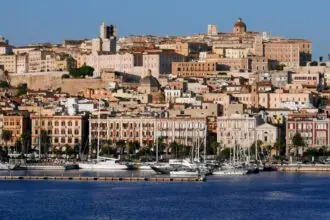
Spend at least a day, ideally two, exploring the hilltop Castello district, its Roman amphitheatre and the seafront before collecting your car, since Cagliari’s historic centre is far easier to enjoy on foot than behind the wheel.
Our Things to Do in Cagliari guide covers the city’s sights, markets and boat trips in full detail before you set off.
Once you’re driving, Cagliari’s suburbs and the SS195 coast road lead quickly out toward the southwest, where salt lagoons, flamingo colonies and long sandy beaches like the dunes at Chia make an easy first stop of 30-45 minutes from the capital.
Parking in central Cagliari can be tight and much of the Castello district falls under a ZTL restricted zone, so confirm your hotel has parking or use one of the paid car parks near the port before collecting your rental.
Most major international rental brands operate from Cagliari-Elmas Airport, generally offering better rates and a wider vehicle selection than the smaller counters at Alghero or Olbia airports.
The Southwest Coast: Chia, Pula and Nora
Heading west from Cagliari along the SS195, the small town of Pula makes a natural first overnight stop, roughly 40 minutes from the capital and close to some of the south’s finest beaches.
The Nora archaeological site just outside Pula sits directly on the coast, with Roman ruins, mosaics and an amphitheatre spilling almost into the sea, making it an easy half-day stop for history-minded travellers.
Chia, a little further along the coast, has some of Sardinia’s most photographed dunes and turquoise water, best visited outside the busiest midsummer weeks when parking near the beach fills up early.
Roads here are generally in good condition and well signposted, though the final approach to some beaches involves unpaved tracks, fine in a standard rental car at low speed but worth taking slowly.
Two nights in this area gives enough time for both the archaeology and the beaches without feeling rushed, before continuing the loop northward.
Further along the coast, the small resort of Villasimius, roughly 40 minutes east of Cagliari in the opposite direction, is a worthwhile add-on for anyone with an extra day before heading west, thanks to its clear water and nearby nature reserve.
Crossing the Interior or Hugging the West Coast
From the southwest, drivers face a choice: continue up the coast through Iglesias and the old mining region, or cut inland via the fast SS131 highway, Sardinia’s main north-south artery, saving several hours.
The coastal option through Iglesias and the abandoned mining towns of the Sulcis-Iglesiente region is slower but rewards patient drivers with dramatic cliff scenery and near-empty beaches like Masua and Porto Flavia.
The SS131 itself is a free, well-maintained dual carriageway running the length of the island, the closest thing Sardinia has to a motorway, and the fastest way to cover ground when you need to make up time.
Either route eventually converges near Oristano, a good lunch stop roughly halfway between Cagliari and Alghero, with an attractive historic centre worth an hour’s wander.
Fuel up in one of the larger towns along this stretch; rural filling stations can be sparse and many close for a long lunch break in the early afternoon, particularly outside peak summer season.
Bird watchers should consider a short detour to the Sinis Peninsula near Oristano, home to flamingo-filled lagoons and the striking quartz sands of Is Arutas beach, both easily reached by a well-signposted side road.
Alghero: The Loop’s Walled-Town Highlight
Alghero is one of the road trip’s essential stops, a walled old town on the west coast with its own airport, making it a sensible place to start or end the loop if your flights allow.
Plan for 2-3 nights here: the old town’s ramparts and harbour are best explored on foot, while a car earns its keep on excursions to nearby beaches and the dramatic cliffs further along the coast.
See our full Things to Do in Alghero guide for the old town, beaches and boat trips to Neptune’s Grotto in detail.
Alghero’s historic centre has a ZTL zone like most Sardinian old towns, so plan to park just outside the walls and walk in, rather than risking a fine driving through the pedestrianised core.
A short drive south of town, Neptune’s Grotto is reachable either by a spectacular but steep cliff staircase of 654 steps, or by the seasonal excursion boat from Alghero’s harbour if you’d rather save your legs.
Alghero’s airport, Fertilia, sits about 10 km from the old town and is another sensible place to collect or drop off a rental car if your flights route through here rather than Cagliari or Olbia.
Bosa and the Wild West Coast Detour
Travellers with an extra day or two should detour south of Alghero to Bosa, a pastel-coloured riverside town roughly 45 minutes away, considered one of Sardinia’s most photogenic and least crowded old towns.
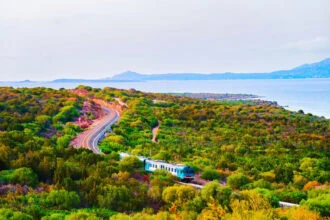
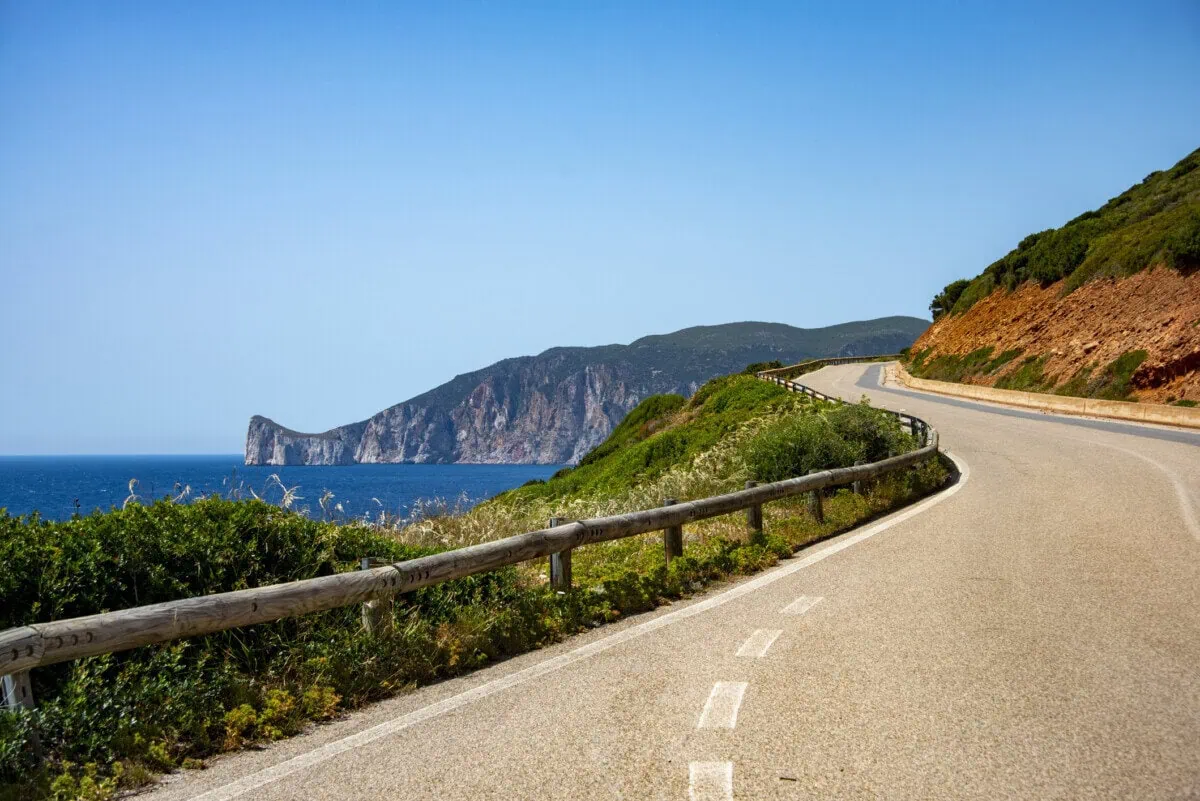
The coast road between Alghero and Bosa is one of the island’s most scenic drives, a narrow, winding stretch clinging to cliffs above the sea, best driven slowly with plenty of stops at viewpoints.
This road is not for nervous drivers: expect tight hairpin bends, minimal barriers in places, and the occasional oncoming tour coach taking more than its share of the lane.
Bosa’s hilltop Malaspina Castle and colourful riverside houses make for an easy half-day visit, with a handful of good seafood restaurants worth timing your arrival around lunch for.
Travellers short on time can skip Bosa without missing the trip’s essential highlights, since the town, while charming, is more of a bonus stop than a must-see compared with Alghero or the Costa Smeralda.
Best if you can move a day either way. Shows how the fare to Sardinia changes across the month.
Compare flightsBest if you want maps and messaging working the moment you switch your phone on.
See eSIM plansBest after a long flight or a late landing. Price agreed before you travel, and no taxi queue.
Check transfersStintino and La Pelosa Beach
North of Alghero, the drive to Stintino takes roughly 1-1.5 hours and leads to what many consider Sardinia’s single best beach: La Pelosa, with Caribbean-blue shallows and a backdrop of a Spanish watchtower on a nearby islet.
La Pelosa is so popular in summer that access is now limited and ticketed during peak months, with a capped number of daily visitors and paid parking some distance from the sand, so booking ahead online is worthwhile.
Arriving early, ideally before 9am in July and August, is the only reliable way to find parking close to the beach and beat both the crowds and the day’s heat.
Nearby Porto Torres, a working port town, is worth a brief stop for its Roman bridge and basilica, and is also a useful ferry gateway if your trip connects onward to mainland Italy or France.
The Asinara National Park, a former prison island visible from Stintino, makes a worthwhile boat excursion for anyone with a spare day, home to wild white donkeys and largely undeveloped coastline.
Along the North Coast to Castelsardo
Continuing east from Stintino, the north coast road passes through Sassari’s outskirts before reaching Castelsardo, a dramatic clifftop fortress town roughly 1-1.5 hours from Stintino.
Castelsardo’s medieval castle, basket-weaving tradition and panoramic viewpoints make it a worthwhile lunch or overnight stop, with the coast road offering some of the trip’s best photo opportunities along the way.
The road quality on this stretch is generally good, though narrow through some of the smaller villages, so allow extra time if you’re travelling in high season when traffic through town centres slows considerably.
From Castelsardo, the route continues toward Santa Teresa Gallura at Sardinia’s northern tip, a good base for anyone wanting to combine the road trip with a ferry crossing to Corsica.
This inland-versus-coast choice repeats itself several times on the northern leg of the loop; the coast roads are almost always more scenic but slower, while the inland shortcuts save time at the cost of sea views.
Santa Teresa Gallura and Palau
Santa Teresa Gallura sits at Sardinia’s northernmost point, roughly 1 hour from Castelsardo, with dramatic granite cliffs, clear water and views across the strait to Corsica on a clear day.
From here, the coast road east to Palau takes about 30 minutes and passes some of the island’s most striking granite rock formations, including the famous Capo d’Orso bear-shaped boulder.
Palau is the departure point for the short ferry to La Maddalena, and driving your rental car onto the ferry is possible if you want to explore the archipelago’s islands by road rather than on foot or by boat tour.
A day trip here pairs well with an overnight in Palau or Santa Teresa Gallura, giving enough time to explore both the mainland coastline and at least the main island of the archipelago.
Capo Testa, just outside Santa Teresa Gallura, has some of Sardinia’s strangest scenery: wind-sculpted granite boulders stacked like giant marbles, best visited close to sunset for the warm light on the rock.
The Costa Smeralda: Porto Cervo and Beyond
From Palau, the drive south to the Costa Smeralda and its flagship village of Porto Cervo takes roughly 30-40 minutes, winding through some of Sardinia’s most expensive real estate and best-known beaches.
This stretch of coast was purpose-built for driving: villages like Baja Sardinia and Cala di Volpe are spread along a network of minor roads leading to individual coves, many with limited or paid parking in high season.
Even without stopping at Porto Cervo’s marina and boutiques, the drive itself is worthwhile for the sea views, especially in the golden light of early evening when the granite cliffs turn a distinctive pink-orange.
Boat trips from Porto Cervo’s marina reach beaches inaccessible by road, a good complement to a driving-based trip if you want to see coves the coast road only glimpses from above.
Fuel and food prices climb noticeably once you enter the Costa Smeralda proper, so it’s worth stocking up on supplies in Olbia or Palau before spending a few days exploring this stretch.
Beach parking here fills quickly by mid-morning in July and August; arriving before 10am or visiting in shoulder season gives a much easier experience.
For a break from the coast, the inland town of Arzachena and its Nuragic archaeological sites, including the well-preserved Coddu Vecchiu tomb, offer an easy half-day contrast to the beach-focused stretches of this route.
Olbia: Closing the Loop by the Harbour
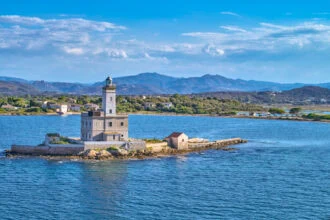
Olbia makes the natural end point for this loop, with its own international airport and ferry connections back to mainland Italy for anyone travelling onward without flying.
The town itself is compact and easily explored on foot in an afternoon before returning your rental car, with archaeological sites and a lively harbour front worth an hour or two.
Full details on Olbia’s sights, boat trips and onward travel are in our Things to Do in Olbia guide.
If your schedule allows a final relaxed day, the beaches immediately around Olbia and nearby Golfo Aranci make a low-key way to wind down the trip before flying home.
Return your hire car at the airport rather than in town if possible; most agencies charge a drop-off fee for one-way rentals ending somewhere other than where the car was collected, so check terms before booking.
Before handing back the keys, run through the same checklist any rental company expects: refuel to the level stated on your contract, clear personal belongings from the boot and glovebox, and photograph the bodywork so there’s no dispute over scratches picked up on Sardinia’s narrower rural roads. Agencies can be quick to flag pre-existing damage at drop-off, so a few photos taken on your phone are worth the minute they take.
If you have a few spare hours before your flight or ferry, Olbia’s old town rewards a slow wander rather than a straight dash to departures. The Romanesque Basilica di San Simplicio, built from pale granite across the late 11th and early 12th centuries, is one of Sardinia’s oldest churches and sits only a short walk from the harbour. Nearby, the town’s archaeological museum occupies a striking building shaped like a ship at anchor on the small Peddone island, reached by a walkway from the old port, and displays the remains of Roman-era cargo ships recovered from Olbia’s own harbour alongside Phoenician, Punic and Roman finds.
Corso Umberto, Olbia’s main pedestrian street, is a pleasant place for a final Sardinian meal or gelato before departure, lined with everyday cafes and shops rather than the tourist-priced restaurants found around Costa Smeralda. It’s also a sensible spot for last-minute gifts, from bottled Cannonau wine to wedges of Sardinian pecorino, without paying resort mark-ups.
By the time you reach Olbia, you’ll have covered a genuinely varied slice of Sardinia, from rugged interior roads and hidden coves to glamorous coastline and quiet fishing villages that rarely make it into guidebooks. Building in this final, unhurried day rather than rushing straight to the departure gate is a good way to let the trip settle before heading home.
Where to Eat Along the Route
Sardinia’s food scene rewards drivers willing to stop at unassuming roadside agriturismi (farm restaurants), often serving some of the island’s best meals at a fraction of coastal resort prices.
Look out for culurgiones (stuffed pasta parcels), porceddu (spit-roasted suckling pig) and fresh bottarga (cured mullet roe) on menus, especially inland where dishes lean more heavily on shepherd traditions than seafood.
Coastal towns like Alghero and Bosa specialise in seafood, with lobster a local speciality worth splurging on at least once, typically priced by weight and best confirmed before ordering.
Many restaurants in smaller towns close between lunch and dinner service, often from around 3pm to 7:30pm, so plan meal stops around these hours rather than expecting all-day dining outside the main resorts.
Markets in Cagliari, Alghero and Olbia are good places to stock a car picnic for driving days, particularly useful on the stretches through the interior where restaurant options thin out.
Booking ahead is wise for well-known restaurants in Porto Cervo and Alghero’s old town during July and August, when the best tables fill up well before evening service begins.
Best for a short stop where being central matters more than the room. Dorms and private rooms both listed.
See hostelsBest arranged before you fly rather than after. Covers claim handling, plus lounge access on eligible delays.
Explore AirHelp+Best for a day with a bag and nowhere to put it. Find a storage point near where you already are.
View storagePhotography Stops and Viewpoints Worth the Detour
A handful of viewpoints along this route are worth building extra time into your schedule for, even if they add an hour or two to an otherwise straightforward driving day.
The Bastione di Saint Remy in Cagliari offers sweeping views over the city and gulf, best visited in the late afternoon light before the evening crowds arrive for the sunset.
Along the Alghero-Bosa coast road, several unmarked pull-offs offer dramatic cliff-and-sea panoramas; driving slowly and stopping where safe rewards patient photographers with some of the trip’s best shots.
Capo Testa’s granite boulder fields near Santa Teresa Gallura are especially striking at sunset, when the pink granite glows against the strait separating Sardinia from Corsica.
The road into Castelsardo offers a classic postcard view of the clifftop town from below, best captured from the small beach just south of the harbour rather than from within the town itself.
Early morning light along the Costa Smeralda’s coast road, before the day’s traffic and heat build up, gives the clearest views of the coastline’s famous turquoise water and pink granite formations.
Optional Extras If You Have More Time
Beyond the stops already built into this loop, a handful of extra detours reward travellers with a spare day or two, none of which require rearranging the core route described above.
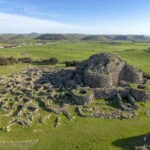
The UNESCO-listed Su Nuraxi di Barumini, Sardinia’s best-preserved nuraghe (a Bronze Age stone tower unique to the island), sits close to the SS131 roughly 45 minutes north of Cagliari, making it an easy detour on the drive toward Oristano or Alghero. Entry is by guided tour only, departing roughly every 30 minutes, with an adult ticket costing around €15 (£13 / $16) covering the site itself, the adjoining Casa Zapata museum and the Giovanni Lilliu Centre.
Off the coast near Olbia, the dramatic limestone island of Tavolara makes a memorable half-day trip for anyone finishing the loop in the northeast. Boats run from Porto San Paolo, a short drive south of Olbia, out to the island’s small beach and its curious claim to fame as one of the world’s smallest self-declared kingdoms.
If the Barbagia and Gulf of Orosei extension described below appeals, it’s worth timing it around a visit to Cala Goloritzé, a UNESCO natural monument near Baunei reached either by boat from Santa Maria Navarrese or a demanding but well-marked hike down from the Golgo plateau. Numbers are capped and a small access permit is required on the walking route, so book ahead in summer rather than turning up on the day.
None of these three need a full extra base to enjoy properly. Barumini works as a lunch-stop detour on a driving day you’re already doing, while Tavolara and Cala Goloritzé each suit a single extra night added to the Olbia or east-coast end of your trip rather than a rebuild of the whole itinerary.
Extending the Loop: East Coast and Barbagia Add-On
Travellers with three weeks or more, or a second trip planned, can extend this route south from Olbia down Sardinia’s dramatic east coast rather than finishing at the airport.
The drive from Olbia to Cala Gonone, gateway to the Gulf of Orosei, takes roughly 2 hours and passes through increasingly mountainous scenery as the road climbs away from the coast.
From Cala Gonone, boat excursions reach beaches like Cala Luna that have no road access at all, making a hire car and a boat trip complementary rather than competing ways to see this coastline.
Inland from here, the mountainous Barbagia region around Nuoro and Orgosolo offers a completely different side of Sardinia: shepherd traditions, dramatic gorges and murals depicting the island’s political history.
Roads through Barbagia are narrower and slower than the coastal route, with fewer fuel stations and less English spoken in smaller villages, so this extension suits confident, well-prepared drivers rather than a first Sardinia visit.
From Nuoro, it’s possible to loop back toward Cagliari via the SS131, closing a much larger circuit than the core coastal route described above if your schedule allows.

How Long Do You Need for This Road Trip?
A comfortable version of this loop takes 10-14 days, allowing two or three nights in each major base and time for detours like Bosa and La Maddalena without feeling rushed.
A tighter 7-day version is workable if you cut the southwest coast detour and Bosa, focusing instead on Cagliari, Alghero, Stintino and the Costa Smeralda as four core stops.
Travellers with 3 weeks or more can extend the loop inland to Barbagia and down the east coast to the Gulf of Orosei, regions that don’t fit naturally into the coastal route described here.
Whatever your timeframe, resist the temptation to move every single night; Sardinia’s best experiences, a long beach afternoon, a slow harbourside dinner, reward a slower pace than the map might suggest.
A rough overnight split for the standard 10-14 day loop: 2 nights Cagliari, 2 nights the southwest coast, 2-3 nights Alghero, 1 night Bosa or Stintino, 2-3 nights Costa Smeralda, and a final night in Olbia before flying out.
Best Time of Year for a Sardinia Road Trip
May, June and September offer the best balance of warm weather, lighter traffic and easier parking than the peak of July and August, when coastal roads and beach car parks fill fast.
July and August bring the warmest sea temperatures and the fullest programme of local festivals, but also the highest prices, busiest roads and toughest competition for parking at popular beaches like La Pelosa.
Spring and early autumn also suit hiking and inland exploring better, since the interior’s summer heat, often exceeding 35°C, makes long drives through Barbagia or the Sulcis-Iglesiente uncomfortable at midday.
Outside April to October, many coastal restaurants, some rental beach umbrellas and a handful of smaller attractions close for the season, so a winter road trip needs more research and lower expectations for beach weather.
Winter and early spring do have their own appeal for drivers: near-empty roads, dramatically lower accommodation prices, and clear conditions for exploring the interior’s hiking trails without summer’s heat.
Renting a Car in Sardinia: What to Know
Book your rental well ahead for summer travel; Sardinia’s limited fleet of hire cars sells out early in peak season, especially at smaller airports like Alghero and Olbia.
A compact or small SUV handles Sardinia’s mix of highway, narrow village streets and occasional unpaved beach access roads better than a larger sedan, and is easier to park in historic town centres.
Check your insurance excess carefully: Sardinia’s narrow roads and stone walls make minor scrapes more common than on the mainland, and excess reduction cover is often worth the extra cost for peace of mind.
Photograph the car for existing damage before driving off, and confirm whether your rate includes unlimited mileage, since a full island loop can easily rack up 800-1,000 km over two weeks.
Automatic transmission cars are less common and pricier to rent in Sardinia than manuals, so book well ahead if you specifically need one, particularly outside the largest Cagliari desks.

Driving Tips: Roads, ZTLs and Local Rules
As in the rest of Italy, driving is on the right-hand side of the road. Sardinia has no toll motorways, but nearly every historic town centre, including Cagliari, Alghero and Castelsardo, has a ZTL restricted traffic zone enforced by camera, with fines issued automatically for unauthorised entry.
Speed limits are typically 50 km/h in towns, dropping to 30 km/h near schools, and 90-110 km/h on the open SS131 highway; speed cameras are common and fines are strictly enforced.
Rural roads can be narrow with sharp bends and minimal lighting after dark; headlights are legally required outside built-up areas even in daylight, and locals drive these roads faster than visitors often expect.
Watch for livestock, particularly sheep, wandering onto rural roads in the interior, and be prepared for the occasional unpaved stretch near beaches; a standard rental car manages these fine at a cautious pace.
GPS apps can be unreliable in remote areas, occasionally routing drivers down unsuitable farm tracks, so cross-check with a paper map or a second navigation app for anywhere off the main routes.
Overtaking on Sardinia’s narrower rural roads takes patience; slower agricultural vehicles are common, and locals often overtake more assertively than visitors expect, so only pass when the road ahead is clearly visible.
Parking Colours and Fuel Basics
Sardinian parking bays follow the same colour code as the rest of Italy: blue lines mean paid parking (typically €1-2 (£1-2 / $1-2) per hour), white lines are free, and yellow lines are reserved for residents or permit holders.
Fuel currently runs around €2 (£2 / $2) per litre for petrol, with diesel usually a little cheaper; self-service pumps are common and generally accept cards, though rural stations sometimes require cash.
Fill up before heading into remote areas like Barbagia or the far southwest coast, since stations can be sparse and some close for a midday break, particularly on Sundays and public holidays.
Many rural stations still operate self-service pumps overnight and on Sundays even when the attached shop is closed, so a card-friendly pump is usually findable even outside normal opening hours.
Toll-free roads and modest fuel prices help offset Sardinia’s higher car rental costs compared with mainland Italy, so total driving costs over a two-week trip are usually reasonable.
Always confirm whether your fuel is diesel (gasolio) or petrol (benzina) before filling up; the wrong fuel is an expensive mistake, and rental cars in Sardinia are a genuine mix of both.
Which Direction Should You Drive the Loop?
The route works equally well in either direction; the main factor is usually which airport your flights use, since starting and ending in different cities avoids unnecessary backtracking.
Flying into Cagliari and out of Olbia, or vice versa, is a common and efficient choice, letting you drive the loop in one direction without returning to your starting point.
If you must fly in and out of the same airport, consider a there-and-back loop with a different inland route on the way home to see fresh scenery rather than retracing the coast road exactly.
One-way rentals between airports typically carry a drop-off fee, so weigh that cost against the time saved by not looping back to your starting city.
Some travellers also choose to start and end in Alghero, treating it as the loop’s midpoint rather than an endpoint, particularly if budget flights make that airport the most convenient option.

Is a Sardinia Road Trip Worth It?
For most visitors, yes. A hire car unlocks beaches, viewpoints and villages that public transport simply cannot reach, and the freedom to stop wherever the coastline demands it is much of Sardinia’s appeal.
The trade-off is pace: driving this route properly takes longer than a fly-and-flop holiday, and days involving winding coastal roads can be tiring, particularly the Alghero-Bosa stretch.
Rental costs and fuel add up too, though they’re usually still lower overall than a comparable number of private transfers or organised day tours covering the same ground.
Travellers who prefer to settle into one or two bases without much driving may be better served by our Getting Around Sardinia Without a Car guide, which covers the same core cities without the logistics of a hire car.
For everyone else, especially those chasing empty beaches, dramatic drives and villages well off the tourist trail, the road trip is very much worth the extra planning.
Families with young children, travellers prone to motion sickness on winding roads, or anyone visiting for under a week may get more value from choosing one or two bases and exploring locally rather than attempting the full loop.
A hybrid approach also works well: fly into Cagliari or Olbia, base yourself in one city for most of the trip, and add a short 3-4 day rental just for the sections of coastline public transport can’t reach.
What Does a Sardinia Road Trip Cost?
Budgeting for a driving holiday here comes down to four main costs: car rental, fuel, accommodation and food, none of which are as expensive as mainland Italy’s most touristy regions.
A compact rental car typically costs €250-450 (£218-392 / $272-491) for a two-week high-season booking, more if you need an automatic or book at short notice during peak summer weeks.
Fuel for a full 800-1,000 km loop generally runs to €110-150 (£96-130 / $120-164) in total, depending on how many detours you add and current pump prices at the time of your trip.
Accommodation varies enormously by season and location: expect €70-120 (£61-104 / $76-131) a night for a comfortable mid-range hotel outside the Costa Smeralda, rising well beyond that for July and August stays in Porto Cervo itself.
Meals are reasonable outside the most exclusive resort restaurants, with a good trattoria dinner typically costing €20-35 (£17-30 / $22-38) per person including wine, noticeably less at inland agriturismi.
All told, a two-week road trip for two people, excluding flights, typically lands somewhere between €1,500 (£1,305 / $1,635) and €2,500 (£2,175 / $2,725), depending heavily on how much of the Costa Smeralda’s premium pricing you factor in.
Packing and Practical Tips for the Drive
Bring a physical driving licence alongside any digital copy, and check whether your home licence requires an International Driving Permit for hire in Italy, since requirements vary by nationality.
Pack a reusable water bottle and snacks for long stretches through the interior, where services can be sparse, and keep a printed copy of key addresses in case of patchy mobile signal.
A phone mount and a portable charger make a real difference on long driving days, since GPS navigation drains battery quickly, especially with the screen on for extended periods.
Sun protection matters even inside the car; Sardinia’s summer sun is intense, and long stretches of the coast road offer little shade at rest stops.
A small first aid kit and a spare set of car keys, if your rental company offers one, are worth requesting before a long remote drive through the interior or south coast.
Finally, keep some cash on hand for rural fuel stations, small-town parking meters and the odd toll-free ferry crossing where card machines aren’t always reliable.
A cool box for the car is a small investment that pays off on hot driving days, keeping drinks and any beach picnic supplies fresh between stops.

Useful Apps for a Sardinia Road Trip
Google Maps and Waze both work well for the coastal towns covered in this guide, with Waze’s live traffic and speed camera alerts particularly useful around the ZTL zones in Alghero, Cagliari and Castelsardo. Both apps rely on a data connection, though, which becomes the real issue once you head inland.
Mobile signal genuinely drops out across stretches of the Sulcis-Iglesiente coast, the Alghero-Bosa road and especially the mountainous Barbagia interior. Download an offline map of Sardinia within Google Maps before setting off, or use a dedicated offline app such as Maps.me or OsmAnd as a backup for anywhere you might lose coverage.
The region’s own official Sardinia app, published by the Regione Autonoma della Sardegna behind the SardegnaTurismo website, is worth installing before you go, with geo-referenced points of interest, suggested itineraries and event listings covering the whole island.
For parking, EasyPark now covers paid bays in Cagliari (branded locally as Parkar) and a growing number of other Sardinian towns, letting you pay and top up from your phone rather than hunting for coins at a machine. Confirm it covers your specific town before relying on it, since coverage varies and a pay-and-display ticket from the machine is always a safe fallback.
A translation app such as Google Translate, with its offline Italian pack downloaded in advance, smooths over menu-reading and conversations with rental desk staff or agriturismo owners in smaller towns where English is less common.
Finally, it’s worth knowing about ACI (Automobile Club d’Italia), Italy’s national roadside assistance body, before setting off on a self-drive trip. Its ACI Space app is useful to have installed in case of a mechanical problem on a remote stretch of road, alongside whatever emergency contact number your rental company provides in the paperwork.

Rupert’s Handy Travel Tips
A few things I’ve picked up after plenty of miles on Sardinia’s coast roads.
- Book La Pelosa ahead: This beach now caps daily visitor numbers in summer, so reserve your access slot online before setting off.
- Avoid ZTL fines: Park outside the walls in Alghero, Cagliari and Castelsardo rather than risking a camera-issued fine driving into the old town.
- Fill up before remote stretches: Fuel stations thin out in Barbagia and the southwest coast, so top up in larger towns.
- Drive the Alghero-Bosa road in daylight: The hairpin bends and cliff drops are best tackled when you can see clearly and enjoy the views.
Want to meet the reindeer behind our travel tips? Find out more in our page Who is Rupert?.




Frequently Asked Questions
How many days do you need for a Sardinia road trip?
A comfortable loop takes 10-14 days, though a tighter version covering Cagliari, Alghero, Stintino and the Costa Smeralda is workable in 7 days.
Are there tolls on Sardinia’s roads?
No. Sardinia has no toll motorways, which keeps driving costs down compared with mainland Italy.
What is the best time of year to drive around Sardinia?
May, June and September offer warm weather with lighter traffic and easier parking than the peak of July and August.
Do I need to book La Pelosa beach in advance?
Yes, in peak season. Access is capped and ticketed during the busiest summer months, so reserve online ahead of your visit.
Is the Alghero to Bosa coast road difficult to drive?
It’s narrow and winding with tight hairpin bends, manageable for confident drivers at a slow pace, but not ideal for anyone nervous about cliffside roads.
Can I take a rental car on the ferry to La Maddalena?
Yes, the Palau-La Maddalena ferry carries vehicles, making it easy to explore the archipelago’s main island by car.
Should I fly into Cagliari or Olbia to start this road trip?
Either works well; flying into one and out of the other avoids backtracking and lets you drive the full loop in one direction.
How much does a two-week Sardinia road trip cost?
Excluding flights, budget roughly €1,500-2,500 (£1,305-2,175 / $1,635-2,725) for two people, covering car rental, fuel, mid-range accommodation and meals, more if you spend several nights in the Costa Smeralda.
Is it worth extending the trip to the east coast and Barbagia?
Yes, if you have three weeks or more. The Gulf of Orosei and Barbagia’s mountain villages offer a completely different side of Sardinia to the coastal loop.
Further Reading
For a deeper look at the three main stops on this route, see Things to Do in Cagliari, Things to Do in Alghero and Things to Do in Olbia, each covering sights and practicalities beyond the driving logistics discussed here.
If you’d prefer not to drive at all, our Getting Around Sardinia Without a Car guide covers the same core cities using trains, buses and ferries instead.
Whichever way you choose to explore, comparing both guides before booking flights and accommodation will help you decide whether a hire car suits your itinerary and travel style.
Many drivers also combine this loop with a short detour to Palau, worth pairing with a look at ferry timetables if La Maddalena or a Corsica crossing might extend the trip further.