Reviewed by our editorial team Published
Discover the Best of Palau, Sardinia
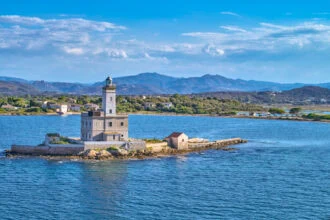
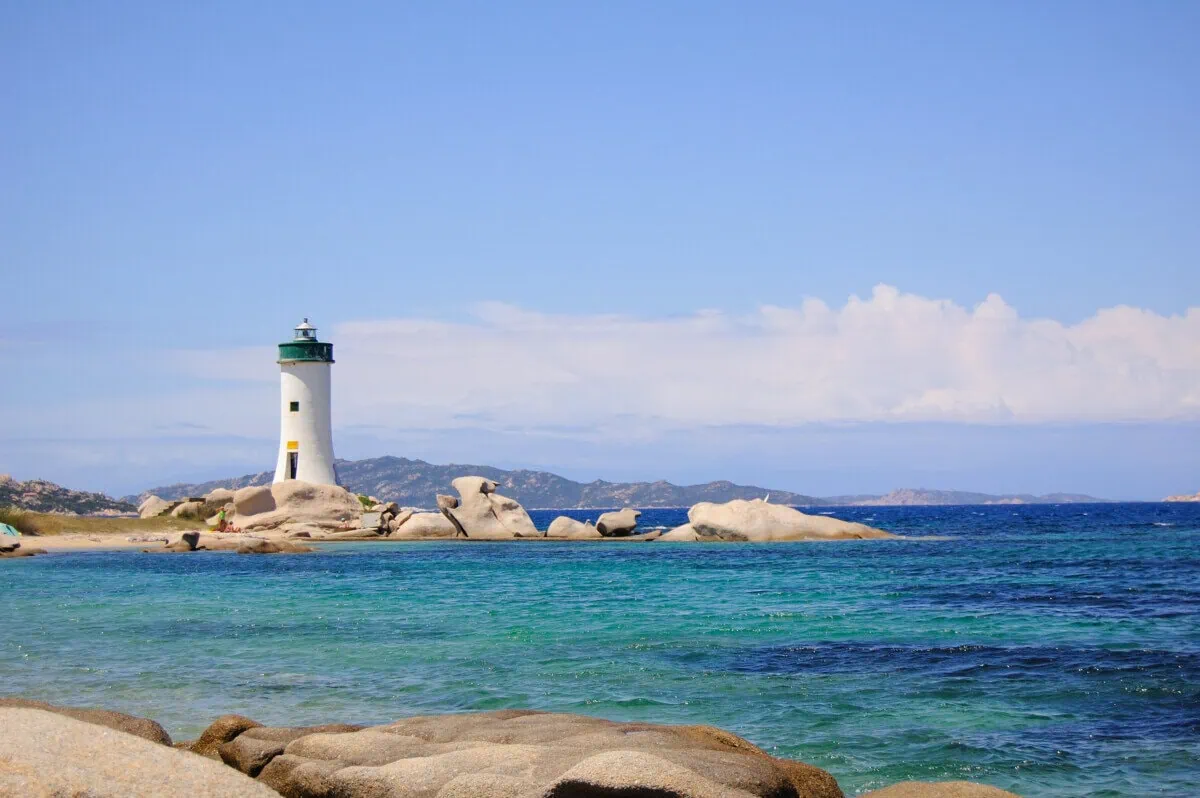
Tucked into Sardinia’s northeastern corner, Palau is a small resort town that punches well above its size, mainly because it sits directly opposite the La Maddalena Archipelago, a scatter of granite islands with some of the clearest water in the Mediterranean.
Most visitors use Palau as a base for a day, or several, exploring that archipelago by ferry or boat tour, but the town and its immediate coastline hold plenty to justify a stay in their own right.
Sandy beaches like La Sciumara sit alongside wind-sculpted granite at Roccia dell’Orso, while old hilltop fortifications, easy hiking trails and a relaxed, low-key waterfront round out a destination that rewards a slower pace over a rushed checklist.
Palau sits within easy reach of the wider Costa Smeralda, Sardinia’s most famous stretch of glamorous coastline, though it retains a far more relaxed, working-town character than its glossier neighbours further south.
This guide covers the beaches, viewpoints, boat trips and archipelago excursions that make Palau worth more than a fleeting overnight stop, along with practical advice on timing and transport.
If you are arriving without a car, our companion guide to the Palau to La Maddalena Ferry covers operators, prices and crossing times in full detail, so we will only touch on the basics here.
An Overview of What Palau Offers
Palau’s appeal comes down to three main strands, and most visitors mix all three during a stay of any length. First, the town’s own beaches and coves, ranging from family-friendly sand at La Sciumara to smaller, quieter bays like Cala Capra and Cala Martinella along the Capo d’Orso peninsula.
Second, a handful of genuinely striking coastal viewpoints and historic sites, chief among them the wind-eroded granite of Roccia dell’Orso and the 18th-century fortress that shares its name, both offering sweeping views across the water.
Third, and for most visitors the real headline, easy access to the La Maddalena Archipelago itself, whether via the short public ferry to La Maddalena town or a full-day boat tour weaving between Caprera, Spargi and Budelli’s famous pink beach.
A fourth, smaller strand worth mentioning is history, from the Bronze Age Li Mizzani tomb to the 18th and 19th-century fortresses guarding the strait, all easily combined with a beach day or archipelago outing.
Beyond these three strands, Palau’s own town centre and waterfront offer a relaxed evening scene of restaurants and gelaterias looking directly across to the islands, a pleasant way to close out a day spent on the water.
A short drive inland also reveals Bronze Age history at the Li Mizzani Giants’ Tomb, a reminder that this coastline was inhabited long before it became a modern gateway to the islands.
Because so much of what makes Palau special lies just offshore, allow enough time in your itinerary for at least one full day dedicated purely to the archipelago, rather than treating it as an afternoon add-on.
Palau also works well as a launchpad for exploring further along the Gallura coastline, with Santa Teresa Gallura and its own beaches and ferry connections to Corsica within an easy half-hour drive.
For divers and snorkellers, the archipelago’s clear water and granite walls add a fourth strand worth building into your plans, whether that means a full certification course or simply a mask and fins from the shore.
Best for a short trip. Compare rooms by neighbourhood, price and guest rating before you book.
Compare hotelsBest for families, or any stay past about four nights. A kitchen and a washing machine start paying for themselves.
Browse rentalsBest for double-checking. Runs the same search across several booking sites so you are not leaving money behind.
Compare pricesLa Sciumara Beach
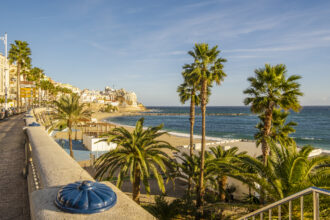
La Sciumara is Palau’s most convenient beach, a short walk or drive from the town centre, with fine golden sand, shallow water that suits families well, and clear views across to La Maddalena island itself.
Facilities here include parking, a beach kiosk and a beach club for those wanting sunbeds, making it an easy default choice if you have not planned further afield for the day.
Sunbed and umbrella hire typically costs around €15-20 per day (£13-17 / $16-22) for a pair, though plenty of free sand remains available if you bring your own setup.
La Sciumara gets busy on weekends throughout the summer, so arriving before mid-morning gives you the best pick of free sand before the crowds build up through the afternoon.
Porto Pollo: Windsurfing and Kitesurfing
Around 10 minutes toward Santa Teresa Gallura, Porto Pollo is a completely different scene, a wide sandy bay that has become one of Sardinia’s premier spots for windsurfing and kitesurfing thanks to reliable cross-shore winds.
Even non-watersports visitors enjoy Porto Pollo for its size and the entertainment of watching kites and sails criss-crossing the bay, with beach clubs and parking available for a straightforward beach day.
Several windsurfing and kitesurfing schools operate directly from Porto Pollo, offering equipment rental and lessons for beginners keen to try the sport for the first time in reliable conditions.
The bay’s reliable cross-shore breeze picks up most reliably in the afternoon, so morning visitors often find calmer water better suited to swimming than to watersports lessons.
Sunbed hire is also available here for around €15-20 per day (£13-17 / $16-22), and like La Sciumara, Porto Pollo gets busy on summer weekends, so arrive early for the best spot on the sand.
Costa Serena: Palau’s Uncrowded Alternative to Porto Pollo
Nearby Costa Serena, also roughly 10 minutes from town in the same direction as Porto Pollo, offers a quieter, medium-grain sand beach with minimal facilities, a good option if Porto Pollo feels too busy or too windy for swimming.
Unlike its watersports-focused neighbour, Costa Serena sees far fewer visitors even in August, making it a reliable choice for travellers who want a straightforward swim without the crowds or the kite traffic offshore.
There is no beach club or sunbed hire here, so bring your own shade, towels and refreshments, along with a beach umbrella if you plan to stay through the middle of the day.
Parking is informal along the approach road rather than a dedicated car park, but space is rarely an issue given how few visitors make the short detour compared with Porto Pollo next door.
Between La Sciumara, Porto Pollo and Costa Serena, most visitors can cover a full range of beach moods, lively and family-friendly, sporty, or simply quiet, all within a 15-minute drive of central Palau.

Cala di Trana: A Snorkeller’s Roadside Secret
For something smaller and less developed, Cala di Trana, roughly 10 minutes toward Porto Pollo, offers excellent snorkelling in emerald water, with free access but no facilities, so bring your own shade and refreshments.
The cove sits within a short walk of an informal pull-off right off the road toward Porto Pollo, with rocky margins giving way to clear, sheltered water that suits a first snorkel of the day well.
Because the bay is small and largely undeveloped, it rarely draws the volume of visitors the region’s bigger beaches see, even during the busiest weeks of August.
The short scramble down passes through typical Gallura scrubland, thick with juniper and wild myrtle, and takes only a few minutes from the roadside pull-off, making Cala di Trana one of the more accessible of Palau’s smaller coves despite its undeveloped feel.
Snorkellers find plenty to see close to the rocky margins, where the seabed drops away quickly enough to reveal small fish and patches of seagrass without needing to swim far from the entry point. Visiting in the morning, before the light wind that often picks up along this stretch in the afternoon, generally gives the calmest and clearest water for a swim.
Cala Martinella: Palau’s Quietest Swim Spot
Cala Martinella, about 15 minutes from town, is smaller still and genuinely secluded, with a mix of white sand and pebbles and no services whatsoever, ideal for travellers prioritising peace and quiet over convenience.
The short walk down to Cala Martinella passes through low Mediterranean scrub, and the cove’s small size means it rarely holds more than a handful of other visitors, even in peak season.
Because so few visitors make the walk down, Cala Martinella suits travellers who prioritise a quiet swim over convenience, though the trade-off is arriving prepared with your own food, water and shade.
The path down follows a narrow, unmarked trail through low maquis scrub, steep in a few short sections but manageable in ordinary footwear, and the reward is a tiny, sheltered bay that rarely appears in guidebooks despite sitting only a short drive from central Palau.
The mix of pale sand and smooth pebbles underfoot means the cove suits confident swimmers happy to wade in over an uneven seabed rather than families with very young children, and the absence of any shade structures makes a beach umbrella brought from town a sensible addition to the day.
Cala Capra: Rock Scramble to a Hidden Viewpoint
On the Capo d’Orso peninsula, roughly 12 minutes from town, Cala Capra combines sand and rock with clear water good for snorkelling, again with no facilities, so pack accordingly.
The rocky headland framing Cala Capra also offers a short scramble up to a low viewpoint, a nice bonus for anyone who enjoys combining a swim with a bit of light exploring.
The cove’s mix of sand and rock means footwear that can handle both surfaces is worth packing, and the short scramble up to the viewpoint rewards those willing to spend a few extra minutes exploring beyond the water’s edge.
The approach follows a rough track off the main Capo d’Orso road, passable in a standard hire car with a little care, before a short final stretch on foot down to the water. The setting feels noticeably wilder than Palau’s main beaches, with granite boulders tumbling almost directly into the sea.
Snorkellers exploring the rocky edges of Cala Capra often spot small shoals of fish sheltering among the boulders, and the clear water here rewards a slow, unhurried swim rather than a quick dip. Combined with the short scramble to the viewpoint above, it makes a satisfying stop of an hour or two rather than a fleeting visit.
Best for long or awkward journeys. Builds one itinerary out of separate flights.
View flightsBest for short trips. Install the eSIM at home and arrive with working data, no shop queue.
Browse eSIMsBest after a long flight or a late landing. Price agreed before you travel, and no taxi queue.
Check transfersVisiting the Hidden Coves: Practical Tips
These coves reward visitors with a hire car or scooter, since none are directly served by public transport and parking is informal, often just a gravel pull-off along the approach road.
Because none of the three have facilities, combine a visit with a packed lunch and plenty of water, particularly in the height of summer when shade is limited along this stretch of coastline.
The rocky approach paths to some of these coves are uneven underfoot, so sturdy sandals rather than flip-flops make the short walk down considerably more comfortable, especially carrying beach gear.
These smaller coves are best visited outside the peak midday hours in August, both for comfort and because the limited informal parking fills quickly once the sun is at its highest.
Mobile signal can be patchy around some of these more remote coves, so download offline maps or directions in advance rather than relying on data once you leave the main road.
A rental scooter is a popular way to reach these coves independently, cheaper than a car and easy to park at the informal pull-offs along the approach roads.
None of these three coves have lifeguard supervision, so confident swimmers only, and keep an eye on conditions, particularly on windier days when the open water can turn choppier than it looks.
Roccia dell’Orso: The Bear Rock Viewpoint
Palau’s most photographed landmark is Roccia dell’Orso, the Bear Rock, a dramatic granite formation roughly 5 km from town that has been sculpted by wind and salt spray into an unmistakable bear-like silhouette.
A panoramic trail leads up to the rock itself, including a steep uphill final stretch, rewarded at the top with sweeping views across the strait to the entire La Maddalena Archipelago on a clear day.
Entry costs around €3 (£3 / $4) per adult, with children under 10 admitted free, and between November and March advance booking via WhatsApp is required since the site operates on reduced hours outside the main season.
Sturdy footwear is genuinely worth packing here, since the granite surface underfoot is uneven in places and can be slippery when damp, particularly in the early morning or after rain.
The formation’s resemblance to a bear was noted as far back as ancient Roman times, when sailors reportedly used it as a navigational landmark along this stretch of the Strait of Bonifacio.
A small amount of car parking is available near the entrance, though it fills up on busy summer days, so arriving earlier in the day helps secure a space close by.
Sunset is a particularly rewarding time to visit, when the low light picks out the texture of the wind-carved granite and the archipelago beyond takes on a golden glow.
Visits typically take 30-45 minutes including the walk up and time to take photographs, though it is easy to linger longer if the views and light are cooperating.
A small café and gift shop near the entrance sells drinks and snacks, a welcome stop after the uphill walk, particularly in the height of a hot Sardinian summer.
Capo d’Orso Fortress and Coastal Hikes
Close to the Bear Rock, the Capo d’Orso Fortress, an 18th-century military structure, forms part of the same hiking trail and adds a layer of military history to what is otherwise primarily a scenic walk.
The fortress was built to defend this strategic stretch of coast overlooking the Strait of Bonifacio, and its position alone explains why: the views up and down the coastline are some of the best around Palau.
A separate but similarly themed walk, the Talmone Battery Hike, departs from Costa Serena beach and takes roughly 30-45 minutes each way at an easy-to-moderate difficulty, passing early 20th-century ruins along the way.
Both walks share a similar reward: unobstructed views over the archipelago from abandoned military positions that once formed part of Italy’s coastal defences during the World Wars.
Bring plenty of water and sun protection for either hike, since much of the trail runs exposed along open granite with little tree cover to offer shade in the warmer months.
Combine the Capo d’Orso walk with the Bear Rock for a single half-day outing, since the two sit along the same peninsula and share a similar trailhead area.
Early morning starts are worth it here in summer, both to avoid the strongest midday heat on exposed granite and to catch softer light for photographs across the strait toward the islands.
Neither Capo d’Orso nor the Talmone Battery charges an entry fee, unlike Roccia dell’Orso, making this pairing a good budget-friendly alternative if you have already visited the Bear Rock.
Fortress of Monte Altura
Built between 1887 and 1889, the Fortress of Monte Altura was constructed specifically to defend the La Maddalena Archipelago, and its thick granite walls and underground tunnels remain remarkably intact today.
Guided tours run approximately 45 minutes and explore both the fortifications above ground and the tunnel network beneath, giving a genuinely atmospheric sense of the site’s original military purpose.
Combined tickets covering Monte Altura alongside other historic sites in the area are usually available, worth asking about if you plan to visit more than one fortification during your stay.
The elevated position offers yet another excellent vantage point over the strait and islands, arguably rivalling the more famous view from Roccia dell’Orso, but with far fewer visitors sharing it.
The tunnels beneath the fortress remain at a cool, stable temperature year-round, a welcome contrast to the exposed granite trails elsewhere around Palau in the height of summer.
This makes a good alternative or addition for visitors who enjoy military history alongside scenery, and pairs naturally with a morning or afternoon that also includes the Bear Rock trail.
Check current opening days and tour times before visiting, since Monte Altura sometimes operates on a more limited schedule outside the main summer season.
Monte Altura forms part of a broader network of coastal fortifications built across northern Sardinia in the late 19th century, most of which are far less accessible or well-preserved than this particular example.
Wear comfortable, closed-toe shoes for the tunnel sections, since the underground passages have uneven stone flooring and limited lighting in places despite the site’s overall good condition.
Li Mizzani Giants’ Tomb
History around Palau goes back much further than its military fortresses. The Li Mizzani Giants’ Tomb is a Bronze Age Nuragic burial site, easily accessible from town and free to visit.
Its centrepiece is a 3-metre monolithic column, part of the distinctive “tomba dei giganti” style of collective burial monument found across Sardinia, unique to the island’s prehistoric Nuragic civilisation.
Unlike the more famous archaeological sites near Alghero or Cagliari, Li Mizzani rarely sees crowds, making it a peaceful stop for anyone with even a passing interest in Sardinia’s ancient history.
There is little in the way of signage or interpretation on-site, so a little background reading beforehand helps make sense of what you are looking at once you arrive.
These giants’ tombs are thought to have served as collective burial sites for extended family groups, used and reused across multiple generations during the Nuragic Bronze Age period.
The surrounding countryside is quiet farmland, so bring your own water, since there are no shops or refreshment stands anywhere near the site itself.
Allow around 20-30 minutes here, easily combined with a beach day or the Roccia dell’Orso hike given its central, easily reached location near town.
Similar giants’ tombs are scattered across the wider Gallura region, and Li Mizzani makes a manageable introduction if a longer archaeological detour does not fit your itinerary.
Combine a stop here with the nearby Fortress of Monte Altura for a half-day that spans several thousand years of history, from Bronze Age burial customs to 19th-century coastal defence.
The La Maddalena Archipelago: Palau’s Gateway
The single biggest reason most people visit Palau is what lies just offshore: the La Maddalena Archipelago National Park, a protected cluster of over 60 islands and islets with some of the clearest water in the Mediterranean.
The main inhabited islands are La Maddalena itself, home to the archipelago’s only real town, and Caprera, connected to La Maddalena by a short bridge and known for its wilder, more forested landscape.
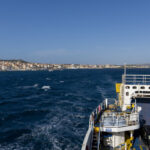
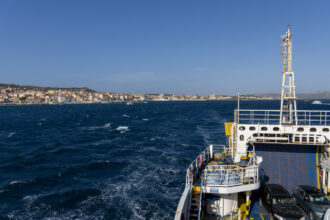
A regular passenger and car ferry connects Palau harbour directly to La Maddalena town, crossing roughly 1.9 nautical miles in around 15-20 minutes, with departures roughly every 15-30 minutes during peak summer.
Foot passenger fares start from around €4-6 (£3-5 / $4-7) one way depending on operator, while taking a car across typically costs from around €25-35 (£22-30 / $27-38), useful if you want to explore Caprera’s beaches independently.
Two ferry operators, Maddalena Lines and Delcomar, run this route, with combined frequency meaning a crossing is rarely more than a short wait away during the main season.
Full details on operators, schedules and booking are covered in our dedicated Palau to La Maddalena Ferry guide, worth reading in full if this crossing forms part of your plans.
The archipelago’s national park status means several islands and coves carry access restrictions or guide requirements, so it is worth checking current rules for any specific spot before planning a visit.
A dedicated national park visitor centre on La Maddalena provides up-to-date information on current access rules, protected zones and any seasonal restrictions affecting specific coves or landing sites, all of which are also published on the Parco Nazionale dell’Arcipelago di La Maddalena‘s own official website.
Best for short city stops where being central matters more than the room. Dorms and private rooms both listed.
See hostelsBest if you have ever given up on a claim. AirHelp checks whether the flight qualifies and pursues it for you.
See the benefitsBest for the gap between checking out and your train. Drop bags at a shop or hotel nearby and carry on.
Store your bagsBoat Trips Through the Archipelago
Beyond the public ferry, boat tours departing directly from Palau harbour offer a far more comprehensive way to see the archipelago’s uninhabited islands, most of which are otherwise completely inaccessible.
Options range from budget-friendly larger boats carrying dozens of passengers to smaller wooden boats or upscale sailing tours with lunch included, typically running as half-day or full-day excursions.
A typical full-day itinerary includes multiple swimming stops, often at coves like Cala Soraya and Cala Granara on Spargi island, plus a slow pass by Budelli to view its famous pink-hued sand from the water.
Half-day tours from Palau are also widely available for travellers short on time, typically covering two or three of the closer islands rather than the full archipelago loop.
Most operators supply snorkelling equipment as standard on swimming stops, though bringing your own mask if you have a preferred fit is always a sensible backup for the day.
Booking a day or two ahead is sensible in July and August, when the more popular sailing and catamaran tours can sell out, particularly those including lunch.
Prices for a full-day tour typically range from around €35-90 per person (£31-79 / $39-98), depending on boat type and whether lunch and drinks are included in the package.
Smaller RIB tours, seating perhaps eight to twelve passengers, offer a faster and more flexible alternative to the larger day boats, useful if you would rather cover more ground and spend less time queuing for swimming stops.
Diving and Snorkelling Around the Archipelago
Beyond boat tours, the La Maddalena Archipelago is a genuinely serious diving destination, with granite walls, seagrass meadows and some of the clearest visibility anywhere in Sardinia drawing divers of all experience levels.
Several dive centres operate out of Palau and La Maddalena town, offering guided dives, equipment rental and full PADI certification courses for complete beginners as well as refresher dives for those returning after a break.
Wreck enthusiasts should ask about dives to the Second World War-era wrecks scattered around the archipelago, a specialist draw for certified divers looking for something beyond the usual reef and rock formations.
Snorkellers do not need a boat tour or dive centre at all to enjoy the water here: shallow coves like Cala Corsara on Spargi and the rocky margins of Cala Capra offer excellent visibility straight from the shore.
Expect to see seagrass meadows, shoals of small fish and, with a bit of luck, larger species like barracuda or grouper around the deeper granite walls further from the coast.
Water temperatures peak in August at a comfortable swimming range, though a light wetsuit is worth considering for longer snorkelling sessions in June or September when the sea is still cool.
Most dive centres in Palau and La Maddalena offer equipment rental by the day, so it is entirely possible to arrange snorkelling gear or a guided dive with little advance planning outside the busiest August weeks.
Budelli and the Pink Beach
Budelli’s Spiaggia Rosa, the famous pink beach, gets its unusual colour from millennia of accumulated coral fragments, but it has been closed to visitors since the 1990s to protect the fragile sand.
Boat tours still pass close enough for a good view and photographs from offshore, so it remains worth including on an archipelago itinerary even though landing is not permitted.
Most operators schedule a slow pass along Budelli’s coastline as part of a wider day exploring the archipelago, timing it so the pink-tinted sand is clearly visible without needing to anchor or land.
The closure has been in place for over three decades with no sign of lifting, so admiring the view from the water remains the only way most visitors will ever see this particular beach.

Spargi Island: Cala Corsara’s Turquoise Anchorage
Spargi, one of the archipelago’s uninhabited islands, offers genuinely spectacular swimming at coves like Cala Corsara, with wild granite coastline and some of the clearest water in the whole park.
The island has no permanent settlement or facilities, so a visit here means arriving by boat tour or private charter, with most itineraries building in an hour or more at anchor for swimming.
Spargi’s coastline alternates between smooth granite slabs and small sandy pockets, giving boat tours several natural stopping points depending on wind direction and how busy any particular cove is that day.
Most day tours anchor at Cala Corsara for the best part of an hour, giving time to swim across the cove’s shallow, brilliantly clear water before continuing on to other stops around the archipelago. The granite here has been smoothed and rounded by centuries of wind and sea, forming natural ledges that make easy entry and exit points for swimmers.
A handful of smaller, quieter coves sit further around the island’s coastline, occasionally visited by smaller RIB tours willing to venture beyond the main anchorage. Bring your own snorkelling mask if you have a preferred fit, since Spargi’s underwater visibility is among the best in the whole park.
Caprera Island: Garibaldi’s Home and Its Hidden Beaches
On Caprera, reachable by car via the bridge from La Maddalena, Cala Coticcio, nicknamed “Little Tahiti”, requires an authorised guide and a national park access fee of around €3 (£3 / $4) per person as of recent regulation changes, with the guide’s own charge arranged separately and varying by operator.
Caprera is also home to the former residence of Giuseppe Garibaldi, the Italian unification hero, now preserved as a museum and worth a stop for anyone interested in Italian history.
Other Caprera beaches, including Cala Napoletana and Cala Brigantina, remain more freely accessible and are well worth the detour if you have brought a car across on the ferry.
Reaching Cala Coticcio independently means driving across the bridge from La Maddalena, then following a marked but occasionally steep trail down through pine woodland to the cove itself, a walk of around 30-45 minutes each way that rewards the effort with three linked pools of strikingly turquoise water.
Booking the required guide and park permit ahead of your visit is essential in peak season, since numbers are capped and popular dates sell out; several local operators in Palau and La Maddalena town can arrange both together as a single package.
La Maddalena Town: Piazza Garibaldi and the Harbour
La Maddalena town itself, on the largest inhabited island, has its own small historic centre with restaurants and shops, worth a wander if your ferry schedule allows a couple of spare hours.
Bicycles and scooters are available to hire on La Maddalena itself, a good way to cover more ground across the island in a single day if you have arrived on foot via the passenger ferry.
A circular scooter route around La Maddalena and Caprera takes roughly half a day at a relaxed pace, stopping at several beaches and viewpoints most boat tours do not cover.
The town’s compact grid of streets around Piazza Garibaldi holds most of the shops, gelaterias and harbourside restaurants, an easy focus for an hour or two before or after a boat trip. A handful of small boutiques sell local ceramics and jewellery inspired by the archipelago’s granite landscape.
Cars are not essential for exploring the town itself, though a hire car or scooter opens up the rest of the island’s quieter beaches and the drive across to Caprera, making La Maddalena worth treating as a half-day destination in its own right rather than just a ferry stopover.

Palau Town, Waterfront and Ferry Port
Palau’s town centre is compact and unpretentious, built primarily to serve the steady flow of visitors passing through to the archipelago rather than as a destination of grand historic sights in its own right.
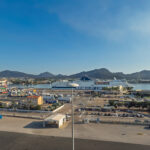
The waterfront promenade near the ferry port is the natural social hub, lined with restaurants and gelaterias that fill their outdoor tables each evening as boats return from the islands.
Seafood dominates local menus, unsurprisingly given the setting, with simply grilled fish and shellfish dishes the standard order at most harbourside restaurants.
The town also serves as a practical base with supermarkets, pharmacies and car hire offices, useful if you need to stock up before a day on the water or pick up gear for the beaches nearby.
A small weekly market operates in town during the summer season, a good spot to pick up local produce, cheese and craft items if your visit coincides with market day.
Evenings here are relaxed rather than lively, with most visitors happy to wind down after a day of sun and swimming, making Palau a comfortable rather than a party-focused base.
For nightlife, nearby Santa Teresa Gallura and the wider Costa Smeralda offer livelier options, easily reached by car for an evening out if Palau’s quieter pace does not fully satisfy.
Several gelaterias and cafes along the waterfront stay open late into the evening during peak summer, a pleasant way to watch the sun set behind the archipelago after dinner.
A small tourist information point near the ferry port can help with maps, boat tour bookings and current ferry timetables if you have not pre-booked everything in advance.
Which Palau Experience Is Right for You?
With a single day, prioritise the archipelago: catch an early ferry or boat tour to La Maddalena and Caprera, or book a half-day boat trip, then finish with dinner on Palau’s waterfront.
With two to three days, add the Roccia dell’Orso hike, a beach day at La Sciumara or Porto Pollo, and a full-day boat tour covering Spargi and the pink beach viewpoint.
Families with young children generally do best at La Sciumara or Porto Pollo for beach time, saving the longer boat tours for when children are old enough to enjoy a full day at sea.
Watersports enthusiasts should prioritise Porto Pollo, one of Sardinia’s best-known windsurfing and kitesurfing spots, with several schools and rental outfits operating directly on the beach.
Travellers with a hire car get considerably more out of Palau, since it unlocks the quieter coves along Capo d’Orso and allows bringing a vehicle across to Caprera via the archipelago ferry.
History enthusiasts should build in time for both Monte Altura and the Capo d’Orso Fortress, pairing military history with some of the best coastal views in the whole area.
Divers and confident snorkellers should factor in at least one dedicated day with a local dive centre, since the archipelago’s clearest water and most interesting formations lie beyond what a standard boat tour covers.
Anyone short on time should still make room for at least the Palau to La Maddalena ferry crossing, even a couple of hours on the main island gives a genuine taste of the archipelago.
Practical Tips for Visiting Palau
The best time to visit is late May through September, when the sea is warm enough for swimming and boat tours run to their full summer schedule.
Outside this window, particularly November to March, some attractions including Roccia dell’Orso require advance booking via WhatsApp, so plan ahead if visiting off-season.
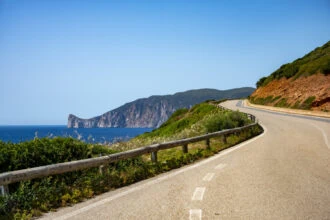
A hire car is genuinely useful for beach hopping and reaching the quieter coves, though Palau’s compact centre and ferry port are easily walkable without one.
The nearest airport is Olbia, roughly 50 minutes away by car, making Palau a realistic base even for a relatively short Sardinian break.
Sun protection matters more here than in most parts of Sardinia, given how much time visitors spend on open granite viewpoints and exposed boat decks with little natural shade.
If a boat tour or the archipelago is central to your plans, allow 5-7 nights if possible, since rushing the crossing and islands into a single day rarely does them justice.
Book accommodation well in advance for July and August, when Palau’s limited stock of hotels and apartments fills quickly given its popularity as a gateway to the islands.
Pack a mix of swimwear and layers, since sea breezes on exposed viewpoints and boat decks can feel noticeably cooler than the town centre, even on otherwise warm summer days.

Reaching Palau by Air, Road and Ferry
Most visitors reach Palau via Olbia Airport Transfers, the closest air gateway, with the drive taking approximately 50 minutes along well-maintained roads through the Gallura countryside.
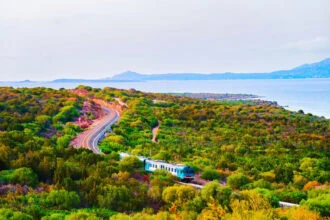
Car hire at Olbia Airport is straightforward and generally the most practical option, since Palau’s beaches and coves are spread out enough to make a car genuinely useful during your stay.
For those without a car, regional buses connect Olbia to Palau, though schedules are considerably less frequent than the drive time might suggest, so check timetables carefully in advance.
Alghero Airport, on the opposite side of the island, is a considerably longer drive of several hours, making it a less practical choice unless it forms part of a wider road trip itinerary.
Parking within Palau itself is generally straightforward outside peak August weekends, with several free and paid options within easy walking distance of the ferry port and town centre.
If travelling from further afield, Cagliari Airport in the south also connects to Palau by road, though the journey takes considerably longer than the drive from Olbia and suits a wider road trip better than a short break.
Travellers arriving by ferry to Olbia port from mainland Italy can also drive directly to Palau, a useful option for anyone bringing their own car across on an overnight crossing.
Where to Stay in Palau
Most visitors base themselves in Palau town, an easy walk from the ferry port and the harbourfront restaurants covered earlier in this guide. It suits anyone without a car, keeping the archipelago boats and evening promenade close by.
A cluster of guesthouses and mid-range hotels sits within a few streets of the port, typically from around €70-120 (£61-104 / $76-131) a night for a double room in peak summer. Rates drop by a third or more outside July and August.
Travellers chasing beach-front convenience often head to Porto Pollo, a short drive west of town, where resort hotels and campsites sit beside the windsurfing lagoon. This suits anyone planning to spend most of the trip on the water.
Self-catering apartments and villas are widely available around Palau and the Capo d’Orso peninsula, a popular choice for families or longer stays. Splitting the cost between several people often makes this the cheaper option.
A smaller number of higher-end hotels overlook the marina and the archipelago itself, with sea-view rooms commanding a real premium, often upwards of €200 (£174 / $218) a night in August.
Booking at least two to three months ahead is sensible for a July or August stay, since Palau’s limited stock of rooms fills quickly given its role as the main gateway to La Maddalena.
Some travellers prefer more restaurants and nightlife and base themselves in Olbia instead, using Palau purely as a day-trip departure point. Our Things to Do in Olbia guide covers that alternative in full.

Rupert’s Handy Travel Tips
Palau is where I first understood why people fall in love with the Maddalena islands, here is what I learned along the way.
- Book archipelago boat tours early: the best sailing and catamaran trips sell out days ahead in July and August.
- Bring cash for the smaller coves: beaches like Cala Martinella have no facilities at all, so pack water and snacks too.
- Check WhatsApp booking for Roccia dell’Orso in winter: the site runs reduced hours outside the main season.
- Take a car across on the ferry for Caprera: its best beaches are otherwise a long walk from the La Maddalena bridge.
Want to meet the reindeer behind our travel tips? Find out more in our page Who is Rupert?.




Frequently Asked Questions
Is Palau worth visiting, or should I stay on La Maddalena instead?
Palau makes an excellent base with easy mainland transport links and its own beaches, while day trips to La Maddalena and Caprera are quick and frequent via ferry.
How do I get to the La Maddalena Archipelago from Palau?
A regular car and passenger ferry runs from Palau harbour to La Maddalena town, taking 15-20 minutes, alongside dedicated boat tours covering the wider archipelago.
Can I visit the pink beach on Budelli?
No, Spiaggia Rosa has been closed to landing since the 1990s to protect the sand, though most boat tours pass close enough for photographs from the water.
What is the best beach in Palau itself?
La Sciumara is the most convenient and family-friendly, while Porto Pollo suits watersports enthusiasts and Cala Capra or Cala Martinella suit those wanting a quiet, undeveloped cove.
Do I need a car in Palau?
Not for the town centre or ferry port, but a car helps considerably for reaching quieter coves, Roccia dell’Orso, and bringing a vehicle across to explore Caprera.
Is Palau good for families?
Yes, particularly around La Sciumara beach and shorter archipelago boat tours, though the more remote coves and longer sailing trips suit older children better.
When is the best time to visit Palau?
Late May through September offers warm sea temperatures and full boat tour schedules, with July and August the busiest and most expensive months.
Can I dive or snorkel around Palau without a boat tour?
Yes, shore snorkelling is excellent at coves like Cala Capra and Cala di Trana, while certified divers can join local dive centres for guided trips further into the archipelago.
Further Reading
If a crossing to the archipelago is part of your plans, our dedicated guide to the Palau to La Maddalena Ferry covers operators, crossing times, ticket prices and travelling with a car in full detail, including how to make the most of a day on Caprera.
Planning a wider Sardinian road trip that includes the northeast coast? Our Road Trip Around Sardinia guide places Palau and the Costa Smeralda within a broader driving route covering Cagliari, Alghero and the north coast.
If you are exploring Sardinia without a hire car, our guide to Getting Around Sardinia Without a Car explains which towns, including Palau, are realistic to reach and explore using public transport and ferries alone.
For more on the gateway city most visitors fly into, our guide to Things to Do in Olbia covers the archaeological sites, beaches and historic centre worth exploring if you have a little extra time before or after your stay in Palau.