
Reviewed by our editorial team Published
Sail Between Sardinia and Mainland Italy via Olbia
Olbia is one of Sardinia’s busiest ferry ports, connecting the island with several mainland Italian cities year-round. For many travellers, particularly those bringing a car, arriving by sea is a practical alternative to flying into Olbia Costa Smeralda Airport.
The port, officially known as Isola Bianca, sits close to the city centre, making onward travel to Olbia town or the Costa Smeralda straightforward once you disembark. Several major operators run regular sailings throughout the year, with frequency increasing considerably in summer.
Routes connect Olbia with Livorno, Civitavecchia and Genoa on the Italian mainland, with journey times ranging from around 6 to 13 hours depending on the port and service chosen. Overnight sailings with cabins are common on the longer routes.
This guide covers each route in detail, the operators running them, what to expect at the port itself, and how Olbia fits into the wider picture of reaching Sardinia by sea, including where to look if you are travelling from France.
Whether you are a first-time visitor bringing a car for a longer road trip, or a returning traveller who prefers the relaxed pace of an overnight sailing to flying, this guide should cover everything needed to book with confidence.
We have also included practical notes on peak season booking, accessibility and onboard facilities, since a smooth ferry crossing depends on more than just picking the right route.
Comparing Olbia’s Three Mainland Routes
Before booking, it helps to compare all the mainland routes side by side. The table below summarises the main options, typical journey times and the operators running each one.
| Route | Journey Time | Main Operators | Frequency |
|---|---|---|---|
| Olbia-Livorno | 7.5-9 hours | Moby Lines, Grimaldi Lines | Daily, up to 6-7 weekly |
| Olbia-Civitavecchia | 6.5-8 hours | Grimaldi Lines, Tirrenia | Daily in summer |
| Olbia-Genoa | 10-13 hours | Grandi Navi Veloci, Moby Lines | 2-7 weekly, seasonal |
Frequency and journey times vary noticeably between peak summer and the rest of the year, with far more sailings scheduled in July and August to cope with holiday demand. Some routes reduce significantly or pause altogether outside the main season.
Fares depend heavily on whether you are travelling as a foot passenger or bringing a vehicle, plus the cabin or seating class chosen. As a rough guide, foot passenger fares often start from around €25-40 (£22-35 / $27-44), rising considerably for cabins and vehicle transport, especially in high season.
It is worth comparing prices across operators rather than assuming the first result from a search is the best value, since the same route can sometimes be sailed by more than one company at noticeably different price points.
Best if you want daily housekeeping and a front desk. Filter by area first, then by price.
Check availabilityBest for groups who want one address and separate bedrooms rather than three hotel rooms.
See holiday homesBest for double-checking. Runs the same Sardinia search across several booking sites so you are not leaving money behind.
Compare pricesThe Livorno Route: Olbia’s Most Frequent Crossing
The Olbia-Livorno route is the most frequently sailed of Olbia’s mainland connections, run primarily by Moby Lines and Grimaldi Lines. It offers the widest choice of departure times, with services running most days of the week year-round.
Journey time is typically 7.5 to 9 hours, meaning many sailings run overnight, letting passengers sleep through the crossing in a cabin and arrive refreshed the next morning. Daytime sailings are also available in peak season for those who prefer to travel by day.
Livorno itself connects well onward by train and road to Tuscany, Florence and beyond, making this route popular with travellers combining a Sardinia trip with mainland Italian sightseeing either before or after their island stay.
Book vehicle spaces well ahead for summer sailings, as capacity for cars fills up faster than passenger seating, particularly around weekends in July and August when demand from Italian holidaymakers peaks.
Ships on this route are generally large, well-equipped vessels, and both operators offer a range of cabin grades, from budget inside cabins to more comfortable options with outward-facing windows for those who prefer natural light during the crossing.
Olbia, Sardinia to Livorno Ferry Times & Departures
Use Ferryhopper to check live sailings between Olbia, Sardinia and Livorno in both directions. Select your travel date to compare scheduled ferry departures, sailing times and available tickets.
Select the date you want to travel. The times shown on the right-hand side are the scheduled departure and arrival times for each ferry.
Availability can change quickly, particularly during weekends and the summer season. Some sailings may stop accepting bookings a few hours before departure. If a timetable is blank, there may be no available sailings for today. Try moving to a later date to check future services.
This is the timetable for the outward direction. Use it to check sailings from Olbia, Sardinia to Livorno for the date you plan to travel.
This is a separate timetable for the opposite direction. It does not select a return ticket for the journey above. Use it to check sailings from Livorno to Olbia, Sardinia.
Want to compare different routes and other ferry options?
Compare routes, operators, sailing times and prices with Ferryhopper or Direct Ferries.
Fast Track to Rome: The Civitavecchia Crossing
The Olbia-Civitavecchia route offers the fastest crossing to mainland Italy from Olbia, typically taking 6.5 to 8 hours, run by Grimaldi Lines and Tirrenia. Daily sailings operate through the summer months.
Civitavecchia is the main port serving Rome, roughly an hour away by train or road, making this route particularly convenient for travellers combining Sardinia with a visit to the Italian capital.
Both day and overnight sailings are usually available in peak season, giving some flexibility around arrival times. Overnight services include cabin options, while daytime crossings typically offer reclining seats or lounge areas.
As with the Livorno route, vehicle capacity is limited and should be booked well in advance for summer travel. Outside peak season, sailing frequency drops, so check current schedules carefully if travelling in winter or early spring.
This route is particularly popular with travellers on a tighter schedule, since the shorter crossing time makes a same-day arrival and onward journey more realistic than the longer Livorno or Genoa options.
Olbia, Sardinia to Civitavecchia, Rome Ferry Schedules & Tickets
Check the current Olbia, Sardinia to Civitavecchia, Rome ferry schedule with Ferryhopper. Change the date to compare available crossings, departure times and bookable tickets for both directions.
Select the date you want to travel. The times shown on the right-hand side are the scheduled departure and arrival times for each ferry.
Availability can change quickly, particularly during weekends and the summer season. Some sailings may stop accepting bookings a few hours before departure. If a timetable is blank, there may be no available sailings for today. Try moving to a later date to check future services.
This is the timetable for the outward direction. Use it to check sailings from Olbia, Sardinia to Civitavecchia, Rome for the date you plan to travel.
This is a separate timetable for the opposite direction. It does not select a return ticket for the journey above. Use it to check sailings from Civitavecchia, Rome to Olbia, Sardinia.
Want to compare alternative ferry routes and more sailing options?
Compare routes, operators, sailing times and prices with Ferryhopper or Direct Ferries.
The Long Haul North: Sailing to Genoa
The Olbia-Genoa route is the longest of the three main mainland connections, with a journey time of around 10 to 13 hours, operated mainly by Grandi Navi Veloci (GNV) and Moby Lines.
Given the length of the crossing, this route runs almost exclusively as an overnight sailing, with cabins strongly recommended for comfort. Onboard facilities on the larger ships typically include restaurants, bars and entertainment areas to help pass the time.
Genoa is a useful gateway for travellers heading further north into Italy or connecting onward to France, given its position on the Ligurian coast and good rail links across northern Italy.
Sailing frequency on this route is more limited than Livorno or Civitavecchia, typically running 2 to 7 times weekly depending on the season, so check timetables early when planning a trip around this crossing.
Some sailings on this route also call at other Sardinian or Italian ports en route, so double-check whether your chosen departure is a direct sailing or one with an intermediate stop before booking.
Olbia, Sardinia to Genoa Ferry Crossings & Times
Compare ferry crossings between Olbia, Sardinia and Genoa with Ferryhopper. The live timetable shows scheduled departure and arrival times so you can choose a suitable sailing in either direction.
Select the date you want to travel. The times shown on the right-hand side are the scheduled departure and arrival times for each ferry.
Availability can change quickly, particularly during weekends and the summer season. Some sailings may stop accepting bookings a few hours before departure. If a timetable is blank, there may be no available sailings for today. Try moving to a later date to check future services.
This is the timetable for the outward direction. Use it to check sailings from Olbia, Sardinia to Genoa for the date you plan to travel.
This is a separate timetable for the opposite direction. It does not select a return ticket for the journey above. Use it to check sailings from Genoa to Olbia, Sardinia.
Looking for different ferry routes or other ferry options?
Compare routes, operators, sailing times and prices with Ferryhopper or Direct Ferries.
Golfo Aranci: A Nearby Alternative Port
Golfo Aranci, a small town around 20-30 minutes northeast of Olbia, offers its own seasonal ferry connection to Livorno, run alongside the main Olbia sailings by some of the same operators.
This alternative can be worth considering in peak summer, when the main Olbia port gets particularly busy, or if your accommodation sits closer to Golfo Aranci than to Olbia town itself.
Service frequency at Golfo Aranci is lower than at Olbia’s main port, and sailings are generally limited to the summer season, so always confirm current timetables before planning your route around this option.
Facilities at Golfo Aranci are more modest than at Isola Bianca, so travellers with complex vehicle or cabin requirements may still find the main Olbia port a more reliable choice.
Beyond the ferry link, Golfo Aranci is worth a look in its own right: the town’s Fisherman’s Village promenade and small aquarium give a pleasant reason to arrive an hour or two early rather than rushing straight to check-in, and the harbourfront restaurants serve genuinely good, unpretentious seafood away from the bigger crowds found at Isola Bianca.
Getting to Golfo Aranci without a car is straightforward from Olbia, with a short local bus or taxi ride covering the distance in well under half an hour, useful if your chosen sailing departs from here rather than the main port. Parking near the terminal is generally easier to find than at Isola Bianca, particularly during the busiest weeks of summer.
Onboard Facilities and Booking Tips
Ships on the longer overnight routes, particularly Olbia-Genoa and Olbia-Livorno, are generally large vessels with a full range of onboard facilities, including restaurants, self-service cafeterias and bars.
Most operators offer a choice of cabins, from basic inside cabins to larger outside cabins with a sea view, alongside cheaper reclining seat options in shared lounge areas for budget-conscious travellers.
Many ships also include a small shop for essentials and souvenirs, an outdoor deck area for fresh air during the crossing, and sometimes a children’s play area on the larger vessels used for the Genoa and Livorno routes.
Wi-Fi is increasingly common onboard, though connection quality varies and is not always reliable mid-crossing, so download anything you need offline before boarding if you plan to work or stream during the journey.
Booking directly through the ferry operator’s own website is often the most reliable way to secure your preferred sailing, especially for peak dates. On the Livorno route, for example, Moby Lines publishes live schedules and fares on its own Livorno-Olbia route page, and comparison sites remain useful for checking prices across all three operators at once.
For summer travel, particularly July and August, book as early as possible, ideally several months ahead if bringing a vehicle, since car spaces on the most popular sailings sell out well before the passenger seating does.
Outside peak season, more flexibility exists, and prices tend to be noticeably lower, particularly for foot passengers travelling without a vehicle or cabin requirement.
Keep a copy of your booking confirmation, whether printed or on your phone, as this is generally required at check-in alongside identification for every passenger travelling, including children.
Combining a Ferry with the Rest of Your Sardinia Trip
Arriving in Olbia by ferry pairs naturally with a wider Sardinia itinerary, whether that means picking up a hire car at the port or heading straight into town to explore on foot. Our Things to Do in Olbia guide is a good starting point for planning your first day.
If you are planning to explore beyond Olbia without a car, our Getting Around Sardinia Without a Car guide covers trains, buses and onward ferry connections across the island.
Travellers heading north to explore the La Maddalena Archipelago can connect onward from Olbia towards Palau, where our Palau to La Maddalena Ferry guide covers the short island-hopping crossing in detail.
For a broader look at Sardinia’s ferry network, including other ports like Cagliari and Porto Torres, our island-wide Sardinia Ferry Routes hub ties everything together in one place.
Best for finding routes the airlines do not sell as a single ticket. Combines carriers to bring the fare down.
Search flightsBest if you want maps and messaging working the moment you switch your phone on.
See eSIM plansBest when public transport has stopped, or when you are travelling with children and bags.
Book a transferTravelling from France: Why Olbia Isn’t the Right Port
Unlike some other Sardinian ports, Olbia does not currently have a direct ferry connection to France. Travellers hoping to sail from Toulon, Nice or Marseille to Sardinia need to look elsewhere on the island rather than booking via Olbia.
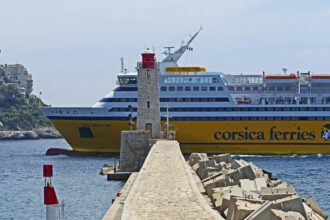
The main France-Sardinia crossing runs between Toulon and Porto Torres, on Sardinia’s northwest coast, operated by Corsica Ferries. Our Porto Torres Ferry Routes guide covers this connection in full, including journey times and practical details.
If you are researching options from the French mainland more broadly, our existing guides to Ferry Routes from Toulon and Ferry Routes from Nice cover the wider network of French departure points serving Corsica, Sardinia and Sicily.
For a full picture of every way to reach Sardinia by sea, including from Italy, France and Corsica, our island-wide Sardinia Ferry Routes hub brings all the options together in one place.
Arriving at Olbia’s Isola Bianca Port
Olbia’s ferry terminal, Isola Bianca, sits right on the edge of the historic centre, roughly a 10-15 minute walk from Corso Umberto for foot passengers travelling light. It is one of the more central ferry ports in Italy in this respect.
A free shuttle bus often runs during peak season between parking areas and the terminal, useful if you are driving to the port to collect passengers or park before a sailing. Regular local buses also connect the port with the wider town.
Check-in generally opens a couple of hours before departure, and operators recommend arriving at least 2 hours early, particularly if travelling with a vehicle or sailing during the busy summer season when queues build quickly.
Parking is available near the terminal for both short stays and longer-term use if you are leaving a car behind while exploring the island by other means, though spaces can be limited in peak summer.
The terminal building itself includes waiting areas, a small selection of cafes and shops, and clear signage directing passengers to the correct berth for their sailing, since larger ports like Olbia can have several ships departing around similar times.
Taxis and buses wait outside the terminal for arriving passengers, making onward travel into Olbia town or towards Olbia Costa Smeralda Airport straightforward if you are combining your ferry crossing with a flight elsewhere.
Travelling with a Car vs as a Foot Passenger
Bringing a car to Sardinia via Olbia is a popular option for travellers planning to explore widely, particularly given how limited public transport becomes once you leave the main towns. Our Road Trip Around Sardinia guide covers a full island driving route worth considering.
Vehicle fares vary by car size and season, generally costing considerably more than a foot passenger ticket, and space is limited, so booking well ahead is essential for summer crossings, especially on the popular Livorno route.
Boarding with a vehicle typically requires arriving earlier than foot passengers, often around 2 hours before departure, to allow time for vehicle check-in and loading onto the car deck.
If you would rather avoid driving on the mainland approach and simply want a car once in Sardinia, hiring locally as a foot passenger is often simpler; see our Olbia Airport Transfers guide, which also covers car hire options near the port area.
Motorcycles and campervans are also carried on most Olbia sailings, generally at different rates to standard cars, so check your specific vehicle type when getting a quote, as oversized vehicles can sometimes require a specific booking category.
Travelling as a foot passenger is generally simpler and cheaper, with boarding taking less time and fewer restrictions on arrival timing at the port compared with bringing a vehicle.
Foot passengers arriving in Olbia will need onward transport from the port, whether that is a short walk into the centre, a taxi, or a pre-booked transfer if heading further afield to the Costa Smeralda.
Those bringing a vehicle benefit from immediate flexibility once ashore, useful for exploring beyond Olbia, but should factor in the higher fare, earlier check-in requirement and the need to book well ahead in peak season.
A middle option, popular with many visitors, is travelling as a foot passenger and picking up a hire car locally once in Sardinia, avoiding the higher ferry vehicle fare while still gaining flexibility for the rest of the trip.
Seasonal Sailing Changes and Accessibility
Ferry schedules to and from Olbia shift considerably across the year. In July and August, sailings run at their highest frequency across all three routes, with multiple daily departures on the busiest connections.
During the shoulder seasons of spring and autumn, frequency drops but remains reasonable, generally with a good spread of departures across the week on the Livorno and Civitavecchia routes.
In winter, particularly between November and March, some routes reduce to just a few sailings weekly, and the Genoa connection in particular can become quite limited. Always check current schedules directly with operators if travelling outside the main season.
Prices generally track this same seasonal pattern, with the cheapest fares available outside July and August, and the most expensive crossings clustering around the peak summer weekends.
Travellers with reduced mobility should contact their chosen operator ahead of travel to arrange assistance at the terminal and confirm whether the specific ship assigned to their sailing has accessible cabins available.
Most larger vessels on the Olbia routes include lifts between decks and at least some accessible cabin options, though availability can be limited, so booking early and flagging accessibility needs at the time of booking is recommended.
Families travelling with young children will generally find enough space to move around on the larger ships, and some vessels include a small play area, particularly useful on the longer overnight Genoa crossing.
If travelling with specific medical equipment or dietary requirements, check with your operator in advance, as onboard catering options and power sockets vary between ships and routes.
Solo travellers and older passengers generally find the larger ships on the Livorno and Genoa routes comfortable, with plenty of communal seating areas and staff on hand at the check-in desk if any assistance is needed.
Which Route Is Right for You?
If speed is your priority, Olbia-Civitavecchia offers the shortest crossing and works well for travellers combining Sardinia with a visit to Rome, given the port’s easy rail connection to the capital.
For the widest choice of departure times and the most frequent sailings, Olbia-Livorno is generally the most flexible option, particularly useful if your travel dates are not fixed and you want backup sailings available.
Travellers heading to or from northern Italy or planning onward travel towards France should consider Olbia-Genoa, despite the longer crossing, given the port’s strong rail links north.
Whichever route you choose, compare current prices and schedules across operators before booking, as fares and frequency shift considerably between low and high season on all three routes.
Practical Tips for Sailing to Olbia
Book overnight cabins well in advance for the longer Genoa route, as these sell out first, especially during peak summer weekends when demand from Italian holidaymakers is highest.
Pack essentials in a small bag if travelling overnight, since access to your main luggage or vehicle is usually not possible once the ship has departed and cars are loaded onto the car deck.
Check whether your fare includes seating or a cabin, as budget tickets on some routes offer only a reclining seat, which may not suit everyone on longer overnight crossings like Genoa.
Confirm your exact departure terminal at the port in advance, as larger ports like Olbia can have multiple berths, and operators sometimes shift check-in areas during peak season works or maintenance.
If travelling with pets, check your operator’s policy well ahead of booking, as rules on cabin access, kennels and required documentation vary between Moby Lines, Grimaldi Lines, Tirrenia and GNV.
Keep an eye on the weather forecast in the days before sailing, as rough seas can occasionally cause delays or, rarely, cancellations on any of the mainland routes, particularly in the shoulder seasons of autumn and early spring.
Sign up for text or email alerts from your operator if available, as this is often the quickest way to hear about any last-minute schedule changes affecting your specific sailing.

Rupert’s Handy Travel Tips
I’ve watched plenty of ferries come and go from Olbia’s Isola Bianca terminal, so here’s what I’d want you to know before booking.
- Book vehicle spaces early: Car capacity fills up faster than passenger seats, especially on the Livorno route in summer.
- Choose Civitavecchia for Rome trips: It is the fastest crossing and connects easily onward to the capital by train.
- Pack an overnight bag separately: Your main luggage or car is usually inaccessible once the ship has set sail.
- Arrive two hours early with a car: Vehicle check-in and loading takes longer than foot passenger boarding.
Want to meet the reindeer behind our travel tips? Find out more in our page Who is Rupert?.




Frequently Asked Questions
How long does the ferry from Olbia to the mainland take?
It depends on the route: around 6.5-8 hours to Civitavecchia, 7.5-9 hours to Livorno, and 10-13 hours to Genoa.
Which ferry operators run from Olbia?
Moby Lines, Grimaldi Lines, Tirrenia and Grandi Navi Veloci (GNV) all operate routes from Olbia to various Italian mainland ports.
Is there a direct ferry from Olbia to France?
No, Olbia has no direct connection to France. The main France-Sardinia route runs between Toulon and Porto Torres instead.
How early should I arrive at the port?
Generally around 2 hours before departure, particularly if travelling with a vehicle or sailing during the busy summer season.
How far is the port from Olbia town centre?
Isola Bianca sits close to the historic centre, around a 10-15 minute walk for foot passengers travelling light.
Should I book a cabin for overnight sailings?
Yes, particularly on the longer Genoa route, since cabins sell out quickly in peak season and budget seating may not suit everyone overnight.
Can I bring a car on the Olbia ferries?
Yes, all the main routes accept vehicles, though space is limited and should be booked well in advance for summer travel.
Which route is fastest from Olbia?
Civitavecchia offers the quickest crossing at around 6.5-8 hours, compared with 7.5-9 hours to Livorno and 10-13 hours to Genoa.
Do ferry schedules change seasonally?
Yes, significantly. Sailings run far more frequently in July and August, with reduced frequency, particularly on the Genoa route, during the winter months.
Further Reading
Once you arrive at Isola Bianca, our Things to Do in Olbia guide covers the historic centre, nearby beaches and the Costa Smeralda in full, while our Olbia Airport Transfers guide is useful if you are combining your ferry crossing with a flight.
For the full picture of reaching Sardinia by sea, our island-wide Sardinia Ferry Routes hub covers every port, including our Porto Torres Ferry Routes guide for connections to Spain and France, and our Palau to La Maddalena Ferry guide for the archipelago further north.
Travellers departing from the French mainland should also see our guides to Ferry Routes from Toulon and Ferry Routes from Nice, both of which cover crossings to Corsica, Sardinia and Sicily.