Reviewed by our editorial team Published
Palau to La Maddalena Ferry: Sardinia’s Shortest Inter-Island Crossing
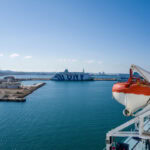
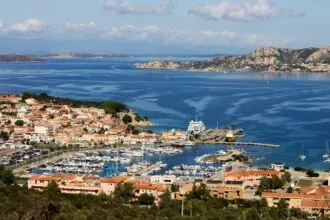
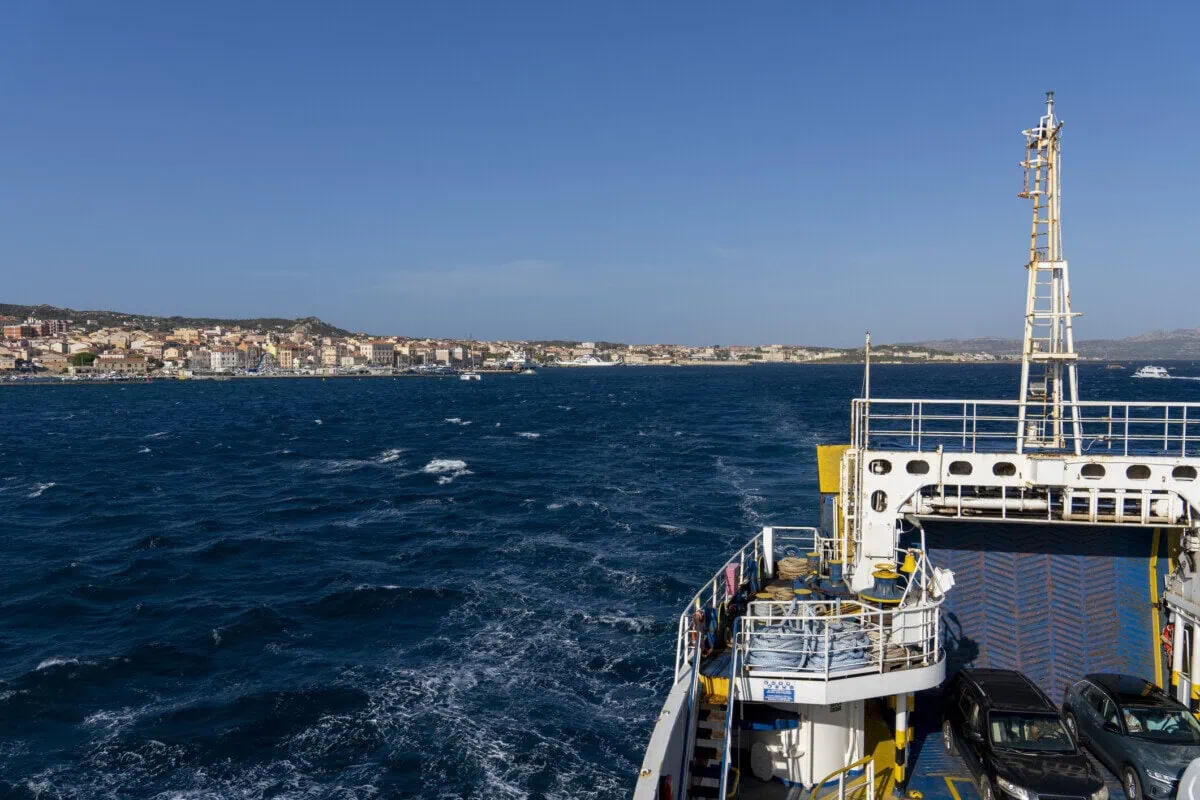
The hop across the Strait of La Maddalena is one of the quickest and most scenic ferry crossings anywhere in Sardinia. In just 15 to 20 minutes, you leave the harbour at Palau on the mainland’s northern tip and arrive on La Maddalena, gateway to the seven-island archipelago of the same name, with granite headlands and turquoise water visible from the deck the entire way across.
Unlike the long overnight sailings that connect Sardinia to mainland Italy or France, this is a short, frequent shuttle service closer in spirit to a harbour crossing than an international ferry. Boats run year-round, with departures roughly every 20 to 45 minutes depending on the season, so you rarely need to plan far ahead or commit to a fixed sailing time.
Two operators cover the route: Delcomar, the year-round public service concession carrying both foot passengers and vehicles, and Maddalena Lines, a seasonal operator running roughly from April to October that adds significant extra frequency through the busy summer months when demand for the crossing spikes sharply.
This guide walks through everything you need for a smooth crossing: the two operators and how their schedules compare, ticket prices for foot passengers and vehicles, whether it is worth bringing a car across, and what to expect at the terminals in both Palau and La Maddalena town itself.
We also cover how the crossing fits into a wider day out exploring the archipelago’s beaches and boat trips, and answer the questions readers ask most often about timing, pricing and travelling with a vehicle in peak season.
If you are staying in Palau to explore the wider coastline and beaches before or after your crossing, our guide to Things to Do in Palau covers the town’s viewpoints, beaches and archipelago boat trips alongside this ferry.
Most visitors reach Palau by flying into Olbia Costa Smeralda Airport, roughly 45-60 minutes away by car; see our Olbia Airport Transfers guide for transfer options if that is how you are arriving.
Ferry Operators and Route Overview
Two companies share this short crossing, and understanding the difference between them helps you pick the right sailing for your plans and your budget. Here is how they compare at a glance before we go into more detail on each one below.
| Operator | Season | Crossing Time | Vehicles? |
|---|---|---|---|
| Delcomar | Year-round | Approximately 15 minutes | Yes, cars and motorbikes |
| Maddalena Lines | April to October | Approximately 20 minutes | Yes, on most sailings |
Delcomar is the long-standing public concessionaire on this route, running a consistent timetable throughout the calendar year regardless of season or demand. It is the reliable choice if you are travelling in winter, or if you simply need a set departure time to plan around outside the busy summer peak.
Maddalena Lines ramps up considerably in summer, with departures roughly every 30 minutes in June and July and around every 20 to 30 minutes through August, making it easy to simply turn up at the terminal and catch the next available boat rather than working around a rigid published schedule.
Neither company generally requires advance booking for foot passengers outside the very busiest weeks of August, when demand can occasionally outstrip capacity on the most popular midday sailings. Booking a car crossing ahead is sensible during peak season, however, to avoid a long wait at the vehicle ramp.
Both companies operate from the same general terminal area in Palau, though their ticket booths and boarding points sit slightly apart, so look for the relevant signage rather than assuming both queues lead to the same boat.
Best for a short trip. Compare rooms by neighbourhood, price and guest rating before you book.
Compare hotelsBest for families, or any stay past about four nights. A kitchen and a washing machine start paying for themselves.
Browse rentalsBest for double-checking. Runs the same search across several booking sites so you are not leaving money behind.
Compare pricesCrossing Times and Sailing Frequency
The crossing itself is genuinely brief: expect around 15 minutes on the water with Delcomar and closer to 20 minutes with Maddalena Lines, plus loading time at either end. Total door-to-door time, from parking your car to walking off the boat in La Maddalena, is usually somewhere between 30 and 45 minutes.
In the shoulder months of April, May and October, expect a combined service of roughly nine to twelve daily departures spread across the two operators, running from around 07:00 to 20:00. This is comfortably enough frequency for a spontaneous day trip without needing to check timetables in advance.
Through June, July and September, Maddalena Lines alone runs around 20 sailings a day, roughly every 30 minutes between 08:15 and 19:45, with Delcomar’s steady year-round timetable running alongside it to add even more frequency for anyone arriving without a fixed plan.
August is by far the busiest month, with combined departures across both operators approaching every 20 minutes at peak times of day. Even with that frequency, queues for vehicle spaces can build quickly around midday and again in the early evening, so build in some buffer time.
Outside the main season, from roughly November to March, only Delcomar operates the route, running a reduced but still perfectly practical timetable with departures approximately every 45 to 60 minutes throughout the working day.
Weather can occasionally disrupt this short crossing, since the strait is exposed to strong Mistral winds funnelling down from the north. Sailings are rarely cancelled outright, but expect some delay or a rougher ride during winter storms, and check conditions if travelling in shoulder season.
Tickets, Prices and Booking
Fares on this short hop are modest compared with Sardinia‘s longer international routes. Foot passengers typically pay around €4 to €6 (£3-5 / $4-7) one way, while a standard car with driver usually costs in the region of €25 to €35 (£22-30 / $27-38), depending on the season, vehicle size and which operator you choose.
Bicycles are usually carried free of charge or for a nominal fee of a euro or two, and motorbikes fall somewhere between the foot passenger and standard car rates. Prices are set independently by each operator, so it is always worth checking the current tariff posted at the booth on the day you travel.
You can buy tickets at the small booths beside both terminals in Palau, and for foot passengers this remains the simplest approach; there is rarely a meaningful queue outside the busiest August afternoons, when it is still only a matter of a few minutes’ wait.
If you are bringing a car in July or August, it is worth booking online in advance through the operator’s website where that option exists, or arriving at least 30 to 45 minutes before your intended sailing to make sure you secure a vehicle space.
Return tickets are not always meaningfully cheaper than buying two singles on this particular route, so it is worth checking both options at the booth, particularly if your planned return time is still uncertain when you first arrive.
Neither operator currently offers a dedicated app for this specific route, so tickets are mostly bought in person or through general ferry aggregator websites; carrying a printed or saved confirmation is sensible if you book online in advance.
For the current timetable straight from the operator, Delcomar publishes its fares and sailing times on its own site at delcomar.it. It is worth a quick check before you travel, particularly if you are planning around the reduced winter schedule.
Palau, Sardinia to La Maddalena Ferry Times & Departures
Use Ferryhopper to check live sailings between Palau, Sardinia and La Maddalena in both directions. Select your travel date to compare scheduled ferry departures, sailing times and available tickets.
Select the date you want to travel. The times shown on the right-hand side are the scheduled departure and arrival times for each ferry.
Availability can change quickly, particularly during weekends and the summer season. Some sailings may stop accepting bookings a few hours before departure. If a timetable is blank, there may be no available sailings for today. Try moving to a later date to check future services.
This is the timetable for the outward direction. Use it to check sailings from Palau, Sardinia to La Maddalena for the date you plan to travel.
This is a separate timetable for the opposite direction. It does not select a return ticket for the journey above. Use it to check sailings from La Maddalena to Palau, Sardinia.
Want to compare different routes and other ferry options?
Compare routes, operators, sailing times and prices with Ferryhopper or Direct Ferries.
Travelling with a Car
La Maddalena island is genuinely compact, but having a car on board makes it far easier to reach the archipelago’s best beaches, several of which sit a good 20 to 30 minute drive from the town centre along winding coastal roads.
Both Delcomar and Maddalena Lines carry vehicles, loading via a stern or side ramp depending on the vessel. The process is quick given how short the crossing is, but staff will direct you into lanes well before departure, so follow the signage carefully at the Palau terminal.
In peak summer, vehicle space rather than passenger seating is the real bottleneck on this route. Arriving early in the day, or travelling outside the busy 11:00 to 16:00 window, generally means a noticeably shorter wait for a car space.
Some visitors deliberately choose to leave their car in one of Palau‘s long-stay car parks and explore La Maddalena on foot, by rented bike, or via the island’s local bus service instead, which also avoids the vehicle fare entirely and sidesteps any summer queue.
Hire car agreements occasionally exclude inter-island ferry travel, so it is worth checking the terms of your rental before assuming a hire car can simply be driven onto the boat without any issue at the terminal.
If you are touring Sardinia by car more widely rather than just visiting Palau, our Road Trip Around Sardinia guide shows how this short crossing fits neatly into a broader north coast itinerary.

The Palau Ferry Terminal
The terminal sits right in the centre of Palau town, an easy walk from the harbourfront shops, restaurants and hotels, so there is generally no need for a separate transfer if you are already staying nearby ahead of your crossing.
Several car parks line the approach roads into the port area, charging modest hourly or daily rates. In August these fill up early in the morning, so arrive with plenty of time to spare if you plan on leaving a car for the day.
Ticket booths for both operators sit close together near the quayside and are clearly signed, and boarding itself is straightforward: passengers simply walk on directly while vehicles queue separately in marked lanes ahead of loading.
There are a handful of cafes and gelaterias right by the terminal, useful for grabbing a coffee or an ice cream while you wait, particularly if you have arrived early to beat the worst of the summer crowds.
Fuel stations and a small supermarket sit a short walk from the terminal in Palau, useful for stocking up on drinks and snacks before a day trip to the archipelago, since prices on La Maddalena itself run slightly higher given everything is barged across.
Public toilets and a small tourist information point are also located near the harbour, and taxi ranks operate close to the terminal entrance if you are arriving from further afield without your own transport.
Arriving in La Maddalena
Ferries dock right in La Maddalena town, a colourful little port with a pedestrianised centre, a lively waterfront promenade and a cluster of restaurants overlooking the harbour, making it a pleasant place to linger even before heading further into the archipelago.
From the port, it is a short walk into the historic centre, where narrow lanes open onto small piazzas dotted with cafes, ideal for a relaxed lunch or a browse of local shops before your onward plans for the day.
If you have brought a car, the island’s main coastal road loops around to Caprera, connected by a short causeway, giving access to some of the archipelago’s most striking and less crowded beaches, including Spiaggia del Relitto.
Without a car, local buses and rental scooters cover the island’s main sights well, and several operators run half-day boat trips around the wider archipelago directly from the harbour, making a car largely optional for most visitors.
Caprera itself is worth setting aside time for beyond its beaches, since it is also home to the compound where Italian unification hero Giuseppe Garibaldi lived out his final years, now preserved as a small museum.
Exploring the La Maddalena Archipelago
Many travellers treat this short ferry as the start of a full day exploring the wider archipelago, a national park made up of granite islands and turquoise coves that has been protected since 1994 and remains largely undeveloped.
Boat excursions from La Maddalena‘s harbour typically last 4 to 6 hours and call at several of the archipelago’s islands along the way. Although the whole group is protected as one national park, each island has a genuinely different character, from the once-famous pink sands of Budelli to the quieter granite coves of Razzoli, and the five sections below cover each of the main islands you are likely to see, pass close to, or step ashore on during a typical boat trip.
Most half-day tours concentrate on two or three islands rather than attempting the whole archipelago, so it is worth checking the specific itinerary before booking if you have a particular beach or bay in mind. Full-day tours generally include a longer swim stop and sometimes a simple lunch on board, making them better value per hour than the shorter half-day options despite the higher headline price.
Snorkelling gear is worth packing if your tour allows a swim stop, since the clear water around Spargi and the outer islands is some of the best visibility anywhere off the Sardinian coast, particularly on calm mornings before the wind picks up.
Prices for a half-day or full-day boat tour generally run from around €35 to €90 (£31-79 / $39-98) per person, often including a swim stop and sometimes lunch, and these are best booked a day or two ahead in peak summer.
If you would rather base yourself in Palau and treat La Maddalena as a half-day excursion, our Things to Do in Palau guide covers viewpoints and beaches on the Sardinian side, plus archipelago boat trips departing from Palau itself.
Many visitors combine both approaches into a single day: a morning ferry across to La Maddalena for the town and Caprera, then an afternoon boat tour of the outer islands before returning on one of the last convenient sailings.
Best for finding routes the airlines do not sell as a single ticket. Combines carriers to bring the fare down.
Search flightsBest for short trips. Install the eSIM at home and arrive with working data, no shop queue.
Browse eSIMsBest if you would rather not work out the transport on arrival. Book it now and forget it.
View transfersBudelli: The Forbidden Pink Beach
Budelli is the smallest and by far the most famous of the outer islands, known around the world for its Spiaggia Rosa, or Pink Beach, where the sand takes on a delicate rose tint from countless microscopic fragments of coral and shell, principally from two organisms called Miriapora truncata and Miniacina miniacea, mixed in with the white quartz sand beneath.
Landing and swimming on the beach itself have been banned since rules introduced in the 1990s to protect the fragile ecosystem from the wear of thousands of visiting feet every summer. Boats are still allowed to slow and anchor a short distance offshore, and a footpath further inland remains open, so the famous pink hue is still clearly visible from the water even without setting foot on the sand.
For over three decades, Budelli had an unlikely full-time resident. Mauro Morandi, a former teacher, settled on the island in 1989 and became something of a local celebrity as its self-appointed caretaker, living alone in a small wooden house near the beach until park authorities evicted him in 2021, closing an unusual chapter in the island’s modern history.
Most boat tours simply slow for a good look at the Pink Beach from just offshore before moving on to a proper swim stop elsewhere in the archipelago, since Budelli itself has no facilities and no permitted landing spot for casual visitors.
Spargi: Cala Corsara’s Turquoise Anchorage
Spargi is the largest of the archipelago’s uninhabited islands, and the one many boat trips linger on longest, thanks to Cala Corsara, a dramatically beautiful bay on its western side ringed by wind-sculpted granite outcrops, including a distinctive formation known as the Roccia della Strega, or Witch Rock, that gives the cove its slightly eerie nickname.
Four small beaches of fine, almost powder-soft white sand sit tucked among low dunes and Mediterranean scrub around the bay, and the water shifts through shades of turquoise, emerald and deep blue depending on the light and the depth of the seabed beneath, making it one of the most photographed spots in the whole archipelago.
Cala Corsara is accessible only by boat, and its combination of clear, sheltered water and dramatic granite scenery has made it genuinely famous beyond Sardinia; it was named Italy’s most beautiful beach by a major travel website in 2016 and has featured in international coverage since. A Roman-era shipwreck lies nearby, adding a layer of archaeological interest for anyone snorkelling the bay.
Most boat tours build in a reasonably long stop here, often the longest single swim break of the day, so pack snorkelling gear if you have it: the visibility around the granite boulders below the surface is some of the best anywhere on this stretch of coast.
Santa Maria: A Natural Swimming Pool and a Ruined Monastery
Santa Maria sits at the northern edge of the archipelago and is unusual among the outer islands in still having a small handful of permanent residents, along with a modest hotel and restaurant that operate through the summer season.
Its main beach, Cala Santa Maria, is a roughly 200-metre stretch of very fine white sand backed by shallow, gently shelving water that forms what many visitors describe as a natural swimming pool, calm enough to suit families and children even when a breeze is picking up further out in the strait.
Behind the beach lies a saltwater lagoon known as the Palude, home to wading birds including mallards and woodcock, a quiet contrast to the beach itself and worth a short walk if you have the time between swims.
The island’s history stretches back to the 11th century, when Benedictine monks built a small monastery here as a retreat; the building was later abandoned, and its ruins now sit quietly inland, a low-key historical footnote easy to miss unless you know to look for it.
At low tide, a shallow sandbank called the Passo degli Asinelli, or Donkeys’ Crossing, links Santa Maria to neighbouring Razzoli, submerged under only around half a metre of water, an unusual spot where you can genuinely wade between two separate islands.

Razzoli: The Archipelago’s Quietest Lighthouse Island
Razzoli is one of the quietest islands in the archipelago, a narrow strip of granite a little over two kilometres long at the far northern edge of the group, closer in feel to Corsica than to the busier beaches nearer Palau.
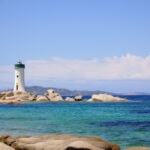
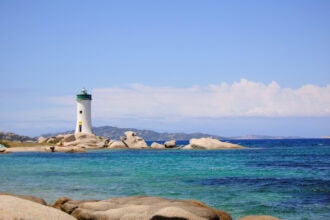
Its most recognisable landmark is the Razzoli lighthouse, a 12-metre stone tower rebuilt in 1974 on the site of an earlier 1858 structure, now solar-powered and fully automated, and still an active aid to navigation marking the eastern approach to the Strait of Bonifacio.
The island’s coves, including Cala Lunga and Cala Cavaliere, are popular sheltered anchorages for yachts and day-charter boats rather than places most visitors actually set foot on land, since Razzoli has no permanent population and very little in the way of facilities.
Its main practical connection to the wider archipelago is the shallow sandbank joining it to Santa Maria at low tide, meaning the two islands are sometimes visited as a single combined stop on a full-day boat tour rather than two separate destinations.
Santo Stefano: Napoleon’s Brief Foothold
Santo Stefano lies just across the water from La Maddalena town itself, close enough that its granite hills, tinted pink and white in places, are clearly visible from the short ferry crossing described earlier in this guide.
The island has a genuinely dramatic military history. Fort San Giorgio, built in 1773 to guard the channel between La Maddalena and the Sardinian mainland, briefly served as a command post for a young Napoleon Bonaparte during an attempted French attack on the archipelago in 1793, an episode still marked today by a small tower known locally as the “Napoleonic tower”.
That strategic value continued into the modern era: an American naval base occupied the island’s eastern side from 1972 until 2008, part of the wider naval and NATO presence that shaped this whole area for much of the 20th century, alongside the naval history covered in more detail elsewhere in this guide.
Beyond the history, Santo Stefano’s beaches are genuinely worth a look if your boat trip stops here: Spiaggia del Pesce has fine white sand and shallow turquoise water, while Cala Villamarina offers golden sand and pebbles beside an old, long-abandoned granite quarry.
A Naval History Worth Knowing
The stretch of water you cross in 15 to 20 minutes has a surprisingly grand history. Admiral Horatio Nelson used the sheltered anchorage at La Maddalena as a base for the British fleet in the early 1800s, in the years leading up to the Battle of Trafalgar in 1805, describing the harbour as among the finest he had ever seen.
From here, Nelson kept watch over the French fleet at Toulon in the years before the Battle of Trafalgar, and the archipelago’s deep, wind-protected channels made it an ideal spot to shelter and resupply a large squadron of sailing ships.
That naval heritage lives on today: La Maddalena later became a major Italian and, for several decades, a NATO submarine base, only closing to military use in the early 2000s and reopening much of the waterfront for civilian and tourist use.
Small museums and plaques around the town centre note this history, and it is a pleasant thread to follow on foot after stepping off the ferry, particularly for visitors with an interest in maritime or Napoleonic-era history.
The old naval buildings along parts of the harbour have gradually been repurposed as cafes, small hotels and cultural spaces, giving the town a layered feel that rewards a slower first hour or two after arriving from Palau.
Best if you would rather spend the money on the trip than on the room. Compare hostels by location and rating.
Search hostelsBest arranged before you fly rather than after. Covers claim handling, plus lounge access on eligible delays.
Explore AirHelp+Best if your room is not ready yet. Left luggage booked in advance, so you are not hunting for a locker.
Check storageAlternative Ways to Reach the Archipelago
The scheduled ferry from Palau is by far the most common and most affordable way across, but it is not the only option if you want more flexibility or a more scenic route into the archipelago itself.
Private water taxis operate from Palau‘s harbour for those wanting a direct, faster transfer, or for reaching a specific beach or mooring point rather than the main port in La Maddalena town, though at a considerably higher price than the scheduled ferry.
Chartered boat trips booked for a half or full day effectively double as transport to the archipelago, dropping you at several islands rather than just La Maddalena itself, which suits visitors who want to see Spargi, Budelli and Caprera without a fixed itinerary.
For most visitors, though, the scheduled Delcomar or Maddalena Lines ferry remains the simplest and cheapest option, and combining it with a boat tour booked separately in La Maddalena town covers most people’s needs without the expense of a private charter.
If you are staying somewhere along the Costa Smeralda rather than in Palau itself, several tour operators also run day trips that include coach transfer to Palau, the ferry crossing and a guided boat tour, bundled into a single ticket for convenience.
Is It Worth Taking a Car?
Whether to bring a car across ultimately depends on how much of the archipelago you want to see in a day. If your plan is limited to La Maddalena town and a guided boat trip, walking on as a foot passenger is both cheaper and faster overall.
If you want to reach Caprera‘s quieter beaches, or explore the wider island at your own pace beyond the town centre, a car saves considerable time and avoids relying on the more limited frequency of the local bus network.
Families or larger groups often find the extra €25 to €35 (£22-30 / $27-38) vehicle fare worthwhile once split between several people, particularly when combined with beach gear, coolers and children’s equipment that is awkward to carry on foot from the port.
Solo travellers and couples on a tighter schedule, particularly in peak August when vehicle queues lengthen considerably, often find it quicker overall to walk on and simply rent a scooter or bicycle once they arrive.
Practical Tips for the Crossing
Check both operators’ timetables before you travel, since combining Delcomar and Maddalena Lines departures often gives you a workable sailing within 15 to 20 minutes whatever time of day you happen to arrive at the port.
In August, aim to cross either early in the morning or later in the evening; midday sailings see by far the longest vehicle queues, particularly on weekends when day-trippers from further afield add to local traffic.
Bring cash in small denominations for the ticket booths, since card payment is not always reliable at the smaller kiosks, though this is gradually improving as more terminals upgrade their payment systems.
Wear sun protection even for this short crossing; the open-deck sections offer very little shade, and the reflection off the water can be surprisingly intense around midday in high summer.
If travelling by car in shoulder season, check the reduced winter timetable in advance, since Maddalena Lines does not operate outside roughly April to October and Delcomar‘s frequency drops considerably once the summer season ends.
Keep an eye on the weather forecast if you are planning a specific departure time; while the strait rarely closes entirely, strong winds can cause short delays that are worth building into a tight itinerary.

Rupert’s Handy Travel Tips
This little crossing to La Maddalena is one of my favourite short hops anywhere in Sardinia, so here is how to make the absolute most of it.
- Skip the car in August: walk on and rent a scooter in La Maddalena town instead of queuing for a vehicle space at peak times.
- Combine both operators: checking Delcomar and Maddalena Lines together usually gets you the next available sailing much sooner than waiting for one specific boat.
- Head to Caprera: the short causeway across from La Maddalena leads to some of the archipelago’s quietest and most beautiful beaches.
- Carry small cash: some ticket booths still prefer coins and notes over card payment, so keep some euros handy.
Want to meet the reindeer behind our travel tips? Find out more in our page Who is Rupert?.




Frequently Asked Questions
How long is the Palau to La Maddalena ferry crossing?
Around 15 minutes on the water with Delcomar and about 20 minutes with Maddalena Lines, plus a little extra loading time at each terminal before and after sailing.
Do I need to book in advance?
Foot passengers rarely need to book ahead outside the very busiest August dates, but booking a car crossing in July and August in advance is recommended to guarantee a space.
Can I take a hire car across?
Yes, both operators carry vehicles, though it is worth checking your rental agreement allows inter-island ferry travel before you book or drive onto the ramp.
Does the ferry run all year round?
Delcomar operates year-round with a reduced winter timetable; Maddalena Lines runs seasonally, roughly from April to October, with much higher frequency in summer.
How much does a ticket cost?
Expect roughly €4 to €6 (£3-5 / $4-7) for a foot passenger and €25 to €35 (£22-30 / $27-38) for a standard car, though prices vary by season, operator and current fuel surcharges.
Is it better to leave my car in Palau?
If you only plan to visit La Maddalena town and take a boat trip, walking on and renting a scooter locally is often quicker, cheaper and avoids any summer vehicle queue.
Where exactly does the ferry depart from in Palau?
The terminal sits in the centre of Palau town, within easy walking distance of hotels, restaurants and the main long-stay car parks near the harbour.
Can I combine this crossing with a boat trip around the archipelago?
Yes, many visitors ferry across in the morning, spend an hour or two in La Maddalena town, then join a half-day boat tour of the outer islands before returning.
Is there anything historic to see near the ferry terminal in La Maddalena?
Yes, the harbour was once Admiral Nelson’s fleet anchorage and later a naval base, and several plaques and small exhibits nearby cover this history for anyone curious.
Further Reading
Before you travel, it is well worth reading our full guide to Things to Do in Palau, which covers the town’s beaches, coastal viewpoints and archipelago boat trips that pair naturally with this short ferry crossing.
If Palau is just one stop on a wider trip around the island, our island-wide Sardinia Ferry Routes hub explains how the region’s ports connect to mainland Italy, France and Corsica, useful background for planning any onward travel by sea.
Travelling around the north coast without a car is also entirely possible; see our guide to Getting Around Sardinia Without a Car for the wider public transport picture, or follow our Road Trip Around Sardinia itinerary if you are driving the island yourself.