Reviewed by our editorial team Published
Discover the Best Things to Do in Alghero
Perched on Sardinia’s northwest coast, Alghero is unlike anywhere else on the island. Founded by Genoese traders and later ruled for centuries by the Crown of Aragon, it still speaks its own Catalan dialect and cooks with a distinctly Spanish accent, right down to the paella on local menus. Locals affectionately call it “Barceloneta”, little Barcelona, and the honey-coloured old town backs that claim up.
Behind the sea walls sits a tight knot of cobbled lanes, Gothic churches and coral workshops, while beyond the ramparts stretch some of Sardinia’s finest beaches. Add in boat trips along the Riviera del Corallo, a UNESCO-listed necropolis and the otherworldly Neptune’s Grotto, and you have enough sights for a proper multi-day stay without ever feeling rushed.
This guide covers everything worth doing in and around Alghero, from the fortified old town to the wild limestone cliffs of Capo Caccia. We have grouped attractions by type, historic sights, beaches, boat trips and archaeology, so you can plan a realistic itinerary, whether you have a single afternoon between flights or a full week to explore.
Most visitors base themselves in the old town or along the northern beach strip toward Fertilia, both within easy reach of the sights below. A hire car opens up Capo Caccia and the nature reserve, but the historic centre, harbour and closest beaches are all comfortably walkable, even on the hottest August afternoon.
Alghero also makes a smart base for exploring Sardinia’s whole northwest corner. Its position between the sea and the interior means you can mix beach days with archaeological sites, dramatic coastal scenery and a couple of worthwhile day trips, such as Bosa or Sassari, all without covering huge distances by car.
If you are arriving by air, our companion guide to Alghero Airport Transfers covers buses, taxis, private transfers and car hire from Alghero-Fertilia Airport in detail, so we will not repeat journey logistics here and can focus purely on what to do once you arrive.
At a Glance: Where to Spend Your Time in Alghero
Before diving into the detail, here is a quick snapshot of Alghero’s headline attractions, roughly how long to allow for each, and whether you will need a car or boat to reach them. Use it to sketch a rough plan before reading the full sections below, which cover every entry in more depth.
| Attraction | Time Needed | How to Reach It |
|---|---|---|
| Historic Old Town & Bastions | 2-3 hours | On foot from anywhere in central Alghero |
| Alghero Cathedral | 30-45 minutes | Walk to Piazza Duomo, old town |
| Porta a Terra | 10-15 minutes | Old town landward gate |
| Coral Museum | 45-60 minutes | Via XX Settembre, old town |
| Alghero Harbour & Waterfront | 1-2 hours | Below the old town walls |
| Lido di San Giovanni & Maria Pia beaches | Half day | 15-20 minute walk or short bus ride |
| Le Bombarde & Il Lazzaretto beaches | Half to full day | Bus or car, 15-20 minutes north |
| Boat trip along the Riviera del Corallo | 3-7 hours | Depart from Alghero harbour |
| Neptune’s Grotto | Half day | Boat from harbour or car plus 654 steps |
| Capo Caccia & Porto Conte Reserve | Half to full day | Car, roughly 25-35 minutes from town |
| Nuraghe Palmavera | 45-60 minutes | Car or bus, about 10 minutes from town |
| Anghelu Ruju Necropolis | 45-60 minutes | Car, about 10 km north of Alghero |
| Bosa day trip | Full day | Car or bus, about 45-60 minutes south |
| Sassari day trip | Half day | Car or ARST bus, about 30-35 minutes inland |
Best if you want daily housekeeping and a front desk. Filter by area first, then by price.
Check availabilityBest for families, or any stay past about four nights. A kitchen and a washing machine start paying for themselves.
Browse rentalsBest if you have already picked a hotel. Checks the big booking sites for the same room and shows who is cheapest.
Check dealsWandering the Centro Storico
The centro storico is Alghero’s beating heart, a compact grid of sandstone lanes squeezed onto a small promontory. Wander without a map for an hour and you will pass coral jewellers, tiny bars serving Vermentino wine, and balconies strung with washing above centuries-old doorways that have barely changed in generations.
Street signs appear in both Italian and Algherese Catalan, a living reminder of the city’s origins under the Doria family and later the Aragonese crown from 1354 onwards. Locals still use the dialect daily, and you will hear it in shops and cafes around Piazza Civica, one of the prettiest squares in the old quarter.
Evenings are best spent here. The lanes fill with the smell of grilled seafood, restaurant tables spill onto the pavements, and the golden stone glows under string lights strung between buildings. Aim to arrive around sunset and let the old town’s rhythm set the pace for the rest of your night.
Shopping here means one thing above all: coral. Alghero has harvested red coral from these waters for centuries, and Via Carlo Alberto is lined with workshops selling necklaces, cufflinks and cameos, many still handmade on-site by third or fourth generation craftsmen.
Morning is a different experience entirely. Bakeries open early, the fish market near the harbour does brisk trade, and the lanes are quiet enough that you can properly appreciate details like carved doorframes and old Catalan house names still visible above lintels.
Give yourself at least half a day here before venturing further afield. The old town rewards slow wandering far more than a rushed checklist of sights, and most of the attractions covered below sit within, or a short walk from, its walls.
Rain is rare in high summer, but if a shower does roll in, the old town’s narrow lanes and covered archways make it one of the easier places in Sardinia to keep sightseeing, since you can duck under cover near Piazza Civica without losing much time.
The City Walls and Bastions
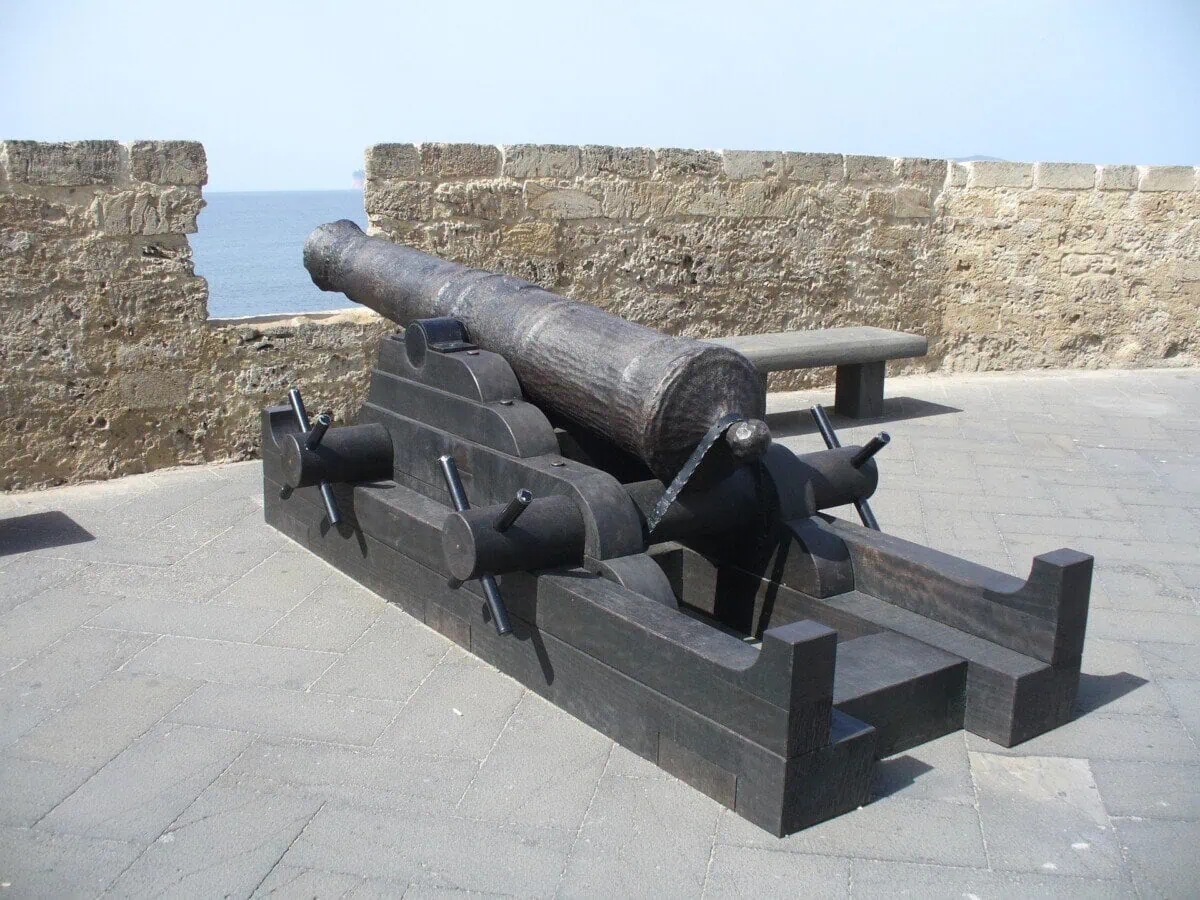
Alghero is one of the few Italian towns where you can walk an almost complete circuit of its 16th-century fortifications. The seaward bastions run from the harbour gate of Porta a Mare around to Piazza Sulis, forming a wide promenade right above the crashing waves below.
Several stout watchtowers punctuate the walk, including Torre di San Giacomo, Torre della Polveriera and Torre di Sant’Elmo. Each was originally built to defend against Barbary pirate raids, and today they make natural pause points for photos of the harbour and the open Mediterranean beyond.
The bastions are free to walk at any time of day, but sunset is when they truly earn their reputation. Cafes and gelaterias along the ramparts fill their outdoor tables from around 7pm, and the light over the bay turns a deep orange that lasts a good 30-40 minutes.
Live music and impromptu street performances are common along here on summer evenings, particularly near Bastioni Marco Polo. It is one of the few places in Alghero where locals and tourists genuinely mix rather than occupying separate spaces at opposite ends of town.
The walk is flat and paved for almost its entire length, which makes it one of the more accessible attractions in the old town for visitors with mobility considerations or families pushing prams, unlike much of the interior’s stepped and narrow lanes.
Budget 45-60 minutes for an unhurried walk of the full circuit, longer if you stop for a drink partway round, which most visitors end up doing at least once during their stay.
Photographers should note that the best light for the bastions falls in the hour after sunrise, when the low sun catches the sandstone at an angle and the promenade is largely empty of the crowds that build up later in the day.
Alghero Cathedral and the Old Town’s Churches
The Cattedrale di Santa Maria, on Piazza Duomo, is Alghero’s principal church and a striking mix of styles built up over centuries. Its origins are 16th-century Catalan Gothic, but the facade and much of the interior were reworked in later Renaissance and Baroque phases.
Look up as you approach: the bell tower is topped with colourful majolica tiles that catch the afternoon sun, a small but memorable detail that separates it from most other Sardinian churches. Entry to the main body of the cathedral is generally free of charge.
A short walk away, the Church of San Francesco dates to the 14th century and preserves a beautiful Gothic cloister behind its later Renaissance facade. It occasionally hosts classical music concerts in summer, well worth checking for during your visit.
Both churches sit within a five-minute walk of each other and of Piazza Civica, one of the old town’s prettiest squares and a natural link between the two. Combine them into a single loop rather than treating them as separate outings on different days.
Smaller chapels are scattered throughout the old town too, several tucked behind unassuming doorways that are easy to miss. Poking your head into any open church door as you wander is often rewarded with quiet, cool interiors and the odd faded fresco.
Allow 30-45 minutes for the cathedral and 20-30 minutes for San Francesco, plus time to linger in the squares between them, especially if you time it for the golden hour just before dinner.
Dress codes are informal but modest coverage of shoulders and knees is generally expected inside both the cathedral and San Francesco, worth bearing in mind if you are coming straight from the beach and only have swimwear with you.
Porta a Terra
Porta a Terra, or “the land gate”, is a 23-metre defensive tower marking the old town’s main landward entrance. Originally known as Porta Reial under Aragonese rule, when a carved stone crown identified it as the city’s principal gateway, it was renamed Porta a Terra once the Savoy dynasty later took control of Sardinia.
The tower dates from the 16th century, built with a sandstone portal and rubble-masonry walls typical of the Renaissance military engineering used across Alghero’s fortifications. It remained the city’s working land gate until the late 19th century, when changes to the town’s military status made the walls redundant; the surrounding land-side fortifications were dismantled after 1867, leaving Porta a Terra as the only substantial section still standing today.
It now doubles as a small museum and information point, with the original Aragonese crown emblem preserved inside, and the upper terrace gives one of the better elevated views over Alghero’s terracotta rooftops and the harbour beyond.
Climbing to the top takes only 10-15 minutes, and tickets cost around €4 (£3 / $4) per person, in line with other small sites around the old town. It is a good first stop if you want an orientation view before exploring the tangle of lanes below at ground level.
Inside Alghero’s Coral Trade: The Coral Museum
For a deeper dive into what made Alghero rich, head to the Coral Museum on Via XX Settembre, housed in a handsome Art Nouveau villa. Exhibits trace the coral trade from Roman times through to the present, with genuinely beautiful jewellery on display throughout.
The museum also explains modern sustainable harvesting practices, since Sardinia’s coral reefs were seriously overfished in the 20th century and are now tightly regulated by law. It is a thoughtful counterpoint to the coral shops lining the streets just outside.
Between the two sights, you get both the romantic view of Alghero’s coral heritage sold in shop windows and the more sober history of an industry that nearly stripped these waters bare, which makes for a genuinely interesting contrast worth the €7 (£6 / $8) entry fee.
Plan on 45-60 minutes for the museum. Combined with Porta a Terra, these two low-key sights fill a pleasant, air-conditioned midday hour when the sun outside is at its strongest and the beaches least appealing.
Life on the Marina
The working marina sits right below the old town walls, lined with fishing boats, pleasure craft and the kiosks selling tickets for boat trips and the Neptune’s Grotto ferry. It is the natural starting point for almost any excursion by sea, and worth a wander even if you are not booking a trip.
Early morning is when the harbour is at its most authentic, with fishermen unloading the night’s catch straight onto ice at the small fish market nearby, well before the tour boats start loading passengers for the day ahead.
A promenade runs along the water’s edge, popular with joggers and evening strollers alike, and connects easily to the bastions walk described above, so the two can be combined into one continuous loop lasting under an hour.
Several of Alghero’s best seafood restaurants sit right on the harbourfront, with outdoor terraces looking directly onto the moored boats. Booking ahead in July and August is wise, as the best waterside tables go quickly each evening.
If you only have time for one sunset view in Alghero, the harbour and adjoining bastions edge out most alternatives, largely because you can pair the view with dinner without moving more than a few metres from your table.
Best for long or awkward journeys. Builds one itinerary out of separate flights.
View flightsBest for anyone whose home plan charges by the megabyte abroad. Pay a fixed price up front.
Check eSIMsBest when public transport has stopped, or when you are travelling with children and bags.
Book a transferAlghero’s Best Beaches: San Giovanni and Maria Pia
You do not need a car to reach a decent beach in Alghero. Lido di San Giovanni sits just south of the old town walls, an easy 10-15 minute walk, making it the default choice for an afternoon dip without any real planning required.
It is a fairly narrow strip of fine sand backed by a beachfront promenade, with sunbeds, showers and several bars within easy reach. Expect it to be busy in July and August, considerably less so if you arrive before 10am.
Maria Pia beach, closer to the airport side of town, is wider and backed by pine trees that offer natural shade, a genuine rarity on this stretch of coast. It is popular with families and slightly quieter than San Giovanni during peak season.
Both beaches have shallow, gently shelving water that suits children well, and both are served by local buses if you would rather not walk in the midday heat. Sunbed and umbrella hire is available at each, typically €15-25 (£13-22 / $16-27) per day for a pair.
Free stretches of sand exist alongside the paid sunbed sections at both beaches, so budget travellers can still enjoy the same water and views by simply bringing their own towel and setting up a little further along the shore.
These two make an ideal choice if your base is central and you want beach time without giving up a whole day to transport, saving the more remote beaches below for when you have a hire car or are happy to catch a bus.
Lifeguards are typically on duty at both San Giovanni and Maria Pia through the main summer months, and the water quality along this stretch of coast is consistently rated among the cleanest in Sardinia by regional environmental monitoring.
Le Bombarde and Il Lazzaretto: Alghero’s Best Sand
For genuinely turquoise water, head north of Fertilia to Le Bombarde, widely rated as Alghero’s finest beach. Fine white sand meets shallow, brilliantly clear water, and pine woodland behind the beach offers shade for a picnic between swims on hot afternoons.
It sits roughly 15-20 minutes from the old town by car or local bus, and gets extremely busy in high summer. Arriving by 9-9:30am in July and August is the only reliable way to secure a decent patch of sand for the day.
Neighbouring Il Lazzaretto is quieter and slightly more sheltered, a good backup if Le Bombarde is packed, or a first choice if you prefer a calmer atmosphere with similarly clear water and fewer sunbeds to navigate around.
Further round the bay inside the Porto Conte Nature Reserve, Mugoni beach offers a long, sweeping curve of sand backed by low dunes, considerably less crowded than the beaches closer to town and worth the extra drive time.
Snorkelling gear is worth packing for any of these three, since the clarity of the water close to shore rivals spots you would normally need a boat trip to reach, particularly around the rocky edges at Il Lazzaretto.
Both Le Bombarde and Il Lazzaretto have beach bars, sunbed rental and parking, though the car park at Le Bombarde fills quickly in season. A scooter or bicycle can be a smart workaround if you are staying nearby.
Boat Trips from Alghero
Alghero’s coastline is best appreciated from the water, and the harbour offers a wide spread of boat trip options running from late May to early October. Full-day sailing trips, often aboard classic yachts, typically last around 7 hours with several swimming stops along the way.
If snorkelling is the priority, Zodiac (rubber boat) tours are faster and more manoeuvrable, reaching coves that larger boats simply cannot. Half-day Zodiac trips run 3-4 hours, while full-day versions cover the whole coastline down to Capo Caccia.
Catamaran cruises are the most comfortable choice for families or anyone prone to seasickness, offering shade, onboard toilets and a steadier ride, usually over a similar 7-hour full-day format with a lunch stop included.
Shorter options include 2-hour sunset sails and dedicated dolphin-watching trips of up to 4 hours, which operators quote at around an 80% sighting rate in season. All trips visit the dramatic cliffs around Capo Caccia and the Porto Conte marine protected area.
Most operators depart directly from the harbour below the old town, so there is no need to arrange separate transport beforehand. Departure points are usually clearly signposted with ticket kiosks lined up along the marina itself.
Prices vary by boat type and duration, generally from around €35-40 (£30-35 / $38-44) for a half day up to €80-100 (£70-87 / $87-109) for a full day with lunch included. Book a day or two ahead in peak season, as the most popular sailings sell out fast.
Most boats provide snorkelling masks and fins as standard on the swimming stops, though bringing your own if you have a preferred fit is never a bad idea, especially for children.
Neptune’s Grotto (Grotte di Nettuno)
Sardinia’s most famous sea cave, Neptune’s Grotto burrows into the base of the Capo Caccia cliffs, about 25 km from Alghero. Inside, a network of chambers holds dramatic stalactites, stalagmites and a still, mirror-like saltwater lake that gives the cave its eerie beauty.
The classic approach is by boat from Alghero harbour, operating from 1 April to 31 October. The crossing takes around 40 minutes each way and costs approximately €18 (£16 / $20) for adults and €9 (£8 / $10) for children aged 5-12, though this covers transport only, not the cave entry fee.
Drivers can instead reach Capo Caccia directly, around 35 minutes via the SS127bis and SP55, then descend the Escala del Cabirol, a dramatic staircase of 654 steps cut into the cliff face. Allow 15-20 minutes down and the same back up, considerably tougher in midday heat.
A limited ARST bus service, route 9321, also runs from Via Catalogna station to Capo Caccia, taking roughly 50 minutes, though timetables are sparse outside peak summer, so check the current schedule before relying on it.
Cave entry itself costs roughly €18 (£16 / $20) for adults and €10 (£9 / $11) for children and students, with under-6s free, and includes a guided tour lasting 45 minutes to an hour. Tours run in multiple languages, including English, German, French and Spanish.
Booking ahead is strongly recommended in summer, as timed entry slots often sell out by midday. Boat access is suspended in rough seas, so if the crossing is your plan, build in a backup day if you possibly can.
The cave maintains a constant, cool temperature year-round, noticeably cooler than the summer air outside, so bringing a light layer even in August is a smart move that many first-time visitors overlook.
Photography inside the grotto is generally permitted, though flash photography is often restricted to protect the delicate formations, and low light levels mean a steady hand or a phone with good night mode helps considerably.
Capo Caccia and Porto Conte Nature Reserve
Even without visiting Neptune’s Grotto, Capo Caccia deserves a visit purely for its scenery. This limestone promontory rises sharply from the sea, with hiking paths tracing the clifftop and views that stretch across the whole bay toward Alghero itself.
Sunset here is genuinely spectacular, arguably better than from the town bastions, though you will need your own transport since public buses to the cape are infrequent, generally just a couple of daily services in each direction.
The wider Porto Conte Nature Reserve wraps around a sheltered bay behind the cape, with marked hiking and cycling trails through Mediterranean forest. It is a good half-day option for anyone wanting a break from beaches and old-town lanes.
Within the reserve, the Le Prigionette protected area is home to wild donkeys, native horses and a healthy population of birdlife, including birds of prey circling the cliffs above. Entry is generally free, though some trails require permits in peak season.
Cyclists in particular rate this area highly, since the roads through the reserve are quiet, largely flat near the bay, and offer some of the best coastal views in the whole Alghero area without any real climbing required.
Combine Capo Caccia with Neptune’s Grotto if driving, since both sit along the same road. Allow a half day minimum, or a full day if you plan to hike any of the reserve’s longer trails.
A working lighthouse still stands at the tip of Capo Caccia, and while it is not open to visitors internally, the surrounding viewpoint remains one of the most photographed spots in the entire Alghero area.
Nuraghe Palmavera
History in Sardinia stretches back far beyond the Aragonese and Genoese. Nuraghe Palmavera, a short drive from Alghero toward Fertilia, is a Bronze Age complex roughly 3,500 years old, with a central tower, an outer tower and the low stone foundations of a surrounding village that once held around fifty circular huts.
The most striking of the surviving huts is the so-called Hut of the Meetings, a wide circular structure added in a later building phase, with a stone bench running around the inside wall and a separate raised seat set aside for a chief or elder. At its centre stood a small stone model of a nuraghe, uncovered during excavation and now one of the clearest clues archaeologists have to how these towers originally looked when complete.
Guided tours explain the site’s layout and the mysterious purpose of the nuraghi, Sardinia’s signature stone towers found nowhere else in the world. Surprisingly little is known for certain about why they were built, whether as defensive strongholds, chieftains’ residences or religious sites, and that lingering mystery is part of what makes a guided visit worthwhile rather than a quick look from the car park.
Entry costs around €7 (£6 / $8) for adults, and a combined ticket covering both Nuraghe Palmavera and the nearby Anghelu Ruju necropolis is usually available on-site for around €12 (£10 / $13), working out cheaper than paying for each site separately if you plan to visit both.
Best if you would rather spend the money on Sardinia than on the room. Compare hostels by location and rating.
Search hostelsBest arranged before you fly rather than after. Covers claim handling, plus lounge access on eligible delays.
Explore AirHelp+Best if your room is not ready yet. Left luggage booked in advance, so you are not hunting for a locker.
Check storageAnghelu Ruju Necropolis
A few kilometres further north, the Anghelu Ruju Necropolis is a UNESCO-recognised site of 38 rock-cut tombs, known locally as “domus de janas”, or houses of fairies, dating to around 3000-2700 BC.
Carved directly into sandstone, the tombs preserve symbolic motifs including bulls’ horns, thought to relate to fertility cults of the period. It is one of the largest necropolises of its kind found anywhere in the Mediterranean region.
Neither site draws huge crowds even in August, which makes them a welcome contrast to the busier beaches and old town, and a genuinely interesting stop for anyone travelling with older children curious about ancient history.
Both sites are easily combined into a single half-day loop by car, roughly 10 km north of Alghero, and reward anyone with even a passing interest in prehistory far more than their modest entry fees suggest they might, typically around €7 (£6 / $8) per site individually.
Bosa: Pastel Houses and a Riverside Castle
If you have a hire car and a spare day, Bosa is the standout excursion from Alghero. This riverside town, roughly 45-60 minutes south along a scenic coastal road, is famous for its pastel-coloured houses stacked beneath a hilltop castle.
Bosa’s old quarter, Sa Costa, is a maze of steep lanes leading up to Malaspina Castle, while the riverfront promenade along the Temo is lined with restaurants serving some of the region’s best seafood risotto and grilled eel.
The drive itself is part of the appeal, hugging dramatic cliffs for much of the way, with several viewpoints worth a quick stop if you are not in a rush to arrive at your final destination.
Malaspina Castle itself was built in 1112 by the Tuscan Malaspina family, and its inner chapel, Nostra Signora de sos Regnos Altos, was added later in the 14th or 15th century and still preserves Spanish-influenced frescoes. The climb up through Sa Costa’s stepped lanes is rewarded with sweeping views back over the pastel rooftops to the river mouth and the sea beyond.
The Temo is Sardinia’s only navigable river, and a row of old tanneries known as Sas Conzas lines its banks just below the old town, a colourful reminder of the leatherworking trade that once supported much of Bosa’s economy. Several of the old tannery buildings have since been restored as small galleries, workshops and cafes.
Bosa is also known for Malvasia di Bosa, a distinctive amber-coloured dessert wine produced from vineyards on the surrounding hillsides, worth seeking out at a riverside restaurant alongside the seafood. If you fancy a swim to round off the day, Bosa Marina’s sandy beach sits just a few minutes further along the coast at the mouth of the Temo.
Sassari: Sardinia’s Second City, Inland
Closer to home, Sassari, Sardinia’s second-largest city, sits around 30-35 minutes inland and offers a livelier, more urban contrast to Alghero’s tourist-oriented centre, with a historic core, lively markets and a good regional museum.
The historic centre radiates out from Piazza d’Italia, a grand 19th-century square lined with elegant palazzi, and the nearby Corso Vittorio Emanuele makes a natural spine for an afternoon wander, past baroque churches and old-fashioned cafes tucked between more modern shopfronts.
The Fontana di Rosello, a Renaissance fountain built by Genoese stonemasons just below the old town walls, is one of Sassari’s most photographed landmarks and worth the short detour down from the centre. History enthusiasts should also make time for the Museo Nazionale G.A. Sanna, Sardinia’s second most important archaeological museum after Cagliari’s, with a strong collection of Nuragic bronzes and prehistoric finds from across the island’s northwest.
If your visit falls in mid-May, it is worth checking whether the Cavalcata Sarda is taking place, a colourful annual parade of traditional costumes, horsemen and folk music drawn from villages right across Sardinia, and one of the island’s biggest cultural events.
Sassari is also well connected by ARST bus from Alghero, so it works as a day trip even without a car, unlike Bosa, which is far more comfortable to reach with your own transport and flexible timing.
Either destination, Bosa or Sassari, fits well into a longer stay once you have covered the essentials in Alghero itself, and both make a good change of pace from beach days and boat trips out on the water.

The Barbagia Interior: Nuoro and the Mountain Villages
Beyond Sassari lies Barbagia, Sardinia’s wild mountainous interior, a landscape of stone villages, oak forests and a noticeably slower pace of life. It sits roughly 120 km from Alghero, around two hours by car across the island’s interior.
Nuoro, Barbagia’s regional capital, makes a natural first stop and is home to the Museo Etnografico Sardo, Sardinia’s most complete folk museum. Entry is free, and the collection spans traditional costumes, ceremonial masks and an unusual display of more than 600 varieties of Sardinian bread.
Just outside town, Monte Ortobene rises to 955 metres and is crowned by a bronze statue of the Redeemer erected in 1901, with marked trails winding through granite outcrops toward views of the Gennargentu mountains. Allow at least an hour if you want to walk even a short stretch of the paths.
About 30 minutes further into the hills, Orgosolo is known across Sardinia for its hundreds of political murals, painted on house facades since the mid-20th century and still added to today. A slow walk from wall to wall through the village is really the only way to see them properly.
Nearby Mamoiada is home to Sardinia’s best-known carnival tradition, the Mamuthones, and its Museo delle Maschere Mediterranee displays their dark wooden masks and sheepskin costumes alongside masks from elsewhere in the Mediterranean. Adult entry costs €9 (£8 / $10), and the museum opens Wednesday to Monday.
This part of Sardinia has almost no rail service and only a limited ARST bus link via Sassari, so a hire car is by far the easiest way to string together two or three of these villages in a single long day trip from Alghero.
Catalan Food, Wine and Culture in Alghero
Alghero’s kitchen is unlike the rest of Sardinia, blending Catalan and Sardinian traditions into dishes you will not find elsewhere on the island. The signature dish is aragosta alla catalana, local lobster served cold with tomato and onion, a direct legacy of the town’s Spanish past.
Seafood generally dominates menus, from paella-style rice dishes to simply grilled catch of the day, best enjoyed at one of the harbourside restaurants along Bastioni Marco Polo as the sun goes down over the bay.
Pair your meal with Vermentino di Sardegna, the crisp white wine grown across this side of the island, or the sweeter Cannonau if you prefer red. Local wine bars in the old town offer tasting flights for those wanting to compare several at once.
Cultural events run through summer, including outdoor concerts in the old town squares and occasional performances tied to Alghero’s Catalan heritage, sometimes with traditional folk dancing. Check the tourist office for what is scheduled during your particular stay.
Markets are another good way into local life; a small produce and fish market operates near the harbour most mornings, worth a browse even if you are not self-catering, purely for the sights, sounds and smells.
Even a single evening spent eating aragosta alla catalana and drinking Vermentino in the old town tells you more about Alghero’s unusual identity than any museum, so leave room in your itinerary for at least one properly unhurried dinner.
Which Alghero Experience Is Right for You?
With so much packed into a relatively small area, it helps to prioritise based on how long you have. On a single day, focus on the old town, bastions and cathedral, then finish with dinner and a sunset walk on the walls above the sea.
With two to three days, add a boat trip or the Neptune’s Grotto excursion, plus an afternoon at Le Bombarde or Maria Pia beach depending on how far you want to travel from the centre.
Travellers with four days or more and a hire car should build in a full day around Capo Caccia and Porto Conte, plus the nuraghe and necropolis, and consider a further day trip to Bosa or Sassari.
Families with young children generally do best sticking closer to town, using San Giovanni or Maria Pia beach and saving the longer boat trips for when kids are a little older and more tolerant of open water.
Couples and independent travellers get the most out of a hire car, since it unlocks Capo Caccia, the quieter beaches and flexible timing for Neptune’s Grotto without relying on fixed tour departure times.
Whichever pace you choose, try not to schedule the boat-dependent activities, Neptune’s Grotto and the longer sailing trips, back to back, since a single bad-weather day can otherwise knock out two highlights at once.
Solo travellers tend to do well here too, since the old town is safe to walk after dark, group boat tours make it easy to meet other travellers, and many restaurants happily accommodate a single diner at the bar.

Practical Tips for Visiting Alghero
The best months to visit are May, June and September, when the sea is warm enough to swim, the crowds are noticeably thinner than August, and daytime temperatures rarely exceed the low 30s Celsius.
Parking in the old town is extremely limited and largely restricted to residents. Use one of the paid car parks just outside the walls, such as near Via Vittorio Emanuele, and walk in from there instead.
If you plan to visit Neptune’s Grotto or take a boat trip, book online in advance during July and August, as same-day availability is unreliable once the peak season crowds arrive in force.
Comfortable shoes matter more here than in most Italian towns, given the cobbled old-town lanes and the 654 steps at Neptune’s Grotto if you choose the road approach rather than the boat option.
Cash is still useful for smaller coral shops, market stalls and some beach kiosks, even though most restaurants and larger shops accept cards without any issue across the whole town.
Finally, most restaurants and shops in the old town close for a few hours in the early afternoon outside peak summer, so plan sightseeing or beach time for that window rather than assuming everything stays open all day.
Mosquito repellent is worth packing for evenings near the harbour and the nature reserve, particularly in the humid weeks of late summer, when the still air around Porto Conte can make outdoor dining a little less comfortable without it.

Rupert’s Handy Travel Tips
Alghero has stolen a piece of my reindeer heart, so here is what I wish someone had told me before my first visit.
- Book Neptune’s Grotto first: it sells out fastest of anything in this guide, so lock in your slot before anything else.
- Bring cash for coral shops: many small workshops in the old town still prefer cash for smaller purchases.
- Watch the tides for boat trips: rough seas can cancel the Capo Caccia crossing with little notice, so avoid scheduling it on your last day.
- Eat where the fishermen eat: the harbourside spots slightly away from Piazza Civica are usually cheaper and just as good.
Want to meet the reindeer behind our travel tips? Find out more in our page Who is Rupert?.




Frequently Asked Questions
Is Alghero worth visiting over other Sardinian towns?
Yes. Its Catalan heritage, walkable old town and easy access to Neptune’s Grotto and excellent beaches make it one of the most rounded bases in northwest Sardinia for a first visit.
How many days should I spend in Alghero?
Two to three days covers the old town, one beach and a boat trip or Neptune’s Grotto visit comfortably; four or more allows Capo Caccia, the archaeological sites and a day trip to Bosa too.
Do I need a car in Alghero?
Not for the old town, harbour beaches or bastions, all of which are walkable. A car becomes useful for Capo Caccia, Porto Conte, the more distant beaches like Le Bombarde, and any day trip to Bosa.
Is it better to reach Neptune’s Grotto by boat or by road?
The boat is more scenic and requires no stair climbing, but is weather-dependent. The road route via the 654 steps is more flexible but physically demanding, especially in summer heat.
Which is the best beach close to the old town?
Lido di San Giovanni, a 10-15 minute walk from the walls, is the most convenient. Le Bombarde, about 15-20 minutes away by car or bus, has better sand and clearer water overall.
When is the best time to visit Alghero?
May, June and September offer warm sea temperatures with fewer crowds than the July-August peak, when both beaches and Neptune’s Grotto bookings get very busy indeed.
Are the city walls free to visit?
Yes, the bastions and their walking promenade are open to the public at no charge, at any time of day or night.
Is Bosa worth the day trip from Alghero?
Yes, particularly if you enjoy scenic coastal drives, colourful old towns and river-side seafood. Allow a full day given the drive time and the walk up to Malaspina Castle.
Can you visit Alghero as a day trip from Cagliari or Olbia?
It is possible but not ideal, since the drive from either city runs well over two hours each way. Alghero rewards an overnight stay far more than a rushed single day.
Is Alghero good for a family holiday?
Yes, thanks to shallow, gently shelving beaches like Maria Pia and San Giovanni, a compact and walkable old town, and family-friendly boat trips that include swimming stops along the coast.
Further Reading
If you are flying into Alghero-Fertilia Airport, our guide to Alghero Airport Transfers covers every option for reaching the old town and beaches, from the ARST bus to car hire, with journey times and fares, so you can plan the first leg of your trip alongside everything in this guide.
Planning a longer Sardinian itinerary that includes Alghero? Our Road Trip Around Sardinia guide places Alghero within a wider driving route taking in Cagliari, the north coast and the Costa Smeralda, useful if you plan to hire a car for more than just the Capo Caccia stretch.
If you would rather explore Sardinia without renting a car, our guide to Getting Around Sardinia Without a Car explains which towns, including Alghero, are realistic to reach and explore using trains, buses and ferries alone.
Building a wider Sardinia itinerary? Our guides to Things to Do in Cagliari and Things to Do in Olbia cover Sardinia’s other two main hub cities in the same depth as this guide.