Reviewed by our editorial team Updated
Discover the Mediterranean by Ferry from Marseille
Marseille has been France’s principal Mediterranean gateway for centuries, and today it remains one of the country’s busiest international ferry ports. From here you can sail to the beautiful French island of Corsica, continue to Sardinia, or cross the Mediterranean to Algeria, Tunisia and even Morocco, making Marseille an excellent departure point for both holidays and longer international journeys.
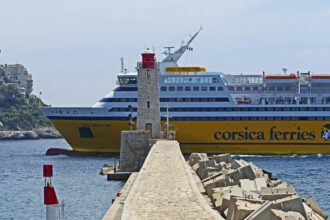
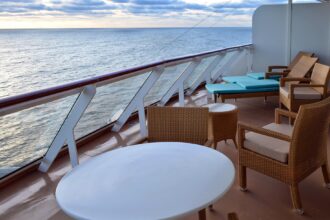
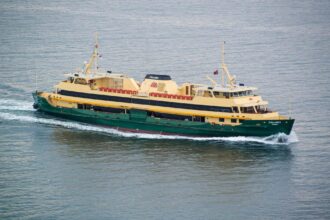
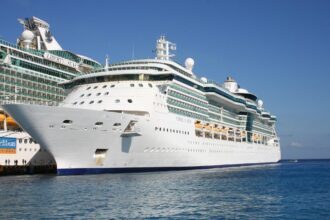
Unlike many ports that specialise in short crossings, Marseille offers a mixture of overnight ferries, multi-day international routes and regular services to nearby islands. Many ships resemble floating hotels rather than simple ferries, offering private cabins, restaurants, bars, lounges, children’s play areas and even outdoor decks where you can enjoy spectacular Mediterranean sunsets.
One of the biggest advantages of travelling by ferry is the ability to take your own vehicle. Whether you’re driving a family car, motorcycle, campervan or motorhome, most routes from Marseille allow you to continue your journey without hiring a vehicle at your destination. This is especially popular for travellers exploring Corsica’s mountain roads, touring Sardinia, or visiting family across North Africa.
Marseille is served by several well-established ferry companies, with routes operating throughout the year and additional sailings during the busy summer season. While some crossings last only a few hours, others are overnight voyages where passengers sleep on board before arriving refreshed the following morning.
Whether you’re planning a relaxing island holiday, an adventurous Mediterranean road trip or an international crossing to North Africa, Marseille offers one of the widest selections of ferry routes anywhere in France.
| Destination | Typical Journey Time | Best For | Service Availability |
|---|---|---|---|
| Corsica (Ajaccio, Bastia, Île-Rousse, Porto-Vecchio, Propriano) | 10–14 hours (overnight) | Beach holidays, hiking and road trips around the island | Year-round; extra sailings and high demand in summer |
| Sardinia (Porto Torres, Golfo Aranci) | Overnight crossing | Exploring Sardinia’s beaches and coastline by road | Less frequent than Corsica routes; book well in advance |
| Algeria (Algiers, Oran, Annaba, Béjaïa, Skikda) | Long overnight or multi-day crossing | Visiting family, city breaks and road trips with your own vehicle | Year-round; demand rises around school holidays, festivals and summer |
| Tunisia (Tunis, Zarzis) | Overnight crossing | Tunis for history and Carthage, or Zarzis for Djerba and the Sahara | Year-round; sailings often sell out in July and August |
| Morocco (Tangier Med) | One of the longest crossings from Marseille | Road trips to Tangier, Chefchaouen, Rabat, Casablanca and Fez | Year-round |
Where Ferries Depart From
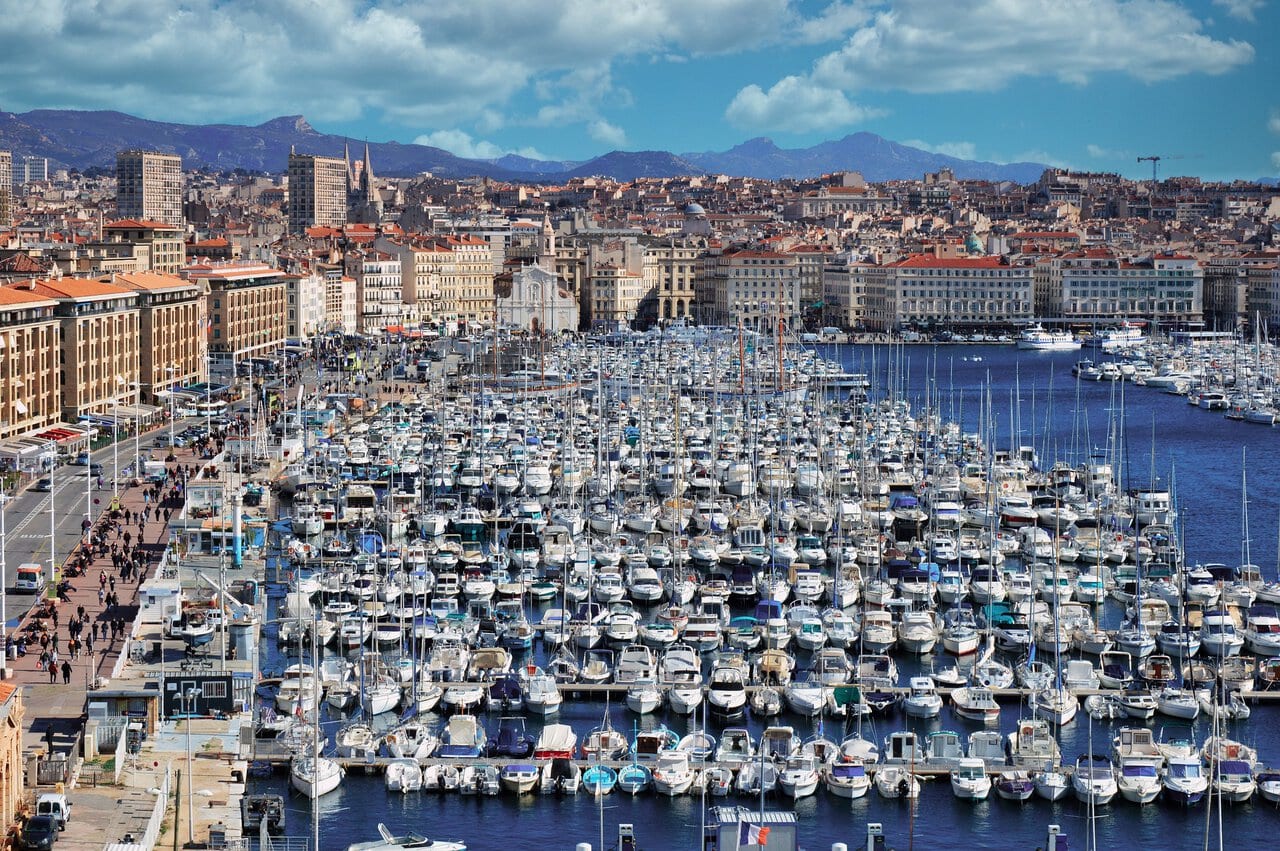
All passenger ferries leave from the Grand Port Maritime de Marseille, one of Europe’s largest commercial and passenger ports. The ferry terminals are located on the northern side of the city’s harbour, several kilometres from the famous Vieux-Port (Old Port), and should not be confused with the marina used by yachts and sightseeing boats.
The terminals are modern and well equipped, with passenger waiting areas, ticket offices, vehicle check-in lanes, cafés, toilets and parking facilities. Larger operators also have dedicated check-in buildings where passengers collect boarding passes before proceeding to security and passport control where required.
If you’re travelling on foot, it’s important to arrive at the correct terminal, as different ferry companies use different boarding areas within the port. Your booking confirmation will clearly state which terminal you need, and signage throughout the port is generally good.
Passengers travelling with cars, motorcycles, caravans or motorhomes follow separate vehicle lanes before boarding. Because loading large ferries can take considerable time, vehicle passengers are normally required to arrive earlier than foot passengers.
Although the ferry port lies outside Marseille’s historic centre, it is well connected by road, taxi, public transport and private transfers, making it straightforward to reach whether you’re arriving from Marseille Provence Airport, Saint-Charles railway station or a hotel in the city.
Best for a short trip. Compare rooms by neighbourhood, price and guest rating before you book.
Compare hotelsBest for families, or any stay past about four nights. A kitchen and a washing machine start paying for themselves.
Browse rentalsBest as a last check before booking. Compares Marseille hotel rates across several sites in one search.
Compare ratesFerry Operators Serving Marseille
Several major ferry companies operate from Marseille, each specialising in different parts of the Mediterranean.
Corsica Linea is one of the port’s largest operators, providing extensive year-round services to Corsica together with regular international crossings to Algeria and Tunisia. Its modern fleet offers comfortable overnight accommodation, restaurants, bars and cabins ranging from simple inside rooms to premium suites.
La Méridionale also operates routes between Marseille and Corsica, while sharing some North African services. The company has built a reputation for comfortable ships, high-quality onboard dining and reliable year-round sailings.
For travellers heading further afield, Grimaldi Lines connects Marseille with destinations including Sardinia and Morocco, offering large cruise ferries capable of carrying thousands of passengers alongside hundreds of cars and freight vehicles.
Most vessels operating from Marseille are designed for long-distance crossings, meaning facilities are considerably more extensive than those found on short ferry routes elsewhere in Europe. Depending on the ship, passengers may find restaurants, self-service cafés, bars, shops, children’s play areas, private cabins, pet-friendly accommodation, Wi-Fi, lounges and spacious outdoor viewing decks.
During the summer holiday season, demand can be extremely high, particularly on services to Corsica. Booking several months in advance often provides the best choice of cabins, lower fares and greater flexibility over sailing dates.
Ferries to Corsica
Corsica is by far the most popular ferry destination from Marseille, with multiple routes connecting mainland France to the island throughout the year. These crossings are ideal whether you’re planning a beach holiday, a hiking adventure through the mountains or a road trip around one of the Mediterranean’s most spectacular islands.
Marseille offers direct sailings to Ajaccio, Bastia, Île-Rousse, Porto-Vecchio and Propriano, giving travellers access to every corner of Corsica without needing to drive across the island after arrival.
Ajaccio, the island’s capital and birthplace of Napoleon Bonaparte, is an excellent arrival point for exploring the dramatic west coast, the Scandola Nature Reserve and the beautiful beaches around Porticcio.
Bastia is the main gateway to northern Corsica and is particularly convenient for visitors heading to Cap Corse, Saint-Florent and the rugged mountain villages of the interior. It is also one of the island’s busiest ports, offering excellent onward road connections.
For those planning to explore Corsica’s famous southern coastline, ferries to Porto-Vecchio and Propriano provide convenient access to some of the island’s finest beaches, including Palombaggia, Santa Giulia and the spectacular cliffs surrounding Bonifacio.
Meanwhile, Île-Rousse offers a relaxed arrival on the beautiful Balagne coast, perfectly positioned for discovering picturesque villages such as Calvi, Lumio and Sant’Antonino.
Most crossings from Marseille to Corsica are overnight sailings, allowing passengers to board in the evening, enjoy dinner and a comfortable night’s sleep before arriving the following morning. Booking a private cabin is highly recommended, particularly on journeys lasting between 10 and 14 hours, as it provides a far more comfortable experience than reclining seats.
Marseille to Corsica (all ports) Ferry Times & Departures
Use Ferryhopper to check live sailings between Marseille and Corsica (all ports) in both directions. Select your travel date to compare scheduled ferry departures, sailing times and available tickets.
Select the date you want to travel. The times shown on the right-hand side are the scheduled departure and arrival times for each ferry.
Availability can change quickly, particularly during weekends and the summer season. Some sailings may stop accepting bookings a few hours before departure. If a timetable is blank, there may be no available sailings for today. Try moving to a later date to check future services.
This is the timetable for the outward direction. Use it to check sailings from Marseille to Corsica (all ports) for the date you plan to travel.
This is a separate timetable for the opposite direction. It does not select a return ticket for the journey above. Use it to check sailings from Corsica (all ports) to Marseille.
Want to compare different routes and other ferry options?
Compare routes, operators, sailing times and prices with Ferryhopper or Direct Ferries.
Sailing to Sardinia
Although Marseille has fewer Sardinian services than Corsican routes, it still provides valuable direct connections to one of Italy’s most beautiful islands.
The principal destinations are Porto Torres, on Sardinia’s north-west coast, and Golfo Aranci, located close to the famous Costa Smeralda and the glamorous resort of Porto Cervo.
Porto Torres is an excellent choice for travellers exploring western Sardinia. From here it’s easy to reach Alghero, renowned for its medieval old town and Catalan heritage, while the spectacular beaches of Stintino and La Pelosa are also within easy driving distance.
Passengers arriving at Golfo Aranci are perfectly placed to discover the island’s luxurious north-east coastline. This area is famous for crystal-clear water, elegant marinas, beautiful beaches and picturesque seaside towns including Olbia, Porto Rotondo and San Teodoro.
Like the Corsica routes, sailings to Sardinia are generally operated by large overnight ferries offering comfortable cabins, restaurants, bars and vehicle transport. Travellers bringing a car will find Sardinia particularly rewarding, as many of the island’s finest beaches, archaeological sites and mountain villages are easiest to reach by road.
Because services to Sardinia are generally less frequent than those to Corsica, it’s advisable to book well in advance, especially during the busy summer holiday season when demand is at its highest.
Ferries to Algeria
Marseille has long been one of the principal ferry gateways between France and Algeria, with regular services linking southern France to several major Algerian ports. These routes are especially popular with people visiting family, travellers taking extended holidays and anyone wishing to travel with their own car, something that would be expensive or impossible by air.
Direct sailings operate to Algiers, Oran, Annaba, Béjaïa and Skikda, providing access to much of Algeria’s Mediterranean coastline.
Algiers, the capital, is the busiest destination and an excellent starting point for exploring the country’s rich history, impressive Ottoman architecture and vibrant waterfront. The city’s famous Casbah, a UNESCO World Heritage Site, is one of North Africa’s most fascinating historic districts.
Further west, Oran offers beautiful seafront promenades, Spanish and French colonial architecture and a lively cultural scene. It is often chosen by travellers visiting western Algeria or continuing inland.
On the eastern side of the country, ferries to Annaba, Béjaïa and Skikda provide convenient access to Algeria’s mountainous coastal regions, beautiful Mediterranean beaches and important commercial centres.
These are generally long overnight or multi-day crossings, with passengers strongly advised to reserve a private cabin. Modern ferries provide restaurants, cafés, shops, children’s play areas, lounges, prayer rooms and extensive vehicle decks capable of accommodating hundreds of cars.
Because demand rises sharply around school holidays, religious festivals and the summer months, booking several months ahead is often essential.
Marseille to Algeria (all ports) Ferry Schedules & Tickets
Check the current Marseille to Algeria (all ports) ferry schedule with Ferryhopper. Change the date to compare available crossings, departure times and bookable tickets for both directions.
Select the date you want to travel. The times shown on the right-hand side are the scheduled departure and arrival times for each ferry.
Availability can change quickly, particularly during weekends and the summer season. Some sailings may stop accepting bookings a few hours before departure. If a timetable is blank, there may be no available sailings for today. Try moving to a later date to check future services.
This is the timetable for the outward direction. Use it to check sailings from Marseille to Algeria (all ports) for the date you plan to travel.
This is a separate timetable for the opposite direction. It does not select a return ticket for the journey above. Use it to check sailings from Algeria (all ports) to Marseille.
Want to compare alternative ferry routes and more sailing options?
Compare routes, operators, sailing times and prices with Ferryhopper or Direct Ferries.
Ferry Services to Tunisia
For travellers heading to Tunisia, Marseille offers direct sailings to both Tunis and Zarzis, making it one of France’s most important ferry hubs for North African travel.
The route to Tunis is the most popular. Arriving at the country’s capital places visitors within easy reach of attractions including the Medina of Tunis, the spectacular ruins of Carthage, the picturesque blue-and-white village of Sidi Bou Said and the beach resorts surrounding the Gulf of Tunis.
Meanwhile, ferries to Zarzis, located in southern Tunisia, are ideal for travellers visiting the country’s quieter Mediterranean coastline or continuing towards destinations such as Djerba, the Sahara and southern Tunisia’s famous desert landscapes.
Crossings typically operate as overnight voyages, with passengers enjoying the comfort of full-size cruise ferries offering private cabins, restaurants, cafeterias, bars, shops, outdoor decks and children’s facilities. Vehicle transport is also widely available, making these routes popular with families taking extended holidays.
If you’re travelling during July and August, or around major public holidays, it’s advisable to reserve both your cabin and vehicle space well in advance, as sailings frequently sell out.
Marseille to Tunisia (all ports) Ferry Crossings & Times
Compare ferry crossings between Marseille and Tunisia (all ports) with Ferryhopper. The live timetable shows scheduled departure and arrival times so you can choose a suitable sailing in either direction.
Select the date you want to travel. The times shown on the right-hand side are the scheduled departure and arrival times for each ferry.
Availability can change quickly, particularly during weekends and the summer season. Some sailings may stop accepting bookings a few hours before departure. If a timetable is blank, there may be no available sailings for today. Try moving to a later date to check future services.
This is the timetable for the outward direction. Use it to check sailings from Marseille to Tunisia (all ports) for the date you plan to travel.
This is a separate timetable for the opposite direction. It does not select a return ticket for the journey above. Use it to check sailings from Tunisia (all ports) to Marseille.
Looking for different ferry routes or other ferry options?
Compare routes, operators, sailing times and prices with Ferryhopper or Direct Ferries.
Crossing the Mediterranean to Morocco
Marseille also offers direct ferry services to Tangier Med, providing an attractive alternative to flying for travellers heading to Morocco.
Located around 40 kilometres east of Tangier itself, Tangier Med is one of Africa’s largest passenger and freight ports. From here it’s easy to continue by road towards Tangier, Chefchaouen, Rabat, Casablanca, Fez or deeper into Morocco.
The crossing is one of the longest ferry journeys from Marseille, making a comfortable private cabin highly recommended. Fortunately, the ships are designed for long-distance travel and offer facilities similar to those found on cruise ferries, including multiple restaurants, lounges, shops, sun decks, children’s play areas and spacious passenger cabins.
One of the biggest advantages of taking the ferry is being able to drive your own vehicle directly into Morocco. This is particularly popular with travellers planning lengthy road trips, overlanding adventures or extended stays, as it avoids the cost of hiring a vehicle after arrival.
As these international crossings involve passport control, customs inspections and occasionally longer boarding procedures, passengers should always allow plenty of time before departure and ensure they have all necessary travel documentation for both France and Morocco.
Marseille to Morocco (all ports) Ferry Timetable & Tickets
View the Ferryhopper timetable for ferries between Marseille and Morocco (all ports). Select a date to check sailing times, available departures and ticket options for the outbound and return journey.
Select the date you want to travel. The times shown on the right-hand side are the scheduled departure and arrival times for each ferry.
Availability can change quickly, particularly during weekends and the summer season. Some sailings may stop accepting bookings a few hours before departure. If a timetable is blank, there may be no available sailings for today. Try moving to a later date to check future services.
This is the timetable for the outward direction. Use it to check sailings from Marseille to Morocco (all ports) for the date you plan to travel.
This is a separate timetable for the opposite direction. It does not select a return ticket for the journey above. Use it to check sailings from Morocco (all ports) to Marseille.
Compare other ferry routes, sailings and ticket options.
Compare routes, operators, sailing times and prices with Ferryhopper or Direct Ferries.
Best if you can move a day either way. Shows how the fare to Marseille changes across the month.
Compare flightsBest if you want maps and messaging working the moment you switch your phone on.
See eSIM plansBest when public transport has stopped, or when you are travelling with children and bags.
Book a transferTaking Your Car, Motorcycle or Motorhome
One of the biggest reasons travellers choose the ferry instead of flying is the ability to take their own vehicle.
Nearly every major ferry sailing from Marseille allows passengers to board with cars, motorcycles, campervans, motorhomes, trailers and, on many routes, bicycles. This provides complete freedom once you arrive, particularly on destinations such as Corsica and Sardinia, where many of the finest beaches, mountain villages and scenic viewpoints are difficult to reach without your own transport.
When making your booking you’ll need to enter your vehicle’s registration number, dimensions and, if applicable, details of any roof boxes, bike racks or trailers. Larger vehicles such as motorhomes usually attract higher fares because they occupy more deck space.
Vehicle passengers are normally required to arrive earlier than foot passengers to allow time for check-in and loading. Once on board you’ll usually leave your vehicle on the enclosed car deck for the duration of the crossing, so it’s important to take everything you’ll need into your cabin or lounge before the ship departs.
For many travellers, particularly families or anyone planning a longer Mediterranean tour, travelling by ferry with their own vehicle offers a level of flexibility, comfort and convenience that simply isn’t possible when flying.
Cabins, Seating and Onboard Facilities
Because many ferry routes from Marseille involve overnight or long-distance crossings, the ships are designed to provide a much higher level of comfort than the short ferries many travellers are used to.
The most comfortable option is to reserve a private cabin, which normally includes comfortable beds, private bathroom facilities, air conditioning, storage space and fresh bedding. Cabins are available in a range of categories, from budget inside cabins to sea-view cabins, larger family cabins and premium suites.
Travellers looking to save money can usually choose airline-style reclining seats, while some operators also offer spacious passenger lounges. Although these are cheaper than cabins, they are generally less comfortable on journeys lasting ten hours or more.
Onboard facilities are often similar to those found on a small cruise ship. Depending on the vessel, you’ll find full-service restaurants, self-service cafeterias, coffee shops, bars, children’s play areas, shops, television lounges, sun decks and occasionally Wi-Fi, although internet access can be slower once the ship is out at sea.
Many ferries also provide pet-friendly cabins, dedicated kennel areas and accessible cabins for passengers with reduced mobility. If you’re travelling overnight or with children, booking a cabin usually transforms the journey from simple transport into a far more relaxing part of your holiday.
How to Book Ferry Tickets
Booking your ferry in advance is strongly recommended, particularly if you’re travelling during the summer holidays, school vacations or taking a vehicle.
Fares vary depending on the route, season, vehicle size, cabin choice and how far ahead you book. Early reservations often provide the lowest prices together with the widest choice of cabins and sailing times.
When making your reservation, you’ll normally need to provide passenger details, passport information for international crossings and vehicle dimensions if you’re travelling with a car, motorcycle or motorhome. It’s important to enter these details accurately, as incorrect vehicle measurements can result in additional charges at the port.
Many ferry operators also offer flexible tickets that allow changes before departure, while others provide discounted fares for return journeys or early bookings.
Before confirming your booking, it’s worth comparing journey times, onboard facilities, departure schedules and cabin prices, particularly on overnight routes where comfort can make a significant difference to your overall travel experience.

Book Your Marseille Ferry Trip with Direct Ferries
Direct Ferries can help you organise a ferry trip involving Marseille by bringing routes, operators and fares together in a single search.
This can be particularly helpful when your journey involves several possible crossings or when departure times vary between ferry companies.
Want to compare ferry prices? You can also check Ferryhopper and FerryScanner before booking.

When is the Best Time to Travel?
Ferry services from Marseille operate throughout the year, although the frequency of sailings varies considerably depending on the destination.
The busiest period is June to September, when additional sailings are added to popular destinations such as Corsica and Sardinia. During this period, ferries often operate close to full capacity, particularly at weekends, making advance booking essential.
Travelling during the shoulder seasons of April, May, September and October is often an excellent compromise. The Mediterranean weather remains pleasant, fares are frequently lower and both ports and ships are generally much quieter.
Winter crossings continue on many routes, especially those serving Corsica, Algeria and Tunisia, as these provide important year-round transport links rather than purely tourist services. Although rougher seas are occasionally possible during winter storms, modern ferries are designed to operate safely in a wide range of conditions.
If your travel dates are flexible, choosing a midweek departure can often result in lower fares, better cabin availability and a quieter onboard experience.
Arriving at the Ferry Terminal
Allowing plenty of time before departure is one of the simplest ways to ensure a stress-free start to your journey.
Foot passengers are generally advised to arrive around two hours before departure, giving sufficient time for ticket collection, security checks and boarding. Those travelling to Algeria, Tunisia or Morocco should allow even more time, as passport control and customs procedures can take longer on international routes.
If you’re travelling with a car, motorcycle, campervan or motorhome, operators usually recommend arriving at least three hours before departure. Vehicle loading begins well before sailing, and late arrivals may not be accepted even if they already hold a confirmed booking.
Before leaving for the port, check that you have your passport, booking confirmation, vehicle documents, insurance papers and any visas or entry requirements needed for your destination. Having everything prepared before reaching the check-in desk makes the boarding process considerably smoother.
Once checked in, staff will direct you either to the passenger waiting area or to the appropriate vehicle loading lane before you board your ferry and begin your Mediterranean crossing.

Rupert’s Handy Travel Tips
Sailing from Marseille? Here are a few useful tips to make your crossing smoother:
- Book your cabin early for Corsica and Sardinia: these overnight routes get very busy in summer, so reserving a private cabin months ahead secures better rates and avoids being stuck with reclining seats on a 10+ hour crossing.
- Arrive extra early with a vehicle: vehicle check-in at the Grand Port Maritime de Marseille closes well before foot passenger boarding, so allow at least three hours if you’re driving a car, motorhome or motorcycle.
- Pack documents for international sailings separately: routes to Algeria, Tunisia and Morocco involve passport control and customs, so keep passports, visas and vehicle papers easily accessible rather than buried in luggage.
- Take essentials out of your car before departure: once loaded, the vehicle deck is usually inaccessible during the crossing, so bring anything you need for the journey, especially on longer overnight sailings, into your cabin first.
Want to meet the reindeer behind our travel tips? Find out more in our page Who is Rupert?.




Frequently Asked Questions
Where do ferries depart from in Marseille?
All passenger ferries depart from the Grand Port Maritime de Marseille, located north of the Vieux-Port. The terminals are easily reached by taxi, public transport and private transfer.
What destinations can you reach by ferry from Marseille?
Marseille offers ferry services to Corsica, Sardinia, Algeria, Tunisia and Morocco, making it one of the Mediterranean’s largest international ferry hubs.
Can I take my car on ferries from Marseille?
Yes. Most ferry operators allow passengers to travel with cars, motorcycles, motorhomes, campervans, caravans and bicycles.
Which ferry route from Marseille is the shortest?
Crossings to Corsica, particularly Bastia and Ajaccio, are generally the shortest routes from Marseille, although journey times vary depending on the destination and operator.
Do ferries from Marseille have private cabins?
Yes. Most long-distance sailings offer a range of private cabins, alongside reclining seats, lounges, restaurants, cafés, shops and outdoor decks.
Should I book my ferry tickets in advance?
Yes. Booking early is strongly recommended, particularly during summer, school holidays and if you’re travelling with a vehicle or require a cabin.
Can I travel as a foot passenger?
Absolutely. All major ferry routes from Marseille welcome foot passengers, making it easy to reach Mediterranean islands and North African destinations without taking a vehicle.
When is the best time to travel by ferry from Marseille?
May, June, September and October usually offer the best combination of pleasant weather, lower fares and fewer crowds, while July and August are the busiest months.
Further Reading
Comparing departure ports along the French coast? Take a look at our guides to Ferry Routes from Nice and Ferry Routes from Toulon if you’re weighing up a Mediterranean crossing from a different French port.
If you have time before you sail, our Things to Do in Marseille guide covers the Old Port, the Calanques and the city’s best neighbourhoods, while our Marseille Airport Transfers guide explains the easiest ways to reach the port area from Marseille Provence Airport.
Combining your ferry crossing with more of France by train? Our Interrail France Pass Guide covers how to make the most of rail travel between France’s major cities.