
Reviewed by our editorial team Updated
Why the Interrail France Pass Is Worth It
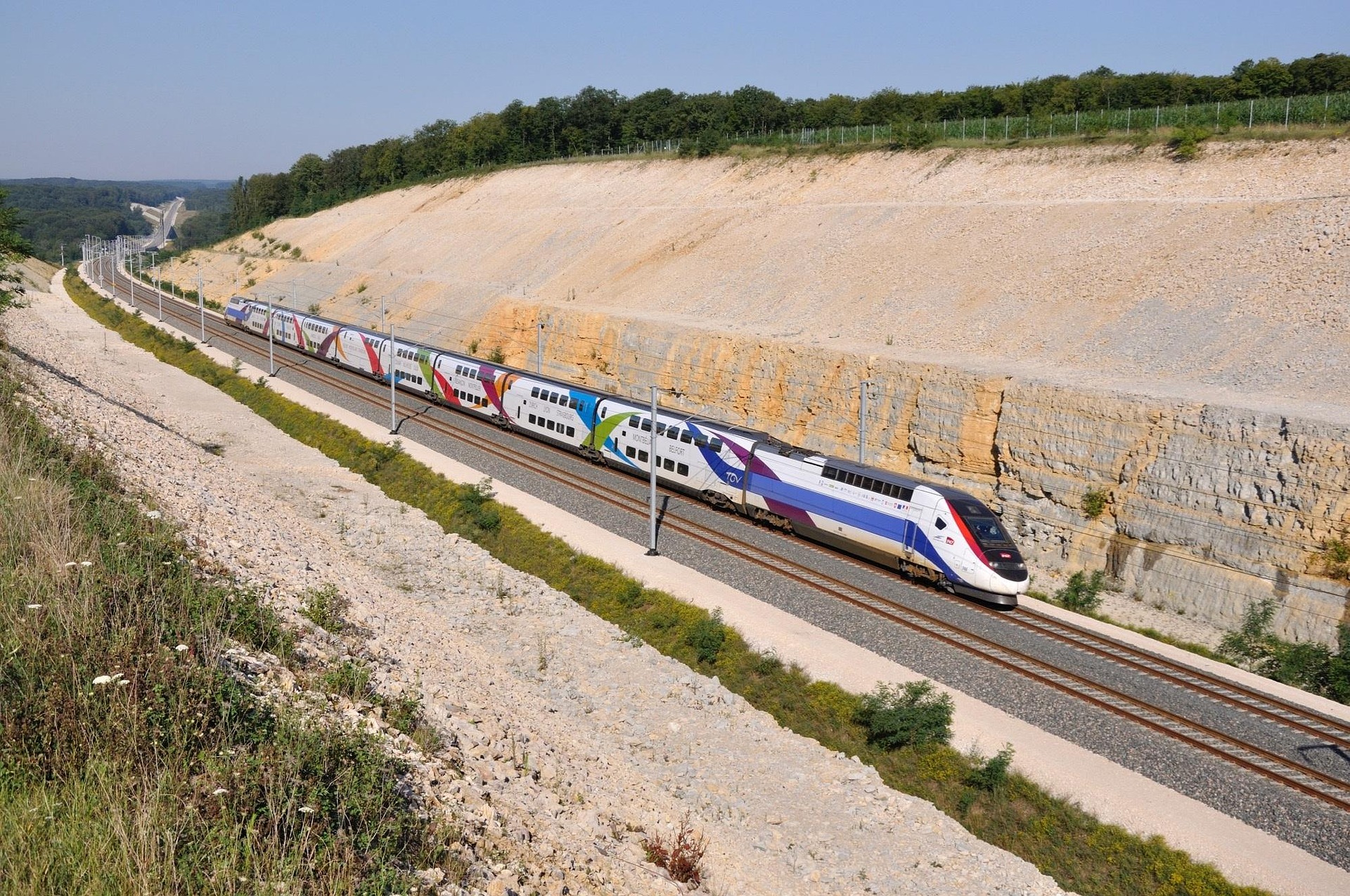
The Interrail France Pass is one of the most powerful rail passes in Europe, giving you access to a country with one of the fastest, most extensive, and most reliable rail networks in the world. At the heart of that network is the TGV high-speed system, which connects Paris to Lyon, Marseille, Bordeaux, Lille, Strasbourg, and Nice in just a few hours, turning what would be long journeys by car into fast, seamless transfers.
One of the biggest reasons to choose the pass is pure cost efficiency on long-distance routes. Standard TGV fares can climb quickly, especially when booking close to departure. A single journey from Paris to Marseille often exceeds €100 (£87/$108), while routes such as Paris to Nice regularly pass €120 (£104/$130). When you compare that to a 3-day Adult Pass priced at €165 (£144/$178), the value becomes clear very quickly. Just two long-distance journeys can effectively cover the cost of the pass, with every additional trip delivering even greater value.
Beyond price, the real strength of the France Pass is flexibility. You are not locked into fixed trains or rigid schedules, which means you can shape your itinerary as you go. You might spend one day exploring Paris and its museums, then head to Lyon for its food scene, continue to Strasbourg for its Franco-German character, or move west towards Bordeaux and its vineyards. The same pass also allows you to break away from major cities and explore coastal regions like Normandy and Brittany, creating a much more varied and rewarding travel experience.
The pass also works exceptionally well if you are thinking beyond France. The rail network connects directly into Belgium, Germany, Switzerland, Spain, and Italy, making it easy to extend your journey without needing to completely rethink your transport strategy. Even if you are primarily focused on France, this level of connectivity adds a layer of flexibility that standard tickets simply cannot match.
For families, the value becomes even stronger. Children under 12 travel free when accompanied by an adult pass holder, which can dramatically reduce overall travel costs. At the same time, youth and senior discounts make the pass accessible across different budgets, whether you are travelling as a student, a couple, or a multi-generational group.
Ultimately, the Interrail France Pass is built for travellers who want to cover distance efficiently, explore multiple regions, and keep control of their itinerary. Whether you are planning a fast-paced trip between major cities or a more relaxed journey that mixes urban highlights with countryside and coastal routes, the pass delivers a combination of speed, comfort, and flexibility that is very difficult to match with individual tickets.
Quick Facts & Pass Overview
The Interrail France Pass is a One Country Pass that gives you unlimited train travel across France for a set number of travel days within a one-month period. It is designed for flexibility, allowing you to move between major cities and regional destinations without needing to buy individual tickets for each journey.
The pass is available exclusively to European residents, while travellers from outside Europe can purchase the equivalent Eurail France Pass, which offers the same coverage and functionality. You can choose between 3, 4, 5, 6, or 8 travel days, depending on how intensive your itinerary is. Each travel day allows you to take multiple trains within a 24-hour period, making it ideal for both long-distance journeys and multi-stop days.
Coverage includes the vast majority of the French rail network, with full access to TGV high-speed trains, Intercités long-distance services, and TER regional trains. This means you can travel quickly between major cities while still having the option to reach smaller towns and rural areas. Some international services departing France are also included, although additional reservation fees apply.
The pass is typically issued as a mobile ticket via the Rail Planner app, allowing you to activate travel days, log journeys, and display your ticket directly from your phone. Paper versions are still available but are far less convenient and carry more risk if lost.
One important detail to understand is reservations. While regional trains can usually be boarded freely, seat reservations are mandatory on most TGV and Intercités services, and these typically cost €10 to €20 per journey (£9 to £17 / $11 to $22). This adds a small extra cost but guarantees you a seat on busy routes.
Overall, the France Pass is built for travellers who want broad coverage, flexibility in planning, and access to both high-speed and regional rail travel without constantly managing separate tickets.
See hotel options and places to stay in France.
Browse hotelsExplore holiday homes and apartments around France.
See holiday homesCompare hotel deals in France from multiple booking sites.
Compare pricesKey Operators and Rail Network Size
Rail travel in France is dominated by SNCF (Société Nationale des Chemins de fer Français), the national operator responsible for the vast majority of passenger services. For anyone using the Interrail France Pass, this is a major advantage, as it means nearly the entire network operates under one integrated system, making travel simpler and more predictable.
The French rail network spans approximately 28,000 kilometres of track, placing it among the largest in Europe. Within this, around 2,600 kilometres are dedicated high-speed LGV lines, which are used by the country’s flagship TGV trains. These lines allow you to travel between Paris and cities such as Lyon, Marseille, Bordeaux, Strasbourg, Lille, and Nice in just a few hours, dramatically reducing travel times compared to driving or flying.
Different types of trains serve different parts of the network. The TGV system forms the backbone of long-distance travel, delivering fast and direct connections between major cities. Alongside this, Intercités services cover routes that are not served by high-speed lines, linking secondary cities and filling important gaps in the network. At a more local level, TER regional trains extend coverage into smaller towns, coastal areas, and rural regions, making them essential for exploring beyond the main tourist hubs.
France also operates Ouigo, a low-cost high-speed service. While these trains are included with the pass, they still require reservations and can have more limited availability, particularly on popular routes.
International connectivity is another major strength. High-speed services connect France directly to Belgium, Germany, Switzerland, Italy, and Spain, allowing you to extend your journey beyond the country with minimal disruption. While some of these routes require additional reservations or a different pass for full coverage, the France Pass still integrates seamlessly with these cross-border connections.
The result is a network that is fast, reliable, and extremely comprehensive, giving you access to everything from major cities to remote regional destinations under one unified system.
Transport Hubs and Major Routes
France’s rail network is highly centralised, with Paris acting as the primary hub for both domestic and international travel. The capital is served by six major railway stations, each dedicated to different regions of the country, which creates a structured and efficient system once you understand how it is organised.
Gare du Nord handles routes to northern France, Lille, and Calais, and also serves international connections towards Belgium, the Netherlands, and the UK. Gare de l’Est focuses on eastern routes, linking Paris with Strasbourg, Metz, and Germany. For travel towards the south, Gare de Lyon is the key departure point, with high-speed services running to Lyon, Marseille, Nice, and onwards into Switzerland and Italy.
Western France is primarily accessed via Gare Montparnasse, which connects Paris to Bordeaux, Nantes, and Rennes, while Gare Saint-Lazare serves routes into Normandy, including Rouen and Le Havre. Gare d’Austerlitz complements the network with Intercités services to central and southwestern regions.
Outside the capital, several major regional hubs play an important role. Lyon Part-Dieu acts as a key interchange linking northern, southern, and eastern France. Marseille Saint-Charles serves as the gateway to Provence and the Mediterranean, while Bordeaux Saint-Jean anchors the southwestern network and provides access to major wine regions. In the north, Lille Europe is an important international hub connecting France with Belgium and beyond.
Some routes stand out for both speed and experience. The high-speed corridor from Paris to Lyon, Marseille, and Nice is one of the busiest and most efficient in Europe, offering rapid access to the Mediterranean. The route from Paris to Bordeaux combines high-speed travel with access to one of France’s most famous wine regions, while Paris to Strasbourg is one of the fastest TGV journeys, often completed in under two hours. The line from Lyon through Avignon to Montpellier offers a strong mix of culture, history, and coastal scenery.
With such a dense and well-organised system, the Interrail France Pass allows you to move efficiently between major destinations while still reaching smaller regional highlights.
Example Ticket Prices vs Pass Value
France’s high-speed rail network is world-class, but ticket prices can be high, particularly if you are booking close to your departure date. This is where the Interrail France Pass can deliver significant value, especially for travellers planning multiple long-distance journeys.
A typical journey from Paris to Lyon, which takes around two hours on a TGV, usually costs between €50 and €90 (£44 to £78 / $54 to $97). Travelling further south, a trip from Paris to Marseille often ranges from €70 to €120 (£61 to £104 / $76 to $130), while longer routes such as Paris to Nice can exceed €120 (£104/$130), particularly during peak travel periods. Even shorter high-speed routes like Paris to Strasbourg, completed in under two hours, can still cost €40 to €80 (£35 to £70 / $43 to $86) depending on demand.
When you start combining journeys, the costs quickly escalate. A return trip between Paris and Marseille can easily exceed €150 (£131/$162), which is already close to the price of a 3-day Adult Pass at €165 (£144/$178). For younger travellers, the Youth Pass at €124 (£108/$134) can be justified with just one return journey between Paris and Bordeaux, especially when tickets are booked last minute.
The value becomes even more obvious on multi-city itineraries. A route covering Paris, Lyon, Marseille, and Nice can easily surpass €300 (£261/$324) in individual ticket costs, whereas a 6-day pass priced at €247 (£215/$267) would cover all of those journeys, while also giving you the freedom to adjust your plans.
Flexibility is a major part of that value. While advance tickets can sometimes be cheaper, they lock you into fixed trains and times. The France Pass allows you to travel more freely, which is particularly useful if you want to adapt your itinerary or avoid rigid scheduling.
In practical terms, the pass delivers its best value when you are planning two or more long-distance high-speed journeys, while shorter regional trips are often better handled with separate tickets.

Interrail France Pass Prices and Options
The Interrail France Pass is offered as a Flexi Pass, meaning you choose a set number of travel days to use within a one-month period. This structure gives you the flexibility to travel intensively over a short period or spread your journeys out between sightseeing days.
There are five main options, allowing you to select the level of coverage that matches your itinerary. The entry-level option is 3 travel days within 1 month, while the most comprehensive is 8 travel days within the same period. In between, you can choose 4, 5, or 6 travel days, which gives you a balanced range depending on how many long-distance journeys you plan to make.
Pricing varies depending on age category. The Adult Pass is the standard option, while Youth travellers 27 or under benefit from reduced pricing, and Senior travellers aged 60 and over receive a discounted rate. Families gain particularly strong value, as children under 12 travel free when accompanied by an adult pass holder, which can significantly reduce total travel costs.
In terms of value, the 6-day pass is often the most popular choice, as it provides enough flexibility to cover multiple regions without overcommitting. The 3-day pass works well for shorter trips focused on major cities, while the 8-day pass is better suited to longer, more comprehensive itineraries that include both cities and regional exploration.
What makes the pricing structure effective is how quickly the pass can pay for itself. With individual TGV fares regularly exceeding €100 (£87/$108), just a couple of long-distance journeys can justify the cost. Beyond that point, each additional trip effectively becomes free, which is where the pass starts to deliver real value.
Choosing the right option comes down to one key decision: how many long-distance journeys you realistically plan to make. If your itinerary includes multiple major routes such as Paris to Marseille, Bordeaux, Nice, or Strasbourg, the pass becomes increasingly cost-effective.
How the Interrail France Pass Works
The Interrail France Pass operates on a flexible travel day system, allowing you to take unlimited trains on each selected travel day within a one-month window. This means you can make multiple journeys in a single day, whether that involves one long-distance trip or several shorter connections.
Once you purchase the pass, it is typically delivered as a mobile ticket via the Rail Planner app, which acts as the central hub for managing your travel. Before boarding your first train of the day, you activate a travel day within the app and add your planned journeys to your digital travel diary. Conductors then scan your QR code ticket directly from your phone, making the process quick and straightforward.
The pass is valid across most of the French rail network, including TGV high-speed trains, Intercités services, and TER regional trains. This gives you access to both fast intercity connections and slower regional routes that reach smaller towns and scenic areas.
However, there are a few operational details that are essential to understand. Seat reservations are mandatory on most TGV and Intercités services, and these must be booked separately before travel. Costs typically range between €10 and €20 per journey (£9 to £17 / $11 to $22), and availability can be limited on popular routes, especially during peak travel periods. In contrast, TER regional trains generally do not require reservations, allowing for more spontaneous travel.
It is also important to note that the pass does not cover local urban transport systems, such as metros, trams, or buses in cities like Paris, Lyon, or Marseille. These must be purchased separately, although they are usually inexpensive and easy to access.
In practice, the France Pass works best when you combine planned high-speed journeys with more flexible regional travel, allowing you to balance structure with spontaneity while maximising the value of each travel day.
Where You Can Travel with the France Pass
The Interrail France Pass provides access to almost the entire SNCF-operated rail network, giving you the freedom to explore both major cities and lesser-known regions under a single ticket. This breadth of coverage is one of the key reasons the pass is so effective for multi-destination travel.
At the core of the network are France’s major cities. You can travel easily between Paris, Lyon, Marseille, Nice, Bordeaux, Strasbourg, Lille, and Toulouse, all of which are connected by fast and frequent services. These cities form the backbone of most itineraries and are linked by the high-speed TGV network.
Beyond these headline destinations, the pass also opens up access to regional highlights that are often missed by travellers relying on point-to-point tickets. You can explore the Loire Valley, with its historic châteaux and riverside towns, head west into Brittany for coastal scenery and maritime history, or visit Normandy for its cultural heritage and dramatic coastline. Routes through the Alps and along the Mediterranean coast also offer some of the most scenic rail journeys in Europe.
While the pass is designed primarily for travel within France, it also integrates with the wider European rail network. High-speed connections extend towards Belgium, Germany, Switzerland, Spain, and Italy, allowing you to continue your journey beyond France with minimal disruption. However, additional reservations or tickets may be required for full cross-border travel, particularly on premium international services.
In practical terms, the France Pass gives you the ability to move seamlessly between urban centres, rural regions, coastal destinations, and mountain landscapes, all within one integrated system. This makes it an ideal tool for travellers who want to experience the full diversity of the country without being restricted to a single region.
Search routes and flight options for your trip to France.
Search flightsBrowse Airalo eSIM options for convenient travel data.
Check eSIMsCheck private pickup options and plan your onward journey before arrival.
View transfersHow to Buy the Interrail France Pass
The easiest way to purchase the Interrail France Pass is online through the official Interrail website or through trusted resellers such as Rail Europe and ACP Rail. Buying online ensures you receive the mobile version of the pass instantly, which can then be activated through the Rail Planner app before you begin travelling.
When purchasing, you will need to select both your age category and the number of travel days you want within the one-month validity period. It is important to match this to your itinerary, as choosing too few travel days can limit your flexibility, while choosing too many may reduce overall value.
The mobile pass is the preferred option for most travellers. It is secure, easy to manage, and works even without a constant internet connection once activated. All your journeys can be logged digitally, and your ticket is always available on your phone. Paper passes are still available, but they require manual entry of each journey and carry a higher risk if lost or damaged.
Payment is straightforward, with most providers accepting credit cards, debit cards, and PayPal. From time to time, Interrail runs seasonal promotions, particularly in spring and autumn, which can offer meaningful discounts on pass prices. If your travel dates are flexible, it is worth checking for these offers before booking.
If your trip includes travel beyond France, it is also worth comparing the France One Country Pass with the Global Interrail Pass, which may offer better overall value depending on your route. However, for itineraries focused entirely within France, the One Country Pass is usually the more cost-effective choice.
Buying in advance allows you to start your journey immediately upon arrival, without needing to navigate ticket machines or deal with fluctuating last-minute fares. It also ensures you can secure any required reservations early, which is particularly important on busy high-speed routes.

Explore Europe by Train with Rail Passes
Travelling by train in Europe can quickly become expensive if you book individual tickets. Rail passes offer a flexible way to travel across one or multiple countries with a single ticket, making it easier to plan your journey.
Rail Europe allows you to compare and buy a wide range of rail passes, including Interrail-style options, helping you choose the best pass for your route and travel style.
Top Routes and Itineraries with the France Pass
One of the biggest strengths of the Interrail France Pass is how easily it allows you to build multi-region itineraries that combine major cities with coastal, rural, and cultural destinations. The network is fast enough that you can cover large distances in a short time, but flexible enough to let you slow down when needed.
A classic route starts in Paris, before heading south to Lyon, which is widely regarded as France’s culinary capital. From there, continuing to Marseille opens up access to the Mediterranean, while extending the journey to Nice allows you to experience the full appeal of the French Riviera. This route works particularly well over five to six travel days, balancing major cities with scenic coastal travel.
If you prefer a more regional focus, the southwest offers a strong combination of culture and landscape. Travelling from Paris to Bordeaux introduces you to one of the world’s most famous wine regions, while continuing to Toulouse provides a different atmosphere, with a more relaxed southern character. Adding a stop at Carcassonne brings in a completely different experience, with its medieval fortress setting offering a striking contrast to modern cities. The Château et remparts de la Cité de Carcassonne is a UNESCO World Heritage site, and entry is free for visitors under 26.
Eastern France provides a different kind of journey, with routes that blend culture and history. Travelling from Paris to Strasbourg gives you access to the Alsace region, known for its distinctive architecture and wine routes. Continuing to Dijon and then Lyon creates a compact but varied itinerary that combines gastronomy, history, and regional diversity.
For travellers drawn to the coast, western routes towards Rennes and Saint-Malo open up access to Brittany, with its rugged coastline and maritime heritage. Extending the journey towards Nantes or La Rochelle adds further variety, particularly if you are interested in combining cultural cities with Atlantic coast scenery.
The key to using the France Pass effectively is to think in terms of connected regions rather than isolated destinations. By linking cities logically, you maximise both the value of each travel day and the overall experience of the trip.
Seat Reservations and Additional Costs
One of the most important things to understand about the Interrail France Pass is that seat reservations are mandatory on most long-distance services, particularly on TGV high-speed trains and Intercités routes. This is not optional. Without a reservation, you will not be able to board these trains, even if you hold a valid pass.
Reservation costs are generally reasonable, but they do need to be factored into your overall budget. Most TGV reservations fall between €10 and €20 per journey (£9 to £17 / $11 to $22), while Intercités services are usually around €10 (£9/$11). On very busy routes or during peak travel periods, these costs can increase slightly, and availability can become limited.
Planning ahead is essential, especially for popular routes such as Paris to Nice, Paris to Bordeaux, or Paris to Marseille, where trains can sell out several days in advance during peak seasons. Securing reservations early gives you access to better departure times and avoids unnecessary disruption to your itinerary.
Regional TER trains provide a useful alternative, as they generally do not require reservations. These services are slower, but they offer much greater flexibility and can be particularly valuable for short journeys or exploring smaller towns and rural areas. In many cases, combining TGV routes with TER connections gives you the best balance of speed and flexibility.
Overnight travel is also an option. Intercités de Nuit services are included in the pass, but require a supplement depending on the level of comfort you choose. A standard reclining seat is the cheapest option, while couchettes and sleeper cabins offer a more comfortable experience at a higher cost. These trains can be an efficient way to cover long distances while saving on accommodation.
International routes departing France may also require additional supplements, depending on the service and destination. While these are usually manageable, they can reduce the overall value of the pass if you rely heavily on cross-border travel.
In practical terms, setting aside an additional €30 to €50 (£26 to £44 / $32 to $54) for reservations over a typical trip is a sensible estimate. This ensures you are not caught off guard and allows you to plan your travel days more effectively.
Benefits of the Interrail France Pass
The Interrail France Pass offers a combination of advantages that make it particularly attractive for travellers who want to explore the country in depth without being tied to fixed tickets.
One of the biggest benefits is access to the TGV high-speed network, which allows you to travel between major cities such as Paris, Lyon, Marseille, Bordeaux, and Strasbourg in just a few hours. This dramatically increases the number of destinations you can realistically include in a single trip, turning what would otherwise be long travel days into short, efficient transfers.
At the same time, the pass provides full coverage of TER regional trains, which opens up access to smaller towns, coastal routes, and rural regions that are often overlooked. This combination of high-speed and regional access allows you to move easily between major cities and lesser-known destinations, creating a much richer travel experience.
Flexibility is another major advantage. Travel days can be used at any point within a one-month period, allowing you to structure your itinerary around your interests rather than fixed bookings. This is particularly useful if you want to adjust your plans as you go or take advantage of good weather in specific regions.
For families, the value proposition is especially strong. Children under 12 can travel free when accompanied by an adult pass holder, which can significantly reduce the overall cost of a trip. At the same time, youth and senior discounts make the pass accessible across a wide range of travellers.
Comfort also plays a role. French trains are modern, spacious, and well-equipped, often offering Wi-Fi, onboard catering, and generous seating space, which makes long-distance travel far more enjoyable than many alternatives.
Perhaps the most important benefit, however, is overall value. With individual high-speed tickets often exceeding €100 per journey (£87/$108), the pass can pay for itself quickly. Once you reach that point, every additional journey effectively increases your return on investment.
Drawbacks and Limitations
Despite its strengths, the Interrail France Pass is not perfect, and understanding its limitations is essential to deciding whether it is the right option for your trip.
The most significant drawback is the mandatory reservation system on high-speed and long-distance trains. Unlike in countries where you can board freely with a pass, France requires reservations on most TGV and Intercités services. This adds both an extra cost and a layer of planning, which reduces some of the spontaneity that rail passes are often associated with.
Cost efficiency can also be an issue on shorter routes. Regional tickets between nearby cities can be relatively inexpensive, sometimes costing €15 to €25 (£13 to £22 / $16 to $27), which is often cheaper than using a full travel day on the pass. This means the France Pass delivers its best value on longer journeys, rather than local travel.
International travel can introduce additional costs as well. While the network connects well to neighbouring countries, cross-border high-speed services often require higher reservation fees. In some cases, this can make standard tickets more competitive, particularly if booked in advance.
Another factor to consider is how the network is structured. Many routes are Paris-centric, meaning that travelling between regions sometimes requires passing through the capital, even if it is not your final destination. This can increase journey times compared to more decentralised rail networks.
The pass also does not include local transport systems, such as metros, trams, and buses in major cities. These need to be purchased separately, which adds a small additional cost and requires some extra planning when navigating urban areas.
Finally, while the network is extensive, some rural or remote areas are not well served by rail and may require bus connections or car hire to reach specific destinations.
Overall, the France Pass works best for travellers planning multiple long-distance journeys across different regions, and is less suited to those focusing on short trips within a single area.
Who the Interrail France Pass Is Best For
The Interrail France Pass is best suited to travellers who want to cover distance efficiently while exploring multiple regions. If your itinerary includes major cities such as Paris, Lyon, Marseille, Bordeaux, Nice, or Strasbourg, the pass becomes a highly effective way to move between them without constantly managing separate tickets.
It works particularly well for city-hoppers, where high-speed routes allow you to move quickly between destinations that would otherwise require long travel days. Travellers interested in culture, food, and history also benefit, as the pass makes it easy to combine Paris museums, Lyon’s gastronomy, Bordeaux’s vineyards, and the historic towns of the Loire Valley or Alsace within a single trip.
For families, the value is difficult to ignore. With children under 12 travelling free when accompanied by an adult pass holder, the cost per person drops significantly, especially when covering longer distances. At the same time, youth travellers benefit from discounted pricing, making it one of the most accessible ways to explore France on a flexible itinerary.
The pass is also well suited to international travellers who want the option to extend their journey into neighbouring countries. While it is focused on France, its integration with routes towards Belgium, Germany, Switzerland, Spain, and Italy makes it a strong foundation for a wider European trip.
Where the pass is less effective is for travellers staying in one region or making only short journeys. In those cases, individual tickets are often cheaper and simpler. In practical terms, the France Pass delivers the most value when you are planning two or more long-distance high-speed journeys combined with regional exploration.
Browse hostels and budget-friendly stays around France.
See hostelsGet help with compensation, eligible lounge access and disruption support.
Explore AirHelp+Use convenient luggage storage around France between arrival, check-in and departure.
Check storagePractical Tips for Using the France Pass
Getting the most out of the Interrail France Pass comes down to using it strategically rather than simply using it often. The most important principle is to prioritise long-distance high-speed journeys, where ticket prices are highest and the pass delivers the greatest value. Routes such as Paris to Marseille, Paris to Nice, or Paris to Bordeaux are where the pass quickly pays for itself.
Planning ahead is essential when it comes to reservations. Since TGV and Intercités services require mandatory seat reservations, it is important to book these as soon as your travel dates are confirmed. This is particularly important during summer, school holidays, and major events, when trains can sell out quickly and limit your options.
Timing your travel can also improve the experience. Trains tend to be busiest during early mornings, late afternoons, and weekends, so travelling during mid-morning or early afternoon often results in a more comfortable journey and better availability.
Regional TER trains are an important tool for adding flexibility to your itinerary. Because they do not require reservations, they allow you to make spontaneous trips to smaller towns and scenic areas without additional cost. This is particularly useful in regions such as Normandy, Brittany, and the Loire Valley, where shorter journeys are common.
It is also worth planning for local transport separately. Since the pass does not include metros, trams, or buses, using city transport apps or local travel cards can make moving around much easier once you arrive in each destination.
Finally, consider using overnight trains where available. These services allow you to cover long distances while saving on accommodation, making them a practical option for longer itineraries.
Used correctly, the France Pass becomes more than just a ticket. It becomes a tool for building a flexible, efficient, and well-structured travel plan.
Essential Apps for Train Travel in France
Using the right apps alongside the Interrail France Pass can significantly improve your experience, particularly when managing reservations, checking live updates, and navigating stations.
The most important tool is the Rail Planner app, which acts as the central hub for your pass. This is where you store your mobile ticket, activate travel days, and log journeys, all while accessing offline timetables across Europe. It is essential for using the pass smoothly and should be set up before your trip begins.
Alongside this, the official SNCF Connect app is one of the most useful tools for travelling within France. It allows you to check live train schedules, book mandatory seat reservations, and receive real-time updates, which is particularly important on busy high-speed routes where plans can change quickly.
For broader journey planning, Google Maps is extremely useful, especially when navigating between stations, hotels, and attractions in larger cities. It helps bridge the gap between national rail travel and local transport systems that are not covered by the pass.
In cities such as Paris, Lyon, and Marseille, local transport apps can also be valuable. These allow you to manage metro, tram, and bus journeys, which need to be purchased separately but are essential for completing most journeys once you arrive.
Using a combination of these tools ensures that your travel experience is smooth, informed, and flexible, reducing the risk of missed connections or unnecessary delays.


App availability and prices vary by country. Some of these may not appear in your local App Store or Google Play.

Rupert’s Handy Travel Tips
France’s rail network rewards a bit of forward planning. Here are a few things worth knowing before you activate your first travel day.
- Book TGV reservations early: Even with a valid pass, seat reservations are mandatory on TGV and most Intercités trains, so secure yours as soon as your dates are confirmed, especially on popular routes like Paris to Nice.
- TER trains need no reservation: Regional TER services can be boarded freely with your pass, making them ideal for spontaneous side trips to smaller towns and coastal villages.
- Check strike advisories before you travel: France has seen a recurring pattern of SNCF industrial action through 2026, including a national strike on 10 June 2026 that disrupted RER, TGV, and Eurostar connections, with further Sud Rail action threatened for summer 2026 targeting TGV, Eurostar, and CDG airport transfers. It is worth checking SNCF’s strike advisory pages close to your travel dates so you can adjust plans if needed.
- Validate your travel day before boarding: Activate each travel day in the Rail Planner app before your first train of the day, so conductors can scan a valid QR code straight from your phone.
- Budget for reservation fees separately: Set aside roughly €30 to €50 (£26 to £44 / $32 to $54) for reservations across a typical trip, on top of the pass price itself.
Want to meet the reindeer behind our travel tips? Find out more in our page Who is Rupert?.


Frequently Asked Questions about the Interrail France Pass
Is the France Pass valid on all trains?
Yes, it covers almost all SNCF services, including TGV, Intercités, TER, and Ouigo high-speed trains. Private tourist railways and city transport systems are not included.
Do I need reservations?
Yes, reservations are mandatory on TGV and most Intercités trains. They cost around €10 to €20 per journey (£9 to £17 / $11 to $22). TER regional trains do not require reservations.
Does the pass include city transport in Paris or Lyon?
No. The pass only covers national rail. Metro, tram, and bus tickets must be purchased separately.
Are overnight trains included?
Yes, Intercités de Nuit trains are covered, but you must pay a supplement for couchettes or sleepers.
Can I use the pass for international routes?
The pass covers travel within France. It also provides access to border routes connecting with Belgium, Germany, Switzerland, Italy, and Spain, but supplements and reservations are required.

Further Reading & Related App Guides
Want to explore more ways to make your European journeys smoother? These guides will help you connect your Interrail Ticket with other essential travel tools:
If France is one leg of a longer trip, our Interrail Spotlight Guide explains how the France Pass fits alongside the Full Interrail Pass, and our Train Booking Apps Guide compares the best platforms for booking TGV and Intercités reservations.
Staying connected while crossing borders by rail matters too, and our eSIM Apps Guide covers the easiest ways to keep data working without swapping physical SIM cards. For getting to and from stations, our Taxi Hailing Apps Guide rounds up the apps worth having installed, and if your route extends beyond the rails, our Ferry Apps Guide covers combining trains with sea travel.
These resources build on the Interrail experience, helping you plan door-to-door journeys, manage connectivity, and find the best combination of train, bus, and ferry tickets. Each page offers practical comparisons, app recommendations, and insider tips that complement your use of your Interrail Ticket.
By linking your trip planning across these guides, you can move beyond simple A-to-B bookings and create a fully integrated travel strategy. Whether you’re crossing borders by high-speed train, hopping onto a ferry for an island escape, or switching to a taxi for the last leg, AppSavvyTraveller has you covered with tools to make every leg smoother.











