Reviewed by our editorial team Updated
Discover Montenegro’s Modern Capital
While many visitors arrive in Montenegro dreaming of Kotor, Budva or the dramatic mountain landscapes of Durmitor National Park, the country’s capital, Podgorica, often receives little more than a passing glance. That’s a shame, because beneath its modern appearance lies a city that offers an authentic glimpse into everyday Montenegrin life, fascinating history, excellent restaurants and one of the best locations in the country for exploring its greatest attractions.
Situated where six rivers meet, Podgorica has been shaped by water for thousands of years. The Morača, Ribnica, Zeta, Cijevna, Sitnica and Mareza rivers all flow through or around the city, creating leafy parks, scenic walking routes and some of Montenegro’s most recognisable bridges. Few European capitals enjoy such a striking natural setting.
Although much of Podgorica was destroyed during the Second World War, traces of its long history remain. Ottoman streets, historic bridges, elegant churches and modern architecture sit side by side, reflecting the many cultures that have influenced the city over the centuries. Rather than being defined by a single landmark, Podgorica is a city best appreciated by exploring its neighbourhoods, riversides and vibrant café culture.
More importantly, Podgorica is the perfect base for discovering the rest of Montenegro. Within little more than an hour you can reach Lake Skadar National Park, Ostrog Monastery, Lovćen National Park, Cetinje, the Adriatic coast and some of the country’s finest wineries, making the capital one of the most practical places to stay during a tour of Montenegro.
Why Visit Podgorica?
Unlike Montenegro’s coastal resorts, Podgorica doesn’t rely on beaches or medieval walls to attract visitors. Instead, it offers something far more authentic: the opportunity to experience modern Montenegro while enjoying excellent food, beautiful riverside parks and easy access to the country’s greatest natural attractions.
The city has a wonderfully relaxed atmosphere. Throughout the day, cafés are filled with locals enjoying coffee, riverside paths are busy with walkers and cyclists, and the parks provide welcome green spaces in the heart of the capital. It’s a city that rewards slowing down rather than rushing from one attraction to another.
Podgorica is also becoming an increasingly popular destination for food lovers. Traditional Montenegrin restaurants, stylish wine bars, modern cafés and international cuisine can all be found within walking distance of the city centre, while nearby vineyards produce some of the best wines in the Balkans.
Perhaps the biggest reason to visit, however, is its location. Whether you’re planning a day trip to Lake Skadar, a visit to the spectacular Ostrog Monastery, a scenic drive into Lovćen National Park or a journey to Montenegro’s Adriatic coast, Podgorica sits at the heart of the country’s transport network, making it an excellent base for exploring in every direction.
It’s also simply a good place to get a more rounded sense of the country beyond its postcard scenery. Sitting in a café on the Morača, watching daily life carry on around you rather than around a busload of visitors, gives a genuinely different perspective on Montenegro than a few days spent purely between the coast and the mountains.
See hotel options and places to stay in Podgorica.
Browse hotelsBrowse apartments, homes and self-catering accommodation in Podgorica.
Browse rentalsSee hotel prices from multiple booking sites in one search.
Compare ratesExplore Stara Varoš (The Old Town)
Hidden among the modern streets of the capital lies Stara Varoš, the historic Old Town that offers a fascinating glimpse into Podgorica’s Ottoman past.
Although much of the city was rebuilt following heavy bombing during the Second World War, Stara Varoš has preserved several important historic landmarks that reflect the centuries of Ottoman rule. Walking through its quieter streets reveals a very different side of Podgorica, where old stone buildings, traditional houses and historic places of worship stand alongside reminders of the city’s multicultural heritage.
One of the district’s best-known landmarks is the Clock Tower (Sahat Kula), built during the seventeenth century and one of the few Ottoman monuments to survive the city’s turbulent history. Nearby you’ll also find several historic mosques, including the Osmanagić Mosque and the Starodoganjska Mosque, both of which remain important religious and cultural landmarks today.
The neighbourhood is ideal for a leisurely walk. Quiet lanes, hidden courtyards and small local cafés provide a welcome contrast to the busy modern city centre and help visitors appreciate how Podgorica has evolved over hundreds of years. While it may not rival the medieval towns of Kotor or Perast, Stara Varoš tells an important chapter in Montenegro’s story that shouldn’t be overlooked.
The contrast between Stara Varoš and the surrounding modern city is part of what makes it worth seeking out. Stepping from a wide, traffic-heavy boulevard into a narrow lane lined with older stone buildings happens almost without warning, and it’s a useful reminder of just how much the city has been rebuilt since the mid-twentieth century.
Visit The Millennium Bridge & Morača River
One of the defining landmarks of modern Podgorica is the striking Millennium Bridge, an elegant cable-stayed bridge that has become the architectural symbol of the Montenegrin capital.
Spanning the fast-flowing Morača River, the bridge connects the older parts of the city with newer residential and commercial districts. Completed in 2005, its soaring central pylon and sweeping cables create one of the most recognisable skylines in Montenegro, particularly when illuminated after dark.
The surrounding riverside is just as enjoyable as the bridge itself. Wide pedestrian paths follow the banks of the Morača, providing excellent places for walking, jogging and cycling while offering beautiful views across the water. The river’s clear turquoise colour, particularly after periods of dry weather, often surprises first-time visitors.
Several cafés and green spaces overlook the river, making this one of the best places in Podgorica to relax after a morning of sightseeing. Whether you’re taking photographs of the bridge, enjoying a peaceful riverside walk or simply watching local life unfold, the Millennium Bridge perfectly captures the blend of modern architecture and natural beauty that defines Montenegro’s capital.
After dark, the bridge and much of the surrounding riverside are lit up, making an evening walk along the Morača one of the more atmospheric free things to do in the city. Locals treat the riverside paths much like a promenade, so it’s also a good place to see everyday Podgorica life rather than a purely tourist-oriented view of the capital.
Discover The Cathedral Of The Resurrection Of Christ
Standing proudly in the New City, the magnificent Cathedral of the Resurrection of Christ (Hram Hristovog Vaskrsenja) is one of Podgorica’s most impressive landmarks and an essential stop for anyone visiting the Montenegrin capital.
Completed in 2013 after almost two decades of construction, the cathedral serves as the principal church of the Metropolitanate of Montenegro and the Littoral and is one of the largest Orthodox churches in the Balkans. Its striking white stone exterior, soaring towers and beautifully landscaped grounds make it one of the city’s most recognisable buildings.
Step inside and you’ll discover an equally breathtaking interior. Towering golden chandeliers, colourful Byzantine-style frescoes, intricate mosaics and richly decorated domes cover almost every surface. The level of craftsmanship is extraordinary, and visitors often spend far longer here than they originally expected simply admiring the artwork.
Whether you’re interested in architecture, history, religion or photography, the cathedral offers one of the most memorable experiences in Podgorica and provides a fascinating contrast to the city’s modern streets.
The cathedral grounds are large enough to make a pleasant stop even for visitors who aren’t planning to go inside, with wide plazas, mature trees and views of the striking exterior from several angles. It’s within easy walking distance of the city centre, making it simple to combine with a wider stroll around Podgorica’s other landmarks.
Discover the Ribnica Bridge & River Confluence
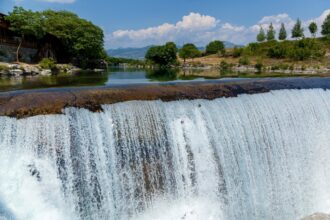
One of the most attractive places to explore in Podgorica is the area where the Ribnica River meets the Morača River. Hidden just a short walk from the city centre, this peaceful riverside setting feels worlds away from the surrounding streets and is a favourite place for locals to relax, particularly during the evening.
The historic Ribnica Bridge, also known as Adži-paša’s Bridge, is one of the oldest surviving landmarks in the capital. Although the bridge dates largely from the Ottoman period, historians believe a crossing has existed here since Roman times. Built from local stone and framed by mature trees, it provides one of the most picturesque locations in Podgorica and is a popular spot for photographers.
Surrounding the bridge are shaded walking paths, riverside terraces and small cafés where you can stop for a coffee while watching the rivers flow together. During the warmer months, the area becomes one of the city’s most pleasant places to escape the heat, while in the evening it offers a surprisingly romantic atmosphere as the sun sets over the Morača.
Because it’s located only a few minutes from Stara Varoš, the Ribnica Bridge is easy to combine with a walk through Podgorica’s historic quarter before continuing towards the Millennium Bridge and the modern city centre.
Experience Independence Square & Hercegovačka Street
If you want to experience everyday life in Montenegro’s capital, spend some time around Independence Square (Trg Nezavisnosti) and the nearby pedestrian streets. Rather than being packed with major tourist attractions, this part of Podgorica is all about atmosphere, cafés and watching local life unfold.
Independence Square forms the commercial heart of the city and regularly hosts concerts, festivals, seasonal markets and public events throughout the year. Wide open spaces, fountains and shaded seating make it a pleasant place to pause during a day of sightseeing, while the surrounding streets are lined with shops, bakeries and cafés.
Leading away from the square is Hercegovačka Street, one of Podgorica’s best-known pedestrian avenues. Here you’ll find stylish coffee shops, wine bars, traditional Montenegrin restaurants and modern cafés, many with outdoor terraces that remain busy well into the evening. Montenegro has a famously strong café culture, and there’s no better place to experience it than here, where locals gather to meet friends over coffee, lunch or an evening drink.
If you’re looking for somewhere to enjoy dinner after exploring the city, this is one of the best areas to start. Whether you prefer traditional Balkan dishes, fresh seafood or international cuisine, you’ll find plenty of excellent restaurants within a short walk of the square.
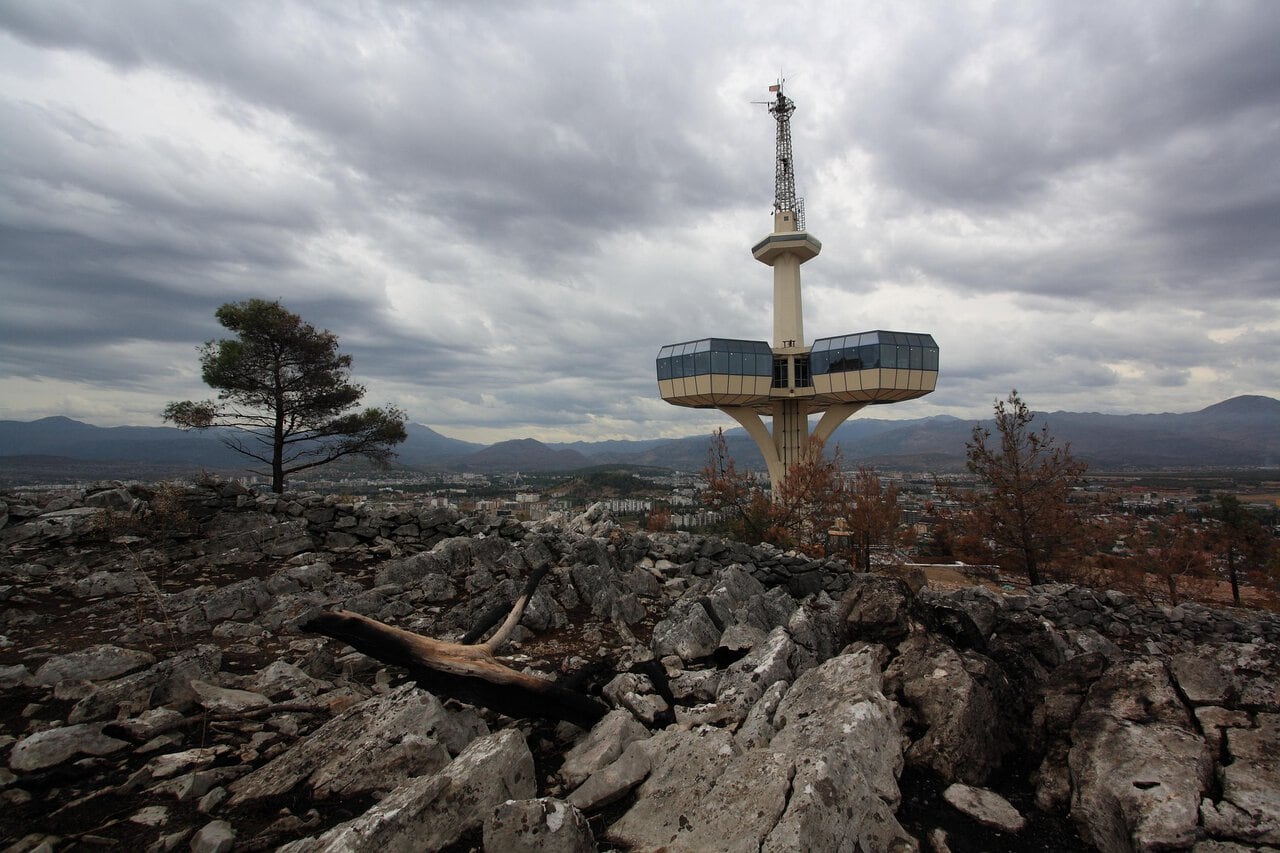
Walk to the Summit of Gorica Hill
Although Podgorica is Montenegro’s largest city, it’s never far from nature. Rising immediately north of the centre is Gorica Hill, the wooded hillside that gave the city its name and remains one of the most popular outdoor spaces for local residents.
A network of well-maintained walking paths winds through fragrant pine forest to several viewpoints overlooking the capital. The climb is gentle rather than demanding, making it suitable for most visitors, and can easily be completed in less than an hour if you’re simply looking for fresh air and panoramic views.
Along the way you’ll pass shaded woodland, picnic areas and quiet benches where locals come to walk, jog or cycle, particularly during the cooler morning and evening hours. From the higher viewpoints, you’ll enjoy excellent views across Podgorica towards the surrounding mountains, while the city’s six rivers become much easier to appreciate from above.
For visitors spending more than a day in Podgorica, Gorica Hill provides a welcome contrast to museums and historic sights. It’s also one of the best free attractions in the city and demonstrates just how much green space surrounds Montenegro’s capital.
Search routes and flight options for your trip to Podgorica.
Search flightsBrowse Airalo eSIM options for convenient travel data.
Check eSIMsHave a private airport pickup arranged before you travel.
Book a transferExplore the Ancient Roman City of Duklja
Just 4 kilometres north-west of Podgorica’s city centre lies one of Montenegro’s most important archaeological sites. The ancient Roman city of Duklja, also known as Doclea, was founded during the 1st century AD and grew into one of the largest settlements in this part of the Roman Empire.
Today, visitors can wander among the remains of Roman streets, temples, baths, churches and defensive walls while imagining what life was like here almost two thousand years ago. Although many of the buildings survive only as foundations and fragments of stonework, the scale of the site gives a fascinating insight into the importance of Duklja during Roman times.
One of the site’s greatest attractions is its peaceful atmosphere. Unlike many famous Roman ruins elsewhere in Europe, Duklja rarely feels crowded, allowing visitors to explore at their own pace while enjoying views across the surrounding countryside. Information boards help explain the history of the settlement, although joining a guided tour or reading about the site beforehand will help you appreciate what you’re seeing.
The ruins are easily reached by car or taxi in around 10 minutes from the city centre, while more energetic visitors can also cycle there using local roads. If you’re interested in history, archaeology or ancient civilisations, Duklja is well worth adding to your Podgorica itinerary and offers a completely different perspective on Montenegro’s long and fascinating past.
Visit Podgorica’s Museums & Galleries
Although often overlooked, Podgorica has an excellent selection of museums that help explain Montenegro’s rich history, culture and artistic heritage.
The Museum and Galleries of Podgorica is one of the best places to begin. Housed in several historic buildings, its collections explore everything from archaeological discoveries and traditional life to the city’s development through the centuries. Exhibitions include historical artefacts, paintings, photographs and cultural displays that bring Montenegro’s story to life.
Art lovers should also visit the Centre of Contemporary Art of Montenegro, located within the grounds of the former Petrović Royal Palace. The galleries showcase works by both Montenegrin and international artists, while the surrounding park provides a peaceful place to stroll after your visit.
History enthusiasts may also enjoy the Natural History Museum, where displays introduce visitors to Montenegro’s remarkable wildlife, geology and biodiversity. While smaller than many European museums, it’s an excellent introduction before exploring destinations such as Lake Skadar National Park, Lovćen National Park and Durmitor National Park.
Together, these museums provide valuable context for understanding Montenegro beyond its beaches and mountains, making them well worth including in your itinerary.
None of these museums require a full day, and most visitors comfortably combine two or three of them with lunch and a walk through the surrounding parks. They’re a particularly good option during the hottest hours of a summer afternoon, when spending time indoors is a welcome break from the heat outside.
Relax In Podgorica’s Parks & Green Spaces
One of the biggest surprises for first-time visitors is just how green Podgorica is. Thanks to its rivers, tree-lined avenues and numerous public parks, the city offers plenty of places to escape the traffic and enjoy a slower pace of life.
The most popular is Njegošev Park, which stretches alongside the Morača River. Shaded by mature trees and dotted with cafés, benches and walking paths, it’s a favourite meeting place for locals throughout the year. Early mornings are particularly peaceful, while evenings see families, joggers and cyclists making the most of the cooler temperatures.
Another excellent place to explore is Gorica Hill, the wooded hill that gives Podgorica its name. A network of walking trails climbs gently through pine forest to several viewpoints overlooking the capital. It’s one of the best places to appreciate the city’s unique setting between mountains and rivers while enjoying fresh air only minutes from the centre.
If you have time, also visit King’s Park (Kraljev Park), one of Podgorica’s oldest public parks. Beautifully maintained lawns, colourful flowerbeds and shaded pathways make it an ideal place to relax after sightseeing or enjoy a picnic before continuing your exploration of the city.
Cycling is a popular way to explore the riverside paths, and bike hire is available at a handful of points around the city for anyone wanting to cover more ground than a walk allows. Combined with the parks and Gorica Hill, it’s entirely possible to spend the best part of a morning outdoors without needing to visit a single formal attraction.
Visit The Šipčanik Wine Cellar
Few visitors realise that Podgorica is home to one of the largest underground wine cellars in Europe.
Located just outside the city, the remarkable Šipčanik Wine Cellar belongs to Plantaže, Montenegro’s largest wine producer. What makes it truly unique is its history. Originally built as a secret underground aircraft hangar during the Yugoslav era, the vast tunnel complex has been transformed into an extraordinary wine cellar stretching for hundreds of metres beneath the surrounding vineyards.
Today, the cellar stores millions of bottles in carefully controlled conditions, with endless rows of oak barrels and wine racks creating one of Montenegro’s most impressive visitor attractions. Guided tours explain the history of the former military facility before introducing visitors to the country’s growing reputation for producing exceptional wines, particularly from the indigenous Vranac grape variety.
Most visits conclude with a wine tasting, allowing guests to sample several award-winning wines alongside local cheeses, cured meats and traditional Montenegrin specialities. For anyone interested in food, wine or unusual attractions, Šipčanik Wine Cellar is one of the most memorable experiences near Podgorica and one of the country’s finest tourism success stories.
Tours typically run for around an hour, including the tasting, so it’s an easy addition to a day that also includes some time in the city itself rather than needing to set aside an entire day for the visit. Advance booking is recommended during summer weekends, when the cellar is a popular stop for both independent travellers and organised coach tours.
Getting there is straightforward with a hire car, and several local tour operators also run combined half-day trips that pair the wine cellar with a stop at Lake Skadar or one of the surrounding vineyards, making it easy to build into a wider day of exploring the countryside around the capital.
Discover Amazing Day Trips From Podgorica
One of Podgorica’s greatest strengths is its location. Sitting at the heart of Montenegro’s road and rail network, the capital provides easy access to many of the country’s most spectacular attractions, making it an excellent base for exploring far beyond the city itself.
Just 30 minutes south lies Lake Skadar National Park, the largest lake in the Balkans and one of Europe’s most important bird reserves. Here you can take scenic boat cruises, explore traditional fishing villages, spot pelicans and enjoy some of Montenegro’s finest wineries overlooking the lake.
To the northwest, the breathtaking Ostrog Monastery is built dramatically into a vertical cliff face and attracts hundreds of thousands of pilgrims and visitors every year. Even those with no religious interest are often amazed by its spectacular location and panoramic mountain views.
Heading southwest, you’ll reach Cetinje and Lovćen National Park, where Montenegro’s royal history combines with some of the finest scenery in the Balkans. Continue over the famous Kotor Serpentine Road and you’ll descend to the spectacular Bay of Kotor, passing some of the country’s most unforgettable viewpoints.
If you have more time, Durmitor National Park, the magnificent Tara River Canyon, Budva, Perast, Kotor and the Adriatic coastline can all be reached as day trips, although some involve longer journeys. Few European capitals place so many outstanding natural and historic attractions within such easy reach.
We’ve written a dedicated Day Trips from Podgorica guide covering all of these excursions in far more depth, including journey times, what to expect and how to combine several destinations into a single well-planned day if your schedule is tight.
Getting Around & Getting To Podgorica
As Montenegro’s capital and largest city, Podgorica is the country’s main transport hub, making it easy to arrive from almost anywhere in the Balkans.
| Starting Point | Bus | Train | Car | Typical Journey |
|---|---|---|---|---|
| Podgorica Airport | ✔ | ✖ | ✔ | Around 15 minutes |
| Budva | ✔ | ✖ | ✔ | Around 1 hour |
| Kotor | ✔ | ✖ | ✔ | Around 1 hour 30 minutes |
| Bar | ✔ | ✔ | ✔ | Around 1 hour |
| Belgrade | ✔ | ✔ | ✔ | Around 8–10 hours |
Podgorica Airport is located just a few kilometres south of the city centre and offers year-round flights to destinations across Europe. Taxis, private transfers and car hire are readily available, making the journey into the city quick and straightforward.
Podgorica also boasts Montenegro’s most important railway station. The spectacular Belgrade to Bar Railway, widely regarded as one of Europe’s greatest train journeys, passes through the city, while regular services also connect with Bar, Nikšić and Bijelo Polje.
The central bus station, located beside the railway station, offers frequent departures to virtually every town in Montenegro, including Budva, Kotor, Cetinje, Ulcinj, Herceg Novi and Žabljak. This makes Podgorica one of the easiest places in the country from which to explore using public transport.
Within the city itself, many attractions are walkable, while local buses and inexpensive taxis provide convenient transport for longer journeys.
Our dedicated Podgorica Airport Transfers guide covers the taxi, private transfer and car hire options in detail if you’re flying in directly. For a wider look at buses, trains and ferries across the rest of the country, our Montenegro Public Transport guide is a useful companion, and our Belgrade to Bar Train guide covers the scenic railway that passes directly through the capital.
Compare hostels and budget-friendly accommodation around Podgorica.
Browse hostelsAccess compensation support, eligible lounge benefits and faster payouts when flights go wrong.
See the benefitsArriving before check-in or leaving later? Store your luggage and make more of your time in Podgorica.
Store your bagsWhere to Stay in Podgorica
Podgorica has a good range of accommodation for a capital city, from modern international hotels near the business district to smaller boutique hotels and apartments closer to the river and the city centre. Staying somewhere within walking distance of Njegošev Park and the Millennium Bridge puts most of the main sights, restaurants and the railway station within easy reach.
Because Podgorica is primarily a business and transport hub rather than a beach resort, prices tend to be noticeably more consistent throughout the year than on the coast, without the sharp summer spikes seen in Budva or Kotor. This makes it a genuinely practical, and often more affordable, place to base a wider Montenegro trip than staying purely on the Adriatic.
Visitors using the city mainly as a transport hub, arriving or departing via the airport or the railway station, will find plenty of comfortable options close to both, making an overnight stay before an early flight or train straightforward to arrange.
Self-catering apartments are widely available and often represent better value than hotels, particularly for longer stays or for anyone using the city as a base for several day trips rather than spending most of their time sightseeing within Podgorica itself. Many are within walking distance of the river and the central bus and railway station.
Unlike the coast, Podgorica rarely sells out completely even in peak summer, so last-minute bookings are far less risky here than in Budva or Kotor, giving you more flexibility to decide how long to stay in the capital once you’ve seen how the rest of your trip is unfolding.
The Best Time To Visit Podgorica
Podgorica can be visited throughout the year, although each season offers a different experience.
Spring is arguably the best time to explore the capital. Parks and riverside paths are at their greenest, temperatures are comfortable for sightseeing and nearby attractions such as Lake Skadar National Park are particularly beautiful as wildlife becomes more active.
Summer brings long sunny days but also very high temperatures. Podgorica is one of the hottest capitals in Europe, with afternoon temperatures frequently exceeding 35°C and occasionally approaching 40°C. If you’re visiting during July or August, it’s best to explore early in the morning or during the evening before escaping to the coast or the mountains during the hottest part of the day.
Autumn is another excellent season, with warm days, cooler evenings and fewer visitors. It’s also harvest time in Montenegro’s vineyards, making it the perfect opportunity to visit the famous Šipčanik Wine Cellar or enjoy wine tasting around Lake Skadar.
Even winter has its appeal. The city enjoys relatively mild conditions compared with much of inland Europe, museums remain open and it’s a good base for combining city sightseeing with day trips to Montenegro’s snow-covered mountain regions.

Rupert’s Handy Travel Tips
Planning a visit to Podgorica? Here are a few tips to help you make the most of Montenegro’s capital:
- Use Podgorica as your base: The capital is perfectly positioned for exploring Lake Skadar, Ostrog Monastery, Lovćen National Park, Cetinje and the Adriatic coast.
- Don’t judge the city too quickly: Podgorica’s charm lies in its cafés, rivers, parks and relaxed lifestyle rather than famous monuments.
- Visit the Šipčanik Wine Cellar: It’s one of the most unique attractions in Montenegro and offers excellent wine tastings in a former underground military facility.
- Stay hydrated in summer: Podgorica regularly records some of the highest temperatures in the Balkans, so carry water and plan sightseeing during the cooler parts of the day.
- Take the Belgrade–Bar Railway if you can: One of Europe’s greatest railway journeys passes through Podgorica, making it an unforgettable way to arrive or continue your travels.
Want to meet the reindeer behind our travel tips? Find out more in our page Who is Rupert?.




Frequently Asked Questions
Is Podgorica worth visiting?
Yes. While Podgorica doesn’t have the medieval architecture of Kotor or the beaches of Budva, it offers a fascinating insight into modern Montenegro, excellent restaurants, attractive riverside parks and easy access to many of the country’s best attractions. It’s also the ideal base for exploring central Montenegro.
How many days should I spend in Podgorica?
Most visitors find that one to two days is enough to explore the city itself. However, if you’re planning day trips to Lake Skadar National Park, Ostrog Monastery, Cetinje or Lovćen National Park, staying three or four nights makes Podgorica an excellent base.
Is Podgorica walkable?
Yes. Most of the city’s main attractions, including the Millennium Bridge, Stara Varoš, Njegošev Park and the city centre, are within comfortable walking distance of one another. Taxis are inexpensive for longer journeys.
What is Podgorica famous for?
Podgorica is best known as Montenegro’s capital city, its position where six rivers meet, the impressive Millennium Bridge, the spectacular Cathedral of the Resurrection of Christ, the famous Belgrade–Bar Railway and being home to one of Europe’s largest underground wine cellars at Šipčanik.
Is there an Old Town in Podgorica?
Yes. Stara Varoš preserves part of the city’s Ottoman heritage with historic streets, mosques and the Clock Tower. Although much smaller than the Old Towns of Kotor or Budva, it’s well worth exploring.
Is Podgorica expensive?
No. Compared with many European capitals, Podgorica offers excellent value. Hotels, restaurants, cafés and public transport are generally affordable, making it one of the least expensive capital cities to visit in Europe.
Can you visit Podgorica as a day trip?
Yes, although many travellers use the city as a base rather than a destination. If you’re staying in Budva or Kotor, Podgorica can be explored in a day, but you’ll get far more from your visit if you also include nearby attractions such as Lake Skadar or Šipčanik Wine Cellar.
Does Podgorica have good nightlife?
Yes. While it’s different from the beach clubs of Budva, Podgorica has an excellent café culture, lively wine bars, modern restaurants and late-night venues that are popular with locals throughout the year.
What are the best day trips from Podgorica?
Some of the best excursions include Lake Skadar National Park, Ostrog Monastery, Lovćen National Park, Cetinje, Budva, Kotor, Perast, Durmitor National Park and the spectacular Tara River Canyon.
When is the best time to visit Podgorica?
Spring and autumn provide the most comfortable temperatures for sightseeing. Summer offers long sunny days but can be extremely hot, while winter is quieter and makes a good time for combining city sightseeing with trips into Montenegro’s snow-covered mountains.
Further Reading
Landing at the capital’s airport, this transfer guide covers the taxi, transfer and car hire options, and this roundup of day trips expands on the excursions above with journey times and planning notes.
Within an hour of the city, Lake Skadar and Ostrog Monastery are two of the best short excursions, while Cetinje and Lovćen National Park pair royal history with some of the finest mountain scenery in the country.
Heading to the coast afterwards, Budva and Kotor are both worth reading up on, and this guide to the bus and rail network explains how it all connects. Travelling north instead, Durmitor and the Tara River Canyon cover the mountain side of the country.
For the bigger picture, this 14-day itinerary shows how Podgorica connects with the coast, the mountains and the national parks.