Reviewed by our editorial team Updated
Why You’ll Love Visiting Toronto
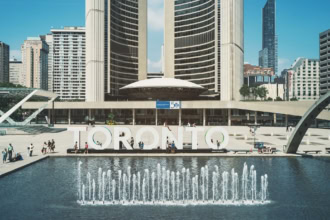
Toronto is Canada’s largest city and one of its most exciting urban destinations. It is a place of skyline views, waterfront escapes, major museums, theatre, sport, neighbourhood character, and food from every corner of the world. Few cities combine so much variety so well. In one day, you can ride to the top of the CN Tower, browse vintage shops in Kensington Market, eat your way through Chinatown, and finish with a harbour view or a show in the Entertainment District.
What makes Toronto stand out is not just its size, but its range. It works for travellers who want iconic attractions, but it also rewards those who prefer wandering distinctive districts, trying independent cafés, and discovering the personality of a city street by street.
Art lovers have the AGO and major exhibitions, sports fans can catch the Raptors, Maple Leafs, or Blue Jays, and travellers who need a break from the pace of downtown can escape to the Toronto Islands, the waterfront, or one of the city’s many parks and ravines.
Toronto is also a practical city to visit. Public transport is extensive, taxis and rideshares are easy to use, walking is often pleasant, and the city is well set up for both short breaks and longer stays. It is also one of the best gateways for exploring more of Ontario, whether that means Niagara Falls, wine country, lakeside towns, or wider rail and road trips.
Above all, Toronto feels global without losing its local character. More than 200 languages are spoken here, and that diversity shapes everything from the food scene to neighbourhood life. For visitors, that means a city that feels welcoming, lively, and constantly varied, with enough major sights to fill a first trip and enough depth to justify coming back.
Quick Facts: Toronto at a Glance
Before diving into the detail below, here’s a quick snapshot of the essentials to help you get oriented.
| Category | Details |
|---|---|
| Country | Canada |
| Province | Ontario |
| Population | ~2.9 million (city), ~6.6 million (metro) |
| Time Zone | Eastern Standard Time (UTC -5) |
| Currency | Canadian Dollar (CAD) |
| Language | English (official), French also widely visible |
| Airport Code | YYZ (Toronto Pearson International) |
| Climate | Humid continental (cold winters, warm summers) |
| Transport Network | TTC (subway, streetcar, bus), GO Transit |
| Electricity | 120V, 60Hz (Type A/B plugs) |
| Drinking Water | Safe to drink from tap |
| Tipping Culture | 15–20% at restaurants |
| Safety | Generally very safe; typical big-city precautions apply |
| Tourist Passes | CityPASS, Presto Card for transit |
Toronto is an easy city to understand at a glance. English-speaking, well connected, safe, and tourist-friendly, it suits first-time visitors to Canada as well as travellers building a longer North American itinerary. The main thing to plan for is cost. Accommodation, eating out, and central parking can be expensive, so knowing the basics early helps you budget more realistically.
Best if you want daily housekeeping and a front desk. Filter by area first, then by price.
Check availabilityBest for longer stays. Whole apartments and houses, so you are not eating out three times a day.
View rentalsBest for double-checking. Runs the same Toronto search across several booking sites so you are not leaving money behind.
Compare pricesA Brief History of Toronto
Toronto’s history reaches back long before the modern skyline, high-rise condos, and financial towers that define the city today. The land was originally home to Indigenous peoples, including the Huron-Wendat, Haudenosaunee, and later the Mississaugas of the Credit First Nation. The word Toronto is widely linked to the Mohawk term tkaronto, often interpreted as meaning “where trees stand in the water.” That origin is an important reminder that the city’s story did not begin with British settlement.
In 1793, the British colonial government established the town of York here, choosing the site because of its strategic position on Lake Ontario. The settlement quickly became important as a military and commercial point, and its location helped it develop into one of the key centres of Upper Canada. In 1834, York was incorporated as the City of Toronto, marking the start of its formal rise as a major urban centre.
During the 19th century and early 20th century, Toronto expanded rapidly through trade, manufacturing, and infrastructure growth. Railways, industry, and immigration all helped drive that change. After the Second World War, the city entered a new period of transformation as large waves of newcomers arrived from Europe, the Caribbean, Asia, Africa, and the Middle East. Those communities helped shape the modern Toronto seen today, not as a city with one dominant identity, but as a place built from many.
That multicultural character is now one of Toronto’s defining strengths. It influences the food scene, the neighbourhoods, the festivals, and the languages heard on the street. Today, Toronto is known for its openness, diversity, and cultural energy, as well as its role as a financial, educational, and media hub. It has grown from a lakeside colonial town into a city of global importance, but its evolution is still visible in preserved heritage buildings, old markets, churches, civic architecture, and neighbourhood street patterns.
For visitors, understanding this history makes the city more interesting. Toronto is not just a modern skyline. It is a place where Indigenous heritage, colonial history, immigration, industry, and modern global culture all sit alongside one another, often within a short walk.
Key Neighbourhoods & Areas in Toronto
Toronto is a city best understood through its neighbourhoods. Each area has its own atmosphere, pace, architecture, and social character, and moving between them can feel like stepping into different versions of the same city. That is part of Toronto’s appeal. It is not just one downtown core surrounded by suburbs. It is a collection of districts with distinct personalities.
The Downtown Core and Financial District form the city’s commercial heart. This is where you will find major landmarks such as the CN Tower, Ripley’s Aquarium, Union Station, and many of the tallest office towers. It is busy, polished, and practical, with easy transit connections and fast access to major attractions. It is also home to the PATH, Toronto’s vast underground pedestrian network, which is especially useful in winter or wet weather.
To the west, Queen West and the Entertainment District bring a more creative, energetic feel. Queen West is known for boutiques, bars, independent shops, murals, cafés, and live music, while the Entertainment District is built around nightlife, theatres, sports venues, and large-scale events. This is a strong area for first-time visitors who want to be close to action after dark as well as major attractions.
Kensington Market and Chinatown offer a completely different mood. Kensington is colourful, relaxed, and slightly eccentric, packed with vintage shops, global food, vegan cafés, and street art, while nearby Chinatown is one of the city’s best places for Chinese restaurants, bakeries, bubble tea, herbal shops, and busy food streets. Together, they create one of Toronto’s most rewarding areas for travellers who enjoy walking, eating, and exploring.
The Distillery District is one of the city’s most visually distinctive quarters. Built around a restored 19th-century industrial complex, it is now a pedestrian-friendly area of cobblestone lanes, galleries, bars, artisan shops, and event spaces. It is especially popular during seasonal events, including its well-known Christmas market and light installations.
Further north, Yorkville and The Annex sit close together but feel quite different. Yorkville is refined and upscale, known for luxury shopping, designer boutiques, five-star hotels, and polished streetscapes. The Annex, by contrast, feels more academic and youthful thanks to its proximity to the University of Toronto, with student cafés, older houses, bookish corners, and lively local dining.
For a slower pace, Harbourfront and The Beaches are two of the best areas to unwind. Harbourfront offers lakeside walks, ferries, cultural venues, cycle routes, and skyline views, while the Beaches feels more residential and relaxed, with boardwalks, sandy stretches, and a community atmosphere that can feel surprisingly removed from the city centre.
Taken together, these areas show Toronto at its best. It is a city where finance, fashion, nightlife, food culture, academia, heritage, and waterfront living all exist within a single urban patchwork, usually connected by a short transit ride or a good walk.
Getting There & Around: Airport Overview & Transfers
Toronto is served by two main airports, and understanding the difference between them helps you plan your arrival properly. Most international travellers use Toronto Pearson International Airport (YYZ), which is Canada’s busiest airport and the main long-haul gateway to the city. Pearson sits about 27 km (17 miles) northwest of downtown, and depending on traffic, the journey into the centre usually takes around 40 to 60 minutes by road. It handles the majority of international and domestic services and is the airport most visitors will use.
The second airport is Billy Bishop Toronto City Airport (YTZ), located just off downtown on the Toronto Islands. It is much smaller and significantly more convenient for central Toronto, sitting under 3 km from the core, with transfer times of around 10 to 15 minutes once you reach the mainland. Billy Bishop mainly serves regional Canadian routes and some short-haul U.S. services, so it is particularly useful for business travellers or those connecting from nearby cities.
| Airport | Code | Distance to Downtown | Typical Journey Time | Main Uses |
|---|---|---|---|---|
| Toronto Pearson International Airport | YYZ | Approx. 27 km | Approx. 40 to 60 minutes | International and domestic flights |
| Billy Bishop Toronto City Airport | YTZ | Under 3 km | Approx. 10 to 15 minutes | Regional and short-haul U.S. flights |
For arrivals at Pearson, the most efficient transfer is usually the UP Express. This dedicated airport train links Pearson with Union Station in just 25 minutes, making it one of the quickest and most dependable ways into the city. Trains run every 15 minutes, and standard adult fares are around CA$12.35. For many visitors, especially those staying downtown, this is the easiest option by far.
Taxis and rideshares are also straightforward from Pearson. Flat-rate airport taxis to downtown generally cost around CA$60, while Uber and Lyft operate from designated pickup zones. Prices for rideshares vary depending on demand and traffic, so they can be cheaper than taxis at some times and more expensive at others. Hotel shuttles and private transfers do exist, though they are less common than they once were.
Public transport is possible too. The TTC 900 Airport Express bus links Pearson with Kipling Station, where you can connect into the subway network. This is slower than the UP Express but cheaper, and PRESTO is accepted. It is a good option for travellers staying outside the immediate downtown core or trying to keep costs down.
At Billy Bishop, transfers are much simpler. The airport is connected to the mainland by a short ferry and a pedestrian tunnel, after which taxis, rideshares, and local buses are easy to access. Because the airport is so close to downtown, the final leg of the journey is usually quick and low stress.
For most travellers, Toronto arrival planning comes down to a simple rule. Pearson gives you scale and route choice. Billy Bishop gives you convenience. Either way, the city is well connected, and getting from runway to hotel is usually straightforward when you know which airport you are using.
Travelling by Train in Toronto
Toronto is one of Canada’s most important rail hubs, and if you plan to explore beyond the city, train travel is one of the most comfortable and reliable options available. At the centre of the network is Union Station, a major landmark in its own right. Located in the downtown core, it connects long-distance trains, regional services, airport rail links, and local transit in one place. Its central location means you can step off a train and be within walking distance of hotels, attractions, and the waterfront.
For intercity travel, Via Rail is the main operator. It runs regular services to cities such as Ottawa, Montréal, Niagara Falls, and Windsor. Trains are modern and well equipped, with comfortable seating, Wi-Fi, and power outlets, making them ideal for both leisure and work. Journey times are competitive for many routes, especially when you factor in city-centre to city-centre travel. Booking in advance usually gives the best fares, and both Economy and Business Class options are available.
For travel into the United States, the Maple Leaf service operated in partnership with Amtrak runs daily between Toronto and New York City. This is a slower but scenic option, taking around 12 hours in total, and it passes through lakeside landscapes and small towns along the way. Border checks are handled during the journey, so expect some additional time built into the schedule.
Within the wider region, GO Transit trains form the backbone of commuter and regional rail. These double-decker trains connect Toronto with surrounding cities including Mississauga, Hamilton, Oshawa, and Kitchener-Waterloo. Services run frequently, particularly during peak hours, and integrate seamlessly with buses and local transit. For visitors, this is one of the easiest ways to take day trips without needing a car.
Ticketing is straightforward. Via Rail tickets are best booked online or via the official app. GO Transit tickets can be purchased through machines, apps, or by tapping a PRESTO card. The UP Express also accepts PRESTO, making airport connections smooth and consistent with the rest of the network.
Toronto’s rail system stands out for being well integrated, easy to use, and centrally located, making it a strong option for both short trips and longer journeys across Canada.
Travelling by Bus in Toronto
Toronto’s intercity bus network is extensive, affordable, and often more flexible than rail, especially when travelling to smaller towns or secondary destinations. While trains offer more comfort on longer journeys, buses fill in the gaps and often run multiple departures per day at competitive prices.
The main hub for bus travel is the Union Station Bus Terminal, which is directly connected to the rail station and downtown core. Additional pickup points exist around the city, including Yorkdale Mall and Scarborough Town Centre, as well as some curbside stops depending on the operator. It is important to confirm your departure location in advance, as it can vary by route and company.
Several major operators serve Toronto. Megabus is well known for its low-cost routes to destinations such as Ottawa, Montréal, Niagara Falls, Buffalo, and New York City, with onboard Wi-Fi and power outlets included. FlixBus has expanded rapidly across Ontario, offering modern coaches, app-based ticketing, and live tracking. Ontario Northland focuses on routes to northern communities such as North Bay, Sudbury, and Timmins, which are not always well served by rail.
Since Greyhound ended most Canadian domestic operations in 2021, services are now split between multiple providers, which has increased choice but also means you need to check schedules more carefully.
Booking is usually done online or through mobile apps, and digital tickets are widely accepted, so there is rarely a need to print anything. Prices tend to be lowest when booked in advance, and services can fill up quickly around weekends and holidays. It is worth arriving early, particularly at curbside stops where seating and shelter may be limited.
For travellers looking to balance cost and flexibility, the bus network offers a reliable and practical way to explore Ontario and nearby U.S. destinations.
Getting Around Toronto by Public Transport (TTC)
The Toronto Transit Commission (TTC) is the backbone of the city’s transport system. It combines subways, streetcars, and buses into a single integrated network, making it possible to reach almost any part of the city without a car. For most visitors, it is the most efficient and cost-effective way to get around.
The network is extensive. There are four subway lines, more than 140 bus routes, and 11 streetcar lines that cover central areas and key corridors. Services typically run from early morning until after midnight, with Blue Night buses operating overnight so that travel is possible 24 hours a day.
The subway system forms the core of the network. Line 1 (Yonge–University) loops through downtown and connects major hubs such as Union Station and the Financial District. Line 2 (Bloor–Danforth) runs east to west across the city and is useful for moving between neighbourhoods. Line 4 (Sheppard) serves part of North York. Line 3 (Scarborough) is being phased out and replaced with bus services as part of ongoing upgrades.
Streetcars are a distinctive part of Toronto’s identity and often the most enjoyable way to travel through central areas. Routes such as 501 Queen and 504 King pass through major districts including the Entertainment District, Chinatown, and waterfront areas. Buses extend the network into suburbs and areas not served by rail, including attractions such as the Toronto Zoo and Ontario Science Centre.
Fares are simple. A standard ride costs around CA$3.35, and the easiest way to pay is with a PRESTO card. You can load credit or passes and tap on and off across all modes of transport. The system also includes fare capping, meaning once you reach a daily limit, additional travel that day does not cost extra.
Accessibility has improved significantly. Most subway stations now have elevators, all streetcars are low-floor and step-free, and audio-visual stop announcements are standard across the network.
For visitors, the TTC offers a system that is comprehensive, easy to understand, and well connected, making it the default choice for moving around Toronto.
Best for long or awkward journeys. Builds one itinerary out of separate flights.
View flightsBest for anyone whose home plan charges by the megabyte abroad. Pay a fixed price up front.
Check eSIMsBest if you would rather not work out the transport on arrival. Book it now and forget it.
View transfersTaxis & Ride-Share Services in Toronto
Taxis in Toronto are regulated, safe, and widely available, making them a dependable option for door-to-door travel. You can hail a cab on the street, book one by phone, or use local taxi apps such as Beck Taxi. All licensed taxis operate on meters, and tipping of around 15 percent is expected.
The typical base fare starts at approximately CA$4.25, with additional charges based on distance and time. Costs can increase slightly in the evening or for airport journeys. While taxis are reliable, they can be slower during peak hours, particularly in busy areas such as the Financial District or near Union Station.
For many travellers, ride-share services such as Uber and Lyft are now the preferred option. They operate across the entire city, including designated pickup zones at both Toronto Pearson and Billy Bishop airports. These apps provide upfront pricing, driver tracking, and estimated arrival times, which makes them especially convenient for visitors unfamiliar with the city.
Ride-shares are often cheaper than taxis outside peak demand periods, though surge pricing can increase fares during busy times, bad weather, or late at night. Payment is handled entirely through the app, removing the need for cash.
Choosing between taxis and ride-share usually comes down to timing and convenience. Taxis are easy to find instantly in busy areas, while ride-share apps offer more transparency and flexibility, particularly for late-night journeys or trips to less central neighbourhoods.
Scooter & Bike Rentals in Toronto
Toronto has invested heavily in cycling infrastructure, and bike travel is now one of the best ways to explore the city, especially in spring and summer. While electric scooters are not widely permitted on public roads, bike-sharing and private rentals are both well developed and easy to use.
The main system is Bike Share Toronto, the city’s official bike-sharing network. It operates more than 7,000 bicycles across over 600 docking stations, concentrated in the downtown core and along key routes. It is designed for short journeys, sightseeing, and quick connections between neighbourhoods.
Using the system is straightforward. You can unlock a bike via the app or a station kiosk, ride to your destination, and return it to any available dock. Pricing starts from around CA$3.25 for a 30-minute ride, with longer passes such as 24-hour or 72-hour options available for visitors. The network integrates with major mapping apps, making it easy to locate bikes and stations in real time.
Private bike rental shops are also common, particularly around the Harbourfront, Distillery District, and downtown core. These offer daily or multi-day rentals, including electric bikes, which are useful for longer rides to places such as the Toronto Islands, High Park, or Don Valley trails.
Electric scooters are currently restricted. Public rental schemes are not permitted within the city, although privately owned scooters may be used in limited areas, typically off-road or on private property. Regulations are under review, so this may change in the future.
For short distances and scenic routes, cycling is often faster than driving and more enjoyable than public transport. With expanding bike lanes and waterfront paths, it provides a flexible, eco-friendly, and genuinely enjoyable way to experience Toronto.
Driving, Parking & Car Access in Toronto
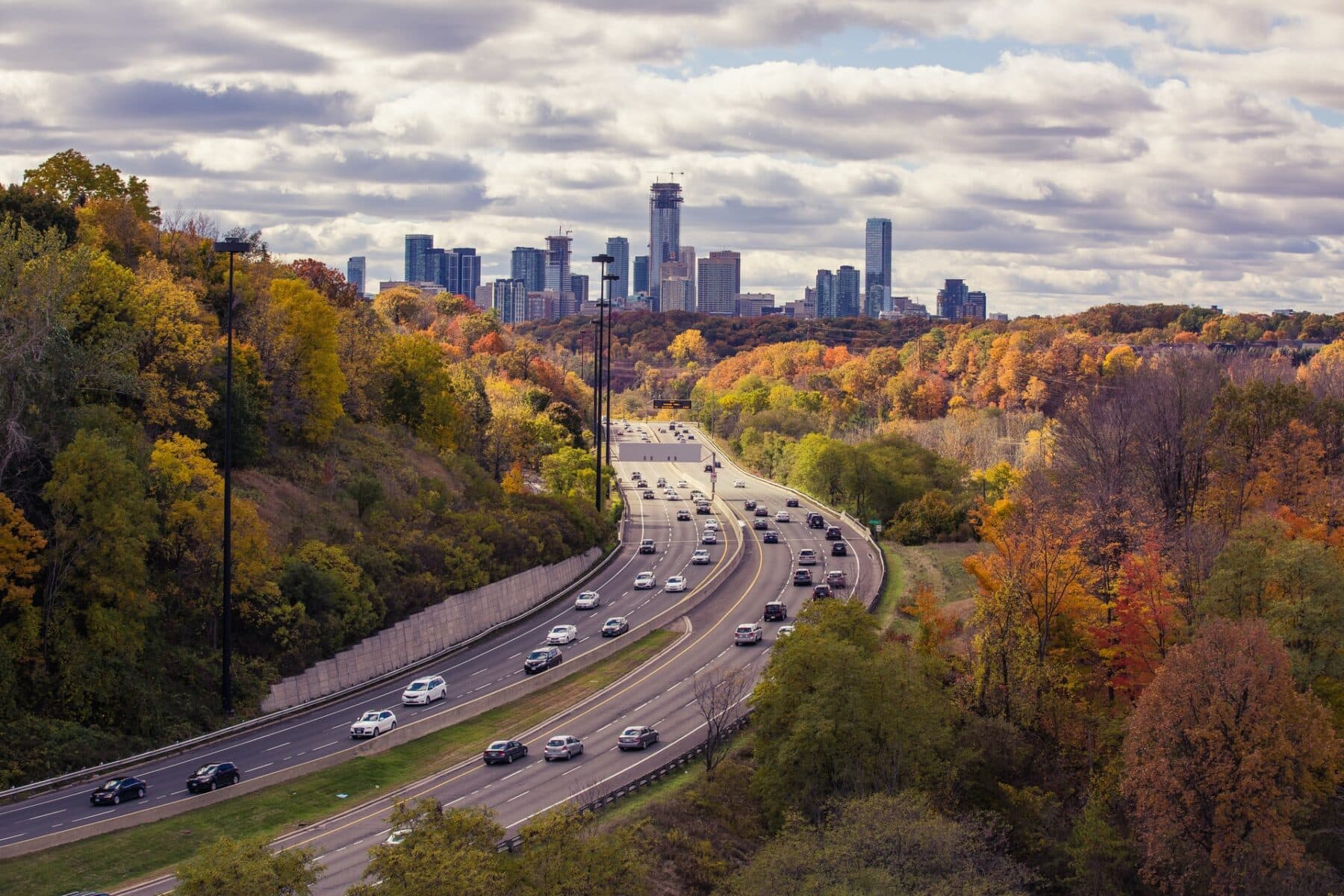
Driving in Toronto is possible, but for most visitors it is not the most practical way to get around the city. Traffic congestion can be heavy, particularly during weekday peak hours between 7:00–9:00 in the morning and 16:00–18:00 in the evening. Key routes such as the Gardiner Expressway, Don Valley Parkway (DVP), and Highway 401 are among the busiest in North America, and delays are common even outside rush hour.
Parking is one of the biggest challenges. In central areas, expect to pay around CA$4–8 per hour in city-run lots, while private garages in the downtown core can reach CA$25–30 per day or more. Street parking exists but is often limited by short time restrictions, resident permits, or unclear signage. Many hotels charge between CA$20–50 per night for parking, which can significantly increase the cost of a stay.
Toronto does not currently operate a congestion charge or low-emission zone, but Highway 407 ETR is a tolled route running across the northern suburbs. It uses automatic number plate recognition, and if you use it with a rental car, charges are applied later and can add up quickly.
Driving does make sense in certain situations. It is useful if you plan to visit places outside the city such as the Toronto Zoo, Scarborough Bluffs, or destinations further afield like Niagara Falls or Prince Edward County. It is also more practical for families, groups, or travellers with mobility needs.
For most city-based trips, however, it is far easier to rely on public transport, walking, or ride-share services. Toronto is designed in a way that allows visitors to avoid driving without sacrificing convenience.
Car Rental in Toronto
If you decide that you do need a car, Toronto offers a wide range of reliable rental options across the city. Major companies including Enterprise, Hertz, Avis, Budget, and National operate from Toronto Pearson International Airport, Union Station, and multiple downtown locations.
To rent a car, you will need a valid driving licence, and international visitors may require an International Driving Permit depending on their country of origin. A credit card in the driver’s name is required for the deposit, and the minimum rental age is typically 21, although drivers under 25 usually pay an additional surcharge. Insurance is often offered at the counter, but it is worth checking whether your travel insurance or credit card already provides coverage before paying extra.
Prices vary depending on demand, but it is common to see higher rates during summer months, public holidays, and major events. Booking in advance online almost always secures better pricing and availability. It is also worth comparing airport pickup locations with city locations, as airport rentals often include additional fees.
When returning a vehicle, allow extra time if you are travelling through central Toronto, as traffic delays can result in late return charges. Planning your route and timing ahead of drop-off is essential.
For travellers planning to explore Ontario’s countryside, lakes, and national parks, renting a car provides the flexibility to travel at your own pace. For short city stays, however, it is usually unnecessary.

Compare Car Hire Prices in Toronto
If you are planning to explore beyond Toronto, hiring a car can give you much more flexibility over where you go and how long you spend there.
Compare prices through Discover Cars and EconomyBookings to check vehicles, rental conditions and offers from multiple car hire companies before you book.
Walking Around Toronto
Toronto is one of Canada’s most walkable cities, particularly in the downtown core, waterfront areas, and inner neighbourhoods. Wide sidewalks, clear street layouts, and pedestrian-friendly zones make it easy to explore on foot. Walking is often the best way to experience the city’s character, from independent cafés and street art to small shops and local parks.
Neighbourhoods such as Kensington Market, Queen West, and the Distillery District are especially suited to walking. These areas reward slow exploration, with plenty of places to stop, eat, browse, and take in the atmosphere. The Waterfront Promenade provides a continuous route along Lake Ontario, offering open views and a calmer pace compared to the busy streets inland.
For longer walks, Toronto has several well-developed urban trails. The Martin Goodman Trail stretches approximately 22 km along the lakeshore, making it ideal for both walking and cycling. The Don Valley Trails provide a more natural setting, with wooded paths that feel far removed from the city centre. The PATH system, an underground pedestrian network extending over 30 km, connects shopping centres, offices, and transit hubs, and is particularly useful in winter or bad weather.
Pedestrian crossings are clearly marked, and traffic signals are generally respected. Jaywalking is technically illegal and can result in fines, so it is best to cross at designated points.
For most visitors, combining walking with short public transport journeys is the most efficient and enjoyable way to explore Toronto.
Ferries & Harbour Cruises in Toronto
Toronto’s waterfront is not just scenic, it is an active part of how people move and explore the city. The Toronto Islands sit just offshore and are one of the easiest and most rewarding escapes from the downtown core. Ferries depart from the Jack Layton Ferry Terminal at the foot of Bay Street, with regular services throughout the year and more frequent departures during the warmer months.
There are three main island destinations. Centre Island is the most popular, with picnic areas, beaches, and family-friendly attractions. Ward’s Island offers a quieter, more residential feel with walking paths and small cafés. Hanlan’s Point is more natural and less developed, known for open green space and its clothing-optional beach.
Return ferry tickets cost around CA$9.11 for adults, and bicycles are allowed on board. During summer weekends and holidays, queues can build quickly, so arriving early is strongly recommended. The ferry ride itself takes around 15 minutes, offering excellent views of the skyline.
In addition to the islands, several companies run harbour cruises from the Harbourfront and Queens Quay areas. These include sightseeing tours, evening cruises, and dining experiences. Many cruises last between 60 and 120 minutes and provide a different perspective of the city, particularly at sunset when the skyline is illuminated.
Combining a ferry trip or harbour cruise with time on the waterfront is one of the simplest ways to experience a different side of Toronto, away from the streets and crowds.
Visit the official page here → Toronto Island Ferry – City of Toronto
Best for a short stop where being central matters more than the room. Dorms and private rooms both listed.
See hostelsBest for anyone flying more than once or twice a year. Handles the compensation claim so you are not chasing the airline.
See AirHelp+Best for a day with a bag and nowhere to put it. Find a storage point near where you already are.
View storageTransport Attractions
Toronto’s transport network is not only functional, it is also part of the city’s appeal. For travellers interested in infrastructure, architecture, or transport history, several locations stand out as attractions in their own right.
Union Station is the most prominent example. Opened in 1927, it is built in a Beaux-Arts style with grand halls, high ceilings, and classical stone detailing. Today, it serves as the central hub for rail, subway, buses, and airport connections, but it also houses shops, restaurants, and public spaces. Even if you are not travelling by train, it is worth stepping inside to see the architecture and atmosphere.
Just behind Union Station, the Toronto Railway Museum in Roundhouse Park offers a more focused look at Canada’s rail history. It features restored locomotives, railcars, and interactive exhibits, as well as a small working miniature railway. It is particularly popular with families and anyone interested in engineering or transport heritage.
Along the waterfront, the streetcar routes running past Harbourfront Centre provide a simple but enjoyable way to experience the city. These routes combine transport with sightseeing, offering views across the lake and access to key attractions without needing to navigate busy streets.
Together, these sites show how transport in Toronto is not just about getting from place to place. It is also a way to understand the city’s development, architecture, and daily life.
Mini Trains, Trams & Tourist Shuttles
Toronto does not rely heavily on traditional tourist trains, but there are still a number of light, fun transport experiences that work well for families and relaxed sightseeing. These options are less about getting from A to B and more about adding variety and convenience to your visit.
At the Toronto Zoo, the Zoomobile provides an open-air ride around the large park. The zoo covers a vast area, so walking every section can be tiring, especially in warm weather. The Zoomobile allows you to move between zones comfortably, with stops at key exhibits. Tickets are purchased separately from zoo entry, and services run regularly throughout the day during peak season.
On Centre Island, a miniature trackless train operates during the busier months. It runs short loops through the park, offering a simple narrated ride that is particularly popular with children. While it is not essential for getting around, it is a pleasant way to take a break and cover more ground without walking.
For broader sightseeing, hop-on hop-off buses provide one of the easiest ways to get an overview of the city. These double-decker buses operate on a loop linking major attractions, with commentary explaining key landmarks along the route. Services typically run from spring through early autumn, and tickets often include extras such as a harbour cruise. This can be a good option if you are short on time or prefer a structured introduction to the city.
The PATH system also deserves mention. While not a vehicle, it functions as a weather-proof transport layer beneath the city. Guided tours and self-guided routes are available, helping visitors understand how this 30 km underground network connects shopping centres, offices, and transit stations.
Overall, Toronto’s smaller-scale transport experiences are about ease and enjoyment rather than necessity, offering simple ways to explore without effort.
Top Attractions in Toronto
Toronto offers a strong mix of iconic landmarks, cultural institutions, and neighbourhood highlights, making it easy to build a varied itinerary. The city balances large-scale attractions with smaller experiences, so you can combine major sights with local exploration.
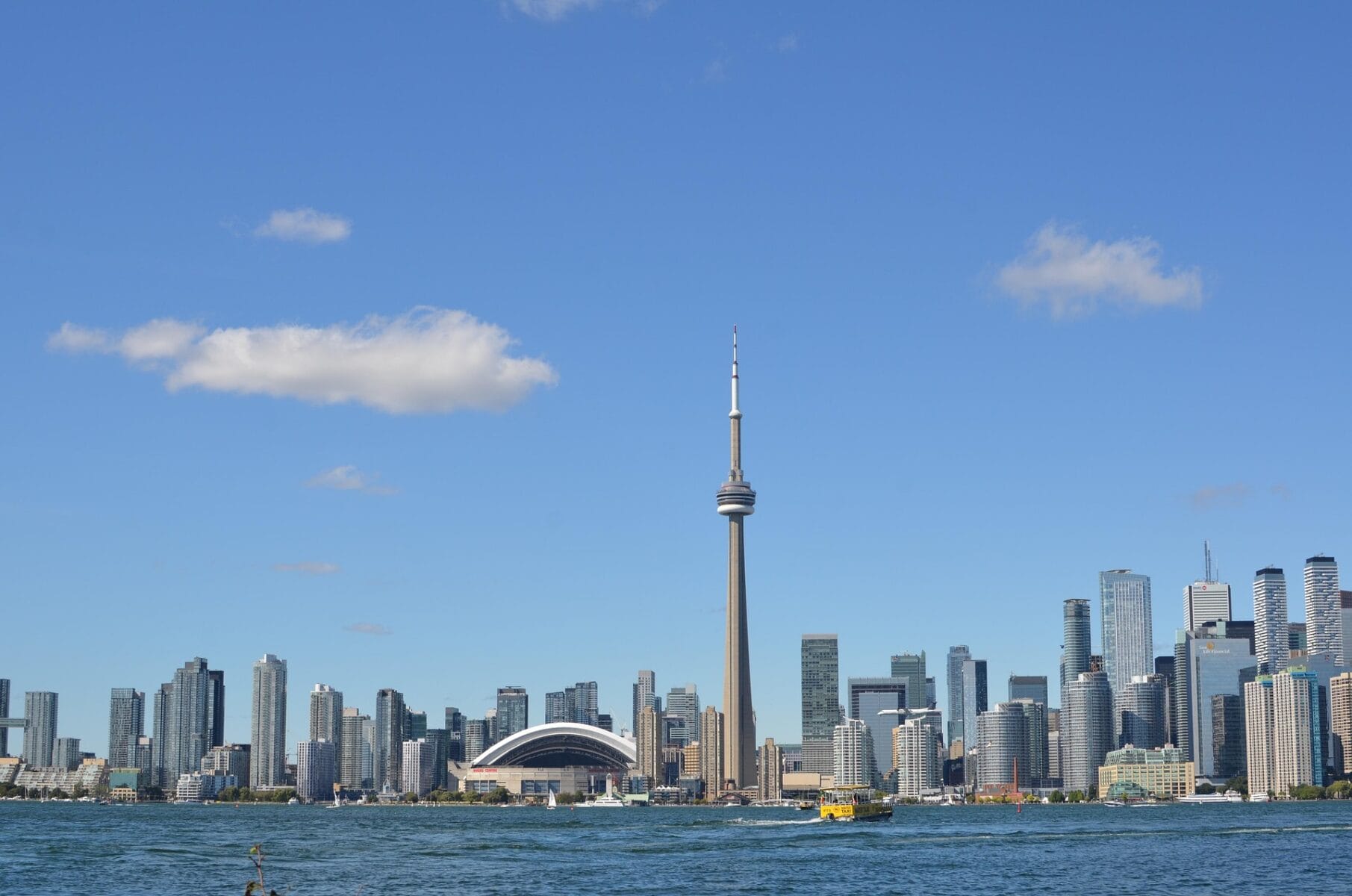
The CN Tower remains the city’s defining landmark. Standing at 553 metres, it offers panoramic views across the skyline and Lake Ontario. Visitors can step onto the Glass Floor or, for something more adventurous, take part in the EdgeWalk, which runs along the outer edge of the tower at a height of 356 metres. Early morning or late evening visits tend to have shorter queues and clearer views.
Nearby, Ripley’s Aquarium of Canada is one of the most popular indoor attractions. It houses more than 20,000 marine animals, including sharks, rays, and jellyfish. The highlight is the Dangerous Lagoon, a moving walkway that passes through a glass tunnel surrounded by sea life.
The Royal Ontario Museum is one of the largest museums in North America, combining natural history, global cultures, and rotating exhibitions. Its modern crystal extension contrasts with the original historic structure. Another major cultural venue is the Art Gallery of Ontario, home to over 95,000 works, including Canadian, Indigenous, and international art. Entry is free for visitors under 25 years old, which makes it particularly accessible for younger travellers.
A short ferry ride leads to the Toronto Islands, where you will find beaches, parkland, and open views back toward the city skyline. The islands offer a quieter contrast to downtown and are especially popular in summer.
For food and local atmosphere, St. Lawrence Market is a key stop. Operating since 1803, it features a wide range of vendors selling fresh produce, meats, baked goods, and prepared food. It is one of the best places to try a peameal bacon sandwich, a local speciality.
The Distillery District adds a different kind of attraction. This restored industrial area features cobblestone streets, galleries, cafés, and seasonal events, making it one of the most visually distinctive parts of the city.
Taken together, these attractions show Toronto at its most complete, combining height, culture, food, and waterfront space into a city that offers something for every type of traveller.

Historical Highlights & Landmarks in Toronto
Although Toronto is often associated with modern architecture, its historical sites provide an important layer of context. These locations help explain how the city developed from a small settlement into a major urban centre.
Fort York National Historic Site dates back to the early 19th century and played a key role during the War of 1812. The site preserves original buildings, defensive structures, and artefacts linked to the Battle of York in 1813. During summer, live demonstrations and guided tours bring the history to life.
Old City Hall, completed in 1899, is one of the city’s most recognisable historic buildings. Its Romanesque Revival architecture, clock tower, and detailed stonework stand in contrast to the modern skyscrapers that now surround it. It remains an active courthouse, but visitors can still admire both the exterior and parts of the interior.
St. James Cathedral is the oldest Anglican church in the city and features a tall Gothic Revival spire. Located in a quiet pocket of downtown, it offers a calm space away from busy streets. The surrounding gardens and occasional organ recitals add to its appeal.
Mackenzie House, once home to Toronto’s first mayor, provides insight into 19th-century life and politics. The preserved interiors and working printing press give a sense of how the city functioned in its early years.
The Distillery Historic District also plays a role here. Originally a large industrial complex, it is now preserved as one of the best examples of Victorian industrial architecture in North America. Its buildings show how the city’s economy once relied heavily on manufacturing and trade.
These landmarks give visitors a clearer understanding of Toronto’s past, showing how military history, civic development, religion, and industry all contributed to shaping the modern city.
Hidden Gems & Local Secrets of Toronto
Beyond the main attractions, Toronto offers a range of lesser-known places that reveal a more personal side of the city. These spots are often quieter, more local, and rewarding for travellers who want to go beyond the obvious.
Glen Stewart Ravine, located in the Beaches area, is a wooded trail that feels far removed from the urban environment. Boardwalk paths run through dense trees, making it particularly appealing during autumn when the foliage changes colour.
Allan Gardens Conservatory is a historic greenhouse complex that is free to enter. Inside, you will find a mix of tropical plants, cacti, and seasonal displays. It is a useful escape during colder months and a reliable option for indoor exploration.
Graffiti Alley, running behind Queen Street West, is one of the city’s most striking open-air art spaces. The walls are constantly changing, as artists update murals and designs, making each visit slightly different from the last.
For something more unusual, The Monkey’s Paw bookshop offers a vintage book vending machine known as the Biblio-Mat. For a small fee, it dispenses a randomly selected second-hand book, adding an element of surprise to the experience.
Toronto Necropolis is one of the city’s oldest cemeteries, combining historic monuments with the stories of early political figures and community leaders. It is a quiet and reflective space, particularly atmospheric in autumn.
Red Sandcastle Theatre in Leslieville provides a small, independent venue for local performances. With around 50 seats, it offers an intimate alternative to larger theatres in the city centre.
These locations highlight Toronto’s creativity, character, and sense of humour, offering experiences that feel more personal than the main tourist trail.
Indoor Attractions & Rainy-Day Ideas in Toronto
Toronto is well equipped for bad weather, with a wide range of indoor attractions that make it easy to fill a day without relying on outdoor plans. Rain or cold conditions rarely limit what you can do.
Ripley’s Aquarium of Canada is one of the strongest options, particularly for families. With thousands of marine species and interactive exhibits, it offers several hours of entertainment in a single location. The underwater tunnel remains the main highlight.
The Royal Ontario Museum provides a broader experience, covering natural history, science, and global cultures across multiple floors. It is large enough to occupy half a day or more, depending on your pace.
The Toronto Eaton Centre combines shopping with architecture, featuring a large glass roof and more than 250 stores. It is directly connected to the subway and the PATH network, making it easy to reach without going outside.
For entertainment, The Rec Room offers a mix of arcade games, virtual reality experiences, and dining. It is particularly popular in the evening or during colder months when outdoor options are less appealing.
Cultural venues such as TIFF Bell Lightbox and the Bata Shoe Museum provide more specialised experiences. The Lightbox focuses on film and cinema, while the museum explores the history of footwear from ancient to modern times.
Toronto also has a strong selection of board game cafés, climbing centres, and indoor activity venues, making it easy to tailor a rainy-day plan to your interests.
With this level of variety, poor weather in Toronto often becomes an opportunity rather than a problem, opening up a different side of the city.

Shopping & Markets in Toronto
Toronto offers one of the most diverse shopping scenes in Canada, combining major international brands, independent boutiques, vintage stores, and multicultural markets. What makes shopping here interesting is how quickly the atmosphere changes between districts, with each area offering a completely different experience.
The Toronto Eaton Centre is the city’s main retail hub. Located in the downtown core, it features more than 250 shops, including global brands such as Apple, Uniqlo, and major department stores. Its glass-roofed galleria makes it a comfortable place to shop in all weather, and its connection to the PATH network allows you to move between shops, food courts, and transit without going outside.
For a more creative and independent feel, Queen Street West is one of the best areas to explore. This district is known for local designers, streetwear, record stores, galleries, and small cafés, making it ideal for travellers looking for something less commercial. It is also one of the best places in the city for people-watching.
At the luxury end, Yorkville offers a completely different experience. This is Toronto’s high-end shopping district, home to brands such as Gucci, Chanel, Prada, and Tiffany & Co. The area also features art galleries, fine dining, and premium hotels, making it as much about atmosphere as shopping.
For something more relaxed and unconventional, Kensington Market is packed with vintage clothing stores, thrift shops, and independent retailers. Nearby Chinatown offers a mix of food markets, herbal shops, and low-cost goods, making it a good area for browsing as well as eating.
St. Lawrence Market remains one of the city’s most important market spaces. Operating since 1803, it combines food vendors, specialty ingredients, and prepared meals in a historic setting. It is one of the best places to experience local produce and casual dining in one stop.
Further out, Yorkdale Mall provides a large, modern shopping environment with a strong mix of mid-range and luxury brands, while CF Shops at Don Mills offers an open-air retail experience with a more relaxed layout.
Overall, shopping in Toronto reflects the city itself. It is varied, international, and easy to navigate, with something to suit every budget and interest.
Suggested Itinerary for Visiting Toronto
Planning your time in Toronto is relatively straightforward because many of the main attractions are located close together. The key is to balance major sights with neighbourhood exploration, rather than trying to rush everything.
For a one-day visit, start early at the CN Tower to avoid queues and take in views across the city and Lake Ontario. From there, move to Ripley’s Aquarium, which is located next door, before heading toward the Harbourfront.
If the weather is good, consider taking a ferry to the Toronto Islands for a short escape from the city. In the afternoon, visit St. Lawrence Market for food, then continue to the Distillery District for a slower-paced walk through galleries and cafés. The evening works well in the Entertainment District, where you can dine and catch a show or event.
For a weekend stay, you can expand on this by adding cultural and neighbourhood experiences. Spend part of a day at the Royal Ontario Museum or the Art Gallery of Ontario, then explore Kensington Market and Chinatown for food and street life. In the evening, areas such as Queen West or Ossington offer a more local nightlife experience compared to the main tourist zones.
With three to five days, you can move beyond the core. Day trips to Niagara Falls are one of the most popular options, typically taking 1.5 to 2 hours each way. Within the city, you can visit High Park, cycle along the Martin Goodman Trail, or spend more time exploring neighbourhoods such as Yorkville or the waterfront.
Toronto works best when you allow time to move at a steady pace. The city rewards flexibility and exploration, and even short stays can feel full without being rushed.
Seasonal Highlights & Annual Events in Toronto
Toronto experiences four distinct seasons, and each one brings a different atmosphere to the city. Choosing when to visit can shape your experience significantly, depending on whether you prefer festivals, outdoor activities, or quieter travel periods.
In spring, typically from March to May, temperatures begin to rise and parks come back to life. This is when you will see cherry blossoms in High Park, along with fewer crowds compared to summer. Events such as the Hot Docs Film Festival and Doors Open Toronto add cultural interest, allowing access to buildings that are normally closed to the public.
Summer, from June to August, is the busiest and most energetic time to visit. The city hosts major events including Pride Toronto, the Toronto Jazz Festival, and the Toronto Caribbean Carnival. Outdoor dining, harbour activities, and island visits are at their peak, and long daylight hours make it easier to fit more into each day.
Autumn, from September to November, is often considered one of the best times to visit. Temperatures are comfortable, and the city’s parks and ravines turn to autumn colours. The Toronto International Film Festival (TIFF) in September is the city’s biggest event, attracting global attention. Other highlights include Nuit Blanche, an overnight art event, and seasonal food markets.
Winter, from December to February, brings colder temperatures, typically between -5°C and 1°C, but also a different charm. The city hosts events such as the Cavalcade of Lights and Winterlicious, where restaurants offer set menus. Ice skating rinks, holiday markets, and snow-covered streets create a more relaxed and festive atmosphere. It is also a quieter period for tourism, which can mean lower hotel prices.
Each season offers a distinct version of Toronto, so timing your visit depends on whether you prioritise events, weather, or value.


City Passes, Discount Cards & Tourism Bundles
Toronto has several passes and bundled ticket options that can make sightseeing simpler, cheaper, and easier to organise, especially if you plan to visit multiple major attractions in a short stay. For first-time visitors, these can be useful because they reduce the need to book everything separately and help keep costs under control.
The best-known option is Toronto CityPASS. This pass includes admission to five major attractions and is designed for travellers who want to cover the headline sights without paying full individual ticket prices.
It includes the CN Tower, Royal Ontario Museum, Ripley’s Aquarium of Canada, Casa Loma, and then a choice between the Toronto Zoo or the Ontario Science Centre. In most cases, using CityPASS saves around 35% to 40% compared with buying the same tickets separately, which makes it a strong option if you already know you want to visit several of these places.
The pass is valid for 9 consecutive days from first use, which gives you enough flexibility to spread visits across a long weekend or a slightly longer stay. Tickets can be stored digitally and scanned from your phone, which keeps things straightforward and avoids paper clutter. For visitors who want a structured, convenient way to cover Toronto’s biggest attractions, it is usually the most useful bundle on offer.
Alongside CityPASS, there are often other combo tickets and attraction bundles available through official attraction websites and selected booking platforms. These may combine experiences such as harbour cruises, hop-on hop-off buses, observation tickets, or aquarium entry. The value varies, so these are worth comparing carefully rather than buying automatically.
On the transport side, Toronto no longer relies on a traditional tourist day pass in the old sense, but the PRESTO system still works well for visitors. With fare capping, once you hit the daily maximum, additional TTC travel that day is effectively covered. For wider regional exploration, the GO Transit Weekend Pass can offer good value if you are planning journeys beyond the city, including places such as Niagara Falls, Hamilton, or other Greater Toronto Area destinations.
You may also find seasonal discounts, digital coupons, and mobile bundles through platforms such as Klook, Trip.com, or Destination Toronto, particularly during quieter travel periods or for special event tie-ins. These can be useful, but CityPASS remains the clearest and most established sightseeing product for most visitors.
For travellers planning to visit several major landmarks, using a pass is often the easiest way to save money, reduce booking friction, and keep everything in one place.
Parks, Gardens & Green Spaces in Toronto
Toronto may be Canada’s largest city, but it has an impressive amount of green space woven into daily life. With more than 1,500 parks, a large ravine system, waterfront trails, and island parkland just offshore, the city offers plenty of places to slow down, reset, and escape the density of the downtown core.
High Park is the city’s best-known green space and the one most visitors should prioritise if time allows. Covering around 400 acres, it includes wooded walking trails, gardens, playgrounds, sports areas, a small zoo, and Grenadier Pond. It is especially famous in spring when the cherry blossoms bloom, drawing large crowds, and again in autumn when the trees turn rich shades of red and gold. It is large enough to feel like a genuine urban escape rather than just a city park.
The Toronto Islands also play a major role in the city’s green identity. Although many visitors think of them mainly as a ferry destination, they are essentially a chain of peaceful park spaces with beaches, picnic areas, walking paths, and cycle routes.
Centre Island is the busiest and most family-friendly, Ward’s Island feels quieter and more residential, and Hanlan’s Point is more open and natural. Because the islands are largely car-free, they offer a completely different atmosphere from downtown and are one of the best places to recharge on a warm day.
For a more natural, less manicured experience, the Don Valley Trails provide wooded routes that feel surprisingly remote for a major city. These trails run through ravines and along the Don River, giving walkers, runners, and cyclists a quieter side of Toronto that many short-stay visitors never see. They are especially good if you want greenery without leaving the city limits.
Allan Gardens Conservatory offers another kind of green escape. This Victorian-era conservatory is free to enter and contains tropical plants, palms, orchids, cacti, and seasonal displays. It is particularly valuable in winter or during poor weather, when you want a green setting without relying on outdoor conditions.
Smaller urban favourites include Trinity Bellwoods Park, which has a social, lived-in feel and is popular for picnics, dog walking, and relaxed afternoons, and the Toronto Music Garden, a beautifully designed waterfront space inspired by Bach’s music and used for summer performances and quiet walks.
What makes Toronto’s parks stand out is their variety. You have formal gardens, waterfront promenades, deep ravines, island retreats, and large multi-use parks, all within easy reach of the city centre. They are not just decorative spaces. They are a real part of how the city is lived in and enjoyed.
For visitors, these green areas provide an important counterbalance to the skyline, museums, and busy streets, showing that Toronto is not only energetic and urban, but also surprisingly spacious and breathable.
Where & What to Eat in Toronto
Toronto’s food scene is one of its biggest strengths. With more than 200 cultures represented, the city offers an exceptional range of dining options, from street food and casual eateries to high-end tasting menus. What sets it apart is not just variety, but authenticity. Many neighbourhoods specialise in specific cuisines, allowing you to experience global food culture without leaving the city.
A few local favourites are worth seeking out. The peameal bacon sandwich is a Toronto classic, best tried at St. Lawrence Market. The butter tart is a rich Canadian dessert found in bakeries across the city. Beyond that, Toronto excels in global staples such as Caribbean roti, Chinese street food, Middle Eastern grills, and South Asian snacks, all widely available in the right neighbourhoods.
Different districts offer distinct food experiences. Kensington Market is one of the best areas for casual dining, with a mix of Latin American, vegan, and fusion options. Chinatown is packed with dumpling houses, noodle restaurants, and late-night eateries. Greektown along Danforth Avenue focuses on traditional Greek cuisine, while Little Italy and Little Portugal bring European flavours to College Street and Dundas West.
Toronto has also gained international recognition for its fine dining. Since the introduction of the Michelin Guide, restaurants such as Alo, Don Alfonso 1890, Frilu, and Edulis have highlighted the city’s ability to compete at a global level. Reservations are usually required for these venues, particularly at weekends.
Markets remain an important part of the food culture. St. Lawrence Market is the most famous, but areas such as Kensington Market and newer spaces like Stackt Market offer more modern takes on street food and local produce.
Toronto is also highly accommodating for different dietary needs. Vegan, halal, kosher, and gluten-free options are widely available, and apps can help you locate suitable places quickly.
Overall, eating in Toronto is less about finding one standout dish and more about exploring a wide range of cuisines, often within a single day.

Nightlife in Toronto
Toronto’s nightlife is varied and well developed, offering everything from large-scale clubs and rooftop bars to smaller venues and late-night dining. The atmosphere changes depending on where you go, making it easy to find something that suits your pace.
The Entertainment District is the main nightlife hub. Centred around King Street West, it features clubs, bars, live music venues, and large event spaces. This is where you will find bigger venues, international DJs, and a more polished nightlife experience. It is also close to theatres and sports arenas, so it tends to stay busy into the late evening.
For something more relaxed, Queen West and Ossington Avenue offer a different style. These areas are known for independent bars, cocktail spots, craft beer venues, and smaller music spaces. The atmosphere is more local and less formal, making it a good choice if you want a quieter evening or something less structured.
The Annex and College Street areas, close to the University of Toronto, bring a younger crowd and a more casual feel. Here you will find pubs, comedy venues, and bars that fill up quickly during weekends and term time.
Toronto also has a strong LGBTQ+ scene, centred around the Church-Wellesley Village. This area includes bars, clubs, and performance venues, with regular events, drag shows, and community-focused nightlife.
For live music, venues such as Massey Hall and The Horseshoe Tavern host both major acts and local performers. Late-night food is easy to find in areas like Koreatown and Chinatown, where restaurants stay open well past midnight.
Toronto’s nightlife is inclusive and varied. Whether you prefer a busy club, a quiet drink, or live entertainment, there are multiple options within a short distance of each other.
Day Trips from Toronto
Toronto’s location makes it an excellent base for exploring southern Ontario. Several high-quality day trips are within one to three hours, offering a mix of natural scenery, small towns, and cultural experiences.
The most famous destination is Niagara Falls, located around 1.5 to 2 hours from the city. It is accessible by train, bus, or car, and offers a range of activities including boat tours, viewpoints, and nearby attractions. The surrounding area, including Niagara-on-the-Lake, adds vineyards, restaurants, and quieter streets to explore.
Hamilton and the surrounding Dundas Valley are about one hour away and are known for their large number of waterfalls. Many are accessible via short walking trails, making the area popular with hikers and photographers.
For a slower-paced escape, Prince Edward County sits around 2.5 hours from Toronto. It is known for wineries, local food, and beaches, particularly at Sandbanks Provincial Park. The area is well suited to cycling and relaxed day trips.
Stratford, also around two hours away, is famous for its theatre scene, particularly the Stratford Festival, which focuses on Shakespeare and classical productions. The town itself is compact and easy to explore on foot.
For outdoor activities, Blue Mountain and Collingwood offer year-round options. In winter, the focus is on skiing and snowboarding, while summer brings hiking, zip-lining, and spa experiences. The journey takes around two hours.
Other options include the Royal Botanical Gardens in Burlington, Elora Gorge, and Algonquin Provincial Park, which is further away at around three hours but offers a more remote wilderness experience.
These day trips expand what Toronto offers, allowing you to combine city exploration with natural landscapes and smaller communities.
Cultural Norms & Etiquette in Toronto
Toronto is one of the most diverse cities in the world, and that diversity shapes everyday behaviour. Visitors will generally find the city polite, inclusive, and easy to navigate socially, but understanding a few norms helps avoid misunderstandings.
Politeness is important. Simple phrases such as “please,” “thank you,” and “sorry” are used frequently and are expected in everyday interactions. Queuing is taken seriously, whether for transport, food, or services, and skipping a line is considered rude.
Personal space is respected, even in crowded areas. Conversations are usually kept at a moderate volume, particularly on public transport. Behaviour that draws attention, such as loud arguments or playing music without headphones, is generally discouraged.
Tipping is part of the culture. In restaurants and bars, a tip of 15 to 20 percent is standard. Smaller tips are expected for taxis and casual services, and it is common to add a small amount per drink in bars.
Toronto is known for its openness. It is a city where different cultures, identities, and lifestyles are widely accepted, including strong support for LGBTQ+ communities. Respect for diversity is expected, and visitors are treated the same way in return.
Public behaviour rules are straightforward. Alcohol consumption is restricted to licensed venues or designated areas, and smoking follows similar rules. Littering is discouraged and can result in fines, as the city places a strong emphasis on cleanliness and environmental responsibility.
Overall, Toronto’s etiquette is based on respect, patience, and awareness of others, making it a comfortable place for international visitors.
Where to Stay in Toronto
Toronto offers a wide range of accommodation, from luxury hotels and boutique properties to budget chains and extended-stay options. Choosing the right area can significantly improve your experience, especially if you want to minimise travel time between attractions.
The downtown core and Entertainment District are the most convenient locations for first-time visitors. Staying here places you close to the CN Tower, Union Station, major attractions, and nightlife. Hotels in this area tend to be modern, with strong transport links and easy walking access to key sites.
Yorkville is the city’s most upscale area, known for luxury hotels, designer shopping, and a quieter atmosphere. It suits travellers looking for a more refined stay while still remaining close to the centre. Nearby, The Annex offers a more relaxed and academic environment, with smaller hotels and easy access to cafés and local dining.
Queen West and Ossington are ideal for travellers who prefer a more creative setting. Boutique hotels and design-focused properties are common here, and the area has a strong mix of nightlife, food, and independent shops.
The waterfront and Harbourfront areas provide a different experience, with lake views, open space, and easy access to ferries and parks. This is a good option for families or travellers who want a quieter base.
For better value, areas slightly outside the centre such as Downtown East, Liberty Village, or Etobicoke offer more affordable options while still being connected by public transport.
When booking, it is important to consider timing. Prices rise significantly during summer, major festivals such as TIFF, and long weekends. Parking fees, typically CA$20–50 per night, should also be factored into the total cost if you are driving.
Toronto’s accommodation reflects the city itself. It is modern, varied, and well connected, making it easy to find a place that suits your travel style and budget.
| Hotel Chain | Presence in Toronto | Nearest Location (if not central) | Approx. Distance from Downtown |
|---|---|---|---|
| Accor | Yes – Fairmont Royal York (Union Station) | Downtown Core | 0 km |
| Hilton | Yes – Hilton Toronto, DoubleTree by Hilton | Financial District | 0 km |
| Marriott | Yes – Delta Hotels, Marriott Downtown at CF Eaton Centre, Courtyard Toronto | Multiple Downtown Locations | 0–2 km |
| IHG (InterContinental Hotels Group) | Yes – InterContinental Toronto Centre, Holiday Inn Express | Downtown & Airport Districts | 0–25 km |
| Radisson Hotel Group | Yes – Radisson Blu Downtown Toronto | Waterfront Area | 1 km |
| Hyatt | Yes – Hyatt Regency Toronto, Park Hyatt Toronto | Downtown & Yorkville | 0–3 km |
| Wyndham Hotels | Yes – Ramada Plaza, Super 8 by Wyndham | Downtown East & Chinatown | 0–2 km |
| Best Western | Yes – Best Western Primrose Hotel, Plus Travel Hotel | Downtown & North York | 0–12 km |
| Choice Hotels | Yes – Comfort Inn, Quality Hotel, Clarion | Etobicoke & Airport Vicinity | 15–25 km |
Compare hotel prices in Toronto with Vio
Vio compares prices across major booking sites, including Booking.com, Expedia, Agoda and Hotels.com, so you can check whether the same stay is cheaper elsewhere before you book.
Other booking options
Hotel group websites
Click the map to open a larger interactive view and explore more accommodation options.
Toilets & Accessibility
Toronto provides generally clean, safe, and accessible public facilities, but they are not always obvious if you are unfamiliar with the city. Knowing where to look can save time, especially when moving between neighbourhoods or travelling with family.
Public washrooms are easiest to find in major hubs. Union Station has some of the best facilities in the city, free to use and open late. The Toronto Eaton Centre also offers reliable options, particularly near the food courts. St. Lawrence Market provides toilets on both upper and lower levels, while the Harbourfront Centre has well-maintained facilities close to the waterfront.
In parks, washrooms are available in places such as High Park and Trinity Bellwoods, though these are often seasonal and may close during colder months. Libraries and community centres are another dependable option, with many allowing access without requiring membership. Cafés such as Starbucks or Tim Hortons can be used in an emergency, although some locations may require a purchase.
Accessibility across the city is strong by North American standards, though older areas can still present challenges. The TTC network has made significant progress, with all buses and streetcars fully accessible and more than 55 subway stations equipped with elevators, with ongoing upgrades. The UP Express and GO Transit services are fully step-free, with level boarding and accessible carriages.
Major attractions, including the CN Tower, Royal Ontario Museum, Art Gallery of Ontario, and Ripley’s Aquarium, are fully accessible. Hotels across the city usually offer adapted rooms, though it is always worth confirming specific requirements such as roll-in showers or step-free access before booking.
Street infrastructure is generally good, with curb cuts and ramps common, but conditions can vary slightly depending on the neighbourhood. In winter, snow and ice can affect accessibility, so sticking to main routes and cleared areas is advisable.
Overall, Toronto is a city where most travellers will find moving around straightforward, but planning ahead makes a noticeable difference, particularly if accessibility is a key requirement.
Weather & Best Time to Visit Toronto
Toronto experiences four distinct seasons, and each one brings a different feel to the city. Understanding how the weather changes through the year helps you decide when to visit and what to expect.
| Season | Average Temperatures | What to Expect |
|---|---|---|
| Winter (Dec–Feb) | -5°C to 1°C | Snow, festive markets, indoor attractions |
| Spring (Mar–May) | 5°C to 17°C | Cherry blossoms, fewer crowds, variable weather |
| Summer (Jun–Aug) | 20°C to 28°C | Festivals, outdoor dining, busy attractions |
| Autumn (Sep–Nov) | 8°C to 20°C | Fall colours, comfortable temperatures |
The most popular time to visit is summer, when the city is at its liveliest. Festivals, outdoor events, and long daylight hours make it easy to explore, though accommodation prices are at their highest during this period.
Late spring and early autumn are often the best balance. In May and June, the weather is comfortable and parks are in full bloom, while September offers warm temperatures with fewer crowds after the peak summer season ends. These periods are ideal for walking, sightseeing, and day trips.
Winter can be cold, with temperatures frequently dropping below freezing, but it has its advantages. The city is quieter, hotel prices are often lower, and seasonal events such as ice skating and holiday markets create a different atmosphere. Proper clothing is essential, as wind between buildings can make conditions feel colder.
One important factor is humidity. During July and August, temperatures can feel higher than they are, so light clothing and regular hydration are important.
Choosing when to visit Toronto depends on your priorities. If you want energy and events, summer is best. If you prefer comfortable weather and fewer crowds, spring and autumn are more suitable.
eSIMs & Connectivity in Toronto
Staying connected in Toronto is straightforward. The city has excellent mobile coverage, fast data speeds, and widespread Wi-Fi, making it easy to stay online from arrival to departure.
Free Wi-Fi is available in many public spaces. Union Station offers strong and reliable connections, while the Toronto Public Library network, with more than 100 branches, provides free access across the city. Many cafés, including Starbucks and other chains, offer complimentary Wi-Fi, and most shopping centres and food courts have open networks. On public transport, Wi-Fi is available in subway stations, although coverage inside tunnels is still limited.
For mobile data, eSIMs are the easiest option for most travellers. They allow you to activate a data plan instantly without needing a physical SIM card. Popular providers include Airalo, Nomad, Ubigi, and GigSky, all of which offer Canada-wide coverage with competitive pricing. Entry-level plans can start from around US $4 to $10, depending on data allowance and duration.
Canada’s main networks are Rogers, Bell, and Telus, and most eSIM providers operate on one of these, ensuring strong coverage across Toronto and surrounding areas. For longer stays, an eSIM is usually far cheaper than international roaming and avoids the need to visit a store on arrival.
For travellers who rely on navigation, bookings, and transport apps, having mobile data makes a noticeable difference. Toronto is a city where being connected helps you move more efficiently, particularly when using public transport, ride-share services, or digital tickets.
Laws, Safety & Warnings in Toronto
Toronto is widely considered one of the safest major cities in North America. Crime rates are relatively low, and most visits are trouble-free, but basic awareness is still important in busy areas.
Personal safety is generally not a concern, though petty theft can occur in crowded locations such as Union Station, Yonge–Dundas Square, and major events. Keeping valuables secure and being aware of your surroundings is usually enough to avoid problems. Police presence is visible, and officers are approachable if assistance is needed.
Emergency services are easy to access. Dial 911 for police, fire, or ambulance services. For non-urgent police matters, the number is 416-808-2222. Healthcare is widely available, but visitors should have travel insurance, as treatment can be expensive without coverage.
There are a few legal points to be aware of. Cannabis is legal for adults aged 19 and over, but consumption is restricted to private residences or designated outdoor areas. It is not permitted in vehicles, hotel rooms, or anywhere tobacco smoking is banned. Alcohol laws are also enforced, with a legal drinking age of 19 and restrictions on open containers in public spaces.
Jaywalking is technically illegal, though enforcement is inconsistent. It is still safest to cross at designated points. Tipping and sales tax are part of daily transactions, with 13% HST added at checkout and tipping of 15% to 20% expected in most service settings.
Toronto is a city that runs on order, respect, and clear rules, and visitors who follow these will find it welcoming and easy to navigate.

Rupert’s Handy Travel Tips
Heading to Toronto? Here are a few useful tips to help your visit run smoothly:
- Get a PRESTO card: It’s the easiest way to pay for the TTC, GO Transit, and UP Express without cash or paper tickets.
- Beat the CN Tower crowds: Arrive early morning or visit after 6 pm for shorter queues and stunning sunset views.
- Dress in layers: Toronto’s weather changes quickly near the lake, so a light jacket is handy even in summer.
- Plan around festivals: Major events like TIFF, Caribana, and Pride fill hotels fast, so it’s worth booking well in advance.
- Walk when you can: Downtown Toronto is compact, and the PATH walkway keeps you dry in winter.
Want to meet the reindeer behind our travel tips? Find out more in our page Who is Rupert?.




Frequently Asked Questions
Is Toronto expensive to visit?
Yes, Toronto can be pricey, especially for accommodation and dining. Budget options exist, but travellers should expect prices similar to major U.S. cities.
Is Toronto safe for solo travellers and women?
Absolutely. It’s one of the safest big cities in North America. Use standard city awareness: avoid unlit areas at night, and keep an eye on belongings.
Can I drink the tap water?
Yes. Toronto’s tap water is clean, safe, and regulated to high standards. No need for bottled water.
Do I need a visa to visit Toronto?
Many nationalities can enter Canada visa-free or with an eTA (Electronic Travel Authorization). Always check Canada’s official immigration site before travel.
How long should I stay in Toronto?
A 3–5 day trip gives you time to explore the city’s highlights, enjoy the food scene, and take a day trip (like Niagara Falls or Stratford).
Further Reading & Related App Guides
Planning a trip to Toronto or exploring more of Canada? These guides cover transport, attractions, sightseeing, rail travel, airport transfers, and one of the country’s biggest airlines to help you build a smoother trip.
Getting around is usually the first thing to plan. Once you land, compare the best ways to get into the city after landing in our guide to Toronto Airport to Downtown: Train, Bus, Taxi & Uber Guide (2026).
Once you’re settled, the GO Trains Toronto Guide: Routes, Tickets, Prices & How to Use (2026) explains how regional rail works for day trips and beyond, and that same network makes it easy to travel from the city to one of Canada’s top natural sights, covered in our Toronto to Niagara Falls: Train, Bus & Travel Guide (2026).
For sightseeing, our Things to Do in Toronto guide rounds up the city’s best attractions and experiences. You can also see the city’s main landmarks from an open-top bus with our Toronto Hop-On Hop-Off Bus Tours: Routes, Stops & Tickets (2026), or decide whether Toronto’s main sightseeing pass offers value with the Toronto City Pass Guide: Attractions, Prices & Is It Worth It?.
Beyond the city, our Best Day Trips from Toronto: Top Destinations for 2026 guide finds the best escapes for waterfalls, wine country, small towns, and scenic Ontario. And if you’re still planning your flights, the Air Canada Travel Guide 2026: Routes, Star Alliance & Aeroplan Explained covers Canada’s flag carrier, route network, and loyalty scheme.