Reviewed by our editorial team Updated
Discover Montenegro’s Most Sacred Place
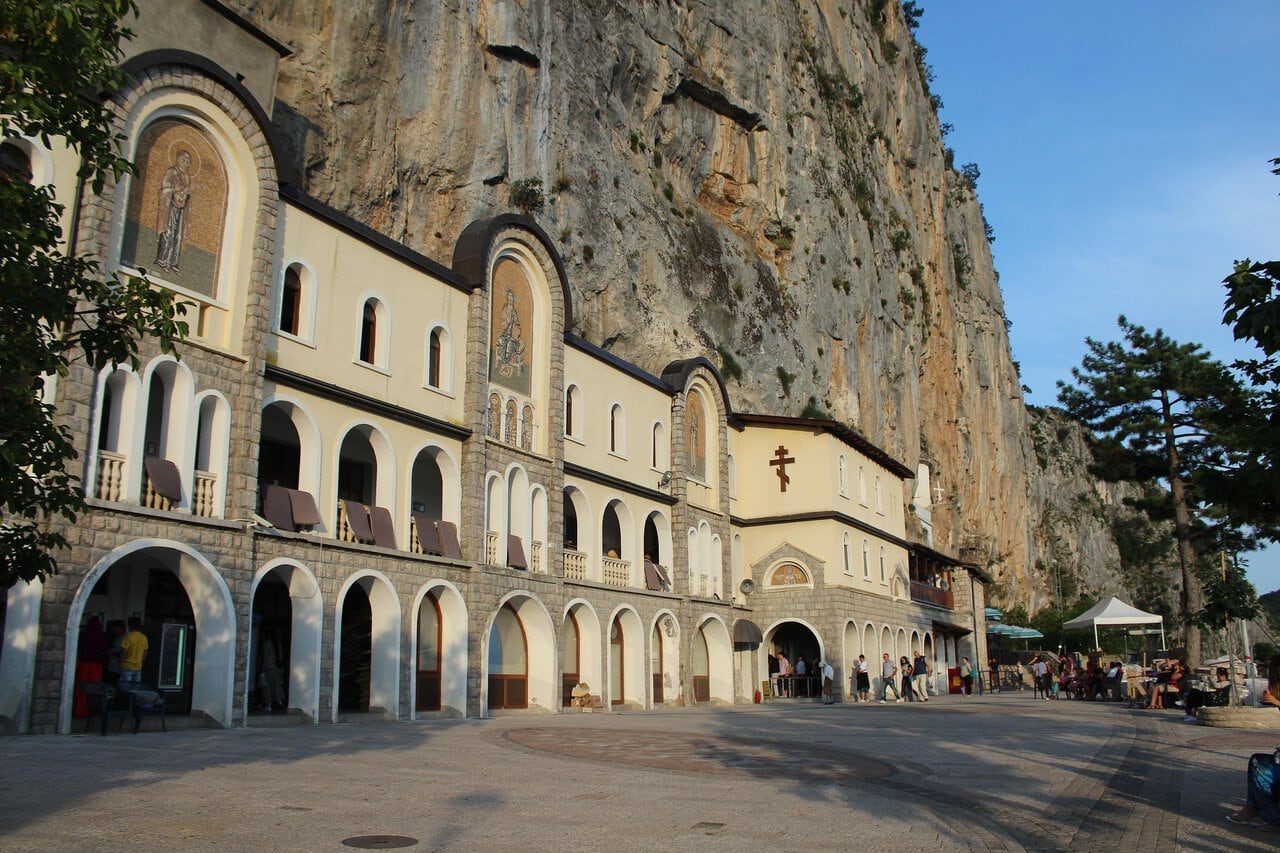
Rising dramatically from a near-vertical cliff face almost 900 metres above sea level, Ostrog Monastery is one of the most extraordinary religious sites in Europe. Built directly into the rock and seemingly suspended high above the Zeta Valley, it attracts hundreds of thousands of visitors every year, making it Montenegro’s most important pilgrimage destination.
Unlike many monasteries hidden behind walls or nestled within towns, Ostrog Monastery appears almost impossible to build. Its brilliant white buildings blend into the sheer limestone cliffs, creating one of Montenegro’s most recognisable landmarks and a sight that leaves a lasting impression long before you arrive.
While it is first and foremost a place of worship for Orthodox Christians, visitors of all faiths and backgrounds are welcome. Many people travel here for religious reasons, while others come to admire the remarkable architecture, learn about the monastery’s fascinating history or simply experience the peaceful atmosphere that has drawn pilgrims for centuries.
Whether you’re interested in history, religion, architecture or simply discovering one of Montenegro’s most iconic attractions, Ostrog Monastery is a destination unlike any other.
Most visitors combine Ostrog Monastery with a wider tour of central Montenegro, since it sits within reach of Podgorica and several of the country’s other major attractions. It’s exactly this kind of detour that fits naturally into a longer trip, such as our own 14-Day Montenegro Itinerary, which weaves the coast, the mountains and sites like Ostrog into one complete route.
Even from a distance, driving through the Zeta Valley below, the monastery is often the first thing visitors notice, a small white mark against the grey cliff face long before the road begins to climb. It’s a view that regularly appears on postcards and travel features about Montenegro, yet somehow still manages to feel understated compared with the real thing.
Why Visit Ostrog Monastery?
Few places combine such spectacular scenery with such deep spiritual significance. Even for visitors with no religious beliefs, Ostrog Monastery is an unforgettable place to experience.
The first thing that captures your attention is the monastery’s extraordinary location. Built directly into a sheer cliff, it overlooks forests, mountains and the broad valley far below, providing breathtaking views across central Montenegro. Simply reaching the monastery is part of the adventure, with the winding mountain road revealing increasingly dramatic views as you climb higher.
Beyond the scenery, Ostrog is a place of remarkable tranquillity. Despite welcoming large numbers of visitors throughout the year, there’s a quiet, reflective atmosphere that encourages people to slow down, explore respectfully and appreciate the monastery’s unique surroundings.
For many visitors, however, the greatest attraction is the opportunity to see one of the most important Orthodox Christian pilgrimage sites in the Balkans. People travel from across Europe and beyond to pray at the monastery, light candles and pay their respects to Saint Basil of Ostrog, whose relics remain enshrined within the monastery church.
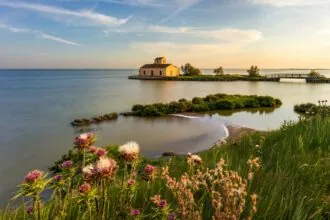
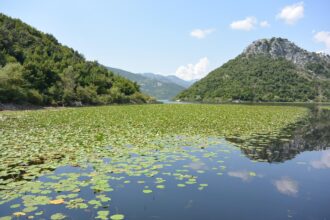
Many visitors also combine their trip with a stop at nearby Lake Skadar National Park, since both destinations sit within a similar distance of Podgorica and reveal very different sides of Montenegro’s landscape in the space of a single day, from sheer cliffside architecture to wetlands and vineyards.
Visiting also offers a rare chance to witness a living tradition rather than a historical curiosity. Unlike many ancient sites that have effectively become museums, Ostrog remains an active place of worship exactly as it was centuries ago, with monks still in residence and daily services continuing much as they always have.
Compare hotels and other places to stay for your trip.
Check availabilityBrowse apartments, holiday homes and self-catering stays.
View rentalsCompare hotel deals from multiple booking sites in one search.
Compare pricesThe History Of Ostrog Monastery
The history of Ostrog Monastery dates back to the 17th century, when Saint Basil of Ostrog chose the remote cliffside location as a place for prayer, worship and monastic life. Seeking peace and isolation high above the valley, he established what would become Montenegro’s most important religious site.
Saint Basil served as the Metropolitan Bishop of Herzegovina during a turbulent period in Balkan history. He became widely respected for his compassion, wisdom and dedication to helping people regardless of their background or faith. Following his death in 1671, his body was placed within the monastery, where it remains today.
Over the centuries, countless stories of miraculous healings and answered prayers have become associated with the monastery. These accounts helped establish Ostrog as one of the most important pilgrimage destinations in Orthodox Christianity, attracting believers from Montenegro, Serbia, Bosnia and Herzegovina, Greece, Russia and many other countries.
Despite wars, political upheaval and the passage of time, Ostrog Monastery has remained an enduring symbol of faith and perseverance. Today it continues to welcome pilgrims and visitors from around the world while preserving traditions that have continued for more than 350 years.
Local guides in the region often share additional stories passed down through generations, of pilgrims travelling for weeks on foot before modern roads existed, and of the monastery surviving earthquakes and conflict largely intact. These oral traditions add a personal layer to the official history, and are well worth asking about if you visit with a local guide rather than exploring independently.
Explore The Upper Monastery
The Upper Monastery is the heart of Ostrog and the destination that almost every visitor comes to see. Built directly into the face of the cliff, its whitewashed walls seem to emerge naturally from the surrounding rock, creating one of the most remarkable religious buildings anywhere in Europe.
This section of the monastery contains two small churches, including the Church of the Presentation and the Church of the Holy Cross, both decorated with beautiful frescoes that blend seamlessly into the natural rock walls. Their intimate size creates a peaceful atmosphere that contrasts with the dramatic landscape outside.
The monastery is also home to the relics of Saint Basil of Ostrog, which are preserved within the Upper Monastery. Pilgrims often queue patiently for the opportunity to enter the shrine, offer prayers and pay their respects. Even for visitors who are not religious, witnessing this centuries-old tradition is a memorable and moving experience.
Stepping onto the monastery’s terraces rewards visitors with spectacular panoramic views across the valley below. On clear days, the scenery stretches for miles, reminding you why this extraordinary location was chosen as a place of peace and contemplation more than three centuries ago.
A small chapel carved directly into the rock face nearby is easy to miss if you’re not looking for it, tucked just off the main terrace. It’s rarely crowded even when the main churches have a queue, making it a good spot for a few minutes of quiet reflection before continuing your visit.
Queues for the shrine move steadily rather than quickly, so allow extra time if you’re visiting during a busy period. Most visitors find the wait itself becomes part of the experience, spent alongside pilgrims from a wide range of countries, many quietly praying or simply taking in the setting while they wait their turn.
Visit The Lower Monastery
Before reaching the famous cliffside sanctuary, most visitors arrive at the Lower Monastery, which acts as the main entrance to the Ostrog Monastery complex. Surrounded by peaceful gardens and mountain scenery, it’s an excellent place to pause before continuing the journey uphill.
The Lower Monastery is home to the impressive Church of the Holy Trinity, built during the 19th century, as well as accommodation for monks and pilgrims, a monastery shop and visitor facilities. Many organised tours begin here, while independent travellers often take time to explore the grounds before making their way to the Upper Monastery.
If you’re arriving by car, you’ll find parking close to the Lower Monastery, although spaces can fill quickly during the busiest summer months and major religious festivals. From here, visitors can either drive the winding mountain road to the Upper Monastery or follow the steep pilgrimage path that climbs through the forest.
Although many people head straight for the Upper Monastery, the Lower Monastery is well worth exploring in its own right. Its peaceful setting provides an excellent introduction to one of Montenegro’s most important religious sites.
A small café near the Lower Monastery car park is a useful stop if you’re planning to walk the pilgrimage path uphill, since there’s nowhere to buy food or drink again until you reach the Upper Monastery itself. Toilets and a gift shop selling icons, candles and religious souvenirs are also based here.
Several information panels around the grounds explain the monastery’s history in multiple languages, making the Lower Monastery a useful place to learn some background before continuing uphill. It’s also generally a good spot to use the toilets and buy water, since facilities become busier the closer you get to the Upper Monastery.

Pilgrimage & Religious Significance
For millions of believers, Ostrog Monastery is far more than a tourist attraction. It is one of the most important Orthodox Christian pilgrimage sites in Europe, welcoming worshippers from across the Balkans and far beyond.
Pilgrims travel here throughout the year to pray before the relics of Saint Basil of Ostrog, seeking comfort, healing and spiritual guidance. Many visitors leave written prayers, light candles or spend time in quiet reflection within the monastery churches.
One of the most moving traditions is seeing pilgrims walk barefoot along the steep path between the Lower and Upper Monasteries as an act of faith and devotion. Others choose to spend the night outside the monastery, sleeping beneath the stars before attending early morning prayers. These traditions have continued for generations and form an important part of the monastery’s unique atmosphere.
Although deeply rooted in Orthodox Christianity, Ostrog welcomes people of all religions and backgrounds. It’s not unusual to see Orthodox Christians, Catholics, Muslims and visitors with no religious beliefs standing together in the same queue, united by curiosity, respect or personal faith.
Feast days connected to Saint Basil draw particularly large crowds, with some pilgrims travelling from neighbouring countries specifically to be at the monastery on these dates. If your visit happens to coincide with one, expect considerably busier roads and car parks, but also a far more vivid sense of the devotion that has sustained this site for centuries.
Even outside major feast days, it’s common to see visitors leave small written notes or prayers tucked near the shrine, a quiet, personal tradition that continues year-round rather than being reserved for special occasions. Watching this unfold, even briefly, gives most visitors a much stronger sense of the monastery’s ongoing significance than the history alone can convey.
Dress Code & Visitor Etiquette
As an active place of worship, visitors are asked to dress and behave respectfully while visiting Ostrog Monastery. Following a few simple guidelines helps preserve the peaceful atmosphere and shows consideration for those who have travelled here on pilgrimage.
Modest clothing is recommended for both men and women. Visitors should avoid beachwear, very short shorts, crop tops or revealing clothing. Bringing a light shawl or scarf can be useful if you’re visiting during the summer months, particularly if you plan to enter the churches.
Photography is generally permitted in the outdoor areas of the monastery, where the spectacular setting provides countless opportunities for memorable photographs. However, photography inside the churches and near the relics of Saint Basil is usually prohibited, so always follow signs and respect any instructions given by the monks.
The monastery can become extremely busy during religious services and feast days. Speaking quietly, switching mobile phones to silent mode and patiently waiting your turn are all appreciated. Even if you’re visiting purely as a tourist, remembering that Ostrog is first and foremost a living monastery will help ensure a respectful and enjoyable visit for everyone.
Shawls and simple wraps are sometimes available to borrow at the entrance for visitors who arrive underdressed, though supplies are limited, so it’s best not to rely on this and to plan your outfit in advance. Removing hats is customary for men before entering the churches, while many women choose to cover their heads with a scarf as a mark of respect.
Getting To Ostrog Monastery
Although Ostrog Monastery sits high on a mountainside, it’s surprisingly straightforward to reach from many parts of Montenegro.
| Starting Point | Bus | Car | Typical Journey |
|---|---|---|---|
| Podgorica | Via Ostrog Station | ✔ | Around 1 hour |
| Nikšić | Via Ostrog Station | ✔ | Around 30–40 minutes |
| Budva | Limited | ✔ | Around 2 hours |
| Kotor | Limited | ✔ | Around 2½ hours |
| Tivat Airport | Limited | ✔ | Around 2½ hours |
Driving is the easiest option. A winding mountain road climbs to the monastery, with parking available near both the Lower and Upper Monasteries. The final section of road is narrow with several tight bends, so careful driving is essential, particularly during busy periods.
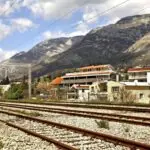
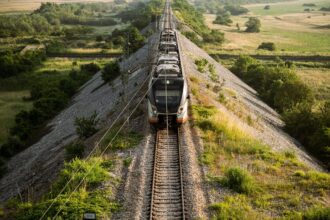
It’s also possible to visit using public transport. Trains on the Belgrade to Bar Railway stop at Ostrog Station, located in the valley below the monastery. From there, visitors can take a taxi or walk the uphill road to the monastery, although the walk is long and steep, especially during the summer heat.
Many visitors also choose to join an organised day tour from Podgorica, Budva, Kotor or other coastal towns. These tours usually include transport, leaving you free to enjoy the monastery without worrying about mountain roads or public transport connections.
If you’re travelling by train along the Belgrade to Bar Railway, Ostrog Station makes an interesting, if energetic, way to combine two very different Montenegrin experiences in one day. Our wider Montenegro Public Transport guide covers bus and rail options across the whole country in more detail, which is useful if you’re planning to reach the monastery without a hire car.

Plan Your Bus Journey with Omio
Booking bus tickets can be a simple and affordable way to travel between cities, especially on routes where trains are expensive or less direct. Omio lets you compare bus routes, check timetables, and buy tickets in one place.
It is ideal for budget travel, intercity journeys, and travellers who want to compare practical transport options before booking. Instead of checking multiple operator websites, you can plan faster and book with confidence.
Compare routes and fares for your next trip.
Compare flightsBrowse Airalo eSIM options for convenient travel data.
Check eSIMsBook a private airport transfer in advance and have your ride planned before you arrive.
Check transfersWhere to Stay Near Ostrog Monastery
There’s no accommodation at the monastery itself beyond very limited pilgrim lodging, so almost everyone visiting stays either in Nikšić, the nearest larger town, or in Podgorica, Montenegro’s capital, roughly an hour away by car. Both offer a good range of hotels, guesthouses and apartments, along with restaurants and services that Ostrog itself simply doesn’t have.
Staying in Podgorica has the advantage of good onward transport connections, including rail links along the Belgrade to Bar line and easy access to the country’s main airport, which makes it a practical base if Ostrog is just one stop on a wider central Montenegro itinerary rather than the sole focus of your trip.
If your schedule allows, arriving the evening before and setting off for the monastery early the next morning is a good strategy, particularly in summer, since it lets you reach the Upper Monastery before the heat and the coach tour groups arrive in full force later in the day.
Nikšić has the advantage of being noticeably closer to the monastery, cutting the drive down considerably compared with setting off from Podgorica, which matters if you’re hoping to beat the crowds to the Upper Monastery. It’s a quieter, more industrial town than Podgorica, but has a reasonable choice of hotels and guesthouses and a handful of decent restaurants for an evening meal before an early start the next day.
Booking ahead is worth doing regardless of which town you choose, particularly around major religious feast days when accommodation in both Nikšić and Podgorica can fill up with pilgrims travelling from across the region.
The Best Time To Visit Ostrog Monastery
Ostrog Monastery is open throughout the year, and every season offers a different experience. The best time to visit depends on whether you’re hoping for peaceful surroundings, pleasant weather or the opportunity to witness one of Montenegro’s most important religious celebrations.
Spring is one of the finest times to visit. The surrounding hills are covered in fresh greenery, temperatures are comfortable for walking and the monastery is generally quieter than during the height of summer. It’s an excellent season for photography, with clear skies often providing spectacular views across the Zeta Valley.
During summer, Ostrog Monastery welcomes its largest number of visitors. Pilgrims and tourists arrive from across the Balkans and beyond, creating a lively yet respectful atmosphere. Arriving early in the morning is highly recommended, as parking is easier, queues are shorter and the temperatures are far more comfortable before the midday heat arrives.
Autumn is another wonderful time to visit. Cooler weather, colourful landscapes and fewer visitors make it ideal for anyone wanting a quieter experience while still enjoying excellent visibility across the surrounding countryside.
Even in winter, the monastery remains an impressive destination. Snow occasionally dusts the surrounding mountains, creating an extraordinary contrast with the monastery’s white walls, while the peaceful atmosphere makes it feel even more secluded than during the busier months.

Rupert’s Handy Travel Tips
Planning a visit to Ostrog Monastery? Here are a few tips to help you enjoy one of Montenegro’s most remarkable attractions:
- Arrive early: The monastery is at its most peaceful during the morning, with fewer visitors and easier parking before organised tours begin to arrive.
- Dress respectfully: Remember that Ostrog Monastery is an active place of worship. Modest clothing is appreciated and will help you feel comfortable while exploring the churches.
- Allow plenty of time: Don’t rush your visit. Take time to explore both the Lower Monastery and the famous Upper Monastery, while enjoying the spectacular mountain views.
- Drive carefully: The mountain road to the Upper Monastery is narrow and winding. Drive slowly, use the passing places where necessary and be prepared for oncoming traffic.
- Combine your visit with nearby attractions: Many visitors include Ostrog Monastery as part of a wider journey through central Montenegro, combining it with Nikšić, Podgorica or a scenic drive towards Durmitor National Park.
Want to meet the reindeer behind our travel tips? Find out more in our page Who is Rupert?.




Frequently Asked Questions
Is Ostrog Monastery worth visiting?
Yes. Ostrog Monastery is one of Montenegro’s most famous attractions and one of the most important Orthodox Christian pilgrimage sites in Europe. Even visitors with no religious background are often amazed by its spectacular cliffside location and fascinating history.
Is there an entrance fee for Ostrog Monastery?
No. Entry to Ostrog Monastery is free, although donations are welcomed to help support the monastery and its ongoing maintenance.
Can anyone visit Ostrog Monastery?
Yes. Visitors of all religions and nationalities are welcome, provided they behave respectfully and follow the monastery’s dress code and visitor guidelines.
How long should I allow for a visit?
Most visitors spend two to three hours exploring both the Lower Monastery and Upper Monastery, although many pilgrims stay considerably longer.
Can you drive to the Upper Monastery?
Yes. A narrow mountain road leads to parking close to the Upper Monastery. Alternatively, many visitors park at the Lower Monastery and walk the traditional pilgrimage path uphill.
Is there a dress code?
Yes. Visitors should wear modest clothing, covering shoulders and avoiding very short shorts or revealing outfits. As this is an active monastery, respectful dress is appreciated.
Can you stay overnight at Ostrog Monastery?
Simple accommodation is available for pilgrims at certain times of the year, although facilities are basic and availability is limited. Many visitors instead stay in Nikšić or Podgorica.
Can you take photographs inside the monastery?
Photography is generally welcome in the outdoor areas, but photography inside the churches and around the relics of Saint Basil is usually not permitted. Always follow signs and any instructions from the monks.
Is Ostrog Monastery suitable for children?
Yes. Families regularly visit the monastery, although parents should be aware that the walk between the Lower and Upper Monasteries is steep and the mountain roads require careful driving.
Who was Saint Basil of Ostrog?
Saint Basil of Ostrog was a 17th-century Orthodox bishop renowned for his compassion, faith and reported miracles. His relics remain at the monastery, making it one of the most important pilgrimage destinations in the Orthodox Christian world.
Further Reading
Most people visit Ostrog as part of a wider swing through central Montenegro, and the capital is the natural base for that, worth a look both for its own attractions and as a jumping-off point.
Coming in by train, the Belgrade to Bar line passes close to the monastery on one of Europe’s more scenic routes, and this guide to the wider bus and rail network covers everything else. Flying in instead, the Tivat transfer guide has the practical details.
For more of the country’s natural side, Durmitor, Lake Skadar and the Tara River Canyon each show a different side of Montenegro entirely, from glacial lakes to wetlands to Europe’s deepest gorge.
And for the bigger picture, this 14-day itinerary shows exactly where Ostrog fits into a longer route around the country.