Reviewed by our editorial team Updated
Discover Montenegro’s Most Famous Island
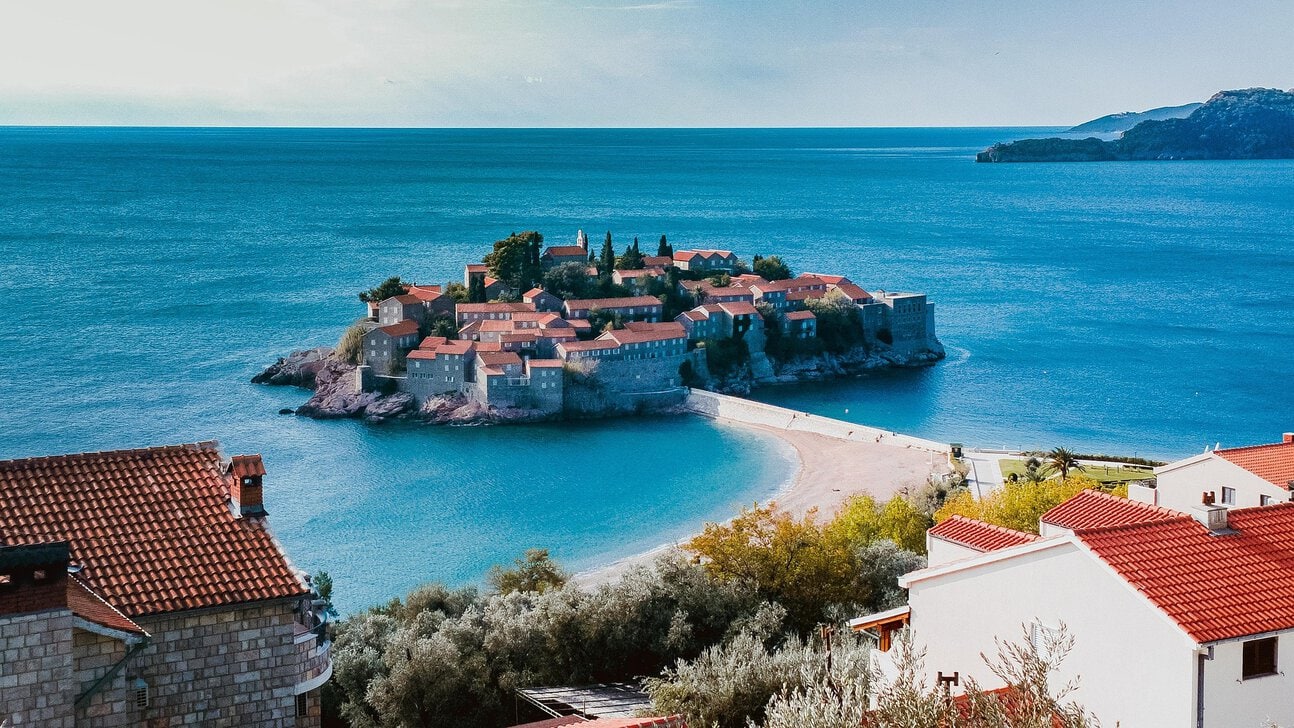
Few places symbolise Montenegro quite like Sveti Stefan. Connected to the mainland by a narrow stone causeway and surrounded by the crystal-clear waters of the Adriatic Sea, this tiny fortified island has become one of the country’s most recognisable landmarks and one of the most photographed destinations anywhere in the Balkans.
Originally built as a 15th-century fishing village, Sveti Stefan has been transformed into an exclusive luxury resort while carefully preserving its medieval appearance. Its distinctive stone buildings, terracotta roofs and narrow alleyways remain almost unchanged, creating a timeless scene that has appeared on countless postcards, travel magazines and television programmes around the world.
Even though access to the island itself is restricted, visiting Sveti Stefan is still one of the highlights of a trip to Montenegro. The surrounding beaches, scenic coastal walks, spectacular viewpoints and relaxed seaside atmosphere make it an unforgettable destination whether you’re visiting for a few hours or spending several nights nearby.
Perfectly positioned between Budva and Petrovac, Sveti Stefan is an easy day trip from much of Montenegro’s coastline and deserves a place on every Adriatic itinerary.
Sveti Stefan also makes a natural stop on a longer coastal itinerary. It sits close enough to Budva and Petrovac that many visitors combine all three in a single day, and it slots neatly into a wider route like our own 14-Day Montenegro Itinerary, which links the coast, the mountains and the national parks into one complete trip.
Even visitors who’ve seen the image a hundred times before arriving tend to admit that nothing quite prepares you for seeing it in person, with the changing sea colour, the mountain backdrop and the scale of the causeway all combining into something photographs alone struggle to capture.
Why Visit Sveti Stefan?
The appeal of Sveti Stefan goes far beyond the famous photograph. While the island’s iconic silhouette is undoubtedly one of Montenegro’s biggest attractions, the surrounding coastline offers beautiful beaches, peaceful walking trails, luxury hotels and some of the finest sea views in the country.
Many visitors simply come to admire the island from the mainland, but there’s far more to experience than taking a quick photograph. You can spend the morning relaxing on the beach, enjoy lunch overlooking the Adriatic, stroll through fragrant pine forests in nearby Miločer Park or walk along the coastal paths linking neighbouring villages.
Sveti Stefan also provides a fascinating glimpse into Montenegro’s history. Once a small community of fishermen protected by defensive walls, it has evolved into one of the world’s most exclusive island resorts while retaining its original medieval character.
Whether you’re interested in history, photography, luxury travel or simply relaxing beside the sea, Sveti Stefan offers a unique experience that’s unlike anywhere else on Montenegro’s coastline.
There’s also something genuinely rewarding about slowing down here rather than treating it purely as a photo stop. Watching the light change across the island over the course of an afternoon, from the sharp midday sun to the soft gold of early evening, gives you a far better sense of why this small peninsula has captured so many imaginations over the decades than a single quick snapshot ever could.
It’s also a rare example of a heavily photographed landmark that still feels genuinely worth the detour once you arrive. Plenty of famous viewpoints around the world can feel like an anticlimax in person, but Sveti Stefan’s combination of setting, history and sheer visual drama tends to live up to expectations, even for visitors who consider themselves hard to impress.
Browse hotels and accommodation for your journey.
View staysBrowse apartments, homes and self-catering accommodation.
Browse rentalsCompare prices from multiple hotel booking sites.
Check dealsThe History Of Sveti Stefan
The story of Sveti Stefan stretches back to the 15th century, when local inhabitants built a fortified settlement on the small rocky island to protect themselves from attacks along the Adriatic coast. Surrounded by defensive walls and connected to the mainland only by a narrow causeway, it provided a safe refuge for local fishing families and merchants.
For centuries, life on the island changed very little. Stone cottages, narrow alleyways and small churches formed a close-knit community whose livelihood depended largely on fishing and trade across the Adriatic.
Everything changed during the 1950s, when the Yugoslav government transformed the abandoned village into an exclusive luxury hotel while carefully preserving its historic architecture. Rather than constructing a modern resort, the original stone buildings were restored and converted into elegant accommodation, creating one of the world’s most unusual hotels.
Over the decades, Sveti Stefan has welcomed royalty, film stars, politicians and international celebrities, helping establish its reputation as one of the Adriatic’s most prestigious destinations. Today, although the island remains an exclusive resort, its remarkable history and distinctive appearance continue to attract visitors from across the globe.
Locals from the original fishing village were relocated to nearby settlements when the resort was created, and many of their descendants still live in the surrounding area today. Older residents in Budva and Petrovac occasionally share memories passed down from that period, adding a personal layer of history to a place now more often associated with celebrity visitors and luxury travel features.
The Best Viewpoints Of Sveti Stefan
If you’ve ever seen a postcard of Montenegro, chances are it featured this view.
The classic panorama of Sveti Stefan is taken from the road overlooking the narrow stone causeway that connects the island to the mainland. From here, you’ll enjoy an uninterrupted view of the medieval village rising above the turquoise Adriatic, with mountains forming a dramatic backdrop behind it. It’s one of the most photographed locations in the Balkans.
The viewpoint is easy to reach on foot and is suitable for visitors of all ages. Early in the morning, the light falls beautifully across the island, making sunrise one of the best times for photography. Sunset is equally spectacular as the warm evening light reflects from the terracotta rooftops and the calm sea surrounding the island.
Don’t rush away after taking your photographs. Spend a little time enjoying the scenery, watching boats pass along the coastline and appreciating why Sveti Stefan has become one of Montenegro’s most iconic landmarks. Even after seeing hundreds of photographs, the first view of the island in person is genuinely memorable.
A slightly higher vantage point can be found a short walk further along the coastal road, giving a broader view that takes in both the island and the sweep of coastline towards Budva. It’s a good option if the main viewpoint is crowded, and the extra height makes for a slightly different composition if you’re taking photographs.
Arriving by boat, if you have the chance to join a short coastal cruise from Budva or Petrovac, offers yet another perspective entirely, letting you see the island’s fortified walls rising directly from the water rather than from the elevated roadside view most visitors experience.
Relax On The Beaches Of Sveti Stefan
Although the island itself attracts most of the attention, the beautiful beaches surrounding Sveti Stefan are every bit as impressive. Washed by the clear, turquoise waters of the Adriatic Sea, these beaches are among the most attractive anywhere in Montenegro and are perfect for spending a relaxing day by the coast.
The main beach stretches along both sides of the famous stone causeway, creating one of the country’s most recognisable seaside scenes. Instead of soft sand, you’ll find the distinctive pink pebble beach that has become synonymous with Sveti Stefan. The crystal-clear water is ideal for swimming, snorkelling and simply cooling off during Montenegro’s hot summer months.
Parts of the beach are operated by the adjacent luxury resort, with sun loungers, parasols and premium facilities available for guests. However, public areas remain accessible, allowing everyone to enjoy this spectacular stretch of coastline regardless of where they’re staying.
If you’re planning to spend several hours here, you’ll also find nearby cafés, restaurants and beach bars where you can enjoy refreshments while taking in one of the finest coastal views in the Adriatic.
Sun loungers and umbrellas can usually be rented on the public sections of the beach for a daily fee, though plenty of visitors are happy simply spreading out a towel on the pebbles instead. If you’re looking for a broader choice of beaches with more space and a wider range of facilities, the beaches around Budva, just a short drive north, are worth considering as an alternative base.

Can You Visit The Island?
This is one of the questions visitors ask most often, and the answer is a little more complicated than many people expect.
Although Sveti Stefan looks like a traditional historic village, it now forms part of an exclusive luxury resort. As a result, general public access to the island itself is normally restricted, and visitors cannot simply walk across the causeway to explore the narrow streets independently.
Access arrangements have changed several times in recent years, depending on the operating status of the resort and local agreements. Occasionally, guided tours have been offered, allowing visitors to explore parts of the island and learn about its remarkable history, but these are not always available. It’s therefore worth checking the latest information before planning your visit if entering the island is important to you.
Fortunately, you don’t need to step onto the island to enjoy one of Montenegro’s most iconic destinations. The viewpoints, beaches, coastal walks and surrounding scenery provide an unforgettable experience in their own right, and many visitors find that simply admiring the island from the mainland is one of the highlights of their trip.
Even resort guests staying on the island typically pay a significant premium for the privilege, reflecting its status as one of the most exclusive properties on the Adriatic. For most travellers, admiring Sveti Stefan from the mainland viewpoints and beaches remains by far the more practical, and arguably just as memorable, way to experience it.
Some visitors choose to book a meal or drink at one of the resort’s restaurants when available, which can occasionally provide limited access to parts of the island itself. This isn’t guaranteed and policies change frequently, so it’s worth treating any such option as a pleasant bonus rather than something to plan your entire visit around.
Walk The Beautiful Coastal Paths
One of the best ways to experience Sveti Stefan is to leave the main viewpoint behind and explore the spectacular coastal walking trails that surround the island. These easy paths reveal a quieter side of Montenegro’s Adriatic coast, with breathtaking sea views around almost every corner.
A favourite walk leads north towards Miločer Park, a peaceful area filled with centuries-old pine trees, cypress groves and beautifully landscaped gardens that once formed part of the royal summer estate. The shaded paths provide welcome relief from the summer sun while offering frequent glimpses across the sparkling Adriatic.
Continuing beyond the park brings you to the beautiful Queen’s Beach and King’s Beach, two sheltered coves renowned for their crystal-clear water and peaceful surroundings. Although access arrangements can vary because of their association with the luxury resort, they’re among the most photographed beaches in Montenegro.
Heading south, the coastal path continues towards Pržno, a charming fishing village with a small beach, waterside restaurants and a much more traditional atmosphere than nearby resort towns. It’s an easy and rewarding walk that allows you to experience several very different sides of Montenegro’s coastline in a single afternoon.
If you’re short on time, even a shortened version of this walk as far as Miločer Park and back is worth doing, since it captures much of the scenery without requiring a full afternoon. Combined with a stop in Petrovac a little further south, it makes for an easy and varied day exploring this stretch of the Budva Riviera.
Where To Stay Near Sveti Stefan
Whether you’re planning a romantic escape, a luxury holiday or simply want to wake up overlooking one of the Adriatic’s most famous landmarks, there are plenty of excellent accommodation options around Sveti Stefan.
The area is best known for its luxury hotels, boutique guesthouses and seafront apartments, many of which enjoy spectacular views across the island and the surrounding coastline. Staying nearby allows you to experience sunrise, sunset and the quieter moments of the day after many day visitors have left.
Travellers looking for more affordable accommodation will also find an excellent selection of family-run apartments, holiday villas and small hotels within walking distance of the beaches. Nearby Budva offers an even wider choice of accommodation and is only a short drive or bus journey away, making it an excellent base if you’re planning to explore more of Montenegro’s coast.
Because Sveti Stefan is one of the country’s most sought-after destinations, booking accommodation well in advance is highly recommended, particularly during July and August, when hotels overlooking the island are often fully booked months ahead.
Self-catering apartments in Pržno and the surrounding hillside are a popular middle-ground option, offering sea views and a bit more space than a standard hotel room without the premium price tag of the resort itself. For visitors who’d rather have a wider choice of restaurants and nightlife within walking distance, staying in Budva and visiting Sveti Stefan as a short day trip is also a perfectly practical option.
Compare routes and fares for your next trip.
Compare flightsBrowse Airalo eSIM options for convenient travel data.
Check eSIMsCheck private airport pickup options and plan the first part of your journey in advance.
View transfersEnjoy The Restaurants & Cafés
Despite its reputation as a luxury destination, Sveti Stefan has a relaxed and welcoming dining scene. Whether you’re looking for a leisurely breakfast overlooking the sea, a long seafood lunch or dinner as the sun sets across the Adriatic, you’ll find plenty of excellent places to eat around the village and neighbouring coastline.
Being right beside the sea, fresh seafood naturally features on many menus. Grilled fish, octopus, calamari, mussels and prawns are local favourites, often served with fresh salads, olive oil and locally baked bread. If seafood isn’t your preference, traditional Montenegrin dishes, grilled meats, homemade pasta and Mediterranean cuisine are also widely available.
Many restaurants have terraces overlooking the island, allowing you to enjoy one of Montenegro’s finest views while you dine. Even if you’re only visiting for a few hours, stopping for lunch or a coffee is one of the best ways to soak up the unique atmosphere that makes Sveti Stefan so special.
The cafés are equally inviting. During the morning they’re popular with locals and visitors enjoying coffee beside the sea, while in the evening they become wonderful places to relax with a glass of Montenegrin wine as the island begins to glow in the warm light of sunset.
A number of restaurants along this stretch of coast are family-run and have been serving the same recipes for generations, which is worth seeking out if you’d rather eat somewhere with genuine local character than one of the larger terraces aimed squarely at day-trippers. Reservations are a sensible idea for dinner during peak summer, particularly at the handful of restaurants with the best views of the island.
Getting To Sveti Stefan
One of the great advantages of Sveti Stefan is how easy it is to reach. Located along Montenegro’s beautiful Budva Riviera, it’s well connected by road and public transport, making it an ideal destination whether you’re staying nearby or visiting on a day trip.
| Starting Point | Bus | Car | Typical Journey |
|---|---|---|---|
| Budva | ✔ | ✔ | Around 15 minutes |
| Kotor | ✔ | ✔ | Around 40 minutes |
| Tivat Airport | ✔ | ✔ | Around 40 minutes |
| Bar | ✔ | ✔ | Around 45 minutes |
| Podgorica | ✔ | ✔ | Around 1 hour 15 minutes |
If you’re travelling by public transport, regular buses operate along the Adriatic coast between Budva, Petrovac, Bar and other coastal towns. The bus stop is only a short walk from the famous viewpoint and the beaches, making it one of Montenegro’s easiest attractions to visit without a car.
Visitors arriving by car will find several public car parks close to the village, although they can become busy during July and August. Arriving earlier in the day usually makes parking much easier and gives you the opportunity to enjoy the viewpoints before the largest crowds arrive.
Many organised coastal tours also include Sveti Stefan alongside destinations such as Budva, Kotor and Perast, making it an easy addition to a wider Montenegro itinerary.
Tivat Airport is the closest international airport, and our Tivat Airport Transfers guide covers the taxi, transfer and car hire options in detail if you’re flying in directly. For anyone driving the coast road from Kotor, the route also passes close to some of the best sections of our Bay of Kotor Scenic Drive, so it’s easy to combine both into a single day on the road.
The Best Time To Visit Sveti Stefan
Sveti Stefan is beautiful throughout the year, but the experience changes with the seasons.
Spring brings pleasant temperatures, colourful flowers and quieter beaches, making it one of the best times to enjoy the coastal walks and photography without the summer crowds.
During summer, the Adriatic Sea is at its warmest and the beaches are at their busiest. Long sunny days are perfect for swimming, relaxing by the water and enjoying dinner on a terrace overlooking the island. This is also the busiest season, so expect more visitors, particularly during the middle of the day.
Autumn is another excellent time to visit. Sea temperatures remain warm enough for swimming, while the crowds begin to thin, creating a much more relaxed atmosphere. The softer evening light also makes this one of the finest seasons for photography.
Even winter has its own charm. Although many beach facilities operate on reduced hours, the peaceful coastline, dramatic waves and uninterrupted views of the island create a completely different experience that’s perfect for a scenic walk.
Shoulder season, in particular May, June and September, tends to offer the best overall balance for most visitors, combining warm enough sea temperatures for swimming with noticeably smaller crowds at the main viewpoint. If photography is your main priority, these months also tend to bring clearer skies than the height of summer, when coastal haze can occasionally soften the view across the bay.
Whatever time of year you visit, checking a short-range weather forecast beforehand is worthwhile, since the classic viewpoint photograph depends heavily on clear skies and good light. A hazy or overcast morning can be worth waiting out with a coffee nearby rather than rushing straight to the viewpoint the moment you arrive.
Combine Sveti Stefan With Other Coastal Destinations
Because of its central location on the Budva Riviera, Sveti Stefan is easy to combine with several of Montenegro’s best-known attractions in a single day.
Many visitors spend the morning exploring the Old Town of Budva, before travelling south to enjoy lunch overlooking Sveti Stefan and an afternoon relaxing on the beach or walking through Miločer Park. Others continue further along the coast towards Petrovac or Bar, discovering quieter beaches and traditional seaside towns along the way.
If you’re touring Montenegro by car, Sveti Stefan also fits naturally into a route between Kotor, Budva, Lake Skadar National Park and the southern Adriatic coast. The journeys are relatively short, allowing you to experience mountains, beaches and historic towns within the same itinerary.
Whether you’re visiting for a couple of hours or making it part of a longer coastal adventure, Sveti Stefan is one of those destinations that rewards taking your time. Rather than simply stopping for the famous photograph, spend the day exploring the coastline and you’ll discover why it’s considered one of Montenegro’s most beautiful places.

Rupert’s Handy Travel Tips
Planning a visit to Sveti Stefan? Here are a few tips to help you enjoy one of Montenegro’s most iconic destinations:
- Visit early or late in the day: The famous viewpoint is much quieter around sunrise and during the evening, while the softer light also creates the best photographs.
- Don’t expect to explore the island: Public access to Sveti Stefan is normally restricted, so plan to enjoy the beaches, viewpoints and coastal walks instead.
- Wear comfortable shoes: The walk through Miločer Park to Pržno is one of the most beautiful stretches of coastline in Montenegro and is well worth exploring.
- Stay for lunch: Rather than simply stopping for a photograph, enjoy a meal overlooking the island. It’s one of the best ways to appreciate the relaxed atmosphere of the Budva Riviera.
- Combine it with Budva: **Budva Old Town** and **Sveti Stefan** are only a short distance apart, making them easy to visit together during the same day.
Want to meet the reindeer behind our travel tips? Find out more in our page Who is Rupert?.




Frequently Asked Questions
Is Sveti Stefan worth visiting?
Absolutely. Sveti Stefan is one of Montenegro’s most famous landmarks, combining stunning Adriatic scenery, beautiful beaches, coastal walking trails and a fascinating history. Even though access to the island is limited, it’s still one of the highlights of the Montenegrin coastline.
Can you walk onto Sveti Stefan Island?
In most cases, no. The island forms part of a luxury resort, and public access is normally restricted. Access arrangements can change, so it’s worth checking the latest information before your visit.
Why is Sveti Stefan so famous?
The island is famous for its unique appearance, with a 15th-century fortified village connected to the mainland by a narrow stone causeway. It has also hosted royalty, world leaders and celebrities, becoming one of the Adriatic’s most exclusive destinations.
Can you swim at Sveti Stefan?
Yes. The public beaches surrounding the island offer excellent swimming during the warmer months, with crystal-clear water and beautiful views across the Adriatic Sea.
How long should I spend at Sveti Stefan?
Allow at least half a day to enjoy the viewpoints, beaches, cafés and coastal walks. If you plan to relax on the beach or explore nearby Miločer Park and Pržno, a full day is well worthwhile.
Is there parking at Sveti Stefan?
Yes. Several public car parks are available close to the village, although they become busy during the peak summer season. Arriving early is recommended.
Can you reach Sveti Stefan by bus?
Yes. Regular buses connect Sveti Stefan with Budva, Petrovac, Bar and other towns along Montenegro’s Adriatic coast, making it easy to visit without a car.
What is the best time of day to visit Sveti Stefan?
Early morning and late afternoon are generally the best times. The light is ideal for photography, temperatures are more comfortable and the viewpoint is usually much quieter than during the middle of the day.
Is Sveti Stefan suitable for families?
Yes. Families can enjoy the beaches, calm swimming conditions, scenic walks and cafés, making it an enjoyable destination for visitors of all ages.
Can you combine Sveti Stefan with other attractions?
Definitely. Many visitors combine Sveti Stefan with Budva Old Town, Miločer Park, Pržno, Petrovac or even Lake Skadar National Park as part of a wider tour around Montenegro.
Further Reading
Sveti Stefan sits right in the middle of the Budva Riviera, so it’s worth pairing this page with Budva at one end and Petrovac at the other, together they cover the whole stretch of coast.
Flying in? The Tivat transfer guide is the quickest way to reach this part of the coast, and if you’d rather explore further afield by car, this scenic drive route makes a good companion.
Beyond the coastline, Montenegro looks very different: Kotor’s historic streets, Lake Skadar’s wetlands, and the mountains of Durmitor and the Tara River Canyon are all worth the detour if you have the time.
And if you’re weaving Sveti Stefan into a longer trip around the country, this 14-day itinerary shows how it all connects.