Reviewed by our editorial team Updated
Why Conwy Castle Is One of Britain’s Greatest Medieval Fortresses
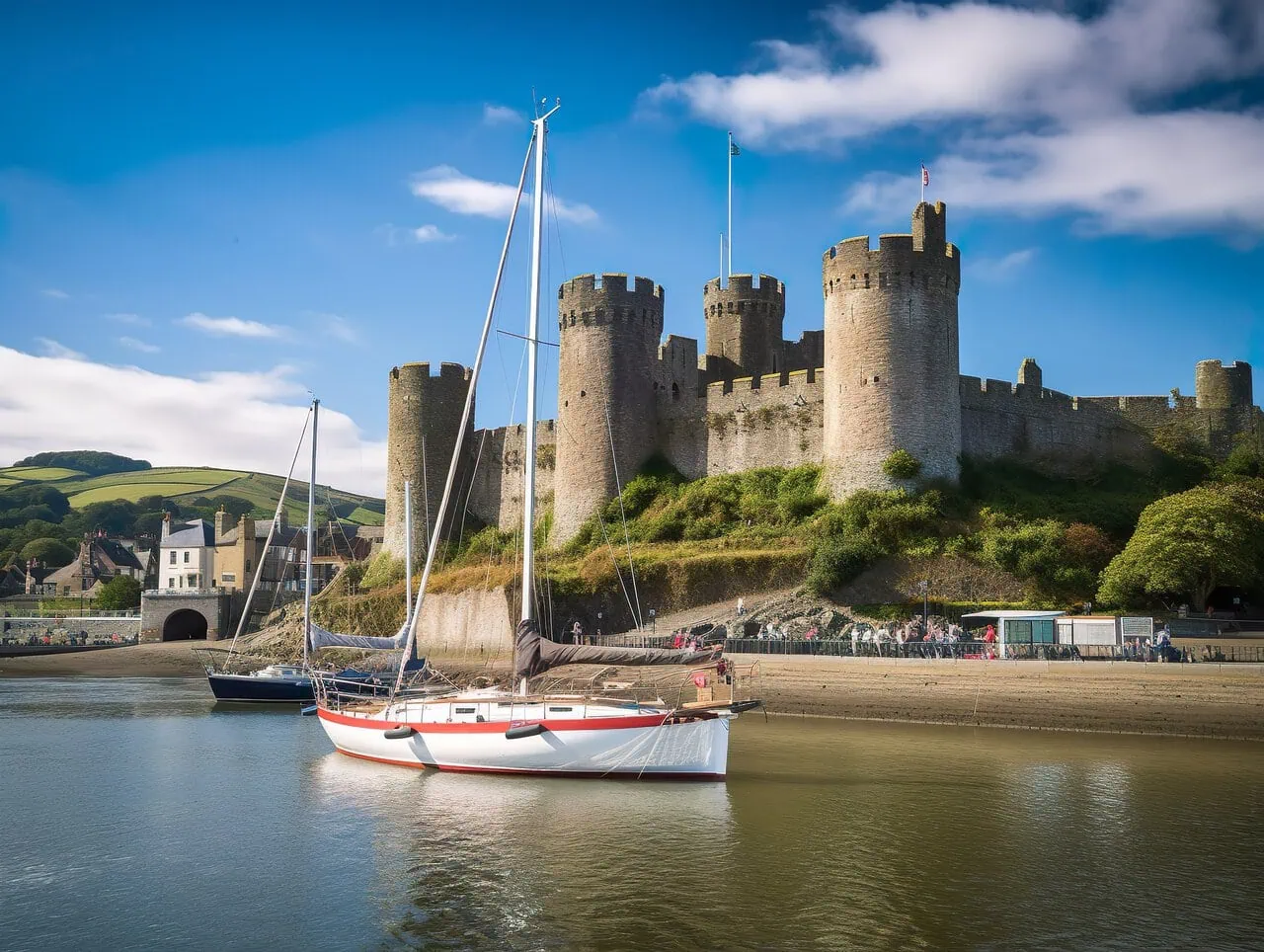
Rising above the harbour and medieval streets of Conwy, Conwy Castle is one of the most spectacular fortresses anywhere in Britain and one of the defining landmarks of the North Wales coast. Built by Edward I during his conquest of Wales in the late 13th century, the castle still dominates the estuary with its massive towers, curtain walls, and panoramic views across the surrounding mountains and coastline.
What makes Conwy Castle particularly impressive is how complete the wider medieval setting still feels today. The castle stands beside largely intact town walls, narrow historic streets, the harbour, and the River Conwy, creating one of the most atmospheric historic towns anywhere in the UK.
Unlike many castles that function mainly as museums, Conwy feels highly explorable. Visitors can climb towers, walk sections of battlements, explore medieval chambers, and experience dramatic elevated views over the harbour and estuary. The castle combines history, photography, architecture, and scenery in a way that appeals equally to families, photographers, and serious history enthusiasts.
Its UNESCO World Heritage status also places it among the most important medieval fortifications in Europe. Together with nearby castles such as Caernarfon, Harlech, and Beaumaris, it forms part of the famous medieval defensive network sometimes referred to as the Ring of Iron.
For many travellers, Conwy Castle becomes the highlight of visiting North Wales, especially when combined with the harbour, boat trips, town walls, and surrounding coastal scenery.
Learn More from UNESCO
This destination is connected to a UNESCO World Heritage Site, recognised for its outstanding cultural, historical, or natural importance. You can explore official listings, background information, and protected heritage sites through UNESCO’s global database.
Why Conwy Castle Is So Famous
Few castles in Britain combine dramatic scenery, military architecture, and historical importance as effectively as Conwy Castle. Even among the many famous castles of Wales, Conwy stands out because the fortress still dominates the town and estuary almost exactly as medieval visitors would have experienced it centuries ago.
One of the biggest reasons for the castle’s reputation is its extraordinary visual setting. The fortress rises directly above the harbour beside the River Conwy, with mountain views stretching inland towards Eryri National Park. The combination of water, walls, towers, bridges, and surrounding hills gives the castle one of the most photogenic locations anywhere in the UK.
The scale of the fortifications is equally impressive. The castle contains eight enormous towers connected by thick defensive walls, all designed to project royal power and control over North Wales following Edward I’s military campaigns. Even today, the structure feels imposing from almost every angle around the town.
Another reason the castle attracts so many visitors is the unusually complete medieval environment surrounding it. Much of the original town wall circuit still survives, allowing visitors to experience the relationship between the fortress, harbour, gates, and streets far more clearly than at many other historic sites.
The castle is also famous because of its UNESCO World Heritage designation. Historians widely consider Conwy one of the finest surviving examples of late 13th-century military architecture anywhere in Europe. The engineering, defensive layout, and integration with the surrounding town were exceptionally advanced for the period.
Unlike some historic attractions that rely mainly on museum displays, Conwy Castle remains highly physical and immersive. Visitors climb spiral staircases, cross exposed battlements, enter medieval chambers, and move through spaces that still feel unmistakably defensive and atmospheric.
The result is a castle that works equally well for casual tourists, photographers, history enthusiasts, and families exploring the North Wales coast.
Browse hotels and accommodation for your visit to Wales.
View staysExplore holiday homes and apartments around Wales.
See holiday homesCompare hotel deals in Wales from multiple booking sites.
Compare pricesQuick Visitor Overview
| Category | Information |
|---|---|
| Location | Conwy, North Wales |
| UNESCO Status | UNESCO World Heritage Site |
| Built By | Edward I |
| Construction Period | 1283–1289 |
| Famous For | Medieval walls, towers, harbour setting |
| Best Feature | Panoramic views from the battlements |
| Typical Visit Length | 1.5–3 hours |
| Family Friendly | Yes |
| Wheelchair Accessible | Partial access only |
| Best Time to Visit | Spring to early autumn |
| Closest Train Station | Conwy Station |
| Nearby Attractions | Conwy Harbour, town walls, boat trips |
| Photography Quality | Excellent |
The History of Conwy Castle
The story of Conwy Castle begins with the conquest of Wales by King Edward I during the late 13th century. Following military campaigns against the Welsh princes, Edward began constructing a chain of enormous fortresses across North Wales designed to secure English control over the region permanently.
Construction of Conwy Castle started in 1283 under the supervision of the famous master architect James of Saint George, one of the leading military engineers of the medieval world. Remarkably, the main structure was completed within only a few years, with thousands of labourers and craftsmen involved in the enormous building project.
The location was chosen carefully for both military and symbolic reasons. The site overlooked the estuary, harbour approaches, and crossing points along the River Conwy, allowing the castle to control movement through this strategically important part of North Wales. Supplies could also reach the fortress directly by sea if surrounding land routes became dangerous.
The castle formed part of Edward’s wider strategy often called the Ring of Iron, which included major fortresses at Caernarfon, Harlech, and Beaumaris. Together these castles projected English royal power across Wales through overwhelming military architecture.
Conwy Castle also became politically important during several later conflicts. It played roles during Welsh uprisings, dynastic struggles, and the English Civil War. At different points in history the fortress was occupied, besieged, partially damaged, and politically contested.
Despite centuries of conflict and changing political control, the core structure survived remarkably well. Unlike many medieval castles that were heavily altered or converted into stately homes, Conwy retained much of its original military appearance.
Today, the castle remains one of the finest surviving examples of medieval military engineering anywhere in Europe and continues to dominate the skyline above the harbour exactly as Edward I intended over 700 years ago.
Parking, Trains & Buses for Conwy Castle
Reaching Conwy Castle is relatively straightforward, but the medieval layout of the town means it helps to plan transport carefully, especially during busy summer weekends and school holidays along the North Wales coast.
Most visitors arriving by car use the public parking areas around Conwy Harbour and the medieval town centre. One of the most convenient larger options is usually Morfa Bach Car Park, located only a short walk from the castle entrance and close to the harbour, waterfront, and medieval walls.
Because Conwy is a compact medieval town, roads around the castle can become heavily congested during busy periods, particularly when sunny weather coincides with weekends or holiday traffic. Arriving earlier in the morning generally makes parking significantly easier and also provides quieter conditions inside the castle itself.
Several smaller parking areas also operate around the town centre, although spaces closest to the castle can fill quickly during peak season. Once parked, most visitors explore entirely on foot because the castle, harbour, town walls, cafés, and shops all sit within a relatively compact walkable area.
Visitors driving larger vehicles or motorhomes should also be aware that parts of the medieval street network remain narrow and can feel restrictive during busy afternoons.
One of the best ways to arrive at Conwy Castle is by train because Conwy railway station sits only a few minutes’ walk from the fortress itself.
The station lies on the scenic North Wales Coast Line, with direct or connecting services linking Conwy to destinations including Llandudno, Bangor, Rhyl, Chester, Manchester, and parts of north-west England.
The railway approach itself is one of the most memorable arrivals anywhere in Wales. Trains pass directly beside the medieval walls, the harbour, and the famous Conwy Suspension Bridge before reaching the station, with the castle towers dominating the skyline almost immediately on arrival.
Many longer-distance journeys involve changing trains at Chester or Llandudno Junction, although connections are generally straightforward. The short walk between the station and the castle entrance is mostly flat and easy to navigate, making rail one of the easiest options for visitors wanting to avoid summer traffic and parking pressure around the harbour.
Conwy is also well connected by regional bus services running along the North Wales coast, with several routes stopping close to the castle and harbour area.
The most important services for visitors are usually the Arriva 5, 5C, and 5D routes, which connect Llandudno, Conwy, Bangor, and Caernarfon. These are among the most frequent coastal services in the region and are especially useful for visitors staying elsewhere along the coast without a car.
Additional services include the 19 route towards Betws-y-Coed and inland areas of Snowdonia, as well as routes such as the 14, 15, and 75, which connect surrounding communities across the Conwy area and nearby coastline.
Most buses stop near Castle Square, Town Ditch Road, or close to the railway station, leaving only a short walk to the castle entrance itself.
Bus travel can often be easier than driving during busy summer periods because parking pressure around the medieval town increases significantly during good weather. Visitors relying on public transport should still check return times carefully outside peak summer months because evening and winter frequencies can become more limited than during the main tourist season.

Compare Trains and Buses with Omio
Choosing between trains and buses is not always obvious. Some routes are faster by train, while others are cheaper or easier by bus. Omio helps you compare routes, journey times, prices, and tickets in one place.
It is useful for city-to-city travel, cross-border journeys, and trips where flexibility matters. You can quickly see which option works best for your route, budget, and schedule before booking.

Inside the Towers, Walls & Battlements
The most memorable part of visiting Conwy Castle is exploring the network of towers, battlements, staircases, and defensive walls that still dominate the estuary above the town. Unlike many ruined castles where access is limited, Conwy allows visitors to move through large sections of the fortress and experience the structure from multiple levels and viewpoints.
The castle contains eight huge towers connected by thick curtain walls that surround both the inner and outer wards. These towers were designed not only for defence but also to project royal authority over North Wales. Even today, climbing through them still feels physically demanding and genuinely medieval.
Much of the experience involves navigating steep spiral staircases built deep inside the towers themselves. The stone steps are narrow, uneven, and worn smooth in places from centuries of use, which adds significantly to the atmosphere but also requires sensible footwear and reasonable mobility.
The battlements are one of the biggest highlights of the castle. Walking along the elevated walls provides sweeping views across Conwy Harbour, the medieval town, the estuary, and the mountains beyond. On clear days, visibility stretches far across the coastline towards Llandudno, the Great Orme, and inland towards the peaks of Snowdonia.
One of the most striking aspects of the design is how effectively the castle uses its rocky position above the river. The fortress feels naturally integrated into the landscape rather than simply placed on top of it. From several points around the battlements, visitors can clearly understand how the castle controlled the harbour approaches and surrounding town.
The towers themselves vary slightly in atmosphere and viewpoint. Some provide broad panoramic scenes over the estuary, while others frame tighter views down towards the medieval streets and harbour walls below. Photographers often spend significant time moving between the towers because the scenery changes noticeably depending on angle and lighting conditions.
Visitors should also expect a more physically immersive experience than at many modern heritage attractions. There are relatively few barriers between visitors and the architecture itself, which helps preserve the castle’s atmosphere but also means caution is needed around stairs, drops, and exposed wall walks during wet weather.
The Great Hall & Royal Apartments
Although Conwy Castle is best known for its military architecture, the fortress was also designed to function as a royal residence capable of hosting the king, his court, and important political gatherings.
The remains of the Great Hall still give a strong sense of the scale and prestige the castle once possessed. In medieval times this would have been one of the central social and political spaces within the fortress, used for feasting, ceremonies, administration, and entertaining important guests.
Large windows, fireplaces, and surviving architectural details help visitors imagine how impressive these rooms once appeared compared with the harsher defensive sections of the castle. While much of the decorative interior has disappeared over the centuries, the layout still clearly reflects the dual military and royal functions of the fortress.
Nearby chambers formed part of the royal apartments where Edward I and later occupants would have stayed while travelling through Wales. These private areas were designed to provide greater comfort and separation from the harsher military environment surrounding them.
The castle’s layout also reveals how carefully medieval architects organised social hierarchy within the fortress. Important royal and administrative spaces occupied protected inner sections of the complex, while defensive areas controlled access from the outer wards and gatehouses.
One particularly interesting detail is the castle’s connection to the harbour itself. Supplies, food, and luxury goods could reach the royal apartments directly by water if necessary, allowing the fortress to function even during periods of unrest or siege.
Although visitors today mostly encounter stone ruins rather than reconstructed interiors, the surviving walls and room layouts still create a surprisingly strong sense of atmosphere. Standing within the remains of the Great Hall while looking out towards the estuary helps explain why Conwy was considered one of Edward I’s most important Welsh strongholds.
The contrast between harsh military towers and more refined residential areas is also one of the reasons the castle feels so architecturally interesting compared with simpler defensive fortresses elsewhere in Britain.
Best Views & Photo Spots
Few castles in Britain offer as many dramatic photography opportunities as Conwy Castle. The combination of medieval architecture, harbour scenery, mountains, bridges, and coastline means the castle looks impressive from almost every angle around the town.
Inside the castle itself, the battlements provide the most famous viewpoints. Walking along the elevated walls gives panoramic scenes across Conwy Harbour, the estuary, the suspension bridge, and the surrounding mountains of Snowdonia. During clear weather, the contrast between medieval stonework and coastal scenery creates some of the best photography opportunities anywhere in North Wales.
The upper towers are especially popular because they provide slightly different perspectives across the town and coastline. Some viewpoints focus on the harbour and river, while others open inland towards rolling hills and mountain landscapes beyond the estuary.
Outside the castle, one of the classic photography locations is the harbour area itself. From here, the fortress rises dramatically above the quay with fishing boats, medieval walls, and waterfront buildings creating a highly recognisable North Wales scene.
The nearby suspension bridge designed by Thomas Telford also provides excellent framing opportunities for photographers wanting to combine engineering, medieval architecture, and river scenery within a single image.
Early morning and evening generally create the best lighting conditions. During sunrise, the eastern side of the castle can become beautifully illuminated above the estuary, while sunset often produces warm light across the harbour and western walls.
Rain and changing weather can also dramatically improve the atmosphere around the fortress. Low cloud, sea mist, and wet stone often make the castle feel even more medieval and dramatic than during clear midday conditions.
For visitors interested in social media photography, the combination of towers, battlements, harbour scenery, and surrounding mountains means Conwy Castle consistently ranks among the most visually impressive heritage sites anywhere in Wales.
Search routes and flight options for your trip to Wales.
Search flightsBrowse Airalo eSIM options for convenient travel data.
Check eSIMsCheck private pickup options and plan your onward journey before arrival.
View transfersTickets, Opening Times & Visitor Information
Visitors exploring Conwy Castle should always check the latest opening times and ticket information before travelling because schedules can vary depending on season, weather conditions, and special events.
The castle is managed by Cadw, the Welsh Government’s historic environment service, and tickets can normally be purchased both online and at the entrance. Booking online in advance is often worthwhile during busy holiday periods, particularly in summer when North Wales receives significantly higher visitor numbers.
| Period | Opening Hours |
|---|---|
| 1 March – 30 June | 9:30am – 5:00pm |
| 1 July – 31 August | 9:30am – 6:00pm |
| 1 September – 31 October | 9:30am – 5:00pm |
| 1 November – 28 February | 10:00am – 4:00pm |
Last admission is normally 30 minutes before closing time. The castle is usually closed on 24, 25, and 26 December, as well as 1 January.
Opening hours generally become longer during spring and summer, while winter operations can feel much quieter and more atmospheric around the harbour and medieval walls.
Most visitors spend between 90 minutes and three hours exploring the site depending on interest level, photography stops, and how extensively they climb the towers and battlements. Travellers combining the castle with the town walls, harbour, nearby cafés, and boat trips may easily spend a full day in Conwy itself.
Because much of the experience involves exposed towers, elevated walls, and uneven medieval surfaces, comfortable footwear is strongly recommended, especially during wet or windy weather conditions.
As of the 2026 season, standard adult admission costs £13.50 between June and August, dropping to £12.90 from September through the winter period. Junior and student tickets cost £9.40 in summer and £9.00 in winter, while seniors pay £12.10 or £11.60 depending on the season. Children under five go free.
Family tickets offer the best value for anyone travelling with children. A ticket covering two adults and up to three children costs around £43.30 in summer, while a single adult with up to three children costs approximately £29.80. Compared with buying separate adult and junior tickets, the family rate usually works out cheaper, particularly for larger groups.
Visitors planning to see several castles may want to compare the cost of individual tickets against Cadw’s Explorer Pass, which gives multi-day access to numerous sites across Wales, including Caernarfon and Harlech. A joint ticket covering both Conwy Castle and the nearby Plas Mawr townhouse is also available at a discount compared with paying for each attraction separately.
For the latest admission prices, family tickets, concessions, and event information, checking the official Cadw website before travelling is always advisable.
Accessibility & Climbing the Castle
Although Conwy Castle is one of the most spectacular historic attractions in Wales, visitors should be aware that the site can be physically demanding because of its authentic medieval design and defensive layout.
The biggest challenge for many visitors is the large number of steep spiral staircases inside the castle towers. These narrow stone stairways are heavily worn from centuries of use and remain highly atmospheric, but they can also feel challenging for visitors with limited mobility, balance concerns, or younger children needing assistance.
Large sections of the castle involve uneven medieval stonework, exposed battlements, elevated walkways, and defensive passages originally built for warfare rather than modern accessibility standards. During wet weather, some areas can become slippery, particularly around the upper towers and battlement routes.
Some lower areas of Conwy Castle are easier to access, including sections near the entrance and outer courtyards, but access to the highest towers and walls is naturally more limited because of the castle’s protected historic structure.
Visitors uncomfortable with heights should also be aware that several battlement sections contain exposed edges with dramatic drops overlooking Conwy Harbour, the medieval streets, and the estuary below. The elevated views are spectacular, but some sections can feel quite exposed during windy conditions.
Despite these limitations, many visitors still enjoy the experience even without climbing every tower. The harbour scenery, defensive walls, courtyards, and lower viewing areas still provide an excellent sense of the fortress and its commanding position above the town.
Families visiting with children should expect a highly physical experience involving constant climbing, steps, and movement between towers. However, this is also one of the reasons the castle feels so engaging compared with more static museum-style attractions.
Good footwear is strongly recommended throughout the year because the combination of historic stone staircases, exposed surfaces, and changing coastal weather can make conditions surprisingly slippery.
Best Time to Visit
The best time to visit Conwy Castle depends largely on the type of atmosphere, photography conditions, and harbour experience you want from your trip to North Wales.
For most visitors, the strongest overall period falls between late spring and early autumn, when the weather is generally milder, daylight hours are longer, and visibility across the estuary and mountains is often at its best. This is also when the wider Conwy Harbour area feels most active, with cafés, boat trips, and harbour activity operating at full strength.
Summer naturally brings the busiest conditions, particularly during weekends and school holidays. The castle can become noticeably crowded during the middle of the day, especially around the narrow tower staircases and popular battlement viewpoints overlooking the harbour.
Visitors wanting quieter conditions often benefit from arriving shortly after opening, when the castle still feels calmer and photography conditions around the walls are often strongest.
Spring is one of the best seasons for photography because the combination of clearer light, greener landscapes, and lighter crowds creates especially attractive conditions around the fortress and surrounding coastline.
Autumn can also be spectacular, particularly during calmer weather when changing colours across the hills and estuary give the castle a much more atmospheric appearance.
Winter visits feel dramatically different from the busy summer season. On clear days, the fortress can look especially striking beneath dark skies and low winter sunlight, although visitors should expect colder temperatures and stronger winds around the exposed battlements.
Time of day also matters considerably. Early mornings generally provide the calmest conditions and best opportunities for unobstructed photography before larger groups arrive. Late afternoons often produce beautiful light across the harbour, suspension bridge, and outer castle walls.
Because Conwy Castle sits directly beside the estuary, weather conditions can change quickly throughout the day. Windproof and waterproof layers are often useful even outside winter months.
Facilities at Conwy Castle
Although Conwy Castle is a highly authentic medieval fortress rather than a modern museum-style attraction, visitors still have access to several useful facilities around the entrance and visitor areas.
Toilets are available near the main entrance area, which is useful because the upper towers, battlements, and interior sections of the fortress do not contain additional facilities once visitors begin exploring the castle itself.
A visitor reception and ticket area operates near the entrance, where guests can purchase admission, check opening times, and obtain general visitor information before entering the castle grounds.
Interpretation panels are positioned throughout the site, helping explain the history of the fortress, the role of Edward I, the defensive design of the towers and walls, and the relationship between the castle and the harbour below.
Because much of the experience involves climbing towers and walking exposed battlements, seating inside the castle itself is relatively limited compared with modern indoor attractions. Visitors planning longer visits often combine the castle with breaks in the nearby cafés and harbour area instead.
The castle does not contain large indoor museum galleries, restaurants, or major commercial facilities inside the fortress itself. This is actually part of what gives Conwy Castle its strong atmosphere because the focus remains on exploring the original medieval structure rather than heavily modernised visitor spaces.
Gift shops, cafés, pubs, bakeries, and additional visitor facilities are all located within a short walking distance around Conwy town centre and the harbour area.
Visitors should also be aware that weather exposure is a major part of the experience. Large sections of the castle are open to wind and rain, particularly around the battlements and towers, so waterproof clothing can be useful even outside winter months.
For families, the castle works well because the layout feels highly explorable, although pushchair access becomes more limited in the upper sections because of the extensive staircases and uneven medieval surfaces.
Visiting Conwy Castle with Children
Conwy Castle works exceptionally well as a family attraction because the fortress feels highly interactive and genuinely explorable compared with many historic sites that rely mainly on display boards or museum-style exhibits.
For children, the biggest attraction is usually the ability to climb towers, walk battlements, explore defensive staircases, and move through spaces that still feel unmistakably medieval. The castle naturally encourages imagination and exploration in a way that many modern heritage attractions struggle to recreate.
The towers and elevated walls are particularly exciting for older children because they provide dramatic views across Conwy Harbour, the estuary, surrounding mountains, and medieval streets below. Many families find the castle feels closer to an adventure experience than a traditional history attraction.
The location also makes planning easier for families spending the day in Conwy. After visiting the castle, it is easy to continue exploring the medieval walls, harbour area, cafés, shops, and nearby boat trips operating from the quay.
Parents should still be aware that the castle contains large numbers of steep stone staircases, narrow tower passages, elevated walkways, and exposed battlements. Younger children require close supervision in several areas because the fortress remains highly authentic rather than heavily modernised.
Pushchair access is naturally limited in the upper sections because of the stair-heavy medieval layout, although some lower courtyard areas are easier to navigate.
Many families find it works best to combine the castle with shorter attractions around the harbour rather than spending an entire day inside the fortress itself. Pairing the visit with a harbour walk, ice cream on the quay, or one of the family-friendly boat cruises often creates a much more balanced day out.
One of the biggest strengths of Conwy Castle is that children do not need deep historical knowledge to enjoy it. The scale of the towers, the dramatic battlements, the harbour views, and the physical experience of exploring the fortress are often enough to make the visit memorable on their own.
Hidden Details Most Visitors Miss
Many visitors arrive at Conwy Castle expecting a straightforward medieval ruin, but the fortress contains countless smaller details that are easy to overlook if you focus only on the towers and panoramic views.
One of the most interesting aspects is how strongly the castle was designed around the surrounding landscape. The fortress was deliberately positioned beside the River Conwy so supplies and reinforcements could arrive directly by sea if land routes became unsafe. Looking down from the battlements towards the harbour makes it much easier to understand how important maritime access was to the castle’s survival.
Visitors also often miss how sophisticated the defensive layout actually was. The towers are not arranged randomly. Every wall angle, gateway, and elevated position was carefully planned to maximise visibility and overlapping defensive coverage across the town, harbour, and surrounding approaches.
The castle’s enormous towers also appear deceptively similar from the outside, but once inside, visitors quickly notice how varied the internal spaces actually are. Some chambers feel dark, cramped, and military, while others contain larger windows, fireplaces, and more refined architectural details associated with the royal apartments.
The surviving medieval stonework also contains subtle signs of centuries of wear, conflict, and adaptation. Looking closely at staircases, wall edges, and defensive passages reveals just how physically used the fortress once was during periods of occupation and unrest.
One detail many photographers miss is the changing relationship between the castle and the light throughout the day. During mornings, the eastern walls above the estuary often become strongly illuminated, while late afternoon creates dramatic shadows across the harbour-facing towers.
The suspension bridge beside the castle is another overlooked feature. Designed by Thomas Telford, it creates one of the most distinctive visual combinations anywhere in Wales, linking medieval military architecture with early industrial engineering.
Visitors also frequently underestimate how complete the wider medieval environment still feels around the fortress. Walking directly from the castle into the surrounding streets and town walls creates a much stronger sense of historical continuity than at many isolated castle sites elsewhere in Britain.
Compare hostels and budget-friendly accommodation around Wales.
Browse hostelsAccess compensation support, eligible lounge benefits and faster payouts when flights go wrong.
See the benefitsUse convenient luggage storage around Wales between arrival, check-in and departure.
Check storageConwy Castle and the Harbour
The relationship between Conwy Castle and the harbour is one of the main reasons the fortress feels so visually dramatic and historically important today.
Unlike many inland castles built mainly around land defence, Conwy was designed from the beginning as both a military fortress and a coastal stronghold connected directly to maritime supply routes. The estuary and harbour below the walls were essential to the castle’s long-term survival during periods of conflict.
When Edward I ordered the castle’s construction in the late 13th century, controlling the harbour meant controlling movement, trade, supplies, and access across this section of North Wales. The castle’s position above the water allowed defenders to monitor both the estuary and the surrounding approaches simultaneously.
Even today, standing on the battlements makes this strategy immediately obvious. Views extend directly across the harbour, bridges, river crossings, and surrounding coastline, demonstrating how effectively the fortress dominated the local geography.
The harbour also transformed Conwy into more than simply a military outpost. Ships could bring food, materials, weapons, and royal supplies directly to the castle even if surrounding land routes became dangerous or blocked during unrest.
This connection between fortress and harbour remains one of the most visually striking parts of visiting Conwy today. Few places in Britain preserve the relationship between medieval walls, harbour activity, defensive architecture, and surrounding landscape so clearly.
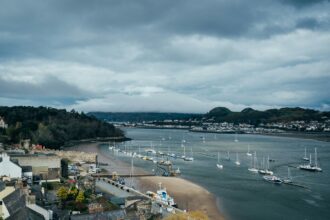
The modern harbour still helps preserve the atmosphere around the castle. Fishing boats, waterfront cafés, estuary views, and departing sightseeing cruises all contribute to a setting that still feels strongly connected to the sea.
For photographers, the harbour area also provides some of the best external views of the fortress itself. Looking back towards the towers from the quay creates one of the most iconic scenes anywhere on the North Wales coast.
Best Things to Do Nearby
One of the biggest advantages of visiting Conwy Castle is how many attractions sit within easy walking distance of the fortress itself. The castle naturally acts as the centrepiece of a much wider day out around the harbour, medieval town, and surrounding coastline.
The most obvious nearby attraction is the network of medieval town walls surrounding Conwy. Large sections remain accessible, allowing visitors to continue exploring elevated defensive walkways with excellent views across the town and estuary. Together, the walls and castle create one of the most complete medieval urban environments anywhere in Britain.
The harbour area itself is another major highlight. Walking around Conwy Harbour provides excellent castle viewpoints alongside cafés, small shops, fishing boats, and waterfront scenery. During warmer months, the harbour becomes particularly lively with sightseeing cruises, wildlife tours, and sunset departures operating from the quay.
Boat trips have become one of the most popular activities alongside the castle itself. Visitors can choose between relaxed river cruises, wildlife safaris towards the Great Orme, or adventurous trips towards Puffin Island and the surrounding coastline.
The nearby Smallest House in Great Britain is also popular with visitors exploring the harbour area. Although tiny, it has become one of the most photographed attractions in the town because of its unusual size and location beside the medieval walls.
Food and photography also form a major part of the wider Conwy experience. The combination of medieval streets, harbour scenery, bridges, castle towers, and surrounding mountains creates excellent conditions for wandering through the town slowly rather than rushing between attractions.
For visitors spending longer in the area, Llandudno, the Great Orme, Eryri National Park, and the wider North Wales coastline are all easily accessible from Conwy, making the castle a strong base for wider regional exploration.

Rupert’s Handy Travel Tips
Planning a visit to Conwy Castle? A little preparation makes a huge difference, especially during busy periods along the North Wales coast.
- Arrive early if possible: The castle becomes much busier during summer afternoons, especially around the narrow tower staircases and battlements.
- Wear proper footwear: The medieval stone staircases inside the towers can become slippery during wet weather.
- Bring a waterproof layer: The battlements are highly exposed to coastal winds, even during warmer months.
- Combine the castle with the harbour: The best Conwy experience usually includes the harbour, medieval walls, suspension bridge, and waterfront cafés alongside the fortress itself.
- Take your time on the battlements: Some of the best views across Conwy Harbour, the estuary, and the mountains of Snowdonia appear from the upper walls and towers.
Want to meet the reindeer behind our travel tips? Find out more in our page Who is Rupert?.
Frequently Asked Questions About Conwy Castle
How long do you need at Conwy Castle?
Most visitors spend between 90 minutes and three hours exploring the castle depending on interest level, photography stops, and how extensively they climb the towers and battlements.
Can you climb the towers at Conwy Castle?
Yes. Visitors can access multiple towers and battlement sections throughout the fortress, although steep spiral staircases are involved.
Is Conwy Castle suitable for children?
Yes. Many families find the castle highly engaging because children can explore towers, walls, staircases, and courtyards rather than simply viewing museum displays.
Is Conwy Castle wheelchair accessible?
Some lower areas are accessible, but much of the fortress involves steep staircases, uneven medieval surfaces, and elevated battlements that naturally limit full access.
Do you need to book Conwy Castle tickets in advance?
Advance booking is not always essential, but it can be useful during summer weekends and school holidays when visitor numbers increase significantly.
What is the best time to visit Conwy Castle?
Late spring and early autumn often provide the best balance between weather, photography conditions, and crowd levels.
Can you walk the walls at Conwy Castle?
Yes. One of the highlights of visiting is walking sections of the battlements and defensive walls overlooking the harbour and estuary.
How much does it cost to visit Conwy Castle?
Standard adult admission is around £13.50 in summer and £12.90 in winter, with family tickets and an Explorer Pass covering multiple castles available for better value. Checking the official Cadw website before travelling confirms the current prices.
Is Conwy Castle worth visiting?
For most visitors exploring North Wales, absolutely. The combination of medieval architecture, harbour scenery, mountain views, and UNESCO status makes it good value for the ticket price and one of the most impressive castles anywhere in Britain.

Further Reading & Related Guides: Conwy Castle
A visit to Conwy Castle works particularly well as part of a wider journey across North Wales, especially when combined with the surrounding harbour, medieval walls, and coastal railway routes. Our detailed North Wales Coast Line Guide explains how to reach Conwy by train while showcasing one of Britain’s most scenic coastal rail journeys.
Travellers exploring the wider region should also read our guides to Conwy Boat Trips, the scenic Cambrian Line, and the dramatic Heart of Wales Line, all of which highlight different sides of Welsh coastal and railway travel.
For a broader overview of the region, our Wales Travel Guide covers trains, coastlines, national parks, and castles across the whole country. If you are continuing west towards Anglesey or Ireland, our Holyhead to Dublin Ferry Guide explains ferry crossings, Rail and Sail tickets, onboard facilities, and connections from the North Wales railway network.
Before travelling, it is also worth preparing your connectivity and transport planning properly. Our guides to the best eSIM apps, offline map apps, and train booking apps can make travelling around Wales far easier, particularly for visitors relying on rail travel and mobile navigation.