Reviewed by our editorial team Updated
Why the North Wales Coast Line Is Britain’s Ultimate Coastal Railway
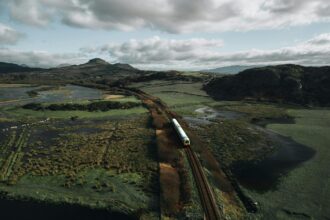
Stretching from the English border at Chester to the ferry port of Holyhead, the North Wales Coast Line is one of the most scenic and underrated railway journeys anywhere in Britain. Running beside castles, estuaries, beaches, mountains, Victorian resorts, and the Irish Sea, the route combines practical transport with some of the finest coastal scenery in Wales.
The line passes through many of the region’s best-known destinations including Conwy, Llandudno Junction, Bangor, Rhyl, Colwyn Bay, and Holyhead, while also providing access to attractions such as Conwy Castle, the Great Orme, Anglesey, and the mountains of Eryri National Park.
Unlike some scenic railways that operate mainly as tourist attractions, the North Wales Coast Line remains an important working transport corridor linking North Wales with Chester, Manchester, Birmingham, London, and ferry services to Ireland.
One of the line’s greatest strengths is how varied the scenery becomes during the journey. Some sections run directly beside beaches and sea walls, while others pass medieval fortresses, estuaries, bridges, mountain backdrops, and busy harbour towns.
The route also works exceptionally well for flexible travel because many of the stations sit within walking distance of beaches, castles, town centres, and waterfront attractions. This makes the railway ideal for day trips, slow travel itineraries, photography journeys, and wider North Wales exploration without needing a car.
For travellers exploring Wales by rail, the North Wales Coast Line is not simply a transport route. It is one of the defining travel experiences of the region itself.
Why the North Wales Coast Line Is One of Britain’s Most Scenic Railways
What makes the North Wales Coast Line stand out compared with many other British railway routes is the sheer variety of scenery packed into a relatively compact journey.
Within a single trip, passengers can experience medieval castles, Victorian seaside resorts, broad estuaries, coastal cliffs, mountain views, busy ferry ports, beaches, and open sea panoramas. Few railways in Britain transition between so many different landscapes so quickly.
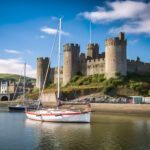
The section around Conwy is especially famous because trains pass directly beside the medieval walls of Conwy Castle, the harbour, and the iconic Conwy Suspension Bridge. The fortress rises almost immediately above the tracks, creating one of the most dramatic railway approaches anywhere in Wales.
Further west, the line opens towards spectacular coastal views around Bangor, the Menai Strait, and the approaches towards Anglesey. During clear weather, passengers often enjoy views across both coastline and mountains simultaneously.
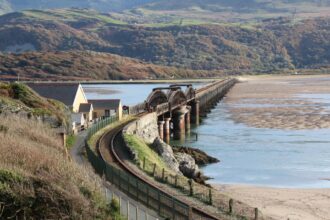
The route is also visually distinctive because the railway frequently runs extremely close to the sea itself. Around locations such as Colwyn Bay, Rhyl, and parts of the Anglesey approach, trains travel beside beaches and sea walls with uninterrupted coastal views.
Unlike heavily commercialised tourist railways, the route still feels authentic and functional. Commuters, ferry passengers, tourists, and long-distance travellers all share the same trains, giving the journey a far more natural atmosphere than heritage railways designed purely around sightseeing.
The changing weather across North Wales also adds significantly to the experience. Bright sunshine can produce spectacular sea views, while rain, mist, and low cloud often create dramatic scenery around the castles, estuaries, and mountains.
For photographers, slow travellers, and rail enthusiasts, the line offers one of the strongest combinations of scenery and accessibility anywhere in the UK rail network.
Compare hotels and other places to stay in Wales.
Check availabilityExplore holiday homes and apartments around Wales.
See holiday homesCompare prices for Wales hotels across multiple booking sites.
Check dealsQuick Route Overview
| Section | Main Highlights |
|---|---|
| Chester to Rhyl | Estuary scenery, coastline and seaside towns |
| Rhyl to Colwyn Bay | Beaches and coastal views |
| Llandudno Junction | Main interchange for North Wales |
| Conwy | Conwy Castle, harbour and medieval walls |
| Bangor | Menai Strait and mountain views |
| Anglesey Section | Coastal scenery and open landscapes |
| Holyhead | Ferry port to Ireland |
The History of the North Wales Coast Line
The origins of the North Wales Coast Line date back to the rapid railway expansion of the 19th century, when engineers and railway companies sought to improve transport links between England, North Wales, and Ireland.
The route became strategically important because it connected major ferry services at Holyhead with railway networks leading towards London and the industrial cities of England. For decades, the line formed a key part of the main transport corridor between Britain and Ireland.
Construction across North Wales was not always straightforward. Engineers had to build along difficult coastal terrain while also crossing estuaries, rivers, and exposed shoreline sections vulnerable to severe weather from the Irish Sea.
One of the most important developments came with the construction of the railway bridges across the Menai Strait, allowing direct rail access onto Anglesey and onward towards Holyhead. These engineering works transformed transport connections across North Wales and significantly strengthened Holyhead’s role as a ferry port.
The railway also helped reshape tourism across the region. Victorian seaside resorts such as Rhyl, Colwyn Bay, and Llandudno expanded rapidly once easier rail access allowed visitors from industrial cities to reach the coast more easily.
Meanwhile, historic towns such as Conwy became increasingly accessible to travellers wanting to explore castles, harbour scenery, and the surrounding mountains of North Wales.
Despite modernisation over the decades, much of the route still retains its strong historic atmosphere today. Many stations continue serving the same coastal communities they connected during the Victorian railway boom, while the line itself remains one of the most important transport corridors anywhere in Wales.
Main Route and Key Stations
The North Wales Coast Line runs for roughly 85 miles between Chester and Holyhead, linking some of the most important coastal towns, ferry connections, and tourist destinations in North Wales.
The eastern end of the route begins at Chester, one of the main gateway stations for North Wales rail travel. From here, trains connect easily with services from London, Manchester, Liverpool, Birmingham, and much of the wider UK rail network.
After leaving Chester, the line quickly enters the coastal corridor of North Wales, serving towns such as Flint, Prestatyn, Rhyl, and Colwyn Bay. These sections combine urban areas with long stretches of open coastline and seaside scenery.
One of the most important stations on the route is Llandudno Junction, which acts as the main interchange point for the region. Here, passengers can connect onto branch services towards Llandudno, one of Wales’ best-known Victorian seaside resorts.
A short distance further west lies one of the line’s greatest highlights, Conwy station, where trains pass directly beside the medieval walls of Conwy Castle and the harbour before continuing along the estuary.
Beyond Conwy, the line continues towards Bangor, with increasingly dramatic views towards the mountains of Eryri National Park and the waters of the Menai Strait.
After crossing onto Anglesey, the route becomes more open and rural before eventually reaching Holyhead, the major ferry port linking Wales with Dublin and Ireland.
The line is primarily operated by Transport for Wales, although some long-distance services are operated by Avanti West Coast, particularly trains linking North Wales with London Euston.
| Station | Why It Matters |
|---|---|
| Chester | Main gateway from England |
| Rhyl | Major seaside resort station |
| Colwyn Bay | Coastal access and beach connections |
| Llandudno Junction | Main interchange for North Wales |
| Conwy | Castle, harbour and medieval town |
| Bangor | Gateway to Snowdonia and Anglesey |
| Holyhead | Ferry connections to Ireland |

Every Station on the North Wales Coast Line
For travellers wanting the complete picture rather than just the main interchanges, the North Wales Coast Line calls at 18 stations between Chester and Holyhead. Not every train stops at every station, so it is worth checking individual timetables when planning a journey to one of the smaller stops.
| # | Station |
|---|---|
| 1 | Chester |
| 2 | Shotton |
| 3 | Flint |
| 4 | Prestatyn |
| 5 | Rhyl |
| 6 | Abergele & Pensarn |
| 7 | Colwyn Bay |
| 8 | Llandudno Junction |
| 9 | Conwy |
| 10 | Penmaenmawr |
| 11 | Llanfairfechan |
| 12 | Bangor |
| 13 | Llanfairpwll |
| 14 | Bodorgan |
| 15 | Ty Croes |
| 16 | Rhosneigr |
| 17 | Valley |
| 18 | Holyhead |
Trains also serve Llandudno itself via the short branch line from Llandudno Junction, which is covered separately in the Great Orme branch section below.
Service Updates: Planned January 2027 Closure
As of August 2026, Network Rail has announced plans to close the entire North Wales Coast Line between Chester and Holyhead for up to four weeks in January 2027 to carry out track renewal, drainage upgrades, and new accessible footbridges at Prestatyn and Pensarn. Rail replacement buses are expected to run throughout the closure.
Exact dates and detailed travel arrangements had not been confirmed at the time of writing, so anyone planning a January 2027 trip along this route should check the latest updates from Transport for Wales or National Rail closer to the time. Shorter weekend engineering works also occur periodically throughout the year, so checking live service status before travelling is worthwhile even outside the main closure period.
Chester to Llandudno Junction
The eastern half of the North Wales Coast Line combines busy transport corridors with increasingly scenic coastal landscapes as the railway moves west from Chester towards the mountains and estuaries of North Wales.
Leaving Chester, trains initially pass through flatter industrial and residential areas before gradually approaching the coastline around Flintshire. As the route continues west, views increasingly open towards beaches, sea walls, and the Irish Sea.
The section around Prestatyn and Rhyl is especially associated with traditional seaside tourism. During summer months, trains become busy with beach visitors travelling between the resorts and nearby cities across north-west England.
Further west, the scenery becomes more varied around Colwyn Bay and the approaches towards Llandudno Junction. Coastal views begin combining with distant mountain backdrops, creating some of the first major scenic moments of the journey.
One of the line’s strengths is how close many stations sit to town centres and seafronts. In several locations, passengers can step off the train and reach beaches, promenades, or coastal walks within only a few minutes.
Llandudno Junction is one of the most important operational points on the route. Although the station itself is more functional than scenic, it acts as the primary interchange for services towards Llandudno, the Conwy Valley Line, and wider North Wales destinations.
For many travellers, this section of the line serves as the transition point between the more urban eastern corridor and the far more dramatic scenery surrounding Conwy, Bangor, and Anglesey further west.
Search flights and useful route combinations for your trip.
View flightsChoose an Airalo eSIM and arrange mobile data before you arrive.
Browse eSIMsHave a private airport pickup arranged before you travel.
Book a transferConwy Castle, Harbour & the Railway
The approach into Conwy is widely considered one of the most dramatic railway scenes anywhere in Britain.
As trains leave Llandudno Junction and cross the estuary approaches, the massive towers of Conwy Castle suddenly rise directly beside the railway line. The tracks run immediately alongside the medieval walls, with the harbour, suspension bridge, and estuary all compressed into an extraordinarily narrow corridor between the castle and the water.
Few railway lines interact with medieval architecture as closely as this. From the train windows, passengers can often look almost directly into the castle walls while crossing beside the harbour.
The famous Conwy Suspension Bridge, designed by Thomas Telford, sits beside the railway and creates one of the most visually distinctive transport scenes anywhere in Wales. The combination of medieval fortifications, Victorian engineering, estuary scenery, and active railway traffic feels uniquely dramatic.
The station itself is extremely small and compact, positioned directly beneath the castle walls and only a short walk from the harbour and medieval town centre.
For rail photographers, the Conwy section is one of the defining highlights of the entire route. Trains passing beneath the fortress create some of the most recognisable railway images anywhere in Wales.
The location also works exceptionally well for travellers using the railway as part of a wider sightseeing itinerary. Visitors can step directly from the station into one of Britain’s best-preserved medieval harbour towns without needing onward transport.
Because the castle, harbour, walls, cafés, and waterfront all sit within a highly walkable area, Conwy becomes one of the strongest stopover points anywhere along the entire North Wales Coast Line.
Llandudno and the Great Orme Branch
One of the most popular side trips from the North Wales Coast Line is the short branch line between Llandudno Junction and Llandudno, connecting the main coastal railway with one of Wales’ best-known Victorian seaside resorts.
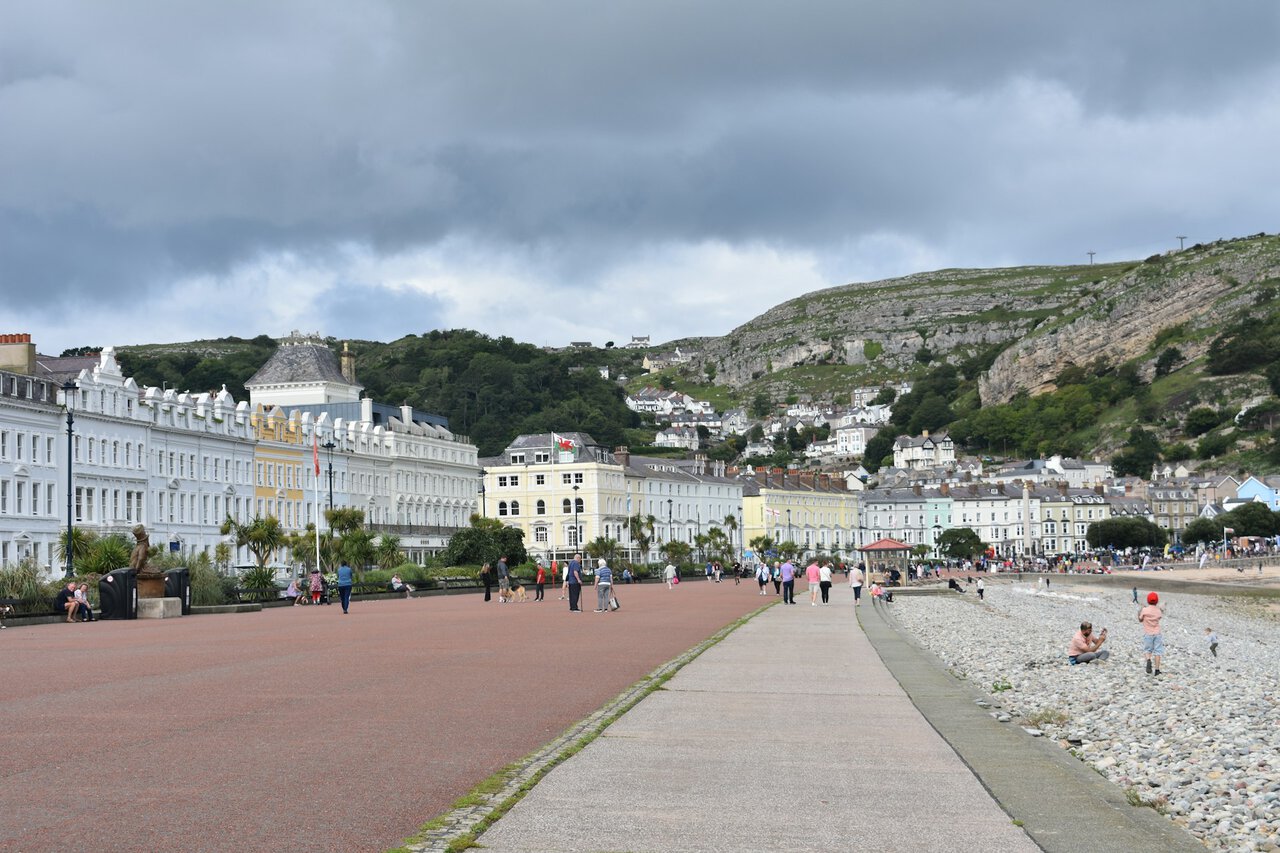
Although the branch itself is relatively short, it provides access to several of the most recognisable attractions anywhere along the North Wales coast including the Great Orme, Llandudno Pier, the promenade, and the town’s famous seafront hotels.
The journey from Llandudno Junction into Llandudno feels noticeably different from the main line. Instead of continuing west towards mountains and ferry ports, the railway curves towards the coast and enters the resort town itself.
Llandudno station sits conveniently close to the town centre, allowing visitors to walk easily to the promenade, beaches, shopping streets, and pier without needing onward transport.
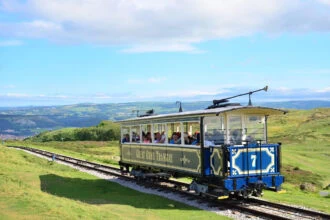
The biggest attraction nearby is usually the Great Orme, the huge limestone headland rising above the town. Visitors can reach the summit using the historic Great Orme Tramway, scenic walking routes, or road access around the cliffs.
The branch also works particularly well for day trips because travel times from nearby stations such as Conwy, Rhyl, and Chester are relatively straightforward. Many visitors combine Conwy Castle and Llandudno into the same rail-based itinerary because the two destinations sit so close together.
For photographers, the branch line and surrounding coastline provide some of the strongest classic seaside scenery anywhere in Wales, especially during clearer summer weather when views extend across the bay towards the mountains and Irish Sea.
Bangor, Menai Strait & Anglesey Views
West of Conwy, the scenery along the North Wales Coast Line becomes increasingly dramatic as trains approach Bangor, the Menai Strait, and the island of Anglesey.
This section combines mountain backdrops, estuary scenery, sea crossings, and coastal landscapes in a way that feels noticeably different from the more urban eastern sections of the route.
The approach towards Bangor is particularly scenic because views begin opening towards the mountains of Eryri National Park while the waters of the Menai Strait appear to the north. During clear conditions, passengers can often see both mountain peaks and coastline simultaneously from the train.
Bangor station itself acts as one of the major gateways to North Wales tourism. It provides access not only to the city but also to Snowdonia, nearby coastal towns, and onward connections towards Anglesey.
Shortly after Bangor, the railway crosses onto Anglesey, one of the most visually memorable parts of the entire route. The crossing provides dramatic views across the Menai Strait, with boats, tidal waters, bridges, and mountain scenery all visible from the train windows.
The famous bridges linking mainland Wales with Anglesey are major landmarks during this section of the journey. The contrast between Victorian engineering, sea views, and surrounding mountains creates one of the strongest scenic moments anywhere on the line.
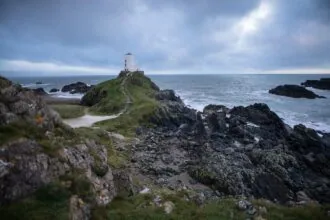
Once on Anglesey, the landscape becomes noticeably more open and rural. Long stretches of coastline, low hills, sea views, and exposed landscapes create a very different atmosphere compared with the castle towns and seaside resorts further east.
For many travellers, this western section of the route is where the North Wales Coast Line feels most dramatic and geographically distinctive.
Holyhead, Ireland Ferries & Rail and Sail Connections
At the western end of the route, the North Wales Coast Line reaches Holyhead, one of the UK’s most important ferry ports and the historic maritime gateway between Britain and Ireland.
The railway and ferry terminal are closely integrated, which is one of the reasons the route became strategically important during the Victorian railway era. For generations, passengers travelling between London and Dublin used this line as part of the primary transport corridor linking Britain and Ireland.
Even today, the railway remains heavily connected to ferry operations, with trains arriving close to the port facilities and onward sailings operating towards Dublin.
The approach into Holyhead feels distinctly maritime. Large ferry vessels, harbour infrastructure, sea walls, and exposed coastal scenery dominate the landscape as trains enter the station area.
One of the most useful options for travellers continuing to Ireland is the long-running Rail and Sail system, which combines rail travel and ferry crossings into a single integrated journey. These tickets allow passengers to travel by train across Britain before connecting directly onto ferries from Holyhead to Dublin.
Rail and Sail routes are particularly popular with travellers wanting to avoid flights while keeping journeys relatively simple and flexible. Depending on the operator and ticket type, journeys can include rail travel from destinations such as London, Manchester, Birmingham, or other UK cities before connecting onto the ferry crossing.
The integrated nature of the route is one of the reasons the North Wales Coast Line still feels like an important long-distance travel corridor rather than simply a regional coastal railway.
Although some travellers simply use Holyhead as a transport interchange, the town also provides access to harbour scenery, coastal walks, and sections of the rugged Anglesey coastline.
For rail enthusiasts, Holyhead carries additional significance because it marks the western terminus of one of Britain’s great coastal railway journeys. The station still feels strongly connected to long-distance travel and maritime transport in a way few British railway terminals do today.
Passengers continuing towards Ireland should still check ferry schedules carefully because sailing times can vary depending on season, weather conditions, and operator timetables.
Scenic Sections of the Journey
Although the entire North Wales Coast Line offers attractive scenery, several sections stand out as especially memorable for photography, coastal views, and overall atmosphere.
The approach into Conwy is widely considered the most dramatic part of the route. Trains pass directly beside the walls and towers of Conwy Castle, with the harbour, estuary, and suspension bridge compressed into a remarkably narrow corridor between medieval fortifications and the sea.
The stretch between Colwyn Bay and Llandudno Junction also provides excellent coastal scenery, particularly during clear weather when beaches, sea walls, and distant mountains become visible simultaneously.
Further west, the crossing near Bangor and the approaches towards the Menai Strait create some of the route’s strongest panoramic views. The combination of water, bridges, mountains, and open coastline feels especially dramatic from the train.
The crossing onto Anglesey is another major highlight. This section feels noticeably more open and exposed, with wider coastal landscapes and sea views stretching across the Irish Sea.
Weather conditions can dramatically change the atmosphere throughout the journey. Bright sunshine creates strong coastal colours and beach scenery, while rain, mist, and low cloud often make the castles, mountains, and estuaries feel even more atmospheric.
Morning and evening light are usually best for photography, particularly around Conwy Castle, the harbour, and the Menai Strait sections where lower sunlight creates much stronger contrast across the coastline and medieval architecture.
Best Stops Along the North Wales Coast Line
One of the biggest strengths of the North Wales Coast Line is how many worthwhile stops sit directly beside the railway itself. Unlike some scenic railways where attractions require lengthy onward travel, many of the best destinations along this route are located only a short walk from the stations.
For many travellers, Conwy is the standout stop along the line. The combination of Conwy Castle, medieval walls, harbour scenery, waterfront cafés, and boat trips creates one of the most complete day-trip destinations anywhere in Wales. The fact that the station sits directly beneath the castle walls makes it especially convenient for rail travellers.
Llandudno is another major highlight and remains one of Britain’s classic Victorian seaside resorts. Visitors can explore the promenade, pier, beaches, and the famous Great Orme, which rises dramatically above the town.
Further east, Rhyl and Colwyn Bay provide traditional coastal resort atmospheres with beaches, seafront walks, and family attractions close to the railway.
For visitors interested in mountains and wider North Wales exploration, Bangor acts as one of the best gateways to Eryri National Park and the surrounding coastline. The station also provides access towards the Menai Strait and nearby Anglesey.
At the western end of the route, Holyhead appeals particularly to travellers interested in ferries, maritime scenery, and the rugged landscapes of Anglesey.
Some of the smaller stations also reward slower exploration. Places such as Prestatyn, Flint, and Penmaenmawr may not receive the same attention as Conwy or Llandudno, but they still provide attractive coastal scenery and quieter alternatives away from the busiest tourist areas.
Browse hostels and budget-friendly stays around Wales.
See hostelsGet help with compensation, eligible lounge access and disruption support.
Explore AirHelp+Leave your luggage somewhere convenient and enjoy Wales hands-free.
View storageBeaches, Castles & Attractions Along the Route
The North Wales Coast Line passes an unusually high concentration of major attractions, which is one of the reasons the route works so well for flexible rail-based travel across the region.
The most famous attraction is undoubtedly Conwy Castle, one of Britain’s finest medieval fortresses and a UNESCO World Heritage Site. The railway passes directly beside the castle walls, creating one of the most visually dramatic rail scenes anywhere in Wales.
Nearby Llandudno offers a completely different atmosphere with its Victorian promenade, long pier, beaches, tramway, and the towering limestone headland of the Great Orme.
Further west, the line provides access towards the mountains and outdoor landscapes of Eryri National Park, especially from stations such as Bangor and Llandudno Junction.
Coastal scenery remains a constant feature throughout much of the journey. Long beaches, sea walls, promenades, and estuary views appear repeatedly between the larger towns and stations.
The railway also acts as an important transport corridor for ferry passengers travelling between Britain and Ireland. At Holyhead, travellers can continue directly onto ferry services towards Dublin, making the route part of a wider international travel network rather than simply a regional railway.
Boat trips are another growing attraction along the line, particularly around Conwy Harbour, where visitors can join wildlife cruises, Puffin Island safaris, harbour sightseeing trips, and sunset tours.
Because the route combines castles, coastlines, mountains, seaside towns, and ferry connections within a relatively compact area, it works exceptionally well for travellers wanting varied scenery without needing extensive onward transport.
Best Time of Year to Ride the Line
The North Wales Coast Line changes dramatically throughout the year, with weather, sea conditions, tourism levels, and visibility all affecting the atmosphere of the journey.
For most travellers, the strongest overall period is between late spring and early autumn, when daylight hours are longer and coastal scenery is usually at its clearest. This is also when beaches, harbour towns, boat trips, and seaside resorts feel most active.
Summer naturally brings the warmest weather and strongest coastal atmosphere, particularly around Llandudno, Rhyl, and Conwy. However, trains can also become considerably busier during weekends and school holidays, especially on services from north-west England towards the Welsh coast.
Spring is often one of the best periods for photography because visibility is usually strong while crowds remain lighter than peak summer. Coastal greenery and clearer mountain views can create especially attractive scenery around Conwy, the Menai Strait, and the approaches towards Snowdonia.
Autumn also works very well for scenic rail travel. Lower sunlight, changing colours, and quieter stations often create a calmer atmosphere along the line, particularly around the estuary and harbour sections.
Winter journeys feel noticeably different from summer travel. Rough seas, dark skies, and changing coastal weather can make the route feel far more dramatic, especially around the exposed sections near Anglesey and the Irish Sea. However, visibility can naturally become more unpredictable during severe weather.
Time of day also matters. Morning and late afternoon generally provide the best lighting conditions for photography, particularly around Conwy Castle, the coastline near Colwyn Bay, and the crossings around the Menai Strait.
Because the route runs so close to the sea for much of its length, weather conditions can shift quickly during any season, which is part of what makes the journey feel so visually dynamic.
Ticket Tips, Railcards & Saving Money
Travelling on the North Wales Coast Line can be surprisingly affordable if tickets are booked carefully, especially for longer journeys from England or when combining multiple stops across North Wales.
For most visitors, advance booking offers the best value. Tickets purchased earlier for routes such as Chester to Holyhead, Manchester to Conwy, or London to Bangor are often significantly cheaper than buying flexible same-day fares.
The line is served mainly by Transport for Wales, although some longer-distance services towards London Euston are operated by Avanti West Coast. Prices can vary depending on operator, departure time, and whether the ticket includes long-distance connections.
Railcards can reduce costs considerably, especially for couples, families, younger travellers, and seniors. The 16–25 Railcard, 26–30 Railcard, Two Together Railcard, Senior Railcard, and Family & Friends Railcard are all valid across the route and can significantly lower ticket prices.
Visitors exploring several destinations along the line often benefit from flexible tickets or split-ticketing strategies rather than buying multiple separate short-distance journeys individually.
The route also works particularly well with Interrail and BritRail passes because many of the stations and attractions sit directly beside the railway itself. Travellers using passes can easily stop at places such as Conwy, Llandudno, or Bangor without complicated onward transport arrangements.
Apps such as Trainline, Omio, Rail Europe, and the official Transport for Wales app are useful for checking live departure times, platform information, disruptions, and advance fares.
Peak summer weekends can become busy, particularly on trains towards seaside resorts and coastal towns. Reserving seats for longer journeys is often worthwhile, especially on Friday afternoons and sunny weekends.

Compare Wales Train Tickets with Omio
Use Omio to check train options for Wales, compare available journeys and see ticket choices without visiting each railway operator individually.
You can also compare rail journeys with available bus and flight options, which can be useful when deciding the best way to travel between European cities.
Scan to open
on your phone


Trains, Operators & First Class
The North Wales Coast Line is mainly operated by Transport for Wales, which runs the majority of regional and intercity services along the route.
Transport for Wales trains connect coastal towns such as Rhyl, Colwyn Bay, Conwy, Bangor, and Holyhead with major destinations including Chester, Manchester, Birmingham, and parts of South Wales.
Longer-distance services between Holyhead and London Euston are operated by Avanti West Coast, providing direct connections between North Wales and the capital.
Train types vary considerably depending on the service. Some routes use modern regional trains designed mainly for shorter journeys, while longer-distance Avanti services provide more spacious seating, luggage areas, onboard toilets, Wi-Fi, and first-class accommodation.
First Class is generally available only on the longer-distance Avanti West Coast services rather than most regional Transport for Wales trains. For travellers making the full journey between London and North Wales, upgrading can provide significantly more comfort, particularly during busy travel periods.
One of the advantages of the route is that even standard class journeys often feel highly scenic because of the large windows and constantly changing coastal views throughout the journey.
Facilities vary depending on the train itself, although most services provide luggage space and onboard toilets. Wi-Fi availability can be inconsistent in some coastal and rural sections of the route, particularly around parts of Anglesey and western North Wales.
Passengers travelling with larger suitcases for ferry connections towards Ireland usually find the trains relatively manageable compared with some busier intercity routes elsewhere in Britain.
Accessibility, Luggage & Facilities
The North Wales Coast Line is generally easier to navigate than many rural railway routes because most major stations along the corridor are well connected and relatively straightforward to use.
Larger stations such as Chester, Llandudno Junction, Bangor, and Holyhead provide the strongest facilities, including waiting areas, toilets, ticket machines, step-free access in many areas, and connections with buses or taxis.
Smaller stations along the coast can feel much simpler and more compact, although this often makes them easier to navigate for visitors unfamiliar with the route.
Accessibility standards vary between stations because some infrastructure along the line dates back to the Victorian railway era. Larger stations usually offer the best step-free access, while smaller historic stations may involve footbridges or older layouts.
Passengers needing assistance should ideally arrange support in advance through the relevant rail operator, particularly for longer journeys or station changes.
Luggage handling along the route is generally straightforward because many coastal stations sit close to town centres, ferry terminals, or nearby attractions. This is particularly useful for visitors travelling onwards to Ireland via Holyhead or staying overnight along the coast.
The line also works well for slower travel itineraries because many stations are located within easy walking distance of hotels, beaches, harbour areas, and historic attractions.
Toilets are normally available on longer-distance services and at larger stations, although smaller stops may have very limited facilities. Food and drink availability also varies considerably depending on the station and train type.
Because the route remains an active transport corridor rather than purely a tourist railway, facilities generally feel practical and functional rather than heavily commercialised.
Using Interrail on the North Wales Coast Line
The North Wales Coast Line works exceptionally well with Interrail and is one of the easiest scenic railway routes in Britain to incorporate into a wider UK or European rail itinerary.
One of the biggest advantages of using Interrail here is the flexibility to stop frequently without needing complicated onward transport. Stations such as Conwy, Llandudno, and Bangor sit directly beside major attractions, allowing travellers to step off the train and begin sightseeing almost immediately.
The route also connects naturally with ferry services at Holyhead, creating opportunities for combined rail-and-sea journeys towards Dublin and wider Ireland travel.
Unlike some European scenic railways, reservations are usually not essential on most Transport for Wales services along the route. However, reservations can still be worthwhile during busy summer weekends or on longer-distance Avanti West Coast trains towards London.
Interrail travellers should also remember that the line combines particularly well with other scenic Welsh railways including the Conwy Valley Line towards Betws-y-Coed and Snowdonia.
Because many travellers rush through North Wales on the way to Ireland, the route is often overlooked compared with more famous British rail journeys. However, for slower travellers using Interrail, the combination of castles, coastline, ferry links, mountains, and harbour towns makes this one of the most rewarding rail corridors anywhere in the UK.

Parking, Local Transport & Station Access
One of the biggest advantages of the North Wales Coast Line is how accessible many of the stations are once you arrive. Unlike some rural railways where onward travel becomes difficult without a car, many North Wales stations sit directly beside beaches, harbour areas, town centres, or major attractions.
Stations such as Conwy, Llandudno, Rhyl, and Bangor are especially easy to explore on foot because key attractions sit only a short distance from the platforms themselves.
At Conwy, passengers can walk from the station directly into the medieval town beside Conwy Castle, the harbour, and the waterfront within only a few minutes. Similarly, Llandudno station sits conveniently close to the promenade, shopping streets, and seafront hotels.
Parking availability varies significantly between stations. Larger stations such as Chester, Llandudno Junction, and Bangor generally offer the strongest parking facilities, while smaller historic stations may have only limited parking capacity nearby.
During busy summer periods, parking pressure can become particularly noticeable around coastal destinations such as Conwy and Llandudno, especially on sunny weekends when day-trip traffic increases sharply.
Bus connections are generally strongest around the larger coastal towns. Services linking stations with local beaches, resorts, harbour areas, and inland communities operate throughout much of the corridor, particularly around Llandudno, Bangor, and the wider Conwy region.
Taxi availability is usually reliable at larger stations such as Chester, Bangor, and Holyhead, while smaller stations may require advance booking outside peak tourist periods.
Cyclists also use the route heavily because many sections of the North Wales coast combine well with cycling routes and waterfront paths. However, bike space on trains can become limited during busy summer periods.
Because the railway acts as a major transport spine for the region, many visitors find combining trains with walking, local buses, and occasional taxis considerably easier than driving the entire coastline themselves.
Is the North Wales Coast Line Worth It?
For travellers interested in scenic rail journeys, coastal landscapes, castles, and flexible slow travel, the North Wales Coast Line is absolutely worth experiencing.
What makes the route particularly impressive is the sheer variety packed into a relatively compact railway journey. Within only a few hours, passengers can experience medieval fortresses, Victorian seaside resorts, mountain scenery, sea crossings, ferry ports, beaches, and dramatic estuary views.
The route also works exceptionally well because many attractions sit directly beside the railway itself. Unlike some scenic routes where stations feel isolated from the places travellers actually want to visit, the North Wales Coast Line places visitors directly beside destinations such as Conwy Castle, Llandudno, and Holyhead Harbour.
The line also remains refreshingly authentic. This is not a heritage railway operating purely for tourists. It is a functioning transport corridor used daily by commuters, ferry passengers, local residents, and long-distance travellers, which gives the journey a much more natural atmosphere.
For photographers, the railway provides some of the strongest coastal and castle scenery anywhere in Britain. The approach through Conwy, the crossings around the Menai Strait, and the sea views near Anglesey are especially memorable.
The route is equally attractive for slower travel itineraries because stations are generally easy to navigate and many destinations work well for overnight stops or flexible day trips.
Even travellers who initially use the line mainly for transport often find the journey itself becoming one of the highlights of visiting North Wales.

Rupert’s Handy Travel Tips
Planning a journey on the North Wales Coast Line? A few simple decisions can make the trip much smoother and far more scenic.
- Sit on the north-facing side where possible: Some of the best coastal views appear towards the sea, especially west of Conwy.
- Do not rush through Conwy: The combination of Conwy Castle, the harbour, and the medieval walls makes it one of the best stopovers anywhere on the route.
- Allow extra time at Llandudno Junction: Connections towards Llandudno and the Conwy Valley Line can easily turn into full day trips.
- Travel early during summer weekends: Trains towards the coast can become extremely busy during sunny weather.
- Keep a camera ready near the Menai Strait: The views towards Anglesey, the bridges, and the mountains can appear suddenly and disappear quickly.
Want to meet the reindeer behind our travel tips? Find out more in our page Who is Rupert?.
Frequently Asked Questions About the North Wales Coast Line
Where does the North Wales Coast Line run?
The route runs between Chester and Holyhead, linking major coastal towns and ferry connections across North Wales.
Which is the most scenic part of the route?
Many travellers consider the section through Conwy and the approaches towards the Menai Strait the most visually dramatic parts of the journey.
Can you use Interrail on the North Wales Coast Line?
Yes. The line works very well with Interrail, especially for flexible stopovers at coastal towns and castle destinations.
Which operators run trains on the route?
Most services are operated by Transport for Wales, while some direct London services are run by Avanti West Coast.
Is the route good for day trips?
Yes. Stations such as Conwy, Llandudno, and Bangor work especially well for flexible rail-based day trips.
Does the line connect with ferries to Ireland?
Yes. The western terminus at Holyhead connects directly with ferry services towards Dublin.
What is the best time of year to travel?
Late spring through early autumn usually provides the best balance of scenery, weather, and visibility.
Is the North Wales Coast Line worth doing for scenery alone?
Absolutely. The combination of castles, coastline, beaches, mountains, and harbour views makes it one of Britain’s best scenic rail journeys.

Further Reading & Related Guides: North Wales Coast Line
The North Wales Coast Line forms part of a much wider network of scenic Welsh rail and coastal travel routes. For a broader overview of the country, our full Wales Travel Guide covers castles, national parks, scenic drives, railways, and coastal destinations across Wales.
If you are planning wider rail travel across the country, our detailed Welsh Trains Guide explains ticketing, major operators, scenic railways, route planning, and how train travel works across both North and South Wales.
Travellers exploring the coastline in more detail should also read our guides to Conwy Castle, Conwy Boat Trips, and the Holyhead to Dublin Ferry, all of which connect naturally with journeys along the North Wales railway corridor.
For travellers wanting even more scenic Welsh railway experiences, our guides to the spectacular Cambrian Line and the rural Heart of Wales Line showcase some of the country’s most atmospheric rail journeys through mountains, estuaries, coastlines, and remote countryside.
Before travelling, it is also worth preparing properly for connectivity and navigation across rural Wales. Our guides to the best eSIM apps, offline map apps, and train booking apps can help make travelling across Wales significantly easier, especially in more remote coastal and mountain areas.