Reviewed by our editorial team Updated
Why Visit Wales
Wales is one of the most underrated travel destinations in the United Kingdom, offering a combination of dramatic landscapes, historic towns, and some of the best scenic rail journeys in Britain. While many visitors focus on England or Scotland, Wales delivers a more accessible and less crowded experience, particularly for travellers looking to explore nature without sacrificing connectivity.
One of the biggest strengths of Wales is its variety within a compact area. In a relatively short distance, you can travel from rugged mountain ranges to sweeping coastlines, passing through historic villages, castles, and national parks along the way. This makes it ideal for travellers who want to experience multiple environments without long travel times.
The country is particularly well suited to independent travel, whether you are travelling solo or planning a flexible itinerary. The rail network connects key regions efficiently, while scenic routes such as the Cambrian Line and the Heart of Wales Line transform the journey itself into part of the experience. This is where Wales stands out. It is not just about the destination, but about how you travel between places.
Wales also offers a strong sense of identity, with its own language, culture, and traditions. You will notice bilingual signage, distinctive architecture, and a slower pace of life compared to larger UK cities. This creates a travel experience that feels both familiar and distinct.
For travellers looking for mountains, coastlines, rail journeys, and authentic local character, Wales delivers a balanced and rewarding experience that is often overlooked.
Quick Facts About Wales
| Category | Information |
|---|---|
| Country | Wales (part of the United Kingdom) |
| Capital City | Cardiff |
| Currency | British Pound (GBP) |
| Languages | English and Welsh |
| Population | Approx. 3.1 million |
| Time Zone | GMT / BST |
| Best For | Nature, rail journeys, coastlines, hiking |
| Transport | Strong rail network with regional coverage |
| Driving | Useful in rural areas but not essential |
| Airports | Cardiff Airport (CWL), plus access via Manchester, Liverpool, Bristol |
Wales is easy to navigate for most travellers, particularly those already familiar with the UK. English is widely spoken everywhere, while Welsh adds a distinctive cultural element that you will see across signs, stations, and place names.
Best for a short trip. Compare rooms by neighbourhood, price and guest rating before you book.
Compare hotelsBest for groups who want one address and separate bedrooms rather than three hotel rooms.
See holiday homesBest as a last check before booking. Compares Wales hotel rates across several sites in one search.
Compare ratesWhere to Visit in Wales
Wales is not a destination you experience in one place. It works best when you think in terms of regions with distinct identities, each offering a different type of trip. From mountains and coastlines to quiet countryside and historic towns, the experience changes significantly depending on where you go.
The key to planning a successful trip is choosing regions that match your interests, then linking them together using efficient travel routes. This is where Wales stands out, particularly if you use the rail network to move between areas while still accessing more remote locations.
North Wales: Mountains, Castles and Coastal Rail Journeys
North Wales is the most visually dramatic part of the country and the region that delivers the classic image of Wales. This is where you will find rugged mountains, historic castles, and a coastline that shifts between open sea views and traditional seaside towns.
At the centre of the region is Eryri National Park, often still referred to as Snowdonia, which is one of the main reasons people travel to Wales. The landscape here is defined by steep peaks, glacial lakes, and wide valleys, creating some of the most impressive scenery in the UK.
The most famous attraction is Snowdon, the highest mountain in Wales, which draws hikers throughout the year. The climb itself is a major experience, but even without hiking, the surrounding area offers viewpoints, lakeside walks, and smaller trails that provide a similar sense of scale.
Beyond the mountains, the region opens out towards the coast. Conwy is one of the most striking towns in Wales, built around a fully intact medieval wall system and dominated by Conwy Castle. Walking through the town feels like stepping into a different period, with narrow streets and views back towards the mountains. Nearby, Llandudno offers a more traditional seaside experience, with a long promenade, pier, and access to the Great Orme headland, which provides sweeping coastal views.
What makes North Wales particularly strong is how well it connects as a journey. The North Wales Coast Line links many of these locations, allowing you to travel along the coast while stopping at key towns. This creates a natural route where the transport itself becomes part of the experience, rather than just a way to move between destinations.
This region is ideal if you are looking for dramatic landscapes, iconic Welsh scenery, and a balanced mix of nature and history, all within a relatively accessible area.
Anglesey: Coastal Landscapes and Island Travel
Anglesey offers a different side of North Wales, one that is defined less by mountains and more by open coastline, beaches, and a slower pace of travel. Located just off the mainland and connected by bridge, it is easy to reach but feels noticeably more remote once you arrive.
The island is known for its coastal scenery, with a mix of sandy beaches, rocky shorelines, and wide views across the Irish Sea. Unlike some parts of mainland Wales, the landscape here feels more open, with fewer dramatic peaks and more emphasis on space and horizon. This makes it particularly appealing for travellers looking for coastal walks, photography, and quieter locations.
One of the most important locations on the island is Holyhead, which acts as both a transport hub and a gateway to Ireland. While many travellers pass through on their way to a ferry, the surrounding area is worth exploring in its own right, with access to coastal paths and viewpoints that highlight the island’s rugged character.
Anglesey also works well as a contrast within a wider itinerary. After spending time in the mountains of Eryri National Park, moving onto the island provides a change of pace and landscape, allowing you to experience a different side of Wales without travelling long distances.
Transport on the island is more limited than on the mainland, so planning is important. You can reach Anglesey easily by train to Holyhead, but exploring further often requires a combination of local buses, taxis, or walking routes. This is part of the appeal, as it encourages a more relaxed and deliberate way of travelling.
Anglesey is best suited to travellers who want to slow down, explore the coastline, and experience a quieter, less crowded part of Wales, while still remaining connected to the wider transport network.

Mid Wales: Quiet Landscapes, Open Space and the Cambrian Coast
Mid Wales is where the pace slows down. This region is defined less by major attractions and more by its sense of space, quiet, and remoteness. It is one of the least densely populated parts of the UK, which makes it particularly appealing if you want to step away from busy destinations.
The defining feature of Mid Wales is the Cambrian Coast, a stretch of coastline that combines wide, open beaches with estuaries and small seaside towns. This is not a heavily developed tourist area, which gives it a more natural and unspoiled feel. Walking along the coast, you will find long sections where it feels like you have the landscape almost to yourself.
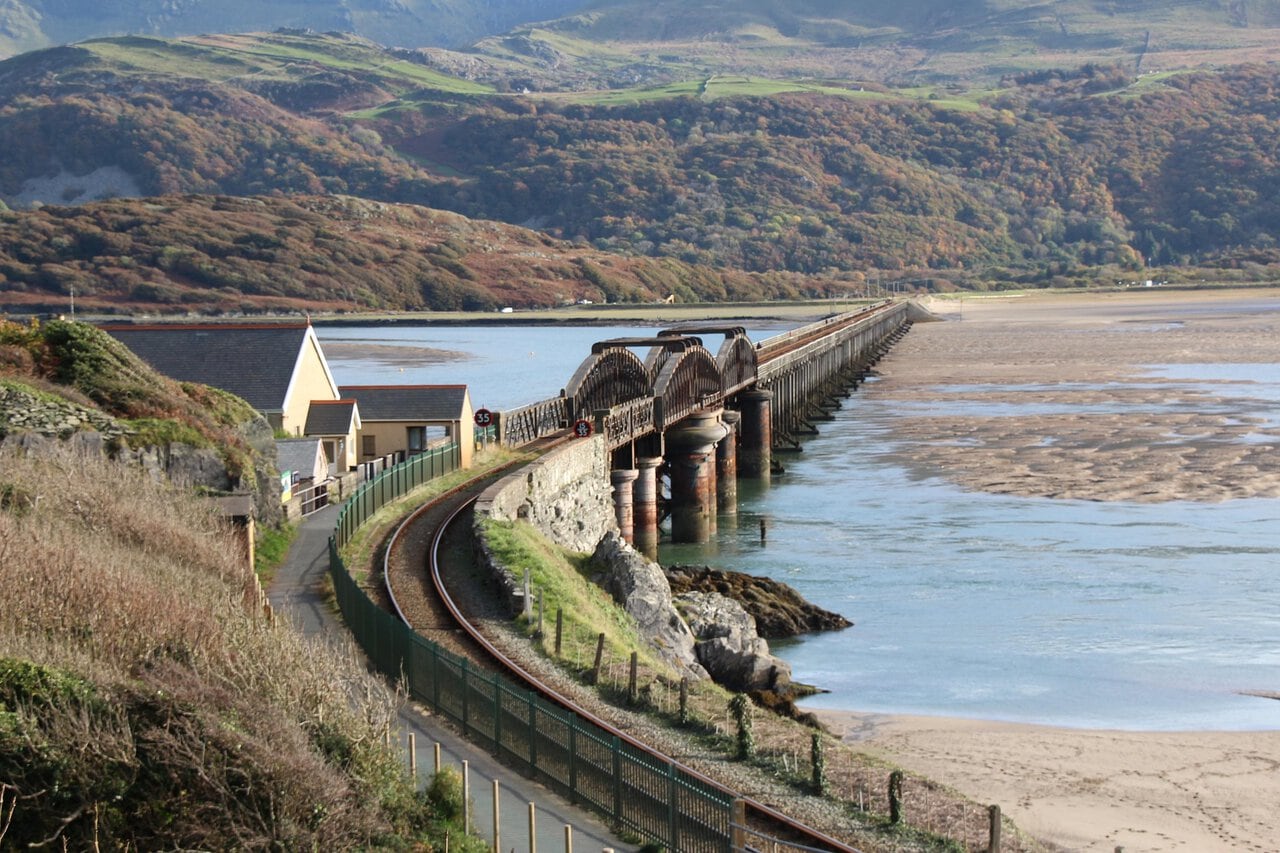
One of the best ways to experience this region is by travelling on the Cambrian Line, which runs along the coast and through rural areas. This is one of the most scenic rail journeys in the UK, with sections of track running close to the sea and others cutting through open countryside. The journey itself becomes a central part of the trip, offering views that would be difficult to access by road.
Towns such as Aberystwyth provide a base for exploring the area, with a seafront, promenade, and access to nearby walking routes. Further along the coast, smaller locations offer quieter stops, where the focus is on the landscape rather than specific attractions.
Mid Wales is best suited to travellers who want a slower, more reflective travel experience, where the emphasis is on scenery, quiet exploration, and the journey itself rather than a packed itinerary.
South Wales: Cities, Culture and Easy Access to Nature
South Wales offers a different type of experience, combining urban centres, cultural attractions, and accessible countryside. This region is often the easiest starting point, particularly for travellers arriving from London or other major UK cities.
The focal point is Cardiff, the capital of Wales, which provides a mix of modern development and historic sites. The city is compact and easy to navigate, with highlights including Cardiff Castle, the waterfront at Cardiff Bay, and a strong selection of restaurants, shops, and cultural venues. It works well as both a destination in its own right and a base for exploring further.
Just outside the city, the landscape changes quickly. Bannau Brycheiniog National Park, often still referred to as the Brecon Beacons, offers rolling hills, waterfalls, and open countryside, providing an accessible introduction to Welsh nature without needing to travel far. This makes it possible to combine city exploration with outdoor activities within the same trip.
South Wales also includes coastal areas and smaller towns, but its main strength is how easily everything connects. Rail links into Cardiff are frequent and reliable, and from there you can branch out into surrounding areas without complex planning.
This region is ideal if you want a balanced trip that includes city life, cultural experiences, and easy access to nature, all within a well-connected area.
West Wales: Coastlines, Beaches and Remote Escapes
West Wales is where you go for the coastline. This region offers some of the most impressive and unspoiled coastal scenery in the UK, with cliffs, wide beaches, and long-distance walking routes that stretch across large sections of the country.
The standout area is Pembrokeshire, which is known for its coastal national park and the Pembrokeshire Coast Path, one of the most scenic walking routes in Britain. The coastline here is varied, with rugged cliffs in some areas and open sandy beaches in others, creating a landscape that feels both dramatic and accessible.
One of the most recognisable locations is Freshwater West Beach, a wide, open stretch of sand that has gained attention through its use in film and television. The scale of the beach and the surrounding landscape give it a distinctive character, making it a worthwhile stop for both scenery and atmosphere.
West Wales is less connected than other regions, which is part of its appeal but also something to plan for. Reaching these areas often involves combining train travel with local transport, particularly if you are heading to smaller coastal locations. This adds an extra step to the journey, but it also contributes to the sense of remoteness.
This region is best suited to travellers looking for coastal scenery, quieter destinations, and a more immersive experience, where the focus is on the landscape rather than structured attractions.
Best for finding routes the airlines do not sell as a single ticket. Combines carriers to bring the fare down.
Search flightsBest for short trips. Install the eSIM at home and arrive in Wales with working data, no shop queue.
Browse eSIMsBest when public transport has stopped, or when you are travelling with children and bags.
Book a transferUNESCO World Heritage Sites in Wales
Wales is home to several UNESCO World Heritage Sites, reflecting its historical importance and the scale of its architectural and industrial heritage. These sites are not just landmarks, they represent some of the most significant cultural and historical developments in the United Kingdom.
The most prominent UNESCO designation in Wales is the Castles and Town Walls of King Edward in Gwynedd, which includes sites such as Conwy Castle, Caernarfon Castle, Harlech Castle, and Beaumaris Castle. These fortifications are considered among the finest examples of medieval military architecture in Europe, and they remain some of the most impressive structures you can visit in the country.
In South Wales, the Blaenavon Industrial Landscape highlights a completely different aspect of Welsh history. This site reflects the country’s role in the Industrial Revolution, with preserved ironworks, mines, and infrastructure that shaped modern industry.
More recently, the Slate Landscape of Northwest Wales was added to the UNESCO list, recognising the region’s global impact on slate production and its influence on communities and landscapes. This area links directly to the mountains of Eryri, showing how industry and environment are closely connected in Wales.
Visiting these sites adds a deeper layer to your trip, allowing you to experience not just the scenery, but the history and significance behind it.
Learn More from UNESCO
This destination is connected to a UNESCO World Heritage Site, recognised for its outstanding cultural, historical, or natural importance. You can explore official listings, background information, and protected heritage sites through UNESCO’s global database.
Castles in Wales: What to See and Why They Matter
Wales is often described as the castle capital of Europe, and for good reason. With over 600 castles across the country, they are one of the defining features of the landscape and a major reason to visit.
These castles are not hidden away or difficult to access. Many are located in coastal towns, city centres, or dramatic natural settings, making them easy to include in your itinerary.
In North Wales, Conwy Castle stands out as one of the most complete medieval fortifications in Europe, with its walls still surrounding the town and views stretching towards the coast. Nearby, Caernarfon Castle is larger and more imposing, with a distinctive design that sets it apart from other castles in the UK. Both are part of the UNESCO-listed group and are essential stops if you are exploring the region.
Further inland, castles often appear in unexpected locations, from hilltops to river crossings. In South Wales, Cardiff Castle offers a different experience, combining Roman, medieval, and Victorian elements within a single site, right in the centre of the city.
What makes castles in Wales particularly compelling is how they are integrated into the landscape. Many are positioned to control routes, coastlines, or key strategic points, which means visiting them often involves dramatic views and strong visual impact, not just historical interest.
Exploring castles also works well alongside other activities. You can combine a castle visit with a coastal walk, a train journey, or a stop in a nearby town, making them easy to include without needing to plan an entire day around them.
For travellers interested in history, architecture, or simply impressive locations, castles are one of the most accessible and rewarding experiences in Wales.
Best Beaches in Wales
Wales has some of the most impressive and varied coastlines in the United Kingdom, yet it remains far less crowded than many comparable destinations. The country’s beaches range from wide, open sandy bays to rugged coastal stretches backed by cliffs, offering a very different experience depending on where you go.
One of the standout areas is Pembrokeshire, where the coastline feels both dramatic and unspoiled. Beaches such as Freshwater West are known for their scale, strong Atlantic waves, and open landscape. This is not a resort-style beach, but a place defined by space, natural beauty, and raw coastal scenery, making it particularly appealing for walking, photography, and simply experiencing the environment.
Further north, the Cambrian Coast offers a different atmosphere. Here, you will find long stretches of sand and quieter seaside towns, often with fewer visitors and a more relaxed pace. Travelling along this coastline, particularly by train, allows you to access multiple beaches without needing a car, turning the journey itself into part of the experience.
In North Wales, beaches are often combined with mountain backdrops, creating a unique contrast between sea and landscape. Locations along the coast near Llandudno and beyond offer easy access and a more traditional seaside feel, while still providing impressive views.
What makes beaches in Wales stand out is not just their appearance, but their sense of space and lack of overcrowding. Even in peak season, it is possible to find quieter areas, particularly if you are willing to travel slightly further or combine your journey with local transport.
For travellers planning to explore the coast, it is important to understand that some of the best beaches require a combination of train and local bus travel, particularly in West Wales. This adds an extra step, but it also contributes to the feeling of reaching somewhere more remote and less developed.
Wales is not a beach destination in the traditional sense, but for those looking for natural coastlines, open space, and a quieter experience, it offers some of the best coastal scenery in the UK.

Best Things to Do in Wales
Wales offers a wide range of activities, but the key to understanding it is recognising that many of its best experiences are outdoor and journey-based, rather than centred around major cities.
One of the most popular activities is hiking, particularly in Eryri. Climbing Snowdon is a major highlight, but there are also numerous trails suitable for different experience levels. The surrounding landscapes provide opportunities for walking, photography, and exploring at your own pace.
The coastline is another major draw. Wales has some of the longest continuous coastal paths in the world, offering access to beaches, cliffs, and coastal villages. Areas such as Pembrokeshire provide a combination of scenic walking routes and quiet, open spaces.
Rail travel is a defining feature of Wales. Scenic routes such as the Cambrian Line and the Heart of Wales Line offer a different way to explore the country, turning transport into an experience in its own right. These journeys pass through landscapes that would otherwise be difficult to access, making them an essential part of any itinerary.
Historic sites also play a significant role. Wales is known for its castles and heritage locations, many of which are located in dramatic settings. These sites provide insight into the country’s history while adding variety to a nature-focused trip.
What makes Wales unique is how these experiences connect. You can combine hiking, coastal exploration, and scenic rail travel within a single trip, creating a varied and engaging travel experience.
Getting to Wales
Reaching Wales is straightforward, with strong connections from across the UK and beyond. The best option for most travellers is rail travel, which provides direct access to major cities and seamless onward connections into rural and coastal areas.
Travelling by train from London, Manchester, and Birmingham is fast and reliable, with regular services running throughout the day. Routes into South Wales typically arrive in Cardiff, while services into North Wales connect to towns such as Chester, Bangor, and Llandudno. Using a dedicated rail planning tool like Omio makes it easy to compare routes, check live schedules, and manage bookings in one place, particularly if you are travelling across multiple regions.
For travellers arriving internationally, nearby airports such as Manchester, Liverpool, and Bristol provide strong access points, all with direct rail links into Wales. Cardiff Airport also serves the region, although connections from larger airports are often more frequent and flexible.
Ferry travel is another option, particularly for those arriving from Ireland. Routes into ports such as Holyhead and Fishguard connect Wales to international travel networks, and these can be combined with rail journeys to continue your trip inland. Understanding how these routes operate is important if you are planning a multi-country itinerary, particularly when coordinating ferry and train connections.
Driving into Wales is possible and can offer flexibility, especially for remote areas. However, for most travellers, rail provides a simpler, more efficient, and more sustainable way to arrive, particularly when visiting multiple destinations.
Getting Around Wales
Getting around Wales is straightforward once you understand one key point: no single transport option covers everything efficiently. The best approach is usually a combination of trains, occasional buses, and selective driving, depending on where you are going.
For most travellers, the backbone of any trip will be the rail network, which connects the main cities, coastal routes, and several of the country’s most scenic areas. Trains allow you to move between regions without dealing with narrow rural roads, parking, or navigation, and they are often the most efficient way to cover distance.
However, Wales is not built like a major metropolitan area. Some of its most rewarding locations, particularly along the west coast and within national parks, are not directly on main rail lines. This is where understanding how to combine transport options becomes important.
Best for a short stop where being central matters more than the room. Dorms and private rooms both listed.
See hostelsBest arranged before you fly rather than after. Covers claim handling, plus lounge access on eligible delays.
Explore AirHelp+Best for a day with a bag and nowhere to put it. Find a storage point near where you already are.
View storageUsing Trains as Your Main Transport
If you are travelling between major destinations such as Cardiff, Swansea, Aberystwyth, Bangor, or Llandudno, the train is almost always the best option. Journeys are predictable, stations are centrally located, and routes are integrated with the wider UK rail network.
One of the biggest advantages of rail travel in Wales is that it allows you to experience the landscape while travelling. Routes such as the Cambrian Line and the Heart of Wales Line are not just functional connections, they are part of the trip itself. These routes pass through coastal scenery, open countryside, and smaller communities that are difficult to access by road without significant planning.
For travellers who plan to rely heavily on rail, it is worth understanding ticket options, timing, and potential delays. Using our dedicated guide to Welsh train travel will help you plan routes more efficiently, avoid peak fares, and understand how to make the most of the network.
When You Will Need Local Buses
Buses in Wales are best understood as connectors rather than primary transport. They play an essential role in reaching places that trains do not cover, but they are rarely the fastest or most convenient option for longer journeys.
You will typically rely on buses when travelling beyond the rail network, particularly when moving from a train station to a coastal or rural destination, accessing hiking areas or beaches, or navigating within smaller towns where rail services are limited. For example, journeys along the Pembrokeshire coast or into parts of Mid Wales often involve taking a train for the main route and then completing the final stretch by bus.
Planning ahead makes a significant difference. Bus services can be less frequent, especially in rural areas, and connections are not always perfectly timed. Checking schedules in advance and understanding how your journey fits together allows you to use buses effectively rather than seeing them as a limitation. When used in the right context, they become a useful extension of the rail network rather than a separate system.
Combining Train and Local Transport
The most effective way to travel around Wales is to combine train journeys with short local connections. This approach allows you to reach a much wider range of destinations without relying entirely on one mode of transport.
In practice, this usually means travelling by train to a regional hub, then continuing the journey with a short bus ride or taxi to reach your final destination. This method works particularly well for coastal areas along the west of Wales, smaller towns that sit away from main rail lines, and walking routes or national park access points.
Thinking in terms of a main route followed by a final connection simplifies planning and helps avoid unnecessary detours. Instead of trying to find a single direct route, you focus on reaching the nearest well-connected location and then completing the journey locally. This makes travel more flexible and often more efficient.

Is Driving Worth It in Wales
Driving in Wales offers the highest level of flexibility, but it is not always the easiest option. Roads in rural areas can be narrow, winding, and slower than expected, particularly in mountainous regions and along the coast. This can make journeys take longer than planned and requires a level of confidence, especially for visitors unfamiliar with UK driving conditions.
Parking can also be a challenge in popular destinations, and navigating unfamiliar routes adds another layer of complexity. For travellers who prefer a straightforward experience, this can make driving feel more demanding than expected.
That said, driving does have clear advantages in specific situations. It is particularly useful if you want to reach remote areas without transport links, visit multiple rural locations within a short timeframe, or maintain complete control over your schedule.
For most travellers, the most effective approach is a balanced one, using trains for longer distances and relying on driving only when it clearly improves access or convenience. This allows you to benefit from the efficiency of rail travel while still retaining the flexibility to explore more remote parts of Wales.
Ports in Wales and Ferry Travel
Wales is not just a destination in its own right, it also acts as an important gateway between the United Kingdom and Ireland. Several coastal ports offer regular ferry services, making it possible to include Wales as part of a wider travel route rather than treating it as a standalone trip.
The most significant port is Holyhead in North Wales, which provides frequent ferry connections to Dublin. This route is one of the busiest sea crossings in the region and is well integrated with the rail network. You can travel directly by train to Holyhead from major cities and connect seamlessly with ferry departures, making it one of the simplest ways to combine rail and sea travel.
Further south, Fishguard and Pembroke Dock provide additional routes to Ireland, including services to Rosslare. These ports are less frequent but can be particularly useful if you are exploring West Wales or the Pembrokeshire coastline, allowing you to continue your journey without needing to return to a major city.
One of the biggest advantages of travelling via Welsh ports is the ability to combine train and ferry journeys into a single route. This approach is often referred to as rail and sail travel, where you move between destinations using coordinated rail and ferry connections rather than flying. It allows you to build a more flexible and often more interesting journey, particularly if you want to experience multiple regions along the way.
If you are planning this type of trip, our Rail & Sail Guide explains how these journeys work in practice, including how to plan connections, book tickets, and structure multi-leg routes. This is especially useful if you are travelling between the UK and Ireland and want to avoid unnecessary complexity.
For a broader overview of routes, ports, and connections across the country, our UK Ports Guide provides a complete breakdown of ferry options, helping you understand where you can travel and how different routes link together.
Wales offers a practical and often overlooked way to connect destinations, turning what would normally be a simple transfer into a more varied and experience-driven journey.
| Port | Route | Destination | Journey Time | Best For |
|---|---|---|---|---|
| Holyhead | Holyhead → Dublin | Ireland | 3–3.5 hours | Fastest and most frequent route |
| Fishguard | Fishguard → Rosslare | Ireland | 3.5 hours | South Wales and quieter crossings |
| Pembroke Dock | Pembroke Dock → Rosslare | Ireland | 4 hours | Access from West Wales and coastal trips |
Planning Ahead Makes a Big Difference
The biggest difference between a smooth trip and a frustrating one in Wales comes down to planning. Understanding how your journey will work before you travel, particularly for connections and rural destinations, removes uncertainty and saves time.
Using the right tools to check routes, timings, and ticket options allows you to move around with confidence. This is especially important when combining different types of transport or travelling outside major cities.
Wales rewards travellers who take a slightly more thoughtful approach to getting around. Once you understand how the system works, it becomes a flexible, efficient, and enjoyable way to explore the country.

Using National Express Coaches in Wales
Coach travel with National Express can be a useful alternative to trains when travelling to and from Wales, particularly for long-distance journeys and airport connections. While trains are generally the best option within Wales itself, coaches can provide direct routes between major UK cities and key Welsh hubs, often at a lower cost.
One of the main advantages of coach travel is simplicity. Services run directly from cities such as London, Birmingham, and Manchester into Cardiff and Swansea, without the need to change trains. This can be particularly useful if you are travelling with luggage or arriving from an airport, as it avoids navigating busy rail stations.
Typical routes include London to Cardiff, which takes around 3.5 to 4.5 hours, and London to Swansea, which continues further into South West Wales in approximately 5 to 6 hours. There are also useful connections from Birmingham into South Wales, making this a practical option for travellers arriving via the Midlands.
Coaches are also one of the simplest ways to travel between major London airports and Wales, with direct services available that avoid the need to transfer across central London. For travellers arriving at Heathrow or Gatwick, this can be a more straightforward option than combining multiple train journeys.
However, it is important to understand the limitations. National Express services are focused on major towns and cities, which means they do not typically reach smaller or more remote destinations. Locations such as Pembroke Dock or coastal areas in West Wales usually require a connection by train or local bus after reaching a regional hub like Cardiff or Swansea.
Journey times are also longer compared to rail, and services can be affected by traffic conditions. For this reason, coaches are best suited to budget-conscious travellers, direct city-to-city journeys, or airport connections, rather than exploring Wales itself.
In most cases, the most effective approach is to use National Express to reach Wales, then switch to rail or local transport to explore further. This combination allows you to balance cost, convenience, and access to more remote destinations.

Compare Trains and Buses with Omio
Choosing between trains and buses is not always obvious. Some routes are faster by train, while others are cheaper or easier by bus. Omio helps you compare routes, journey times, prices, and tickets in one place.
It is useful for city-to-city travel, cross-border journeys, and trips where flexibility matters. You can quickly see which option works best for your route, budget, and schedule before booking.
Suggested Wales Itinerary
Wales works best when you build your trip around regions and travel routes rather than individual locations. Trying to cover everything too quickly can lead to long travel days and missed opportunities, while a structured route allows you to experience both the landscapes and the journeys between them.
A shorter trip of around three to five days is best focused on a single region. North Wales is a strong choice, with a combination of Eryri, coastal towns, and accessible rail routes. Starting in a well-connected location such as Llandudno or Bangor allows you to explore the surrounding area efficiently, including a visit to Snowdon and time along the coast.
A longer trip of seven to ten days allows you to combine regions. One effective route is to start in South Wales, using Cardiff as a base, before travelling west towards the coast and then continuing north. This approach lets you experience urban areas, national parks, and coastal landscapes within a single journey.
Rail travel plays a key role in making this work. Travelling along routes such as the Cambrian Line allows you to move through Mid and West Wales while experiencing some of the most scenic parts of the country. This transforms the journey itself into part of the itinerary, rather than simply a way to move between destinations.
For travellers interested in coastal locations, including areas such as Pembrokeshire and Freshwater West, it is important to plan connections carefully. These areas are best reached by combining rail travel with local transport, which fits naturally into a multi-day itinerary.
The most effective itineraries in Wales are not about covering as much ground as possible. They are about linking key regions with efficient travel routes, allowing you to experience both the destinations and the journey itself.
Best Time to Visit Wales
The best time to visit Wales depends largely on what you want to do, as the country’s landscape and weather play a major role in shaping the experience.
Spring and early summer offer a strong balance, with longer daylight hours, moderate temperatures, and fewer crowds than peak season. This is an ideal time for walking, exploring national parks, and enjoying coastal areas before the busiest months begin.
Summer brings the warmest weather and the longest days, making it the most popular time to visit. This is when Wales is at its most active, particularly in areas such as Eryri and the Pembrokeshire coast. However, this also means higher demand for accommodation and busier transport, so planning ahead becomes more important.
Autumn is often overlooked but can be one of the most rewarding times to travel. The landscapes change colour, popular areas become quieter, and the overall pace slows down. For travellers focused on scenery and photography, this can be an excellent choice.
Winter is less suitable for outdoor activities in some areas due to shorter days and more challenging weather conditions. However, it can still be a good option for city visits, coastal walks, and quieter travel experiences, particularly if you prefer to avoid crowds.
Wales does not rely on a single “perfect” season. Instead, each time of year offers a slightly different experience, and choosing the right time depends on your priorities and travel style.

Where to Stay in Wales
Choosing where to stay in Wales depends on how you plan to travel and which regions you want to explore. Because the country is relatively compact but varied, location plays a significant role in how easily you can move around.
Staying in a well-connected town or city is often the most practical option, particularly if you are relying on public transport. Locations such as Cardiff, Bangor, or Llandudno provide access to rail services, local transport, and nearby attractions, making them strong bases for exploring the surrounding area.
For travellers focused on nature, staying within or near national parks can provide a more immersive experience. Areas around Eryri or the Pembrokeshire coast offer direct access to walking routes, coastal paths, and outdoor activities. However, transport options in these areas may be more limited, so planning becomes more important.
Accommodation types vary widely, from hotels and guesthouses to self-catering properties and smaller rural stays. The right choice depends on your travel style, but in all cases, location and accessibility should take priority over price alone, as this will affect how easily you can explore.
A well-chosen base reduces travel time and simplifies logistics, allowing you to focus on the experience rather than the practicalities of getting around.
Food and Drink in Wales
Food in Wales reflects its landscape and culture, with a strong focus on local ingredients, traditional dishes, and coastal produce. While it may not be as internationally recognised as other cuisines, it offers a distinctive and authentic experience.
Traditional dishes such as Welsh cakes, cawl, and locally sourced lamb are widely available, particularly in smaller towns and rural areas. These provide a connection to local culture and are often found in independent cafés and restaurants.
Coastal regions bring a different focus, with fresh seafood and simple, locally prepared meals playing a key role. Areas along the west coast are particularly known for their quality and variety, making them a worthwhile part of any itinerary.
Pubs also form an important part of the food and drink scene, offering a combination of local dishes, regional beers, and a relaxed atmosphere. These are often located in central areas and can provide both a meal and a social experience.
Dining in Wales is less about high-end restaurants and more about quality, simplicity, and local character, which fits naturally with the overall travel experience.
Money-Saving Tips for Travelling in Wales
Travelling in Wales can be very cost effective if you understand how to structure your journey, particularly when it comes to transport. The biggest opportunity to save money comes from using the rail network efficiently and avoiding unnecessary last-minute bookings.
Train fares vary depending on time and demand, so travelling during off-peak hours can significantly reduce costs. Planning journeys outside busy commuter times not only saves money but also makes travel more comfortable.
For longer trips or multi-stop itineraries, rail passes can offer better overall value. Options such as the BritRail Pass and the Interrail Great Britain Pass allow you to travel flexibly across multiple routes without buying individual tickets. This is particularly useful if you are combining regions or planning to move frequently during your trip.
It is also important to be aware of your rights when travelling by train. The UK’s Delay Repay scheme allows you to claim compensation if your train is delayed, which can make a noticeable difference over the course of a trip. Many travellers overlook this, but it is a simple way to recover part of your costs when things do not run as planned.
Accommodation costs can also be managed by choosing the right location. Staying slightly outside the busiest areas can reduce prices, but it is important to balance this with transport costs and travel time, as cheaper accommodation can become less cost effective if it requires long or complex journeys.
By planning your transport carefully and understanding how the system works, you can keep costs under control while still experiencing the best that Wales has to offer.

Accessibility and Travel Practicalities
Wales offers a generally accessible travel experience, but it is important to understand that urban and rural areas differ significantly in terms of infrastructure.
Major train stations and cities such as Cardiff provide step-free access, clear signage, and good facilities, making them relatively easy to navigate. Trains also offer accessible entry points and designated spaces, although availability can vary depending on the service.
In more rural areas, accessibility can be more limited. Smaller stations may have fewer facilities, and connections between transport options are not always seamless. Planning ahead becomes more important, particularly if you require step-free access or additional support.
Luggage handling is another factor to consider. Travelling with lighter luggage makes it easier to move between trains, buses, and accommodation, especially in areas where lifts or escalators may not be available.
Weather also plays a role in practical travel. Conditions can change quickly, particularly in mountainous or coastal areas, so being prepared with appropriate clothing and allowing extra time for travel can make a significant difference.
Understanding these practical considerations helps you plan more effectively and ensures that your trip runs smoothly from start to finish.
Explore Our Wales Guides
If your trip extends into Cardiff and South Wales, our Things to Do in Cardiff guide is the best starting point, covering the city’s main sights and how to plan your time there. From there, dedicated guides cover getting into the city from Cardiff Airport, arriving via Cardiff Cruise Port, reaching Principality Stadium on matchday, and day trips from Cardiff if you want to use the capital as a base for exploring further afield.
In North Wales, alongside Conwy Castle, our Conwy Boat Trips guide covers wildlife cruises along the estuary, a relaxed way to see the town walls and surrounding coastline from the water.
For rail travellers looking beyond the Cambrian and Heart of Wales lines, our UK Rail Ranger & Rover Tickets guide explains regional ticket options that can cover parts of the Welsh network, alongside the BritRail and Interrail passes mentioned above.

Rupert’s Handy Travel Tips
Rupert knows that Wales is best explored with a flexible plan and the right transport choices, especially when combining scenic routes with remote destinations.
- Use the train as your backbone: treat scenic routes like the Cambrian and Heart of Wales lines as part of the experience, not just a way to get around.
- Plan connections ahead: coastal and rural areas often need a bus or taxi to complete the final leg from the nearest station.
- Travel off-peak: off-peak trains save money and are far less crowded.
- Pack for changing weather: conditions shift quickly in national parks and along the coast.
- Allow extra time: rural services run less frequently, so build slack into your schedule.
Want to meet the reindeer behind our travel tips? Find out more in our page Who is Rupert?.




Frequently Asked Questions About Visiting Wales
Is Wales easy to travel around without a car?
Yes, Wales can be explored without a car, particularly by using trains as your main form of transport. Some rural areas require additional planning, but a combination of rail and local connections works well.
What is the best way to travel across Wales?
The train is the most efficient and practical option for most journeys, especially between major towns and scenic routes. Combining rail with local transport allows you to reach more remote areas.
Is Wales expensive to visit?
Wales is generally more affordable than many parts of the UK, particularly outside major cities. Costs can be managed effectively by planning transport and accommodation in advance.
When is the best time to visit Wales?
Spring and early summer offer the best balance of weather and crowd levels, although each season provides a different experience depending on your priorities.
Do I need to book trains in advance?
Booking in advance can help reduce costs, particularly for longer journeys. However, flexible tickets are also widely available, allowing you to adapt your plans if needed.
Further Reading & Related Guides
Planning your trip across Wales becomes much easier when you have the right supporting information in place. If you are heading into the mountains, our Visiting Snowdon Guide will help you understand routes, access points, and what to expect when exploring one of the country’s most iconic landscapes.
For rail travel, our Welsh Trains Guide provides a detailed overview of the network, while the Cambrian Line Guide and Heart of Wales Line Guide take a deeper look at two of the most scenic routes in the country. These guides will help you turn travel time into one of the highlights of your trip.
If your itinerary includes coastal locations, our Freshwater West Beach Guide offers practical advice for visiting one of the most recognisable beaches in Wales, including travel options and what to expect when you arrive.
For longer journeys or multi-region travel, our BritRail Pass Guide and Interrail Great Britain Guide explain how rail passes work and when they provide the best value. You can also prepare for disruptions with our Delay Repay Guide, which explains how to claim compensation if your journey is delayed.
If you are arriving by ferry or planning to combine Wales with other destinations, our UK Ports Guide provides a useful overview of routes and connections.