Reviewed by our editorial team Updated
Getting from Milan to Lake Como: What You Need to Know
Travelling from Milan to Lake Como is one of the easiest and most rewarding day trips in northern Italy, but it is also one of the most commonly misunderstood. The journey itself is simple. The decision you make at the start is what determines whether your day feels smooth and scenic or slow and frustrating.
The first thing to understand is that Lake Como is not a single destination. The lake is large, spread across multiple branches, and shaped like an inverted Y. The three most important arrival points are Como, Varenna, and Bellagio, and each one offers a completely different experience. Many travellers default to Como because it is closest, only to realise later that the most iconic views and ferry routes sit further up the lake.
From Milan, you have several ways to reach the lake, including fast regional trains, buses, organised tours, and driving. All are technically straightforward, but they are not equal in terms of time, convenience, and positioning once you arrive. Choosing the wrong route can quietly add an extra hour or more to your day without you realising it.
The good news is that this route is extremely well served. Frequent trains run throughout the day, and once you reach the lake, ferry connections between towns are reliable and easy to use. This means you can build a flexible itinerary without needing to overplan every step.
Because of this, Lake Como works perfectly as both a half-day and full-day trip, but only if you make the right call at the start. Get your arrival point right, and the rest of the day becomes simple. Get it wrong, and you spend more time in transit than enjoying the lake itself.
Where to Go on Lake Como: Choosing the Right Destination
Before you even look at trains or routes, you need to decide where on Lake Como you actually want to go. This is the single most important decision in planning a Milan to Lake Como trip, and getting it right will save you time, effort, and unnecessary backtracking later in the day.
Lake Como is not one place. It is a large, branching lake with multiple towns spread across different areas, each offering a slightly different experience. Most travellers end up choosing between Como, Varenna, and Bellagio, but these are not interchangeable.
If your priority is speed and simplicity, Como is the easiest option. If you want the classic postcard views and better access to multiple towns, Varenna is usually the stronger choice. Bellagio sits in the middle of the lake and is often the highlight of a visit, but it typically requires a ferry connection, which adds an extra step to your journey.
The key is to match your destination to your travel style. A short, relaxed visit needs a different approach from a full-day exploration with multiple stops.
| Location | Best For | Travel Time from Milan | Key Advantage | Limitation |
|---|---|---|---|---|
| Como | Quick, easy day trips | 35 to 40 minutes | Fastest and simplest to reach | Less central for exploring the lake |
| Varenna | Scenic views and exploring multiple towns | 1 hour to 1 hour 15 minutes | Best access to ferries and mid-lake villages | Slightly longer journey from Milan |
| Bellagio | Iconic views and lakeside atmosphere | 1.5 to 2 hours total | Most famous and photogenic town | Requires ferry or indirect access |
Best if you want daily housekeeping and a front desk. Filter by area first, then by price.
Check availabilityBest for families, or any stay past about four nights. A kitchen and a washing machine start paying for themselves.
Browse rentalsBest as a last check before booking. Compares Milan hotel rates across several sites in one search.
Compare ratesTrain from Milan to Lake Como: Fastest and Most Reliable Option
For most travellers, the train from Milan to Lake Como is by far the best option, offering the strongest combination of speed, reliability, and ease of use. It is also the option that gives you the most control over how your day unfolds.
There are two key routes to understand, and the difference between them is critical.
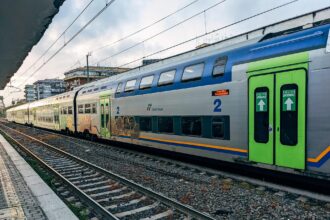
If you want the quickest and simplest journey, trains run from Milano Centrale or Milano Porta Garibaldi to Como S. Giovanni, with journey times of around 35 to 40 minutes. This is the most direct route and works well if your plan is to visit Como town, walk along the waterfront, and keep things simple.
However, if you are aiming for the classic Lake Como experience, including photogenic villages, ferry connections, and access to Bellagio, the better choice is the train from Milano Centrale to Varenna-Esino. This journey takes around 1 hour to 1 hour 15 minutes, but it places you directly on the central lake corridor, where the scenery is stronger and the transport links between towns are far more useful.
This is where many people get caught out. They choose Como because it is closer, then spend additional time trying to reach Bellagio or mid-lake villages, effectively undoing the time they saved. Starting in Varenna puts you in a stronger position immediately, especially if you plan to explore more than one location.
Trains on both routes are frequent, affordable, and easy to use, with tickets available online, at station machines, or at staffed counters. In most cases, you do not need to book far in advance unless you are travelling during peak summer weekends or holidays.
Overall, if you want a smooth, predictable, and flexible journey, the train remains the most efficient way to travel from Milan to Lake Como, provided you choose your destination with intention.
| Route | From | To | Journey Time | Best For | Key Advantage |
|---|---|---|---|---|---|
| Milan to Como | Milano Centrale / Porta Garibaldi | Como S. Giovanni | 35 to 40 minutes | Fast, simple day trips | Quickest and easiest option |
| Milan to Varenna | Milano Centrale | Varenna-Esino | 1h to 1h 15m | Scenic trips and exploring multiple towns | Best starting point for ferry connections |
| Milan to Bellagio (via Varenna) | Milano Centrale + ferry | Bellagio | 1.5 to 2 hours total | Visiting Bellagio directly | Combines train and scenic ferry crossing |

Search Milan Rail Routes with Omio
When planning onward travel involving Milan, Omio allows you to search train routes and compare available journeys from multiple operators.
This can be useful for everything from short city-to-city journeys to longer European rail trips where checking each operator separately would take considerably more time.
Scan to open
on your phone

Bus from Milan to Lake Como: Slower but Occasionally Useful
Taking the bus from Milan to Lake Como is less common than the train, but it can still be a useful option in specific situations, particularly if you are starting outside the main railway stations or heading towards towns that are not directly served by rail.
Most long-distance buses depart from areas around Milano Centrale or Lampugnano Bus Station, which is the main coach hub on the western side of the city. From here, services typically run towards Como town, arriving near the lakefront and within walking distance of the centre.
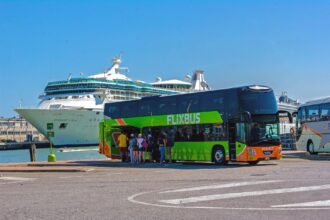
The main operators on this route include FlixBus and Autostradale, both of which offer direct coach services between Milan and Como. These are standard intercity coaches with allocated seating, luggage storage, and onboard facilities, making them comfortable enough for the relatively short journey.
Journey times usually fall between 1 hour 30 minutes and 2 hours, depending on traffic and departure point. Unlike trains, buses are fully exposed to road congestion leaving Milan, particularly during morning rush hour and weekend travel peaks, which can extend journey times without much warning.
Ticket prices are generally affordable, often ranging from around €5 to €15, depending on how far in advance you book and the time of day you travel. This can make buses slightly cheaper than trains in some cases, but the difference is rarely significant enough to outweigh the longer and less predictable journey time.
One of the key advantages of the bus is route flexibility. Some services extend beyond Como or connect with smaller towns and regional routes, which can reduce the need for additional transfers once you arrive. However, for most travellers heading to Como, Varenna, or Bellagio, this advantage is limited compared to the efficiency of the train and ferry network.
In practical terms, buses work best if you are already near a coach departure point, travelling on a budget, or heading somewhere slightly off the main rail corridor. For a typical Milan to Lake Como day trip, the train remains the more reliable and time-efficient choice, but the bus is still a viable alternative when used in the right circumstances.
Driving from Milan to Lake Como: Flexible but Not Always Easier
Driving from Milan to Lake Como gives you the highest level of freedom and flexibility, but it also introduces a set of challenges that many travellers underestimate.
The journey itself typically takes around 1 hour to 1 hour 30 minutes, depending on your destination and traffic conditions. The main roads are well maintained, and navigation is generally straightforward, particularly if you are heading towards Como on the southern tip of the lake.
The advantage of driving is control. You can choose your own route, stop at viewpoints, and access areas that are harder to reach by public transport. This can be particularly useful if you plan to explore less visited villages or travel beyond the main tourist corridor.
However, this flexibility comes with trade-offs. Traffic leaving Milan can be heavy and slow-moving, especially during morning departures and weekend travel periods. Once you reach the lake, roads become narrow, winding, and often congested, particularly around popular towns such as Como and Bellagio.
Parking is another factor that can affect your day more than expected. While spaces do exist, they are often limited near key areas, and you may need to park outside the centre and walk in. During busy periods, this can add both time and frustration to your visit.
For confident drivers who want maximum independence, driving remains a viable option. For most travellers, however, the simplicity and predictability of the train makes it the more practical and enjoyable way to reach Lake Como.
Como, Bellagio and Lugano Day Tour from Milan
If you want to see more than one Lake Como destination without planning train routes, ferry times, or border logistics, the Como, Bellagio and Lugano day tour from Milan is one of the strongest organised options. It is designed for travellers who want a full sightseeing day rather than a simple point-to-point journey.
The route usually begins at Milano Centrale, before travelling by coach to Como for free time, a walk around the historic centre, and the chance to see Como Cathedral. From there, the experience moves onto the lake itself with a private boat cruise, giving you a much better sense of the scenery, villas, and mountain backdrop than you get from the shore alone.
The tour then continues to Bellagio, often described as the Pearl of Lake Como, where you can explore the lakeside streets, stop for lunch, browse local shops, and enjoy some of the most recognisable views on the lake. The final stop is Lugano, in the Italian-speaking part of Switzerland, which adds a completely different feel to the day with its Swiss-Italian atmosphere, lakeside setting, and elegant old town.
This tour is best for travellers who want a high-value, multi-stop day from Milan with transport, guiding, and the boat element already organised. The key thing to remember is that this tour crosses into Switzerland, so you must bring the correct travel document. EU and EEA citizens can usually use a national ID card, while travellers from the UK, USA, Canada, Australia, and other non-EU countries need a valid passport.
Lake Como, St. Moritz and Bernina Red Train Tour from Milan
The Lake Como, St. Moritz and Bernina Red Train tour from Milan is a completely different kind of day trip. This is not just a Lake Como visit. It is a long, scenic alpine itinerary that combines lake views, Swiss mountain scenery, and one of Europe’s most famous rail journeys.
The day usually starts from the Milano Centrale area, with coach travel to Lake Como for a short private boat cruise or lakeside sightseeing stop. From there, the route continues through mountain landscapes towards St. Moritz, one of Switzerland’s best-known resort towns. You normally get free time to walk around, shop, or enjoy the resort atmosphere before continuing to the train section of the day.
The highlight is the Bernina Red Train, which travels through some of the most dramatic scenery in the Alps. Depending on the exact route used on the day, the journey may run between St. Moritz, Tirano, or Thusis, with views of glaciers, high mountain passes, valleys, and alpine villages. The train is usually in second class, which can actually be useful for photos because the windows may open.
This tour is best for travellers who want a big bucket-list day from Milan rather than a slower Lake Como-only itinerary. It usually lasts around 13 hours, so it is a long day, but the payoff is the combination of Lake Como, St. Moritz, and the Bernina railway in one organised route. As with the Lugano tour, you need to bring a valid passport or European ID, because the itinerary crosses into Switzerland.
Best Option for Most Travellers: What We Recommend
If you want a clear answer for your Milan to Lake Como trip, the best option for most people is to take the train and choose your destination carefully. The journey itself is simple. The decision that matters is where you arrive.
If your priority is speed and minimal planning, heading to Como is the easiest route. You can be at the lake in under 40 minutes, step straight out of the station, and start exploring immediately. This works well if you are short on time or want a low-effort, relaxed visit without needing to coordinate multiple connections.
However, if you are looking for the classic Lake Como experience, including scenic villages, ferry crossings, and access to multiple locations, then Varenna is usually the better choice. The journey takes a little longer, but it places you directly in the most useful and visually impressive part of the lake. From here, you can easily reach Bellagio and other towns by ferry, without losing time doubling back.
There is also a third option that many travellers overlook. If you prefer a fully organised day with everything handled for you, a guided tour can remove the need for planning entirely. One of the strongest options combines Como, Bellagio, and Lugano, including round-trip transport from Milan and a private boat experience on the lake. This type of tour is ideal if you want to see multiple locations in one day without worrying about train times, ferry schedules, or logistics. It also gives you access to experiences that are harder to organise independently, particularly the private boat segment, which is often a highlight.
The key takeaway is simple. The best option is not just about how you travel, but where you arrive and how you want your day to feel. For most people, the train offers the best balance of speed, cost, and flexibility, but choosing the right destination is what turns a good trip into a great one.
Best for long or awkward journeys. Builds one itinerary out of separate flights.
View flightsBest for short trips. Install the eSIM at home and arrive in Milan with working data, no shop queue.
Browse eSIMsBest after a long flight or a late landing. Price agreed before you travel, and no taxi queue.
Check transfersHow Long to Spend at Lake Como
When planning a Milan to Lake Como day trip, one of the easiest mistakes is underestimating how much time you will actually want once you arrive. The lake looks compact on a map, but moving between towns and enjoying the setting properly takes longer than many expect.
If your plan is to visit a single town such as Como, then around 4 to 6 hours at the lake is usually enough. This gives you time for a walk along the waterfront, a relaxed meal, and a few viewpoints, without feeling rushed. It is a good option if you are fitting the trip into a shorter itinerary.
If you want to explore properly, particularly if you plan to travel between towns such as Varenna and Bellagio, then a full day is the better choice. Ferry crossings, waiting times, and simply enjoying each location all add up. Trying to compress multiple stops into a short visit often results in spending more time moving than experiencing.
There is also a more ambitious option for travellers who want to turn the day into something bigger. Some organised trips extend beyond Lake Como to include St. Moritz and the Bernina Red Train, creating a full alpine experience in a single day. These tours are longer, typically around 13 hours, but they combine lake scenery, mountain landscapes, and one of the most scenic rail journeys in Europe. This is not a standard Lake Como visit, but it is a powerful alternative if you want something more memorable and wide-ranging.
If you have the flexibility, staying overnight will always improve the experience. The lake is at its best in the early morning and evening, when the crowds thin out and the atmosphere becomes much calmer. Even without staying overnight, planning your time realistically will have a major impact on how enjoyable your trip feels.
What to Expect When You Arrive
Arriving at Lake Como from Milan feels like stepping into a completely different environment. The pace slows down immediately, and the focus shifts from city movement and transport to water, mountains, and small-town atmosphere.
In Como, you will arrive into a lively lakeside town with a wide promenade, cafés, and easy access to viewpoints. It feels more like a small city, with plenty of activity and structure, making it ideal for a straightforward visit. You can walk directly from the station to the waterfront and begin exploring without needing additional transport.
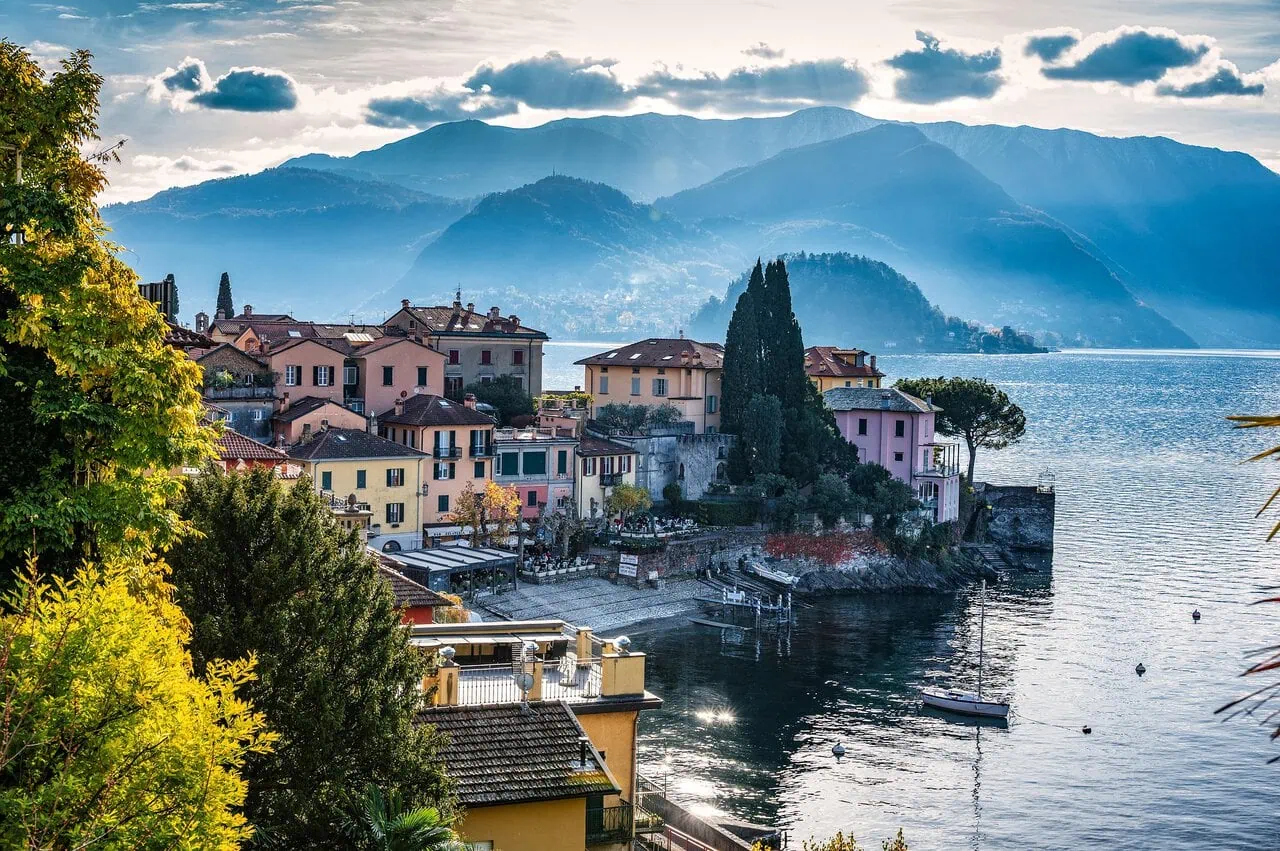
In Varenna, the experience is more compact and scenic. The station sits just above the lake, and within minutes you are walking through narrow streets, colourful buildings, and lakeside paths. It feels quieter and more traditional, and it places you directly next to the ferry terminal, which becomes important if you plan to move between towns.
Wherever you arrive, the layout is generally walkable and easy to navigate, but the atmosphere encourages you to slow down. The most memorable moments usually come from taking your time, finding viewpoints, and enjoying the setting, rather than trying to move quickly from place to place.
Even during busy periods, it is usually possible to find quieter areas by moving slightly away from the main arrival points. The lake absorbs visitors well, and the experience quickly improves once you step beyond the most crowded spots.
Rupert’s Handy Travel Tips

Rupert knows that a smooth Lake Como trip comes down to a few smart decisions made before you even leave Milan.
- Choose your destination first – deciding between Como and Varenna early will shape your entire day and avoid unnecessary travel time.
- Travel early if possible – morning trains are quieter, and you’ll have more time to enjoy the lake without rushing.
- Check ferry timings in advance – if you plan to visit Bellagio or multiple towns, this keeps your itinerary smooth and efficient.
- Pack light – you’ll likely be walking between stations, waterfronts, and ferries, so keeping things simple makes a big difference.
- Avoid peak weekend crowds – if you can, visit on a weekday for a more relaxed experience around the lake.
Want to meet the reindeer behind our travel tips? Find out more in our page Who is Rupert?.




Frequently Asked Questions about Milan to Lake Como
What is the best way to get from Milan to Lake Como?
For most travellers, the train is the best option, offering fast, frequent services and easy access to key towns such as Como and Varenna.
How long does it take to travel from Milan to Lake Como?
Journey times depend on your destination. Como takes around 35 to 40 minutes, while Varenna usually takes 1 hour to 1 hour 15 minutes.
Is Lake Como worth visiting from Milan?
Yes, it is one of the most popular and rewarding day trips from Milan, offering a completely different setting with lakeside views and mountain scenery.
Which town should I visit at Lake Como?
If you want a quick and simple trip, Como is the easiest choice. If you are looking for better scenery and access to multiple towns, Varenna is usually the stronger option.
Can you visit Lake Como in one day from Milan?
Yes, a day trip is very manageable, especially if you focus on one area or plan your route carefully. Many travellers choose to extend their visit if time allows.

Further Reading & Related Guides
Planning your journey beyond this Milan to Lake Como route becomes much easier when you connect it with the right tools and wider travel options. If you are exploring more of Italy by rail, our Interrail Italy Pass guide helps you understand how to move between major cities efficiently while keeping costs under control. For booking your tickets, comparing routes, and finding the best fares, our train booking apps guide breaks down the platforms that make planning simple and flexible. If Lake Como is just one stop on a longer Milan-based itinerary, our Day Trips from Milan guide rounds up other realistic day trips worth comparing, and our Things to Do in Milan guide covers the city itself.
If your trip includes other regions or alternative transport, our bus booking apps guide shows how to find additional routes that are not always visible on standard rail planners. Once you arrive in cities, using the right local transport apps can save time and help you navigate networks with confidence.
Staying connected is equally important, especially when checking train times or ferry schedules, which is where our eSIM apps guide becomes useful for reliable data without the hassle of physical SIM cards.