
Reviewed by our editorial team Updated
Why the Interrail Italy Pass Is One of the Smartest Ways to Travel Italy
Italy is one of the most rewarding countries in Europe to explore by rail, and the Interrail Italy Pass is built for exactly that purpose. It allows you to move effortlessly between major cities, regional towns, and coastal destinations without constantly buying separate tickets or locking yourself into fixed plans.
The biggest advantage comes from Italy’s high-speed rail network, which connects Rome, Florence, Milan, Venice, Naples, and Turin at speeds of up to 300 km/h. Journeys that would take most of a day by car are reduced to just a few hours, with Rome to Florence in around 90 minutes and Milan to Rome in roughly 3 hours. This means you can realistically visit multiple cities within a single day if you want to travel at pace.
Beyond the high-speed lines, the pass also unlocks InterCity and regional services, giving access to destinations such as Pisa, Verona, Bari, Lecce, and the Cinque Terre. This is where the pass becomes far more powerful, allowing you to combine iconic landmarks with lesser-known towns that many travellers miss.
Another major strength is flexibility. On a single travel day, you can take unlimited trains, meaning you could start the morning in Florence, stop in Bologna, and arrive in Venice by evening, all under one travel day. For travellers who want to maximise time while keeping costs predictable, this flexibility is a huge advantage.
In short, the Interrail Italy Pass is ideal for travellers who want to see more of Italy in less time, travel comfortably between destinations, and avoid the rising cost of last-minute train tickets.
Interrail Italy Pass Overview and Key Facts
The Interrail Italy Pass is a One Country Pass that allows flexible rail travel across Italy over a one-month period. Instead of travelling every day, you select a set number of travel days and use them when it suits your itinerary, giving you far more control over your trip.
The pass is available with 3, 4, 5, 6, or 8 travel days, and each travel day allows unlimited train journeys from midnight to midnight. This structure makes it particularly effective for combining long-distance high-speed journeys with shorter regional connections on the same day.
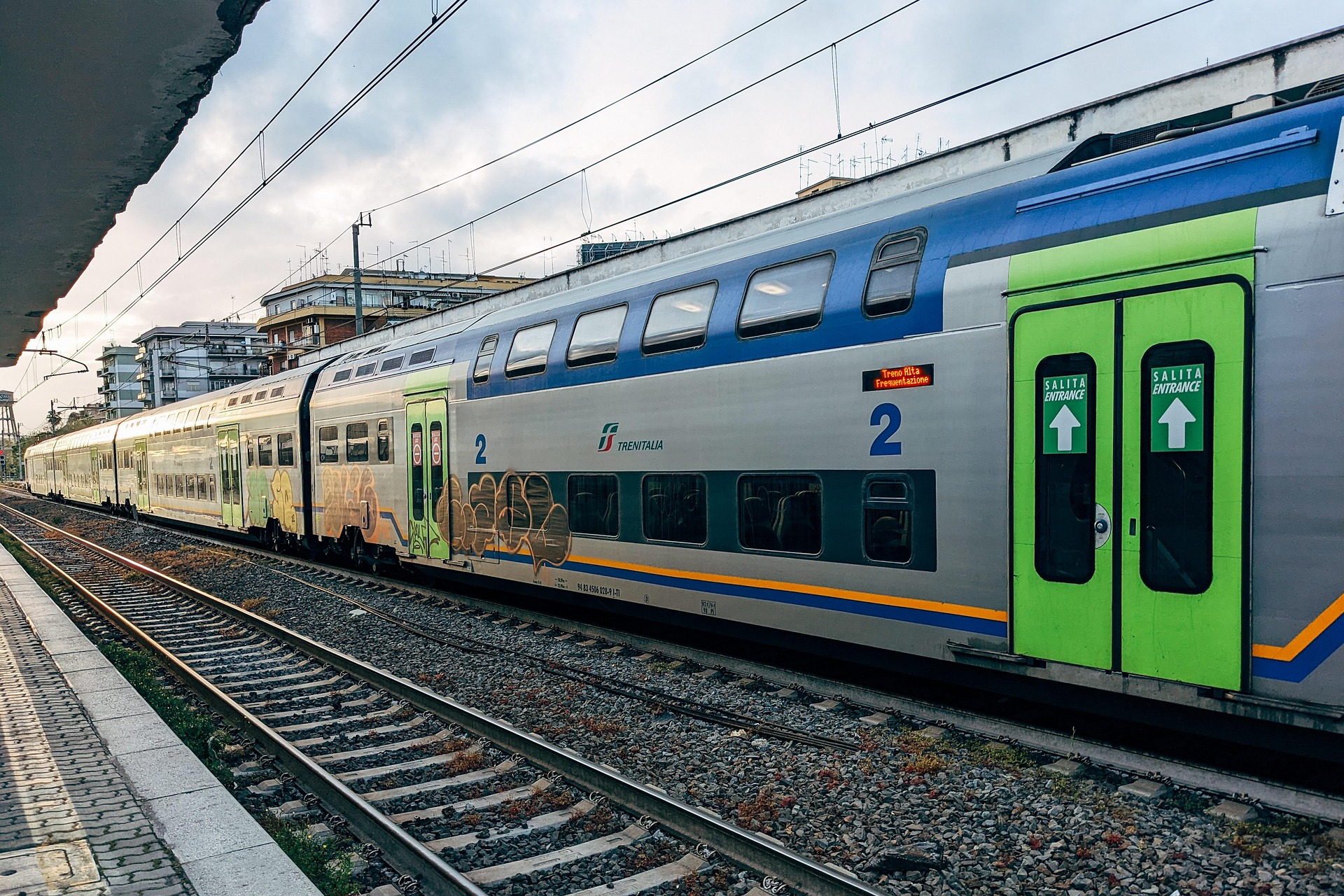
The pass is valid on services operated by Trenitalia, including Frecciarossa, Frecciargento, Frecciabianca, InterCity, and regional trains. However, high-speed services operated by Italo are not included, which is important when planning routes between major cities.
Travellers can choose between 1st and 2nd class, with 1st class offering more space, quieter carriages, and additional comfort, while 2nd class provides excellent value and is widely used across Italy. The pass is available in both mobile and paper formats, although most travellers now use the mobile version via the Rail Planner app, where travel days are activated and tickets are shown via QR code.
Seat reservations are a key part of travelling in Italy. High-speed and InterCity trains require reservations, typically costing €10 (£9/$11) to €13 (£11/$14) for high-speed services and €3 (£3/$3) to €5 (£4/$5) for InterCity trains, while regional trains usually do not require reservations, allowing more spontaneous travel.
The pass does not include urban transport such as metros, trams, or buses, so these must be paid for separately in cities like Rome, Milan, and Florence. However, it does integrate well with airport rail connections, including links to Rome Fiumicino and Milan Malpensa, making arrivals and departures straightforward.
In practical terms, the pass delivers the strongest value when used for multi-city itineraries involving high-speed travel, especially when plans are flexible or booked at short notice.
Browse hotels and accommodation for your visit to Italy.
View staysBrowse apartments, homes and self-catering accommodation in Italy.
Browse rentalsCompare hotel deals in Italy from multiple booking sites.
Compare pricesKey Operators and Rail Network Size in Italy
Italy has one of the largest and most diverse rail networks in Europe, with over 16,000 km of track connecting major cities, regional centres, and coastal destinations. The Interrail Italy Pass gives access to the vast majority of this system, making it one of the most practical One Country Passes available.
The dominant operator is Trenitalia, which runs everything from high-speed Frecciarossa services to InterCity and regional trains. The high-speed network forms the backbone of long-distance travel, linking Turin, Milan, Bologna, Florence, Rome, Naples, and Salerno with fast, frequent services throughout the day.
Alongside high-speed trains, InterCity routes connect secondary cities and longer-distance corridors, while regional trains provide dense coverage into smaller towns, rural areas, and coastal regions. This layered structure is what makes rail travel in Italy so effective, as you can move quickly between major hubs and then branch out into local destinations.
There are also smaller regional operators such as Trenord in Lombardy and Ferrovie del Sud Est in Puglia, although not all of these are fully covered by the pass. A notable exception is the Circumvesuviana line near Naples, which serves Pompeii and Sorrento but is not included, meaning a separate ticket is required.
Overall, the network is strongest in the north and central regions, where services are frequent and modern. In the south, coverage remains good but trains can be slower and less frequent, which is worth factoring into your itinerary.
Main Transport Hubs and Key Rail Routes in Italy
Italy’s rail system revolves around several major hubs, with Rome Termini and Milan Centrale acting as the two primary gateways. These stations connect almost every major route in the country and serve as the starting point for both high-speed and regional services.
Other key hubs include Florence Santa Maria Novella, Bologna Centrale, Napoli Centrale, Venezia Santa Lucia, and Torino Porta Nuova. These stations function as interchange points, allowing easy transfers between high-speed lines and regional networks.
The most important rail corridor is the north–south high-speed spine, linking Milan, Bologna, Florence, Rome, and Naples. This is where the fastest trains operate, with frequent departures and journey times that make city-hopping incredibly efficient.
Another major route is the Milan to Venice corridor, which connects northern Italy’s business and tourism centres. From Venice, trains continue east towards Trieste or south along the Adriatic coast.
In central and western Italy, the Florence to Pisa to La Spezia line is particularly popular, as it provides access to the Cinque Terre coastline, one of the most scenic rail journeys in the country. Meanwhile, southern routes such as Rome to Bari and Lecce open up access to Puglia, offering a completely different side of Italy.
These hubs and routes allow you to structure your journey around fast long-distance travel combined with shorter regional exploration, which is exactly where the Italy Pass delivers its best value.
Example Ticket Prices vs Pass Value in Italy
Italy is one of the countries where the Interrail pass can deliver real financial value, particularly if you are travelling on high-speed routes without booking far in advance.
A typical one-way ticket on a high-speed train such as Rome to Milan can cost between €70 (£61/$76) and €100 (£87/$108) if booked close to departure. Even shorter routes like Rome to Florence can reach €45 (£39/$49) to €60 (£52/$65), while Florence to Venice often sits between €35 (£30/$38) and €50 (£44/$54).
When you start combining multiple journeys, the costs escalate quickly. A common itinerary such as Rome to Florence to Venice to Milan to Naples and back to Rome can easily exceed €250 (£218/$270) to €300 (£261/$324) in individual tickets if flexibility is required.
By comparison, a 5-day Interrail Italy Pass covers all of these journeys for a fixed cost, with only reservation fees added on top. This makes the pass particularly attractive for travellers who prefer freedom over fixed bookings.
The pass also works well when mixing expensive and cheap routes. You can use pass days for long high-speed journeys, while paying separately for short regional trips, which are often inexpensive anyway. This approach maximises value and keeps overall travel costs under control.
In practical terms, if you are planning three or more long-distance high-speed journeys, the pass usually begins to justify itself, especially if you want the ability to change plans at short notice.

Interrail Italy Pass Prices Explained (Flexi Options)
The Interrail Italy Pass is offered exclusively as a Flexi Pass, meaning you select a number of travel days to use within a one-month period rather than travelling continuously.
For Youth travellers aged 12 to 27, prices start at €98 (£85/$106) for 3 travel days, rising to €262 (£228/$283) for 8 travel days. For Adults aged 28 to 59, prices range from €123 (£107/$133) for 3 days up to €327 (£284/$353) for 8 days. Senior travellers aged 60 and over benefit from reduced fares, with prices starting at €111 (£97/$120) for 3 days and reaching €294 (£256/$318) for 8 days.
Each travel day allows unlimited train journeys, which is where the real value comes in. A single day could include a high-speed journey such as Rome to Venice, combined with one or two additional regional connections, all counted as one day of travel.
Shorter passes such as the 3-day option are best suited to travellers making a handful of major journeys, while 5 to 8-day passes are ideal for full multi-city itineraries covering much of the country.
Children under 12 can often travel free when accompanied by an adult, making the pass a strong option for families. The ability to spread travel days across a month also means you can build in rest days between journeys, avoiding the need to rush through destinations.
Overall, the pricing structure is designed to reward travellers who plan multiple long-distance journeys, with the cost per travel day falling as you add more days to the pass.
How the Interrail Italy Pass Works in Practice
The Interrail Italy Pass is built around a flexible travel system, allowing you to choose a set number of travel days to use within a one-month window. Instead of travelling every day, you decide when to activate each travel day, giving you full control over the pace of your trip.
On any activated day, you can take unlimited train journeys from midnight to midnight. This means you can combine multiple high-speed and regional trips into a single day, which is where the pass delivers the most value. For example, you could travel from Rome to Florence, continue to Bologna, and end the day in Venice, all within one travel day.
The pass is most commonly used in its mobile format, managed through the Rail Planner app. Here, you activate travel days, log your journeys, and present your ticket via a QR code when checked by conductors. Paper passes are still available, but they require you to manually fill in travel dates and details before boarding, which is less convenient.
A key point to understand is that seat reservations are mandatory on most high-speed and InterCity trains. This includes services such as Frecciarossa and Frecciargento, and you must purchase a reservation before boarding. Regional trains, however, usually do not require reservations, allowing for far more spontaneous travel.
The pass does not include trains operated by Italo, so you will need to rely on Trenitalia routes for covered travel. Fortunately, the Trenitalia network is extensive and more than sufficient for most itineraries.
In practice, the smartest way to use the pass is to cluster long-distance journeys on travel days and leave shorter local trips for separate tickets. This approach keeps costs low while maximising the flexibility that the pass offers.
Where You Can Travel with the Italy Pass
The Interrail Italy Pass provides access to nearly the entire Trenitalia network, allowing you to travel from the Alps in the north to Sicily in the south with a single ticket.
You can easily move between Italy’s major cities, including Rome, Florence, Venice, Milan, Naples, and Turin, using high-speed trains that run frequently throughout the day. These routes form the backbone of most itineraries and allow you to cover large distances quickly and comfortably.
Heading south, the pass includes routes from Rome to Naples and Salerno, opening access to destinations such as the Amalfi Coast and Pompeii, although local connections may require separate tickets. The Archaeological Park of Pompeii publishes its own opening times, entry rules and ticket prices, which is worth checking before planning a day trip from Naples. Further south, long-distance trains continue to Bari, Lecce, and other towns in Puglia, offering a completely different landscape and travel experience.
The pass also extends to Sicily, where trains cross the Strait of Messina by ferry before continuing on the island. Once there, you can travel between Palermo, Catania, Syracuse, and Messina, making Sicily a realistic addition to your itinerary.
Regional trains add even more depth, particularly in areas such as Tuscany, Liguria, and Umbria. You can reach destinations like Pisa, Lucca, Assisi, and the Cinque Terre, often without needing reservations. These slower routes are ideal for travellers who want to explore beyond the main tourist circuit.
There are a few important gaps. Local systems such as the Circumvesuviana line to Sorrento and Pompeii are not covered, and urban transport in cities must be paid for separately. Even so, the overall coverage is extensive and allows you to explore the vast majority of Italy by rail.
Compare routes and fares for your journey to Italy.
Compare flightsBrowse Airalo eSIM options for convenient travel data.
Check eSIMsCheck private pickup options and plan your onward journey before arrival.
View transfersHow to Buy the Interrail Italy Pass
Buying the Interrail Italy Pass is straightforward and can be done entirely online before your trip. The most reliable option is through the official Interrail platform, where you will find the latest pricing, promotions, and flexible refund conditions.
Once purchased, the pass is delivered digitally and loaded into the Rail Planner app, which becomes your main travel tool. From there, you can activate travel days, plan journeys, and display your ticket when required. This mobile format eliminates the need for paper tickets and makes managing your travel much easier.
When purchasing, you will choose your travel class, your number of travel days, and your age category, which determines pricing. Youth and Senior travellers benefit from discounted rates, while children under 12 can often travel free when accompanied by an adult pass holder.
Paper passes are still available through some retailers, but they are gradually being phased out. If you choose a paper pass, you will need to validate it at a station before your first journey and manually record travel days, which adds an extra step compared to the mobile version.
Seat reservations are not included in the pass and must be booked separately. These can be arranged through Trenitalia, at ticket machines, or via the Rail Planner app for many routes. It is wise to book these in advance for popular high-speed services, especially during peak travel periods.
Overall, the buying process is quick and flexible, and once the pass is activated, it gives you immediate access to one of Europe’s most extensive rail networks.

Explore Europe by Train with Rail Passes
Travelling by train in Europe can quickly become expensive if you book individual tickets. Rail passes offer a flexible way to travel across one or multiple countries with a single ticket, making it easier to plan your journey.
Rail Europe allows you to compare and buy a wide range of rail passes, including Interrail-style options, helping you choose the best pass for your route and travel style.
Top Routes and Itineraries with the Italy Pass
The Interrail Italy Pass is perfectly suited to both classic itineraries and more adventurous routes, allowing you to tailor your journey based on time, interests, and pace.
A popular starting point is the classic Rome to Florence to Venice to Milan route, which connects Italy’s most iconic cities using high-speed trains. This itinerary works well over four to five travel days, giving you a balanced mix of culture, history, and architecture.
For travellers heading south, a strong route is Rome to Naples to Salerno to Bari to Lecce, which opens up access to the Amalfi Coast, Pompeii, and the Puglia region. This route offers a very different experience, with warmer climates, coastal scenery, and a slower pace of life.
Northern Italy also provides excellent options. A route such as Milan to Verona to Venice to Bologna combines major cities with smaller cultural stops. From Florence, you can branch west towards Pisa and La Spezia, giving access to the Cinque Terre coastline, one of the most scenic rail journeys in Europe.
With more time, a full loop becomes possible. A longer itinerary might run Rome to Florence to Venice to Milan to Bologna to Naples and back to Rome, covering most of Italy’s major highlights while still leaving room for regional detours.
Because each travel day allows unlimited journeys, you can also build multi-stop days. Travellers often break up longer routes by stopping in cities such as Bologna or Verona, turning what would normally be a single journey into a richer travel experience.
The flexibility of the pass means you are never locked into one plan. You can adjust routes as you go, stay longer in places you enjoy, or skip ahead if needed, making it one of the most adaptable ways to explore Italy.
Seat Reservations and Extra Costs on the Italy Pass
Understanding seat reservations is essential when using the Interrail Italy Pass, as Italy operates a mandatory reservation system on most long-distance trains. This is the main difference compared to countries where you can simply board with your pass.
On high-speed trains such as Frecciarossa, Frecciargento, and Frecciabianca, a reservation is compulsory. You cannot board these trains with just your pass, and you must secure a seat in advance. These reservations typically cost between €10 (£9/$11) and €13 (£11/$14) per journey, depending on the route and demand.
InterCity trains also require reservations, although these are cheaper, usually costing €3 (£3/$3) to €5 (£4/$5) per journey. These trains are slower than high-speed services but still connect major cities and regions effectively.
By contrast, regional trains do not usually require reservations, which makes them extremely useful for flexible travel. You can simply arrive at the station, board the train, and show your pass when checked. This makes regional routes ideal for short trips and spontaneous detours.
Reservations can be booked through Trenitalia, at station ticket machines, or via the Rail Planner app for many routes. During busy periods such as summer, weekends, and holidays, it is important to book in advance, as popular services can sell out.
There are no major hidden supplements beyond these reservation fees, but upgrades to 1st class may require an additional payment depending on availability and service type. Travellers should also note that services operated by Italo are not covered by the pass at all.
In practical terms, reservations are simply part of travelling in Italy. The system works well, but you need to factor in both cost and planning, especially if you want to travel at specific times.
Key Benefits of the Interrail Italy Pass
The Interrail Italy Pass stands out as one of the most powerful rail passes in Europe because it combines speed, coverage, and flexibility in a single ticket.
The biggest advantage is access to Italy’s high-speed rail network, which allows you to travel between major cities quickly and comfortably. Journeys such as Rome to Milan, Florence to Venice, or Milan to Naples can be completed in just a few hours, making it possible to see far more of the country in a limited time.
Another major benefit is flexibility. With unlimited travel on each pass day, you can build itineraries that include multiple stops in a single day, rather than being locked into fixed point-to-point tickets. This makes it ideal for travellers who want to explore places like Bologna or Verona en route, rather than simply passing through them.
The pass also provides cost control. Train prices in Italy can fluctuate significantly, particularly for high-speed routes booked at short notice. With the pass, your main travel cost is fixed, and you only need to account for reservation fees, which makes budgeting much easier.
The geographic coverage is another strength. From the Alps in the north to Sicily in the south, the pass allows you to explore a wide range of regions, landscapes, and cultural experiences. It is equally effective for city-based travel and regional exploration.
Discounts for Youth and Senior travellers increase the value further, and families benefit from children often travelling free when accompanied by an adult. Combined with the comfort of modern trains, including air conditioning, spacious seating, and onboard services, the overall travel experience is far more relaxed than driving or flying.
Drawbacks and Limitations to Consider
Despite its strengths, the Interrail Italy Pass does have a number of limitations that need to be understood before committing to it.
The most significant drawback is the mandatory reservation system. While fees are not excessively high, they add an extra cost to every long-distance journey and require a degree of forward planning. On busy routes such as Rome to Florence or Milan to Venice, trains can sell out, which reduces the spontaneity that many travellers expect from Interrail.
Another limitation is that the pass does not cover Italo, which operates on many of the same routes as Trenitalia. In some cases, Italo tickets can be cheaper if booked in advance, so pass holders are not always accessing the absolute lowest fares available.
The quality of the network is also uneven. While high-speed routes are modern and efficient, some regional services can be older, slower, and less reliable, particularly in southern Italy. This is not a major issue, but it does affect travel times and comfort in certain areas.
The pass is also less suitable for travellers with a limited itinerary. If you are only visiting one or two cities or making just a couple of journeys, individual tickets will almost always be cheaper, especially if booked in advance.
Finally, major stations such as Rome Termini and Milan Centrale can be busy and overwhelming, particularly during peak travel times. Navigating platforms, finding trains, and managing luggage requires a bit of awareness, especially for first-time visitors.
Who the Interrail Italy Pass Is Best For
The Interrail Italy Pass is best suited to travellers who want to explore multiple destinations across the country, rather than staying in one place.
It is particularly well suited to first-time visitors, as it makes it easy to connect Italy’s most famous cities, including Rome, Florence, Venice, Milan, and Naples, without complex planning. The ability to move quickly between these destinations is one of the biggest advantages of the pass.
It also works extremely well for fast-paced travellers who want to maximise what they see. With unlimited journeys per travel day, you can build itineraries that include multiple stops in a single day, something that would be expensive or restrictive with individual tickets.
For Youth travellers aged 12 to 27, the discounted pricing makes the pass especially attractive, while Senior travellers benefit from reduced fares and the comfort of rail travel. Families also gain value, as children can often travel free when accompanied by an adult.
The pass is also ideal for travellers who prefer flexibility over fixed plans. If you want the option to change destinations, stay longer in one city, or adjust your route based on weather or recommendations, the pass allows you to do so without financial penalties.
On the other hand, it is less suitable for travellers planning a single-city trip or a very limited number of journeys, where advance purchase tickets are usually cheaper.
Overall, the Italy Pass is best for travellers who want variety, flexibility, and the ability to explore widely, rather than those following a fixed and minimal itinerary.
Browse hostels and budget-friendly stays around Italy.
See hostelsGet help with compensation, eligible lounge access and disruption support.
Explore AirHelp+Arriving before check-in or leaving later? Store your luggage and make more of your time in Italy.
Store your bagsConsider Italy’s Other Rail Passes
Although the Interrail Italy Pass is an excellent choice for many travellers, it’s not always the cheapest or most suitable rail pass for every itinerary. Depending on how you’re planning to travel, Italy also offers several alternative ticket options that could save you money.
If you’re planning to travel extensively on Frecciarossa, Frecciargento and Frecciabianca high-speed services, it’s worth comparing Interrail with the Trenitalia Pass. Designed specifically for international visitors, the pass allows you to choose a set number of journeys over a fixed period and can offer excellent value if you’re travelling between Italy’s major cities. Unlike Interrail, reservations are generally included within the booking process, making it a straightforward option for travellers focusing on long-distance rail journeys.
For slower regional travel, the Italia in Tour Pass is another excellent alternative. Available during selected periods, this budget-friendly pass provides unlimited travel on Trenitalia’s regional trains for a fixed number of consecutive days. It’s particularly useful if you’re planning to explore smaller towns, coastal villages and rural regions where high-speed trains don’t operate. Travellers following scenic routes through Tuscany, Puglia, Sicily or the Italian Lakes often find it offers exceptional value.
Choosing the right pass ultimately depends on how far you’re travelling, which trains you plan to use and how quickly you want to move around the country. Interrail remains the most flexible option for visitors combining Italy with other European countries, while the Trenitalia Pass and Italia in Tour Pass can sometimes work out cheaper for travellers staying entirely within Italy.
Before booking, it’s well worth comparing all three options to make sure you’re choosing the pass that best matches your itinerary.
| Pass | Best For | Includes High-Speed Trains | Covers Regional Trains |
|---|---|---|---|
| Interrail Italy Pass | Flexible travel across Italy and Europe | Yes (reservation required) | Yes |
| Trenitalia Pass | International visitors using high-speed trains | Yes | Limited |
| Italia in Tour Pass | Budget regional travel | No | Yes |
Practical Tips for Using the Interrail Italy Pass
Getting the most out of the Interrail Italy Pass comes down to using it strategically rather than just using it often. The biggest mistake people make is treating every journey the same, when in reality some journeys deliver far more value than others.
The most effective approach is to use your pass days for long-distance high-speed journeys, where ticket prices are highest. Routes such as Rome to Milan, Venice to Florence, or Naples to Bologna can cost significant amounts if booked last minute, so these are the journeys where the pass pays for itself. Short regional trips, such as Florence to Pisa or Milan to Como, are often cheap enough to buy separately.
Another key tip is to book reservations early, especially for high-speed services. Trains on routes like Rome to Florence and Milan to Venice can fill up quickly during peak periods, and leaving reservations too late can limit your options. Even though the pass gives flexibility, reservations still require a degree of planning.
It also pays to avoid peak travel times where possible. Early mornings and late afternoons tend to be busiest, particularly on commuter-heavy routes. Travelling mid-morning or early afternoon usually results in a more comfortable journey and better seat availability.
When using major stations such as Rome Termini or Milan Centrale, give yourself extra time. Platforms are often announced late, and stations can be crowded, so arriving 20 to 30 minutes early helps avoid unnecessary stress.
Finally, take advantage of regional trains for scenic travel. Routes such as La Spezia through the Cinque Terre or Florence into Tuscany’s smaller towns are slower but offer a completely different experience. These journeys rarely require reservations and allow you to travel more spontaneously.
Best Apps to Use with the Italy Pass
Using the right apps alongside your Interrail Italy Pass will make a noticeable difference to how smoothly your trip runs. Rail travel in Italy is efficient, but having real-time information and planning tools removes most of the friction.
The most important app is the Rail Planner, which is essential for managing your pass. It allows you to activate travel days, log journeys, and display your ticket via QR code. It also provides timetable information and shows which trains require reservations.
For real-time updates, the Trenitalia app is extremely useful. It provides live departure boards, platform numbers, and delay notifications. While Rail Planner is excellent for planning, Trenitalia is more accurate for last-minute changes.
Although not included in the pass, the Italo Treno app is worth having if you want to compare routes or use non-covered services as a backup option.
For navigating cities, apps like Google Maps help connect train journeys with metro, tram, and bus systems, which are not included in the pass. This is particularly useful in cities such as Rome, Milan, and Naples, where station-to-destination transfers matter.
For broader travel planning, apps such as Omio can help compare trains, buses, and ferries, while also providing a fallback if you need to book a non-pass journey.
Using a combination of these tools ensures you have both big-picture planning and real-time accuracy, which is exactly what you need when travelling flexibly.

Rupert’s Handy Travel Tips
If you’re planning to explore Italy by rail with an Interrail Italy Pass, here are a few tips that can save both time and money:
- Reserve high-speed trains early: Frecciarossa, Frecciargento and Frecciabianca services require seat reservations when travelling with an Interrail Pass. Popular departures can sell out well in advance during summer and public holidays.
- Take advantage of regional trains: Regional services don’t require reservations and are perfect for reaching places like Cinque Terre, Puglia, Tuscany and many of Italy’s smaller towns without paying additional reservation fees.
- Compare Italy’s other rail passes: If you’re travelling only within Italy, the Trenitalia Pass or Italia in Tour Pass may work out better value depending on your itinerary and the types of trains you plan to use.
- Travel light: Most Italian railway stations involve steps, underpasses and busy platforms. A compact suitcase or backpack makes changing trains much easier, especially during peak travel periods.
Want to meet the reindeer behind our travel tips? Find out more in our page Who is Rupert?.


Frequently Asked Questions about the Interrail Italy Pass
Is the Italy Pass available in mobile format?
Yes. The Interrail Italy Pass is available in both mobile and paper formats. The mobile pass can be managed through the Rail Planner app, while the paper version must be validated at a station before use.
Do I need seat reservations in Italy?
Yes, for most long-distance services. Reservations are compulsory on Frecciarossa, Frecciargento, Frecciabianca, and InterCity trains. Fees range from €3 (£3/$3) to €13 (£11/$14) depending on the service. Regional trains rarely require reservations.
Does the pass cover Italo high-speed trains?
No. Italo services are not included in the Interrail Italy Pass. However, Trenitalia’s Frecce network provides extensive high-speed coverage across the country.
Can I use the pass for airport trains?
Yes, in many cases. Routes such as the Leonardo Express (Rome Fiumicino) and trains to Milan Malpensa are included. Always check train validity in the Rail Planner app before boarding.
Is the Italy Pass good value?
Yes, particularly if you plan multiple high-speed journeys. A single last-minute Rome–Milan ticket can cost €90+ (£78+/$97+), so a few long-distance trips quickly justify the cost of the pass.
Can I reach Sicily with the Italy Pass?
Yes. Trenitalia trains cross the Strait of Messina by ferry. Once on the island, the pass is valid for services linking Palermo, Catania, Messina, and Syracuse.
Does the pass cover urban transport like buses or metros?
No. Local transport in cities such as Rome, Milan, Florence, and Naples is not included and must be paid separately.
Further Reading & Related App Guides
Want to plan an even smoother Interrail adventure across Italy and beyond? These carefully chosen guides will help you travel smarter and stay connected on every leg of your journey.
If Italy is one leg of a wider trip, our Main Interrail Guide explains how to plan multi-country rail trips with confidence, and our Pisa Travel Guide is worth a look if the Leaning Tower and historic centre are on your list.
Staying online across Europe matters too, and our eSIM Apps Guide covers the easiest ways to keep data working without swapping physical SIM cards. Once you arrive, our Local Transport Apps Guide helps you get around cities quickly, our Train Booking Apps Guide rounds up the best rail and transport deals, and if your route extends beyond the rails, our Ferry Booking Apps Guide makes booking ferries effortless for island hopping.











