
Reviewed by our editorial team Updated
Discover Wales’ Vibrant Capital
Cardiff punches well above its weight for a capital city of its size. Everything of interest sits within a walkable core, from the castle right in the centre to the waterfront regeneration of Cardiff Bay, so you rarely need transport once you have arrived from the airport.
What makes Cardiff genuinely enjoyable is the mix. You get a Norman castle with Victorian Gothic apartments stacked on top of Roman remains, a retractable-roof national stadium in Principality Stadium a few minutes from the main shopping streets, and a bay that was working docks a generation ago and is now lined with restaurants and the Wales Millennium Centre.
It also rewards slower exploration. The Victorian arcades threaded through the shopping streets are easy to miss if you stick to the main roads, and the same goes for Bute Park, which most visitors do not realise runs almost the entire length of the castle walls.
If you have just landed, our Cardiff Airport Transfers guide covers getting into the city first. From here, this guide works through the sights roughly in order of how central they are, so you can build a route without doubling back.
Step Inside Cardiff Castle
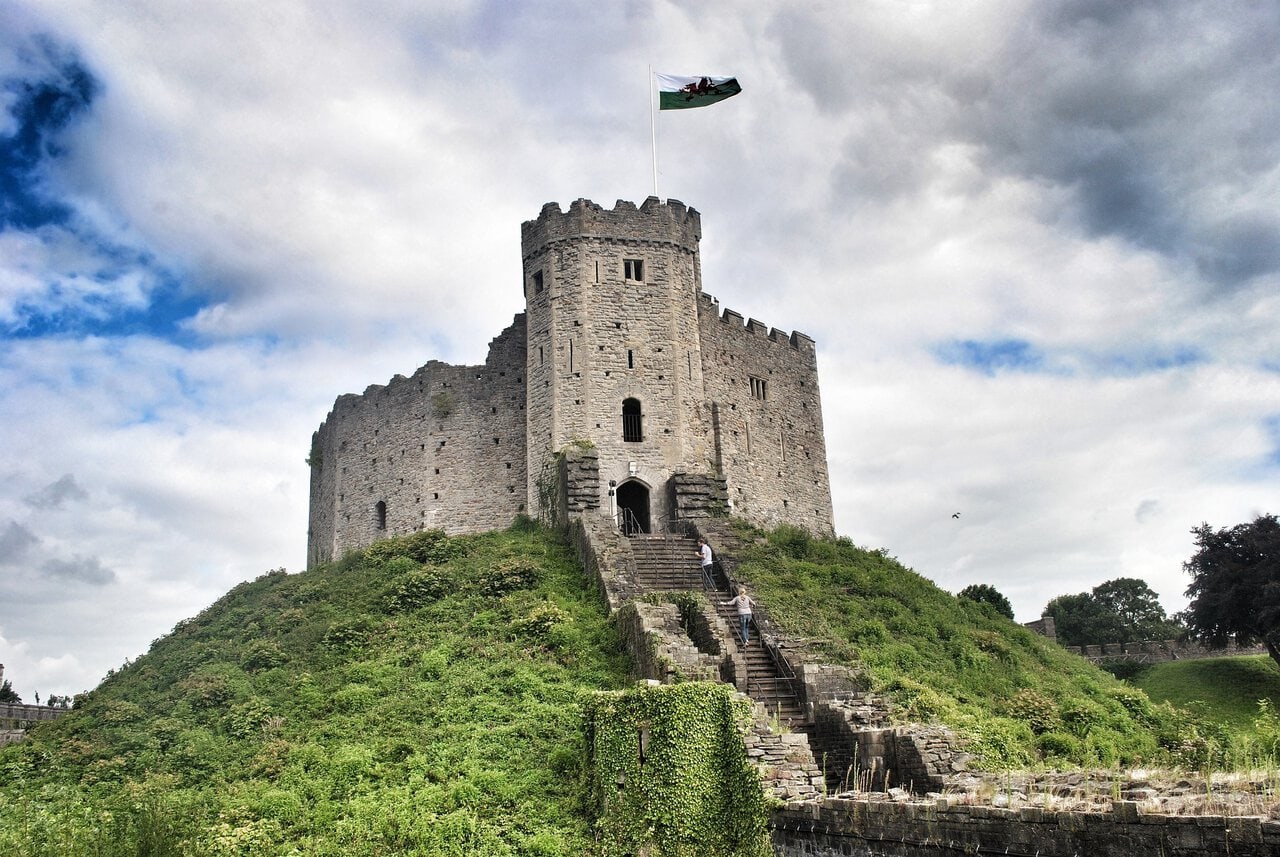
Cardiff Castle sits right in the middle of the city, which still catches first-time visitors off guard. Behind its walls you will find Roman foundations, a Norman motte and keep, and a set of Victorian Gothic apartments commissioned by the third Marquess of Bute, one of the wealthiest men in the world at the time.
A standard adult ticket costs around £16.50 ($21 / €19), with children aged five to sixteen around £11 ($14 / €13) and concessions around £13 ($17 / €15). It covers the Castle Apartments, the Norman Keep, the Battlement Walks, the Wartime Shelters, and the Firing Line military museum, along with the Roman remains at Chariot Corner, on a free-roam ticket that lets you come and go across the day rather than following a fixed route.
The Wartime Shelters are worth setting aside proper time for. The castle walls were used as air raid shelters during the Second World War, and the tunnels have been restored with sound and lighting that put you back in 1940s Cardiff rather than just reading a plaque.
Note that opening hours shift during the summer concert season, roughly early June to mid August, when major acts play the castle grounds. If your visit falls in that window, it is worth checking the castle’s current times before building your day around it, though a big name playing the grounds is a reason to plan around the season rather than avoid it.
See hotel options and places to stay in Cardiff.
Browse hotelsExplore holiday homes and apartments around Cardiff.
See holiday homesSee hotel prices from multiple booking sites in one search.
Compare ratesWander Around Cardiff Bay
Cardiff Bay was Tiger Bay and working docks within living memory, and the transformation is genuinely striking. The old coal exchange and dockside warehouses have given way to the Wales Millennium Centre, the Senedd building, and a waterfront lined with restaurants around Mermaid Quay.
The Wales Millennium Centre itself is worth a look even if you are not seeing a show. The bronze slate exterior carries a poem by Gwyneth Lewis picked out in illuminated lettering, and the foyer is open to wander without a ticket.
Just behind the centre, the Pierhead Building, a red-brick Victorian landmark that once managed the docks, and the Senedd, home to the Welsh Parliament, both offer free entry and give a very different architectural flavour to the glass and steel around them.
Getting to the bay from the city centre is straightforward on the short Bay Car shuttle train from Cardiff Central or Queen Street, or it is an easy twenty-minute walk along the water if the weather is playing along.
Experience Principality Stadium
Few cities anywhere have a stadium quite as central as Cardiff’s. Principality Stadium sits right on the banks of the River Taff, a few minutes’ walk from Cardiff Central station, and its retractable roof dominates the skyline whether or not there is an event on.
On non-event days, stadium tours take you through the players’ tunnel, the changing rooms, and out pitchside, which is when the scale of the place really lands. Tours typically run a little under an hour and tickets are best booked ahead, since capacity is limited.
If you happen to be visiting during a Six Nations weekend, expect the entire city centre to shift gears. St Mary Street becomes an open-air party from mid-morning, and hotel prices climb well in advance, so book early if a match lines up with your trip.
Our dedicated Getting to Principality Stadium guide covers matchday transport, road closures, and where to watch if you cannot get tickets, so it is worth a read before a big event.
Relax Among the Trees in Bute Park
Bute Park runs along the castle walls and follows the River Taff for well over a mile, and most visitors never realise quite how far it stretches. It was once the castle’s private grounds before being gifted to the city, which explains the formal arboretum tucked among the open lawns.
The park is home to one of the UK’s most significant tree collections, with specimens gathered from across the world over more than a century. You do not need any particular interest in botany to enjoy it, the shaded avenues alone make for a good escape from the city centre on a warm day.
Following the river path north eventually brings you to Sophia Gardens and the Glamorgan Cricket Ground, while heading the other way takes you straight back towards the castle and city centre, making it easy to build a loop of an hour or two.
There is a small café by the castle entrance serving coffee and light lunches, and the park hosts occasional outdoor cinema screenings and food festivals over the summer months, worth checking for if your visit lines up.
Travel Back in Time at St Fagans
St Fagans National Museum of History sits a short bus ride from the city centre and is consistently rated among the best free attractions in the UK. Rather than static exhibits, over forty original buildings have been relocated here brick by brick from across Wales, from a medieval church to a 1970s terraced street.
Entry is completely free, and the museum opens daily from 10am to 5pm. Realistically you need three or four hours to do it justice, since the site is large and spread across open parkland as well as the buildings themselves. Current times are confirmed on the Amgueddfa Cymru page for St Fagans National Museum of History.
Highlights include a working Victorian school where costumed staff run lessons as they would have been taught, a row of miners’ cottages furnished to show a century of change decade by decade, and traditional Welsh longhouses with thatched roofs.
Public transport connections run regularly from the city centre, and the journey takes around twenty minutes. Checking Traveline Cymru before you travel is sensible, since services can be less frequent on Sundays.
Browse the Historic Victorian Arcades
Cardiff is sometimes called the City of Arcades, and once you start looking for them, they turn up everywhere between the main shopping streets. Seven survive from the Victorian and Edwardian eras, each with its own character rather than being interchangeable shopping strips.
The Royal Arcade, dating from 1858, is the oldest and holds the accolade of being the city’s first proper shopping centre. Close by, the Castle Arcade is worth a visit for its Victorian balcony alone, alongside specialist shops including a violin maker and a long-standing bookstore.
Music fans should make time for the Morgan Arcade, home to Spillers Records, widely recognised as the oldest record shop in the world. The nearby Duke Street Arcade leans towards food, with delis, gelato, and Welsh cuisine restaurants tucked along its length.
Give yourself at least an hour to wander without a fixed plan. The arcades connect to one another in places, so it is entirely possible to cross much of the city centre while staying under cover, useful to know if the Welsh weather turns.
Admire the Collections at National Museum Cardiff
Set inside the grand Edwardian buildings of Cathays Park, the National Museum Cardiff houses one of the UK’s finest art collections outside London, alongside natural history and geology galleries covering the whole of Wales.
Like the country’s other national museums, entry is free, which makes it an easy addition to a day that also includes the castle, since the two sit only a short walk apart in the civic centre.
The art galleries hold an impressive run of Impressionist and Post-Impressionist works, including pieces by Monet, Renoir, and Cézanne, largely thanks to a substantial bequest from the Davies sisters in the twentieth century. It is a genuinely unexpected find in a regional museum.
Downstairs, the Evolution of Wales gallery walks through the country’s geological and natural history from the earliest rocks to the present day, and tends to hold younger visitors’ attention better than a typical art gallery.
Search flights and useful route combinations for your trip.
View flightsBrowse Airalo eSIM options for convenient travel data.
Check eSIMsHave a private airport pickup arranged before you travel.
Book a transferSample Welsh Produce at Cardiff Market
Tucked just off St Mary Street, Cardiff Market occupies a handsome Victorian hall dating from 1891 and remains a proper working market rather than a tourist recreation of one, complete with butchers, fishmongers, and greengrocers who have traded there for generations.
It opens Monday to Saturday, 8am to 5pm, with entrances on both St Mary Street and Trinity Street near St John’s Church. Arriving mid-morning gives you the best mix of stalls open and a manageable crowd.
Alongside the traditional traders, look out for stalls selling Welsh cakes cooked fresh on a griddle, laverbread, a Welsh seaweed delicacy usually served with bacon and cockles, and a scattering of vintage clothing and record stalls upstairs on the balcony level.
It is a good stop for picking up picnic supplies before heading to Bute Park, or simply for people-watching over a coffee, since the balcony cafés give a decent view down over the market floor.
Take to the Water on Cardiff Bay
For a different perspective on the city, the Aquabus water taxi runs between Bute Park in the city centre and Mermaid Quay in Cardiff Bay, tracing the River Taff past Principality Stadium along the way.
Boats depart the city centre on the hour and the bay on the half hour, generally between 10am and 5pm, with a one-way adult ticket costing around £9 ($11 / €10). It is not the cheapest way to cover the distance, but it is a genuinely pleasant way to see both ends of the city.
The catamarans are fully wheelchair accessible and welcome bikes, pushchairs, and dogs without an extra charge, which makes this one of the more practical boat trips for families rather than a pure tourist novelty.
Beyond the water taxi, the wider Cardiff Bay Barrage is worth a walk in its own right, a mile-long structure that transformed the tidal mudflats into the freshwater lake you see today, with views out towards the Bristol Channel from its far end.
Enjoy Cardiff with the Family
Cardiff manages to be genuinely good for a family trip without leaning on generic theme park attractions. Techniquest, in Cardiff Bay, is the obvious starting point, a hands-on science discovery centre with a planetarium and exhibits built for touching rather than just looking. A standard adult ticket costs around £13.50 ($17 / €16), with children around £12 ($15 / €14) and under-threes free.
Cardiff Castle’s Wartime Shelters tend to go down surprisingly well with children too, and the free-roam ticket means families are not rushed through at a set pace, useful with younger kids who want to linger somewhere unexpected.
Bute Park has enough open space for children to properly run around, and the summer months often bring a small funfair or splash pad to the area near the castle, worth checking closer to your visit.
For a change of pace, the Aquabus covered above tends to be a genuine highlight for younger visitors, and combining it with an ice cream at Mermaid Quay afterwards makes for an easy, low-stress afternoon.
Discover the City’s Evening Scene
Cardiff’s evening scene splits fairly cleanly into two areas. St Mary Street and Westgate Street in the city centre carry the bulk of the bars and clubs, and get considerably livelier on weekends and around major events at Principality Stadium.
For a calmer evening, Cardiff Bay has a strong run of restaurants along Mermaid Quay with water views, ranging from casual chains to more considered independent kitchens, and it stays pleasant well after dark thanks to the lit-up waterfront.
Food halls have taken off in the city too, with converted warehouse spaces bringing together street food traders, craft beer, and live music under one roof, generally a safer bet than a single restaurant if your group cannot agree on cuisine.
The Wales Millennium Centre in the bay also runs a full programme of theatre, opera, and touring musicals, so it is worth checking what is showing during your visit even if a big night out is not the plan.
Planning the Perfect Time to Visit
Cardiff is a genuinely year-round city, but the season you pick changes the experience quite a lot. Late spring through early autumn gives you the best odds of decent weather for Bute Park, the Bay Barrage, and outdoor arcades browsing.
If rugby is part of the appeal, the Six Nations Championship runs from February to March and brings an entirely different atmosphere to the city, though hotel prices rise sharply and rooms sell out well ahead of Wales home fixtures.
For a quieter visit with lower hotel prices, January and November tend to be the calmest months, though shorter daylight hours mean planning museum and castle visits earlier in the day.

Rupert’s Handy Travel Tips
Exploring Cardiff? Here are a few useful tips to make your visit smoother:
- Buy a combined castle and museum day: Cardiff Castle and the National Museum sit a five-minute walk apart, so pair them on the same day.
- Book stadium tours ahead: Principality Stadium tours have limited capacity and sell out on busy weekends.
- Allow half a day for St Fagans: Entry is free, but the site is large and needs three or four hours to see properly.
- Carry cash for the market: Some smaller Cardiff Market stalls still prefer cash over card.
Want to meet the reindeer behind our travel tips? Find out more in our page Who is Rupert?.


Frequently Asked Questions About Things to Do in Cardiff
How many days do you need in Cardiff?
Two full days cover the main sights comfortably, including the castle, Cardiff Bay, and either the arcades or St Fagans. Three days allows a more relaxed pace with time for both.
Is Cardiff Castle worth visiting?
Yes. The combination of Roman remains, a Norman keep, Victorian Gothic apartments, and restored wartime shelters makes it one of the more varied castle visits in the UK, all within one free-roam ticket.
Is St Fagans really free to visit?
Yes, entry to St Fagans National Museum of History is completely free, though donations are welcomed and some special events may carry a charge.
What is the best way to get around Cardiff?
Walking covers most central attractions easily. For Cardiff Bay, the Bay Car shuttle train, a bus, or the Aquabus water taxi are all straightforward alternatives to the twenty-minute walk.
Is Cardiff good for a family holiday?
Yes. Techniquest, Cardiff Castle’s shelters, Bute Park, and the Aquabus all work well for children, and the compact city centre means less walking between attractions than many UK cities.
Further Reading
Landing shortly? Our Cardiff Airport Transfers guide covers getting into the city first, and if a match or concert is part of your trip, our guide to reaching Principality Stadium covers matchday travel in full.
Once you have covered the city itself, our Day Trips from Cardiff guide rounds up the best excursions within easy reach, from castles to national parks, and joining a cruise, our Cardiff Cruise Port Guide covers the terminal in full.
Exploring further into Wales, our Wales Travel Guide covers trains, coastlines and castles across the country, and our Welsh Trains Guide is worth a read for onward rail journeys.











