
Best Things to Do in Bedford
Bedford is often treated as somewhere to pass through rather than somewhere to explore, but there is far more to the town than its location between London and the Midlands. The River Great Ouse runs straight through the centre, creating an attractive riverside area surrounded by parks, historic buildings and several of Bedford’s main cultural attractions.
For history, you can explore the remains of Bedford Castle, visit museums connected with John Bunyan and the unusual Panacea Society, or spend time inside The Higgins Bedford. If you’d rather stay outdoors, the Embankment, Priory Country Park and Bedford Park provide plenty of opportunities for walking and cycling.
Bedford also works well as a base for exploring the surrounding area. Wrest Park, the Shuttleworth Collection, Willington and Woburn are all possible additions if you have a car or are spending more than a day locally.
And Bedford is about to become considerably better known internationally. Universal is developing a major theme park and entertainment resort in Bedfordshire, currently planned to open in 2031. The project is expected to transform tourism in the area, and we’ve included a dedicated section below explaining what has been confirmed so far.
This guide covers the best things to do in Bedford, from free riverside walks and museums to family attractions, historic sites and places worth visiting just outside the town.
| Attraction | Best For | How Long to Allow | Cost |
|---|---|---|---|
| River Great Ouse & Embankment | Riverside walks & first visits | 1–2 hours | Free |
| The Higgins Bedford | Art, history & archaeology | 1–2 hours | Free |
| Bedford Castle Mound | Local history & river views | 20–30 minutes | Free |
| Panacea Museum | Unusual local history | 1–2 hours | Free |
| John Bunyan Museum | Literature & Bedford history | 30–60 minutes | Free |
| Priory Country Park | Walking, wildlife & families | 2–3 hours | Free |
| Bedford Park | Relaxing & green space | 30–60 minutes | Free |
| Bedford Green Wheel | Walking & cycling | 1 hour–full day | Free |
| Willington & Danish Camp | Riverside walks & cycling | 2–3 hours | Mostly free |
| Shuttleworth | Historic aircraft & vehicles | Half/full day | Paid |
| Wrest Park | Historic gardens & architecture | 3–4 hours | Paid |
| Woburn Safari Park | Families & wildlife | Full day | Paid |
Walk Along the River Great Ouse and Bedford Embankment
The River Great Ouse is the defining feature of central Bedford, and walking along the Embankment is one of the easiest ways to get a feel for the town.
The landscaped riverside runs east from the town centre, with paths beside the water, mature trees and views across the river. Bedford’s Town Bridge connects the two sides close to the centre, while the Castle Mound overlooks the river nearby. Bedford Borough Council’s conservation assessment identifies the Castle site, Town Bridge and riverside as particularly important elements of the historic townscape.
Rather than treating the Embankment as a standalone attraction, use it to connect several places in this guide. You can start around the Castle Mound and The Higgins, follow the Great Ouse eastwards and continue towards Russell Park.
It’s also one of Bedford’s best free things to do. You don’t need a fixed route or ticket, and it’s easy to shorten or extend the walk depending on how much time you have.
The river becomes particularly important during major local events. Bedford’s River Festival uses the Embankment and surrounding riverside, with the Castle Mound providing a viewpoint over activities on the Great Ouse.
If you only have a couple of hours in Bedford, we’d make the Embankment, Castle area and historic centre the basis of your visit rather than trying to reach several attractions further out.
Browse hotels
Compare hotels and other places to stay for your trip.
Check availabilityChoose a holiday rental
Browse apartments, homes and self-catering accommodation.
Browse rentalsSee who has the better rate
Compare hotel prices across multiple booking sites.
Compare ratesVisit The Higgins Bedford
For an introduction to Bedford’s history and art, head to The Higgins Bedford, the town’s main museum and art gallery.
The museum brings together the former Bedford Museum and Cecil Higgins Art Gallery, with collections covering local history, archaeology, social history, fine and decorative arts. The museum is particularly useful near the beginning of a Bedford visit because it gives context to many of the historic places you’ll encounter elsewhere in town.
The exhibitions aren’t completely static. Works from the fine-art collection are displayed through changing themed exhibitions because many of the watercolours, drawings and prints cannot remain permanently exposed to light. That means there can be something different to see on repeat visits.
The Higgins also runs temporary exhibitions, talks, tours and family activities throughout the year, so it’s worth checking what’s on rather than assuming you’ll only find the permanent collections.
Best of all, general admission to The Higgins is free, although some special events and activities require advance booking or a separate charge.
Its location is particularly convenient. The museum sits beside the Castle Mound and only a short distance from the River Great Ouse, so you can easily combine all three without needing transport.
Explore Bedford Castle Mound
You won’t find an intact medieval castle towering over Bedford today, but the Castle Mound marks the site of the fortress that once occupied an important position beside the River Great Ouse.
The surviving mound and surrounding castle site are now incorporated into a landscaped area beside the river. Bedford Borough Council describes the castle site as a Scheduled Ancient Monument of high significance, with the original castle extending considerably beyond the area visible today.
The mound is particularly useful for understanding the layout of historic Bedford. From around the site you can look towards the Embankment, Town Bridge and the river, while The Higgins stands immediately beside the former castle grounds.
Don’t come expecting substantial castle walls, towers or reconstructed medieval buildings. This is primarily an archaeological and historic site, and it makes considerably more sense when visited alongside The Higgins, where you can learn more about Bedford’s past.
The Castle Mound is also a useful riverside viewpoint. During Bedford’s River Festival, the council specifically uses it as a place from which visitors can watch activities taking place on the Great Ouse.
Because the site is free and right in the town centre, we’d include it even on a short Bedford itinerary. The Higgins, Castle Mound and Embankment together provide an easy first few hours in the town.
Universal United Kingdom Resort – The Theme Park Coming to Bedford
Bedford is set to become home to Universal’s first theme park and resort in the UK and Europe, a development that could completely transform tourism in the area.
The resort is being developed on the former Kempston Hardwick brickworks site south of Bedford, with an opening currently targeted for 2031. The plans include a major theme park containing multiple themed lands, alongside a 500-room hotel and a separate retail, dining and entertainment complex.
This isn’t expected to be a small regional theme park. Universal and the government have described a multibillion-pound development, with forecasts suggesting it could become one of the UK’s most visited attractions. Major investment is also planned for the surrounding road and rail infrastructure, including improvements intended to make the resort easier to reach.
Exactly what visitors will find inside the park is still one of the big unanswered questions. Universal has not confirmed the individual themed lands, rides or major entertainment franchises that will feature in Bedford, so reports linking particular films or characters to the park should not yet be treated as confirmed.
The important date for visitors is 2031, but we’ll keep this section updated as construction progresses and Universal reveals more about the attractions, hotels, transport and eventual ticketing arrangements.
For Bedford itself, the implications are enormous. A town that many visitors currently use primarily as a transport or regional base could eventually become the gateway to one of Europe’s largest new theme-park destinations.
Relax in Bedford Park
Just north of the town centre, Bedford Park is one of Bedford’s main traditional public parks and a useful place to escape the busier central streets.
The park has the feel of a classic Victorian urban park, with mature trees, open lawns, paths and recreational facilities. It’s particularly useful if you’re visiting Bedford with children or simply want somewhere quieter to walk after exploring the town centre.
Unlike some of the larger country parks later in this guide, Bedford Park doesn’t require you to dedicate half a day to visiting. You can incorporate it into a wider walk around Bedford or spend an hour here before continuing elsewhere.
It’s also another free thing to do in Bedford, which makes it easy to combine with the Embankment, Castle Mound and the town’s free museums without spending much on admission charges.
For longer walks and more extensive natural surroundings, we’d choose Priory Country Park instead. But for green space close to central Bedford, Bedford Park is the easier option.
Visit St Paul’s Church and St Paul’s Square
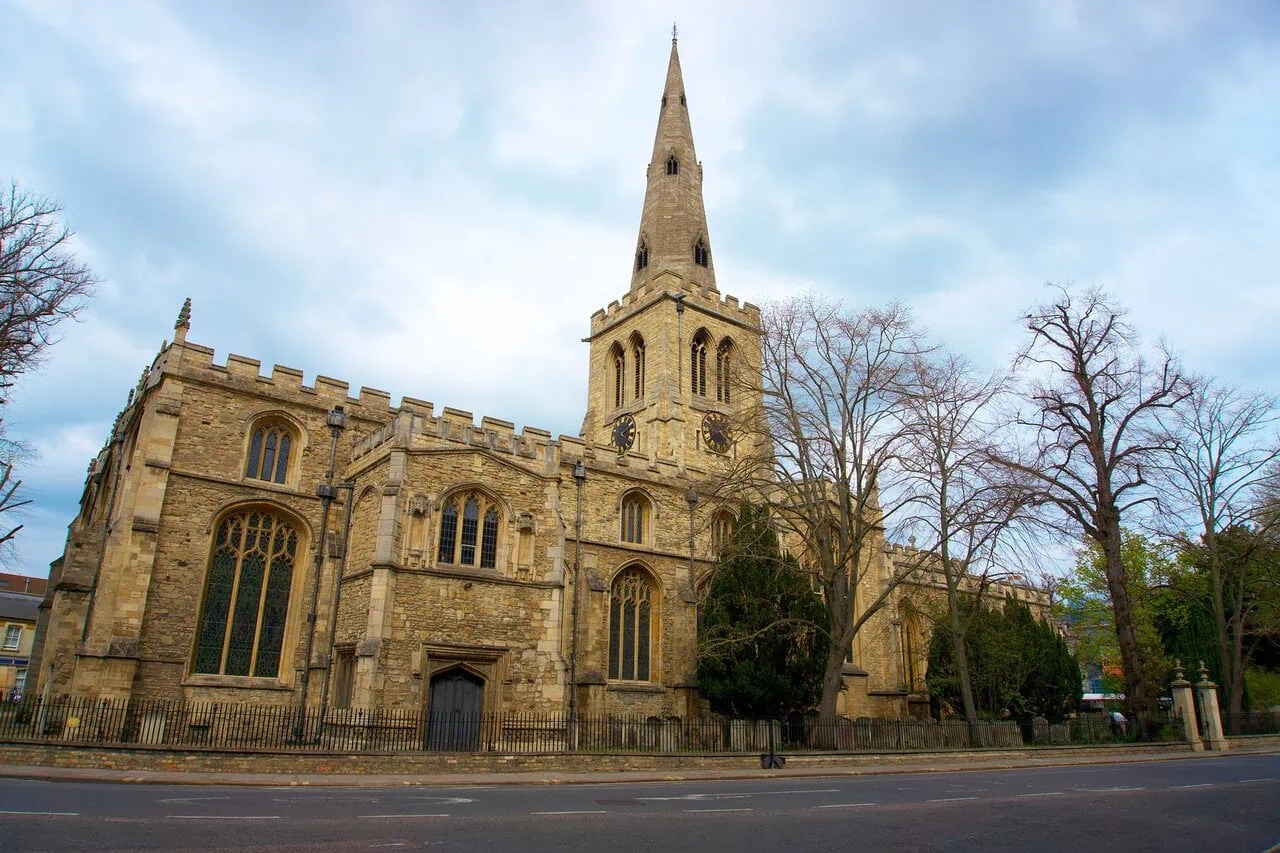
Standing prominently in the centre of Bedford, St Paul’s Church is one of the town’s most important historic buildings and has a history stretching back many centuries.
There is evidence of a church here from the Anglo-Saxon period, and St Paul’s is named in the Domesday Book. The building has repeatedly been damaged, rebuilt and altered over its long history, with much of the present church dating from the 15th century and substantial restoration and expansion taking place during the 19th and early 20th centuries.
One particularly interesting chapter came during the Second World War, when the BBC moved significant operations from London to Bedford. The Trinity Chapel at St Paul’s was used as a BBC studio for the Daily Service, with more than 1,000 broadcasts transmitted from the church under the deliberately vague location of “Somewhere in England.”
The church stands on St Paul’s Square, close to Bedford’s main shopping streets and only a short walk from the River Great Ouse. Its prominent tower and spire also make it one of the easiest landmarks to spot while walking around central Bedford.
Even if you aren’t particularly interested in churches, it’s worth including St Paul’s as part of a walk through the historic centre rather than treating it as an attraction requiring a separate journey.
Discover the Panacea Museum
Bedford has several conventional historical attractions, but the Panacea Museum tells one of the town’s strangest and most distinctive stories.
The museum occupies a collection of Victorian buildings that were once the headquarters of the Panacea Society, a religious community established in the early 20th century. The group created what it regarded as its own Garden of Eden in the centre of Bedford, and the museum now preserves the story of the society, its members and its beliefs.
Rather than being confined to a single gallery, the museum extends across buildings associated with the community, helping visitors understand how its members lived and how the organisation operated.
It’s an especially good addition if you’ve already visited The Higgins because it moves away from broad local history and focuses on a peculiarly Bedford story that you’re unlikely to encounter anywhere else.
The museum is also conveniently located on Newnham Road, close to The Higgins and the John Bunyan Museum, so all three can be combined on foot. Current 2026 visitor information lists seasonal opening days and hours, so check before travelling rather than assuming it opens every day.
If you enjoy unusual British history, the Panacea Museum may actually be one of the most memorable attractions in Bedford.
See the John Bunyan Museum and Bunyan Meeting
Few people are more closely associated with Bedford than John Bunyan, the preacher and author best known for The Pilgrim’s Progress.
Bunyan spent much of his life in and around Bedford, and his imprisonment in the town for preaching without permission became an important part of his story. Today, visitors can learn more about his life at the John Bunyan Museum, beside Bunyan Meeting in the centre of Bedford.
The museum explores Bunyan’s life, writing and religious beliefs, as well as the world in which he lived. Even if you’ve never read The Pilgrim’s Progress, the displays provide useful context for understanding why Bunyan became such an important figure in Bedford’s history.
Next door is Bunyan Meeting, a church whose congregation traces its history back to the community with which Bunyan himself was associated. The combination means you can see both the museum collection and a living continuation of Bedford’s Bunyan heritage in the same visit.
This part of Bedford is particularly rich in attractions. The Higgins, Panacea Museum, Castle Mound and River Great Ouse are all nearby, so we’d combine them rather than making separate journeys into town.
Check the museum’s current opening arrangements before visiting, particularly outside the main visitor season.
Explore Priory Country Park
For more substantial green space than Bedford’s central parks, head east to Priory Country Park, a 360-acre landscape of lakes, meadows and woodland wrapped partly within a bend of the River Great Ouse.
The park contains walking trails, bird hides, play areas and waterside paths, while its mix of reed beds, meadows and lakes makes it one of Bedford’s better places for spotting wildlife. Parts of the site are deliberately left relatively undisturbed because Priory is also designated as a County Wildlife Site.
Water is a major part of the attraction. Canoeing, kayaking and stand-up paddleboarding are permitted on navigable sections of the River Great Ouse, and weekend day tickets can be available through Priory Sailing Club for activities including dinghy sailing, windsurfing and paddle sports. Swimming, however, is not permitted within Priory Country Park.
There is also a café overlooking the lake, making this an easy place to spend several hours rather than simply taking a quick walk.
Priory Country Park retained its Green Flag Award for 2026–27, recognising the quality and management of the park.
If the weather is good and you have longer than a day in Bedford, we’d put Priory Country Park fairly high on the list, particularly for families, walkers and cyclists.
Discover Bedford’s Italian Heritage
One of the more unusual aspects of Bedford is its strong connection with Italy, which has influenced the town’s food, businesses and cultural identity for generations.
Large numbers of Italian workers moved to Bedford after the Second World War, many recruited to work at the London Brick Company and other local industries. The community that developed became an important part of modern Bedford, and the town remains particularly well known for its Italian connections.
You don’t need to visit a conventional attraction to experience this side of Bedford. Look around the town and you’ll find Italian cafés, restaurants, delicatessens and family businesses, making food one of the easiest ways to explore the connection.
The most prominent landmark is the Italian Church of St Francesca Cabrini, while Bedford’s Italian identity also becomes particularly visible during community celebrations and events.
We’d treat this section differently from a museum visit. Rather than arriving, looking around for 30 minutes and leaving, incorporate Bedford’s Italian heritage into where you stop for coffee, lunch or dinner while exploring the town.
It also helps explain something that isn’t immediately obvious to a first-time visitor: Bedford’s identity has been shaped by several generations of migration, and its Italian community is a major part of the town Bedford became after the Second World War.
Stay for less
Compare hostels and budget-friendly places to stay.
Browse hostelsProtect your flights
Get fast compensation payouts, eligible lounge benefits and expert help when flights go wrong.
See AirHelp+ benefitsDrop your bags and keep exploring
Use convenient luggage storage between arrival, check-in and departure.
Check storageGet Out on the River Great Ouse
You’ve already seen how important the River Great Ouse is to Bedford from the Embankment, but you don’t necessarily have to experience it entirely from dry land.
For active visitors, sections of the river around Bedford can be explored by canoe, kayak or stand-up paddleboard. Priory Country Park provides access to navigable water, with portage points around Cardington Lock allowing paddlers to travel upstream towards Bedford town centre or downstream towards Willington and beyond.
That creates an interesting alternative way to see Bedford. Instead of following the Embankment on foot, experienced paddlers can see parts of the Great Ouse from the water and continue beyond the central riverside.
Bedford also has a strong relationship with rowing and other watersports, particularly around the wider Great Ouse corridor.
You’ll need to check the current navigation, licensing and equipment requirements for whichever activity you’re planning rather than simply turning up and launching anywhere along the river. Not every stretch of water or riverbank is suitable for public access.
For most visitors, walking along the Embankment remains the easiest way to enjoy the Great Ouse. But if you’re spending longer in Bedford and enjoy watersports, getting onto the river itself gives you a completely different perspective on the town and surrounding countryside.
Relax in Russell Park
Immediately behind Bedford’s Embankment, Russell Park is one of the easiest green spaces to incorporate into a walk along the River Great Ouse.
The park has open lawns, mature trees and recreational areas, making it particularly useful for families who want somewhere for children to burn off some energy between other attractions. Its location is the main advantage: you don’t need to make a separate journey out of central Bedford to visit.
Russell Park also hosts community activities and events throughout the year, while its proximity to the Embankment means the two areas effectively work together as one larger riverside recreational space.
If you’re following the Great Ouse eastwards from Bedford town centre, you can walk along the Embankment before spending some time in Russell Park and then continue towards Priory Country Park if you want a considerably longer walk.
We wouldn’t necessarily make Russell Park a destination in its own right for a short Bedford visit. Instead, think of it as part of the wider riverside experience, particularly on a sunny day when you aren’t in a hurry to move between attractions.
Walk or Cycle the Bedford Green Wheel
If you want to explore beyond the town centre without getting in the car, the Bedford Green Wheel provides a network of walking and cycling routes around Bedford.
Rather than being a single short circular trail, the Green Wheel combines an outer orbital route with a series of spokes connecting central Bedford with the surrounding countryside and villages. This means you can choose a manageable section rather than having to complete the entire route.
The network connects several places already covered in this guide, including areas around the River Great Ouse and Priory Country Park, while providing opportunities to reach quieter countryside beyond the built-up parts of Bedford.
For cyclists, it provides a particularly useful way of turning Bedford into the starting point for a longer ride. Walkers can simply select one section and use public transport or another route to return rather than attempting the complete circuit.
The Green Wheel also demonstrates one of Bedford’s advantages as an outdoor destination: the town centre connects surprisingly quickly with riverside paths, parks and open countryside.
If you’re staying overnight and have already explored Bedford’s museums and historic centre, spending a few hours walking or cycling part of the Green Wheel provides a very different second day.

Visit Willington Dovecote and Stables
A few miles east of Bedford, Willington Dovecote and Stables provide an interesting glimpse into Tudor England and are particularly easy to combine with a walk beside the Great Ouse.
The historic buildings are cared for by the National Trust and date from the 16th century. They were constructed for Sir John Gostwick, an important figure during the reign of Henry VIII whose family estate was based at Willington.
The dovecote is the most distinctive building. Dovecotes were used for keeping pigeons and doves as a source of meat, eggs and manure, and the surviving structure contains hundreds of nesting spaces built into its internal walls.
Nearby are the historic stables, another surviving part of the former estate. Together they make a relatively compact attraction, so you don’t need to dedicate an entire day to visiting.
The best approach is to combine the buildings with the surrounding countryside. Willington sits beside the River Great Ouse and is connected with riverside walking and cycling routes, making this an easy extension to a more active day outside Bedford.
Check the National Trust’s current opening arrangements before travelling, as access to historic buildings can be more limited than access to the surrounding paths and countryside.
Stop at Danish Camp in Willington
Also at Willington, Danish Camp is a popular riverside stopping point for walkers and cyclists exploring the Great Ouse valley east of Bedford.
Despite the name, you shouldn’t arrive expecting a reconstructed Viking settlement or a major archaeological attraction. Danish Camp is primarily a riverside visitor destination and café, surrounded by countryside and walking routes.
Its position makes it especially useful when exploring the area between Bedford, Priory Country Park and Willington. You can incorporate it into a longer walk or cycle ride rather than driving there solely for a short visit.
The surrounding paths provide opportunities to continue alongside the river and through the countryside, while the nearby Willington Dovecote and Stables give you a historic attraction to add to the same outing.
For families, this combination can work particularly well: spend some time outdoors, stop beside the river for food or a drink and then explore the National Trust buildings nearby.
If you’re looking for a quieter alternative to Bedford town centre, we’d combine Danish Camp, Willington Dovecote and the riverside paths into one half-day trip rather than treating them as three separate destinations.
Visit the Shuttleworth Collection
Around half an hour from Bedford by car, Shuttleworth is one of Bedfordshire’s most distinctive attractions, particularly if you’re interested in aviation, engineering or historic vehicles.
The collection at Old Warden occupies six hangars and contains historic aircraft alongside veteran and classic cars, motorcycles, bicycles, buses, carriages and other vehicles. What makes Shuttleworth particularly unusual is that the collection includes some of the world’s oldest airworthy historic aircraft, rather than aircraft displayed purely as static museum pieces.
Aviation is only part of the visit. Admission also gives you the opportunity to explore the nine-acre Swiss Garden, a Regency landscape containing ornamental structures, woodland and landscaped planting. The wider estate includes Shuttleworth House and the Grade II listed Old Warden Park*.
If you have any flexibility over your dates, check the events programme before visiting. Shuttleworth holds air shows and other special events throughout the year, which can make a considerable difference to the experience.
This isn’t really somewhere we’d squeeze into an hour between other Bedford attractions. There’s enough between the aircraft, vehicles and gardens to make Shuttleworth a substantial half-day or day trip from Bedford.
It’s particularly worthwhile if you’re travelling with someone interested in historic aircraft, because seeing airworthy machines from the early years of aviation is very different from visiting a conventional aviation museum.
Explore the Gardens at Wrest Park
At Silsoe, south of Bedford, Wrest Park combines a grand country house with one of Bedfordshire’s most important historic landscapes.
The present mansion was built in the 19th century in the style of a French château, but the gardens are arguably the main reason to visit. They preserve around 300 years of garden design, allowing you to walk through landscapes influenced by different periods rather than seeing a garden created to one single plan.
Close to the house are the formal gardens and Long Water, while further exploration reveals the Archer Pavilion, Bath House, Chinese Bridge, Chinese Temple and woodland paths through the Great Garden. English Heritage is undertaking a long-term restoration programme across the landscape.
You can also enter the mansion and see its decorated state rooms, although the interiors are relatively sparsely furnished. For families, there is a children’s play area, while the Walled Garden contains a café.
Wrest Park is managed by English Heritage, and advance online tickets can be cheaper than paying on arrival. English Heritage members can visit as part of their membership.
We’d allow several hours rather than treating Wrest Park as a quick historic-house visit. The scale of the grounds is a major part of the attraction, particularly when the weather is good.
Visit Woburn and Woburn Safari Park
For one of the biggest family days out within easy reach of Bedford, head towards Woburn Safari Park.
Unlike a conventional zoo where you walk between every enclosure, the experience begins with a self-drive Road Safari, allowing you to travel through large animal reserves in your own vehicle. The park is home to more than 75 species of exotic and endangered animals.
Your admission also includes the Foot Safari, where you can continue exploring on foot, attend keeper talks and use the indoor and outdoor play areas. Tickets allow unlimited circuits of the Road Safari during your visit, so you aren’t restricted to driving the route once.
There is one particularly important practical consideration: you need your own vehicle to visit Woburn Safari Park. The park states that admission includes the vehicle and that the safari park is only accessible in your own vehicle. Some vehicle types are also restricted from particular animal sections, so check the latest rules before travelling.
Don’t confuse the Safari Park with Woburn village itself. If you have enough time, you can combine the wildlife attraction with a look around the wider Woburn area rather than immediately driving back to Bedford.
For families, we’d regard this as a full-day excursion rather than another attraction to squeeze into a busy Bedford sightseeing day.
Things to Do in Bedford With Children
Bedford works particularly well for families because you can mix free parks and outdoor activities with larger paid attractions without needing to spend money at every stop.
Within Bedford itself, Priory Country Park is one of the easiest choices for a good-weather day, with lakes, walking routes, wildlife and play areas. Russell Park and Bedford Park provide simpler options when you don’t want to travel far from the centre.
The River Great Ouse and Embankment also make an easy family walk, particularly when combined with a stop in Russell Park. The Higgins provides an indoor alternative and regularly supplements its permanent collections with temporary exhibitions and activities.
For a bigger day out, Woburn Safari Park combines its drive-through Road Safari with a Foot Safari, keeper talks and indoor and outdoor play areas.
Children interested in aircraft and vehicles may prefer Shuttleworth, where the collection ranges from historic aeroplanes to veteran cars, motorcycles and buses, with the Swiss Garden providing outdoor space alongside the museum collections.
And, of course, Bedford’s family-attraction landscape is going to change dramatically when Universal United Kingdom Resort opens, currently targeted for 2031. Until then, make sure children understand that the Universal development is a construction project rather than somewhere that can currently be visited as a theme park.


Free Things to Do in Bedford
You don’t need to spend much to enjoy Bedford. In fact, several of the town’s best attractions are completely free, making it particularly easy to put together a low-cost day.
Start beside the River Great Ouse, where you can walk along the Embankment, cross the river and explore the Castle Mound without paying anything. Continue east and you can add Russell Park before following the riverside towards Priory Country Park if you want a longer walk.
The Higgins Bedford offers free general admission, giving you access to collections covering Bedford’s history, archaeology and art. Combined with the Castle Mound and Embankment immediately outside, this makes the Castle Quarter one of the best places to begin exploring Bedford.
Bedford’s parks provide plenty more free options. Priory Country Park, Bedford Park and Russell Park are all free to explore, while walkers and cyclists can use sections of the Bedford Green Wheel to head further into the surrounding countryside.
You can also explore St Paul’s Square and Bedford’s historic centre without spending anything. Some of the smaller museums have seasonal opening arrangements, so check before making a special journey.
For a simple free day, we’d combine The Higgins → Castle Mound → Embankment → Russell Park, adding Priory Country Park if you have enough time and the weather is good.
Things to Do in Bedford When It Rains
Bedford’s riverside and parks are a major part of its appeal, but there are still several options when the British weather makes an afternoon beside the Great Ouse considerably less attractive.
The Higgins Bedford would be our first choice. Because it combines local history, archaeology and art collections with changing exhibitions, there’s enough variety to spend considerably longer inside than you might expect from a local museum.
The Panacea Museum provides a very different indoor experience, exploring the unusual history of the Panacea Society. Nearby, the John Bunyan Museum concentrates on Bedford’s most famous writer and his connections with the town.
You can also explore St Paul’s Church when it is open to visitors, particularly if you’re interested in Bedford’s history or the church’s unusual role as a BBC broadcasting location during the Second World War.
If you have a car and don’t mind travelling outside Bedford, Shuttleworth becomes another strong wet-weather option because much of its historic aircraft and vehicle collection is displayed inside hangars. You won’t get as much from the Swiss Garden in heavy rain, but the collection itself can still justify the journey.
For families, we’d check the current programme at The Higgins first, particularly during school holidays when additional activities may be available.
Things to Do in Bedford at Night
Bedford isn’t a major nightlife destination, but there is still plenty to do after the museums and daytime attractions have closed.
The area around the River Great Ouse and Embankment is pleasant for an early-evening walk, particularly during the lighter summer months. From here, it’s easy to continue into the town centre for dinner or drinks.
For live entertainment, Bedford Corn Exchange hosts a changing programme of concerts, comedy, performances and events. Because the programme varies throughout the year, check what’s scheduled for the dates of your visit rather than assuming a particular type of performance will be available.
Bedford also has a strong independent pub, bar and restaurant scene. The town’s Italian heritage is particularly noticeable in its food, making an Italian restaurant a fitting choice if you’re visiting Bedford for the first time.
It’s also worth checking for events before your trip. Bedford hosts festivals and performances throughout the year, while the Bedford River Festival transforms the riverside on the years it takes place.
For a relaxed evening, we’d keep things simple: walk beside the Great Ouse, have dinner in town and see whether there’s a performance or event taking place at the Corn Exchange or elsewhere in central Bedford.


How Long Do You Need in Bedford?
You can see the main sights of central Bedford in one day, although staying for a weekend gives you much more opportunity to explore the surrounding countryside and attractions elsewhere in Bedfordshire.
With half a day, concentrate on the centre. Visit The Higgins, see the Castle Mound and walk along the River Great Ouse and Embankment. Depending on opening times, you could add either the Panacea Museum or John Bunyan Museum.
With one full day, continue further along the riverside towards Russell Park and Priory Country Park, or spend more time exploring Bedford’s museums, churches and historic streets.
A two-day visit gives you room to use Bedford as a base. Spend the first day in town and use the second for somewhere such as Shuttleworth, Wrest Park, Willington or Woburn Safari Park.
If you’re primarily visiting friends or family locally, Bedford also works well for a slower stay because many of its attractions don’t require a rigid itinerary. Riverside walks, parks and nearby countryside can easily fill the gaps between other plans.
From 2031, this advice will inevitably change. Once Universal United Kingdom Resort opens, visitors using Bedford as a base for the theme park are likely to need several days if they also want to explore Bedford itself and the surrounding area.
Getting Around Bedford
Central Bedford is compact enough to explore largely on foot, particularly if you’re visiting The Higgins, Castle Mound, St Paul’s Square, the Panacea Museum, John Bunyan Museum and the Embankment.
Bedford railway station sits west of the town centre, with the main shopping area and riverside within walking distance. Bedford St Johns station is another smaller station south of the centre, although most visitors arriving by rail will use Bedford’s main station.
Local buses become more useful for attractions further from the centre, while a car gives you considerably more flexibility if you’re planning to visit Wrest Park, Shuttleworth, Willington or Woburn Safari Park. Woburn Safari Park specifically requires visitors to enter in their own vehicle.
Cycling is another practical option. The Bedford Green Wheel connects the town with surrounding parks, countryside and villages, while riverside routes provide an attractive way to travel towards Priory Country Park and Willington.
The arrival of Universal United Kingdom Resort will bring substantial changes to transport south of Bedford before its planned 2031 opening. New and improved road and public transport infrastructure forms part of the wider project, so transport information for that area will need updating as the resort develops.
For sightseeing Bedford as it stands today, we’d walk around the centre and riverside, then use a car, bicycle or public transport only when heading to the attractions further out.

Rupert’s Handy Travel Tips
Heading to Bedford? Here are a few useful tips to make your visit smoother:
- Start beside the river: The Higgins, Castle Mound and River Great Ouse are close together, making this the easiest area to begin a first visit to Bedford.
- Check museum opening days: Smaller attractions such as the Panacea Museum and John Bunyan Museum can have more limited or seasonal opening arrangements, so check before making a special journey.
- Bring a bike if you enjoy cycling: The Bedford Green Wheel and Great Ouse corridor provide routes connecting the town with Priory Country Park and the surrounding countryside.
- Use a car for the wider area: Attractions including Shuttleworth, Wrest Park and Woburn are much easier to incorporate when you have your own transport. Woburn Safari Park requires visitors to enter in their own vehicle.
- Don’t travel to Bedford expecting Universal to be open yet: Universal United Kingdom Resort is currently planned to open in 2031. Until then, the Bedford site is a development project rather than a visitor attraction.
Want to meet the reindeer behind our travel tips? Find out more in our page Who is Rupert?.
Frequently Asked Questions
What are the best things to do in Bedford?
For a first visit, we’d prioritise The Higgins Bedford, the River Great Ouse and Embankment, Bedford Castle Mound and Priory Country Park. The Panacea Museum and John Bunyan Museum are particularly worthwhile if you’re interested in Bedford’s history.
Is Bedford worth visiting?
Yes, particularly for a day or weekend. Bedford combines riverside walks, free museums, parks and historic attractions, while places such as Wrest Park, Shuttleworth and Woburn provide additional options nearby.
What can you do in Bedford for free?
You can walk along the River Great Ouse and Embankment, explore Bedford Castle Mound, visit The Higgins Bedford and spend time in Bedford Park, Russell Park and Priory Country Park without paying a general admission charge.
What is there to do in Bedford with children?
Priory Country Park, the Embankment and Bedford’s parks are good free choices. Further afield, Woburn Safari Park and Shuttleworth provide substantial family days out.
What can you do in Bedford when it rains?
Start with The Higgins Bedford, then consider the Panacea Museum, John Bunyan Museum and St Paul’s Church depending on their opening hours. Shuttleworth is another option if you have a car.
Is there a Universal theme park being built in Bedford?
Yes. Universal United Kingdom Resort is being developed south of Bedford, with the theme park and resort currently targeted to open in 2031.
Is Universal Bedford open yet?
No. The Universal resort is not currently open to visitors as a theme park. Its planned opening is 2031.
Where will the Universal theme park in Bedford be?
The resort is being developed on land around the former Kempston Hardwick brickworks site, south of Bedford.
Can you walk around Bedford easily?
Yes. Most central attractions are within walking distance, including The Higgins, Castle Mound, the Embankment, St Paul’s Square, the Panacea Museum and John Bunyan Museum.
How long do you need in Bedford?
One day is enough for the main town-centre attractions. Two days is better if you want to add Priory Country Park or make a trip to somewhere such as Wrest Park, Shuttleworth or Woburn.
Further Reading & Related Guides
If you’re exploring more of the area, our Bedford Travel Guide provides a broader introduction to the town, including practical information for planning your stay.
Bedford is also well connected by rail, making it possible to incorporate into a wider trip through this part of England. Our Train Booking Apps guide explains the different ways to find and buy rail tickets, while our UK Railcards guide can help you work out whether you could reduce the cost of your journeys.
If you’re planning to travel around without a car, our guides to Bus Booking Apps and Local Public Transport Apps cover useful tools for planning journeys and buying tickets.
We’ll also continue following the development of Universal United Kingdom Resort as the project moves towards its planned 2031 opening. As Universal confirms the themed lands, attractions, transport arrangements, hotels and tickets, we’ll update our Bedford coverage accordingly.