Reviewed by our editorial team Updated
Best Things to Do in Singapore
Singapore packs an extraordinary amount into a relatively small city. You can explore futuristic gardens and skyscrapers around Marina Bay, ride across to Sentosa Island by cable car, discover colourful historic neighbourhoods, visit major wildlife attractions and finish the day beside the water watching one of the city’s nighttime shows.
One of Singapore’s biggest advantages is how easy it is to combine several attractions in a single day. Marina Bay Sands, Gardens by the Bay, the ArtScience Museum and the Singapore River can all form part of the same sightseeing day, while many of the major family attractions are concentrated around Sentosa Island. Further north, the Mandai wildlife attractions include Singapore Zoo, Night Safari, River Wonders and Bird Paradise.
There is also plenty to do without buying an attraction ticket. Chinatown, Little India, Kampong Glam, Marina Bay and the Singapore Botanic Gardens provide some of the best free sightseeing in the city, while Singapore’s hawker centres are an attraction in their own right.
This guide covers our pick of the best things to do in Singapore, including the famous attractions, some less expensive alternatives and experiences that are particularly worthwhile at night. Where we have a complete guide to an attraction, we’ll point you towards it for tickets, transport and practical information.
Explore Gardens by the Bay
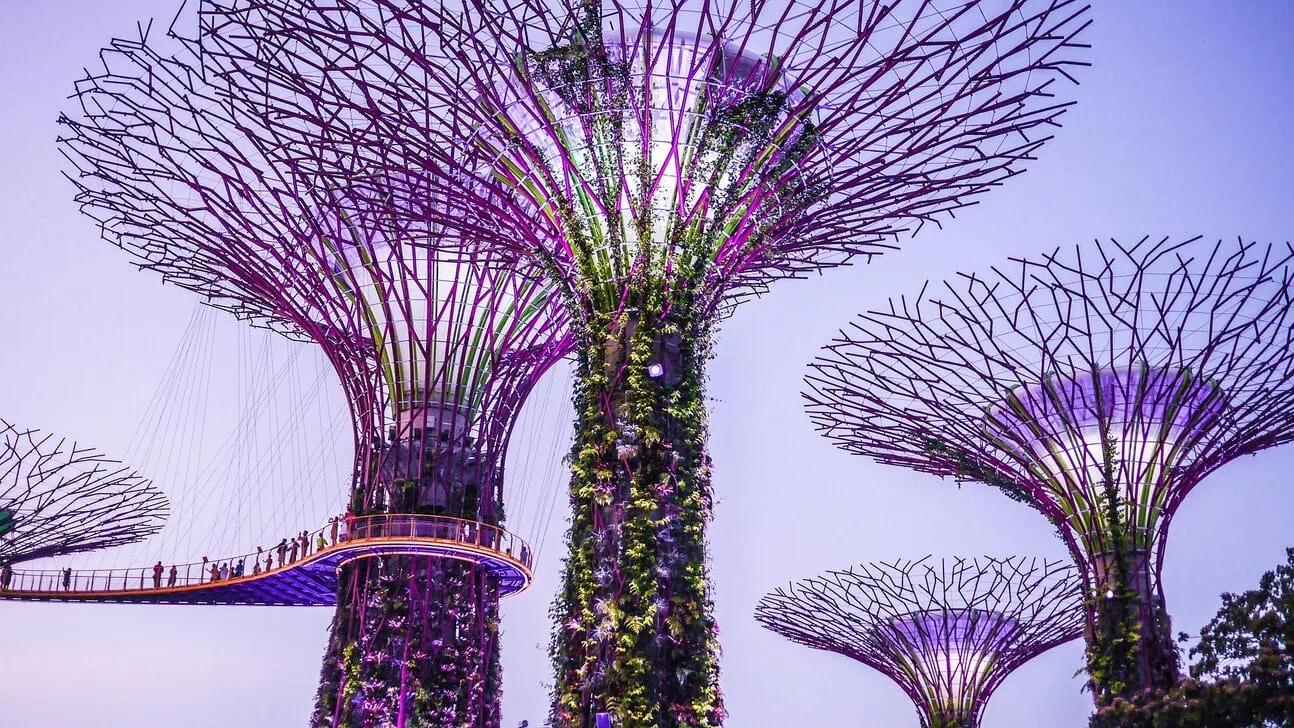
Few attractions represent modern Singapore quite as well as Gardens by the Bay. The enormous waterfront garden sits immediately behind Marina Bay Sands and combines outdoor gardens, futuristic Supertrees and huge climate-controlled conservatories.
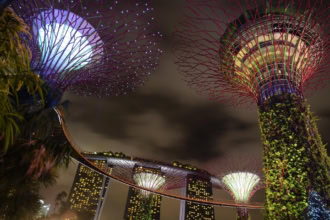
The Supertree Grove is the part most visitors recognise. These towering vertical gardens reach up to around 50 metres high and are impressive during the day, but they become particularly atmospheric after sunset when they are illuminated. The free Garden Rhapsody light and music show makes this an easy attraction to revisit in the evening even if you explored the gardens earlier in the day.
The major ticketed attractions include the Cloud Forest and Flower Dome. Cloud Forest contains an indoor mountain surrounded by tropical vegetation, while the Flower Dome recreates different climates and plant environments beneath its enormous glass roof.
You can easily spend several hours here, particularly if you plan to enter the conservatories. Gardens by the Bay also combines extremely well with Marina Bay Sands, the ArtScience Museum and an evening Singapore River Cruise, so it makes sense to keep these attractions together when planning your itinerary.
Our complete Gardens by the Bay guide covers what to see, tickets, getting there and how to plan your visit.
Best if you want daily housekeeping and a front desk. Filter by area first, then by price.
Check availabilityBest for families, or any stay past about four nights. A kitchen and a washing machine start paying for themselves.
Browse rentalsBest as a last check before booking. Compares Singapore hotel rates across several sites in one search.
Compare ratesSee Singapore From the Singapore Flyer
For one of the best elevated views across the city, take a ride on the Singapore Flyer, the enormous observation wheel beside Marina Bay.
The Flyer reaches 165 metres above Singapore, with a complete rotation taking approximately 30 minutes. The enclosed observation capsules are spacious and air-conditioned, providing 360-degree views without having to contend with Singapore’s heat and humidity.
From the top, you can look across towards Marina Bay Sands, Gardens by the Bay and the Singapore River, as well as the skyscrapers of the central business district. In clear conditions, views can extend considerably further beyond central Singapore.
Your ticket also includes the Time Capsule, a pre-boarding experience exploring Singapore’s past, present and future. Children under three can currently enter free, while standard tickets are non-refundable and non-exchangeable.
There is a choice to make over when to visit. Daylight gives you the clearest overview of Singapore’s geography, while an evening rotation provides views across the illuminated Marina Bay skyline. Timing a visit around sunset can give you a little of both, although naturally this is an attractive time for other visitors too.
The Singapore Flyer is also well positioned for exploring Marina Bay, so we wouldn’t travel here solely for the wheel and then immediately leave the area. Combine it with Gardens by the Bay, Marina Bay Sands or the waterfront to make better use of your time.
Take a Singapore River Cruise
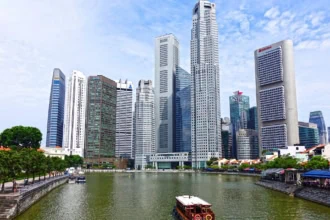
A Singapore River Cruise provides a completely different perspective on the city. Rather than looking down on the skyline, you travel at water level through Singapore’s historic river district before emerging into the much larger surroundings of Marina Bay.
The classic cruise takes around 40 minutes, passing Clarke Quay and Boat Quay before continuing towards landmarks including Merlion Park, Marina Bay Sands and the Esplanade. Onboard commentary also provides some background to the river’s transformation from a busy commercial waterway into the waterfront you see today.
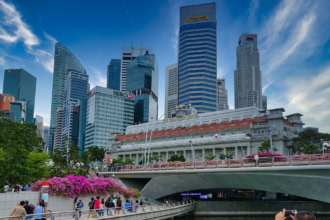
There is a particularly striking contrast along the route. Around the historic quays you pass restored low-rise riverside buildings, while immediately behind them rise the skyscrapers of Singapore’s modern financial district. Once you reach Marina Bay, the view opens considerably and Marina Bay Sands dominates the waterfront.
We particularly like the river cruise after dark, when the skyscrapers, bridges and Marina Bay buildings are illuminated and reflected across the water. Daytime has its advantages too, particularly if you want a clearer look at the historic architecture along the river.
There are also longer evening experiences combining the river with Spectra and Garden Rhapsody, including an option where Spectra is watched from the boat itself.
We’ve covered the different cruises, boarding arrangements, route and the important differences between the nighttime tours in our complete Singapore River Cruise guide.
Explore the Singapore Oceanarium
On Sentosa Island, the Singapore Oceanarium is one of the city’s biggest attractions for families and anyone interested in marine life. The experience combines enormous aquatic habitats with interactive displays, digital experiences and exhibits explaining marine ecosystems and conservation.
Inside, you can explore environments containing a wide variety of marine species while learning about the different habitats they depend on. The attraction has a stronger educational element than simply displaying marine life, with exhibits looking at ocean conservation, threatened species and the challenges facing marine ecosystems.
There is also a dedicated Research and Learning Centre, with sustainability and marine education forming an important part of the wider Oceanarium experience.
This is an attraction where it is worth allowing plenty of time. Visitors can easily spend several hours exploring the exhibits, making it particularly useful when Singapore’s weather is very hot or wet.
Children aged three and under can currently enter free, and the attraction is wheelchair accessible. Tickets are valid for the selected visit date and are non-refundable, so check your plans before booking.
Because the Oceanarium is at Resorts World Sentosa, combine it with other Sentosa attractions rather than travelling back and forth to the mainland. Universal Studios Singapore is nearby, while the Singapore Cable Car provides a much more interesting way of reaching Sentosa than simply taking the quickest transport option.
See the City From Marina Bay Sands SkyPark
Marina Bay Sands is one of Singapore’s defining landmarks, and the SkyPark Observation Deck gives you the opportunity to see the city from the top rather than simply admiring the building from Marina Bay.
From the observation deck, you can look across Gardens by the Bay, Marina Bay, the Singapore Flyer and Singapore’s central business district, giving you an excellent sense of how the different parts of central Singapore fit together.
The experience works particularly well towards the end of a day around Marina Bay. Visit Gardens by the Bay and the waterfront first, then head upwards as the city begins to illuminate. If you would rather prioritise visibility and photography, visit during daylight when the details of the city are easier to pick out.
Don’t confuse the observation deck with the famous Marina Bay Sands infinity pool. Access to the pool is reserved for eligible hotel guests; buying an observation deck ticket does not provide access to it.
This is also one of the easiest attractions on the page to combine with others. Gardens by the Bay and the ArtScience Museum are immediately nearby, while Merlion Park and the Singapore River are on the opposite side of Marina Bay.
Our dedicated Marina Bay Sands SkyPark Observation Deck guide covers tickets, what you can see, the best time to visit and practical information for planning your visit.
Race Down Skyline Luge Sentosa
If you want something more active than another observation deck or museum, Skyline Luge Sentosa combines a downhill luge ride with a scenic chairlift journey above Sentosa Island.
You begin by taking the Skyride towards the top of the course, with elevated views across Sentosa and the surrounding coastline. From there, you ride a small gravity-powered luge cart downhill along purpose-built tracks containing bends, slopes and tunnels.
The carts are designed so that riders control their own speed, making the experience accessible to beginners rather than being purely a high-speed thrill ride. There are several tracks, so booking multiple rides gives you an opportunity to try different routes rather than repeating exactly the same experience.
Families need to pay particular attention to the height rules. Children aged two to six and between 85cm and 110cm tall must ride the luge in tandem with an adult using the appropriate child ticket. Children over six and taller than 110cm can ride alone, subject to the attraction’s requirements. Different height restrictions apply to riding the Skyride independently.
The attraction isn’t suitable for pregnant visitors or certain medical conditions, so check the restrictions carefully before buying tickets.
Skyline Luge works particularly well as part of a Sentosa day. You can combine it with the Singapore Cable Car, beaches, Singapore Oceanarium or one of the island’s evening attractions rather than making a separate journey purely for the luge.
Spend a Day at Universal Studios Singapore
For theme park fans and families, Universal Studios Singapore is one of the biggest reasons to spend a full day on Sentosa Island.
Located within Resorts World Sentosa, the park combines themed areas, roller coasters, family attractions, live entertainment and experiences based around major film and television franchises. It is considerably more time-consuming than most attractions in this guide, so we recommend treating Universal Studios as a major part of the day’s itinerary rather than trying to squeeze it between several other sights.
This is particularly important during busy periods when queues can consume a significant amount of your visit. Arriving early gives you more time inside the park and makes it easier to prioritise the attractions that matter most to you.
Universal Studios can still be combined with another Sentosa experience, particularly in the evening. For example, you could spend the day inside the theme park and then stay on Sentosa for dinner or an evening show rather than travelling immediately back into central Singapore.
There is also an important ticket decision to make before visiting. Universal Studios Singapore is included among the attractions offered with the Singapore Go City All-Inclusive Pass, so visitors planning several paid Singapore attractions should compare the pass against buying everything separately.
We’ve covered the park in much greater detail in our dedicated Universal Studios Singapore guide, including tickets, getting there and practical advice for making the most of your day.
Best if you can move a day either way. Shows how the fare to Singapore changes across the month.
Compare flightsBest for short trips. Install the eSIM at home and arrive in Singapore with working data, no shop queue.
Browse eSIMsBest when public transport has stopped, or when you are travelling with children and bags.
Book a transferSee Wings of Time on Sentosa
If you are spending the day on Sentosa Island, Wings of Time provides an easy way to finish your visit without heading straight back into central Singapore after the daytime attractions close.
The approximately 20-minute outdoor show takes place beside the sea at Siloso Beach, combining water jets, lasers, 3D projections, music, fire effects and fireworks. Rather than using a conventional screen, many of the visual effects are projected onto a huge screen created from water.
There is a story running through the performance, following the mythical bird Shahbaz and friends Rachel and Felix on a journey through different periods and places. However, the main attraction is undoubtedly the scale of the visual effects, particularly when the fountains, projections and fireworks are combined during the show.
There are normally two evening performances, with standard and premium seating options available. For the standard ticket covered here, an advance seat reservation is required after purchasing your ticket, so don’t assume buying the voucher alone guarantees a particular performance.
Gates open around 15 minutes before the show, and arriving early is sensible because latecomers may not be admitted once the performance has begun. Wheelchair-accessible seating is available in the front row of the seating gallery.
Wings of Time works particularly well after Universal Studios Singapore, Skyline Luge or a day exploring Sentosa. Rather than treating it as an attraction worth crossing Singapore solely to see, use it as the finale to a full Sentosa day.
Ride the Singapore Cable Car to Sentosa
The Singapore Cable Car turns the journey to Sentosa into an attraction in its own right. Instead of simply taking ground transport onto the island, you travel above the harbour with views across Singapore’s southern waterfront and Sentosa.
The cable car network is particularly useful if you are already planning to spend time on Sentosa, where attractions include Universal Studios Singapore, Singapore Oceanarium, Skyline Luge and Wings of Time.
The elevated journey also gives you a very different view from the attractions around Marina Bay. Rather than skyscrapers and the central business district, the scenery here is dominated by Sentosa, the harbour, coastline and ships surrounding Singapore.
If you’re trying to decide whether the cable car is worth paying for when cheaper ways of reaching Sentosa exist, think of it as part transport and part sightseeing attraction. It isn’t necessary simply to reach the island, but the views make the journey considerably more memorable.
It can also make sense financially for visitors considering an attraction pass. A round-trip Singapore Cable Car Sky Pass is among the attractions listed with both of the Go City Singapore passes covered later in this guide.
We’ve put together a dedicated Singapore Cable Car guide covering the routes, stations, tickets and how to use it as part of a Sentosa visit.
Explore Singapore Botanic Gardens & the National Orchid Garden
For a complete change from Singapore’s skyscrapers and theme parks, spend a few hours exploring the Singapore Botanic Gardens. The historic gardens are a UNESCO World Heritage Site and provide one of the best opportunities to enjoy a substantial Singapore attraction without paying a general admission charge.
The wider Botanic Gardens are free to enter, with paths taking you through tropical greenery, lawns, lakes and different landscaped areas. This makes the gardens particularly useful if you want to balance expensive attractions with some free sightseeing.
Inside the Botanic Gardens is the ticketed National Orchid Garden, home to more than 1,000 orchid species and 2,000 hybrids. Rather than simply displaying orchids in rows, the garden is divided into landscaped areas designed around different colours and seasonal themes.
The four main colour zones represent spring, summer, autumn and winter, ranging from bright yellows and golds through reds and pinks to cooler blue and white displays. You can explore at your own pace, making this a much more relaxed experience than many of Singapore’s timed attractions.
The National Orchid Garden is currently listed as opening from 8:30am until 7pm daily, with last entry at 6pm, and children below 12 can enter free. Check the latest opening information before travelling, particularly around special events or holidays.
You don’t necessarily need to choose between the free and paid experiences. Explore the Singapore Botanic Gardens first and then decide whether you want to add the National Orchid Garden as the highlight of your visit.

Step Inside the ArtScience Museum
The distinctive lotus-shaped ArtScience Museum is one of the easiest attractions to recognise around Marina Bay. It sits beside Marina Bay Sands and combines art, technology, science and interactive digital installations.
One of its best-known experiences is Future World, which uses large-scale digital installations and interactive environments rather than presenting everything as a conventional museum exhibition. This makes the ArtScience Museum particularly appealing to families and visitors who don’t normally put museums near the top of their sightseeing list.
Its location is another major advantage. You can walk between the museum, Marina Bay Sands and Gardens by the Bay, while the waterfront outside provides views towards Singapore’s financial district and Merlion Park.
That makes it particularly useful during Singapore’s hottest or wettest periods. You can spend part of the day exploring Marina Bay outside before moving into the air-conditioned museum rather than abandoning your sightseeing plans when the weather becomes uncomfortable.
Entry to the ArtScience Museum’s Future World exhibition is also listed among the attractions available through both Singapore Go City passes, so don’t automatically buy an individual ticket if you are considering using an attraction pass elsewhere in the city.
Our dedicated ArtScience Museum Singapore guide covers the exhibitions, tickets, location and how to incorporate the museum into a day around Marina Bay.
Try the Skypark Sentosa SkySlides
For another more active Sentosa experience, Skypark Sentosa SkySlides offers two enormous dry slides descending from a height of around 44 metres.
The more intense option is Skydrop, which begins with a brief drop before sending riders into a fast, curving descent. It is described as the world’s tallest land-based drop slide, so this is very much the option for visitors looking for the bigger adrenaline rush.
The Big Slide starts from the same height but provides a more relaxed descent, making it the less intimidating of the two. Lighting, music and audiovisual effects are incorporated into the experience, adding more to the ride than simply sliding from top to bottom.
The ticket covered here includes one ride on Skydrop and one on The Big Slide. There are different height requirements for the two attractions: Skydrop has a minimum height of 140cm and a maximum weight of 130kg, while The Big Slide has a minimum height requirement of 120cm.
SkySlides isn’t something we’d recommend making a special journey across Singapore for on its own. Instead, add it to a Sentosa day alongside Universal Studios, Skyline Luge, the Singapore Oceanarium or the cable car.
It also gives older children and teenagers another option on Sentosa if they have little interest in museums or gardens.
Visit Jewel Changi Airport & Canopy Park
Jewel Changi Airport is much more than somewhere to wait for a flight. The enormous complex connected to Changi Airport has become an attraction in its own right, making it one of the easiest pieces of sightseeing to incorporate into either your arrival or departure day.
Its centrepiece is the spectacular HSBC Rain Vortex, the indoor waterfall plunging through the middle of Jewel and surrounded by the greenery of the Shiseido Forest Valley. You don’t need a Canopy Park ticket simply to visit Jewel or see the Rain Vortex.
Higher in the complex, Canopy Park adds a collection of ticketed attractions and landscaped spaces. This makes Jewel particularly useful for families with several hours available before a flight, although you should still leave plenty of time for airport formalities.
The important thing is to plan your visit around your flight rather than treating Jewel like an ordinary city-centre attraction. Changi Airport is some distance from central Singapore, so it usually makes more sense to explore Jewel when you are already at the airport than to make a dedicated return journey during a short stay.
There is another useful option for pass holders: Jewel Changi Airport’s Canopy Park attractions are currently among the choices listed with the Singapore Explorer Pass.
Our dedicated Jewel Changi Airport Canopy Park guide explains what there is to see, which attractions require tickets and how to plan a visit around arriving or departing from Changi.
Best for solo travellers and anyone watching the budget. Dorm beds and private rooms in the same search.
Browse hostelsBest arranged before you fly rather than after. Covers claim handling, plus lounge access on eligible delays.
Explore AirHelp+Best if your room is not ready yet. Left luggage booked in advance, so you are not hunting for a locker.
Check storageDiscover Singapore Zoo and Mandai Wildlife Reserve
Singapore’s wildlife attractions are concentrated at Mandai Wildlife Reserve, away from the central Marina Bay and Sentosa sightseeing areas. The best known is Singapore Zoo, but it is only one part of a much larger wildlife destination.
Singapore Zoo is particularly well known for its open-style habitats and landscaped enclosures, making it one of the city’s major attractions for families. This isn’t somewhere we’d try to squeeze into an otherwise busy sightseeing day; allow a substantial part of the day if the zoo is one of your priorities.
Mandai is also home to Night Safari, River Wonders and Bird Paradise, which means visitors particularly interested in wildlife could potentially spend considerably more than a single day in this part of Singapore.
The location matters when planning your itinerary. Don’t try to combine Mandai with several attractions on Sentosa simply because they appear close together on a list of Singapore’s best attractions. Grouping your sightseeing geographically will save a lot of unnecessary travelling.
There is also a potentially useful way to reduce admission costs if you’re visiting several attractions. Singapore Zoo admission is included among the choices listed with both the Singapore All-Inclusive Pass and Explorer Pass, alongside several of Mandai’s other wildlife attractions.
We’ll look at Night Safari, River Wonders and Bird Paradise separately below because each offers a different experience.
Explore Chinatown
Not everything worth doing in Singapore requires an admission ticket. Chinatown is one of the best areas for exploring the city’s history, food and religious diversity on foot, and it provides a useful contrast to the ultra-modern surroundings of Marina Bay.
The neighbourhood combines historic shophouses, markets, temples and busy food streets with modern Singapore immediately surrounding it. One of its most recognisable landmarks is the Buddha Tooth Relic Temple, while nearby streets are easy to explore without needing a fixed itinerary.
Food should be part of the visit. Chinatown Complex Food Centre and Maxwell Food Centre give you the opportunity to try Singaporean dishes without turning lunch into another expensive tourist attraction.
It’s also worth looking beyond the busiest souvenir streets. Part of Chinatown’s appeal comes from simply walking through the neighbourhood and noticing the mix of Chinese temples, Hindu religious sites, traditional architecture and modern buildings within a relatively small area.
Chinatown works particularly well as a free or inexpensive half-day activity between Singapore’s more expensive attractions. It is also centrally located, making it easy to combine with areas around the Singapore River, Boat Quay and the central business district.
If your itinerary is becoming dominated by admission tickets, Chinatown is exactly the sort of section we would keep in the plan rather than adding yet another paid attraction.
Experience Singapore’s Night Safari
The Night Safari is one of Singapore’s most distinctive wildlife attractions and offers a very different experience from visiting Singapore Zoo during the day. Rather than simply keeping the zoo open after sunset, it is a separate wildlife park designed specifically around nocturnal animals and nighttime viewing.
The experience takes place at Mandai Wildlife Reserve, alongside Singapore Zoo, River Wonders and Bird Paradise. The park’s habitats are kept relatively dark, allowing you to see animals when many nocturnal species are naturally more active.
One of the easiest ways to explore is aboard the tram, which travels through different geographical zones and allows you to cover a substantial amount of the park without walking the entire site. There are also walking trails for visitors who want to explore more closely at their own pace.
Night Safari makes particular sense if wildlife is one of the priorities of your Singapore trip. You could spend the daytime at another Mandai attraction before staying for the evening, although combining several wildlife parks in one day can make for a very long day, particularly with children.
It is also one of the higher-value attractions worth considering when comparing sightseeing passes. Night Safari admission is currently included among the attractions available with both the Singapore All-Inclusive Pass and Explorer Pass.
If you’re only going to choose one of Singapore’s wildlife experiences, we’d give the Night Safari serious consideration simply because the nighttime format is much harder to replicate elsewhere on your trip.

Discover Little India
Little India is one of Singapore’s most colourful neighbourhoods and another excellent place to explore without needing an attraction ticket.
The area around Serangoon Road is packed with shops, restaurants, markets and religious buildings, with colourful façades and street scenes that feel markedly different from Marina Bay or the polished attractions of Sentosa.
One of the area’s best-known landmarks is Sri Veeramakaliamman Temple, while the surrounding streets are worth exploring rather than simply visiting one building and leaving. You’ll find shops selling everything from jewellery and textiles to spices and Indian sweets.
Food is another good reason to visit. Little India has a huge choice of South Indian, North Indian and regional restaurants, so it works particularly well around lunch or dinner rather than being treated purely as a sightseeing stop.
Nearby Tekka Centre combines a wet market, food centre and shops, providing another look at everyday Singapore beyond the city’s major tourist attractions.
We’d allow at least a couple of hours to wander through the neighbourhood, and longer if you’re eating here. Little India is particularly useful for balancing an itinerary filled with expensive ticketed attractions, as simply exploring the streets and temples can cost virtually nothing.
Visit Bird Paradise and River Wonders
Two more major attractions at Mandai Wildlife Reserve are Bird Paradise and River Wonders, and both are sufficiently different from Singapore Zoo and Night Safari to justify considering them separately.
Bird Paradise is Singapore’s major bird park, with large aviaries recreating habitats from different parts of the world. The emphasis is on walking through landscaped environments where birds can move around much more freely than in traditional rows of small enclosures.
River Wonders focuses instead on freshwater ecosystems and wildlife associated with some of the world’s great rivers. It makes a useful alternative for visitors particularly interested in aquatic and freshwater species and is easier to combine with another Mandai attraction than travelling back into central Singapore between visits.
You don’t need to visit all four Mandai parks. In fact, for most short Singapore trips, we wouldn’t recommend trying. Choose the wildlife experiences that genuinely interest you and leave enough time for Singapore’s other neighbourhoods and attractions.
For families spending longer in Singapore, however, Mandai can justify more than one visit. Singapore Zoo works particularly well as a major daytime attraction, while Night Safari naturally fits into an evening.
Both Bird Paradise and River Wonders are currently included among the attractions listed with the Singapore All-Inclusive Pass, while they also appear among the options offered through the Explorer Pass. That becomes important if you’re considering two or three Mandai attractions because individual admission costs can quickly accumulate.
Explore Kampong Glam and Haji Lane
For another side of central Singapore, head to Kampong Glam, the historic Malay-Arab quarter centred around the distinctive Sultan Mosque.
The mosque’s enormous golden dome is the area’s most recognisable landmark, but the surrounding streets are a large part of the reason to visit. Arab Street and Bussorah Street contain restaurants, textile shops and cafés, while nearby Haji Lane has become known for its narrow street, colourful buildings, murals and independent businesses.
Haji Lane is particularly popular for photographs, so it can become busy during the middle of the day. Exploring earlier gives you a better chance to see the street before it fills up, although the neighbourhood becomes lively again later as its bars and restaurants open.
Kampong Glam is another useful free sightseeing area. You can spend money on food, shopping or drinks if you want to, but you don’t need an admission ticket simply to explore the neighbourhood.
It also combines naturally with nearby Bugis, making this an easy area to spend several hours without a rigid itinerary.
Along with Chinatown and Little India, Kampong Glam helps show why it’s worth leaving the major purpose-built attractions behind for part of your trip. Some of Singapore’s most interesting sightseeing comes simply from exploring its different neighbourhoods on foot.

Singapore All-Inclusive Pass – Is It Worth It?
If you are planning to visit several of Singapore’s major paid attractions within a few days, the Go City Singapore All-Inclusive Pass is worth comparing against the cost of buying individual tickets.
The pass is available for 2, 3, 4, 5, 6 or 7 consecutive days and currently provides admission to more than 50 attractions, tours and experiences. Once activated at your first attraction, the clock starts on consecutive calendar days rather than blocks of 24 hours, so starting early on your first day will give you better value.
The attraction list overlaps heavily with many of the places in this guide. Current options include Universal Studios Singapore, Gardens by the Bay, Singapore Cable Car, Singapore Zoo, Night Safari, River Wonders, Bird Paradise, Marina Bay Sands SkyPark Observation Deck, ArtScience Museum and a Hop-On Hop-Off Big Bus tour.
That makes the pass particularly interesting for a first Singapore visit when you intend to do a lot of sightseeing. Someone visiting Universal Studios, Gardens by the Bay and several other expensive attractions over two or three days has a much better chance of saving money than someone planning a relaxed trip dominated by free neighbourhoods and hawker centres.
However, don’t buy the pass purely because it advertises savings of up to 50%. Decide which attractions you genuinely intend to visit, check their individual admission prices and compare the total with the pass price. There is little value in rushing around Singapore simply to use enough attractions to justify buying a pass.
Some attractions also require advance reservations, even though admission is included with the pass. The participating attraction list can change, so check the current Go City guide before buying and again when planning each day.
The All-Inclusive Pass is best suited to a busy sightseeing itinerary over consecutive days. If you would rather choose only a handful of attractions and spread them across your holiday, the Explorer Pass below is likely to be the better fit.
Singapore Explorer Pass – Is It Worth It?
The Singapore Explorer Pass works differently from the All-Inclusive Pass and can be a much better choice for visitors who don’t want to cram as many attractions as possible into consecutive days.
Instead of buying a fixed number of sightseeing days, you choose admission to 2, 3, 4, 5, 6 or 7 attractions from a list of more than 50 participating experiences. Once you use the pass for the first time, you currently have 30 days to use your remaining attraction choices.
That flexibility is the main advantage. You could visit Gardens by the Bay one day, spend the following day exploring free neighbourhoods, and use another attraction several days later without feeling that you have wasted one of your paid pass days.
Current choices include Gardens by the Bay, Singapore Zoo, Night Safari, River Wonders, Singapore Cable Car, Jewel Changi Airport Canopy Park, Marina Bay Sands SkyPark, Bird Paradise, ArtScience Museum and the Hop-On Hop-Off Big Bus tour, among others.
As with the All-Inclusive Pass, some popular attractions require reservations or additional ticket-redemption steps. Check the instructions for every attraction you intend to use before arriving, particularly where timed admission is involved.
The Explorer Pass makes the most sense when you already know which two to seven relatively expensive attractions you want to visit. Work out what those attractions would cost individually and compare that figure with the relevant pass before purchasing.
If you want to visit lots of attractions over a packed two- or three-day itinerary, consider the All-Inclusive Pass instead. If you want a slower trip with free sightseeing between your paid attractions, we’d favour the Explorer Pass.
Which Singapore Attraction Pass Should You Choose?
The Singapore All-Inclusive Pass and Singapore Explorer Pass solve two different problems, so don’t simply choose whichever appears cheaper when you book.
The All-Inclusive Pass is designed for intensive sightseeing. You buy a pass covering 2–7 consecutive days and can visit as many included attractions as you can realistically fit into that period. It makes the most sense if you have a long list of paid attractions and are happy to organise several of them into each day.
The Explorer Pass works by attraction rather than by day. You choose 2–7 attractions and currently have 30 days from first activation to use them. That makes it much more suitable for a relaxed itinerary where paid attractions are mixed with free neighbourhoods, parks, shopping or days when you don’t use the pass at all.
| All-Inclusive Pass | Explorer Pass | |
|---|---|---|
| How it works | Unlimited included attractions | Choose 2–7 attractions |
| Validity after activation | 2–7 consecutive days | 30 days |
| Best for | Packed sightseeing trips | Slower, flexible trips |
| Universal Studios Singapore | Included on the supplied attraction list | Not listed on the supplied Explorer Pass list |
| Gardens by the Bay | Included | Included |
| Singapore Zoo | Included | Included |
| Night Safari | Included | Included |
| Singapore Cable Car | Included | Included |
| Marina Bay Sands SkyPark | Included | Included |
| ArtScience Museum | Included | Included |
The presence of Universal Studios Singapore is particularly significant. If Universal Studios is already high on your list, calculate whether the All-Inclusive Pass works for your itinerary before buying a separate park ticket.
For a short, attraction-heavy first visit, we’d investigate the All-Inclusive Pass first. For a longer Singapore stay where you might spend one day sightseeing, another exploring Chinatown and Little India, and another relaxing or shopping, the Explorer Pass is likely to fit more naturally.
Whichever you choose, build a realistic itinerary before paying. A sightseeing pass only saves money if you use enough of the included attractions that you genuinely wanted to visit anyway.

Eat at Singapore’s Hawker Centres
Food is such an important part of visiting Singapore that we’d consider spending time at a hawker centre an essential experience rather than simply somewhere convenient to have lunch.
Hawker centres bring numerous independent food stalls together under one roof, making it easy to try several Singaporean dishes without the cost of eating in a conventional restaurant. Depending on where you go, you might find Hainanese chicken rice, laksa, satay, char kway teow, roti prata and many other Singaporean and regional dishes.
Maxwell Food Centre is particularly convenient when exploring Chinatown, while Lau Pa Sat sits much closer to Marina Bay and the central business district. Lau Pa Sat becomes especially atmospheric in the evening when nearby Satay Street comes alive.
Don’t feel you need to seek out one specific famous stall for the experience to count. Part of the fun is walking around, seeing what people are ordering and choosing several different dishes to share.
Hawker centres are also useful for keeping the cost of a Singapore trip under control. A day involving Universal Studios, an observation deck or several ticketed attractions can become expensive surprisingly quickly, so an inexpensive hawker meal provides a welcome counterbalance.
We’d include at least one evening hawker-centre visit in a Singapore itinerary. Lau Pa Sat works particularly well after Marina Bay sightseeing, while Maxwell is an obvious choice when visiting Chinatown.
Walk Around Merlion Park and Marina Bay
You don’t need to pay for an observation deck or boat trip to enjoy Marina Bay. Walking around the waterfront is one of the best free things to do in central Singapore and gives you close-up views of several landmarks that appear throughout this guide.
Start around Merlion Park, home to Singapore’s famous Merlion statue overlooking the bay. From here you have a classic view towards Marina Bay Sands, while the skyscrapers of the central business district rise immediately behind you.
Continue around the waterfront and the perspective constantly changes. You’ll pass views towards the Esplanade, Singapore Flyer, ArtScience Museum and Gardens by the Bay, with numerous places to stop for photographs along the route.
The walk is particularly enjoyable towards the end of the day. Singapore’s daytime heat can make a long waterfront walk uncomfortable, whereas the area becomes much more pleasant after sunset as the skyline illuminates.
Marina Bay is also home to Spectra, the free light and water show outside Marina Bay Sands. If you don’t want to pay for one of the cruises or guided tours incorporating Spectra, watching it from the waterfront is an excellent alternative.
This is another reason not to fill every hour of a Singapore trip with paid attractions. A simple evening walking around Marina Bay can be one of the most memorable parts of the visit and costs nothing.
See Singapore on a Hop-On Hop-Off Bus
A Hop-On Hop-Off bus can be a useful way to get your bearings in Singapore, particularly on your first day when you haven’t yet worked out how the city’s different sightseeing areas fit together.
The open-top sightseeing buses connect many of Singapore’s major attractions and neighbourhoods, allowing you to leave the bus at places you want to explore before joining another service later. This can be particularly convenient if you want to see Marina Bay, the Singapore Flyer, Gardens by the Bay, Chinatown and other central attractions without planning individual public transport journeys between every stop.
We wouldn’t use a sightseeing bus as your only way of getting around Singapore. The city’s MRT and public bus network is excellent, and public transport will often be faster when you simply need to travel from one specific place to another.
Where Hop-On Hop-Off works best is as a sightseeing experience rather than pure transportation. Sitting on the upper deck gives you a view of parts of the city you might otherwise pass underground on the MRT, while the commentary provides an introduction to the areas you’re travelling through.
There is also a useful attraction-pass connection. A Big Bus Hop-On Hop-Off tour is currently included among the activities available with both Go City Singapore passes, so check what your pass includes before buying a separate sightseeing-bus ticket.
We’ve compared the routes, tickets and practicalities in our dedicated Hop-On Hop-Off Singapore guide.

Visit Fort Canning Park
Just beyond Singapore’s modern shopping streets and skyscrapers, Fort Canning Park provides a mixture of greenery and history in the middle of the city.
The hill has played an important role throughout Singapore’s history, including associations with Malay royalty and later British colonial administration and military defence. Today the area is a public park where you can explore paths, gardens and surviving historical features without paying an entrance fee.
One of the most photographed spots is the Fort Canning Tree Tunnel, where a spiral staircase leads towards a circular opening framed by greenery. It has become extremely popular for photographs, so don’t expect to have it entirely to yourself during busy periods.
There is much more to Fort Canning than that single photograph, though. Exploring the wider park gives you a chance to escape Singapore’s busier streets and add some historical context to a trip that might otherwise concentrate heavily on modern attractions.
Its central location makes Fort Canning particularly easy to fit into an itinerary. Clarke Quay and the Singapore River are nearby, so you could explore the park before heading down towards the river later in the day.
Best of all, Fort Canning Park is free, making it another useful counterbalance to Singapore’s more expensive ticketed attractions.
Best Things to Do in Singapore at Night
Singapore is particularly good after dark, and some attractions are actually better in the evening than during the daytime.
Around Marina Bay, you can watch the free Spectra Light & Water Show, walk around the illuminated waterfront or take a Singapore River Cruise beneath the city lights. For a different perspective, an evening rotation on the Singapore Flyer gives you elevated views across the illuminated skyline.
At Gardens by the Bay, the Supertree Grove becomes the setting for Garden Rhapsody, when the enormous structures illuminate in time with music. The outdoor show is free, making it easy to combine with Spectra during an evening around Marina Bay.
Sentosa has its own nighttime option with Wings of Time, combining water, projections, lasers, fire and fireworks beside Siloso Beach. This is particularly convenient if you’ve already spent the day at Universal Studios, Skyline Luge or elsewhere on Sentosa.
For wildlife, the obvious choice is Night Safari at Mandai, which is specifically designed around seeing nocturnal animals after dark rather than simply being a daytime wildlife park with extended opening hours.
Singapore’s neighbourhoods also change character in the evening. Clarke Quay, Boat Quay and Lau Pa Sat become particularly lively after sunset, while the cooler temperatures make walking considerably more comfortable.
If we were choosing just one evening for a first visit, we’d concentrate on Gardens by the Bay → Marina Bay → Spectra → Singapore River. Together they provide one of the easiest and most memorable introductions to Singapore after dark.
Best Things to Do in Singapore With Children
Singapore is an excellent destination for families because many of its biggest attractions work just as well for children as they do for adults, while the MRT makes travelling between different parts of the city relatively straightforward.
On Sentosa, Universal Studios Singapore is the obvious choice for a full theme-park day, while the Singapore Oceanarium provides an indoor alternative with marine habitats and interactive exhibits. Older or more adventurous children may prefer Skyline Luge, while Wings of Time provides an easy way to finish a Sentosa day with a short evening show.
Gardens by the Bay is another particularly good family option. The Supertrees and outdoor gardens can be explored without paying for the main conservatories, while the Cloud Forest provides a dramatic indoor attraction when the weather becomes too hot or wet.
For wildlife, Singapore Zoo, River Wonders, Bird Paradise and Night Safari are all at Mandai. Don’t try to force all four into a short visit simply because they’re located together. Choosing one or two will usually produce a much more relaxed family day.
Children who enjoy transport and views may also like the Singapore Cable Car, Singapore Flyer and Singapore River Cruise. These have the advantage of being sightseeing experiences for adults while still providing something more interesting for children than simply walking between landmarks.
Remember to check individual age, height and ticket requirements before booking. Attractions such as Skyline Luge and SkySlides have specific rider restrictions, while some Singapore attractions allow very young children to enter free.
Best Free Things to Do in Singapore
Singapore can become expensive if every day is built around ticketed attractions, but some of the city’s best experiences cost nothing at all.
Start with the Singapore Botanic Gardens, where the main gardens are free to explore. You only need a ticket if you decide to enter attractions such as the National Orchid Garden.
Around Marina Bay, walking between Merlion Park, the waterfront and Marina Bay Sands costs nothing and gives you some of the city’s most recognisable views. Return after dark and you can also watch Spectra without buying a ticket.
At Gardens by the Bay, much of the outdoor garden is free, including the Supertree Grove. Garden Rhapsody provides another free nighttime experience when the Supertrees illuminate in time with music.
Singapore’s neighbourhoods are equally important. Chinatown, Little India and Kampong Glam can all be explored on foot without paying admission, while each offers very different architecture, religious buildings, shops and food.
For greenery and history, Fort Canning Park is another worthwhile free stop in central Singapore.
A good Singapore itinerary doesn’t need to choose between paid and free sightseeing. We’d deliberately alternate expensive attractions with free neighbourhoods, parks and waterfront walks. You’ll see considerably more of the real city and keep the overall cost of the trip under control.
How Many Days Do You Need in Singapore?
For a first visit, we’d aim for at least three full days in Singapore. You can see the major sights in less time, but three or four days allows you to experience several different parts of the city without turning the trip into a race between attractions.
With one day, concentrate on central Singapore. Gardens by the Bay, Marina Bay Sands, Merlion Park and the Singapore River fit naturally together, with Garden Rhapsody and Spectra providing an easy evening finish.
With two days, use the second day for either Sentosa or Singapore’s neighbourhoods. Families and theme-park fans may prefer Universal Studios and other Sentosa attractions, while other visitors could explore Chinatown, Little India, Kampong Glam and the Botanic Gardens.
With three days, you can do both. Spend one day around Marina Bay, one exploring Sentosa and another combining neighbourhoods, food and the Botanic Gardens.
A fourth day creates room for Mandai. Singapore Zoo, Bird Paradise, River Wonders and Night Safari are away from the main central sightseeing areas, so giving wildlife its own day avoids wasting time travelling backwards and forwards.
If you have five days or longer, you can slow the pace considerably, revisit favourite areas and explore beyond the headline attractions rather than simply adding more tickets to the itinerary.
The key is not how many attractions you can physically fit into each day. Singapore is compact, but attractions in Marina Bay, Sentosa and Mandai are not all beside one another, so sensible geographical planning makes a significant difference.
Plan Your Singapore Sightseeing by Area
One of the easiest mistakes when planning Singapore is choosing attractions individually and only afterwards working out where they are. Grouping attractions by area can save a surprising amount of travelling.
For a Marina Bay day, combine Gardens by the Bay, Marina Bay Sands SkyPark, the ArtScience Museum, Singapore Flyer, Merlion Park and the waterfront. A Singapore River Cruise or the evening light shows can then finish the day without requiring another cross-city journey.
Make Sentosa Island a separate sightseeing day if you are visiting several attractions there. Universal Studios Singapore, Singapore Oceanarium, Skyline Luge, SkySlides, the Singapore Cable Car and Wings of Time can all potentially form part of the same day, although trying to do every one would be unrealistic.
Group Chinatown, the Singapore River and the central city together where practical. Chinatown works well with Maxwell Food Centre, while Clarke Quay, Boat Quay and Fort Canning are all useful additions elsewhere in this part of Singapore.
Little India and Kampong Glam can also be paired relatively easily, giving you a day focused more on neighbourhoods, food and culture than admission-ticket attractions.
Finally, treat Mandai Wildlife Reserve as its own area. Singapore Zoo, Night Safari, River Wonders and Bird Paradise are well away from Sentosa and Marina Bay. If you’re visiting more than one Mandai attraction, planning them together is considerably more efficient.
Organising Singapore this way gives you a much better starting point than simply ranking attractions from one to twenty. Choose the areas you most want to experience first, then decide which attractions within each area deserve your time.

Rupert’s Handy Travel Tips
Planning your sightseeing in Singapore? Here are a few useful tips to help you make the most of your visit:
- Group attractions by area: Keep Marina Bay, Sentosa and Mandai attractions together where possible. Singapore is easy to get around, but repeatedly crossing the city can waste a surprising amount of sightseeing time.
- Mix paid attractions with free sights: Chinatown, Little India, Kampong Glam, Fort Canning Park, Marina Bay and much of Gardens by the Bay can all be explored without paying an admission charge.
- Save something for after dark: Singapore is particularly impressive at night. Garden Rhapsody, Spectra, Night Safari, Wings of Time and an evening Singapore River Cruise are all worth considering.
- Compare attraction passes before buying separate tickets: If you plan to visit several major attractions, check whether the Singapore All-Inclusive Pass or Explorer Pass works out cheaper for your itinerary.
- Use your airport day wisely: If you want to explore Jewel Changi Airport and Canopy Park, consider doing it on your arrival or departure day rather than making a separate journey back to Changi.
Want to meet the reindeer behind our travel tips? Find out more in our page Who is Rupert?.




Frequently Asked Questions – Things to Do in Singapore
What are the best things to do in Singapore for a first visit?
For a first trip, we’d prioritise Gardens by the Bay, Marina Bay, a Singapore River Cruise and at least one of Singapore’s historic neighbourhoods. Depending on your interests, add Sentosa, Singapore Zoo or Night Safari.
How many days do you need in Singapore?
We recommend at least three full days for a first visit. Four days gives you considerably more flexibility and makes it easier to include Sentosa or Mandai without rushing the central attractions.
What can you do in Singapore for free?
Some of the best free things to do include exploring Singapore Botanic Gardens, Chinatown, Little India, Kampong Glam, Fort Canning Park and Marina Bay. You can also watch Garden Rhapsody and Spectra without buying an admission ticket.
What are the best things to do in Singapore at night?
Good evening options include Garden Rhapsody at Gardens by the Bay, Spectra at Marina Bay Sands, Night Safari, Wings of Time and a Singapore River Cruise. Marina Bay and Clarke Quay are also particularly attractive after dark.
What are the best things to do in Singapore with children?
Popular family attractions include Universal Studios Singapore, Singapore Oceanarium, Singapore Zoo, River Wonders, Gardens by the Bay and Skyline Luge Sentosa. The Singapore Cable Car and Singapore Flyer are also easy family sightseeing experiences.
Is Sentosa Island worth visiting?
Yes, particularly if you’re interested in Universal Studios, Singapore Oceanarium, Skyline Luge, beaches or Wings of Time. Families could easily spend an entire day on Sentosa.
Is Singapore Zoo worth visiting?
Singapore Zoo is one of the city’s major wildlife attractions and is particularly worthwhile for families and wildlife enthusiasts. Remember that Mandai is outside the main central sightseeing area, so allow enough time for the journey and the zoo itself.
Is Night Safari worth doing?
Night Safari is one of Singapore’s more unusual attractions because it is specifically designed around nocturnal wildlife and nighttime viewing. We’d consider it particularly worthwhile if you want a wildlife experience that is different from a conventional daytime zoo.
Is Gardens by the Bay free?
Large parts of Gardens by the Bay can be explored for free, including the outdoor gardens and Supertree Grove. Attractions such as the conservatories require tickets.
Are Singapore Botanic Gardens free?
The main Singapore Botanic Gardens are free to enter. The National Orchid Garden inside the Botanic Gardens has a separate admission charge.
Which is better, the Singapore Flyer or Marina Bay Sands SkyPark?
Both provide elevated views but offer different experiences. The Singapore Flyer moves slowly around Marina Bay during an approximately 30-minute rotation, while Marina Bay Sands SkyPark provides a fixed observation deck high above the city.
Should I buy a Singapore attraction pass?
It depends on your itinerary. The All-Inclusive Pass is better suited to visitors doing lots of paid attractions over consecutive days, while the Explorer Pass is generally better for choosing a smaller number of attractions and spreading them across a longer stay.
Can you visit Singapore attractions using public transport?
Yes. Singapore’s MRT and bus network reaches most major sightseeing areas, although attractions at Mandai and some parts of Sentosa can require additional connections.
Further Reading & Singapore Travel Guides
If this is your first visit, start with our Singapore Travel Guide for a broader overview of getting around, planning your stay and exploring the city.
Flying into Changi? Our Singapore Airport to City Centre guide explains your transport options, while our Jewel Changi Airport Canopy Park guide can help you decide whether to add some airport sightseeing to your arrival or departure day.
Around Marina Bay, we have detailed guides to Gardens by the Bay, Marina Bay Sands SkyPark Observation Deck and the ArtScience Museum. If you want to see the waterfront from a different perspective, our Singapore River Cruise guide compares the classic sightseeing cruise with longer evening experiences incorporating Singapore’s light shows.
For Sentosa, read our guides to Universal Studios Singapore and the Singapore Cable Car before deciding how much of the island you want to include in your itinerary.
We’ve also covered the Hop-On Hop-Off Singapore buses if you’d prefer an above-ground introduction to the city rather than using the MRT for every journey.
Finally, if Singapore is only one stop on a longer Southeast Asian trip, our Singapore to Malaysia transport guide covers your options for continuing across the border.